Combined therapy of 532-nm KTP and microsecond 1064-nm Nd:YAG laser for rosacea
2026年7月22日17 min read
Lasers in Medical Science 2026;41(1):155
Lasers in Medical Science 2026;41(1):155
The management of rosacea continues to pose a significant clinical challenge, underscoring the necessity for alternative therapeutic strategies to address this chronic dermatological condition. The primary objective of this study was to assess the efficacy and safety of combined therapy using a 532-nm potassium titanyl phosphate (KTP) laser and a microsecond-pulsed 1064-nm neodymium-doped yttrium aluminum garnet (Nd: YAG) laser for the treatment of rosacea. A total of 15 participants underwent 3 sessions of combined laser therapy, with each session administered at 3-week intervals. Clinical evaluations were performed both before the initiation of treatment and after the completion of all 3 treatment sessions using the Clinician’s Erythema Assessment (CEA) and the Dermatology Life Quality Index (DLQI). Additionally, the Global Assessment of Improvement Scale (GAIS) was utilized to quantify overall clinical improvement, while patient-reported satisfaction levels and adverse events were documented throughout the study period. Statistical analysis revealed a significant reduction in the CEA score, which decreased from a baseline mean of 3.33 ± 0.47 to 1.47 ± 0.62 following treatment (P < 0.001). Concurrently, the DLQI score exhibited a significant improvement, declining from 18.20 ± 2.14 at baseline to 13.80 ± 2.40 post-treatment (P < 0.001). With regard to the GAIS, 14 out of 15 patients (93.3%) demonstrated clinical improvement; among these, 10 patients (66.7%) achieved either much or very much improvement. Notably, no severe adverse events were reported during the study. In conclusion, the findings of this study suggest that combined therapy with a 532-nm KTP laser and a microsecond-pulsed 1064-nm Nd: YAG laser represents an effective and well-tolerated treatment option for facial erythema associated with rosacea. Trial registration number was NCT07250165 (ClinicalTrials.gov) and date of registration was 18th, November, 2025, retrospectively registered.
关键词:Rosacea / Erythema / KTP laser / Nd:YAG laser
Rosacea is an extremely common condition characterised by facial flushing, dilated capillaries and papules and pustules. The pathogenesis of rosacea remains incompletely elucidated but is recognized as hereditary susceptibility, environmental provocations, immune dysregulation, neurovascular instability, and gut microbial communities [1]. Common precipitants include ultraviolet radiation, thermally or chemically spicy foods, abrupt temperature shifts, vigorous exercise, and psychological stress [2]. Patients frequently report burning, stinging, pruritus, and heightened cutaneous sensitivity. Systemic medications (such as isotretinoin, minocycline hydrochloride and doxycycline) and topical medications (such as metronidazole, azelaic acid, topical brimonidine, oxymetazoline cream, ivermectin cream, calcineurin inhibitors, etc.) have been used alone or in combination for the treatment of rosacea [3]. However, both systemic and topical treatments have their drawbacks, such as limited efficacy, intolerable adverse reactions, drug resistance and high recurrence rates. Besides, these treatments have limited impact on the vascular component. Therefore, it is necessary to explore new treatment methods for rosacea.
Lasers have been used for more than three decades to treat vascular lesions with an excellent safety profile and very low risk of scar formation. Purpura was a common side effect of the previous generation of lasers (such as pulsed dye laser) and has been significantly reduced with the introduction of newer devices [4]. The 532-nm potassium titanyl phosphate (KTP) laser is used for treating vascular cutaneous lesions due to its selective absorption by haemoglobinn, while rarely inducing purpura [5]. However, the 532-nm KTP laser is primarily effective for superficial blood vessels. Its relatively short wavelength constitutes a significant limitation, rendering it inadequate as a monotherapy for deeper vascular structures [6].
The long-pulsed 1064-nm neodymium-doped yttrium aluminum garnet (Nd: YAG) laser can penetrate up to 5–6 mm beneath the skin and is effective in treating larger blood vessels [7–9]. Previous studies have demonstrated that the long-pulsed 1064-nm Nd: YAG laser is effective for both erythematotelangiectatic rosacea (ETR) and papulopustular rosacea (PPR) [10]. However, traditional millisecond-domain devices should still be used with caution in darker skin types, and it is associated with an extensive zone of thermal injury and a heightened risk of scar formation. In contrast to millisecond 1064-nm Nd: YAG lasers, microsecond-pulsed lasers deliver energy within the thermal relaxation time of the epidermis, minimizing heat diffusion to surrounding tissues. This approach offers two advantages: reduced treatment-related pain and a significantly lower risk of post-inflammatory hyperpigmentation or scarring due to shorter thermal exposure [11].
Rosacea is a chronic and recurrent dermatologic condition that poses significant therapeutic challenges. While both 532-nm KTP and 1064-nm Nd: YAG lasers demonstrate efficacy in managing rosacea-associated erythema, no single laser system can address all vascular components due to their distinct limitations in penetration depth and vessel selectivity. We need to explore more treatment options. This study aims to evaluate the efficacy and safety of a 532-nm KTP laser combined with a microsecond 1064-nm ND: YAG laser in treating the erythema of rosacea, in order to provide scientific evidence for clinical application.
This prospective, interventional study was devised to assess the therapeutic efficacy of a combination treatment involving 532-nm KTP and microsecond 1064-nm ND: YAG lasers for rosacea. The evaluation was based on comparing the clinical outcomes before and after treatment within the same subjects. The study adhered to the ethical guidelines outlined in the Declaration of Helsinki and was approved by the Ethics Committee of the Second Affiliated Hospital of Zhejiang University School of Medicine (IRB-2024-0959). Each participant was provided with comprehensive information regarding the study’s objectives, the treatment procedure, possible advantages, and any associated risks. Written consent was obtained from all patients, confirming their voluntary involvement in the study and their consent for the use of their anonymized data for research and publication.
A total of 17 subjects of Fitzpatrick skin types Ⅲ-V, with mild to moderate rosacea were recruited for this study between August 2024 and July 2025. Inclusion criteria for this study were as follows: [1] Participants aged between 18 and 65 years, without cognitive impairments, and of any gender; [2] Patients must meet the 2017 rosacea diagnostic criteria updated by the National Rosacea Society Expert Committee; [3] The severity of rosacea must be scored at least 2 points on the Clinician’s Erythema Assessment (CEA) scale. Subjects were excluded from the study if they had undergone any treatments that could influence the prognosis of rosacea within the preceding 8 weeks, or if they had taken photosensitizing or phototoxic medications within the same period. Additionally, exclusion criteria included the presence of other facial conditions that might confound the efficacy assessment, participation in any drug clinical trial as a subject within the last month, and the presence of severe concurrent diseases.
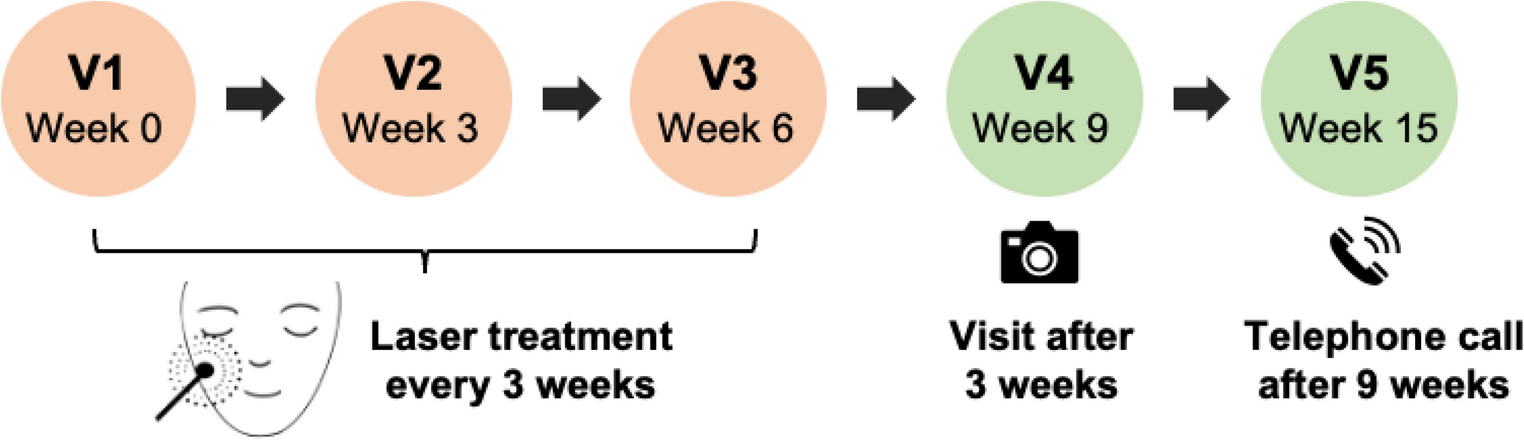
The facial erythema was treated with 532-nm KTP combined with microsecond 1064-nm ND: YAG laser. Each patient received three consecutive laser treatments with an interval of three weeks (Fig. 1). Patients were treated using both laser modules during the same session without anesthesia. Firstly, microsecond 1064-nm ND: YAG laser (Excel V; Cutera, Inc, Brisbane, CA) was applied with an 8 mm spot size, 0.3ms pulse duration, and energy density of 6–7 J/cm². Then, 532-nm KTP laser was used for treatment. When a 10 mm spot size was used, the energy density was 6–9 J/cm² and the pulse duration was 8-15ms; when a 5 mm spot size was used, the energy density was 8–10 J/cm² and the pulse duration was 8-12ms. Patients underwent assessments prior to each treatment session. Images were captured using the VISIA Skin Analysis System (Canfield Scientific, Inc, Parsippany, NJ, USA). Patients were followed up 3 weeks after the final treatment and telephone called 9 weeks after the final treatment. Throughout this follow-up, any adverse effects or recurrence were documented.
图注:图 1. Experimental design of the study
The severity of rosacea erythema was evaluated using the CEA scale. CEA scores were assessed by A blinded investigator based on the photos from each follow-up visit (0 = clear, 1 = almost clear, 2 = mild, 3 = moderate, and 4 = severe). A decrease in CEA of 1 or more is considered as a CEA success [12]. The Dermatological Life Quality Index (DLQI) is a validated self-reported questionnaire consisting of 10 questions designed to assess how skin disorders affect a patient’s quality of life. The maximum possible score for the DLQI is 30, with higher scores indicating a more significant impact on quality of life. The global aesthetic improvement scale (GAIS) was used to score the improvement (0 = worse, 1 = unaltered, 2 = improved, 3 = much improved, 4 = very much improved). Patient satisfaction was assessed by the patients themselves, with responses categorized as follows: 1 = very dissatisfied, 2 = dissatisfied, 3 = neither satisfied nor dissatisfied, 4 = satisfied, 5 = very satisfied.
Patients and dermatologists documented any adverse events experienced throughout the study, including pain, heat sensation, erythema, edema, dryness, tightness, itching, purpura, vesicle, hyperpigmentation, hypopigmentation, and scar. Pain levels were assessed using a 10-point scale, where 0 indicated “no pain” and 10 indicated “severe pain” during each treatment. Heat sensation and erythema were rated on a 4-point scale, with 0 = none, 1 = mild, 2 = moderate, and 3 = severe.
We conducted statistical analyses using GraphPad Prism version 10.4.1. Paired t-tests were applied to assess changes in CEA and DLQI scores pre- and post-treatment. A P-value < 0.05 was considered statistically significant.
Of the 17 enrolled patients, 15 completed the study and two patients were lost to follow-up. The patient’s baseline characteristics are shown in Table 1. Their age ranged from 22 to 43 years (mean 27.5 ± 5.0) and the gender ratio was 2:13 (male: female). Most participants had Fitzpatrick skin type III (73.3%). The majority were classified with ETR (93.3%).
| Basic characteristics | Participants ( n = 15) |
|---|---|
| Age (years), mean ± SD | 27.5 ± 5.0 |
| Sex, n (%) | |
| Female | 13 (86.7) |
| Male | 2 (13.3) |
| Disease duration, n (%) | |
| ≤1 year | 4 (26.7) |
| 1–5 years | 7 (46.7) |
| 5–10 years | 2 (13.3) |
| ≥10 years | 2 (13.3) |
| Fitzpatrick skin type, n (%) | |
| Ⅲ | 11 (73.3) |
| Ⅳ | 4 (26.7) |
| Rosacea clinical subtype, n (%) | |
| ETR | 14 (93.3) |
| PPR | 1 (6.7) |
| Rosacea CEA, n (%) | |
| moderate = 3 | 10 (66.7) |
| severe = 4 | 5 (33.3) |
For the erythema assessment, the CEA scores decreased significantly from 3.33 ± 0.47 to 1.47 ± 0.62 (P < 0.001) after three treatments (Fig. 2A). 93.3% of the patients showed a decrease of 1 point or more in their CEA score, indicating CEA success. Among them, 6 cases (40.0%) had a decrease of 2 points, and 4 cases (26.7%) had a decrease of 3 points. No exacerbation of the rash was observed in any of the patients. Furthermore, after three treatments, the DLQI score significantly decreased from 18.20 ± 2.14 to 13.80 ± 2.40 (P < 0.001) (Fig. 2B). In terms of clinical improvement, as shown in Table 2, the GAIS scores indicated significant clinical improvement, with no patients experiencing worsening conditions. The GAIS score improved in 14 patients (93.3%), among whom 10 patients (66.7%) showed significant or very significant improvement. The photographs are shown in Figs. 3 and 4. A follow-up call was made 9-weeks later and it was found that one case had relapsed.
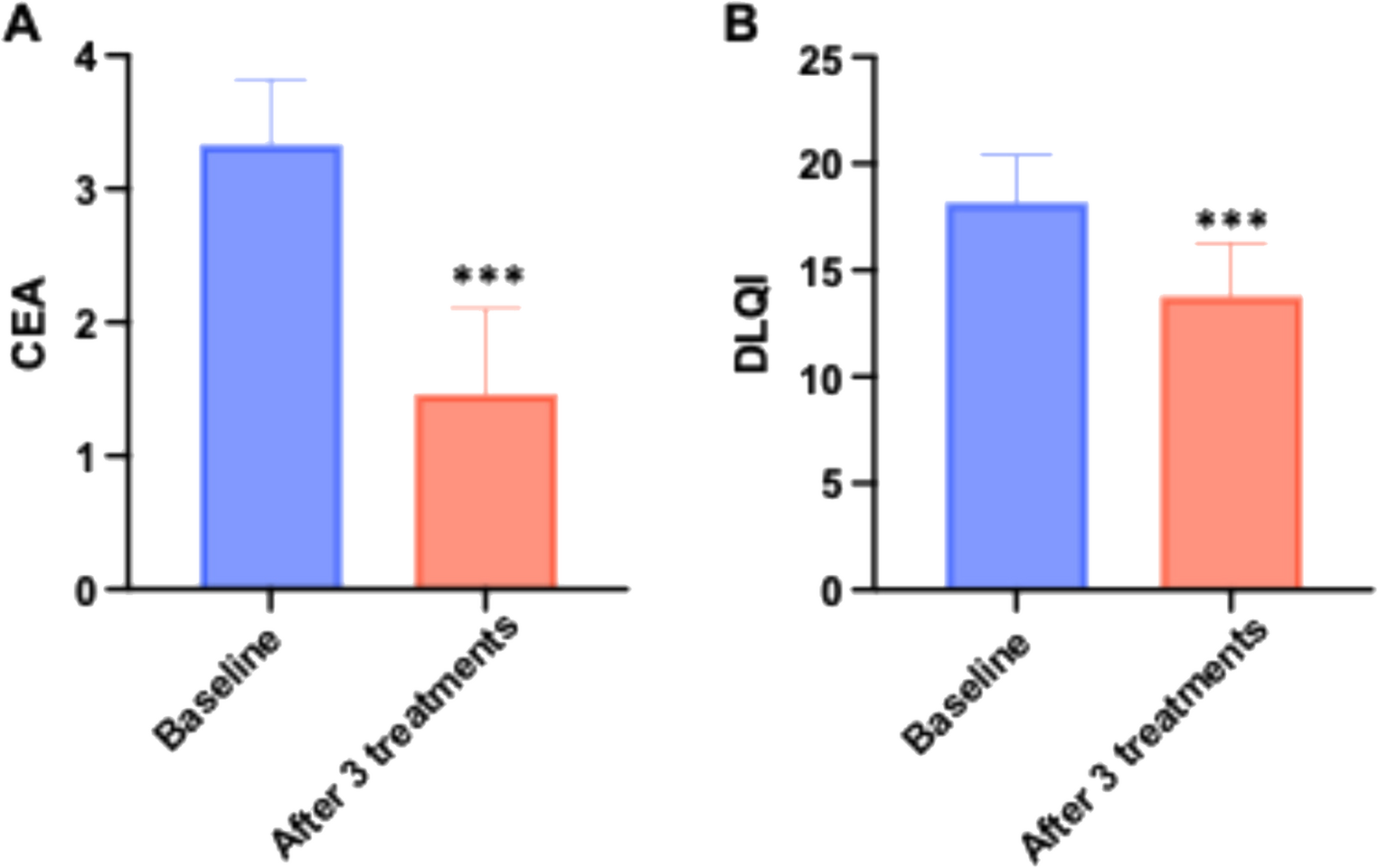
*图注:图 2. CEA scores (A) and DLQI scores (B) before and after 3 treatments (A) (**P<0.001)
| Outcome variables | Cases, n (%) | Pearson’s R 2 | P |
|---|---|---|---|
| 0.757 | <0.001 | ||
| GAIS | |||
| Worse | 0 (0.0) | ||
| Unaltered | 1 (6.7) | ||
| Improved | 4 (26.7) | ||
| Much improved | 7 (46.7) | ||
| Very much improved | 3 (20.0) | ||
| Clinical satisfaction | |||
| Very dissatisfied | 0 (0.0) | ||
| Dissatisfied | 1 (6.7) | ||
| Neither satisfied nor dissatisfied | 3 (20.0) | ||
| Satisfied | 9 (60.0) | ||
| Very satisfied | 2 (13.3) |
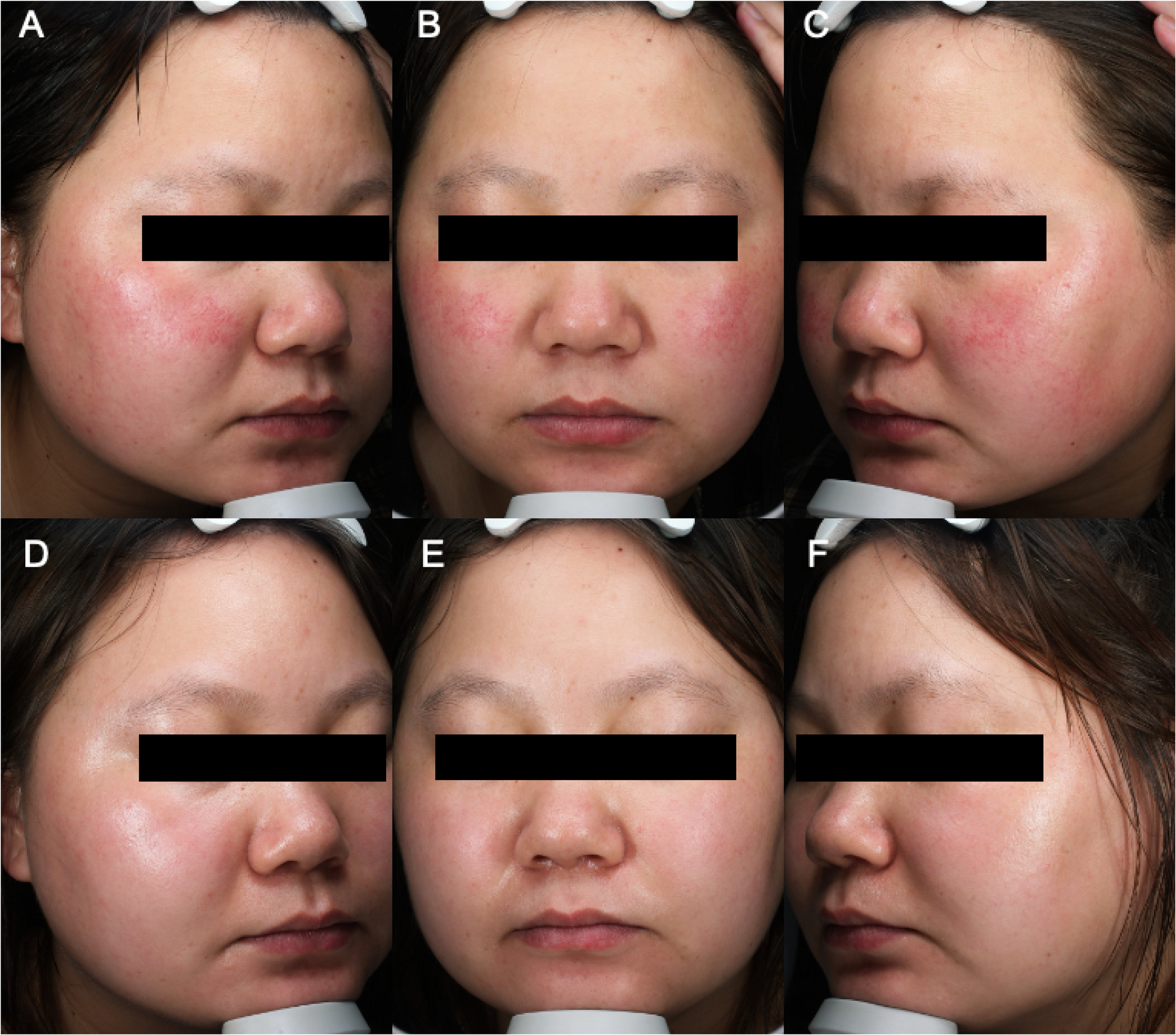
图注:图 3. Photos of facial erythema in a 25-year-old female patient before treatment (A-C) and 3 weeks after three treatments (D-F)
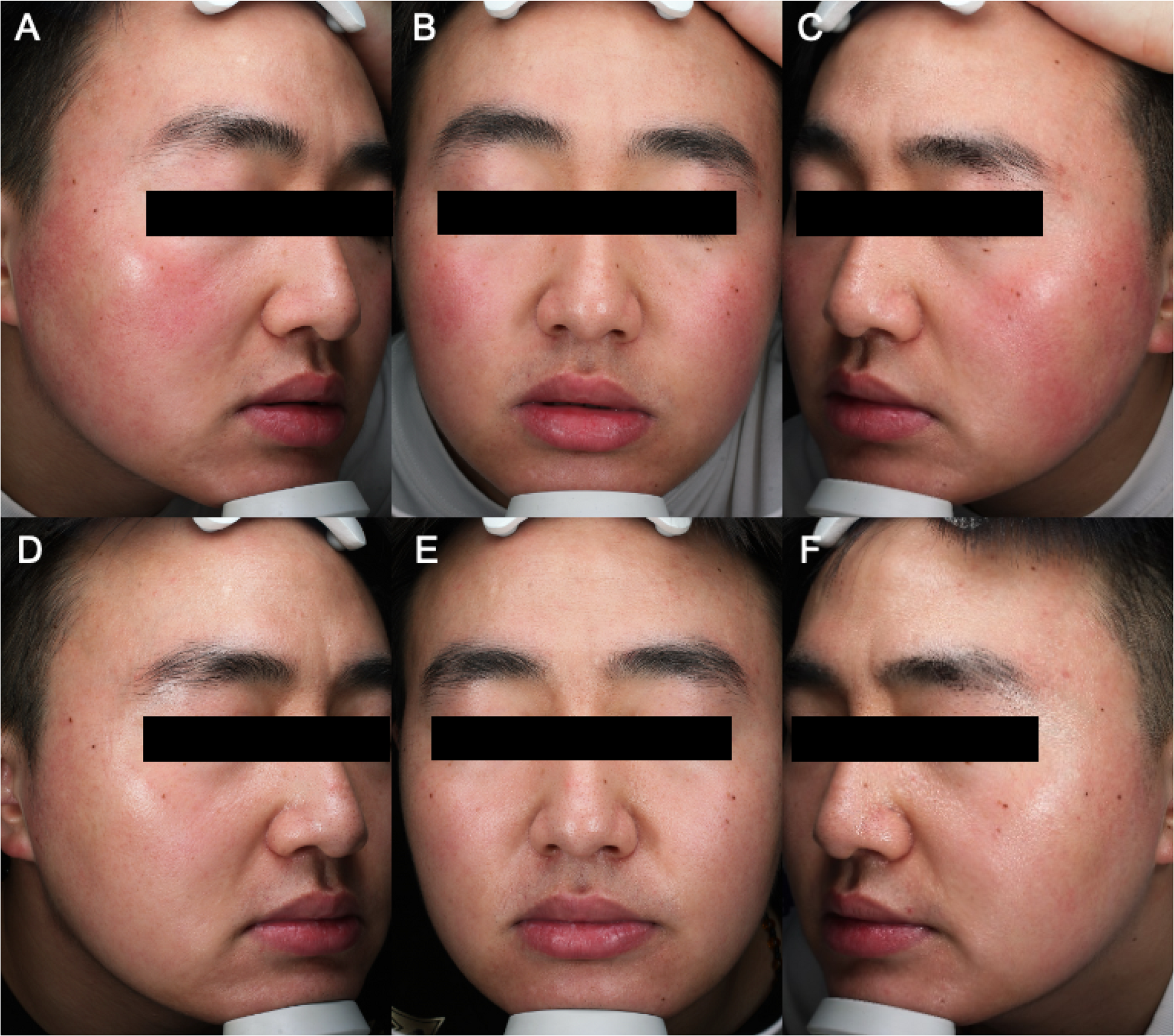
图注:图 4. Photos of facial erythema in a 23-year-old male patient before treatment (A-C) and 3 weeks after three treatments (D-F)
In terms of patient satisfaction, 3 (20.0%) patients were neither dissatisfied nor dissatisfied, 9 (60.0%) were satisfied, and 2 (13.3%) were very satisfied. The subjective satisfaction ratings were high and the average score was 3.13 ± 0.96. The patients’ satisfaction scores were significantly correlated (Pearson’s R2 = 0.757, P < 0.001) with the clinical improvement scores.
We assessed the side effects associated with the treatment. The most common adverse reaction was mild-to-moderate pain, with a score of 3.40 ± 1.36 (Table 3), which was tolerable for the patients. Five patients experienced dryness, three reported slight tightness, and one patient had itching, all of which were typically relieved with cold compresses. Erythema was observed in all patients (100%), with a duration of 4.07 ± 1.39 days, and edema was noted in 14 out of 15 patients, lasting for 4.47 ± 1.75 days. One patient developed localized purpura, which resolved within one week. One patient reported the formation of vesicles, but no cases of hyperpigmentation, hypopigmentation, or scarring were observed.
| Adverse event | |
|---|---|
| Pain (VAS scale) | 3.40 ± 1.36 |
| Heat sensation (0–3 scale) | 2.67 ± 0.60 |
| Erythema (0–3 scale) | 2.00 ± 0.63 |
| Edema, n (%) | 14 (93.3) |
| Dryness, n (%) | 5 (33.3) |
| Tightness, n (%) | 3 (20) |
| Itching, n (%) | 1 (6.7) |
| Purpura, n (%) | 1 (6.7) |
| Vesicle, n (%) | 1 (6.7) |
| Duration of erythema, day | 4.07 ± 1.39 |
| Duration of edema, day | 4.47 ± 1.75 |
| Hyperpigmentation, n (%) | 0 (0) |
| Hypopigmentation, n (%) | 0 (0) |
| Scar, n (%) | 0 (0) |
Rosacea is characterized by widespread superficial flushing and a gradual increase in deeper dermal vascular changes. Therefore, combining wavelengths with both superficial targeting and deeper tissue penetration may offer a more effective and comprehensive therapeutic approach for managing this condition. To the best of our knowledge, this is the first study to evaluate the efficacy and safety of a combination of 532-nm KTP laser and microsecond 1064-nm Nd: YAG laser for moderate-to-severe facial erythema in rosacea. After three sessions, 93.3% of patients achieved ≥ 1-grade improvement in erythema, and 66.7% showed marked or very marked improvement. DLQI scores decreased significantly, and patient satisfaction was strongly correlated with objective improvement (R2 = 0.757). For safety profiles, no serious side effects were observed.
Prior research has demonstrated that microsecond 1064-nm Nd: YAG laser treatment effectively reduces diffuse facial redness, with patients reporting less pain compared to pulsed dye laser (PDL) therapy [11, 13]. Compared with the 34% erythema improvement previously reported for microsecond Nd: YAG in rosacea [11], the dual-wavelength regimen used in our study achieved superior outcomes. The microsecond Nd: YAG laser also shows promise in scar improvement. A study of 44 individuals with Fitzpatrick skin types I–VI diagnosed with keloids revealed that combining a 300-microsecond 1064-nm Nd: YAG laser with topical corticosteroids led to a marked reduction in both scar elevation and redness, outperforming corticosteroid monotherapy [14]. Additionally, millisecond Nd: YAG has been shown to promote collagen production, enhancing skin smoothness and reducing fine wrinkles [15]. Furthermore, since Demodex mites residing in pilosebaceous units can trigger perifollicular inflammation in rosacea, the thermal action of long-pulsed Nd: YAG lasers may help eliminate these mites [16]. It is plausible that the microsecond 1064-nm Nd: YAG laser may exert a comparable effect, potentially contributing to the observed reduction in facial inflammatory symptoms.
The 532-nm KTP laser is a frequency-doubled variant of the Nd: YAG laser, generated by halving the wavelength to produce green light [17]. Due to its moderate absorption by oxyhemoglobin, it demonstrates high efficacy in targeting telangiectasias. While this wavelength offers the advantage of shorter recovery periods, its reduced tissue penetration depth—resulting from the doubled frequency—limits its effectiveness in treating broader facial erythema when compared to other Nd: YAG modalities with longer wavelengths. Relative to earlier KTP systems, the incorporation of dual wavelengths, along with multiple pulse settings, allows for a closer match to the heterogeneous thermal relaxation times of rosacea-associated vasculature, thereby enhancing therapeutic versatility. Previous study has established the efficacy of combining 532-nm KTP and 1064-nm Nd: YAG wavelengths for treating vascular malformations [18]. Separately, a different group reported findings from a prospective series of 25 ETR patients using a device that delivers variable-sequenced, long-pulsed 532-nm KTP and 1064-nm Nd: YAG emissions with concurrent cryogen cooling; in their study, subjective improvement exceeding 50% was achieved in 73.3% of cases [19]. The distinction of our work, compared to prior studies using long-pulsed 1064-nm Nd: YAG, is the use of a microsecond-domain laser, yet both approaches yield supportive findings.
In our study, no severe or prolonged adverse events or patient complaints were documented by the physicians. Although no topical anesthetics were applied prior to the treatment, the mean pain VAS score was 3.4, which is lower than the reported score of 5.6 following PDL treatment in a separate study [20]. It should be noted that post-treatment erythema and edema, though frequently observed, resolved within an average of 4 days and 4.5 days respectively, consistent with expected inflammatory responses. Localized purpura may occur following combination therapy, primarily associated with the 532-nm KTP laser. Although many studies suggest that KTP laser treatment rarely induces purpura [21], it was observed in one out of 15 cases in our study, potentially attributable to shorter pulse widths and higher fluences. The microsecond 1064-nm laser typically does not cause purpura due to its lower oxyhemoglobin absorption and shorter pulse duration. In summary, adverse effects associated with the dual-wavelength treatment in this study were mild; no instances of post-inflammatory hyperpigmentation, hypopigmentation, or scarring were observed.
This study has several limitations. The sample size was small, and the follow-up period of only 15 weeks was insufficient to evaluate long-term recurrence rates. Objective microvascular measures, such as dermoscopic documentation or laser Doppler flowmetry, were not systematically recorded. Given that facial erythema in rosacea is influenced by various factors including environmental triggers, diet, and microbial activity, recurrence is common. Therefore, further randomized controlled trials are warranted to validate our findings.
The combination of 532-nm KTP and microsecond 1064-nm Nd: YAG laser is a safe and effective short-term intervention for mild-to-moderate rosacea in Fitzpatrick skin types III–V, significantly reducing facial erythema and improving quality of life. Larger-scale, long-term follow-up studies are required to confirm its sustained efficacy and to establish the optimal treatment interval.
声明:中文精读 · 仅供学术参考。内容来自公开文献检索,不代表本人观点,不构成诊疗建议。 医疗美容需在正规医疗机构由执业医师实施。