选择性吸脂塑形腰腹过渡美学单元女性腰线雕塑技术
2026年9月2日30 min read
Plastic and Reconstructive Surgery Global Open
结论与实践要点
技术要点(可直接迁移): 本文提出『腰腹过渡美学单元』的概念,把腰线塑形从『整体平坦化吸脂』升级为『按 zone 1 / 2 / 3 保留不同皮瓣厚度』的选择性 sculpting。捏夹试验目标值(zone1<1cm、zone2≈2cm、zone3≈3cm)是可操作的术中量化标准,配合前侧 S 点拐点按躯干长短个体化调整,能避免『腰线台阶 / 不自然过渡』。对形体雕塑(本团队已做 BBL、腹壁成形、联合塑形)有直接补充价值。
安全边界(必须强调): 本研究为中位 BMI 29 的人群、单中心大样本(1999 例),主要并发症率较低,但大容量 360° 吸脂(3100–4200 mL)本身携带血栓栓塞(PE / DVT 0.20%)与贫血输血(0.55%)风险,围手术期须做风险分层、弹力加压、早期活动与必要药物预防;皮肤充血 22.91% 虽多可逆,仍提示操作创伤量不可忽视。文中明确『未做肋骨重塑 / 取肋(rib remodeling / extraction)』——对当下部分机构鼓吹的『截肋瘦腰』须明确反对,属高风险违规操作。
循证边界: 单术者、回顾性、无对照、缺乏客观 3D 体表量化与一致随访。结论宜作为『腰线选择性塑形思路』参考;对我团队的启发:在形体雕塑方案中引入『过渡单元分区 + 捏夹厚度目标』的术前标记与术中质控,并把大容量吸脂的血栓预防列为强制项。
Background:An “hourglass” waist is often valued as a sign of health and beauty. Despite this, methods to achieve the 3-dimensional anatomy and aesthetics of the waist remain underexplored. Selective liposuction or fat grafting of the waist transition aesthetic unit influences shape, depth, and proportions, regardless of adjunct surgical techniques to reduce the transverse plane of the waist. This study describes a technique using selective liposuction or fat grafting to refine the waist.
Methods:The primary author’s technique using selective liposuction or fat grafting is described. A retrospective study of patients treated between November 1, 2016, and January 30, 2025, was conducted to assess safety and efficacy. Medical records, photographs, and insurance claims were reviewed. Progress photographs were taken preoperatively and at postoperative time points. A photometric analysis was performed.
Results:A total of 1999 consecutive cases were performed during the study period. The median age was 36 (interquartile range, 31–42) years, and the median body mass index was 29 (interquartile range, 26–32) kg/m 2 . Complications included hematoma (4, 0.20%), pulmonary embolism or deep vein thrombosis (4, 0.20%), postoperative anemia requiring transfusion (11, 0.55%), and surgical site infection (24, 1.20%). Six patients required excision for skin necrosis (0.30%). Skin hyperemia occurred in 458 cases (22.91%), resolving in most but leading to permanent hyperpigmentation in less than 1%.
Conclusions:Selective liposuction or fat grafting is a safe, reliable technique and serves as the first surgical intervention in our surgical protocol to enhance the waist. Addressing this area helps achieve a more balanced feminine profile.
Question: Which specific anatomical zones should be targeted in waist-selective liposuction or fat grafting to optimize the female silhouette?
Findings: This study highlights the waist transition aesthetic unit as a key anatomical zone for selective liposuction or fat grafting. Precise identification of this zone allows improved surgical planning and enhanced control of lateral curvature, facilitating the creation of a natural, balanced, and harmonious feminine contour.
Meaning: The waist transition aesthetic unit, as a distinct anatomical zone, provides a structured framework for waist-selective liposuction or fat grafting, improving surgical precision, aesthetic consistency, and standardization, while advancing the understanding of feminine waist contouring.
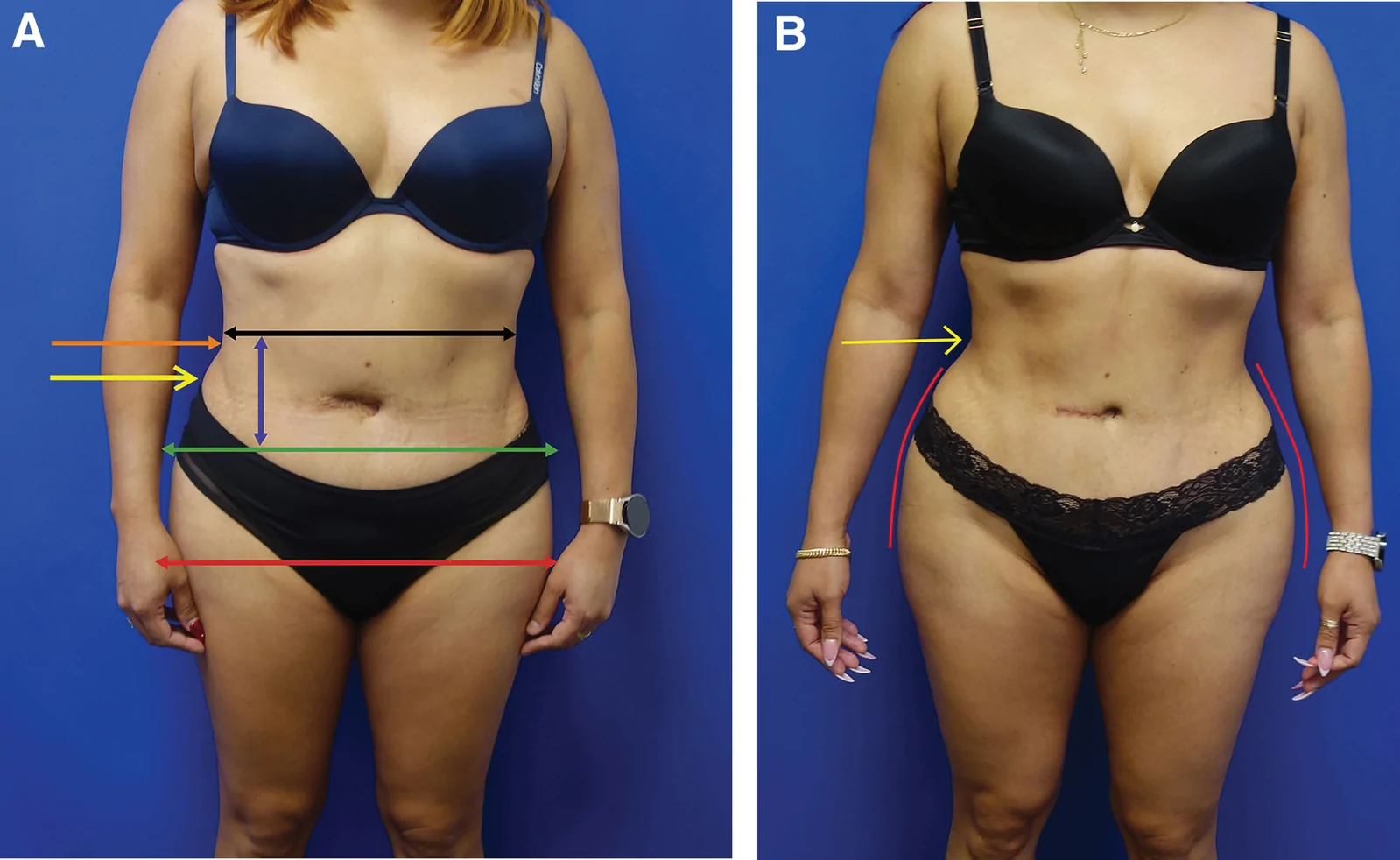
A curvaceous, “hourglass” waist has long been valued as a universal standard of beauty. 1 Art in various media has reflected humanity’s admiration for these physical cues in a woman’s waist and adjacent torso. It was not until the development and advances of waist and body-contouring techniques that modern women sought surgical enhancement through liposuction, which was previously attempted to be achieved through nonsurgical methods such as corsets. This trend shows that the waist has always been valued in culture and society, making it the key trait defining female curviness. 2 Liposuction has become one of the most requested cosmetic interventions. 3 – 6 It has revolutionized how plastic surgeons address areas of excess fat. 5 – 7 Still, in many instances, the surgical philosophy continues to focus on debulking and removing fat to achieve maximum fat extraction, rather than adopting a more selective approach to body contouring. To achieve a proportionate female silhouette, the aesthetic units defining the female contour should be approached systematically. Otherwise, poor liposuction may create an unnatural waist-to-hip ratio, resulting in a square appearance and an elongated torso (Fig. 1 ). ( See figure, Supplemental Digital Content 1 , which displays a postoperative photograph of Figure 1 with different lighting and background to observe the natural shadows of the silhouette, aesthetic units, and the abdominal definition, https://links.lww.com/PRSGO/F271.)
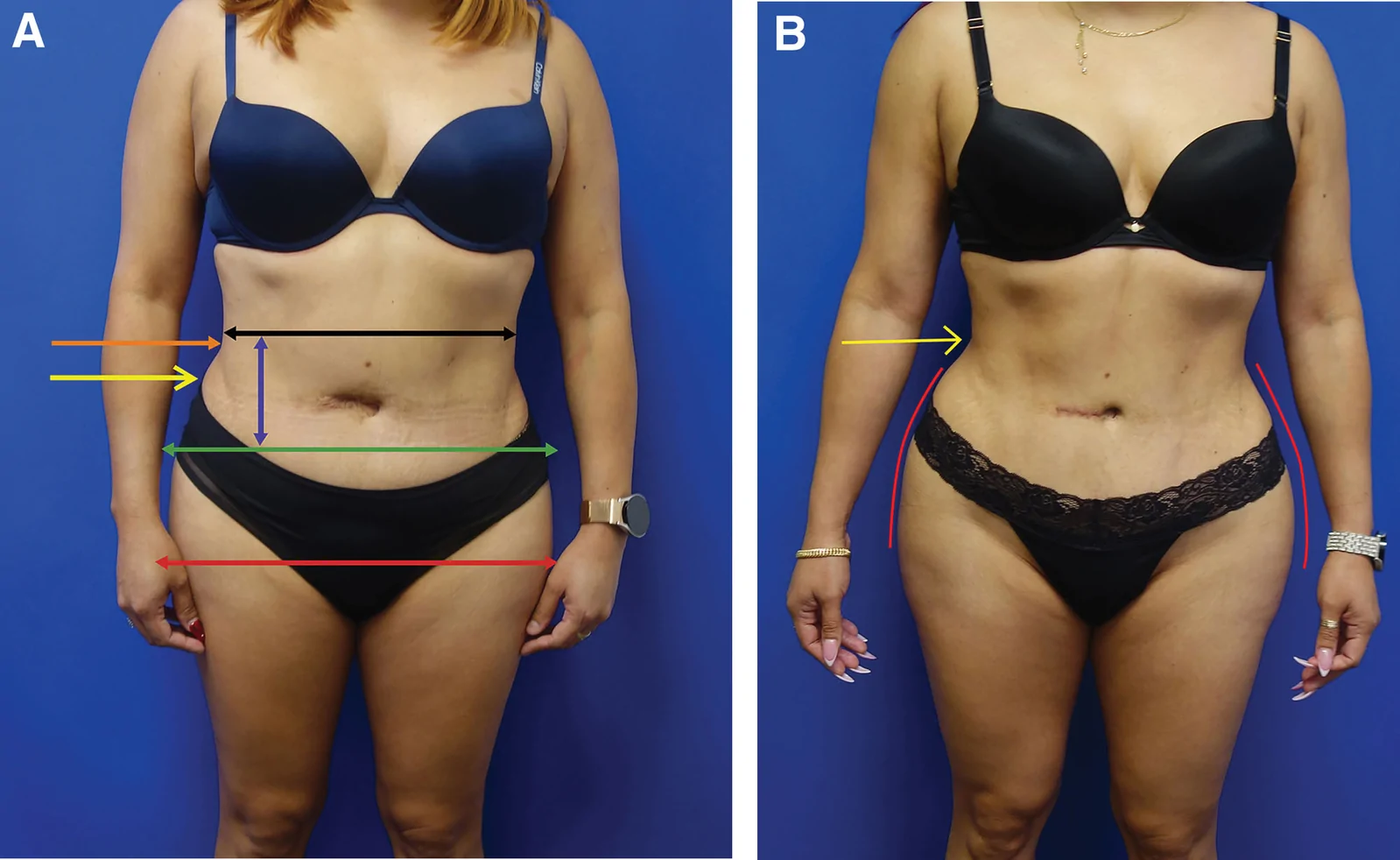
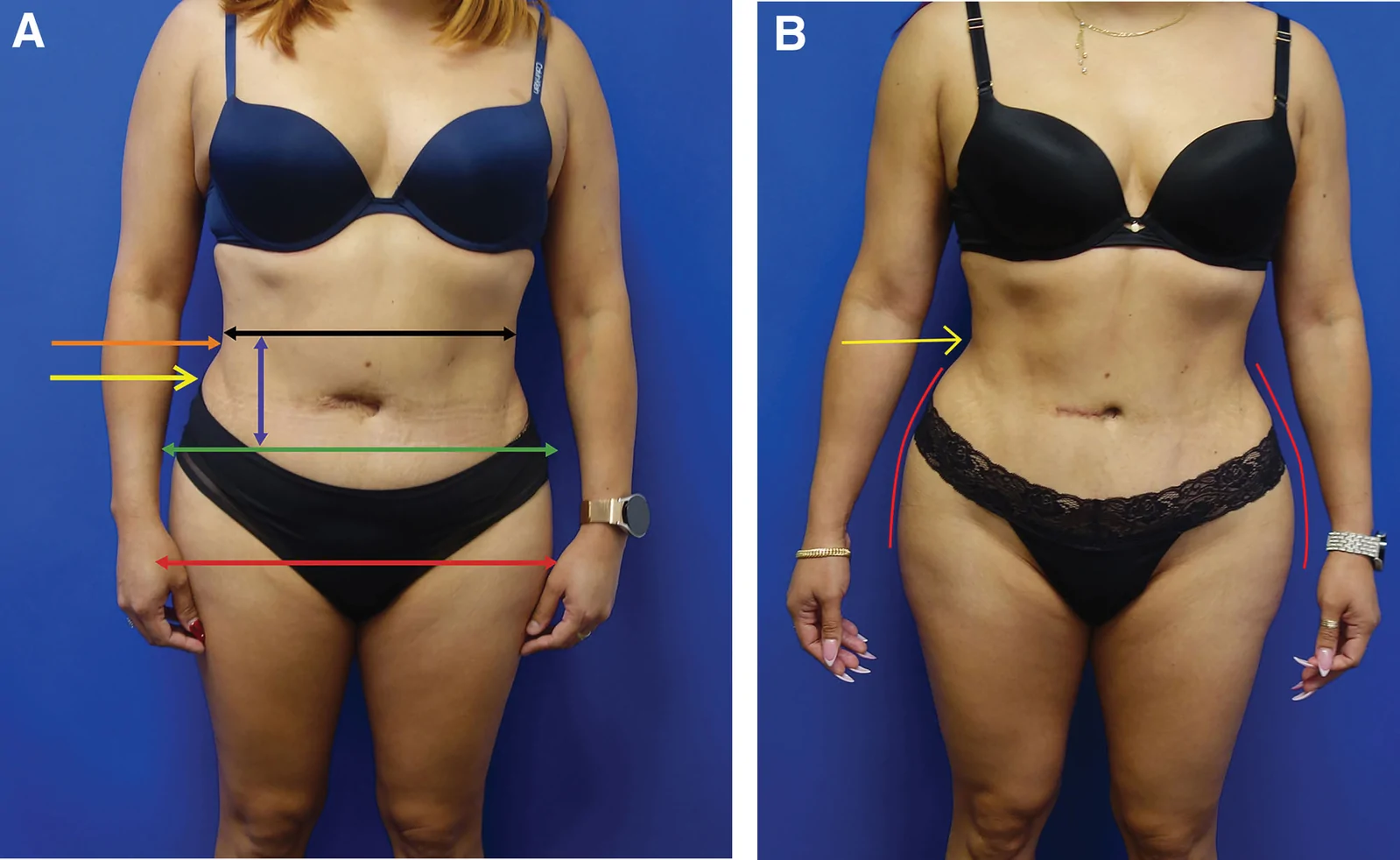
Fig. 1. Before and after photographs. A, Preoperative photograph of a 39-year-old woman with a BMI of 28 kg/m2 who underwent nonselective torso liposuction and abdominoplasty, demonstrating a poorly defined and low anterior “snatch point” (orange arrow), a wide transverse waist plane (black horizontal double-arrow line), overresection of the waist transition aesthetic unit (yellow arrow), a poor transition between the iliac crest (green horizontal double-arrow line) and the hip transverse plane (red horizontal double-arrow line), and an elongated torso (vertical blue double-arrow line). B, Postoperative photograph obtained 15 months after surgery. The patient underwent 360-degree selective trunk liposuction with 2400 mL aspirated, abdominoplasty with progressive wide abdominal plication, 100 mL of fat grafting to each side of zones 2 and 3 of the waist transition aesthetic unit, 500 mL to each hip aesthetic unit, and right periumbilical scar revision. No rib remodeling or rib extraction was performed. Note the higher and better-defined anterior “S” point (yellow arrow), a fuller waist transition aesthetic unit, and improved curvature of the hip and waist transition aesthetic units (red curved line) (Supplemental Digital Content 1, https://links.lww.com/PRSGO/F271).39 岁女性(BMI 28)非选择性躯干吸脂 + 腹壁成形术前(A)对比术后 15 月(B):A 示 snatch point 低平、腰平面宽、过渡单元过度去除;B 经 360° 选择性吸脂 2400mL + 腹壁折叠 + 腰 / 臀脂肪移植后,S 点上提、过渡单元更饱满、腰臀曲率改善。正反对照的核心图。The “surgical waist” is a term used by the authors to describe surgical maneuvers that enhance lateral curvature, beginning at the anterior “snatch point” (waist), which anatomically correlates with the 10th rib. The anterior “snatch point” (anterior “S” point) marks the beginning of the lateral curvature and the trunk area surgically modified to achieve the smallest horizontal dimension of the waist’s transverse plane relative to the torso. The authors also propose the waist transition aesthetic unit, with defined boundaries between the waist and the previously described hip aesthetic unit, as integral to achieving the hourglass figure 8 (Fig. 2 ).
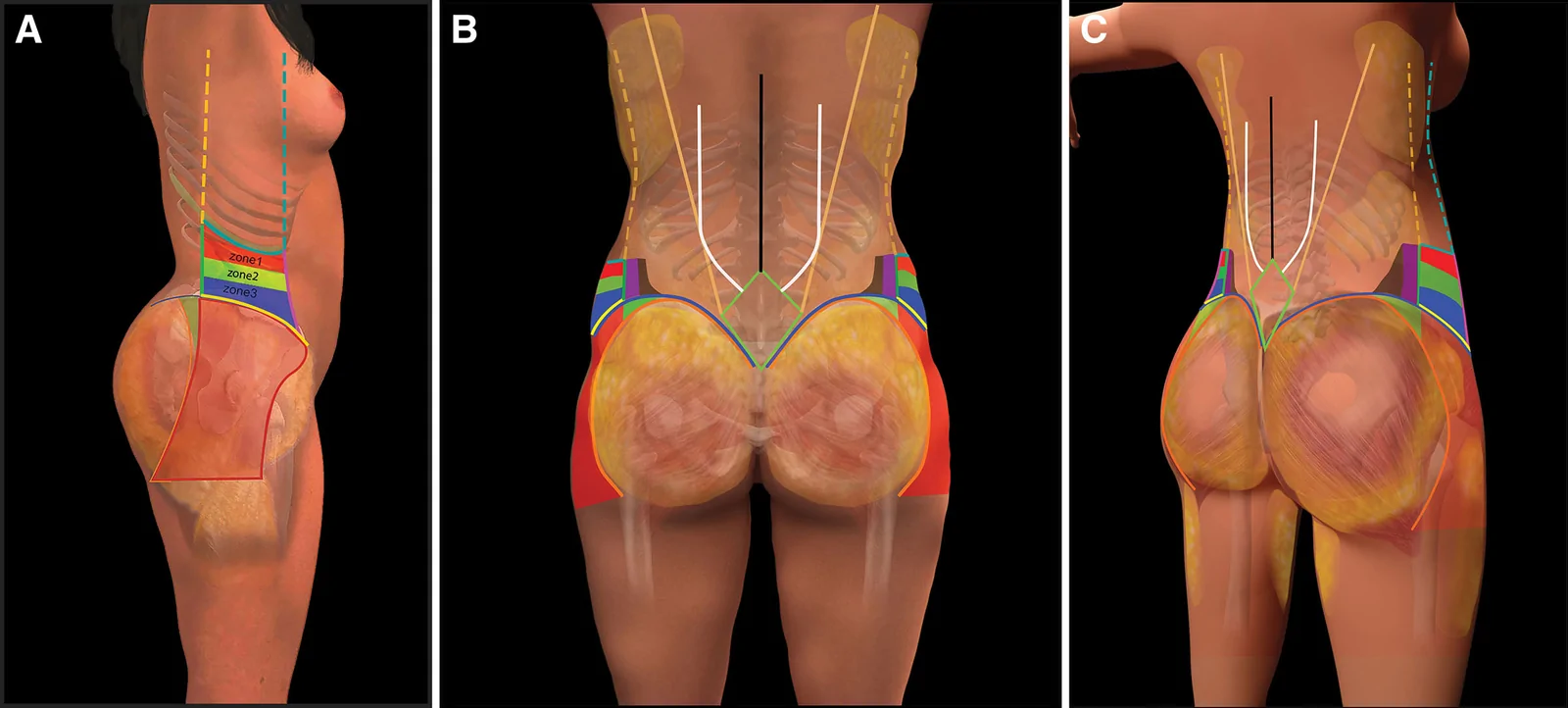
Fig. 2. Illustrations demonstrating the anatomy of the waist transition aesthetic unit and hip aesthetic unit. A, Lateral view. B, Posterior view. C, Oblique view. The hip aesthetic unit (red shading) is bounded by the lateral buttock (posteriorly), inferior gluteal fold (inferiorly), a line from the anterior superior iliac spine to the level of the inferior gluteal fold (anteriorly), and the iliac crest (superiorly). The waist transition unit is shown with red, green, and blue shading representing the superior (zone 1), middle (zone 2), and inferior (zone 3) zones, respectively. The zones extend between the 10th rib (superior) and the iliac crest (inferior). The anterior and posterior boundaries of the transition unit are shown in magenta at the anterior axillary line (blue dashed line) and in green at the posterior axillary line (yellow dashed line), respectively (see Videos 2 and 3 [online]).腰腹过渡美学单元与臀美学单元解剖示意(侧 / 后 / 斜位)。红 / 绿 / 蓝分别代表 zone 1 / 2 / 3,前界为前腋线、后界为后腋线。理解分区的基础图。The topic of selective liposuction remains underexplored, with few articles detailing its role in enhancing the female silhouette. 8 – 12 No specific guidelines exist for adjusting the waist’s transverse plane angulation and the vertical position of the anterior “S” point relative to torso proportions. This article describes advanced surgical interventions combined with body contouring procedures, including selective liposuction or fat grafting to the waist transition aesthetic unit, to enhance the waist and achieve a feminine physique.
The authors view the female waist as the foundation of trunk and body sculpting, from which surrounding aesthetic units are enhanced. This article aims to define the anatomical zones of the waist transition aesthetic unit and present a structured approach to selective liposuction or fat grafting to guide body-contouring procedures that enhance the female silhouette. It also demonstrates the technique’s safety and efficacy based on observed outcomes and objective measurements from a large case series.
A retrospective review was conducted, including all patients who underwent the described technique in addition to other body contouring procedures between November 1, 2016, and January 30, 2025, by the senior author. Complications were compiled using insurance claims and medical records. The technique used by the senior author to enhance the waist is described in detail.
The first step in surgical waist modification is identifying the narrowest point of the torso in the frontal view, defined as the anterior “snatch” point (waist at the level of the 10th rib). The medial sweep maneuver determines the waist’s transverse plane and guides the extent of liposuction or fat grafting within each zone of the waist transition aesthetic unit. ( See Video 1 [online] , which demonstrates the medial sweep maneuver.)
Preoperative markings are performed in multiple positions for accuracy but can also be done in the standing position (Figs. 2 , 3 ). ( See Video 2 [online] , which demonstrates a review of preoperative markings.) ( See Video 3 [online] , which demonstrates a review of preoperative markings on a patient.) The markings need to be verified in the standing position 13 using the medial sweep maneuver, and they also need to be verified intraoperatively, as they can shift with the patient’s position.
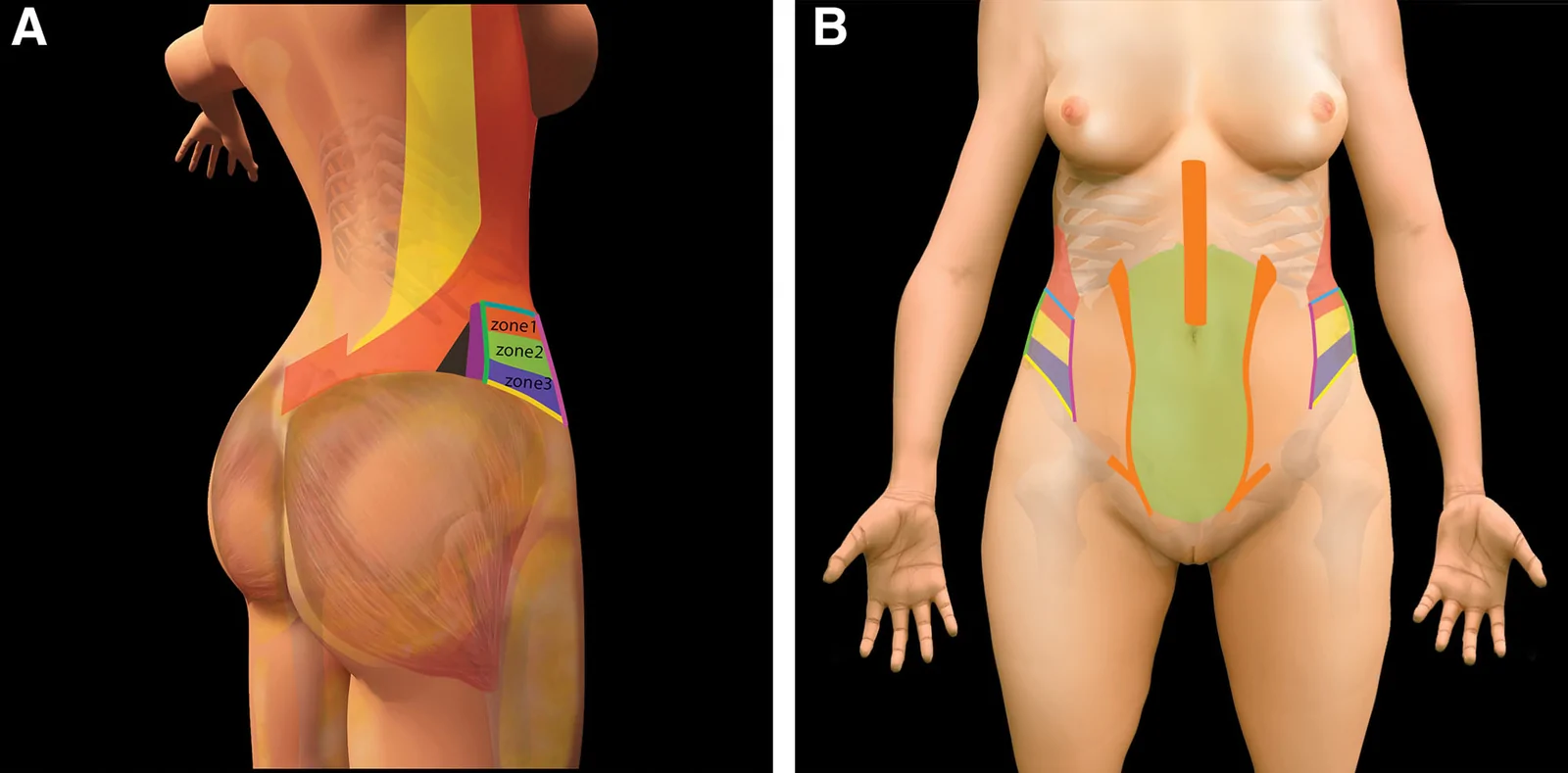
Fig. 3. Illustrations demonstrating selective liposuction for different flap thicknesses based on anatomical location. A, Oblique view illustrating zones of different flap thickness. The pinch test in zone 1 (red-shaded area) of the waist transition aesthetic unit should be less than 1 cm, in zone 2 approximately 2 cm, and in zone 3 approximately 3 cm; the yellow-shaded back zone should be 1.5 cm, whereas the red-shaded back zone extending to the anterior axillary line should be less than 1 cm. The purple-shaded transition zone should be beveled to avoid an unnatural step-off as it joins the posterior “snatch point” (black-shaded zone). B, Anterior view illustrating zones of different flap thickness, with the orange lines defining the linea alba and linea semilunaris. The superior area between the anterior and posterior axillary lines and the adjacent red-shaded area should demonstrate a pinch test of less than 1 cm, the central abdomen (green-shaded area) approximately 2 cm, and the lateral abdomen approximately 1.5 cm.按解剖位置差异化保留皮瓣厚度的示意(斜位 / 前位)。捏夹试验目标值:zone1<1cm、zone2≈2cm、zone3≈3cm,背部及中央 / 侧腹各有定值——这是『选择性』而非『均匀』吸脂的量化依据。
In the prone position, 4 access incisions are made: 1 at the superior intergluteal fold, 1 at the midline of the midback, and 2 laterally along the bra line at the level of the erector spinae muscles. Standard superwet tumescent solution containing 30 mL of 1% lidocaine and 1 mg of epinephrine per 1 L of lactated Ringer solution is injected.
The markings define different levels of selective liposuction and thickness, shaping the contour of the aesthetic units (Fig. 3 ). All units were pretreated with an ultrasound-assisted device, VASER technology (Solta Medical, Bausch Companies, Bothell, WA), using 3.7-mm groove probes at 60% VASER mode. Power-assisted liposuction was performed using MicroAire instruments (MicroAire Surgical Instruments LLC, Charlottesville, VA) with 4-mm Mercedes cannulas at 80% power and 18 inHg of suction pressure.
First, liposuction is performed through the intergluteal incision toward the posterior “S” point and the waist transition zone behind it. To define the lower back and superior buttocks, liposuction is carried out between the distal erector spinae and the marked superior buttock border. Liposuction then continues at the posterior “S” point to create a transition shadow. The superior buttock boundary is defined, and the inferior posterior iliac crest triangle is liposuctioned as needed until the desired shape is achieved, blending the waist transition aesthetic unit with the hip aesthetic unit. The area between the waist transition aesthetic unit and the posterior “S” point is beveled to prevent step-off deformities. Zones 2 and 3 are progressively liposuctioned, leaving greater thickness than zone 1 until blending with the iliac crest. These zones may not require liposuction in every case but may benefit from fat grafting, especially in revisions. Liposuction then continues through the upper lateral incision, targeting zone 1 of the waist transition aesthetic unit.
The upper and lower back and flanks are suctioned radially using deep and superficial extraction, with visualization and pinch tests to achieve optimal contour. From the upper lateral incisions, the erector spinae muscles are etched if indicated. All lipectomy access sites are closed with interrupted 4-0 nylon sutures (Ethicon, Johnson & Johnson, Warsaw, IN), which are removed on postoperative day 1 for drainage.
Next, the patient is placed in the supine position, and tumescent solution is injected superficially and deeply lateral to the rectus abdominis and into the central abdomen. Liposuction is performed through 5 stab incisions: 2 at the thigh-groin junctions, 2 at the hypochondriac region, and 1 above the umbilicus. The linea semilunaris and linea alba are defined if indicated.
As in the prone position, liposuction is performed at varying thickness levels. The waist transition aesthetic unit is small and unforgiving; excessive liposuction in zone 3 may cause step-off deformities at the iliac crest. The axilla and lateral torso are treated through the lateral hypochondriac incisions. ( See Video 4 [online] , which demonstrates the surgical technique.) Liposuction or fat injection in zones 2 and 3 allows adjustment of the angle of take-off in the transverse plane of the waist, providing different lateral curvatures based on patient and surgeon preferences. ( See figure, Supplemental Digital Content 2 , which displays an illustration that demonstrates the concept of adjusting the angle of the transverse planes of the waist, https://links.lww.com/PRSGO/F272.)
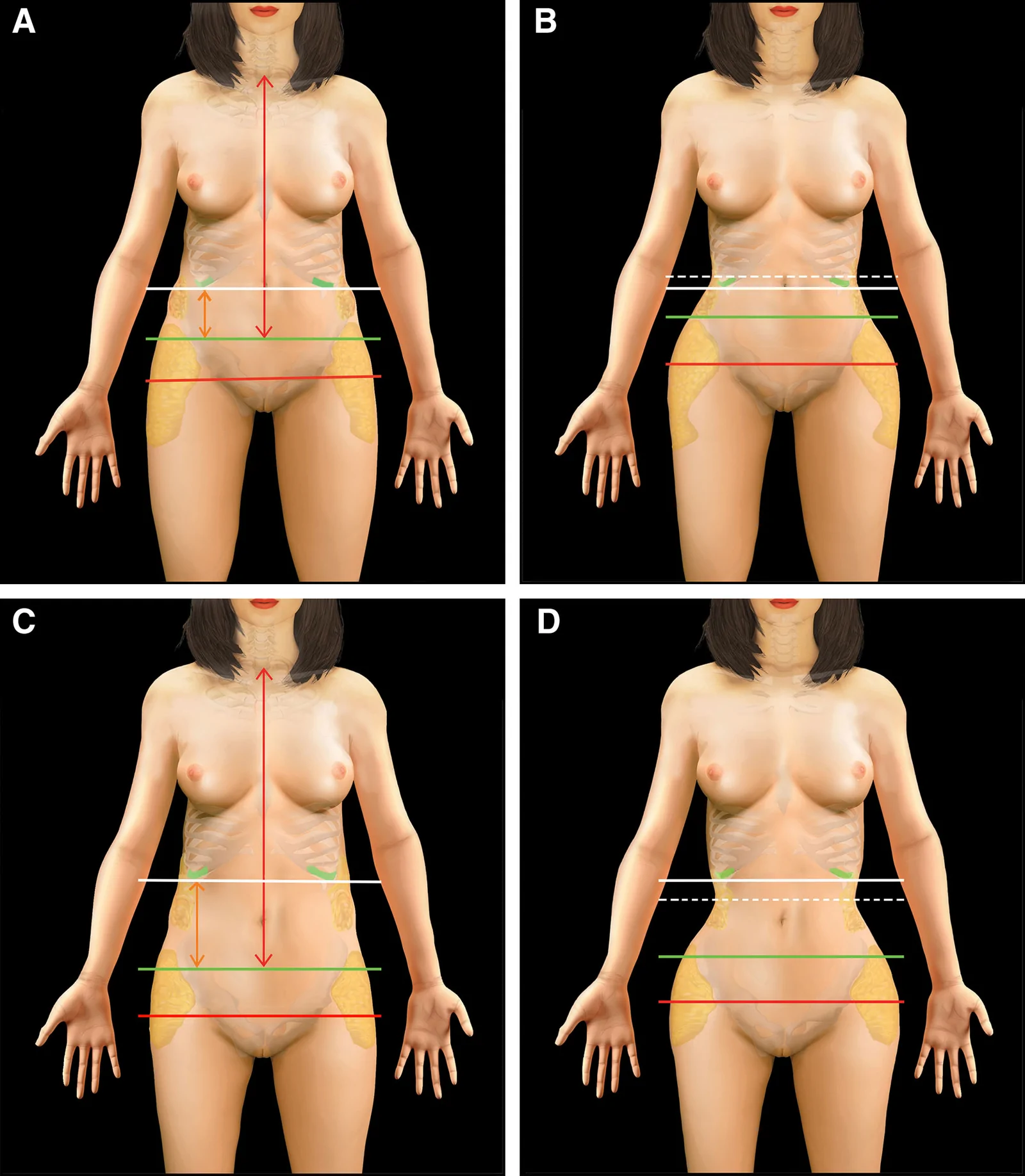
Fig. 4. Illustrations demonstrating adjusting the inflection point of the waist (“anterior snatch point”) for different trunk dimensions. A, Adjustment in a patient with a short torso (double vertical red arrow), measured from the seventh cervical spine to the transverse plane of the iliac crest (green horizontal line). Short torso proportions are also reflected by a distance of less than 5 cm from the transverse plane of the waist (white horizontal line), at the level of the 10th rib (fluorescent green), to the transverse plane of the iliac crest. B, The anterior “S” point must be positioned higher with liposuction to achieve a more balanced profile (dashed horizontal white line). C, Patients with long torso proportions are reflected by a distance of greater than 6 cm. D, The anterior “S” point must be lowered with liposuction to achieve a more balanced profile; the red horizontal line represents the transverse plane of the hip aesthetic unit, which typically lies at the level of the symphysis pubis.按躯干长短调整前侧 S 点高度(短躯干上提、长躯干下放)的示意。说明腰线拐点需个体化,不能一刀切。
A case series was reviewed and analyzed to demonstrate perioperative outcomes of the surgical technique. The senior author’s medical records and insurance claims of consecutive patients who underwent selective liposuction or fat grafting to enhance waist contour were used. Patients who underwent adjunct procedures, including abdominoplasty with wide progressive abdominal plication, buttock augmentation with fat or implants, and liposuction with hip fat grafting, were included in the analysis. Demographic data, including age and body mass index (BMI), and operative details, such as total fat injected into the waist transition and hip aesthetic units, total fat and fluid extracted, and outcomes, were recorded in an Excel spreadsheet (Redmond, WA), which was used to calculate statistics. Photographs documenting progress were taken before the procedure and at follow-up visits at 1, 3, and 6 months after the procedure and, in some cases, up to 1 year. All patients were operated on by the senior author (W.C.).
An objective analysis of a random sample of 76 patients was selected from the full cohort, with sampling distributed across the 4 procedural categories in approximate proportion to their representation in the overall series. Pre- and postoperative photographs were taken using a Sony RX100 II 20.2 MP with the same distance, lighting, and resolution. These were reviewed, and blinded measurements of the transverse waist and hip planes were performed in Adobe Photoshop by an independent evaluator using the predefined anatomical landmarks. Measurements were recorded in centimeters, and the waist-to-hip ratio was calculated at both time points as waist width divided by hip width. This design provided an objective image-based estimate of silhouette change while preserving the practicality of a technique article.
Continuous variables were summarized as medians and interquartile ranges (IQRs) because the Kolmogorov–Smirnov test indicated nonnormal distributions for the variables assessed. Comparisons of age, BMI, total fat injected, and total fat removed were performed between procedure groups using nonparametric Mann-Whitney U tests, as appropriate. Categorical complications were summarized as frequencies and percentages and compared across procedure groups using Fisher exact tests. Statistical significance was defined as a P value less than 0.05, and all P values were 2-sided.
The case series includes 1999 consecutive cases with a minimum 6-month follow-up. (Figs. 1 , 5 – 7 ). ( See figure, Supplemental Digital Content 3 , which displays postoperative photographs of the patient in Figure 5 with different lighting to observe the natural shadows of the silhouette, aesthetic units, and the abdominal definition, https://links.lww.com/PRSGO/F273.) ( See figure, Supplemental Digital Content 4 , which displays postoperative photographs of the patient in Figure 7 with different lighting to observe the natural shadows of the silhouette, the aesthetic units, and the abdominal definition, https://links.lww.com/PRSGO/F274.) Results were observed across diverse body types, although the degree of waist definition was tailored to each patient’s anatomy, aesthetic goals, adjunct procedures, and cultural differences.
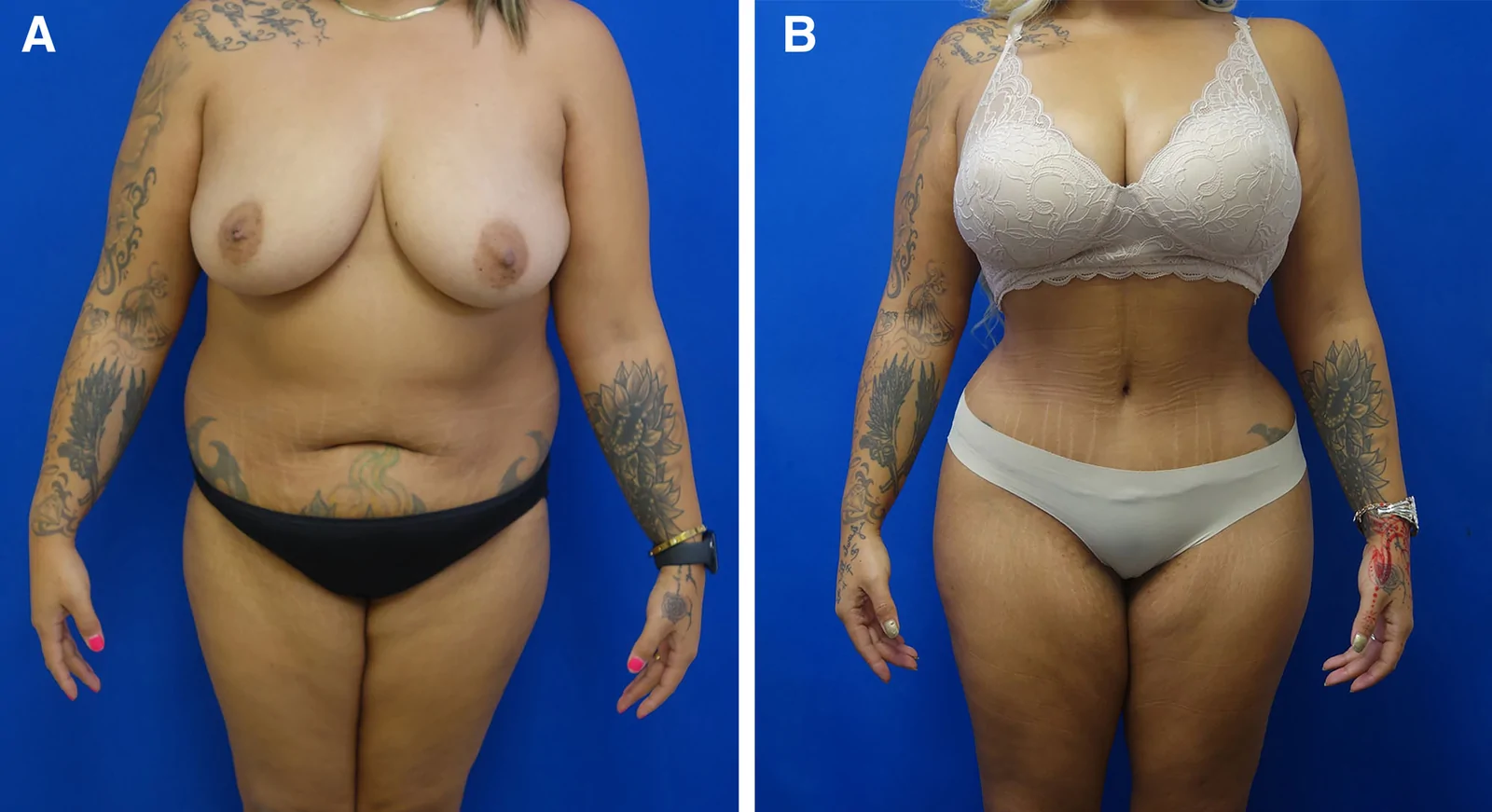
Fig. 5. Before and after photographs. A, Preoperative photograph of a 32-year-old woman with a BMI of 32 kg/m2 who desired a more feminine look. B, Postoperative photograph at 10 months. She underwent 360-degree selective trunk liposuction with 4200 mL removed. Additionally, she underwent abdominoplasty with progressive wide abdominal plication and 660 mL of fat grafting to each hip aesthetic unit. No rib remodeling or rib extraction was performed (Supplemental Digital Content 3, https://links.lww.com/PRSGO/F273).32 岁女性(BMI 32)术前(A)与术后 10 月(B):360° 选择性躯干吸脂 4200mL + 腹壁成形 + 臀单元脂肪移植 660mL / 侧,腰臀比改善。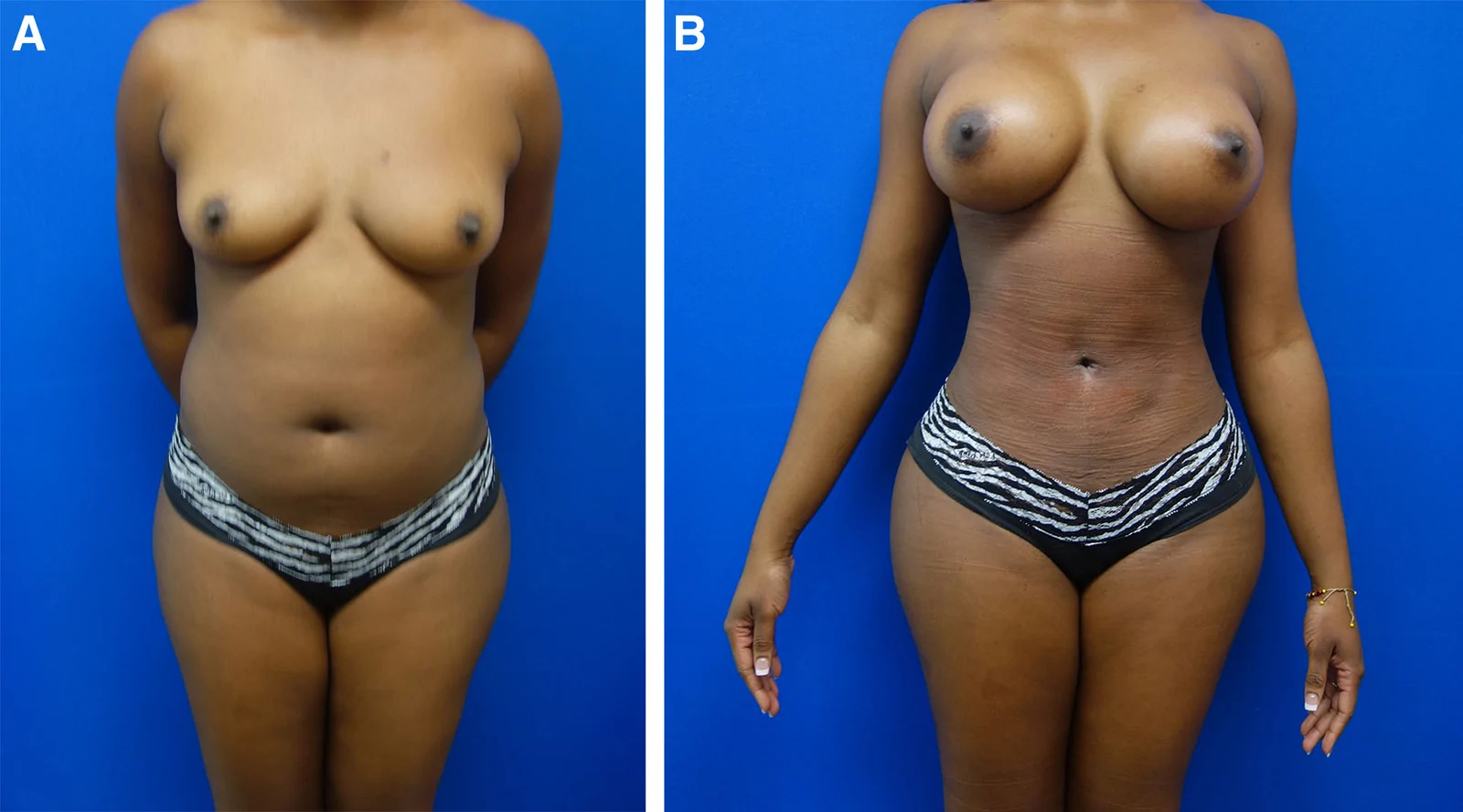
Fig. 6. Before and after photographs. A, Preoperative photograph of a 32-year-old woman with a BMI of 25 kg/m2 who desired a more feminine look. B, Postoperative photograph at 4 months. She underwent 360-degree selective trunk liposuction with 4000 mL of fat and fluid removed. No abdominoplasty or progressive wide abdominal plication was performed. Additionally, 370 mL of fat was grafted to each hip aesthetic unit, and 50 mL was grafted to each side of zones 2 and 3 of the waist transition aesthetic unit; no rib remodeling or rib extraction was performed.32 岁女性(BMI 25)术前(A)与术后 4 月(B):360° 选择性吸脂 4000mL + 臀移植 370mL / 侧 + 腰区 50mL / 侧,未做腹壁成形。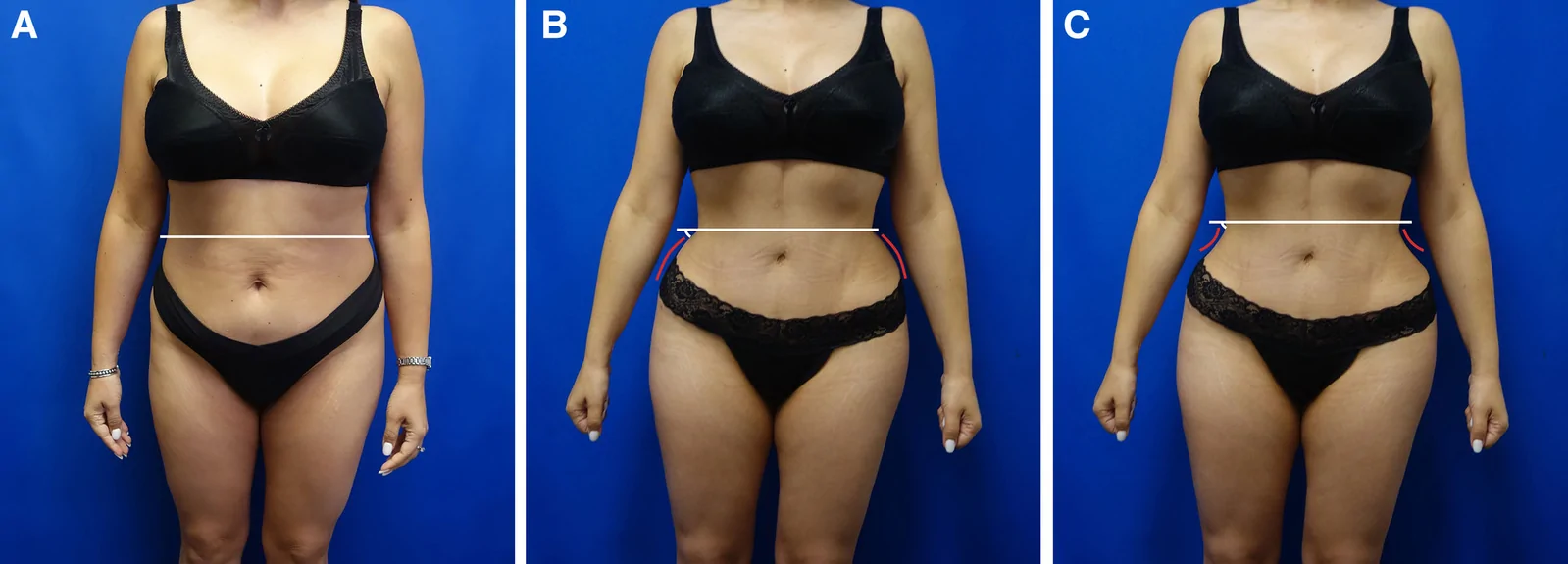
Fig. 7. Before and after photographs. A, Preoperative photograph of a 50-year-old woman with a BMI of 24 kg/m2 who desired a more feminine appearance. B, Postoperative photograph at 8 months following 360-degree selective trunk liposuction with 3100 mL removed, abdominoplasty with progressive wide abdominal plication, and 550 mL of fat grafting to each hip aesthetic unit. Note a rounder transition in the waist aesthetic unit (red convex line); no rib remodeling or rib extraction was performed (Supplemental Digital Content 4, https://links.lww.com/PRSGO/F274). C, Digitally modified photograph of the same patient illustrating a hypothetical scenario in which more liposuction was performed in zones 2 and 3 to create a more settled curvature. Notice the more subtle curvature of the waist transition aesthetic unit (red concave line).50 岁女性(BMI 24)术前(A)与术后 8 月(B):360° 吸脂 3100mL + 腹壁成形 + 臀移植 550mL / 侧;C 为数字化模拟『若 zone2 / 3 再多加吸脂』的更收敛曲率,提示分区剂量的可调节空间。Waist-selective liposuction or fat grafting was performed as an adjunct to abdominoplasty (949 cases, 47%), buttock augmentation with fat (616 cases, 31.0%), buttock augmentation with implants (282 cases, 14%), and body contouring with liposuction and fat grafting alone (152 cases, 7.6%). The median age was 36 (IQR, 31–42) years. The median BMI was 29 (IQR, 26–32) kg/m 2 . The median aspirated fat volume was 2400 mL, with an IQR of 1700 to 3200 mL. The median volume injected into the waist transition aesthetic unit was 480 mL for both sides together. ( See table, Supplemental Digital Content 5 , which displays a table with demographics by procedures, https://links.lww.com/PRSGO/F275.) Complications were as follows: hematoma, 4 (0.20%); pulmonary embolus or deep vein thrombosis (DVT), 4 (0.20%); surgical site infection, 24, (1.20%); and postoperative anemia requiring transfusion, 11 (0.55%). Six (0.30%) patients required skin excision at the waist due to ischemia of the subdermal plexus, leading to necrosis. Skin hyperemia in the waist transition aesthetic unit or surrounding tissue occurred in some patients (458 cases, 22.91%) and usually resolved, although in fewer than 1% of cases, it caused permanent hyperpigmentation. Complications specific to this technique are skin hyperemia and necrosis. ( See table, Supplemental Digital Content 6 , which displays a table with complications by procedure, https://links.lww.com/PRSGO/F276.)
Comparative analyses demonstrated significant differences between procedures in baseline and operative characteristics. Age, BMI, fat injected, and fat removed differed significantly by procedure (all P < 0.0001). Among complications, surgical site infection ( P < 0.0001) and skin hyperemia ( P < 0.0001) differed significantly by procedure. No statistically significant differences were observed among procedures for hematoma ( P = 0.5455), pulmonary embolism/DVT ( P = 0.3661), anemia requiring transfusion ( P = 0.2667), or skin necrosis from liposuction ( P = 0.9138).
Taken together, objective image-based measurements complement the findings from the larger case series. The postoperative waist-to-hip ratio in the sampled subset clustered around 0.67, which is within the anticipated target range and materially lower than the preoperative values, which were centered near 0.87. ( See table, Supplemental Digital Content 7 , which displays a table with overall description of statistics, https://links.lww.com/PRSGO/F278.) ( See table, Supplemental Digital Content 8 , which displays a table with descriptive statistics by procedure, https://links.lww.com/PRSGO/F277.) ( See table, Supplemental Digital Content 9 , which displays a table with univariable analyses of different outcomes among procedures, https://links.lww.com/PRSGO/F279.) ( See table, Supplemental Digital Content 10 , which displays a graph with a box plot for the comparison tests of waist [A], hip [B], and waist–hip ratio [C], among procedures, https://links.lww.com/PRSGO/F280.)
The waist greatly influences the female physique and should be the focus for achieving a balanced, slim, and defined silhouette. Predictable results require preoperative waist assessment and accurate identification of anatomical landmarks.
The authors define the waist (anterior “S” point) anatomically at the level of the 10th rib. The literature does not describe objective landmarks to guide surgeons pre- and intraoperatively in enhancing the surgical waist. For this technique, the 10th rib is a reliable bony landmark that accurately identifies the waist and is more consistent than surface landmarks. 14 – 19
Various authors have developed contemporary surgical waist techniques. 8 , 10 , 20 – 22 However, no consensus or standardized protocol exists to unify these techniques and achieve consistent outcomes. In the authors’ opinion, to unify surgical waist techniques, the waist transition unit must be addressed first. This balances the structural foundation (ribs and abdominal musculoaponeurotic complex) with the overlying subcutaneous tissue and skin that form the visual basis of the surgical waist. These visual and structural foundations are not mutually exclusive, and independent modification of each can produce predictable outcomes. Mendieta and Stuzin 10 emphasized proper volume reduction around the waist to improve lateral curvature from the waist to the thigh. We expand this concept by defining the waist transition aesthetic unit as the anatomical bridge between the anterior “snatch point” and the hip aesthetic unit.
Generally, the waist transition aesthetic unit measures approximately 5 cm in vertical dimension. The waist inflection point (anterior “S” point) may be vertically adjusted higher or lower than the original transverse plane of the waist, depending on trunk dimensions, to enhance torso balance and its relationship with the navel. For example, if the patient has a waist transition aesthetic unit of less than 5 cm (a low-lying waist), the vertical length of zones 2 and 3 can be increased to create a higher waistline. If the waist transition aesthetic unit is 6 cm or more, it may need to be shortened. Selective liposuction to adjust waist shape is feasible only in patients with sufficient subcutaneous tissue. Thus, this may not be possible in thin patients, and osseous modification 20 – 23 may better increase the vertical distance of the waist in those with a short torso or a waist transition unit measuring less than 5 cm (Fig. 4 ).
Modifying the angulation of the transverse plane of the waist determines the final shape of the lateral curvature in the front view (Fig. 7 , Supplemental Digital Content 2 , https://links.lww.com/PRSGO/F272). By manipulating the angulation at the take-off of the anterior “S” point, it can be perceived as more pronounced by selective liposuction or fat grafting of zones 2 and 3. For example, the more zone 2 is liposuctioned, or the less fat grafting is done, the more obtuse the take-off angle becomes, resulting in a softer, more natural curvature. Less liposuction or greater fat grafting in these zones creates a more rounded and acute take-off angle from the anterior “S” point, giving the perception of a shorter waist transverse plane.
Liposuction is a reliable body-contouring technique with a decades-long proven record of efficacy and safety. The literature reports complication rates of 0.15%–0.25% for seroma, 0.15%–0.6% for hematomas, 0.2%–0.6% for DVT/pulmonary embolism, less than 1% for infection, and 2.89% for postoperative anemia requiring transfusion. 24 – 27 Complications with this technique are comparable to those of other studies, although comparisons are limited by variables influencing outcomes.
Technique and liposuction volume influence complications such as skin injury, which occurs more frequently with superficial liposuction. Postoperative skin injury may range from hyperemia with possible hyperpigmentation to skin necrosis. Skin complications reported in the literature are comparable to those observed in our cohort. 28 – 31
Skin injury and morbidity can be minimized by following key steps. First, cannula size affects tissue injury, edema, bleeding, bruising, and pain. Cannulas should be blunt, no larger than 4.0 mm in diameter, with the suction hole directed away from the dermis. Second, cannula design influences the risk of subdermal plexus injury and potential skin necrosis. Angulated or curved cannulas offer an advantage over straight ones, as they follow the natural body curvature and remain parallel to the skin. Third, the direction of the cannula through the access incisions is crucial. The superior lateral incision is recommended for liposuction of the anterior “S” point and zone 1, and the intergluteal incision for zones 2 and 3, providing parallel access and minimizing the risk of skin injury. Finally, it is advisable to remain sufficiently deep when performing superficial liposuction. Given the proximity of the cannula to the skin, this technique requires sound judgment, anatomical knowledge, and experience, and is not recommended for novice surgeons.
Another consideration is the risk of postoperative bleeding with high-volume liposuction, 32 which typically involves removing 3–6 L of fat and fluid. 24 , 33 – 35 Hemoglobin should be at least 13 mg/dL preoperatively. 36 In addition, the standard superwet tumescent solution must be injected into the superficial and deep layers in any area where the flaps will be 1 cm or less. We also recommend administering 1 g of tranexamic acid intravenously at the beginning and end of the procedure. 37 – 39
The described technique is a powerful adjunct to various body-contouring procedures for waist enhancement, and both subjective and objective data support the authors’ premise that defining and selectively treating the waist transition aesthetic unit can yield reproducible, clinically visible, and quantitatively measurable proportional changes in the female silhouette. It should be noted that this procedure is not offered to patients with excessive visceral fat, a prominent thoracic skeleton, or “top-heavy” anatomy, as indicated by a broad osseous torso, or to those with a history of massive weight loss.
There are several limitations to the study. Given the unpredictability of fat grafting and the risk of reabsorption, comparing magnetic resonance imaging 40 or computed tomography 41 scans before and after surgery could provide an objective measure of the technique’s efficacy. This would be ideal for future studies, though cost and potential radiation exposure must be considered, depending on the modality used. 42 In addition, although all patients underwent liposuction, many also had adjunct procedures that may enhance postoperative results beyond what liposuction alone can achieve. Another limitation is the lack of objective data on patient satisfaction and reported outcomes, despite patients being pleased with the subjective results; this could be explored in future studies.
Selective 360-degree liposuction or fat grafting of the waist transition aesthetic unit provides a structured approach to sculpting the waist. Defining this unit enables precise preoperative planning and execution, including adjustments to the perceived vertical height and angulation of the anterior “S” point relative to trunk proportions.
The coordinated use of superficial and deep liposuction within defined aesthetic units can enhance overall body shape. Based on the subjective and objective results described, selective liposuction or fat grafting of the waist transition aesthetic unit can achieve a more defined, feminine waist profile. This technique enhances the surgical waist and serves as a bridge for additional operative interventions to highlight this visually simple yet anatomically complex structure central to the female standard of beauty.
The authors have no financial interest to declare in relation to the content of this article.
声明:中文精读 · 仅供学术参考。内容来自公开文献检索,不代表本人观点,不构成诊疗建议。 医疗美容需在正规医疗机构由执业医师实施。
基于相同主题推荐 · 继续深挖
研究设计:PRS Global Open 回顾性研究,2016-11 至 2025-01 共 1999 例连续手术,旨在界定并塑形『腰腹过渡美学单元(waist transitio
背景:因假体并发症、乳腺植入物相关症状等需求行假体取出者增多;如何在取出同期重建自然轮廓、避免“空瘪”外观是临床难点。
回顾性大样本病例系列(2016年11月至2025年1月),共1999例连续手术,中位年龄36岁(IQR 31至42),中位BMI 29(IQR 26至32),最短随访6个月。