Fujiyama术式三角皮瓣乳房再造自然下垂
2026年9月6日10 min read
Plastic and Reconstructive Surgery Global Open
结论与实践要点
难点在『自然下垂』: 乳房再造从假体转自体时,下极凸度与下垂形态常难重现。Fujiyama 用逆向倒 T 思路 + 下极三角皮瓣重新分配包膜,同时解决下极体积与血供,恢复自然轮廓。
技术价值: 对乳腺 / 整形外科而言,这是一个可重复的术式参考,尤其适合长期假体放置后包膜条件受限的二次再造。属技术革新描述。
循证边界: 小样本、描述性,尚无对照与长期数据;引进或借鉴时应视为『术式选项之一』,结合本团队病例积累评估。
The Fujiyama procedure is a surgical technique designed for patients undergoing conversion from implant-based breast reconstruction to autologous tissue reconstruction. Conventional implant-to-flap conversion often fails to reproduce natural breast ptosis and lower pole projection because of biomechanical differences between implants and autologous tissue and an insufficient lower pole skin envelope after long-term implant placement. This technique applies the inverted-T mastopexy concept in reverse and introduces a geometric redesign strategy, in which a triangular skin paddle is intentionally exposed at the lower pole. This design allows redistribution of the skin envelope while providing adequate lower pole volume and skin supply, both of which are essential for restoring a natural ptotic contour. Following implant and capsule removal, the pectoralis major muscle is repositioned to the chest wall, and a prepectoral pocket is created to optimize softness and contour. The transferred flap is inserted into this plane, and the exposed skin paddle forms the “Fujiyama-shaped” lower pole. Intraoperative assessment in sitting position under negative pressure enables contour adjustment. When necessary, the inframammary fold is reinforced using multiple tacking sutures. Seven patients (9 breasts) underwent reconstruction using pedicled or free abdominal flaps and profunda artery perforator flaps. Complete flap survival without major or minor complications was achieved in all cases. Stable inframammary fold reconstruction, natural breast ptosis, and lower pole projection were achieved without secondary revisions. The Fujiyama design represents a structural lower pole redesign rather than simple implant replacement and offers an option for restoring natural breast morphology in secondary autologous reconstruction.
Many patients seek conversion from implant-based breast reconstruction to autologous reconstruction because of implant firmness, aesthetic dissatisfaction, and long-term complications. 1 However, surgical design strategies specifically aimed at restoring natural ptosis in implant-to-autologous conversion remain limited. 2
These conversions are often performed years after the initial reconstruction, when asymmetry in contour and breast position has become more apparent. 3 In addition, the skin envelope maintained by long-standing implants often lacks sufficient lower pole redundancy, limiting restoration of a natural ptotic contour. 4
To address these challenges, we developed the Fujiyama procedure, named for the silhouette of the exposed lower pole skin paddle resembling Mount Fuji. This technique applies the inverted-T mastopexy concept in reverse to reconstruct natural ptosis through geometric breast redesign. 5 We designed the Fujiyama procedure not as a simple implant-to-flap replacement, but as a structural redesign strategy aimed at restoring a natural breast morphology. We describe the surgical technique and clinical outcomes.
This retrospective study was conducted at the Department of Plastic and Reconstructive Surgery, Tokyo Women’s Medical University, and included consecutive patients who desired conversion from implant-based to autologous breast reconstruction and underwent the Fujiyama procedure between 2023 and May 2025. All implants had been placed in the subpectoral plane, and all procedures were performed by a single surgeon. No exclusion criteria were applied. All patients were followed up until 2026. This study was approved by the Ethics Committee of Tokyo Women’s Medical University (approval no. 2020-0088) and was conducted in accordance with the Declaration of Helsinki. Informed consent was obtained from all patients.
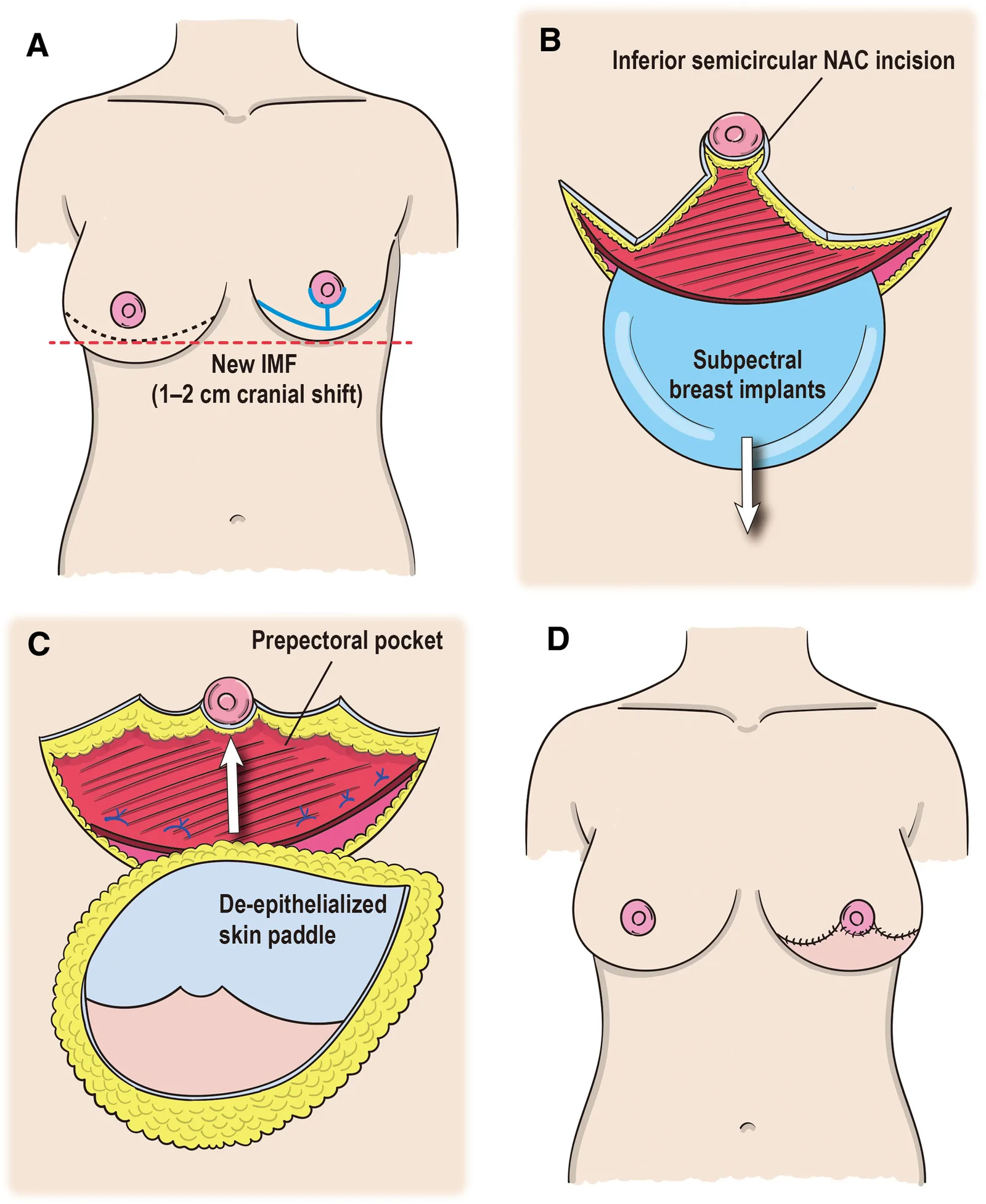
Markings were done in the standing position. Previous scars were disregarded, and new incision designs were prioritized (Fig. 1 A–D). If the nipple–areola complex (NAC) position was previously reconstructed, its position was used as the reference. Otherwise, a new NAC position was determined using a contralateral sternal notch-to-nipple distance and circular marking was performed. In unilateral cases, inframammary fold (IMF) was designed by mirroring the contralateral IMF onto the reconstructed side. In bilateral cases, the side with the more favorable implant position and IMF was used as the reference, and the opposite side was adjusted accordingly. Chest wall landmarks, including the costal arch and cartilages, were referenced to ensure a natural contour. As IMF descent often follows implant removal and capsular release, the final incision line was positioned 1–2 cm cranial to the estimated location.
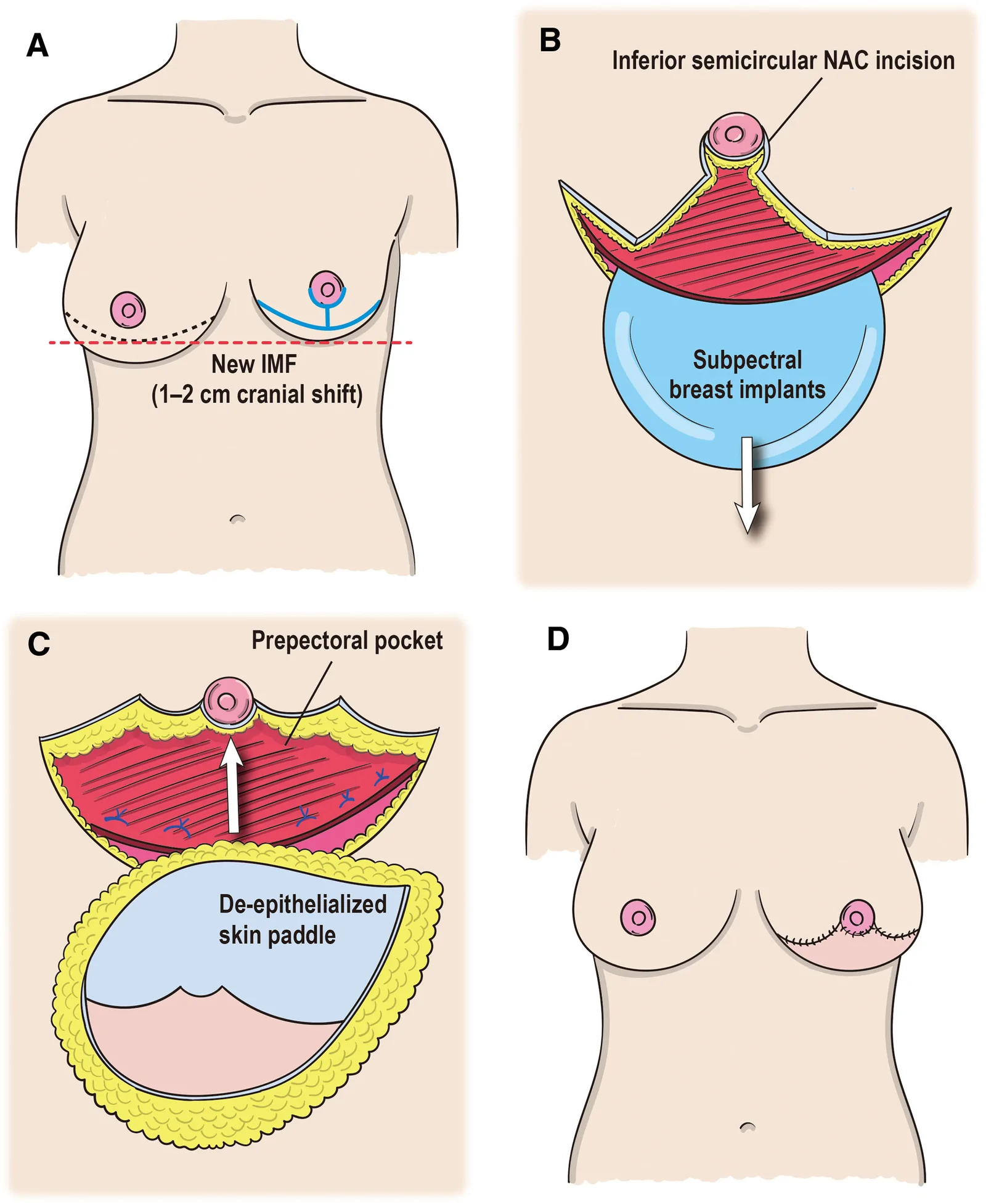
Fig. 1. Schematic illustration of the Fujiyama procedure. A–D, The sequential operative steps, including preoperative design based on the NAC and IMF, implant removal, creation of a prepectoral pocket, and inset of a triangular lower pole skin paddle to restore natural ptosis.Fujiyama 术式示意图(含术前设计、假体取出、皮瓣置入等步骤)。The incision consisted of an arcuate IMF incision, an inferior semicircular NAC incision, and a vertical connecting incision. This design exposed a Fujiyama-shaped triangular skin paddle at the lower pole (Fig. 2 ).
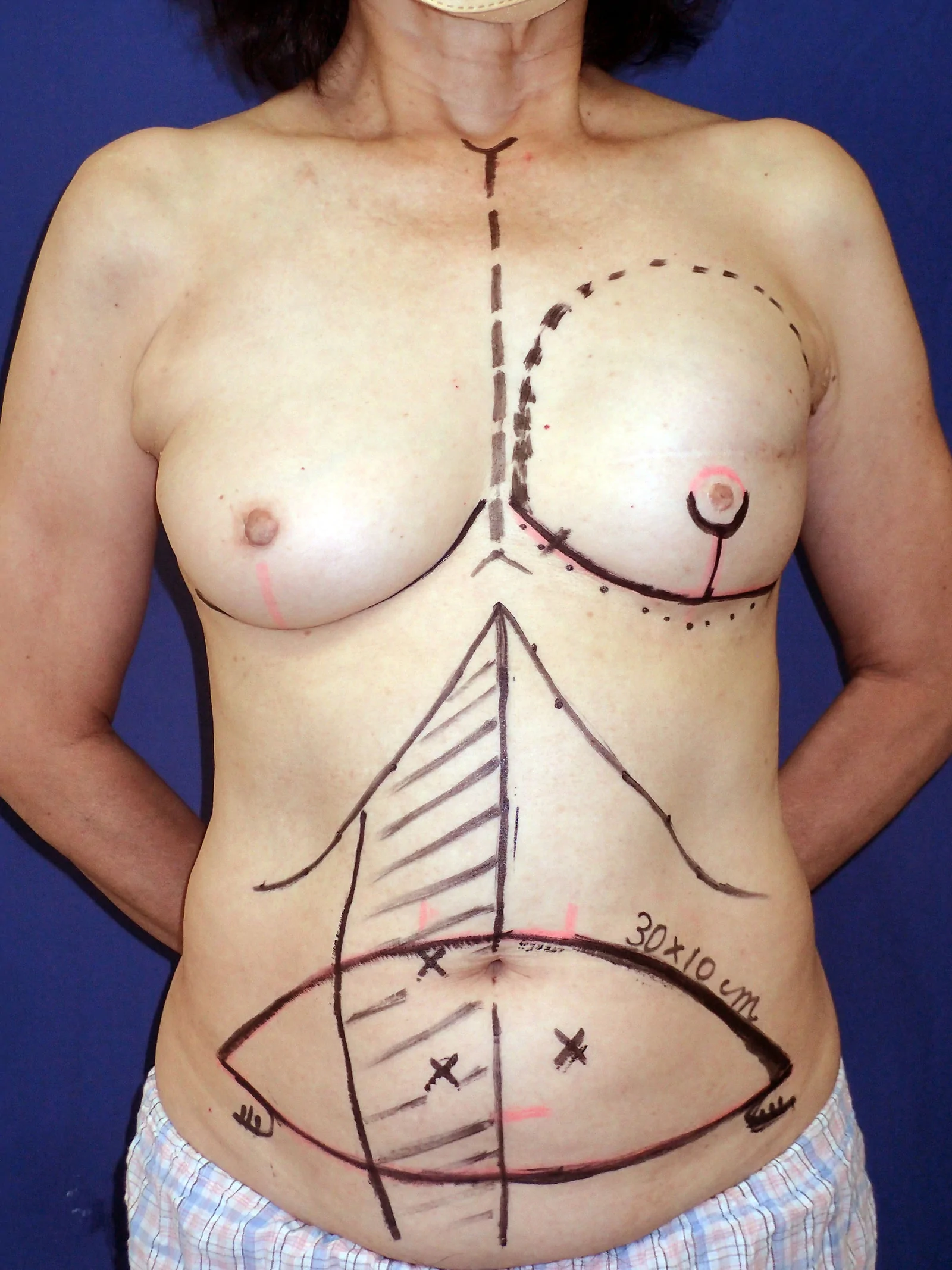
Fig. 2. Preoperative clinical photograph. Preoperative frontal view showing geometric design of the Fujiyama procedure in a patient who underwent conversion from implant-based to autologous breast reconstruction.术前临床照片(几何设计)。
The implant and capsule were completely removed. The subpectoral space was not used for flap placement. Instead, the pectoralis major muscle was reattached to the chest wall and a prepectoral pocket was created. A profunda artery perforator flap was used in patients with insufficient abdominal tissue or a history of abdominal surgery. The contralateral breast was scanned using three-dimensional imaging to estimate breast volume, and this value determined the estimated flap weight required for implant removal. 6 The flap was trimmed while preserving volume for projection and inserted into the prepectoral pocket with the skin paddle positioned at the lower pole. Patients were placed in the sitting position intraoperatively, and breast contour was assessed under negative pressure from closed-suction drains. The extent and shape of the exposed Fujiyama skin paddle were determined using temporary fixation. The skin paddle was de-epithelialized except for the exposed lower pole portion, and the de-epithelialized portion was positioned to provide upper pole fullness (Fig. 3 ). In cases where free flaps were used, the third costal cartilage was partially removed to expose the internal mammary vessels. The flap pedicle vessels were anastomosed end to end to the internal mammary vessels under microscopic guidance. If loss of inframammary fold support or downward displacement of the lower pole was observed after implant removal and capsular release, the IMF was reconstructed using multiple tacking sutures between the dermis, subcutaneous tissue, and chest wall structures.
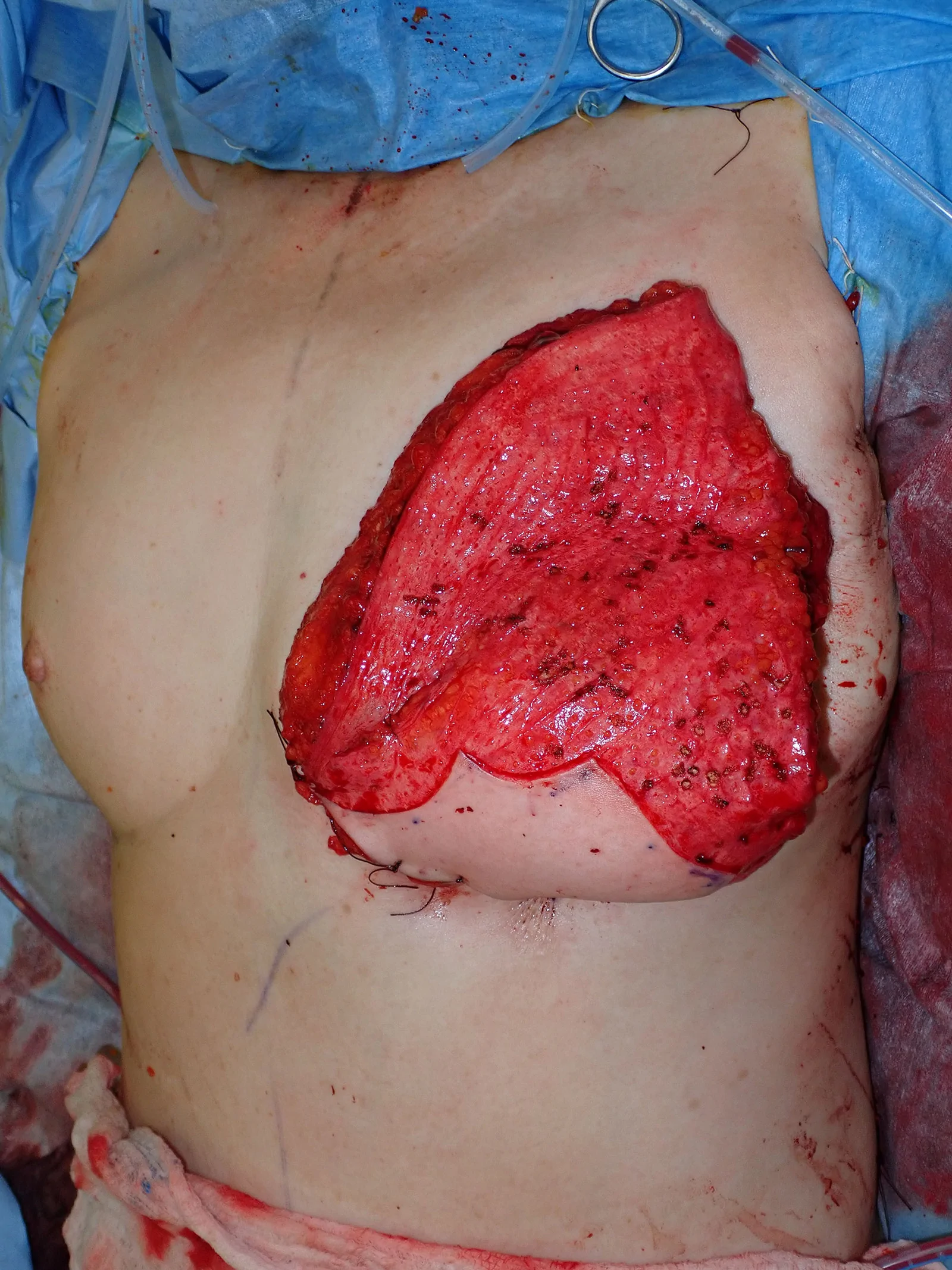
Fig. 3. Intraoperative view of flap inset. Intraoperative photograph demonstrating the de-epithelialized flap immediately before the inset. A Fujiyama-shaped skin paddle was prepared for lower pole exposure to provide structural support and enhance projection.皮瓣置入术中视图(去上皮皮瓣 + 三角皮瓣)。
Seven patients (9 breasts) underwent reconstruction, including 3 breasts with pedicled transverse rectus abdominis musculocutaneous flaps, 4 with free deep inferior epigastric perforator flaps, and 2 with free profunda artery perforator flaps. Complete flap survival was observed in all cases. No major or minor complications, including infection, hematoma, seroma, skin necrosis, fat necrosis, or fat induration, were observed. Reconstructed IMFs remained stable.
Natural breast ptosis and lower pole projection were achieved without excessive upper pole fullness. The exposed skin paddle was aligned with the IMF, resulting in inconspicuous scarring. No secondary revisions or fat grafting were required (Fig. 4 ).
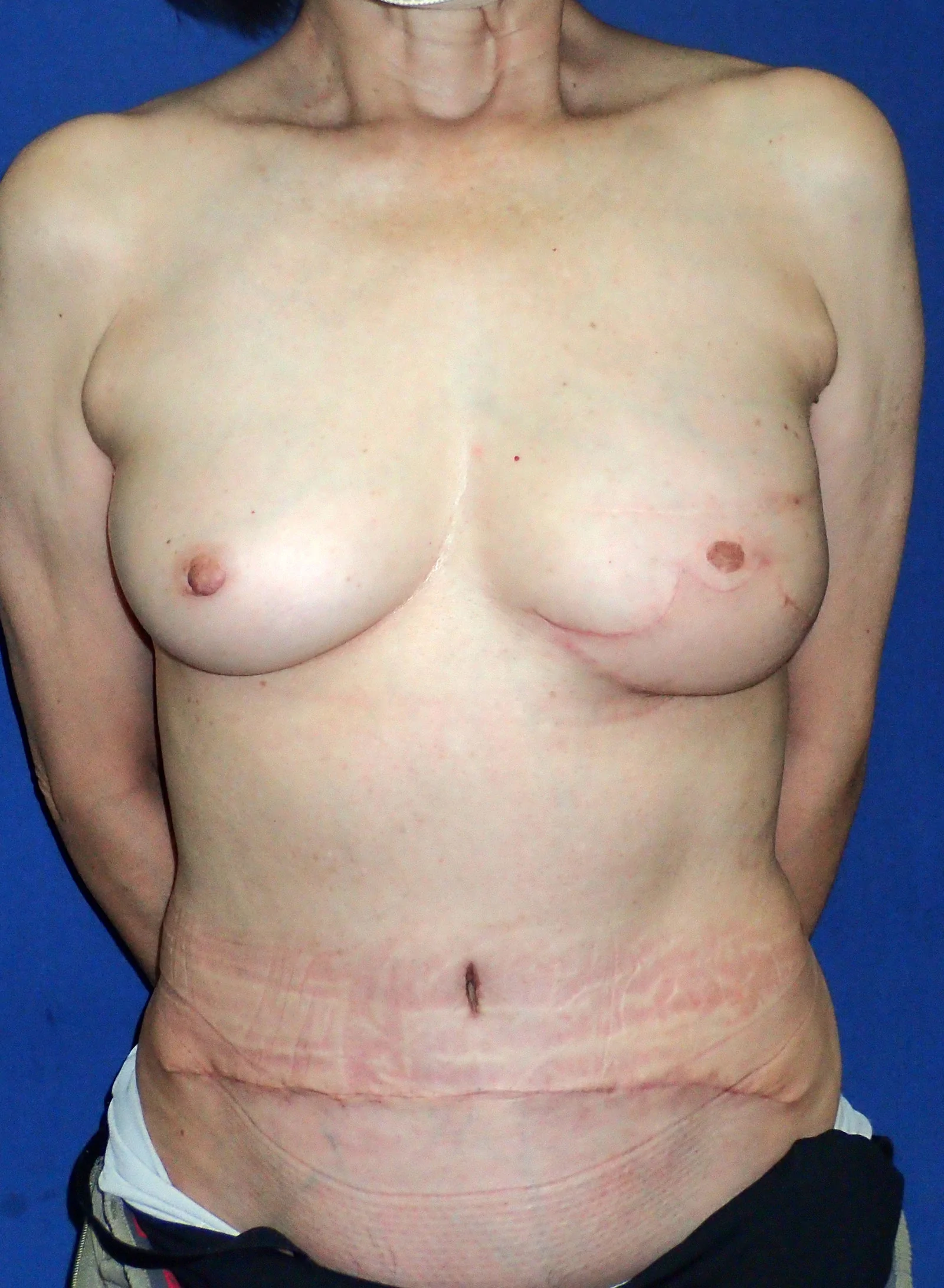
Fig. 4. Postoperative appearance. Postoperative frontal view at 6-month follow-up demonstrating a natural ptotic breast contour with adequate lower pole projection and improved symmetry following implant-to-autologous breast reconstruction using the Fujiyama procedure.术后 6 月正面观,自然下垂轮廓与下极凸度。
Implant-based reconstruction with shape retention produces an upper pole–dominant projection. In contrast, autologous tissue is pliable and naturally ptotic under gravity. 7 This difference hinders balanced reconstruction after implant removal. Long-standing implants maintain a tight skin envelope that lacks the lower pole skin components necessary for natural ptosis. Therefore, an adequate lower pole skin supply is essential.
The Fujiyama procedure exposes a triangular lower pole skin paddle, enabling the geometric redistribution of the skin envelope while providing lower pole volume and coverage to achieve natural ptosis and projection.
Prepectoral flap placement improves breast texture. Subpectoral placement increases stiffness due to the muscle layer and often limits projection, whereas prepectoral positioning provides a softer and more natural contour. 8
IMF reconstruction is critical because capsular release often destabilizes the IMF structures. Multiple tacking sutures restore structural support and stabilize the lower pole contour.
This technique disregards previous scarring. Long-standing scars may undergo revascularization, and no skin necrosis was observed around the scars in this study. Thus, the geometric design can be prioritized without scar-related limitations.
The limitations of this study include persistent NAC asymmetry in previously reconstructed cases, insufficient donor volume in some patients, and potential aesthetic compromise from skin paddle exposure. In addition, no postradiation cases were included in this study, which requires further investigation. This was a single-surgeon technical case series, which may have introduced observer and reporting bias. Further studies are needed to clarify the applicability of this technique.
The authors have no financial interest to declare in relation to the content of this article.
声明:中文精读 · 仅供学术参考。内容来自公开文献检索,不代表本人观点,不构成诊疗建议。 医疗美容需在正规医疗机构由执业医师实施。
基于相同主题推荐 · 继续深挖
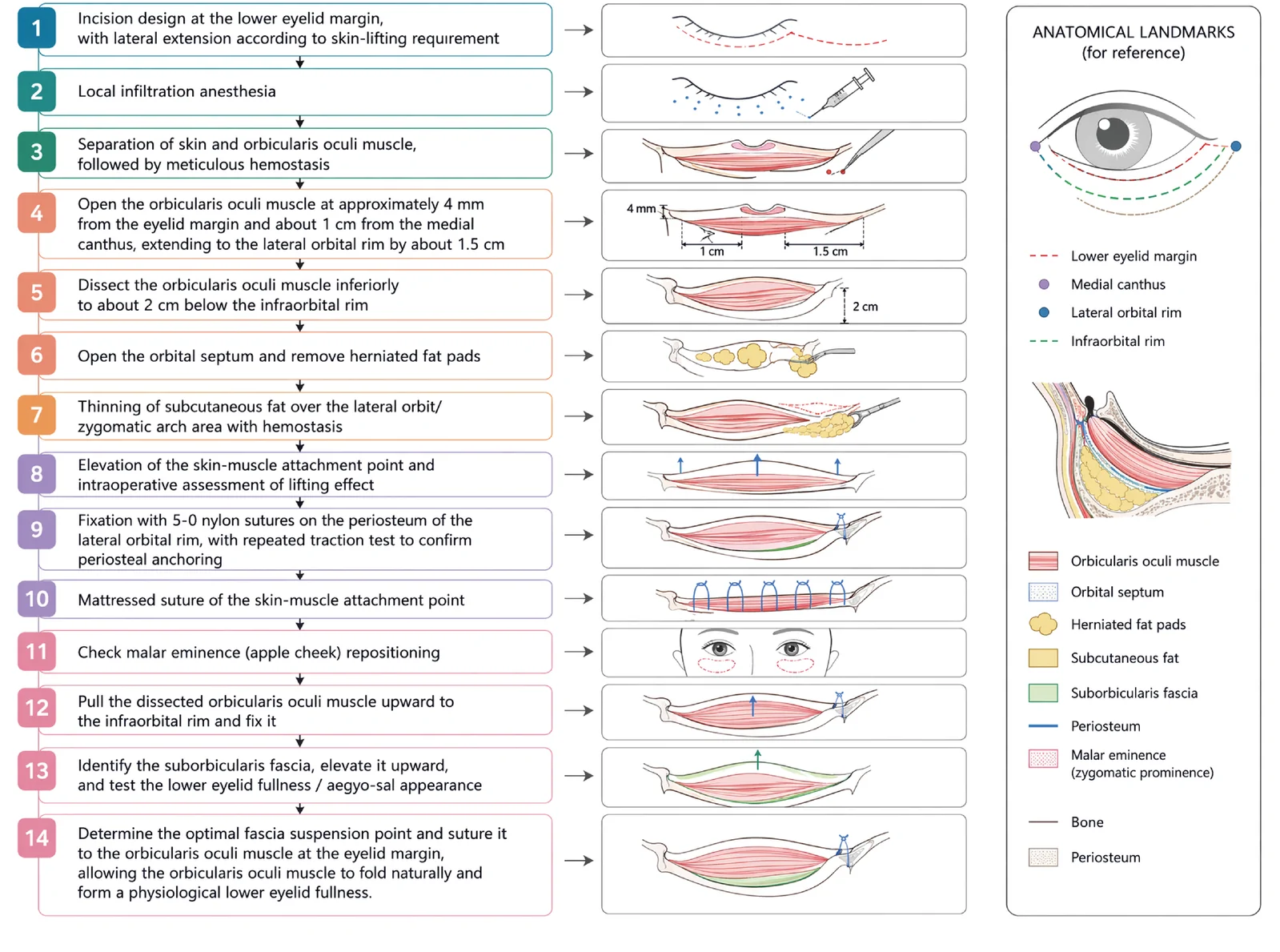
V3中面部提升经睫毛下切口,沿内眦线、外眦线、颧脂肪垫下界三个向量悬吊,可同时改善中面部下垂、下睑袋及睑颊轮廓不连续。
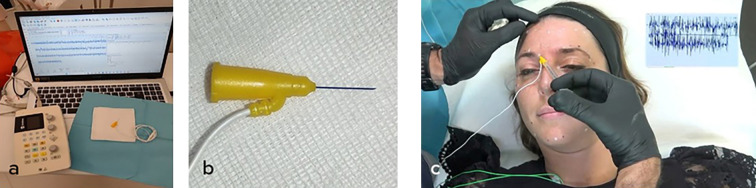
由6名意大利多学科专家(皮肤科、整形外科、神经科)基于文献回顾(PubMed 1973–2025)与临床经验形成的专家共识,针对incobotulinumtoxin A(Bocou
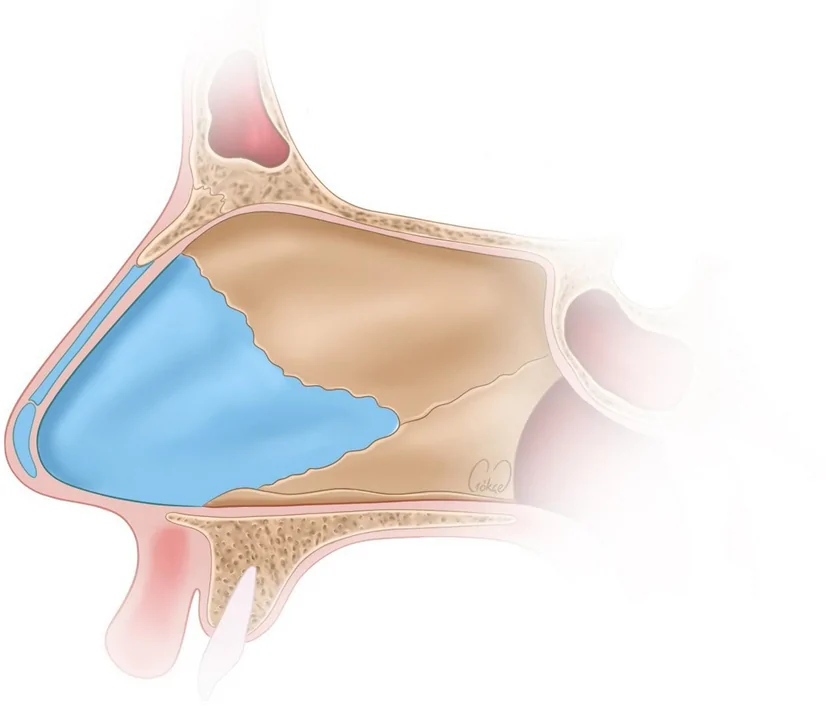
回顾性队列研究(循证等级IV),50例轴向偏曲(C形28例、反C形22例)歪鼻患者,由单一术者于2021至2023年行开放鼻整形,平均随访2年(1至3年)。