除皱术联合等离子射频换肤:安全性与有效性的案例系列
2026年9月21日33 min read
Plastic and Reconstructive Surgery
结论与实践要点
本研究为同一术者2017–2025年连续96例(93女/3男,48–86岁)的单次联合手术案例系列:在面颈部除皱(深平面/颈阔肌成形)同期行全面部脂肪移植与全面部深层等离子皮肤换肤(84例氦等离子、12例氮等离子),其中20例于术前与术后90天行ImagePro计算机皮肤分析。结果显示:上唇皮肤高度平均下降1.26 mm(反映组织收缩),皮肤年龄平均年轻4.27年、弹性平均改善9.81年、皱纹平均减轻7.36年、紫外线斑平均减少4.54年;最长随访达6年。并发症仅4例(4.1%),全部位于氦等离子组(一过性蜂窝织炎1例、增生性瘢痕3例),未出现皮肤坏死。
结论认为该联合方案可在单次手术与单次恢复期、单次麻醉暴露内完成全面部三维年轻化,且不增加皮肤坏死风险,相比分期手术更高效。临床提示:① 氮等离子的穿透深度受控于真皮网状层以上(ZTD小),安全性更可控,可作为联合换肤的首选模式;② 并发症集中于氦等离子组,需警惕增生性瘢痕与感染,术中严格分层与术后护理是关键;③ 研究为回顾性、无对照、单术者案例系列,证据等级有限,效果量化依赖计算机分析,应审慎解读。该方案适合皮肤光老化明显、已计划接受除皱术、希望一次解决容量与皮肤质地的患者。
Background:Deep facial skin resurfacing with plasma technology is known to produce superior correction of deep rhytids and photoelastosis. When combined with a rhytidectomy, total facial rejuvenation can be achieved in a single surgical session and recovery period.
Methods:A single surgeon’s experience (2017 to 2025) is presented involving 96 consecutive patients (93 women and 3 men; age range, 48 to 86 years) who underwent a single-session combination of face and neck lifts, full-face fat grafting, and full-face deep plasma skin resurfacing. Helium plasma radiofrequency was used in 84 patients, and nitrogen radiofrequency plasma was used in 12 patients. A subset of 20 patients underwent additional computerized skin analysis preoperatively and at 90 days postoperatively. The longest follow-up was 6 years.
Results:Computerized analysis showed decreased upper cutaneous lip height (0.25 to 2.47 mm; average, 1.26 mm), decreased skin age (1 to 9 years; average, 4.27 years), improved elasticity (1 to 20 years; average, 9.81 years), rhytid reduction (1 to 22 years; average, 7.36 years), and ultraviolet spot reduction (1 to 9 years; average, 4.54 years). The 4 complications (4 of 96 patients [4.1%], all in the helium radiofrequency group) included transient cellulitis (1 patient) and hypertrophic scarring (3 patients). No skin necrosis occurred. Results demonstrated significant correction of deep rhytids and photoelastosis.
Conclusions:This 7-year series demonstrates that full-face deep plasma skin resurfacing can be safely and effectively combined with face and neck lifts, along with fat grafting, to achieve comprehensive 3-dimensional facial and neck rejuvenation in a single session without increasing the risk of complications such as skin necrosis. Patients can have enhanced aesthetic outcomes with reduced downtime, surgical time, and anesthesia exposure, offering an efficient alternative to traditional staged procedures.
Facial aging is a 3-dimensional (3D) process; as such, modern facial and neck rejuvenation techniques must provide multidimensional correction. Aging involves not just soft-tissue sagging and descent but also bone and soft-tissue atrophy, skin aging, and photodamage. Traditional and modern face and neck lift techniques that target sagging tissue alone are insufficient to address these changes comprehensively. Even the most experienced face lift surgeons using advanced techniques may not obtain ideal results if poor skin quality, photoelastosis, and severe perioral and periorbital rhytids are not corrected.
The author presents a case series demonstrating the safety and efficacy of deep plasma resurfacing performed concurrently with face and neck lifts, without an increase in complications. This combined approach optimizes results and eliminates the need for staging, thereby reducing patient downtime and exposure to anesthesia. The author introduces a 3D technique of face and neck rejuvenation combining surgical lifting, fat grafting, and deep plasma skin resurfacing for comprehensive correction of effects of the aging process.
Combining face lifts with deep skin resurfacing has historically been controversial due to concerns regarding an increased risk of skin necrosis and compromised wound healing, particularly in areas of elevated skin flaps. However, the literature supports the safety of combining face lift procedures with deep resurfacing techniques, including ablative lasers (CO 2 and erbium), 1 – 7 nitrogen plasma, 8 and helium plasma. 9 – 12
Plasma resurfacing, which emerged in the early 2000s, offers significant advantages compared with other deep resurfacing techniques, although there is a higher risk of skin necrosis when performed concurrent with a face lift. In comparison, deep phenol chemical peels can produce significant correction of deep rhytids; however, cardiac arrhythmias are a rare but serious complication. Ablative laser resurfacing (such as with CO 2 or erbium lasers) also offers effective correction of rhytids and photoelastosis, but it can produce temporary or permanent patterning in the treated skin when passes overlap, producing areas of inadvertent overtreatment.
Plasma resurfacing is highly efficacious for treating deep rhytids and severe photoelastosis, while maintaining a good safety profile with minimal complications. Lasers use collimated and organized light beams for selective photothermolysis by affecting specific chromophores (water, hemoglobin, or melanin); plasma resurfacing works by applying unipolar or bipolar radiofrequency energy through a gas, producing a plasma beam. This plasma beam produces a localized thermal effect, inducing protein denaturation and coagulation, resulting in simultaneous skin resurfacing and tissue contraction. 13 – 16
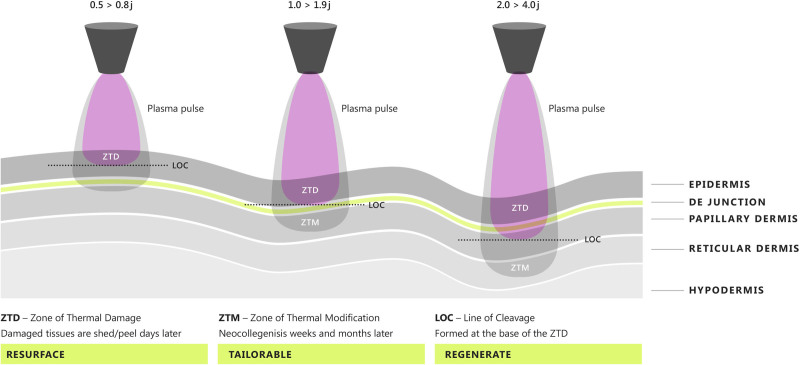
The interaction of the plasma beam with the skin produces 2 zones: the centralized zone of thermal damage (ZTD) and the peripheral zone of thermal modification (ZTM). The ZTD is the zone of controlled permanent damage, which temporarily stays intact and sloughs off in a few days when epidermolysis occurs along the line of cleavage (usually just deep to the dermal–epidermal junction). The ZTM is where tissue remodeling, neocollagenesis, and neoelastogenesis occurs (Fig. 1 ). In addition, the plasma beam is composed of ionized gas particles that interact with atmospheric air and oxygen on the surface of the skin, producing reactive oxygen species capable of selectively targeting metabolically active cells, such as neoplastic cells, potentially aiding in the selective destruction of precancerous lesions.
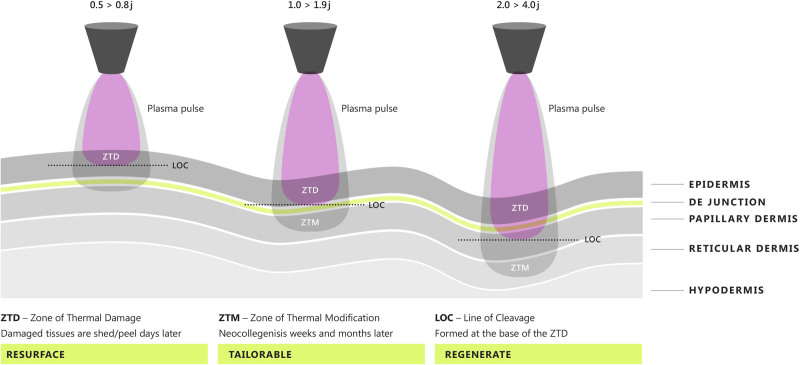
Fig. 1. Mechanism of action of nitrogen plasma resurfacing, illustrating depth of penetration, different energy levels, and treatment protocols. The ZTD remains small despite energy increases (above the reticular dermis), maintaining safety. The ZTM is wider and deeper than the beam, allowing greater areas of fibroblast activation, increasing efficacy. DE junction, dermal–epidermal junction. Courtesy of Energist, London, United Kingdom. Published with permission.氮等离子换肤作用机制:穿透深度与能量分级,ZTD维持于安全范围。These reactive particles alter the skin’s water channels through ionic and electronic charge changes, temporarily opening the stratum corneum barrier, allowing passage of larger molecules through the epidermis and into the dermal–epidermal junction and papillary dermis. This can have profound effects on plasma-assisted drug and regenerative particle delivery through the skin barrier.
The plasma radiofrequency device forms a plasma bridge between the handpiece (anode) and the skin (cathode), producing further tissue contraction by enhancing vertical and lateral spread in areas with less impedance (ie, lower resistance). Both helium (Renuvion; Apyx Medical) and nitrogen plasma (Neogen PSR; Energist) resurfacing devices are well-documented for their efficacy and safety in treating rhytids and photoelastosis. 8 – 11 , 17 – 22 Our case series further emphasizes the safety and efficacy of combining plasma resurfacing with face and neck lift procedures.
This article presents a single-surgeon, single-institution retrospective case series review. Patients who underwent open face and neck lift procedures concurrent with deep plasma resurfacing between 2017 and 2024 were identified. All procedures were performed in a Florida state-accredited office-based surgery center and conducted in accordance with the principles outlined in the Declaration of Helsinki, ensuring ethical standards were maintained for the safety, rights, and well-being of the patients.
A total of 96 patients (93 women and 3 men) were included, ranging in age from 48 to 86 years. A total of 94 cases were performed under intravenous sedation and 2 under general anesthesia. Sixty patients underwent high superficial musculoaponeurotic system (SMAS) imbrication, and 36 patients received a deep-plane face and neck lift. All patients treated with helium radiofrequency plasma ( n = 84) had Fitzpatrick skin types 1 through 3. In the nitrogen plasma group ( n = 12), patients had Fitzpatrick skin types 1 through 3 ( n = 8) or 4 ( n = 4). All patients also underwent concurrent full-face fat grafting.
Preoperative protocols include skin preparation with a topical 1% retinol and 4% hydroquinone compounded cream for 2 to 4 weeks.
After administration of adequate anesthesia, the face and neck were prepped and draped using standard sterile techniques. Intravenous sedation with a nasal trumpet airway was the most common method of anesthesia used. Tumescent solution (1% lidocaine with epinephrine, 50 cc per liter lactated Ringer’s solution) was infiltrated into the face and neck (400 to 500 cc total).
Next, the face lift, neck lift, and platysmaplasty procedures were performed. For the face and neck lifts, dissection was subcutaneous in 60 patients and sub-SMAS and subplatysmal deep plane in 36 patients, depending on facial anatomy and surgical goals. Ancillary procedures, such as brow lifts, upper lid and lower lid blepharoplasties, and upper-lip lifts, were then performed as needed.
After completion of the rhytidectomy, additional tumescent solution was infiltrated into the remaining areas, such as the central face, nose, and perioral areas, in preparation for helium plasma resurfacing. Approximate infiltration volumes by facial area are provided, with total volume depending on the individual facial anatomy. ( See Figure, Supplemental Digital Content 1 , which shows approximate volumes for tumescent solution infiltration before helium plasma resurfacing, https://links.lww.com/PRS/I528.) Adequate tumescent infiltration is necessary in helium plasma resurfacing, even under general anesthesia, to decrease tissue impedance and distribute helium plasma energy more evenly laterally and vertically, enhancing tissue interaction. 14 , 18 This is also important in avoiding excessive thermal energy absorption into the tissue. 18 , 23
Tumescent solution infiltration is not necessary for nitrogen plasma resurfacing, but systemic hydration is highly recommended, because the same principles apply to nitrogen plasma and tissue interactions. 8 , 23 , 24
Because rhytidectomy is performed before resurfacing, all elevated and undermined preauricular skin flaps are treated with plasma energy. In addition, plasma resurfacing is applied to nonelevated central facial areas (such as the nose, perioral region, and glabella), allowing for full-face coverage. The skin was prepped with acetone as a degreaser, and helium plasma radiofrequency resurfacing was performed using 40% energy and 4-liter helium flow in a continuous-beam, “paint-strokes” technique. The oxygen was briefly turned off when resurfacing near the airway to avoid a possible fire hazard. A white “frosting” of the treated skin indicates successful permeation of the plasma energy into the epidermis and papillary dermis. For deeper rhytids, a second pass was optionally performed after a wipe with saline gauze in the forehead, nose, and perioral areas. When the second pass is performed, visible tissue contraction is observed, confirming that the protein coagulation process has reached the deeper papillary dermis. Attempts to reach the reticular dermis (by applying extra passes or increasing energy delivery) were avoided, as injury to this layer can result in permanent scarring. The neck was treated at 20% energy, 4-liter helium flow, pulsed for 800 ms on and 800 ms off. For the 12 patients treated with nitrogen plasma resurfacing, for patients with Fitzpatrick skin types 1 through 3 ( n = 8), the settings were 3 to 4 J/2 MHz (single pass) for the face and 2 to 2.5 J/2 MHz (single pass) for the neck. For patients with Fitzpatrick skin type 4 ( n = 4), the face was treated at 2.5 J/2 MHz (single pass) and the neck at 2.0 J/2 MHz (single pass). The pulses were placed close together with no overlap. ( See Video [online] , which demonstrates full-face deep skin resurfacing with helium radiofrequency plasma performed concurrently with a deep-plane face and neck lift with full-face fat grafting.)
For fat grafting, fat was harvested from the abdomen or medial/lateral thighs using 20-cc syringes, then allowed to decant. An additional 60 to 80 cc of fat was harvested specifically for nanofat processing, which was performed using the Tulip system. Fat grafting was performed using the Coleman technique as needed using macrofat and nanofat in the preperiosteal, deep, and superficial subdermal layers. Volumes and injection sites were tailored for each patient’s facial anatomy. An illustration of common fat grafting locations and volume ranges is provided in the Supplemental Digital Content. ( See Figure, Supplemental Digital Content 2 , which shows the approximate fat grafting volume for different areas of the face, https://links.lww.com/PRS/I529.) A nanofat cream was prepared by mixing processed nanofat with a compounded hyaluronic acid cream in a 1:1 ratio (50/50 mixture). Patients were instructed to keep the cream refrigerated.
Mesenchymal-derived stem cell exosomes (Exo Elixir; Evolutionary Biologics) derived from donated human umbilical cord tissue were applied topically to the resurfaced skin, followed by nanofat. Nonstick occlusive dressings (ie, Xeroform) were then placed over the resurfaced skin to prevent adherence, followed by a facial compression Coban wrap to provide uniform pressure. On postoperative day 1, the Coban wrap was removed and replaced with a face and neck compression garment, which was worn continuously during the first postoperative week to support healing and minimize swelling.
All patients were seen on the day after surgery. During this visit, all dressings are removed, the treated skin is cleansed with mild cleansers and water, and patients receive an oxygen dome facial and red LED light therapy. Nanofat is applied to the skin topically, then nonstick dressings are placed on areas that are in contact with the facial compression garment, which is worn continuously for 1 week. During the first postoperative week, patients were instructed to shower twice daily, use mild facial cleansers, and apply their nanofat cream. Patients are instructed to refrigerate their nanofat and apply topically twice a day until gone. Reepithelialization occurred between 7 and 10 days postoperatively, after which patients resumed daily showers and began using a skincare regimen that included epidermal growth factors and peptides. Sunscreen with SPF 50 is initiated once reepithelialization has occurred, and at this point patients can resume social activities.
Patients were evaluated on postoperative days 1, 3, 7, 14, and 30; at 3 and 6 months; and yearly thereafter. Photographs were taken immediately after surgery and at each follow-up visit.
Computerized skin analysis using ImagePro (Emage) was conducted on a subset of 20 patients (January of 2023 through September of 2024) preoperatively and at 90 days postoperatively.
ImagePro is an advanced skin analysis system that provides detailed assessments of skin condition using high-resolution imaging and multispectral light technology. Its ultrahigh-resolution imaging capability (9280 × 13,920 pixels) allows microscope-level zoom, and full-spectrum skin imaging (including normal, polarized, and ultraviolet wavelengths) facilitates analysis of measures such as hydration, porphyrin levels, pigmentation, sun damage, rhytids, elasticity, and facial symmetry. These metrics are compiled to generate a “skin age” score, comparing the individual’s results with a database of 100,000 individuals of the same age within the Emage Medical database.
The author incorporates this device as part of her standardized preoperative and postoperative photography protocol. The entire face was scanned to evaluate global measures, including skin age, elasticity, rhytids, and ultraviolet spot/solar elastosis. To assess tissue contraction specifically, the upper-lip cutaneous area was selected as a static reference zone, as this region is not influenced by the lateral repositioning and lifting performed during the concurrent rhytidectomy. This measurement was taken from the mid-cupid’s bow to the base of the columella and recorded in millimeters. Patients who underwent a concurrent excisional upper-lip lift were excluded from this portion of the analysis. The longest postoperative follow-up in this series was 6 years.
补充视频 / 附件(原文未随文提供原图,可于出版方页面查看)prs-158-0041-s001.mp4Video. This video demonstrates full-face deep skin resurfacing with helium radiofrequency plasma performed concurrently with a deep-plane face and neck lift with full-face fat grafting.
Postoperative photographs reviewed after 90 days demonstrate significant correction of deep and severe rhytids compared with the preoperative images. Patients also reported a high level of satisfaction with their results.
In a subset of 20 patients treated between January of 2023 and September of 2024, additional computerized imaging was conducted using the ImagePro system both preoperatively (baseline) and at 90 days postoperatively. This subset was selected because the cases were performed after the imaging device was acquired. Comparison of the results showed upper cutaneous lip skin contraction (height decrease) ranging from 0.25 mm to 2.47 mm (average, 1.26 mm), with a percentage of upper-lip shrinkage ranging from 3.9% to 21.32% (average, 13.85%); a reduction in skin age by 1 to 9 years (average, 4.27 years); improvement in skin elasticity by 1 to 20 years (average, 9.81 years); reduction in rhytids by 1 to 22 years (average, 7.36 years); and a decrease in ultraviolet spots by 1 to 9 years (average, 4.54 years). These measures were obtained through a comparative database obtained by the ImagePro manufacturer compiled from 100,000 age-matched individuals.
Four complications occurred among the 96 patients (4.2%). One patient developed forehead cellulitis at 8 weeks postoperatively, which resolved after a 2-week course of oral antibiotics. Three patients experienced mild to moderate hypertrophic scarring, 2 on the chin and 1 on the upper cutaneous lip area, which resolved with triamcinolone injections and light CO 2 resurfacing. The hypertrophic scarring was attributed to 2 main factors: a second pass of plasma resurfacing was performed in the perioral region, which may have contributed to increased thermal exposure in this area; and these cases took place during the COVID-19 era, and the patients were wearing facial masks during the early healing phase (weeks 3 through 8). Prolonged contact and friction from the masks likely caused inadvertent adherence to the healing skin, resulting in localized hypertrophic scarring. Long-term follow-up at 6 years showed sustained stability of results and long-term correction of the deep rhytids and solar elastosis. No revisional procedures or additional resurfacing procedures were required.
A 73-year-old woman sought a comprehensive total face and neck rejuvenation procedure. She underwent a secondary deep-plane face and neck lift, platysmaplasty, full-face fat grafting, and full-face and neck deep resurfacing with helium plasma. The postoperative healing sequence for this combined procedure is demonstrated from before surgery to 3 years after surgery in the Supplemental Digital Content. ( See Figure, Supplemental Digital Content 3 , which shows the healing progression in a 73-year-old woman who underwent secondary deep-plane face and neck lift, platysmaplasty, full-face fat grafting, and deep full-face and neck resurfacing with helium radiofrequency plasma, https://links.lww.com/PRS/I530.)
A 54-year-old woman sought a comprehensive, single-session total face and neck rejuvenation procedure. She underwent a deep-plane face lift, neck lift, platysmaplasty, brow lift, full-face fat grafting, and full-face deep resurfacing with helium plasma. Her preoperative appearance and 9-month postoperative results are shown in Figure 2 . ImagePro detailed skin analysis (Fig. 3 ) and computerized measurements of her upper cutaneous lip height (Fig. 4 ) are shown preoperatively and at 90 days postoperatively.
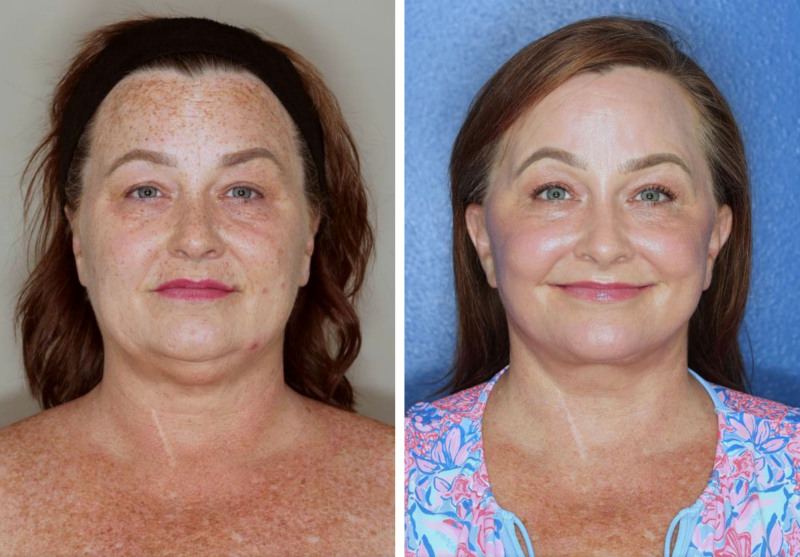
Fig. 2. A 54-year-old woman received a deep-plane face and neck lift, platysmaplasty, brow lift, full-face fat grafting, and deep full-face resurfacing with helium radiofrequency plasma. (Left) Before surgery. (Right) Nine months after surgery.54岁女性深平面除皱+脂肪移植+氦等离子换肤,术前与术后9月对比。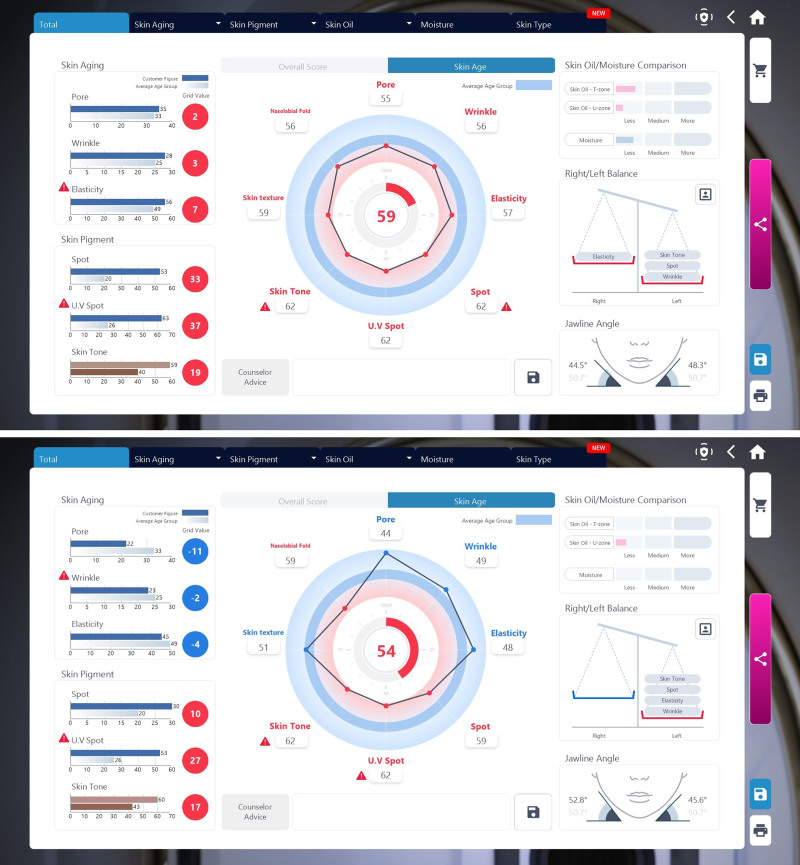
Fig. 3. (Above) Preoperative and (below) 90 days postoperative ImagePro computerized skin quality assessment of the 54-year-old woman presented in Figure 2, showing improvement in skin age (−5 years), skin elasticity (−11 years), rhytids (−2 years), and ultraviolet spots (−1 year).图2患者术前与术后90天ImagePro皮肤分析,年龄/弹性/皱纹/UV斑改善。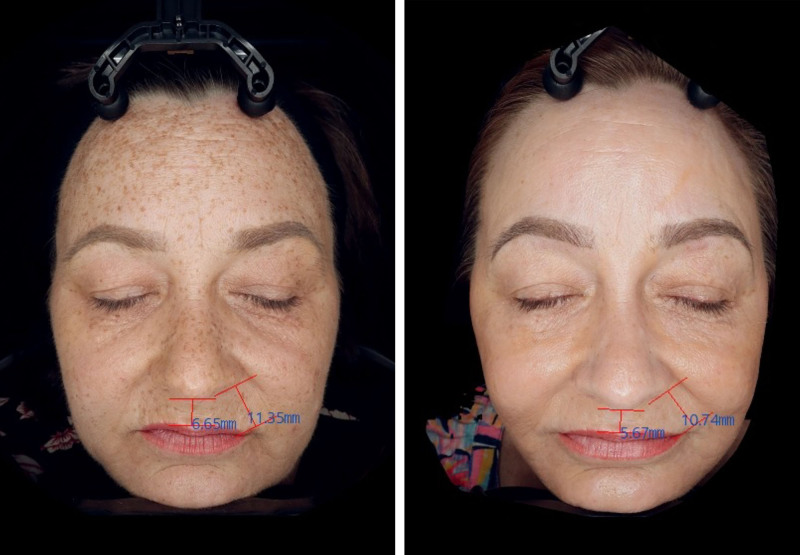
Fig. 4. (Left) Preoperative and (right) 90-day postoperative objective measurements of the upper cutaneous lip height (base of columella to central Cupid’s bow) to measure tissue contraction resulting from the deep plasma skin resurfacing (0.25-mm change without skin excision) of the 54-year-old woman presented in Figure 2.上唇皮肤高度术前与术后90天客观测量,反映组织收缩约0.25 mm。
A 76-year-old woman sought a comprehensive, single-session total face and neck rejuvenation procedure. She underwent a deep-plane face and neck lift, platysmaplasty, brow lift, full-face fat grafting, and deep full-face resurfacing with helium plasma. Her preoperative appearance and 90-day postoperative results are shown in Figure 5 . ImagePro computerized skin analysis (Fig. 6 ) and measurements of her upper cutaneous lip height (Fig. 7 ) are shown preoperatively and at 90 days postoperatively.
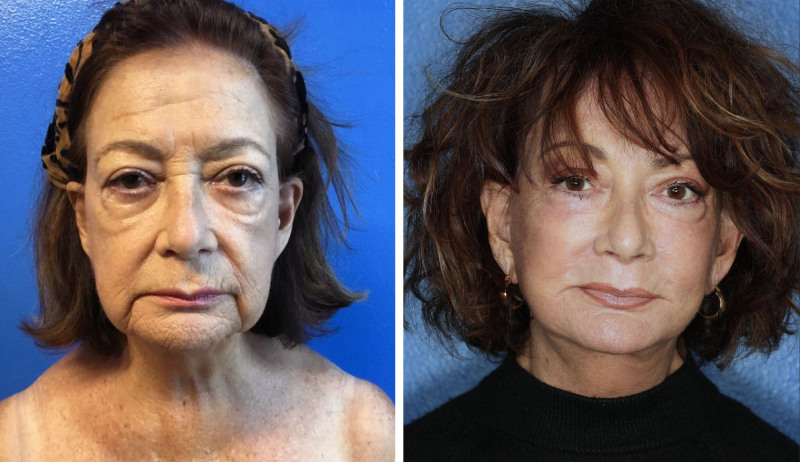
Fig. 5. A 76-year-old woman received a deep-plane face and neck lift, platysmaplasty, brow lift, full-face fat grafting, and deep full-face resurfacing with helium radiofrequency plasma. (Left) Before surgery. (Right) Five months after surgery.76岁女性联合手术,术前与术后5月对比。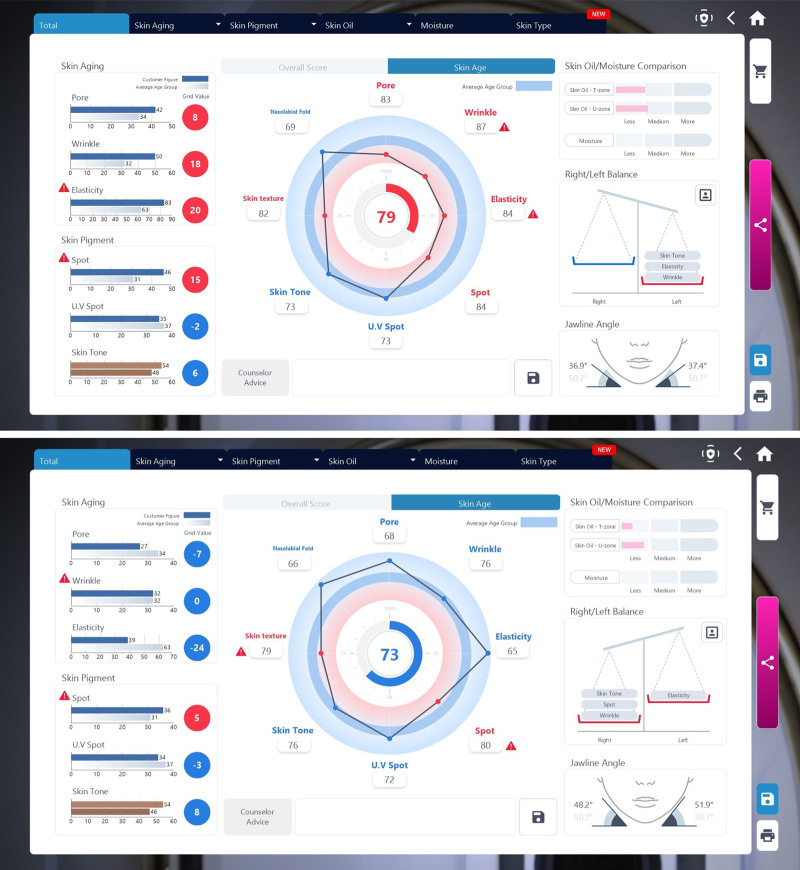
Fig. 6. (Above) Preoperative and (below) 90 days postoperative ImagePro computerized skin quality assessment of the 76-year-old woman presented in Figure 5, showing improvement in skin age (−6 years), skin elasticity (−19 years), rhytids (−22 years), and ultraviolet spots (−1 year).图5患者ImagePro皮肤分析,皮肤年龄-6年、弹性-19年等。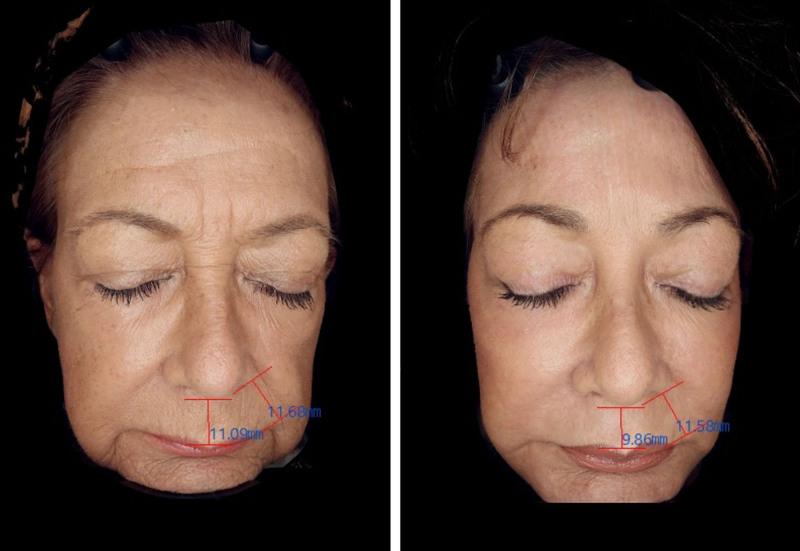
Fig. 7. (Left) Preoperative and (right) 90-day postoperative objective measurements of the upper cutaneous lip height (base of columella to central Cupid’s bow) to measure tissue contraction resulting from the deep plasma skin resurfacing (0.5-mm change without skin excision) of the 76-year-old woman presented in Figure 5.上唇皮肤高度测量,组织收缩约0.5 mm。
A 68-year-old woman sought a comprehensive, single-session total face and neck rejuvenation procedure. She underwent a deep-plane face and neck lift, platysmaplasty, brow lift, full-face fat grafting, and deep full-face resurfacing with helium plasma. Photographs were taken before surgery and 6 years after surgery, at age 74 years (Fig. 8 ).
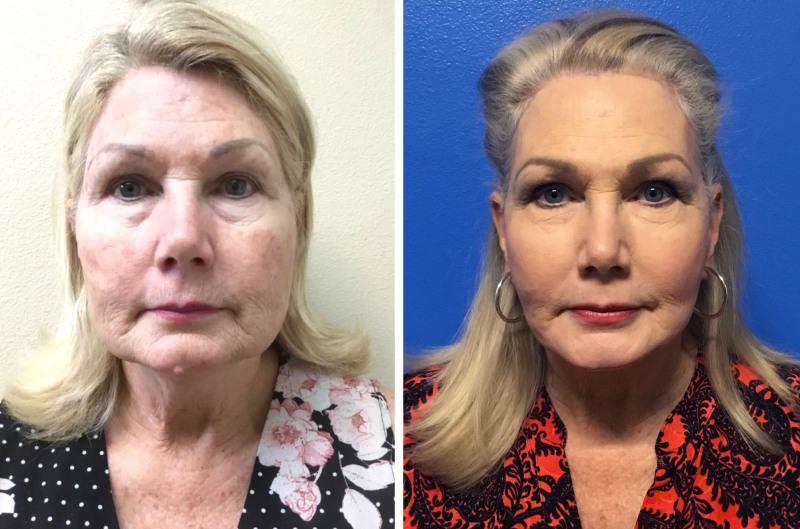
Fig. 8. A 68-year-old woman received a deep-plane face and neck lift, platysmaplasty, full-face fat grafting, and deep full-face resurfacing with helium radiofrequency plasma. (Left) Before surgery. (Right) Six years after surgery (age 74 years).68岁女性联合手术,术前与术后6年(74岁)对比。
There has been some hesitation among plastic surgeons to combine deep skin resurfacing with face lift procedures, despite the numerous studies in the literature supporting the safety of such combinations, including CO 2 lasers, 1 – 6 nitrogen plasma, 8 and helium plasma. 9 – 13 Based on the author’s 8 years of experience performing concurrent face lifts and plasma resurfacing, elevated face lift skin flaps can be safely treated with plasma resurfacing. This includes resurfacing of undermined preauricular and submandibular skin flaps, provided that they appear viable intraoperatively. If skin flap vascularity appears compromised during surgery, the resurfacing step can be deferred, but the author has not yet encountered this scenario in her clinical experience.
This approach is supported by multiple publications in the facial plastic surgery and plastic surgery literature, including by Holcomb et al., 8 Gentile, 9 , 12 DeLozier and Holcomb, 10 and Leake and Lee. 11
From 2009 through 2017, before fully transitioning to plasma resurfacing, the author routinely performed skin resurfacing with face lifts using nonablative erbium (1540 nm), ablative erbium (2940 nm), and CO 2 lasers (10,600 nm), including treatment of the elevated skin flaps. This technique is well-documented in the literature. 1 – 7
In this 8-year series of 96 patients, the author demonstrates that deep ablative plasma resurfacing can be performed safely alongside face and neck lifts, without increasing complication rates. The 2 types of plasma resurfacing performed in this series were helium radiofrequency plasma (Renuvion) and nitrogen plasma (Neogen PSR).
Helium radiofrequency plasma uses monopolar radiofrequency energy applied to helium gas to generate a plasma beam that interacts with the skin, inducing protein denaturation, tissue coagulation, and skin resurfacing. Helium radiofrequency plasma has been approved by the Food and Drug Administration (FDA) for facial skin resurfacing for patients with Fitzpatrick skin types 1 through 3. 25 Nitrogen plasma uses monopolar radiofrequency energy applied to nitrogen gas to produce a plasma beam that resurfaces the skin. Nitrogen plasma has been approved by the FDA for treatment of various dermatologic conditions, including rhytids, superficial skin lesions, actinic keratosis, viral papillomata, seborrheic keratosis, and acne scars (using a 5-mm nozzle), as well as for tissue coagulation in dermatologic procedures (using a 25-mm nozzle), for patients with Fitzpatrick skin types 1 through 4. 26
The author prefers to use helium plasma for patients with Fitzpatrick skin types 1 through 3 who present with severe photoelastosis and deep rhytids. Unlike nitrogen plasma, the helium plasma device operates as a closed loop system, with a grounding pad connecting the patient to the generator. This configuration allows for both top-down skin resurfacing and subdermal energy flow, producing concurrent tissue coagulation and contraction in addition to skin resurfacing (Fig. 9 ). Based on the author’s experience with other resurfacing modalities, including Hetter chemical peels, CO 2 lasers, ablative erbium lasers, and nitrogen plasma, helium plasma radiofrequency provides unparalleled results in terms of both resurfacing efficacy and tissue tightening. Holcomb and Schucker 14 elegantly demonstrated this distinction in an animal model, showing significantly greater tissue contraction with helium plasma compared with nitrogen plasma.
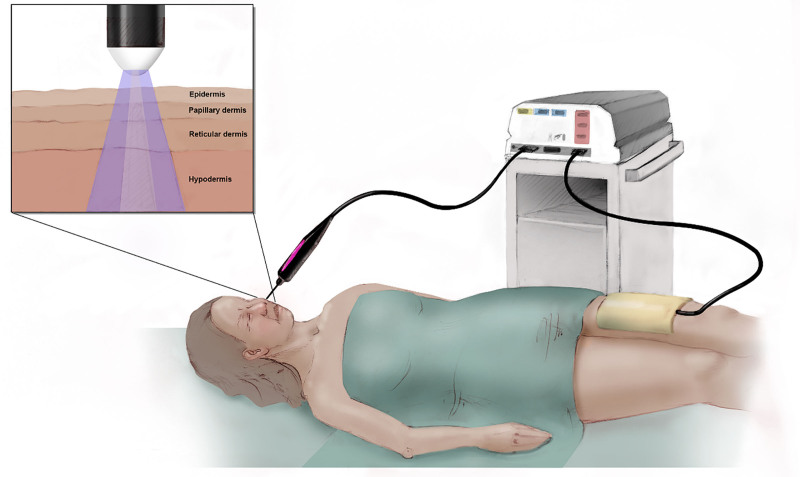
Fig. 9. The helium plasma device runs as a closed loop system, with a grounding pad connecting the patient to the generator. This configuration allows for both top-down skin resurfacing and subdermal energy flow, producing concurrent tissue coagulation and contraction in addition to skin resurfacing. Courtesy of Apyx Medical, Clearwater, Florida. Used with permission.氦等离子设备闭环系统示意,接地垫连接实现表皮与皮下双向能量。Nitrogen plasma is preferred for patients with Fitzpatrick skin types 1 through 3 who have mild to moderate photoelastosis and rhytids, and for all patients with Fitzpatrick skin types 4 though 6. The author pretreats patients with Fitzpatrick skin types 4 through 6 with a compounded cream containing 1% retinol and 4% hydroquinone for at least 2 weeks (which is discontinued the day before surgery and resumed 4 to 6 weeks postoperatively). In addition, patients with Fitzpatrick skin type 5 or 6 are treated using only low-energy settings (0.8 to 1.0 J) to minimize the risk of postinflammatory hyperpigmentation or scarring.
The author favors plasma resurfacing (both helium and nitrogen) over other deep resurfacing techniques for several reasons. Plasma resurfacing can achieve effective correction of deep rhytids and photoelastosis comparable to deep chemical peels, such as phenol–croton oil peels, without the risk of arrhythmias or cardiac toxicity. Unlike deep ablative laser resurfacing techniques (CO 2 or erbium), plasma resurfacing is non–chromophore-dependent, so there is less likelihood of inadvertent injury to adjacent structures, such as melanin and hemoglobin. Therefore, the risk of postinflammatory hyperpigmentation and hypertrophic scarring in patients with a higher Fitzpatrick skin type is reduced when compared with ablative lasers. 27 , 28
Plasma resurfacing produces a central ZTD—the area of permanent injury that sloughs off and is visible intraoperatively as frosting—which penetrates vertically with higher energies. Surrounding this is the ZTM, which extends peripherally and supports regeneration, neocollagenesis, and neoelastogenesis. The ZTM is not visible during treatment, but spreads horizontally beyond the visible ZTD. As a result, minor overlap of passes will theoretically not result in overtreatment, and small gaps between passes will not result in undertreatment, as the regenerative effects of the ZTM still overlap. This produces more uniform resurfacing and regeneration, reducing the risk of stripping or visible treatment lines when the procedure is performed freehand (Fig. 1 ).
This mechanism contracts with ablative lasers, which exhibit greater lateral thermal spread and more discrete pulse boundaries. In laser resurfacing, overlapping pulses can result in excessive energy delivery and create visible striping or patterning. These insights are based on the author’s 8 years of experience of using plasma resurfacing, compared with her previous 8 years using ablative, nonablative erbium, and CO 2 lasers. Nitrogen plasma has been associated with lower rates of hypopigmentation or hyperpigmentation and fewer complications overall when compared with CO 2 lasers. 8 , 24
In addition, helium plasma radiofrequency resurfacing provides greater tissue contraction than deep resurfacing lasers. Whereas lasers resurface the skin with a top-down mechanism, helium plasma also induces subdermal tissue contraction through its closed loop system. The plasma beam creates joule energy connections between the handpiece (cathode) and skin (anode), with the patient grounding pad acting as an energy coupler 2 (Fig. 9 ). Tissue contraction effects of helium plasma are well-documented in the literature. 13 – 17 , 27
Contraindications to plasma resurfacing include a history of poor healing, collagen vascular disorders, active smoking, active skin infections or inflammatory dermatoses, and untreated skin cancers of the face and neck. Additional contraindications include the use of oral or systemic corticosteroids, chemotherapy, or recent radiation therapy. For helium plasma specifically, the presence of a cardiac pacemaker is a contraindication; however, this does not apply to nitrogen plasma.
When treating the neck (and chest), the energy must be decreased compared with the face, as the neck has less density of skin appendages and may heal more slowly. This area may also be more prone to complications, such as poor wound healing and hypertrophic scarring. When performing helium plasma resurfacing, the pulsed mode is used (as opposed to continuous mode on the face) to preserve skin appendages and support proper wound healing. This application is considered off-label, and patients must be adequately counseled and consented before the procedure.
In contrast, nitrogen plasma resurfacing offers only a pulsed mode. Therefore, reducing the energy by 1 to 1.5 J compared with facial settings is generally sufficient for safe treatment of the neck, chest, and body. These areas are FDA-cleared indications for nitrogen plasma, so additional off-label consent is not required. The author has successfully treated the neck and chest using this approach without additional complications.
This series revealed no increased risk of skin flap necrosis or prolonged wound healing. A single-session combination procedure of face and neck lifts, fat grafting, and full-face deep plasma resurfacing offers several advantages over staged procedures. First, it reduces patient downtime by consolidating procedures into one session. This also decreases patient exposure to excessive local sedation or general anesthesia. Second, there is a theoretical “shrink-wrap” effect when deep plasma resurfacing is performed alongside a face lift: while the deeper tissue layers are healing from the face and neck lifts, tissue contraction is occurring with the deep plasma resurfacing and externally provides an invisible facial “compression garment,” allowing the face and neck to heal and conform to their new contours more effectively than with a face lift alone.
There is also a theoretical synergistic effect during the healing process: collagen (type 1 and 3) and elastin synthesis and tissue remodeling occur simultaneously at the skin, deeper subcutaneous, SMAS, and sub-SMAS layers. Ultimately, this approach allows for a comprehensive, 3D total facial and neck rejuvenation. The face and neck lift addresses sagging tissue at the SMAS and sub-SMAS levels, fat grafting restores lost volume and promotes tissue regeneration, and deep plasma resurfacing corrects rhytids and photoelastosis on the whole face, including the central face and periorbital and perioral areas.
When performing deep plasma resurfacing procedures, it is paramount to develop a postoperative protocol that enhances would healing and skin regeneration, ideally incorporating regenerative therapies. The topical application of nanofat after deep skin resurfacing has numerous benefits, including reduced inflammation and pain, accelerated reepithelialization, and improved overall skin quality. 7 , 28 , 29
The author has used nanofat topically since 2017; the addition of exosomes was introduced in 2022. To differentiate the effect of exosomes, the author compared reepithelialization rates between 2017 and 2021 (nanofat-only group) and between 2022 and 2025 (nanofat plus exosomes group). In the nanofat-only group, reepithelialization typically occurred between 9 and 21 days (average, 15.65 days [SD 3.83]). In contrast, the combined exosome and nanofat group demonstrated faster healing, with reepithelialization occurring in 6 to 14 days (average, 9.54 days [SD 1.99]). The differences in healing rates were statistically significant ( P < 0.000001). 30
The most effective addition to the author’s protocol was the use of topical exosomes. However, no topical exosome product has received FDA approval, and their use in this context is considered experimental; therefore, patient consent must reflect this status. A prospective, randomized, double-blind, split-face study from South Korea using topical exosomes with CO 2 laser skin resurfacing for acne scars demonstrated faster healing and better outcomes with the use of exosomes in the treated area versus the control (4.1 versus 4.3 days). 31 , 32 The differences were not statistically significant, but the results are encouraging, and further studies are warranted.
This is the first case series reporting exosome and nanofat use concurrent with deep plasma skin resurfacing. Because of its retrospective nature, the study has inherent limitations related to potential bias and lack of control over variables. However, although prospective randomized controlled trials would provide more robust evidence, the extended follow-up period and relatively large sample size in this series offer valuable insight into the safety and efficacy of this comprehensive, single-session technique.
This 8-year retrospective case series demonstrates that deep plasma resurfacing (helium or nitrogen) of the face and neck can be safely performed concurrently with face and neck lifts, along with fat grafting, to achieve comprehensive 3D facial and neck rejuvenation. The results show significant improvements in deep rhytids, skin elasticity, and overall skin quality, with minimal complications. This approach presents a compelling alternative to staged procedures, reducing the risks associated with repeated anesthesia and multiple recovery periods, and offering cost savings to the patient by eliminating the need for multiple operating room sessions.
A total facial and neck rejuvenation procedure can be performed without any additional risks or complications, such as skin necrosis or compromised wound healing, offering patients a complete corrective procedure that addresses sagging tissue, corrects rhytids, improves skin quality, and provides volume correction and regeneration when combined with fat grafting. This single-session technique not only provides substantial aesthetic benefits by addressing aging in 3 dimensions but also reduces downtime and the risks associated with staged procedures, such as repeated anesthesia and multiple recovery periods. This approach presents a promising alternative to traditional staged methods, offering a more efficient and cost-effective solution for patients seeking facial and neck rejuvenation. The findings would benefit further from more rigorous validation, such as a prospective randomized controlled trial comparing combined versus staged procedures.
Medical writing assistance was provided by Kari Larson, MBA, Apyx Medical, under the direction of the author.
Dr. Lacerna Kimbrell serves as a key opinion leader and consultant for Apyx Medical (manufacturer and distributor of Renuvion), Energist (manufacturer of Neogen PSR), Emergent MedTech (US distributor of Neogen PSR), Cytrellis (manufacturer and distributor of Ellacor), and Evolutionary Biologics (supplier of exosomes).
Patients provided written informed consent for the use of their images.
声明:中文精读 · 仅供学术参考。内容来自公开文献检索,不代表本人观点,不构成诊疗建议。 医疗美容需在正规医疗机构由执业医师实施。
基于相同主题推荐 · 继续深挖
单中心7年系列:96例单次联合除皱+脂肪移植+全面部等离子换肤
回顾性队列研究,纳入93例哥伦比亚患者(2023.6–2025.7,随访≥1年),平均52.9岁(SD 8.13),女85例(90%)、男8例(10%),平均BMI 26.8 kg

隧道式深层平面提升术(TDL)融合深层平面提升与 SMAS 折叠,为下面部与颈部松弛的改良术式;本研究为回顾性队列,纳入 2023–2025 年哥伦比亚 93 例随访≥1 年患者。