A型肉毒毒素联合康复用于面神经麻痹后慢性面部不对称的疗效与短期持久性
2026年10月10日24 min read
Plastic and Reconstructive Surgery Global Open
Plastic and Reconstructive Surgery Global Open
结论与实践要点
本研究为回顾性队列,纳入2019年1月至2024年12月面神经麻痹后慢性面部不对称患者28例,接受A型肉毒毒素注射(每点0.25–6 U,常用总剂量数十单位)并序贯神经肌肉再训练,以Sunnybrook评分(SFGS)与睑裂高度比(PFHR)评估。主要结局:SFGS中位评分较基线在2周升高17.4分、4.7个月仍高12.0分(均P<0.001);PFHR由0.76升至2周0.96(P<0.001)、4个月0.77(P<0.05),疗效延续超出肉毒毒素常规3–4个月时效,提示联合康复可能延长获益。
研究为单中心、回顾性、无对照设计,样本量中等,未设盲法与随机,缺乏独立第三方评估,且未系统报告4个月以上的长期结局。肉毒毒素疗效本身为暂时性,联合康复训练对持久性的贡献仍需前瞻性对照研究确认;方案强调对对侧亢进肌群(如额肌、颧大肌、颈阔肌)注射以平衡张力,临床应个体化滴定剂量并警惕眉下垂等不良反应,疗效需结合病程与病因综合判断。
Background:Although the benefits of botulinum toxin last for 3–4 months, the durability has not been quantitatively evaluated. Recent studies have suggested that combining botulinum toxin injections with neuromuscular retraining can enhance both functional and aesthetic results. This study aims to assess the efficacy and short-term durability up to 4 months of this combined approach in patients with chronic facial asymmetry after facial nerve palsy.
Methods:We retrospectively evaluated patients with facial asymmetry due to facial palsy treated with botulinum toxin type A injections followed by neuromuscular retraining between January 2019 and December 2024. Patients were evaluated before treatment, at 2 weeks posttreatment, and at 4 months posttreatment using the Sunnybrook Facial Grading System (SFGS). Synkinesis was assessed using the palpebral fissure height ratio (PFHR).
Results:A total of 28 patients (age range: 17–79 y; median age 49.0; interquartile range , 38.0–59.2 y) were included. Patients showed improved facial symmetry. The median SFGS score increased by 17.4 points at 2 weeks and remained 12.0 points above the baseline at 4.7 months (both P < 0.001). The PFHR improved from 0.76 pretreatment to 0.96 at 2 weeks ( P < 0.001) and remained improved at 0.77 at 4 months ( P < 0.05).
Conclusions:A combination of botulinum toxin type A injections and rehabilitation was effective in patients with chronic facial nerve palsy. Improvements in SFGS score and PFHR indicate a sustained therapeutic effect beyond the expected 3–4 months.
Question: Is the combination of botulinum toxin type A injections and neuromuscular retraining effective and durable for improving facial symmetry in patients with chronic facial nerve palsy?
Findings: This retrospective study showed that combining botulinum toxin type A with neuromuscular retraining significantly improved facial symmetry in patients with chronic facial nerve palsy. Improvements in Sunnybrook Facial Grading System scores and palpebral fissure height ratio were evident at 2 weeks and sustained at 4 months.
Meaning: Combining botulinum toxin type A injections with neuromuscular retraining offers a sustained improvement in facial symmetry for patients with chronic facial nerve palsy.
Facial asymmetry and functional impairment due to facial palsy can negatively affect the psychosocial well-being and quality of life of patients. The therapeutic application of botulinum toxin for facial muscle disorders began in the 1980s, initially targeting hemifacial spasm and blepharospasm. Its use for facial palsy was first reported in a case involving iatrogenic injury to the frontal branch of the facial nerve, where contralateral frontalis injection successfully improved brow asymmetry. 1 In the 1990s, the use of botulinum toxin type A was extended to the treatment of synkinesis and hyperkinesis in facial palsy, with multiple studies reporting improvements in both patient-reported and clinician-rated outcomes. 2 – 4 Additionally, botulinum toxin type A may enhance the effects of adjunct therapies such as neuromuscular retraining. 5 , 6 Mirror-based facial biofeedback therapy following a single injection of botulinum toxin type A provides effective and sustained improvement in synkinesis. 6 A systematic review concluded that botulinum toxin significantly improves facial asymmetry, particularly when combined with physical therapy. 7
Although the pharmacological effects of botulinum toxin type A usually last between 4 and 6 months, 8 studies have reported that benefits persist for approximately 6 months, particularly when used with adjunct therapies. 9 , 10 Based on patient-reported outcomes and surface electromyography results, injecting botulinum toxin into the nonparalyzed side improves facial symmetry for approximately 6 months. 9 Similarly, in 88 patients evaluated using 3 validated questionnaires (hemifacial spasm-30, facial clinimetric evaluation, and hospital anxiety and depression scale ), the quality of life significantly improved 1 month after botulinum toxin type A injection and remained stable at 4 months. 10 However, objective quantitative assessments of the long-term therapeutic effects of botulinum toxin remain limited. This study aims to quantitatively evaluate the therapeutic efficacy and durability of combining botulinum toxin type A injections and neuromuscular retraining in managing chronic facial asymmetry secondary to facial nerve palsy.
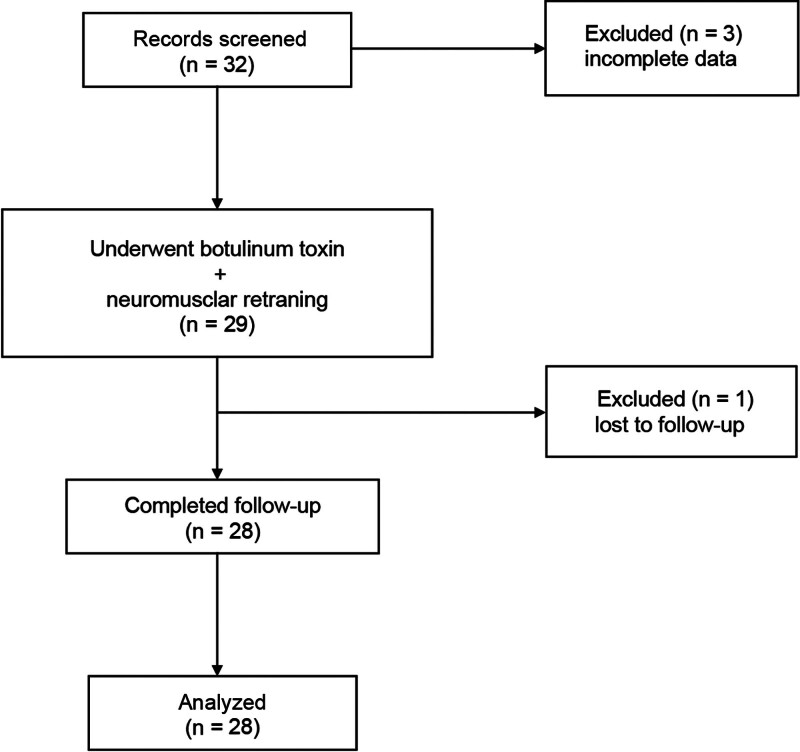
Medical records and clinical photographs of patients treated with botulinum toxin type A for facial asymmetry following facial nerve palsy between January 2019 and December 2024 were retrospectively reviewed. The patient selection process is summarized in the consolidated standards of reporting trials flow diagram (Fig. 1 ). For treatment, 50 units of botulinum toxin type A (Botox; Allergan, Inc., Irvine, CA) were diluted in 0.9% saline (2.5 mL) to yield a concentration of 2 units per 0.1 mL. Injections were administered using a 1-mL syringe fitted with a 34G needle. Botulinum toxin was injected into the target facial muscles on both the affected and unaffected sides. The selection of target muscles and dosing of botulinum toxin were individualized according to each patient’s clinical presentation. Specifically, decisions were based on the severity of synkinesis, the degree of muscle hyperactivity, and the extent of functional impairment. The target muscles on the affected side were facial muscles that cause synkinesis, muscles with contractures, and antagonist muscles of the facial muscles with poor recovery. Moreover, muscles with hyperkinesis on the unaffected side and the lacrimal gland in patients with crocodile tear syndrome were injected with botulinum toxin.
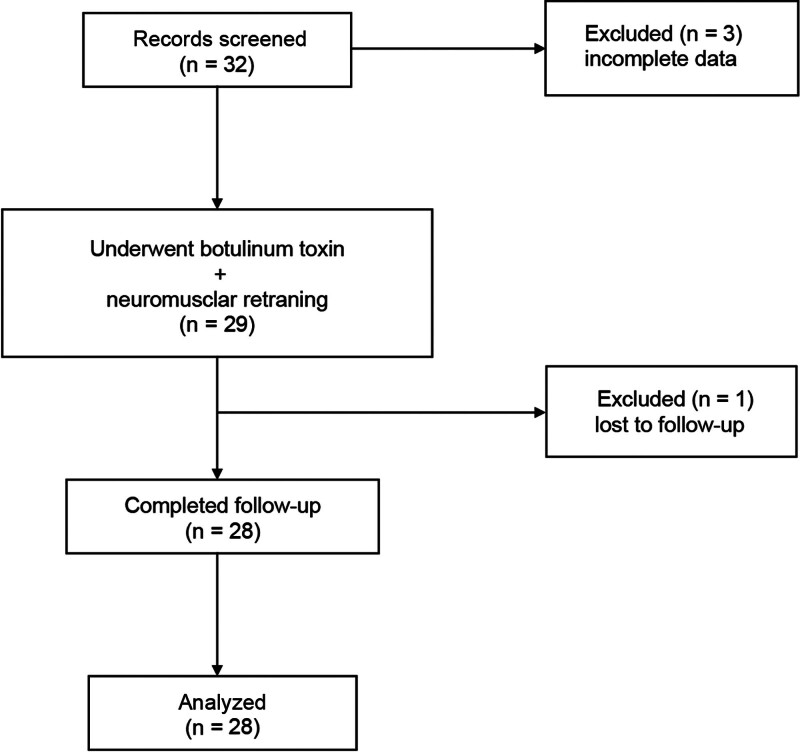
Fig. 1. CONSORT flow diagram of patient selection and analysis. CONSORT, consolidated standards of reporting trials.患者筛选与分析流程图(CONSORT)。The injection dose ranged from 0.25 to 6 units per point. The most commonly treated sites included the palpebral portion of the orbicularis oculi on the affected side with synkinesis, the zygomaticus major on the unaffected side with hyperkinesis, and the lower lip depressor muscles contributing to asymmetry due to contracture or hyperkinesis. Detailed information on the injections is provided in Table 1 and Figure 2 . The injection dose was determined for each patient and each session after evaluating asymmetry at rest and during voluntary facial movements through visual examination and manual muscle testing. Initial treatments included conservative dosing with small aliquots per site and reassessments after 2 weeks for potential supplemental injections. Two weeks after the injection, the patients were provided with detailed instructions on the rehabilitation protocol, including stretching exercises for the facial muscles and mirror biofeedback therapy. Rehabilitation was primarily performed at home by patients themselves, following initial instruction by a doctor, and patients were monitored through regular outpatient visits. Treatment sessions were scheduled at 4-month intervals for the first 3 sessions; thereafter, the intervals were individualized based on each patient’s clinical needs. The median follow-up period was 13.5 months (interquartile range [IQR], 4.5–26.5 mo).
Table 1. Injection Points and Doses
| Muscle | Nonaffected Side | Affected Side |
|---|---|---|
| Points | Injected Dose (U/Point) | Points |
| Frontalis | 1–2 | 0.5–2 |
| Corrugator supercilii, depressor supercilii | 1–2 | 1–3 |
| Orbicularis oculi | ||
| Palpebral part | ||
| Superolateral portion of orbital part | ||
| Lateral portion of orbital part | 1–3 | 2 |
| Levator labii superioris alaeque nasi | 1 | 1 |
| Levator labii superioris | 1 | 1–2 |
| Zygomaticus major | 1 | 2–6 |
| Zygomaticus minor | 1 | 1–2 |
| Orbicularis oris | ||
| Modiolus area | 1 | 1–2 |
| Depressor labii inferioris | 1 | 2 |
| Depressor anguli oris | 1 | 2 |
| Platysma |
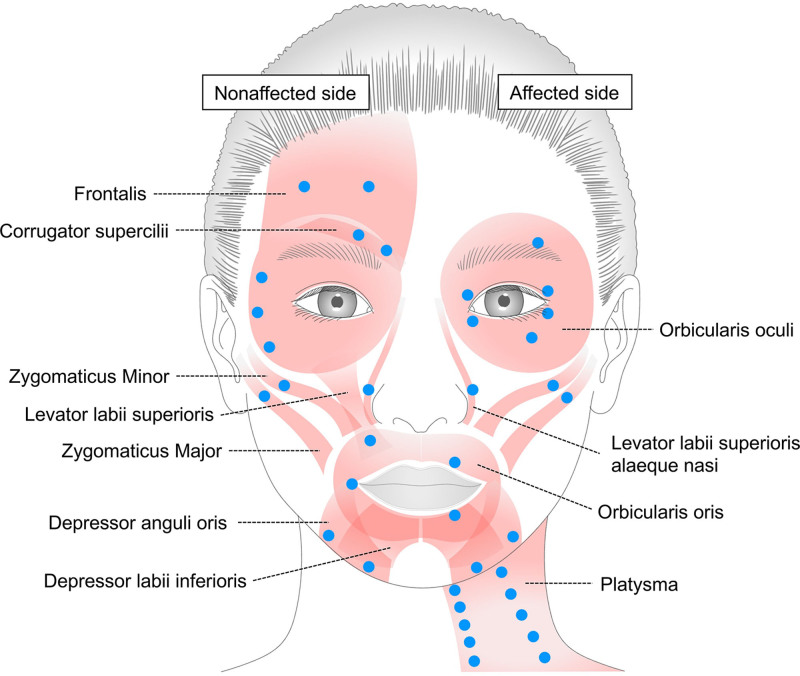
Fig. 2. Injection sites for botulinum toxin in patients with chronic facial asymmetry after facial nerve palsy. Injections were individualized based on clinical evaluation to address synkinesis, hyperkinesis, and stiffness.慢性面部不对称肉毒毒素注射位点示意,依据联带运动、亢进与僵硬个体化布点。The efficacy and durability of treatment were assessed using standardized clinical photographs taken at baseline (pretreatment), 2 weeks, and before the next treatment session. Facial symmetry was independently assessed using the Sunnybrook Facial Grading System (SFGS) by 3 experienced plastic surgeons who were blinded to the treatment timing. The inter-rater reliability was 0.87 (95% confidence interval [CI], 0.81–0.92).
To objectively quantify oculo-oral synkinesis, we established a novel parameter, the palpebral fissure height ratio (PFHR), based on vertical eyelid aperture measurements during lip puckering (Fig. 3 ). The PFHR was measured using ImageJ software (version 1.53, National Institutes of Health, Bethesda, MD). This study was approved by the institutional review board of Kanazawa Medical University (approval no. C213) and was conducted in accordance with the principles of the Declaration of Helsinki (2024). All patients provided written informed consent before participating in the study.
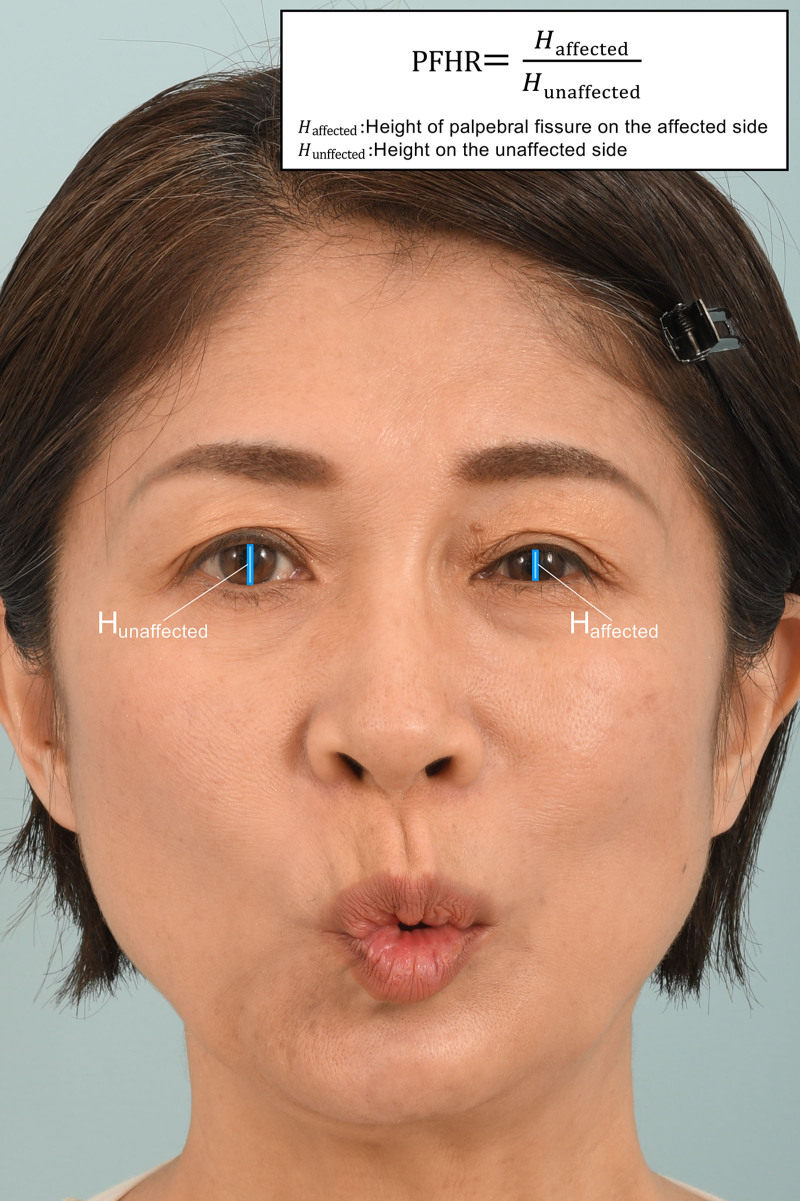
Fig. 3. Measurement of the PFHR, calculated during lip puckering as the ratio of the vertical palpebral fissure height on the affected side to that on the unaffected side.PFHR测量:撅嘴时患侧睑裂垂直高度与健侧之比,用于评估眼-口联带运动。
Statistical analyses were performed using R version 4.3.1 (R Foundation for Statistical Computing, Vienna, Austria). The Shapiro–Wilk test indicated nonnormal distribution for several variables; therefore, a nonparametric test (Wilcoxon signed-rank test) was applied. As this was an exploratory analysis with correlated paired endpoints, no formal correction for multiple comparisons was applied. Statistical significance was set at a P value of less than 0.05.
A total of 28 patients (24 women and 4 men; age range: 17–79 y; median age 49.0 y; IQR, 38.0–59.2 y) were treated with botulinum toxin type A injections for facial asymmetry following facial nerve palsy. Etiologies included Bell palsy (n = 21), Ramsay Hunt syndrome (n = 2), iatrogenic causes (n = 1), and other (n = 4). Four (14%) patients had been treated with botulinum toxin injections before enrollment, and 8 (29%) had undergone previous facial retraining therapy. None had been treated with both therapies simultaneously before the present intervention. The time from onset of facial palsy to the initial botulinum toxin injection ranged from 0.5 to 42 years (median, 7.0 y; IQR, 2.0–14.0 y). The median number of treatment sessions per patient was 3.5 (IQR, 2.0–5.0), with a median intertreatment interval of 4.0 months (IQR, 3.0–4.0 mo). The median dose of botulinum toxin type A per session was 15.0 (IQR, 12.5–20.0) units. Overall, 117 treatment sessions were performed, excluding touch-ups provided within the first 2 weeks postinjection (Table 2 ).
Table 2. Summary of Clinical and Demographic Data of the Patients
| Demographics | |
|---|---|
| No. patients | 28 |
| Age, y | |
| Median | 49.0 (38.0–59.2) |
| Range | 17–79 |
| Sex (female) | 24 (86%) |
| Paralyzed side (right) | 15 |
| Duration since onset, y | |
| Median | 7.0 (2.0–14.0) |
| Range | 0.5–42 |
| Etiology, n (%) | |
| Bell palsy | 21 (75%) |
| Ramsay Hunt | 2 (7.1%) |
| Iatrogenic | 1 (3.5%) |
| Idiopathic | 4 (14%) |
| Severity of facial palsy, * n (%) | |
| Severe | 0 (0) |
| Moderate | 11 (40) |
| Mild | 17 (60) |
| Total BTX dose per session, units | |
| Median | 15.0 (12.5–20.0) |
| Range | 2–60.5 |
| Adverse events, n (%) | |
| Temporal lagophthalmos | 2 (7.1) |
| Dry eye symptoms | 1 (3.5) |
All the patients showed improvements in both static and dynamic facial symmetry. The most common symptom was oculo-oral synkinesis, defined as the involuntary contraction of the orbicularis oculi during smiling or lip puckering, which was observed in 93% of the patients. All the affected individuals showed improvement according to both subjective and objective evaluations. Figures 4 – 6 show representative clinical photographs taken before and after botulinum toxin injections, demonstrating improvements in facial symmetry. These improvements were largely maintained at the 4-month follow-up visit. Two patients with synkinesis who received injections targeting the lower eyelid developed temporal lagophthalmos, which resolved within 1 month in both cases. In 1 patient with crocodile tear syndrome, 2 units of botulinum toxin were injected percutaneously into the lacrimal gland, resulting in reduced reflex tearing associated with eating or mastication. In subsequent sessions, the dose was reduced to 1 unit because of complaints of dry eye symptoms.
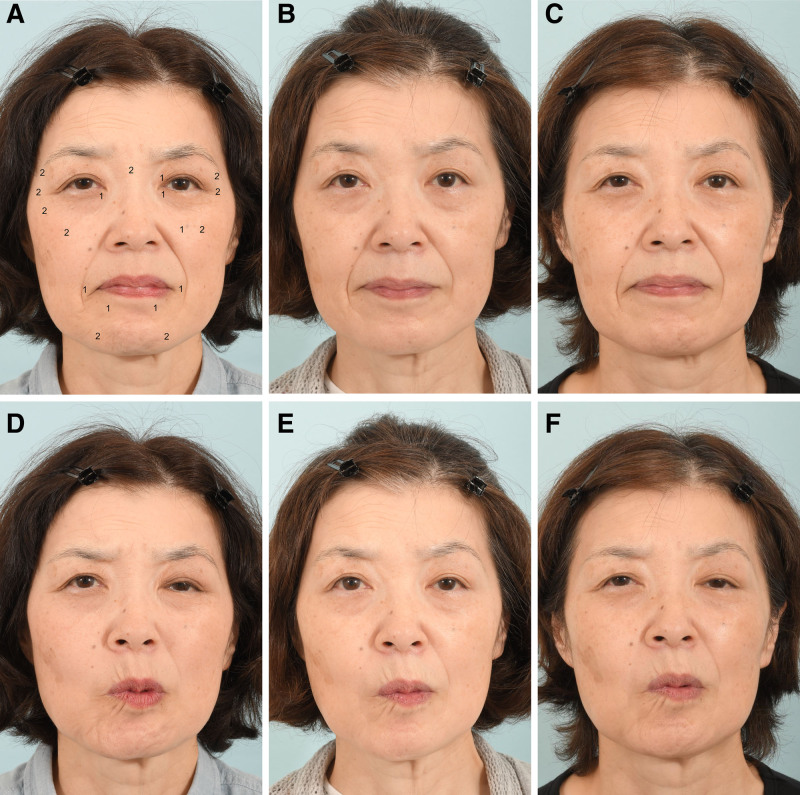
Fig. 4. A 59-year-old woman with chronic facial asymmetry following left Bell palsy of 2 years’ duration. A, Pretreatment image at rest showing injection points and doses. D, Pretreatment image during lip puckering demonstrating ocular synkinesis (SFGS score: 54; PFHR: 0.69). B and E, Two weeks after the third session with 28 units of botulinum toxin type A, the patient showed improved facial symmetry (SFGS score: 72; PFHR: 0.91). C and F, Four months after the same session, with sustained improvement (SFGS score: 69; PFHR: 0.88).59岁女性左Bell麻痹2年病例:第三次注射28 U后2周对称改善,4个月维持。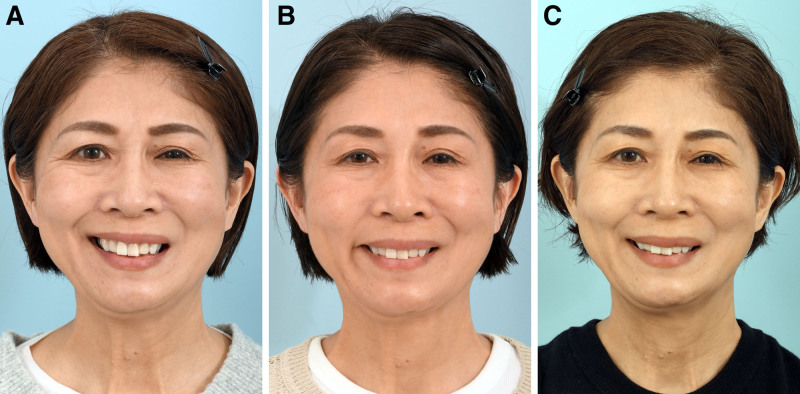
Fig. 5. A 54-year-old woman with chronic facial asymmetry following left Bell palsy of 5 years’ duration. A, Pretreatment image during smiling shows synkinesis and hyperkinesis (SFGS score: 69; PFHR: 0.54). B, Two weeks after the second session, using 52.5 units of botulinum toxin A (SFGS score: 86; PFHR: 1.0). C, Four months after the same session, with partial decline but sustained improvement (SFGS score: 80; PFHR: 0.66), and notable improvement of the platysma band.54岁女性左Bell麻痹5年病例:第二次注射52.5 U后2周显著改善,4个月部分回落但维持。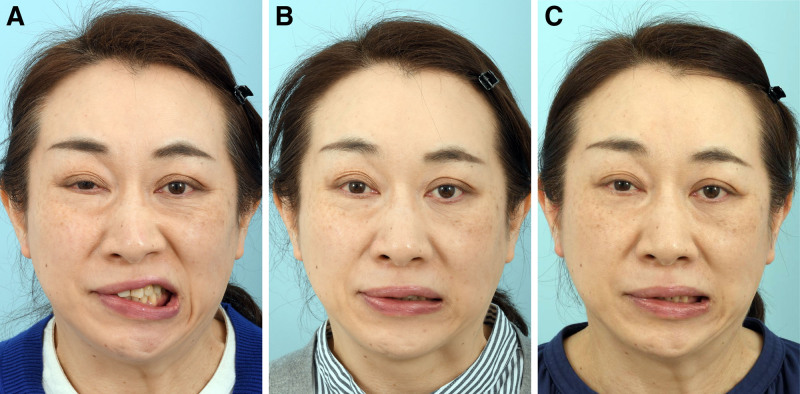
Fig. 6. A 52-year-old woman, 6 months after the onset of right Bell palsy. A, Pretreatment image during smiling (SFGS score: 50; PFHR: 0.55). B, Two weeks after the second session, a total of 21 units of botulinum toxin A—including 10 units injected into the left anterior platysma band—were administered (SFGS score: 96; PFHR: 0.81). C, Four months after the same session, improvement in perioral hyperkinesis and the platysma band persisted (SFGS score: 86; PFHR: 0.69).52岁女性右Bell麻痹6个月病例:第二次注射21 U(含左侧颈阔肌10 U)后改善并维持。Statistically significant improvements were observed in the SFGS score, which evaluates resting symmetry, voluntary facial movements, and synkinesis. The median pretreatment SFGS score was 70.5 (IQR, 67.0–76.0), which improved to 88.0 (IQR, 83.0–93.5) at 2 weeks posttreatment (median change 17.0; 95% CI, 13.6–20.0; P < 0.001, Wilcoxon signed-rank test). The median score remained significantly higher than baseline at 4 months (82.5; IQR, 78.8–88.0; median change 11.5; 95% CI, 9.6–15.3; P < 0.001) (Fig. 7 ). Objective synkinesis outcomes were evaluated using the PFHR during lip puckering as a quantitative marker of oculo-oral synkinesis. The median PFHR improved from 0.76 (IQR, 0.62–0.83) at baseline to 0.96 (IQR, 0.84–1.00) at 2 weeks posttreatment ( P < 0.001). At 4.0 months (IQR, 3.0–4.0) posttreatment, the PFHR was 0.77 (IQR, 0.68–0.83), remaining slightly but significantly higher than the baseline value ( P < 0.05) (Fig. 8 ).
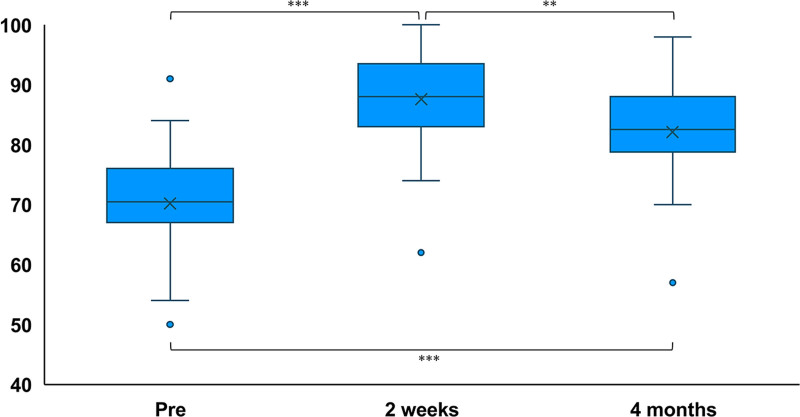
Fig. 7. SFGS total scores before treatment, at 2 weeks, and at 4 months posttreatment; higher scores indicate better facial function (**P < 0.01, ***P < 0.001).SFGS总分治疗前、2周、4个月变化,评分越高提示面部功能越好。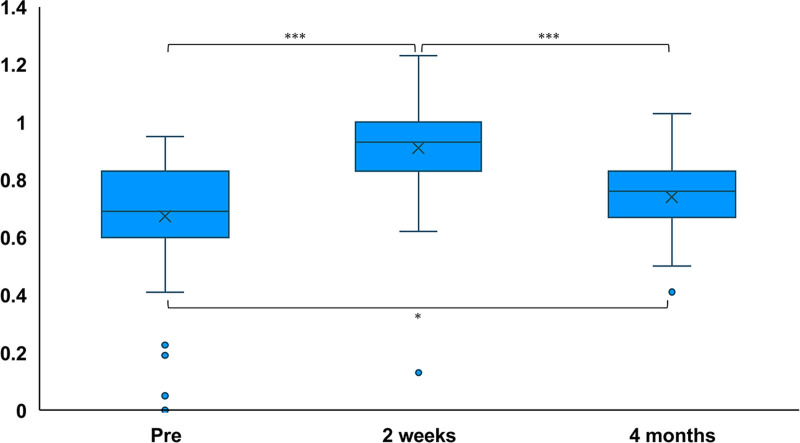
Fig. 8. PFHR during lip puckering before treatment, at 2 weeks posttreatment, and at 4 months posttreatment; lower values indicate more severe synkinesis (*P < 0.05, ***P < 0.001).撅嘴时PFHR治疗前、2周、4个月变化,数值越低提示联带运动越重。
Botulinum toxin type A has been widely used since the 1980s, and its application has been extended to facial nerve palsy–related asymmetry since the early 1990s. Botulinum toxin injections, alone or combined with neuromuscular retraining, have been established as nonsurgical treatments for facial palsy, as comprehensively reviewed in the literature. 11 , 12 Previous reports have suggested that botulinum toxin therapy may improve the quality of life in patients with facial palsy. 13 In the absence of formal guidelines, a conservative initial dose with subsequent adjustments based on patient response is recommended. 3 , 4 In the present study, botulinum toxin was mainly injected into contracted or hyperkinetic periocular and perioral muscles. Based on our clinical experience, injections into these hyperactive muscles reduce facial asymmetry and stiffness. A recent review summarized the use of botulinum toxin in treating facial asymmetry due to facial palsy. Although the review mainly focuses on injections to the nonaffected side, it also provides detailed descriptions of injection sites and techniques that can be applied to the affected side. 14 In another study, a low dose, 0.5–1.25 units per site in the orbicularis oculi, with an average total of 5.76 units, was sufficient for treating synkinesis, which is notably lower than the average dose used for blepharospasm (11.14 units). 15 The effectiveness of botulinum toxin type A injections for platysma bands has been previously reported, although efficacy is limited in patients who are obese or those with significant cervical skin laxity. 16 , 17 Platysma synkinesis occurs in approximately 65.2% of patients with facial nerve palsy. A total dose of 17.7 units of botulinum toxin type A (8.2 units per band) injected into the platysma improves synkinesis. 18 Addressing cervical synkinesis or the platysma band typically requires a relatively higher total dose of botulinum toxin.
In the present study, to further enhance facial symmetry, botulinum toxin was injected into muscles antagonistic to the poorly recovering facial muscles on the affected side. Brow ptosis, which may result from frontalis muscle weakness due to facial palsy, can be ameliorated by injecting botulinum toxin, a frontalis muscle antagonist, into the superolateral portion of the orbicularis oculi. This approach was adapted from nonsurgical brow lift techniques, with care taken to avoid diffusion into the orbit. For aesthetic lateral brow lifting, botulinum toxin type A was injected at 3 points into the superolateral orbicularis oculi below the lateral brow with a total dose of 7–10 units. 19 In patients with chronic facial palsy, 2 units at a single point were sufficient to lift the brow on the affected side.
In the chronic phase of facial palsy, contracture of facial muscles can cause facial asymmetry and stiffness. Research has indicated that a multimodal treatment approach, including facial therapy, chemotherapy, denervation, and surgical interventions, when necessary, has been used in the management of facial palsy. 20 It was concluded that early rehabilitation reduced muscle stiffness and synkinesis more effectively over time. In the present study, botulinum toxin was injected into contracted muscles commonly located in the periocular and perioral regions to improve facial stiffness. A reduced palpebral aperture is caused by contracture of the orbicularis oculi. Although this condition may resemble blepharoptosis, it significantly improved after botulinum toxin injection. The injection protocol, including dosage and precautions, was identical to that used to treat synkinesis. Contracture of the facial muscles on the affected side may also lead to the deepening of the nasolabial fold and excessive exposure of the lower incisors. To address these issues, botulinum toxin was injected into the levator labii superioris alaeque nasi, levator labii superioris, zygomaticus major, zygomaticus minor, depressor labii inferioris, and depressor anguli oris. The dose per site ranged from 1 to 5 units. When injecting facial muscles involved in smiling, caution is required, as excessive dosing may cause drooping on the affected side and compromise aesthetic outcomes. To maintain facial balance, treatment of the unaffected side is often required; however, patients should be informed that this could reduce facial expressiveness.
There are reports of botulinum toxin injection into the lacrimal gland as a treatment for crocodile tears. 21 – 23 Both transcutaneous and transconjunctival injections are effective, with no significant difference in outcomes between routes, and the therapeutic effect lasts an average of 5.63 months, slightly longer than the typical 3–4 months observed in facial muscle treatment. 24 Reported side effects include temporary ptosis and diplopia. In the present study, 1 patient with gustatory lacrimation showed improvement after a 2-unit transcutaneous lacrimal gland injection, which was later reduced to 1 unit owing to dry eye symptoms. Before injection into the lacrimal gland, patients should be informed of the potential side effects, including diplopia, ptosis, and dry eye syndrome.
The SFGS is a widely accepted tool for evaluating facial palsy. It assesses both facial symmetry at rest and during voluntary movements, including forehead wrinkles, gentle eye closure, open-mouth smiles, snarls, and lip puckers, as well as the presence and severity of synkinesis. In this study, both the SFGS score and PFHR at 4 months posttreatment remained significantly improved compared with baseline values. Although the pharmacological effects of botulinum toxin type A generally diminish within 3–4 months, our results suggest that concurrent rehabilitation may extend the therapeutic benefits. Although significant improvements were sustained at the 4-month follow-up, durability beyond 6–12 months remains unknown. Given the exploratory nature of this study and the correlated structure of the paired endpoints, we did not apply a formal correction for multiple comparisons. The results should therefore be interpreted as hypothesis-generating rather than confirmatory. Statistically significant differences may not necessarily translate into clinically meaningful improvements, and long-term prospective studies are required to confirm the persistence of these treatment effects. These results align with the growing evidence suggesting that combining neuromuscular retraining with botulinum toxin therapy improves both the effectiveness and durability of treatment outcomes in patients with chronic facial nerve palsy. 25 Neuromuscular retraining, including mirror biofeedback, facial stretching, and targeted motor exercises, helps patients regain voluntary facial control and suppress involuntary movements. When combined with botulinum toxin injections, which temporarily reduce muscle overactivity, improved movement patterns are facilitated during a critical therapeutic window, likely contributing to sustained synkinesis improvement. Additionally, recent studies have reported that botulinum toxin type A injections on the nonparalyzed side, combined with mirror biofeedback therapy, improved facial symmetry and were associated with changes in brain functional connectivity, suggesting a role in promoting neuroplasticity. 26 These findings support the application of multimodal strategies in chronic facial palsy. The SFGS score and PFHR provided valuable quantitative data in this study, and there remains a need for more sensitive and standardized assessment tools for synkinesis and facial symmetry. The SFGS is a subjective evaluation method that is susceptible to assessor bias and variability in clinical experience. The PFHR, although objective and highly reproducible, is limited to eyelid synkinesis assessment, and image-based measurements are complex and time-consuming. Recent studies have reported novel findings on artificial intelligence–driven video analysis as a quantitative and objective evaluation tool for facial palsy, highlighting its potential clinical utility. 27
This study has certain limitations. First, this was a retrospective, single-arm study with a small sample size and a short follow-up period. Because there was no comparator arm, no claim for superiority of the combined approach can be made. The findings support the need for larger controlled trials with a longer follow-up period to confirm efficacy and durability beyond 6–12 months. Second, our cohort was heterogeneous, which may have influenced treatment responsiveness. Additionally, dosing and muscle selection were individualized based on each patient’s pattern of synkinesis and functional impairment. This variability limited our ability to perform a formal dose–response analysis. Third, the small sample size limited our ability to conduct subgroup analyses by etiology, and the lack of correction for multiple comparisons may increase the risk of type I error. Fourth, PFHR was a newly developed metric for this study and has not yet undergone formal external validation. Although changes in PFHR corresponded with clinical improvements, it evaluates only oculo-oral synkinesis. Assessment using 3-dimensional photogrammetry or quantitative video analysis would provide a more comprehensive evaluation. Finally, patient-reported outcomes, such as the FACE-Q or Synkinesis Assessment Questionnaire, were not collected. Future studies should include these instruments, as well as randomized controlled designs, to establish the efficacy and durability of the combined therapy.
This study evaluates the efficacy and durability of combining botulinum toxin type A injection and rehabilitation for chronic facial asymmetry following facial nerve palsy. These results suggest that the therapeutic effect persisted longer than the typical duration observed in other facial muscle treatments using botulinum toxin. These findings suggest that combining botulinum toxin type A injection and neuromuscular retraining is an effective and minimally invasive treatment for facial synkinesis, hyperkinesis, and stiffness following facial nerve palsy. Further research is needed to optimize the treatment and establish guidelines for assessing long-term outcomes.
The authors have no financial interest to declare in relation to the content of this article. Botulinum toxin type A (Botox, Allergan, Inc.) was used in this study. The authors have no commercial or proprietary interest in any of the products or companies mentioned.
Patients provided written informed consent for the use of their images.
声明:中文精读 · 仅供学术参考。内容来自公开文献检索,不代表本人观点,不构成诊疗建议。 医疗美容需在正规医疗机构由执业医师实施。
基于相同主题推荐 · 继续深挖
由6名意大利多学科专家(皮肤科、整形外科、神经科)基于文献回顾(PubMed 1973–2025)与临床经验形成的专家共识,针对incobotulinumtoxin A(Bocou
一项前瞻性、开放标签探索性临床研究纳入13名颈部皮肤松弛女性(平均48.5岁),单次采用STIIM UP方案(CaHA+HA+BoNT-A经22G钝针扇形注射至颈前皮下)。
研究类型:单中心回顾性研究,先以40例病历建立耳部美学老化分类(AEAC,0–3级),再以50例50–65岁健康女性行A型肉毒毒素(Russo Ear Lift Technique