新型复方草本乳霜改善敏感皮肤与酒渣鼻症状的4周多中心临床研究:皮肤生理、疗效与安全性评估
2026年10月12日34 min read
Journal of Cosmetic Dermatology
Journal of Cosmetic Dermatology
结论与实践要点
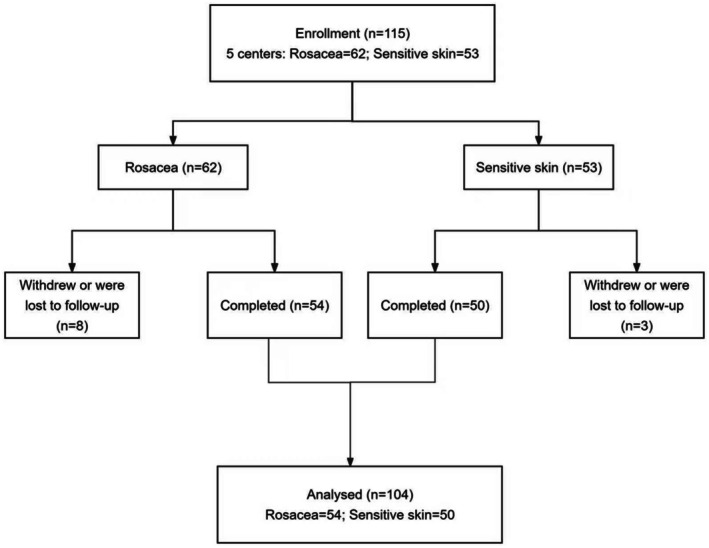
本研究为4周、多中心、开放标签、单组前瞻性研究,在5个中心纳入115例并完成104例(敏感皮肤50例、酒渣鼻54例;敏感皮肤经乳酸刺激试验LAST确认,酒渣鼻为轻、中度临床诊断)。受试者每日至少2次使用含马齿苋提取物3%、酸浆(挂金灯)花萼提取物0.25%、外源性神经酰胺与胆固醇(3:1:1)及Prinsepia utilis油的复方草本乳霜,于第0、7、14、28天以Corneometer、Tewameter、pH计、Sebumeter、Mexameter等客观仪器结合医师红斑评估(CEA)、症状自评及DLQI进行评估。
主要结果:28天时敏感皮肤组红斑指数(EI)由321.73降至295.80(-8.06%,p<0.001)、TEWL由31.21降至29.33(-6.02%,p<0.05);酒渣鼻组EI由356.87降至320.30(-10.25%,p<0.01)、TEWL由29.05降至24.34(-16.21%,p<0.01)。敏感皮肤组角质层含水量于D7/D14/D28显著上升(p<0.05/0.01/0.05),酒渣鼻组皮脂分泌各时点下降;两组CEA评分与主观症状均较基线改善,DLQI显著下降。两组间疗效差异均无统计学意义,提示改善或源于两类问题共有的屏障障碍与炎症通路。未观察到中重度相关不良事件。
局限性与解读:开放标签单组设计、无安慰剂对照,不能排除安慰剂效应与疾病自然病程;酒渣鼻组允许继续四环素类、羟氯喹、复方甘草酸苷及抗组胺药等标准治疗且用药未标准化,产品的单独贡献无法剥离(作者认为敏感皮肤组单用结果可提示其内在有效性)。样本量未做事前效能计算,且未校正多重比较,p值为名义值,作者明示结论应视为假设生成而非确证。文中抗炎机制(如经NF-κB通路抑制TNF-α等)引自文献,本研究未做直接机制学验证。总体而言,该乳霜耐受良好,提示其或可作为敏感皮肤/酒渣鼻屏障修护与症状缓解的辅助选择,值得随机双盲安慰剂对照试验进一步验证。
BackgroundProducts formulated with Prinsepia utilis oil and Portulaca oleracea extract have the potential to enhance stratum corneum hydration, decrease transepidermal water loss (TEWL), and alleviate erythema in individuals with sensitive skin.
AimsTo evaluate the efficacy and safety of a newly developed herbal cream in improving signs and symptoms in patients with sensitive skin and rosacea.
MethodsA 4‐week multicenter study was conducted among 104 participants across 5 centers. Participants were classified into the sensitive skin or rosacea group. Parameters were evaluated at 0, 7, 14, and 28 days. Transepidermal water loss rate (TEWL), hydration, pH, sebum, erythema index, clinician erythema assessment, self‐assessment, and dermatology life quality index were evaluated.
ResultsAt the 28‐day follow‐up, the sensitive‐skin group showed significant improvements compared to the baseline: the erythema index decreased by 8.06% (from 321.73 to 295.80; p < 0.001), TEWL decreased by 6.02% (from 31.21 to 29.33 g·h −1 ·m −2 ; p < 0.05), and the mean dermatology life quality index score improved from 4.9 ± 4.4 to 2.3 ± 3.0 ( p < 0.05). Similarly, the rosacea group demonstrated significant improvements: the erythema index decreased by 10.25% (from 356.87 to 320.3; p < 0.01), TEWL decreased by 16.21% (from 29.05 to 24.34 g·h −1 ·m −2 ; p < 0.01), and the mean dermatology life quality index improved from 5.6 ± 4.1 to 3.1 ± 3.5 ( p < 0.05).
ConclusionsThe newly developed cream demonstrated efficacy in alleviating the signs and symptoms of rosacea and sensitive skin, as evidenced by enhancements in skin barrier function and reductions in inflammation.
Keywords: complex herbal cream、erythema、inflammation、rosacea、sensitive skin、skin barrier function、TEWL
CEAClinician Erythema Assessment
DLQIDermatology Life Quality Index
SCstratum corneum
TEWLtransepidermal water loss rate
TNF‐αtumor necrosis factor‐α
1
Sensitive skin, characterized by sensory responses such as stinging, burning, or itching to normally non‐irritating stimuli, with or without erythema [ 1 , 2 ], shares key features with rosacea, a chronic inflammatory dermatosis, including neurovascular dysfunction, inflammation [ 3 , 4 ], and impaired barrier function, which increases transepidermal water loss (TEWL) and irritant susceptibility [ 5 , 6 , 7 , 8 , 9 ]. Effective management must address both barrier repair and inflammation.
Standard treatments can induce irritation, with frequent symptom recurrence. Thus, barrier‐supporting, soothing skincare may serve both as primary therapy for sensitive skin and an adjunct in rosacea. In this study, we evaluated the efficacy and safety of a novel cream formulated with a unique combination of herbal actives (Prinsepia utilis oil, Portulaca oleracea extract, Physalis alkekengi extract) and exogenous ceramides to improve skin barrier function and reduce inflammation. Unlike conventional barrier repair products, this formulation integrates synergistic mechanisms: Prinsepia utilis oil and Portulaca oleracea extract enhance barrier parameters and reduce erythema [ 10 ], while exogenous ceramides support lipid barrier repair [ 11 ]. Additionally, Physalis alkekengi extract provides specific anti‐inflammatory effects [ 12 , 13 ]. This combination offers a multi‐targeted approach to support barrier integrity and alleviate inflammation, assessed in individuals with sensitive skin and rosacea.
2
2.1
A 4‐week, multicenter, open‐label, prospective study was conducted at five centers. This study was approved by the appropriate ethics review committee (2021年审(360)号), and all participants provided written informed consent. The study protocol was registered at ClinicalTrials.gov (ChiCTR2300071789).
2.2
The complex herbal cream used in this study is a commercially available product manufactured by Beitaini Bio‐technological Co. Ltd. (Kunming, China). The cream was supplied directly by the manufacturer as a finished product and used according to their instructions. Its key active ingredients include Portulaca oleracea extract (3%), Physalis alkekengi calyx extract (0.25%), and a combination of exogenous ceramides, Prinsepia utilis oil, and cholesterol formulated at a 3:1:1 ratio.
2.3
Adult participants (16–65 years) were classified into two groups: sensitive skin and rosacea. Sensitive skin was confirmed using the lactic acid sting test (LAST) [ 14 ]. At room temperature (21°C ± 1°C), 50 μL of 10% lactic acid solution was applied to the nasolabial fold and one cheek (randomly selected). Participants reported their sensory response (stinging sensation) at 2.5 and 5.0 min post‐application using a four‐point scale (0, no; 1, mild; 2, moderate; 3, severe stinging). A total score (sum of 2.5‐min and 5‐min scores) ≥ 3 indicated positivity for sensitive skin. The LAST is a well‐established and common diagnostic tool for selecting participants with sensitive skin in dermatological research, particularly for evaluating the irritant or soothing potential of topical formulations [ 2 ]. The LAST offers greater objectivity than relying solely on subjective self‐reporting while still including a self‐reported sensory component [ 1 , 15 ]. Moreover, the LAST has high sensitivity and specificity, with approximately 90% of individuals who self‐identify as having sensitive skin also testing positive in the LAST [ 15 ]. Patients diagnosed with mild or moderate rosacea were included in the rosacea group. As each center recruited 24 patients (12 per group), 120 patients were planned across the five centers. Clinical drugs approved for patients with rosacea are tetracycline, hydroxychloroquine, compound glycyrrhizin, and antihistamines. Participants received one or more of these approved medications according to their individual clinical indications; the type and dose of medication were not standardized but were documented during the study. Participants were provided with the study product for self‐application. Participants began using the product before the clinical treatment period at least twice a day until the end of the test period. No other products with similar activities were allowed alongside the study product. Sunscreen use was standardized: participants with habitual sunscreen use continued their original product (brand and SPF/PA value documented), whereas those without such habits used physical sun protection (e.g., umbrella). Compliance was monitored by daily records, follow‐up visits, and product weighing.
2.4
Participants were followed up at baseline and on days 7 ± 2, 14 ± 2, and 28 ± 2. We evaluated the efficacy of the cream based on biophysical skin measurements, participants' self‐assessment, and physicians' assessment. All skin measurements were conducted in a climate‐controlled room at a constant temperature of 21°C ± 1°C and relative humidity of 40%–60%. Participants were instructed to cleanse their face using a standardized protocol before resting in the climate‐controlled room for at least 30 min to allow for skin acclimatization to the ambient conditions. This procedure was followed at each follow‐up visit to minimize environmental and physiological variability.
The biophysical skin measurements included facial photography, stratum corneum (SC) hydration, TEWL, pH, sebum secretion, and erythema index (EI). SC hydration was measured using a Corneometer (CM825, Courage and Khazaka, Cologne, Germany), which assesses hydration through capacitance, exploiting the high dielectric constant of water. As both sensitive skin and rosacea often involve barrier disruption and reduced hydration, this provides a reliable measure of skin moisture dynamics. TEWL was measured using a Tewameter (TM300, Courage and Khazaka), which quantifies the rate of water evaporation (g·h −1 ·m −2 ) via an open‐chamber method. Elevated TEWL reflects compromised barrier function, which is common in these skin conditions, making it a widely accepted standard for non‐invasively assessing barrier integrity [ 16 ]. Skin surface pH was measured using a skin pH meter (pH 900, Courage and Khazaka), employing a planar glass electrode for potentiometric measurement. Maintaining an acidic surface pH (4.0–6.0) is crucial for optimal barrier function, and the elevated pH levels (6.0) often observed in patients with rosacea and sensitive skin correlate with barrier impairment [ 17 , 18 ]. Sebum secretion was measured using a Sebumeter (SM815; Courage and Khazaka), which quantifies skin surface lipids (μg/cm 2 ) photometrically via sebum‐absorbing tape. Alterations in sebum levels affect the skin barrier [ 19 ]. The EI was measured using a narrow‐spectrum reflectance spectrophotometer (Mexameter MX18, Courage and Khazaka), which measures hemoglobin absorption via spectral analysis at specific wavelengths (568, 660, and 880 nm), providing an objective measure of vasodilation and inflammation [ 20 ]. Together, these instruments provide objective, reproducible, and non‐invasive assessments of key skin parameters for monitoring sensitive skin and rosacea and evaluating therapeutic interventions. Each measurement was performed in triplicate, and the mean was used for analysis. The sides of the test face are shown in Figure 1 .
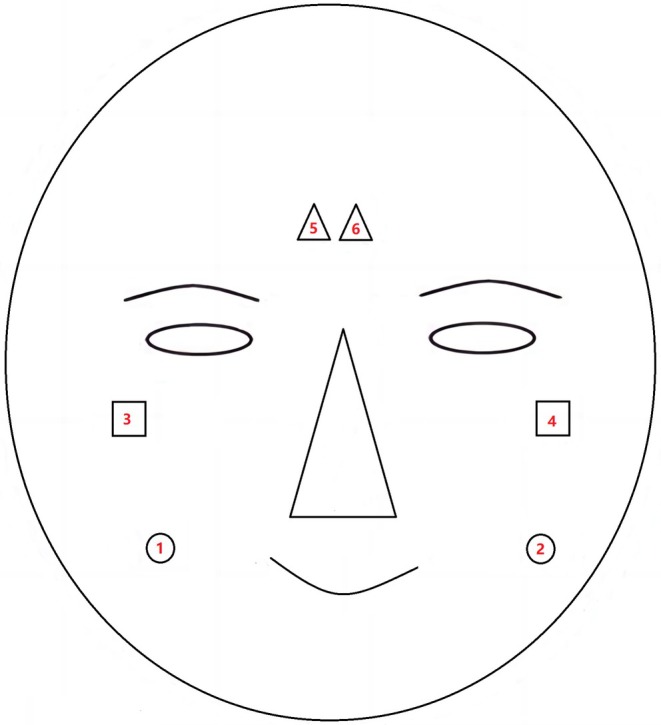
FIGURE 1 Test sites for skin biophysical measurements. Hydration of the stratum corneum: 3, 4; transepidermal water loss (TEWL): 3, 4; pH: 1, 2; sebum secretion: 5, 6; and erythema index: 3, 4.皮肤生物物理测量部位示意:角质层含水量与TEWL测3、4点,pH测1、2点,皮脂测5、6点,EI测3、4点。The front, left, and right sides of the face were photographed using the VISIA system (Canfield Scientific Inc., Fairfield, NJ, USA). Each photograph was captured using three light sources.
Two physicians performed a clinician erythema assessment (CEA) to assess the severity of facial erythema before and after using the product.
Questionnaires were provided to evaluate skin symptoms, such as prickling sensation, burning sensation, itching, pain, self‐perceived dryness, and tightness, graded as 0 (none), 1 (light), 2 (medium), and 3 (heavy). At the first and last follow‐up, the Dermatology Life Quality Index (DLQI) was used to measure quality of life. The DLQI consists of 10 questions for self‐evaluation of life experiences in the past week, including symptoms and feelings, daily activities, leisure, work and school, personal relationships, and treatment. Each item was rated on a 4‐point scale (0–3), with a total score of 0–30 points [ 21 ]. A higher score indicates a greater impact on quality of life [ 21 ]. Additionally, tolerance and adverse reactions were assessed throughout the follow‐up period.
2.5
Analyses were performed using SAS version 9.4 (SAS Institute Inc., Cary, NC, USA). Data were managed in SAS. Continuous variables are presented as mean ± standard deviation (SD), and categorical variables as frequency (percentage). All statistical tests were two‐sided with a significance level of α = 0.05. Given the exploratory nature of this study, no formal correction for multiple comparisons was applied; therefore, all reported p ‐values are nominal and the findings should be interpreted as hypothesis‐generating rather than confirmatory. Where applicable, effect sizes with corresponding 95% confidence intervals (CIs) are reported to facilitate interpretation beyond null hypothesis testing.
3
3.1
A total of 115 patients (62 with rosacea and 53 with sensitive skin) were enrolled at the five centers, among whom 11 did not complete the trial for various reasons. Thus, 104 participants completed the trial (54 with rosacea and 50 with sensitive skin) (Figure 2 ). Participant demographic characteristics, TEWL, SC hydration, pH, EI, and CEA scores at baseline are presented in Table 1 .
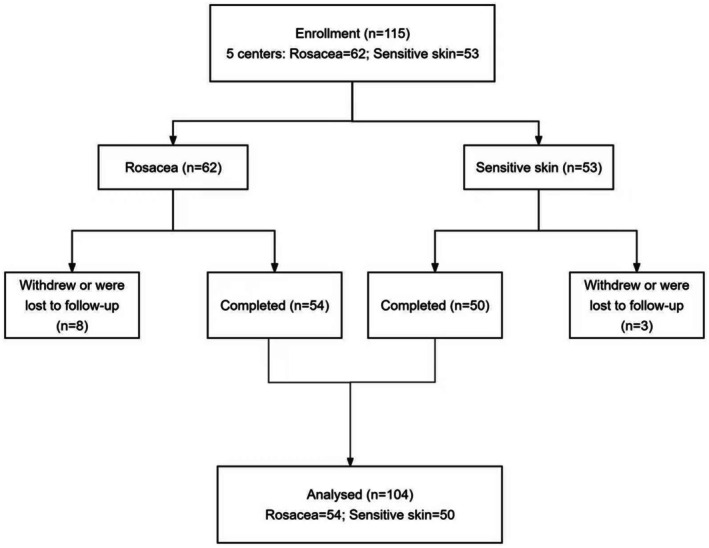
FIGURE 2 CONSORT flow diagram showing participant progression through the study. Of 115 enrolled participants (53 with rosacea, 62 with sensitive skin), 11 discontinued (3 and 8 per group, respectively), resulting in 104 participants included in the final analysis.CONSORT流程图:115例入组,11例脱落(酒渣鼻3例、敏感皮肤8例),104例纳入分析。TABLE 1 Participant demographic characteristics, transepidermal water loss rate, stratum corneum hydration, pH, erythema index, and CEA scores at baseline.
| Sensitive skin | Rosacea | |
|---|---|---|
| Total | 50 | 54 |
| Gender, n | ||
| Male | 2 | 6 |
| Female | 48 | 48 |
| Age, Mean (SD) | 29.48 (8.44) | 26.11 (5.41) |
| TEWL, Mean (SD) | 31.21 (17.37) | 29.05 (14.48) |
| SC hydration, Mean (SD) | 54.13 (13.44) | 56.66 (14.12) |
| PH, Mean (SD) | 5.27 (0.72) | 5.38 (1.12) |
| Erythema index, Mean (SD) | 321.73 (76.34) | 356.87 (73.13) |
| CEA scores,n (%) | ||
| 0 = clear | 5 (10%) | 1 (2%) |
| 1 = almost clear | 31 (62%) | 24 (44%) |
| 2 = mild | 9 (18%) | 26 (48%) |
| 3 = moderate | 5 (10%) | 3 (6%) |
| 4 = severe | 0 (0%) | 0 (0%) |
3.2
The EI showed the most significant change among the physiological skin measurements. The EI of the two groups significantly decreased at 28 days compared with that at baseline (from 321.73 ± 76.34 to 295.80 ± 71.65 in sensitive skin and from 356.87 ± 73.13 to 320.30 ± 73.15 in rosacea); however, there were no significant differences between the groups (Figure 3 , Table 2 ). The effect sizes indicated a small reduction for sensitive skin (Cohen's d = −0.35, 95% CI [−0.73, 0.03]) and a moderate reduction for rosacea (Cohen's d = −0.50, 95% CI [−0.90, −0.10]). Similarly, the TEWL of both groups significantly decreased on day 28 compared with that at baseline ( p < 0.01 in rosacea; p < 0.05 in sensitive skin), but the difference between the groups was not significant (Cohen's d = −0.10, 95% CI [−0.48, 0.28] for sensitive skin; Cohen's d = −0.36, 95% CI [−0.75, 0.04] for rosacea). SC hydration increased on days 7, 14, and 28 in sensitive skin; these increases were significant ( p < 0.05), with a small‐to‐moderate effect size at day 28 (Cohen's d = 0.34, 95% CI [−0.04, 0.72]). A slight increase in skin pH after product use was observed; however, all values were within the normal range (Cohen's d = 0.68, 95% CI [0.29, 1.08] for sensitive skin; Cohen's d = 0.47, 95% CI [0.06, 0.87] for rosacea).
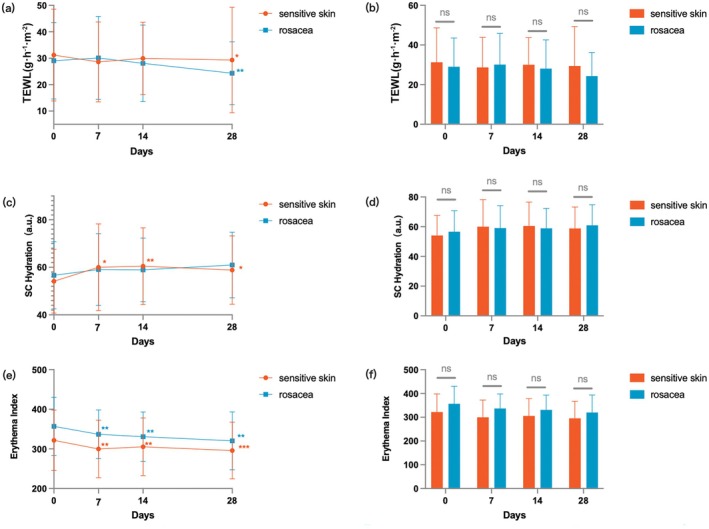
FIGURE 3 (a, c, e) Time‐course changes in transepidermal water loss (TEWL), stratum corneum (SC) hydration, and erythema index in the sensitive skin and rosacea groups. TEWL significantly decreased by Day 28 compared to baseline (D0) in both groups (p < 0.001). SC hydration significantly increased on Days 7, 14, and 28 in the sensitive skin group (p < 0.05, p < 0.01). Erythema index significantly decreased on Days 7, 14, and 28 in both groups (p < 0.01, p < 0.001). (b, d, f) Intergroup comparisons of TEWL, SC hydration, and erythema index at each time point. No significant differences were observed between the two groups (“ns”). *p < 0.05, **p < 0.01, ***p < 0.001.TEWL、SC含水量与EI的时程变化及组间比较:两组TEWL与EI均较基线显著下降,组间无显著差异(ns)。TABLE 2 Changes in skin biophysical parameters over time in the sensitive skin group and the rosacea group. In the sensitive skin group, transepidermal water loss (TEWL) decreased significantly by Day 28 (p < 0.05). No significant changes were observed in the rosacea group (p > 0.05). Stratum Corneum (SC) hydration increased significantly in the sensitive skin group at Day 7 (p < 0.05), Day 14 (p < 0.01), and Day 28 (p < 0.05), while no significant changes were noted in the rosacea group (p > 0.05). Skin pH increased significantly in the sensitive skin group at Day 14 (p < 0.001), whereas in the rosacea group, pH increased significantly at Day 7, Day 14, and Day 28 (p < 0.01 for all). Sebum secretion showed no significant changes in the sensitive skin group (p > 0.05) but decreased significantly in the rosacea group at all timepoints (p < 0.05 or p < 0.01). The erythema index decreased significantly in the sensitive skin group across all timepoints, with the most significant reduction at Day 28 (p < 0.001). In the rosacea group, erythema significantly decreased only at Day 14 (p < 0.05) and Day 28 (p < 0.01).
| SENSITIVE SKIN | ROSACEA | ||
|---|---|---|---|
| Day 0 | Day 7 | Day 14 | Day 28 |
| TEWL | means ± SD | 31.21 ± 17.37 | 28.62 ± 15.14 |
| Percentage of change | — | −8.30% | −4.04% |
| p | — | 0.075 | 0.602 |
| SC hydration | means ± SD | 54.13 ± 13.44 | 60.01 ± 18.25 |
| Percentage of change | — | 10.86% | 11.71% |
| p | — | < 0.05 * | < 0.01 ** |
| PH | means ± SD | 5.27 ± 0.72 | 5.46 ± 0.65 |
| Percentage of change | — | 3.61% | 10.06% |
| p | — | 0.101 | < 0.001 *** |
| Sebum secretion | means ± SD | 78.04 ± 56.79 | 82.41 ± 74.52 |
| Percentage of change | — | 5.60% | 8.97% |
| p | — | 0.527 | 0.367 |
| Erythema index | means ± SD | 321.73 ± 76.34 | 299.84 ± 72.63 |
| Percentage of change | — | −6.80% | −5.06% |
| p | — | < 0.01 ** | < 0.01 ** |
3.3
Objectively, the effect of treatment on erythema was confirmed by a decrease in the EI; subjectively, the treatment effect was verified by a decrease in the CEA score. On days 7, 14, and 28, the CEA scores in both groups were significantly lower than those at baseline (Figures 4 , 5 ) ( p < 0.01).
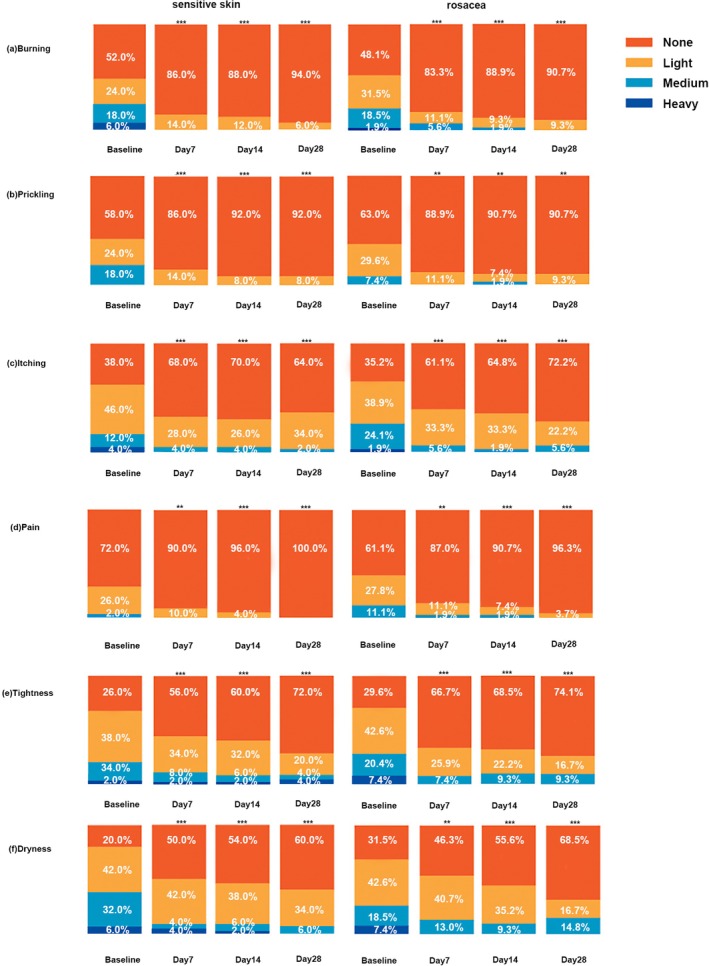
FIGURE 4 Percentage distribution of Clinician Erythema Assessment (CEA) scores at baseline (D0) and follow‐up visits (D7, D14, D28) in the sensitive skin and rosacea groups. CEA was rated on a 4‐point ordinal scale: 0 = clear (no visible erythema), 1 = almost clear (slight redness), 2 = mild (definite erythema), 3 = moderate (marked erythema). In the sensitive skin group, the proportion of lower scores (CEA 0–1) increased significantly at Days 7, 14, and 28 compared to baseline (p < 0.001). In the rosacea group, significant reductions in higher‐grade erythema (CEA 2–3) were observed at the same time points (p < 0.01). *p < 0.05, **p < 0.01, ***p < 0.001.CEA评分分布:两组D7、D14、D28低分级(0–1)比例升高、高分级(2–3)下降(p<0.01)。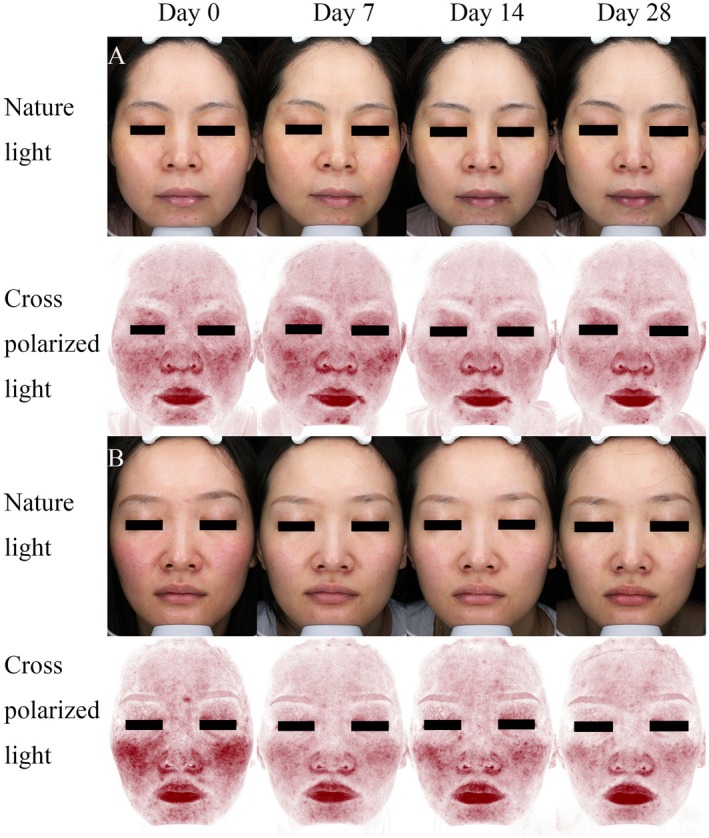
FIGURE 5 Typical images of both cheeks. Participant A has sensitive skin. Participant B has rosacea.典型面部照片:A为敏感皮肤、B为酒渣鼻受试者,使用前后双颊对比。3.4
The participants' sensations, including prickling, burning, itching, pain, self‐perceived dryness, and tightness, significantly improved (Figure 6 , Table 3 ). However, there were no significant differences between the rosacea and sensitive skin groups.
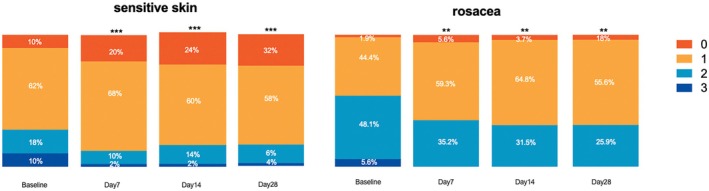
FIGURE 6 Self‐assessment of skin discomfort (burning, prickling, itching, pain, tightness, and dryness) at baseline (D0) and follow‐up visits (D7, D14, D28) in the sensitive skin and rosacea groups. Burning, itching, and tightness showed significant improvement in both groups at all follow‐up visits (p < 0.001). Prickling decreased significantly at all time points in the sensitive skin group (p < 0.001), and in the rosacea group (p < 0.01). Pain scores were significantly lower at Day 7 (p < 0.01) and further decreased at Days 14 and 28 (p < 0.001). Dryness improved significantly in the sensitive skin group at all time points (p < 0.001) and in the rosacea group at Day 7 (p < 0.01), with greater reductions at Days 14 and 28 (p < 0.001). *p < 0.05, **p < 0.01, ***p < 0.001.主观不适(灼热、刺痛、瘙痒、疼痛、紧绷、干燥)自评变化:多数症状在各随访时点显著改善。TABLE 3 Changes in participant self‐assessment of sensation after intervention.
| SENSITIVE SKIN | ROSACEA | |||
|---|---|---|---|---|
| Day 0 | Day 7 | Day 14 | Day 28 | Day 0 |
| Burning | Graded | None | 52.0% | 86.0% |
| Light | 24.0% | 14.0% | 12.0% | 6.0% |
| Medium | 18.0% | 0.0% | 0.0% | 0.0% |
| Heavy | 6.0% | 0.0% | 0.0% | 0.0% |
| p | — | < 0.001*** | < 0.001*** | < 0.001*** |
| Prickling | Graded | None | 58.0% | 86.0% |
| Light | 24.0% | 14.0% | 8.0% | 8.0% |
| Medium | 18.0% | 0.0% | 0.0% | 0.0% |
| Heavy | 0.0% | 0.0% | 0.0% | 0.0% |
| p | — | < 0.001*** | < 0.001*** | < 0.001*** |
| Itching | Graded | None | 38.0% | 68.0% |
| Light | 46.0% | 28.0% | 26.0% | 34.0% |
| Medium | 12.0% | 4.0% | 4.0% | 2.0% |
| Heavy | 4.0% | 0.0% | 0.0% | 0.0% |
| p | — | < 0.001*** | < 0.001*** | < 0.001*** |
| Pain | Graded | None | 72.0% | 90.0% |
| Light | 26.0% | 10.0% | 4.0% | 0.0% |
| Medium | 2.0% | 0.0% | 0.0% | 0.0% |
| Heavy | 0.0% | 0.0% | 0.0% | 0.0% |
| p | — | 0.009** | < 0.001*** | < 0.001*** |
| Tightness | Graded | None | 26.0% | 56.0% |
| Light | 38.0% | 34.0% | 32.0% | 20.0% |
| Medium | 34.0% | 8.0% | 6.0% | 4.0% |
| Heavy | 2.0% | 2.0% | 2.0% | 4.0% |
| p | — | < 0.001*** | < 0.001*** | < 0.001*** |
| Dryness | Graded | None | 20.0% | 50.0% |
| Light | 42.0% | 42.0% | 38.0% | 34.0% |
| Medium | 32.0% | 4.0% | 6.0% | 6.0% |
| Heavy | 6.0% | 4.0% | 2.0% | 0.0% |
| p | — | < 0.001*** | < 0.001*** | < 0.001*** |
3.5
In both groups, the mean total DLQI score at day 28 was significantly lower than that at baseline ( p < 0.05), indicating an improvement in quality of life. In the sensitive skin group, the mean DLQI declined from 4.9 ± 4.4 at baseline to 2.3 ± 3.0 on day 28. In the rosacea group, the mean DLQI declined from 5.6 ± 4.1 at baseline to 3.1 ± 3.5 on day 28. Delta values were defined as the difference between the mean DLQI values at day 28 and baseline. No significant differences in delta values were observed between the groups ( p > 0.05).
3.6
No moderate or severe adverse events related to product use, such as erythema or tingling, were observed during the study period.
4
The results of this study demonstrate that the novel composite herbal cream significantly improved clinical assessment scores (e.g., CEA), objective measurements (e.g., TEWL and EI), and subjective symptoms (stinging, burning, itching, dryness, and tightness) in individuals with sensitive skin and rosacea. These results suggest that simultaneously targeting skin barrier dysfunction and addressing clinical manifestations commonly associated with cutaneous inflammation offers an effective strategy for managing these intertwined skin conditions.
Rosacea pathophysiology involves a complex interplay of neurovascular dysregulation, altered innate immunity, and often a compromised epidermal barrier [ 22 ]. Similarly, although sensitive skin is commonly heterogeneous, impairment of epidermal barrier function serves as a central pathogenic mechanism [ 23 ]. Our findings align with this understanding, showing significant reductions in TEWL, which indicates barrier repair, along with decreased CEA scores, which reflect reduced clinical severity of erythema. The significant decrease in EI, observed as early as day 7 and sustained until days 14 and 28 in both groups, further supports this clinical observation. The marked alleviation of subjective sensory symptoms (e.g., stinging and burning), which are often linked to neurogenic inflammation, further implies beneficial effects of the novel herbal cream on the pathways involved in these skin conditions.
Several potential confounding factors must be considered when interpreting these findings. First, this was an open‐label, single‐arm study without a placebo control group. The absence of a placebo arm means that we cannot definitively exclude the possibility that the observed improvements were influenced by a placebo effect, the natural course of the conditions, or regression to the mean, particularly for subjective symptoms. The act of participating in a study and applying any cream, regardless of its active ingredients, can lead to perceived and even objective improvements. Second, the rosacea cohort was permitted to continue their standard medical treatments. Although this reflects a real‐world clinical scenario of adjunctive therapy, it makes it impossible to isolate the effect of the herbal cream from that of the concurrent medications. We demonstrated the apparent intrinsic efficacy of the cream in the sensitive‐skin group (who used it as a monotherapy). However, the magnitude of the synergistic or additive effect in the rosacea group remains unquantified. Future randomized, placebo‐controlled, and double‐blind studies are necessary to control for these variables and robustly validate the cream's efficacy. Furthermore, although the baseline characteristics between the two groups were generally similar, subtle differences in disease severity or lifestyle factors (e.g., diet, stress levels, and sun exposure) could have influenced the outcomes. We did not control for these environmental or behavioral factors, which are known to trigger flare‐ups in both sensitive skin and rosacea. These limitations underscore the preliminary nature of our findings and highlight the need for more rigorously controlled trials.
In comparison to commercially available barrier‐repair moisturizers marketed for rosacea, our novel cream shares a foundational strategy while offering a distinct mechanistic approach. Standard‐of‐care moisturizers for rosacea typically combine barrier‐replenishing lipids, such as ceramides, with specific anti‐inflammatory or neurosensory‐calming agents (e.g., licochalcone A) to manage erythema and sensitivity [ 24 ]. Our formulation aligns with this principle by incorporating exogenous ceramides [ 11 ]. However, it distinguishes itself through the integration of a unique combination of herbal actives. This blend of Prinsepia utilis oil, Portulaca oleracea extract, and Physalis alkekengi extract is designed to provide a multi‐targeted, synergistic effect—simultaneously enhancing endogenous barrier parameters, reducing inflammation, and mitigating erythema [ 10 , 12 , 13 ]. This contrasts with strategies that often rely on a single primary active ingredient to address inflammation. While direct head‐to‐head clinical comparisons are needed, recent reviews strongly support the rationale for such integrated approaches, re‐emphasizing the critical and complementary role of both barrier restoration (e.g., ceramides) and targeted anti‐inflammatory agents in rosacea management [ 25 , 26 ].
The observed efficacy is attributed to the multi‐target actions of the herbal ingredients in the cream. For example, P. oleracea has demonstrated anti‐inflammatory functions [ 27 , 28 ], and P. alkekengi constituents mediate anti‐inflammatory effects partly by inhibiting the NF‐κB pathway and downstream mediators such as TNF‐α [ 12 , 13 ]. These documented anti‐inflammatory properties provide a plausible biological basis for the improved inflammation in the participants, which included erythema (CEA, EI) and related symptoms.
Beyond potential direct anti‐inflammatory effects, the improvement in TEWL highlights effective barrier restoration. Prinsepia utilis oil restores skin barrier function through coordinated regulation of corneocyte envelope proteins, lipid synthesis enzymes, and tight junction proteins [ 29 ]. Exogenous ceramides serve as precursors for endogenous ceramide synthesis and modulate keratinocyte differentiation to enhance epidermal barrier function [ 30 ]. Notably, barrier repair is not merely a secondary benefit; a restored barrier reduces TEWL, minimizes penetration by external irritants and microbes, and can itself modulate keratinocyte signaling to downregulate inflammation [ 31 ]. This bidirectional relationship between barrier function and inflammation may explain the synergistic effects observed in this study.
Comparing this herbal cream with standard therapies such as azelaic acid (AA) and metronidazole (MTZ) provides important context, as both are recommended first‐line treatments for reducing rosacea lesions and erythema [ 3 ]. However, unlike AA and MTZ, which do not primarily target barrier repair and may cause initial irritation, the herbal cream improved barrier function (demonstrated by significant TEWL reduction) while also exerting anti‐inflammatory effects. Direct statistical comparison with standard treatments was not feasible in the rosacea group due to concomitant therapies, but the significant improvements in the sensitive‐skin group using only the test cream—reductions in EI (−8.06%, p < 0.001) and TEWL (−6.02%, p < 0.05)—support its apparent intrinsic efficacy. The erythema reduction in the rosacea group (−10.25%, p < 0.01) should be interpreted in this context. Reported efficacy of AA and MTZ varies across studies, and definitive comparative conclusions about their relative efficacy would ideally rely on head‐to‐head randomized controlled trials [ 22 ]. The herbal cream demonstrated good tolerability (based on adverse event data). This favorable tolerability profile combined with the dual action of the cream (barrier repair plus improvement of symptoms associated with inflammation) suggests potential applications: (1) for patients intolerant to standard therapies or seeking gentler options; (2) as an adjunct to standard therapies to mitigate irritation and improve barrier function, potentially enhancing overall treatment adherence and outcomes, which is consistent with recommendations for comprehensive rosacea management [ 3 ]; and (3) for maintenance therapy focused on long‐term skin homeostasis and barrier health.
Previous research typically focused on either barrier repair primarily for sensitive skin or anti‐inflammatory agents primarily for rosacea flares. Our study is the first to include both patient groups and employ both clinical and objective assessments to track erythema, alongside barrier metrics and subjective symptoms. The likelihood of shared mechanisms underlying these skin conditions is reinforced by our findings that the cream effectively addressed both barrier issues (as shown by improved TEWL and reduced sensations of dryness and tightness) and clinical symptoms associated with inflammation (as shown by reduced CEA and EI scores and decreased stinging, burning, and itching) across both conditions, which implies the need for a holistic treatment approach. The lack of significant differences in efficacy between the sensitive‐skin and rosacea groups implies that the product targeted fundamental shared pathologies rather than disease‐specific triggers, warranting further investigation into potential differential effects between specific rosacea subtypes or sensitive‐skin phenotypes.
4.1
This study provides promising preliminary data; however, several limitations must be acknowledged.
Its open‐label, single‐arm design without a placebo group means the cream's effects cannot be definitively separated from placebo responses or natural progression. In the rosacea group, concurrent medical therapies confound the results, making it impossible to isolate the cream's specific contribution. From a statistical perspective, two additional limitations should be noted. First, the sample size was not determined by a formal a priori power calculation but was based on precedent and feasibility considerations, which may limit power to detect smaller or more subtle effects. Second, given the exploratory nature of the analyses, no correction for multiple comparisons was applied; therefore, all reported p ‐values are nominal, which may increase the risk of Type I error (false positives). Accordingly, these results should be interpreted cautiously as hypothesis‐generating rather than confirmatory. Other uncontrolled variables, including lifestyle and environmental/exposomal influences [ 32 , 33 ], may also have influenced the outcomes. Lastly, direct mechanistic analyses were not conducted to confirm the suggested anti‐inflammatory pathways.
Future research should incorporate randomized, double‐blind, active‐controlled or placebo‐controlled designs with longer follow‐up periods to confirm our findings, assess long‐term efficacy and safety, including effects with continued maintenance use, and explicitly define the therapeutic benefits. Future studies should be designed with pre‐specified sample sizes based on formal power calculations to ensure adequate power to detect clinically meaningful differences. To control the risk of false positives due to multiple testing, confirmatory studies should apply appropriate correction methods, such as False Discovery Rate (FDR) correction. Incorporating direct mechanistic assessments would further elucidate the anti‐inflammatory and barrier‐repair mechanisms, and exploring the impact on the skin microbiome may provide additional insights. Additionally, stratifying participants according to rosacea subtype and sensitive skin subgroups in future trials could provide more targeted clinical insights.
5
The novel composite herbal cream is well‐tolerated and effective for improving the symptoms of both sensitive skin and rosacea. By concurrently enhancing skin barrier function and reducing clinical signs associated with inflammation, this product addresses key pathophysiological drivers of these skin conditions. The significant improvements observed even in the sensitive‐skin group underscore its inherent efficacy. Given its dual action and favorable tolerability, this herbal cream may serve as an adjunct or alternative therapy for patients with sensitive skin or rosacea, pending confirmation from future controlled trials.
Xiaohong Shu, Wei Huo, Zhaoxia Li, and Lin Zou performed the research; Li Li and Xi Wang designed the research; Yuling Chen, Qiujing Chen, and Wei Huo analyzed the data; Yuling Chen and Xi Wang wrote the manuscript; Xiaohong Shu, Li Li and Xi Wang reviewed and revised the manuscript. All authors have read and approved the final manuscript.
Use of Artificial Intelligence Statement: DeepSeek was used solely for language editing, improvement of readability, and assistance with reference formatting during manuscript preparation. It was not used to generate scientific content, interpret data, draw conclusions, or select references. All AI‐assisted content and formatted references were carefully reviewed and verified by the authors, and any inaccuracies were corrected against the original sources to ensure the accuracy, validity, and integrity of the final manuscript.
This study was conducted in accordance with the Declaration of Helsinki and was approved by the appropriate ethics review committee (Approval No. 2021审(360)号). Informed consent was obtained from all participants.
The authors declare no conflicts of interest.
声明:中文精读 · 仅供学术参考。内容来自公开文献检索,不代表本人观点,不构成诊疗建议。 医疗美容需在正规医疗机构由执业医师实施。
基于相同主题推荐 · 继续深挖
4周多中心开放标签前瞻性研究:5个中心入组115例、104例完成(敏感皮肤50例、酒渣鼻54例),第0/7/14/28天评估。
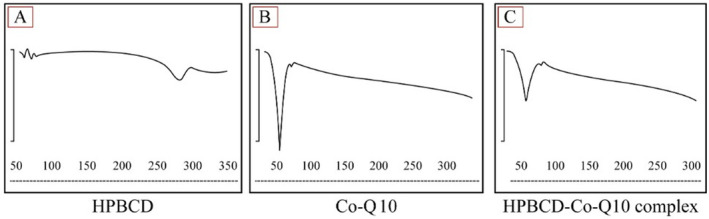
CoQ10经HPβCD包合后水溶性显著提升(约17.5 mg/mL)
研究设计:前瞻性、单盲、半脸对照试验,24名35–55岁健康女性(平均45.2岁),一侧使用高频面部神经肌肉电刺激(fNMES,40–190 kHz,CERTEC)+ 基础护肤,对