皮内注射 A 型肉毒毒素(Incobotulinumtoxin A)改善口罩痘(maskne)皮肤质量:前瞻性随机双盲安慰剂对照研究
2026年10月13日26 min read
Journal of Cosmetic Dermatology
Journal of Cosmetic Dermatology
结论与实践要点
本文发表于 Journal of Cosmetic Dermatology(DOI: 10.1111/jocd.70391),为一项前瞻性、随机、双盲、安慰剂对照的单中心临床试验,旨在评估皮内注射 Incobotulinumtoxin A(INCO)对佩戴口罩所致皮肤问题(maskne)患者皮肤质量的影响。研究由德国汉堡医师协会独立伦理委员会与德国联邦药品和医疗器械研究所(BfArM)于 2021 年批准,遵循赫尔辛基宣言与 ICH-GCP。共纳入 36 例 18-60 岁女性,入选标准为因规律佩戴口罩而对下面部皮肤质量不满;原文明确将 maskne 作为功能性或美学性皮肤障碍(主要反映于客观生物物理参数)而非皮肤病诊断。既往 12 个月内于中下面部接受过 BoNT-A、透明质酸、PRP、CaHA、激光或超声治疗者,以及妊娠哺乳期女性被排除。受试者按 2:1 随机分为 INCO 组(24 例,总量 20 U)与安慰剂组(12 例,生理盐水),在中下面部固定注射区域内每侧 20 个注射点给药,每点 0.025 mL 含 0.5 U;注射容量、点数、针型与注射器在两组完全一致,注射者与受试者均设盲。
方法学上,研究设置 6 次访视(筛选访视于基线前 -14 至 0 天、基线第 1 天、随访第 28±3、56±7、84±7、112±7 天),生物物理测量在标准化环境(温度约 20°C、湿度约 50%)下完成:皮肤粗糙度(SEr)用 Visioscan VC 20plus、皮脂用 Sebumeter SM 18、毛孔用 VisioFace 1000 D、红斑指数用 Mexameter MX 18;同时以 Global Impression of Change Scale(GICS)记录患者与研究者评价,并以标准化摄影(Canon PowerShot G10)记录变化。统计分析采用混合 ANOVA 与 Welch 检验,显著性水平 p<0.05,正态性与球形性假设均经检验满足。最终 33 例完成研究(年龄 39.2±8.9 岁),其中 22 例接受 INCO、11 例接受安慰剂。
关键结果方面,皮肤粗糙度(SEr)在所有随访时间点均显著优于安慰剂:第 28 天 INCO 组 -1.01 对安慰剂组 +0.24(p<0.001)、第 56 天 -0.89 对 +0.22(p=0.003)、第 84 天 -0.83 对 +0.20(p<0.001)、第 112 天 -0.61 对 +0.20(p=0.037)。皮脂水平在第 28 天显著下降(-19.27 对 +1.27 μg/cm²,p<0.001),第 56 天(-18.09 对 +0.73,p<0.001)与第 84 天(-7.09 对 +0.82,p=0.008)仍有显著差异,但第 112 天差异不再显著(-0.86 对 +1.00,p=0.41)。毛孔大小在第 28 天(INCO -0.22% 对安慰剂 +0.01%,p<0.001)与第 56 天(-0.14% 对 +0.03%,p=0.014)显著缩小,第 84 天(p=0.095)与第 112 天(p=0.091)差异不显著。红斑指数第 28 天(-43.81 对 -3.27,p=0.041)与第 56 天(-40.68 对 +2.00,p=0.038)显著下降。安慰剂组各指标在研究期内保持稳定且呈正态分布,研究虽于冬季进行(寒冷可能普遍降低皮脂),但安慰剂组皮脂未下降,作者据此认为观察到的改善为治疗相关而非季节或环境因素所致。
主观与影像结果一致:GICS 评分显示患者在第 28 天(p<0.001)、56 天(p=0.004)与 84 天(p=0.004)报告整体印象改善(+1),研究者在第 28 天(p<0.001)与 56 天(p=0.001)同样记录到改善;标准化照片显示治疗组毛孔更细、皮肤更光滑有光泽。安全性方面,治疗总体耐受良好,仅 4 例出现轻微、典型的短暂针孔淤青并自行消退、无需干预;尽管注射区域靠近口角,未观察到唇部不对称或下垂。作者指出,皮内 INCO 不含复合蛋白、在现有肉毒毒素制剂中总蛋白负荷最低,可能支持更好的耐受性与更低免疫原性;并基于下面部主要表情肌(如颊肌、降口角肌)位置较深、不太可能由浅表肌肉松弛驱动的解剖学论证,提出其作用机制更倾向于真皮调节(既往研究推测涉及抑制肥大细胞脱颗粒与通过乙酰胆碱及神经肽通路调节神经源性炎症)而非神经肌肉阻滞。据作者所述,这是首个评估皮内 INCO 用于高加索人群 maskne 相关皮肤问题的安慰剂对照研究,填补了以往以亚洲人群为主的研究空白。
对临床的启示需限定在证据范围内:该研究提供的中下面部皮内给药方案为总量 20 U、每点 0.5 U、每侧 20 点、每点 0.025 mL,作用时程约 3 个月(与 BoNT-A 已知作用时长相符),提示对因长期佩戴口罩出现皮肤粗糙、皮脂分泌增多、毛孔明显与红斑的患者,皮内 INCO 或可作为一种针对皮肤质量参数的辅助选择,其靶点与传统针对炎性皮损的痤疮治疗不同。但应强调:本为中下面部皮内应用,超出该产品已获批的上面部动态皱纹适应证,属超说明书使用,须结合当地法规与知情同意;本研究样本量小(完成 33 例)、单中心、仅白人女性、仅测试单一 20 U 剂量方案,毛孔与皮脂效果在 112 天时已不显著,且未设置痤疮严重程度分级与成本效果分析,因此不宜将数值直接外推至其他人种、剂量与部位。总体而言,如原文结论所述,这是一项支持皮内 INCO 用于 maskne 相关皮肤问题的早期循证信号,其确立仍有待更大样本、更多样人群与不同剂量方案的进一步研究验证。
BackgroundSkin quality affects both external perception and psychological well‐being. A decline in skin quality, as seen in acne tarda or due to prolonged mask use, especially in healthcare professionals, can be reflected in emergent perceptual category (EPC) parameters. During the COVID‐19 pandemic, this led to an increase in mask‐induced acneiform eruptions, commonly referred to as “maskne.” Intradermal application of Incobotulinumtoxin A (INCO) may improve skin quality, but data in maskne patients are limited.
AimsTo evaluate the efficacy of intradermal INCO on skin quality in women with maskne.
Patients/MethodsIn a prospective, randomized, double‐blind, placebo‐controlled trial, 36 women with maskne received intradermal INCO (20 U) or placebo (2:1) in the mid and lower face. Skin roughness (SEr), sebum level, pore size, and erythema index were measured over 112 days using biophysical tools. Patient and expert assessments were recorded via Global Impression of Change Scale (GICS).
ResultsThirty‐three participants completed the study. The INCO group showed significantly greater SEr improvement than placebo on days 28, 56, 84, and 112. Sebum level decreased significantly by day 28 (−19.27 μg/cm 2 vs. +1.27 μg/cm 2 in placebo; p < 0.001). Pore size differed significantly at days 28 and 56. Erythema decreased in both groups, with greater reduction in the INCO group (−43.81 vs. −3.27; p = 0.041). Both patients and investigators reported improved skin quality in the treatment group.
ConclusionIntradermal injection of INCO represents a promising approach for managing mask‐associated skin conditions (“maskne”). While further investigations are necessary to fully establish its benefits, the present study offers encouraging evidence supporting its efficacy.
Keywords: botulinum toxin、COVID‐19、Incobotulinumtoxin a (INCO)、mask、maskne、skin quality acne
1
Healthy skin is widely recognized as an essential component of overall well‐being and the quality of life [ 1 , 2 ]. The concept of skin quality encompasses a variety of parameters that can be divided into four emergent perceptual categories (EPCs). These are: skin tone evenness, skin surface evenness, skin firmness, and skin glow [ 3 ].
These EPCs can be negatively affected by clinical symptoms such as redness, irritation, and papulopustular eruptions. Such features are observed in individuals with acne tarda. In women with adult acne, inflammatory lesions such as papules, pustules, and nodules usually appear on the lower part of the face in a U‐shaped pattern and tend to worsen during the premenstrual phase [ 4 ]. Such dermatologic alterations have also been seen in healthcare professionals who wear Filtering Face Piece (FFP) or surgical masks for extended periods [ 5 ]. During the COVID‐19 pandemic, such mask‐induced skin changes were reported with increasing prevalence, likely due to mandatory and continuous mask usage. This phenomenon has been termed “maskne”—a neologism formed by combining the words “mask” and “acne”—as it results in acneiform skin lesions within the mask‐wearing areas [ 6 ].
Several published studies have demonstrated that Botulinum NeuroToxin Type A (BoNT‐A) can reduce erythema (rosacea), seborrhea, and other signs of poor skin quality [ 7 , 8 , 9 , 10 , 11 ]. Since 2002, formulations of Incobotulinumtoxin A (INCO) containing only the purified BoNT‐A neurotoxin, free of complexing proteins, have been approved for aesthetic treatment of dynamic facial lines in the upper face regions [ 12 , 13 ]. While intramuscular application reduces facial muscle activity, intradermal use has shown additional effects on skin quality, including refined texture, minimized pores, and decreased sebum levels, as demonstrated previously [ 9 , 14 , 15 ]. Therefore, the aim of the present study was to investigate the effects of intradermally administered INCO in the lower and midface regions on skin quality in patients affected by maskne.
2
The single‐center study was designed as prospective, randomized, double‐blind, and placebo‐controlled. It was conducted in accordance with the guidelines of the Declaration of Helsinki and the International Conference of Harmonization Guidelines for Good Clinical Practice. In 2021, the Independent Ethics Committee (Ethikkommission der Ärztekammer Hamburg) and the Federal Institute for Drugs and Medical Devices (Bundesinstitut für Arzneimittel und Medizinprodukte) approved the study.
A total of 36 women aged 18 to 60 years participated in a 112‐day observational period. They were included if they reported dissatisfaction with the skin quality in the lower face associated with regular mask‐wearing. Although the term “maskne” was used as a guiding concept, the condition was not regarded or diagnosed as a dermatosis, but rather as a functional or aesthetic impairment of the skin, primarily reflected in objective biophysical parameters. Participants who had received prior treatments with BoNT‐A, hyaluronic acid (HA), platelet‐rich plasma (PRP), calcium hydroxylapatite (CaHA), laser, or ultrasound in the mid or lower face within the past 12 months were excluded. In addition, pregnant or breastfeeding women were not eligible for participation. Written informed consent was obtained from all participants prior to the commencement of any study‐related procedures.
The study included six visits in total: a screening visit conducted between −14 and 0 days before baseline, a baseline visit (day 1), and four follow‐up visits on days 28 ± 3, 56 ± 7, 84 ± 7, and 112 ± 7. At baseline, 24 subjects received an intradermal injection of a total dose of 20 U INCO (verum group), and 12 subjects received a placebo (saline solution) in the middle and lower face following a fixed injection field with 20 injection points per side (Figure 1 ). The INCO treatment involves the administration of 0.025 mL aliquots of 0.5 U per injection point (Figure 2 ). Participants were randomly assigned to one of the two treatment groups. Both the injector and the participants were blinded to group allocation. Injection volume, number of injection points, needle type, and syringe were identical in both groups to ensure procedural consistency.
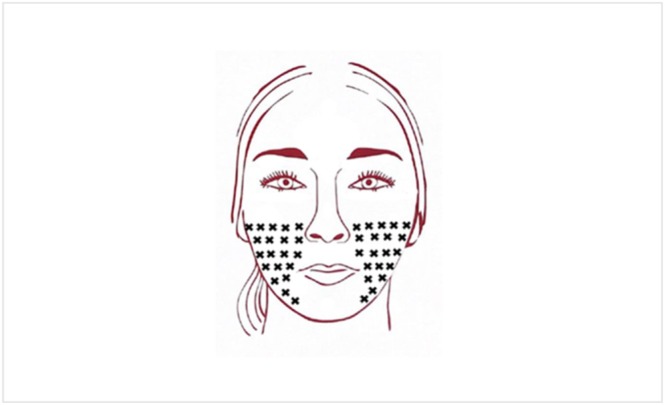
FIGURE 1 Injection scheme (0.025 mL aliquots of 0.5 U per injection point).注射方案示意图,标示每个注射点给予 0.5 U、0.025 mL 容量及每侧 20 个注射点的固定注射区域布局。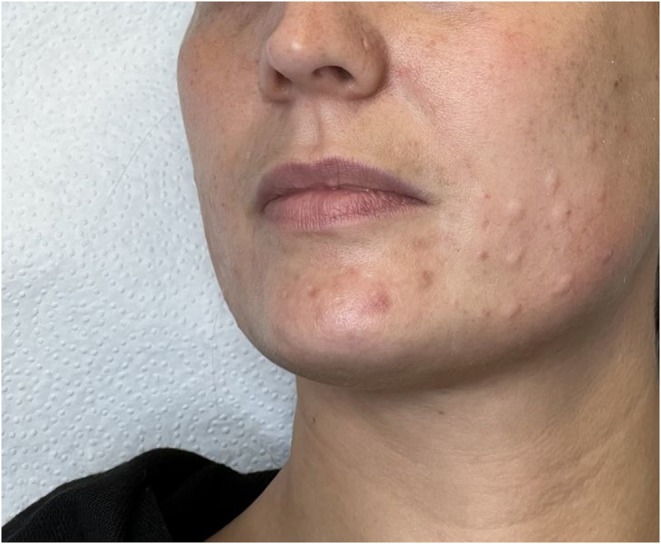
FIGURE 2 Injection technique (intradermal application).注射技术演示图,展示 INCO 于中下面部的皮内给药操作方式。Biophysical measurements were performed under standardized conditions (temperature at ~20°C, humidity at ~50%) using devices from Courage+Khazaka electronic GmbH, Cologne, Germany. Subjects were not allowed to wear face masks during the measurements to ensure standardization. Skin roughness (SEr) was assessed with Visioscan VC 20plus, sebum level with Sebumeter SM 18, pore size with VisioFace 1000 D, and erythema index with Mexameter MX 18. Furthermore, expert and patient satisfaction was assessed using the Global Impression of Change Scale (GICS) at each visit. Standardized photography (Cannon, Modell PowerShot G10) was conducted to visualize the before‐and‐after effects.
The data were analyzed using Mixed ANOVA and Welch's test. All statistical assumptions, including normality and sphericity, were tested and met. Mixed ANOVA evaluated within‐subject effects (temporal changes) and between‐subject effects (differences between the verum and placebo groups). Welch's ANOVA identified significant differences across visits, with a significance level of p < 0.05.
3
In total, 33 female subjects completed the study (39.2 ± 8.9 years), with 22 receiving INCO and 11 receiving placebo. Overall, the treatment was well tolerated. Only minor adverse events included small, typical, transient needle‐induced hematomas at the injection sites in four participants, all resolving spontaneously without the need for intervention. Despite injections near the oral commissures, no lip asymmetry or ptosis was observed.
3.1
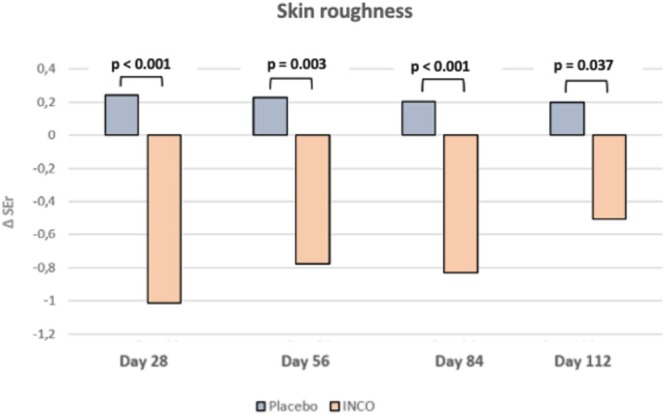
The improvements in SEr were observed in the INCO grouped compared to placebo at all follow‐up visits. The greatest difference occurred at day 28 (INCO: −1.01 vs. placebo: +0.24; p < 0.001), with sustained significance at day 56 (INCO: −0.89 vs. placebo: +0.22; p = 0.003), day 84 (INCO: −0.83 vs. placebo: +0.20; p < 0.001), and day 112 (INCO: −0.61 vs. placebo: +0.20; p = 0.037). The SEr values in the placebo group remained stable and normally distributed throughout the study period (Figure 3 , Table 1 ).
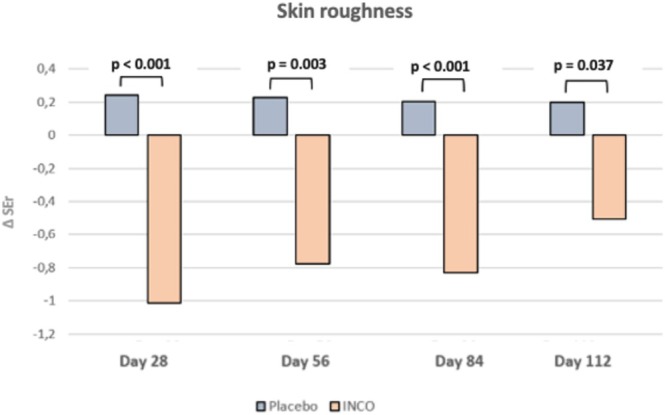
FIGURE 3 Results of SEr of the middle and lower face area.中下面部皮肤粗糙度(SEr)结果统计图,展示 INCO 组与安慰剂组在各随访时间点的变化趋势。TABLE 1 Average SEr and Deltas Across Time Points.
| Time points | SEr INCO | Difference to baseline (INCO) | SEr placebo | Difference to baseline (placebo) | Difference INCO and placebo p |
|---|---|---|---|---|---|
| Baseline | 3.85 | — | 3.67 | — | — |
| Day 28 | 2.84 | −1.01 | 3.91 | +0.24 | p < 0.001 |
| Day 56 | 2.96 | −0.89 | 3.89 | +0.22 | p = 0,003 |
| Day 84 | 3.02 | −0.83 | 3.87 | +0.20 | p < 0.001 |
| Day 112 | 3.24 | −0.61 | 3.87 | +0.20 | p = 0.037 |
3.2
Sebum levels decreased markedly in the INCO group compared to the placebo group through day 84, with no significant differences by day 112 (Figure 4 ). At day 28, INCO‐treated subjects showed a reduction of −19.27 μg/cm 2 compared to +1.27 μg/cm 2 in the placebo group ( p < 0.001). Similar significant differences were found at day 56 (INCO: −18.09 μg/cm 2 vs. placebo: +0.73 μg/cm 2 ; p < 0.001) and day 84 (INCO: −7.09 μg/cm 2 vs. placebo: +0.82 μg/cm 2 ; p = 0.008). At day 112, the difference was no longer significant (INCO: −0.86 μg/cm 2 vs. placebo: +1.00 μg/cm 2 ; p = 0.41). While intradermal injection with INCO initially led to a marked reduction in sebum levels in the verum group, this effect was not observed after 112 days. The placebo group showed a slight increase in sebum levels, although the sebum values remained normally distributed throughout the duration of the study and did not exhibit significant changes (Figure 4 , Table 2 ).
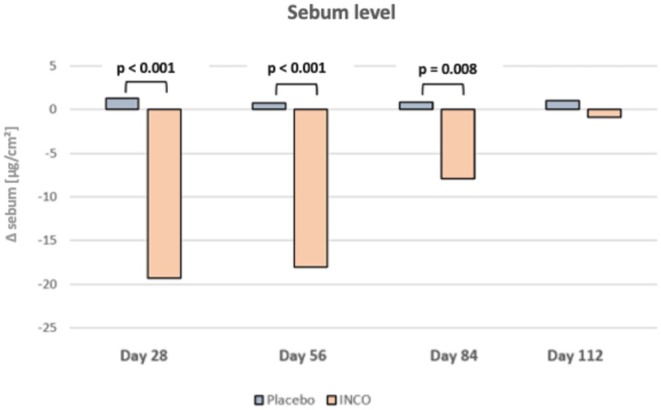
FIGURE 4 Results of the sebum level of the middle and lower face area.中下面部皮脂水平结果统计图,展示两组随时间的皮脂水平变化。TABLE 2 Average Sebum Levels and Deltas Across Time Points.
| Time points | Sebum level INCO | Difference to baseline (INCO) | Sebum level placebo | Difference to baseline (Placebo) | Difference INCO and placebo p |
|---|---|---|---|---|---|
| Baseline | 115.95 μg/cm 2 | — | 111.00 μg/cm 2 | — | — |
| Day 28 | 96.68 μg/cm 2 | −19.27 μg/cm 2 | 112.27 μg/cm 2 | +1.27 μg/cm 2 | p < 0.001 |
| Day 56 | 97.86 μg/cm 2 | −18.09 μg/cm 2 | 111.73 μg/cm 2 | +0.73 μg/cm 2 | p < 0.001 |
| Day 84 | 10.86 μg/cm 2 | −7.09 μg/cm 2 | 111.82 μg/cm 2 | +0.82 μg/cm 2 | p = 0.008 |
| Day 112 | 115.09 μg/cm 2 | −0.86 μg/cm 2 | 112.00 μg/cm 2 | +1.00 μg/cm 2 | p = 0.41 |
3.3
Pore size was significantly reduced in the INCO group at day 28 (−0.22%) and day 56 (−0.14%), while the placebo group showed minimal changes (+0.01% and + 0.03%, respectively). Differences between the groups were statistically significant at day 28 ( p < 0.001) and day 56 ( p = 0.014), but not at day 84 ( p = 0.095) or day 112 ( p = 0.091). The intradermal injection of INCO resulted in a significant reduction in pore size within the verum group after 28 and 56 days, contrasting with the placebo group where pore size remained relatively unchanged (Figure 5 ).
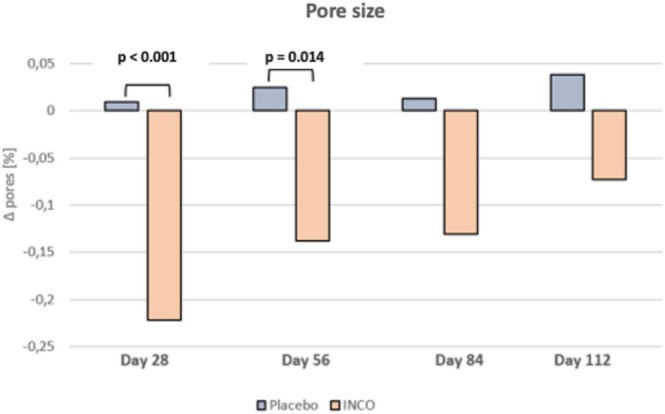
FIGURE 5 Results of the pore size of the middle and lower face area.中下面部毛孔大小结果统计图,展示两组随时间的毛孔变化。3.4
The erythema index decreased significantly in the INCO group compared to the placebo group at day 28 (INCO: −43.81 vs. placebo: −3.27; p = 0.041) and day 56 (INCO: −40.68 vs. placebo: +2.00; p = 0.038). Intradermal administration of INCO led to a statistically significant decline in erythema values in the verum group at both day 28 and day 56 compared to placebo, reflecting a visible reduction in skin redness. The erythema values of the placebo group remained normally distributed between day 28 and 112 without significant changes (Figure 6 ).
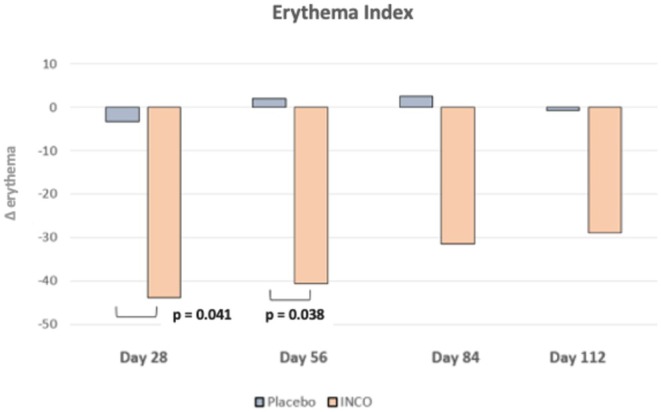
FIGURE 6 Results of the erythema index of the middle and lower face area.中下面部红斑指数结果统计图,展示两组随时间的红斑变化。3.5
Both patient and investigator reported higher satisfaction in the INCO group. GICS scores indicated significant improvement in their overall impression (+1) at day 28 ( p < 0.001), with sustained benefit at days 56 ( p = 0.004) and 84 ( p = 0.004). The investigator also noted an improvement (+1) at day 28 ( p < 0.001) and 56 ( p = 0.001).
3.6
Evaluation of before‐and‐after images clearly demonstrated visible improvements in skin quality for INCO‐treated subjects. Notably, pores appeared finer, and the skin appeared smoother and more radiant (Figure 7 ).
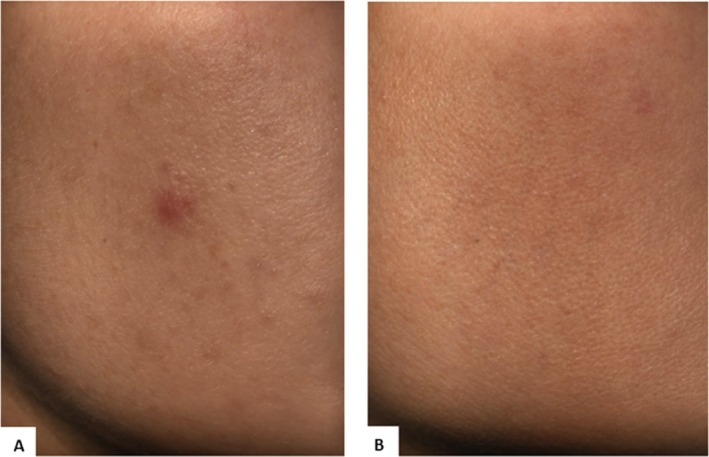
FIGURE 7 (A) Middle and lower side of the face at baseline. (B) Middle and lower side of the face 30 days after intradermal injection with INCO.标准化临床照片对比:(A) 基线时中下面部外观;(B) 皮内注射 INCO 30 天后中下面部外观,示皮肤更光滑、毛孔更细、更有光泽(按图注时间描述)。4
Skin quality has a significant impact on well‐being and quality of life [ 1 , 2 ]. This prospective placebo‐controlled study is the first to evaluate intradermal INCO for mask‐related skin issues in Caucasian women, using objective biophysical markers mapped to established skin quality EPCs.
The intradermal application of INCO resulted in statistically significant improvements in skin surface roughness, pore size, sebum level, and erythema index, thereby contributing to an overall enhancement in skin quality. INCO significantly improved skin surface evenness (SEr), tone evenness (erythema index), and glow (sebum and pore size), aligning with three of the four EPCs [ 3 ]. The most significant effects in SEr were observed after 28 days (−1.01) compared to the placebo (+0.24), followed by a gradual increase thereafter, consistent with the known 3‐month duration of BoNT‐A efficacy [ 16 ]. These findings align with other studies that have demonstrated rejuvenation and reduced roughness in the lower facial region following intradermal BoNT‐A injection, which were tentatively attributed to the blockade of superficial fibers of the facial muscles [ 17 , 18 ].
Regarding pore size and sebum production, significant differences were observed between the verum and placebo groups, persisting through days 28 and 56. Importantly, the observed reductions in sebum levels and pore size cannot be attributed solely to seasonal influences. The verum group experienced a notable decrease in pore size by day 28, while the placebo group showed a slight increase. Statistically significant differences between the groups persisted at day 56. Similarly, sebum production declined significantly in the INCO group, whereas the placebo group exhibited no meaningful change over time (+1.27 μg/cm 2 at day 28; +0.73 μg/cm 2 at day 56). These stable values in the placebo group support the conclusion that the observed improvements were treatment‐related and not attributed to environmental or seasonal factors. Although the study was conducted during winter, when colder temperatures might reduce sebum levels across all subjects [ 19 ], this seasonal effect was not reflected in the placebo group, further reinforcing the specificity of the INCO response.
Erythema in the middle and lower face was assessed using mexametry. By 28 days, the INCO group showed a substantial mean reduction in erythema values (−43.81), while the placebo group's reduction was minimal (−3.27). This treatment effect persisted at day 56, with the INCO group. These findings suggest that intradermal INCO not only prevents worsening of erythema but actively improves skin tone evenness relative to baseline. The result is consistent with prior studies demonstrating the efficacy of intradermal BoNT‐A in reducing erythema and flushing, particularly in patients with rosacea [ 20 , 21 ]. The underlying mechanism is hypothesized to involve inhibition of mast cell degranulation and modulation of neurogenic inflammation through acetylcholine and neuropeptide pathways [ 22 ]. While promising, these findings merit further study in larger and more diverse populations to better understand the broader therapeutic potential and safety of INCO in erythema‐related conditions.
The intradermal administration of INCO has shown promising potential for improving skin quality in individuals experiencing mask‐related skin issues (“maskne”). Unlike conventional acne therapies, which primarily target inflammatory lesions, INCO was employed in this study to address biophysical skin quality parameters, such as texture, erythema, sebum production, and pore size. While prior studies demonstrating these effects have predominantly focused on Asian populations [ 15 , 23 ], this is, to our knowledge, the first placebo‐controlled trial to investigate intradermal INCO in a Caucasian cohort.
INCO was explicitly selected due to its lack of complexing proteins, resulting in the lowest total protein load among currently available botulinum toxin formulations, which may support better tolerability and lower immunogenicity [ 24 ]. In the context of ongoing mask use in both professional and public settings, these findings hold significant clinical relevance. Patients experiencing skin irritation, acneiform eruptions, or diminished skin quality due to prolonged mask‐wearing may benefit from this treatment approach.
Furthermore, the improvements observed in the lower face are unlikely to be driven by superficial muscle relaxation, as the key mimetic muscles in this area—such as the buccinator or depressor anguli oris—are located deeper within the facial anatomy than the superficial muscles of the upper face, like the frontalis [ 25 ]. This supports a mechanism rooted in dermal modulation rather than neuromuscular blockade.
Overall, intradermal injection of INCO in the middle and lower face resulted in significant improvements in skin quality, including reductions in pore size and sebum production, two interrelated factors, as excess sebum contributes to the enlargement of pores [ 26 , 27 , 28 ]. While additional research is warranted to confirm and expand upon these findings, this study provides compelling early evidence in support of the efficacy of INCO for managing mask‐associated skin concerns. Despite limitations such as the small sample size, single‐center setting, and restriction to Caucasian female participants, this represents the first randomized, double‐blind, placebo‐controlled trial to demonstrate a positive impact of BoNT‐A on skin quality in this population. These results support the growing role of intradermal BoNT‐A as a novel, skin quality–focused intervention in aesthetic dermatology.
Alena Roessle and Stefanie Gluecklich share first authorship. Prof. Kerscher provided guidance and advisory support throughout the study process. Heike Buntrock provided support during the submission process and assisted with the revision of the manuscript.
The authors confirm that the ethical policies of the journal, as outlined on the journal's author guidelines page, have been adhered to, and appropriate approval from the ethical review committee has been obtained. The Independent Ethics Committee (Ethikkommission der Ärztekammer Hamburg) and the Federal Institute for Drugs and Medical Devices (Bundesinstitut für Arzneimittel und Medizinprodukte) in Germany approved the study in 2021. The study was conducted in accordance with the principles of the Declaration of Helsinki and the International Conference on Harmonization Guidelines for Good Clinical Practice. Study procedures were not taken prior to the signing of the informed consent.
The authors declare no conflicts of interest.
声明:中文精读 · 仅供学术参考。内容来自公开文献检索,不代表本人观点,不构成诊疗建议。 医疗美容需在正规医疗机构由执业医师实施。
基于相同主题推荐 · 继续深挖
由6名意大利多学科专家(皮肤科、整形外科、神经科)基于文献回顾(PubMed 1973–2025)与临床经验形成的专家共识,针对incobotulinumtoxin A(Bocou
一项前瞻性、开放标签探索性临床研究纳入13名颈部皮肤松弛女性(平均48.5岁),单次采用STIIM UP方案(CaHA+HA+BoNT-A经22G钝针扇形注射至颈前皮下)。
研究类型:单中心回顾性研究,先以40例病历建立耳部美学老化分类(AEAC,0–3级),再以50例50–65岁健康女性行A型肉毒毒素(Russo Ear Lift Technique