年龄相关软组织变化对自体软骨鼻整形术后远期轮廓显形的潜在影响:一项叙述性综述(Medicina)
2026年10月22日25 min read
Medicina
结论与实践要点
本文为发表于 Medicina 的叙述性综述,聚焦一个临床现象:自体软骨鼻整形术在初期效果满意后,部分患者(尤其薄鼻皮肤者)可于数年后逐渐显现轮廓不规则或移植物显形。作者指出,薄皮肤鼻整形、自体移植物行为及鼻部老化虽已被分别研究,但三者之间潜在的相互作用尚不清楚,故对现有证据进行定性综合。
综述的核心机制观点包括:薄鼻皮肤提供的软组织遮盖有限,使移植物边缘与轮廓不规则更易被看见;自体软骨远期可发生翘曲或吸收等结构改变;而鼻部老化并非单纯“皮肤变薄”,而是涵盖皮肤厚度与弹性、软组织容积及鼻支架(含鼻韧带、骨骼重塑)的多层面变化。基于这些独立观察,作者提出假说:年龄相关的软组织包裹变化可能使原本细微的移植物轮廓随时间变得更显形;但该关系不同于移植物本身的结构改变,且直接证明软组织老化导致移植物显形的纵向证据仍缺乏。
对鼻整形术式的指导意义在于:薄皮肤患者应重视移植物精细塑形、软组织保留与筋膜/碎软骨等掩饰(camouflage)技术,保留性鼻整形亦可能减少背侧不规则。但需明确,本文证据等级为综述级(叙述性、未做荟萃分析),掩饰与保留技术能否预防年龄相关的迟发显形尚未被证实,且软组织老化与移植物显形之间仅为假说而非已确立的因果机制,后续需以客观测量软组织厚度、移植物形态与外部鼻轮廓的前瞻性纵向研究加以验证。
Background and Objectives : Delayed contour irregularities may become apparent years after otherwise successful autologous rhinoplasty, particularly in patients with thin nasal skin. Thin-skinned rhinoplasty, autologous graft behavior, and nasal aging have been studied individually, but their potential interaction remains unclear. This review examines current evidence on age-related changes in the nasal soft-tissue envelope, thin nasal skin, autologous graft behavior, and their potential effects on long-term rhinoplasty outcomes. Materials and Methods : A structured narrative review was conducted using PubMed as the primary database, with supplementary searches of Google Scholar and reference lists. Four predefined search domains addressed thin nasal skin, nasal aging, autologous graft behavior, and preservation and camouflage techniques. The PubMed searches identified 463 records. After duplicate removal and title and abstract screening, 205 publications were retained for further assessment. Additional relevant publications were identified through supplementary searches. Evidence was synthesized qualitatively because of differences in study design, surgical technique, follow-up duration, and outcome assessment. Results : Thin nasal skin is associated with increased visibility of underlying structural features after rhinoplasty. Aging is associated with changes in skin thickness and elasticity, soft-tissue volume, and the underlying nasal framework. These findings provide a possible basis for changes in soft-tissue camouflage over time, but direct longitudinal evidence linking aging to delayed graft visibility is lacking. Late contour changes may also result from graft warping or resorption, scar remodeling, or changes in the native nasal framework. The ability of preservation and camouflage techniques to prevent aging-related delayed contour visibility has not been established. Conclusions : Age-related changes in the nasal soft-tissue envelope may contribute to delayed contour visibility after rhinoplasty. However, direct longitudinal evidence showing that these changes increase the visibility of an otherwise stable autologous graft is lacking. This relationship should therefore be considered a hypothesis rather than an established causal mechanism. Prospective longitudinal studies using objective measurements of soft-tissue thickness, graft morphology, and external nasal contour are needed to test this hypothesis.
Keywords: rhinoplasty、aging、thin nasal skin、autologous cartilage graft、contour irregularity、soft-tissue aging
Autologous cartilage is widely used in structural rhinoplasty because of its biocompatibility and favorable long-term outcomes [ 1 , 2 ]. Septal, auricular, and costal cartilage grafts are commonly used to restore nasal contour and provide structural support [ 1 , 3 , 4 ]. Delayed contour irregularities, graft visibility, and subtle asymmetries may occur, particularly in patients with thin nasal skin [ 5 , 6 , 7 ].
Thin nasal skin provides limited soft-tissue coverage over the underlying framework [ 5 , 6 , 7 , 8 ]. Minor graft edges, contour irregularities, or surface asymmetries may therefore be more visible in patients with thin skin. Nasal soft-tissue thickness also varies according to anatomical site [ 9 , 10 , 11 ]. Graft refinement, soft-tissue preservation, and camouflage techniques are important considerations in thin-skinned patients [ 12 , 13 ].
The nasal soft-tissue envelope and supporting structures change with aging [ 14 , 15 , 16 , 17 , 18 , 19 , 20 , 21 , 22 , 23 ]. Age-related changes involve skin thickness and elasticity, soft-tissue volume, and the underlying nasal framework [ 16 , 18 , 19 , 20 , 21 , 22 , 23 ]. Nasal ligaments also contribute to structural support [ 24 ]. Such changes could affect the long-term appearance of reconstructed nasal structures. However, direct evidence showing that age-related soft-tissue changes increase the visibility of an otherwise stable autologous graft is lacking.
Thin nasal skin, autologous graft behavior, and nasal aging have been studied separately. Their interaction over time is less well defined. Late contour changes may result from graft-related factors, changes in the native nasal framework, postoperative tissue remodeling, or changes in the overlying soft-tissue envelope. The relative contribution of these factors remains unclear.
This narrative review examines the available evidence on thin nasal skin, age-related changes in the nasal soft-tissue envelope, autologous graft behavior, and long-term contour outcomes after rhinoplasty. It also considers the possible contribution of soft-tissue aging to delayed contour visibility and identifies areas that require further study ( Figure 1 ).
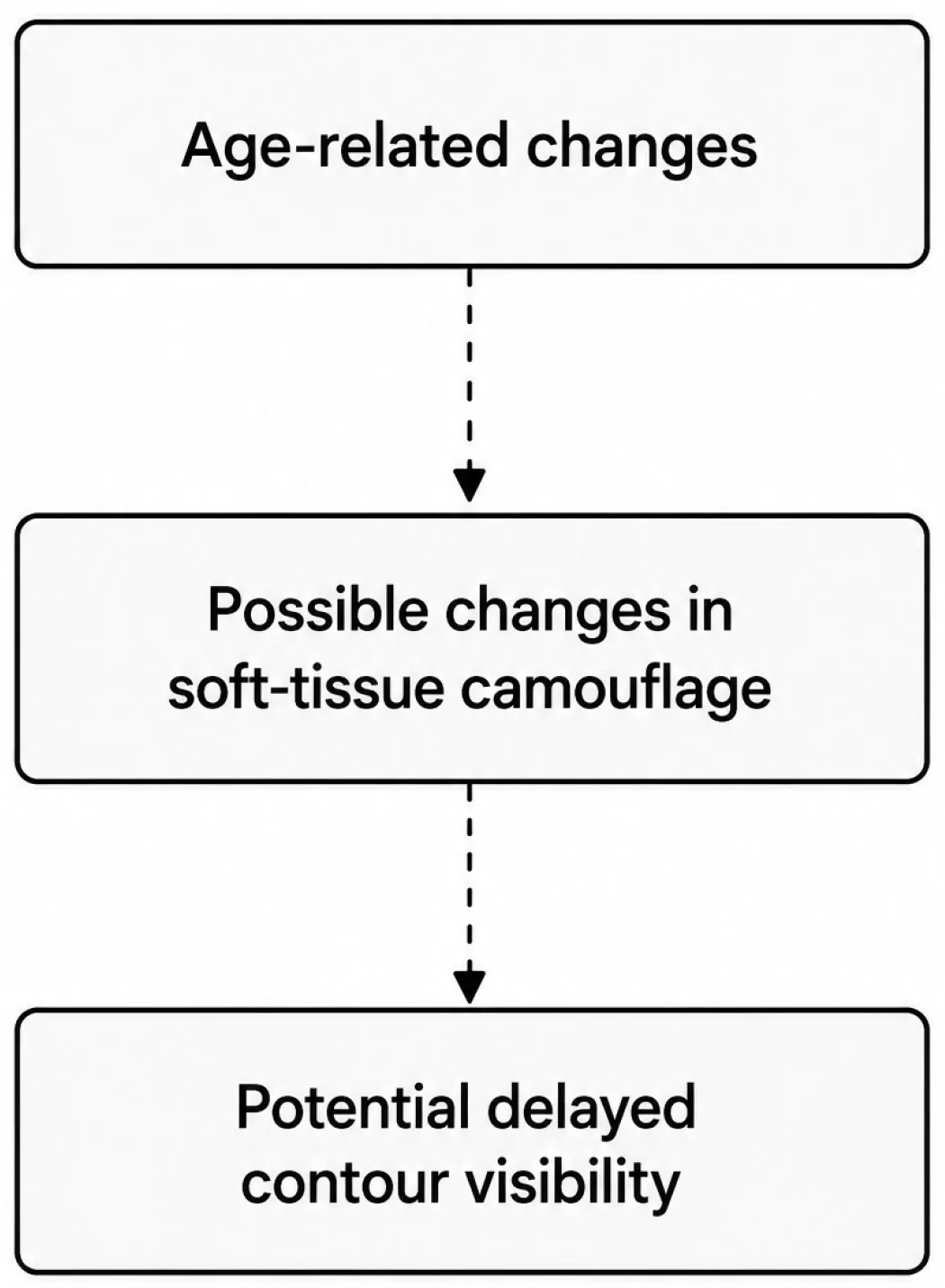
Figure 1 Hypothesized framework for delayed contour visibility after autologous rhinoplasty. Dashed arrows indicate proposed rather than established relationships. Age-related changes may alter soft-tissue camouflage and potentially contribute to delayed contour visibility.提出自体软骨鼻整形术后远期轮廓显形的假说框架,虚线表示“推论的而非已确立”的关系,年龄相关变化可能改变软组织遮盖并促成迟发显形。
This study was conducted as a structured narrative review. PubMed was used as the primary database and was searched from database inception through 30 June 2026. Four search domains were used: (1) thin nasal skin and contour visibility, (2) nasal aging and rhinoplasty, (3) autologous grafts and long-term contour outcomes, and (4) preservation and camouflage techniques. The search terms included “rhinoplasty”, “thin nasal skin”, “nasal skin thickness”, “soft-tissue envelope”, “nasal aging”, “aging nose”, “autologous cartilage”, “cartilage graft”, “contour irregularity”, “graft visibility”, “warping”, “resorption”, “preservation rhinoplasty”, “fascia”, “diced cartilage”, and “camouflage”. The PubMed search domains, search terms, and numbers of records retrieved are provided in Supplementary Table S1 .
The four PubMed searches identified 21, 133, 105, and 204 records, respectively, for a total of 463 records. After removal of 47 duplicate records, 416 unique records remained. Google Scholar and the reference lists of relevant articles were used as supplementary sources to identify additional relevant or landmark publications. These supplementary sources were not included in the PubMed record count.
Studies were considered eligible if they addressed at least one of the following topics: age-related changes in nasal anatomy or soft tissues; thin nasal skin or nasal soft-tissue thickness; long-term behavior of autologous grafts, including resorption, warping, displacement, or contour visibility; delayed contour changes after rhinoplasty; or camouflage and preservation techniques relevant to contour visibility. Clinical studies, anatomical studies, systematic reviews, narrative reviews, and relevant technical articles were considered.
Studies were excluded if they were unrelated to rhinoplasty, nasal aging, graft behavior, or nasal soft tissues. Studies limited to cleft, traumatic, oncologic, or non-nasal reconstruction without findings relevant to the review question were also excluded. Duplicate publications and technical reports without relevant outcome or anatomical information were excluded.
Of the 416 unique records, 123 were excluded after title screening. The remaining 293 records underwent title and abstract screening, and 205 were retained for further assessment. Screening was performed by one reviewer using the predefined criteria. Because this was a narrative review, no formal systematic full-text eligibility stage was performed after this screening step. Publications were subsequently selected from this pool according to their relevance to the predefined review domains, with additional relevant or landmark publications identified through Google Scholar and reference-list screening. The final narrative synthesis cited 38 publications.
Delayed contour irregularities were defined as contour changes that developed or became more apparent after an initially satisfactory postoperative result. Because no widely accepted time threshold was identified, a fixed cutoff for “delayed” or “long-term” was not used.
Thin nasal skin was interpreted according to the definition or assessment method used in each study. Studies based on clinical assessment and those using objective measurements of nasal soft-tissue thickness were both considered. Differences in thickness among nasal anatomical sites were considered when interpreting the findings.
The evidence was synthesized qualitatively because the included publications differed in study design, patient population, surgical technique, graft material, follow-up duration, and outcome assessment. No meta-analysis was performed.
Evidence in Table 1 , Table 2 and Table 3 was classified as consistent, moderately consistent, or limited. Consistent evidence indicated similar findings across multiple relevant studies. Moderately consistent evidence indicated generally similar findings with limitations in study number, design, or follow-up. Limited evidence indicated mainly indirect evidence, small or retrospective studies, technical reports, or a lack of direct long-term clinical data. These categories were used for narrative interpretation and do not represent a formal grading system. These categories describe only the direction and apparent agreement of findings across the available literature and do not indicate methodological quality, certainty of evidence, or risk of bias.
Table 1 Summary of Evidence Relevant to the Proposed Relationship Between Aging and Delayed Contour Visibility After Rhinoplasty.
| Evidence Domain | Main Finding | Evidence Type | Evidence Consistency | Key References |
|---|---|---|---|---|
| Thin nasal skin and contour visibility | Reduced soft-tissue coverage increases visibility of contour irregularities. | Direct clinical and anatomical evidence (A/B) | Consistent | [ 5 , 6 , 7 , 8 , 9 , 10 , 11 , 12 ] |
| Objective nasal soft-tissue thickness | Nasal soft-tissue thickness varies by anatomical subsite and patient characteristics. | Anatomical/imaging evidence (B) | Consistent | [ 9 , 10 , 11 ] |
| Aging-related skin changes | Aging changes skin thickness, elasticity and mechanical properties. | Indirect aging-related evidence (B) | Consistent | [ 18 , 19 , 23 ] |
| Aging-related nasal structural changes | Nasal soft tissues and supporting structures change with aging. | Anatomical/imaging and clinical evidence (A/B) | Consistent | [ 14 , 15 , 16 , 17 , 21 , 22 , 24 ] |
| Long-term autologous graft behavior | Autologous grafts may undergo long-term structural changes. | Direct clinical/technical evidence (A/C) | Moderately consistent | [ 2 , 3 , 4 , 25 , 26 ] |
| Camouflage techniques | Camouflage techniques may reduce visibility of contour irregularities. | Clinical/technical evidence (A/C) | Moderately consistent | [ 12 , 13 , 27 , 28 , 29 , 30 , 31 ] |
| Preservation rhinoplasty | Preservation techniques may maintain native structural relationships. | Clinical/technical evidence (A/C) | Moderately consistent | [ 32 , 33 , 34 , 35 ] |
| Aging-related loss of camouflage causing delayed visibility of a stable graft | Biologically plausible, but lacking direct longitudinal evidence. | Indirect evidence/proposed mechanism (B/D) | Limited | Indirectly supported by [ 9 , 10 , 11 , 12 , 14 , 15 , 16 , 17 , 18 , 19 , 20 , 21 , 22 , 23 , 24 ] |
Table 2 Clinical Implications and Cautious Considerations for Long-Term Contour Management.
| Clinical Consideration | Potential Rationale | Current Evidence | Suggested Interpretation |
|---|---|---|---|
| Preoperative assessment of the soft-tissue envelope | Reduced soft-tissue coverage may increase visibility of contour irregularities. | Consistent [ 5 , 6 , 7 , 8 , 9 , 10 , 11 , 12 ] | Consider soft tissue characteristics when planning structural grafting. |
| Careful graft contouring and positioning | Graft changes may contribute to late contour irregularities. | Moderately consistent [ 1 , 2 , 3 , 4 , 26 ] | Careful graft preparation and placement remain important. |
| Selective use of camouflage materials | Fascia, diced cartilage or other coverage techniques may improve contour smoothness. | Moderately consistent [ 12 , 13 , 27 , 28 , 29 , 30 , 31 ] | Consider camouflage in patients with limited soft-tissue coverage. |
| Consideration of preservation techniques | Preservation techniques may reduce disruption of native structural relationships. | Moderately consistent [ 32 , 33 , 34 , 35 ] | Consider preservation techniques when anatomically appropriate; benefit for delayed contour visibility is unproven. |
| Counseling regarding long-term contour change | Both graft- and patient-related factors may affect contour irregularities over time. | Moderately consistent [ 2 , 3 , 14 , 15 , 16 , 17 , 21 , 22 , 25 , 36 ] | Patients may be informed that late contour change is multifactorial. |
| Long-term clinical follow-up | Delayed changes may emerge over time. | Limited | Longer follow-up may be useful in selected high-risk patients. |
| Objective documentation | Serial assessment may help distinguish structural from soft-tissue changes. | Limited/emerging [ 9 , 10 , 11 , 37 ] | Use standardized photography and objective measurements for long-term assessment. |
Table 3 Differential Mechanisms of Late Contour Irregularities After Rhinoplasty.
| Potential Mechanism | Primary Structure Affected | Possible Clinical Manifestation | Supporting Evidence/Context | Relationship to Aging Hypothesis |
|---|---|---|---|---|
| Graft warping/deformation | Autologous graft | Altered contour | Direct graft-related evidence [ 3 , 26 ] | Alternative mechanism |
| Graft resorption | Autologous graft | Altered contour | Direct clinical evidence [ 2 , 3 ] | Alternative mechanism |
| Graft displacement/migration | Graft–host interface | Altered contour | Clinical/technical evidence [ 3 , 4 , 26 , 36 ] | Alternative mechanism |
| Diced-cartilage–related change | Diced cartilage construct | Irregularity, displacement | Meta-analytic/clinical evidence [ 25 ] | Alternative mechanism |
| Scar contraction/remodeling | Soft tissue/scar | Retraction, Irregularity | Clinical/technical context [ 36 ] | May coexist with aging |
| Infection or chronic inflammation | Graft/surrounding tissues | Altered contour | Rhinoplasty complication evidence [ 3 , 25 , 36 ] | Alternative mechanism |
| Native framework remodeling | Bone/cartilage | Altered contour | Anatomical/aging evidence [ 14 , 15 , 16 , 17 , 21 , 22 , 24 ] | May be aging-related but distinct from soft-tissue camouflage |
| Soft-tissue volume change | Soft-tissue envelope | Altered soft-tissue coverage | Indirect aging evidence [ 18 , 19 , 20 , 21 , 23 ] | Biologically supports proposed mechanism |
| Age-related skin change | Skin/dermis | Altered camouflage | Indirect aging evidence [ 18 , 19 , 23 ] | Biologically supports proposed mechanism |
| Trauma, weight change, or subsequent procedures | Variable | Altered contour | Clinical contextual factors | Confounding/alternative mechanism |
| Stable graft with altered overlying camouflage | Soft-tissue envelope over stable graft | Increased graft visibility | No direct longitudinal validation | Proposed hypothesis |
Autologous cartilage is widely used in rhinoplasty because of its biocompatibility and low risk of extrusion [ 1 ]. Septal, auricular, and costal cartilage are commonly used according to the amount and structural support required [ 1 , 3 , 4 ]. Costal cartilage provides abundant material and strong support but may be associated with warping and resorption [ 3 ].
Autologous cartilage generally has favorable long-term outcomes, but complications can occur. Reported complications include warping, resorption, infection, and contour irregularity [ 2 , 3 ]. Complication rates vary among studies because of differences in graft material, surgical technique, follow-up duration, and outcome definitions [ 3 ]. Long-term data extending over many years remain limited.
Late contour changes may result from the graft itself or from other postoperative changes. Graft warping and resorption may alter nasal contour [ 2 , 3 ]. Scar remodeling and changes in the surrounding soft tissues may also affect the external contour. These mechanisms may occur separately or together.
Direct evidence linking age-related changes in the nasal soft-tissue envelope to increased visibility of an otherwise stable graft is limited. Late graft visibility should therefore be evaluated together with structural graft changes and other possible causes. This distinction is important when evaluating delayed contour irregularities ( Table 1 ).
Thin nasal skin provides less coverage of the underlying nasal framework and may increase the visibility of graft edges, contour irregularities, and surface asymmetries [ 5 , 6 , 7 , 12 ]. Careful graft shaping and soft-tissue management are important in patients with thin skin [ 12 , 13 ].
Thin nasal skin is not defined uniformly in the literature. Some studies use clinical examination or surgeon assessment, whereas others use objective measurements of the nasal soft-tissue envelope [ 9 , 10 , 11 ]. Soft-tissue thickness also varies among nasal regions [ 9 , 10 , 11 ]. These differences limit the use of a single definition of thin nasal skin.
Camouflage techniques used in thin-skinned patients include fascia and diced cartilage-based methods [ 12 , 13 , 27 , 28 , 29 ]. These techniques may reduce the visibility of underlying structural irregularities. However, the studies differ in technique, follow-up duration, and outcome assessment, and direct comparative evidence is limited [ 12 , 13 , 27 , 28 , 29 , 30 ].
Thin skin alone does not explain all late contour irregularities. Graft material and position, scar remodeling, surgical technique, changes in the native framework, and age-related changes in the overlying soft tissues may also contribute. Direct longitudinal studies examining the interaction between thin skin, aging, and delayed graft visibility are lacking.
Aging affects the skin, soft tissues, and supporting structures of the nose [ 14 , 15 , 16 , 17 , 18 , 19 , 20 , 21 , 22 , 23 ]. Age-related skin changes include alterations in dermal thickness, collagen and elastin characteristics, and skin elasticity [ 18 , 19 , 23 ]. Changes in facial soft-tissue volume also occur with aging [ 20 ]. These processes are distinct and should not be considered simply as skin thinning.
Nasal ligaments contribute to tip support and stability [ 24 ]. Age-related skeletal remodeling of the nasal and perinasal region has also been described [ 16 , 21 ]. Clinical studies of the aging nose have reported changes in nasal length, tip position, and the nasolabial angle [ 17 , 22 ].
These findings show that nasal anatomy changes with age. However, most studies do not examine patients longitudinally after rhinoplasty. Direct measurements of postoperative changes in nasal skin thickness, soft-tissue volume, and graft visibility over many years are limited.
Age-related skin changes vary among individuals. Intrinsic aging and external factors, including sun exposure, can affect skin characteristics [ 18 , 19 ]. Age alone may therefore not predict changes in the nasal soft-tissue envelope or long-term contour appearance.
Available evidence shows that the nasal skin, soft tissues, and supporting framework change with aging. Whether these changes affect long-term graft visibility remains uncertain ( Figure 2 ).
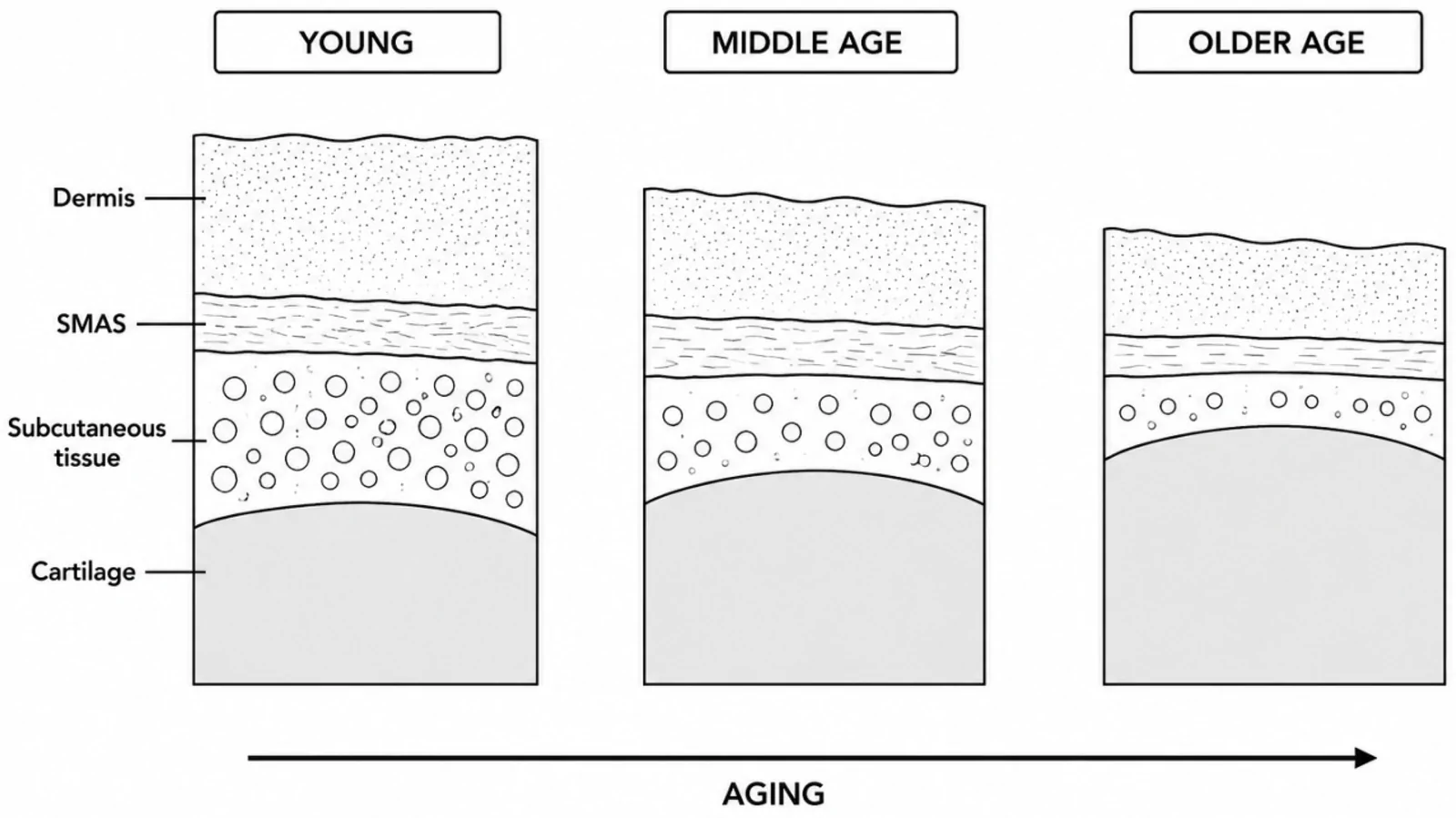
Figure 2 Age-related changes in the nasal soft-tissue envelope. Changes may involve the skin, subcutaneous tissues, supporting soft-tissue layers, and the underlying nasal framework. The pattern and extent of these changes may vary among individuals. The arrow indicates the direction of increasing age.展示鼻部软组织包裹的年龄相关变化,可涉及皮肤、皮下组织、支撑性软组织层及下方鼻支架,变化模式与程度存在个体差异,箭头指示年龄增长方向。
Long-term contour after rhinoplasty is influenced by both the underlying framework and the overlying soft-tissue envelope. Autologous grafts may remain stable, but structural changes such as resorption and warping can occur over time [ 2 , 3 ]. These changes should be considered when evaluating late contour irregularities.
Aging is associated with changes in skin thickness and elasticity, soft-tissue volume, and the underlying nasal framework [ 16 , 18 , 19 , 20 , 21 , 22 , 23 ]. Nasal ligaments also contribute to structural support [ 24 ]. Thin soft-tissue coverage is associated with greater visibility of underlying structural features [ 5 , 6 , 7 , 9 , 10 , 11 , 12 ]. Based on these separate observations, it is possible that age-related changes in the soft-tissue envelope could make a previously subtle graft contour more visible over time.
This proposed mechanism should be distinguished from structural change in the graft itself. Late contour irregularities may result from graft warping or resorption, scar remodeling, changes in the native nasal framework, or changes in the overlying soft tissues [ 2 , 3 , 16 , 21 ]. More than one mechanism may be present in the same patient. Broader rhinoplasty practice data also show that secondary procedures remain a relevant part of clinical practice [ 38 ].
Current studies do not establish that age-related soft-tissue changes cause increased visibility of an otherwise stable graft. Direct longitudinal studies measuring both graft structure and the overlying soft-tissue envelope are lacking. The proposed interaction between soft-tissue aging and graft visibility should therefore be considered a hypothesis rather than an established causal relationship ( Figure 3 ).
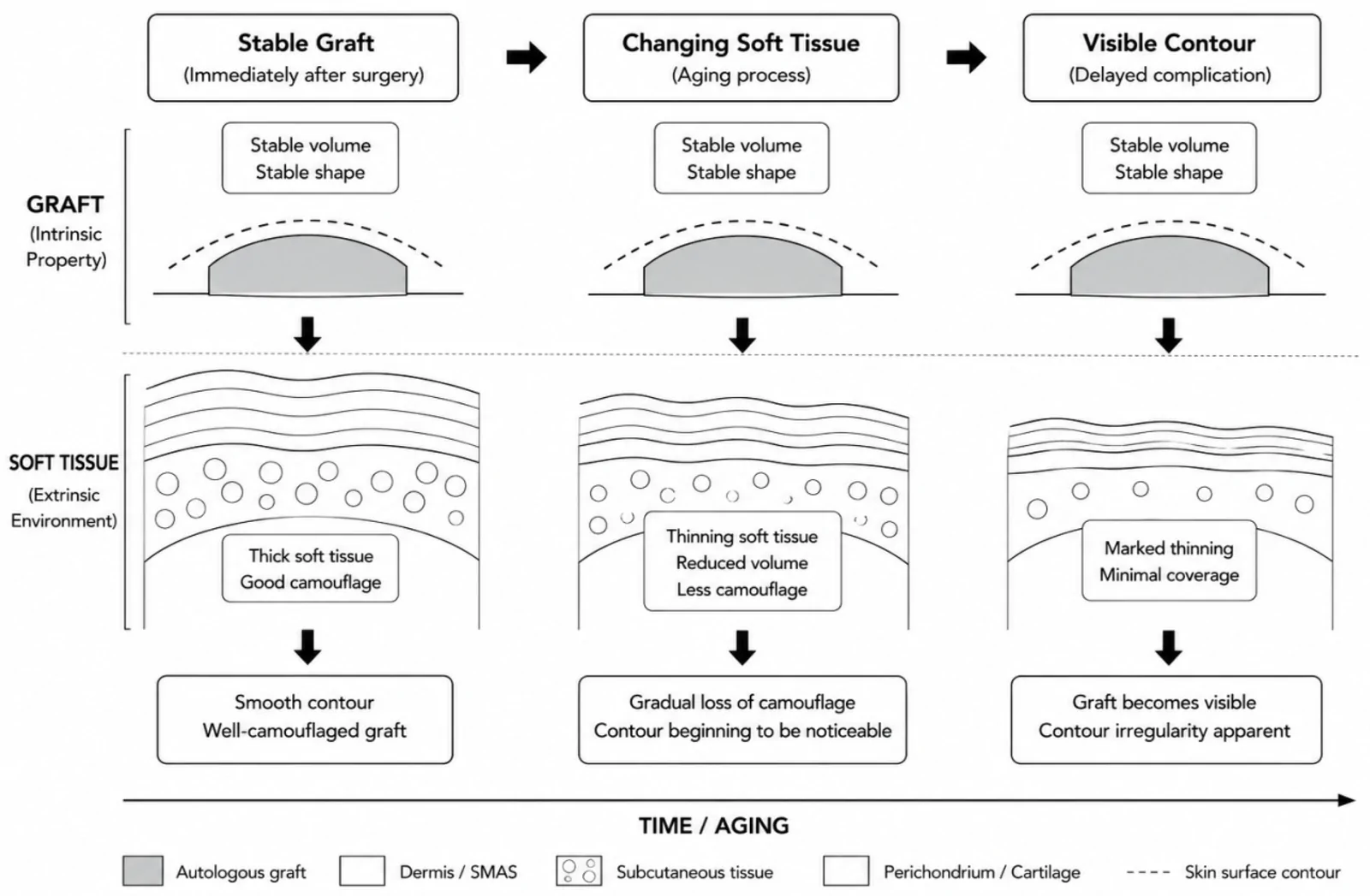
Figure 3 Proposed interaction between age-related soft-tissue changes and graft visibility. Changes in the nasal soft-tissue envelope may alter the visibility of an otherwise stable graft over time. This is a conceptual model; a causal relationship has not been established by longitudinal clinical studies.呈现年龄相关软组织变化与移植物显形之间假想的交互关系:软组织包裹改变可能随时间改变原本稳定移植物的显形程度,此为概念模型,尚无纵向临床研究确立因果关系。Longitudinal studies using objective measurements of nasal soft-tissue thickness, graft morphology, and external contour are needed to test this hypothesis. Serial photography and three-dimensional imaging may also be useful for evaluating changes over time [ 37 ].
Preservation rhinoplasty includes techniques that aim to maintain native nasal structures while limiting disruption of the dorsal framework and surrounding soft tissues [ 32 , 33 ]. A systematic review and meta-analysis found fewer dorsal irregularities with dorsal preservation than with dorsal reduction, although residual or recurrent hump remained a potential complication [ 34 ]. Long-term outcomes after dorsal preservation have also been reported [ 35 ].
Camouflage techniques may be useful in patients with thin soft-tissue coverage. Reported techniques include fascia lata, temporalis fascia, deep temporal fascia, and diced cartilage-based methods [ 13 , 27 , 28 , 29 ]. Other approaches to dorsal augmentation have also been described [ 30 ]. Clinical studies have reported favorable contour outcomes with these techniques in selected patients, although direct comparisons are limited [ 12 , 13 , 27 , 28 , 29 ].
Careful graft preparation and positioning are important in patients with thin skin [ 1 , 12 ]. Potential limitations vary according to the material and technique. Diced cartilage has been associated with complications such as visible irregularity, absorption, and infection [ 25 ], while partial resorption has been reported withAlloDerm [ 31 ].
Current evidence does not show that preservation or camouflage techniques prevent aging-related delayed contour visibility. These techniques may be considered when clinically and anatomically appropriate, but their role in preventing late changes related to aging has not been established ( Table 2 ).
Longer follow-up with standardized photography and objective soft-tissue measurements may help define the long-term effects of these techniques. Three-dimensional imaging may provide an additional method for objective contour assessment [ 37 ].
Few studies have examined the long-term interaction among nasal soft-tissue changes, graft behavior, and contour visibility after rhinoplasty.
Available studies vary in design and often have limited long-term follow-up. Study populations, graft materials, surgical techniques, follow-up periods, and outcome measures also vary. These differences limit comparison across studies. Objective measurements of postoperative soft-tissue thickness and graft morphology are also rarely reported.
Future studies should use prospective longitudinal designs. Patients could be grouped according to baseline soft-tissue thickness, age, graft material, graft location, and surgical technique. Comparison of patients with thinner and thicker soft-tissue envelopes may help determine whether baseline tissue thickness is associated with late contour visibility.
Serial assessment should include standardized photography and objective measurements of the nasal soft-tissue envelope. Three-dimensional surface imaging may be useful for measuring changes in external nasal contour over time [ 37 ]. When feasible, imaging methods that can assess both soft-tissue thickness and graft morphology could help distinguish changes in the graft from changes in the overlying tissues.
Follow-up over several years may be needed to evaluate delayed changes. Outcome assessment could include objective contour measurements, photographic assessment, patient-reported outcomes, and revision surgery. These studies may help determine whether aging-related soft-tissue changes independently contribute to delayed contour visibility after rhinoplasty ( Table 3 ).
Thin nasal skin provides limited camouflage of underlying structural features, and the nasal soft-tissue envelope and supporting framework change with aging. These findings provide a basis for the hypothesis that age-related soft-tissue changes may contribute to delayed contour visibility after rhinoplasty.
The proposed relationship between soft-tissue aging and delayed graft visibility remains a hypothesis, and alternative mechanisms such as graft warping or resorption, scar remodeling, and changes in the native nasal framework should also be considered.
Prospective longitudinal studies using objective measurements of soft-tissue thickness, graft morphology, and external nasal contour are needed to test this hypothesis.
声明:中文精读 · 仅供学术参考。内容来自公开文献检索,不代表本人观点,不构成诊疗建议。 医疗美容需在正规医疗机构由执业医师实施。
基于相同主题推荐 · 继续深挖
薄皮肤鼻整形术后数年后才显现的轮廓不规则,可能与年龄相关鼻部软组织变化有关,但这一联系目前仍属假说。
回顾性研究纳入23例接受JAMBER(JB)盘绕PDO线鼻部塑形患者(8男15女,平均35.3岁,21–72岁),随访至术后12个月。
回顾性单中心研究纳入59例巴西多族裔患者(20–60岁,平均36.0±10.3岁),由53名鼻部填充经验各异的注射者实施透明质酸(HA)非手术隆鼻。