肉毒毒素改善咬肌突出下面部轮廓
2026年10月23日31 min read
Plastic and Reconstructive Surgery
结论与实践要点
本文为一项2期随机、安慰剂对照、剂量递增研究的次要疗效结果,评估onabotulinumtoxinA(保妥适/Botox)注射对双侧咬肌突出(MMP)人群下面部轮廓的改善。研究共纳入187例受试者(平均35.4岁,81.8%为女性,79.7%为亚洲人),按4:1随机接受24、48、72、96 U或安慰剂,每侧咬肌3点、共6点肌内注射,部分受试者在第180天接受重复治疗。
文献原文报告的关键结果:注射后90天,各onabotulinumtoxinA剂量组下面部宽度较安慰剂均显著降低(P<0.001),下颌面角较安慰剂显著增大(P<0.001);其中96 U组下面部宽度较基线平均减少5.6 mm、下颌面角平均增加4.2度。研究者评定的MMPS分级及受试者报告量表(LFSQ)亦显示改善,且重复治疗较单次治疗带来进一步改善,效果在1或2个治疗周期后可维持至少6个月。研究存在主要为亚洲人群、受试者对剂量分组非盲等局限,结论外推需谨慎。
临床落地提示:onabotulinumtoxinA可作为咬肌突出所致方形/梯形下面部轮廓的非手术注射改善选择;较高剂量(如72–96 U)改善更明显、维持更久,但96 U组有少数受试者出现微笑局部影响(文献原文4例,占该组10.5%),低剂量(24 U)效果较细微。具体剂量与方案应由有资质的医师结合个体情况评估。
Background:Masseter muscle prominence (MMP) contributes to a widened lower facial shape, considered aesthetically undesirable to some individuals. This study assessed lower facial shaping improvements with onabotulinumtoxinA.
Methods:In a phase 2, randomized, placebo-controlled study, onabotulinumtoxinA (24, 48, 72, or 96 U) or placebo was injected intramuscularly (3 sites per masseter) into subjects with bilaterally symmetric “marked” or “very marked” MMP on the Masseter Muscle Prominence Scale (MMPS). Changes from baseline at day 90 in lower facial width, mandibular facial angle, investigator-rated MMPS response, subject-perceived symptoms, psychosocial impact of lower face appearance, and satisfaction with lower face on the Lower Facial Shape Questionnaire were assessed.
Results:Among 187 subjects (mean age, 35.4 years; 81.8% female; and 79.7% Asian), significant reductions from baseline in lower facial width and mandibular angle were achieved with all onabotulinumtoxinA doses versus placebo at day 90 ( P < 0.001, each parameter), continuing through day 180. At day 90, greater improvements in MMPS grade (all doses) and MMP signs, psychosocial impacts, and satisfaction were observed.
Conclusion:OnabotulinumtoxinA treatment improved lower facial shape in individuals with MMP, producing a more desirable ovoid appearance for at least 6 months, with greater patient satisfaction.
The masseter muscle, the main muscle used for mouth closure and chewing, contributes to lower facial contour. 1 , 2 Masseter muscle hypertrophy can be associated with trismus and pain, 3 , 4 and may be linked to bruxism or chewing habits. 5 , 6 Benign masseter muscle hypertrophy, or masseter muscle prominence (MMP), may be described as a pronounced square or trapezoidal lower facial contour, which gives the face a disproportionately bottom-heavy appearance. 2 A more ovoid lower facial shape has been considered desirable across many cultural and ethnic populations 7 , 8 ; thus, excessive MMP can be considered aesthetically undesirable for both men and women, regardless of cultural and ethnic identity. 2 , 7 , 9 , 10
MMP reduction for cosmetic purposes has been accomplished historically with surgery. 3 However, surgery includes risks associated with general anesthesia, edema, hematoma, infection, scarring, facial nerve damage, and postoperative hemorrhage. 2 Alternatively, clinicians have used botulinum toxin A off-label as a minimally invasive and efficacious treatment for the reduction of MMP, for more than 2 decades. 10 – 14 Treatment of the masseter muscle with onabotulinumtoxinA (Botox; Allergan, an AbbVie Company, Dublin, Ireland), an acetylcholine release inhibitor and neuromuscular blocking agent, 15 produces temporary chemical denervation of the muscle, causing localized reduction in activity and subsequent reduction in size of the muscle, 3 resulting in effective reshaping and contouring of the lower face to a pleasing shape and more youthful proportions. 2 , 8
Well-controlled studies of onabotulinumtoxinA for the treatment of MMP are needed. 3 The primary results of a randomized, double-blind, placebo-controlled, dose-escalation study (NCT02010775) showed that onabotulinumtoxinA achieved a significant reduction from baseline to day 90 in lower facial volume. 16 We now report the results of secondary efficacy outcomes and measurements of facial shaping improvements from that study.
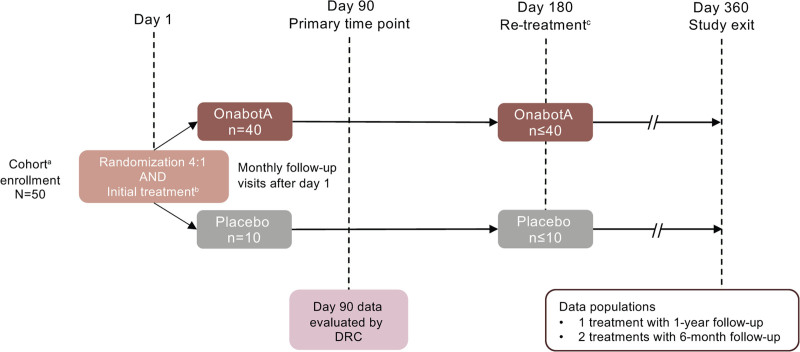
A detailed description of the design of this phase 2 study was reported previously (Fig. 1 ). 16 Briefly, eligible subjects were assigned randomly (4:1) to receive up to 2 treatments with onabotulinumtoxinA 24, 48, 72, 96 U, or placebo and attended monthly study visits for 1 year. Investigators, subjects, and study site staff were blinded to treatment assignment (ie, onabotulinumtoxinA versus placebo), but not to dose cohort (ie, the volume per injection was greater for higher dose cohorts, but was the same for onabotulinumtoxinA-treated and placebo-treated subjects within each cohort). Investigators were instructed to enroll approximately 70% Asian subjects to reflect the likely patient population, as demand for MMP reduction treatment is popular among Asian individuals. 17 , 18 The lowest dose cohort was enrolled and treated first, and all subjects completed the day-90 visit before an independent data review committee reviewed the safety and efficacy information to determine whether the data supported retreatment and escalation to the next cohort, until all cohorts were enrolled. The study protocol conformed to the ethical guidelines of the 1975 Declaration of Helsinki, and was approved by a properly constituted institutional review board or independent ethics committee before initiation. Written informed consent was obtained from each subject before the conduct of any study procedures.
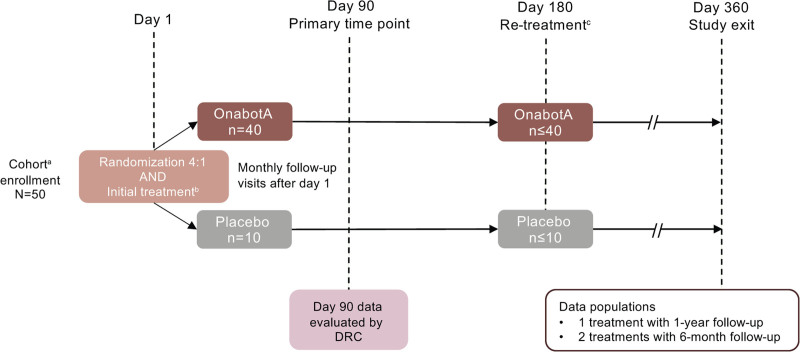
Fig. 1. Study schema. DRC, Data Review Committee; onabotA, onabotulinumtoxinA. aDose escalation (onabotulinumtoxinA 24, 48, 72, 96 U) and treatment of next dose cohort contingent on DRC recommendations based on the safety evaluation of the preceding cohort. bTreatment was administered as 6 intramuscular injections (3 injections per masseter muscle). cRetreatment was contingent on DRC approval following review of day-90 safety and efficacy data.研究设计流程图:展示剂量递增方案(24/48/72/96 U)及每队列需经数据审查委员会评估后方可进入下一队列,治疗以每侧咬肌3点共6点肌内注射实施。
Eligible subjects were 18 to 50 years of age and had grade 4 (marked) or grade 5 (very marked) bilateral MMP (identical grades for left and right masseter) based on the Masseter Muscle Prominence Scale (MMPS), a clinical severity scale for rating masseter muscle appearance and bulk. Key exclusion criteria were a dental or surgical procedure for lower facial shaping or masseter muscle reduction; history of or current temporomandibular joint dysfunction; conditions that would interfere with study assessments (dental or facial procedures, implanted metal device, clinically relevant abnormal mandibular finding or artifact, excess lower facial fat, loose or lax skin in lower face, parotid gland hypertrophy, substantial facial asymmetry, facial hair, or scarring); or weakness of muscles that could interfere with normal chewing and jaw clenching (masseter, pterygoid, temporalis). Subjects were prohibited from receiving any botulinum toxin treatment other than the study intervention throughout the study period.
OnabotulinumtoxinA injections were performed using a standardized protocol, detailed previously in Carruthers et al. 16 { See Figure, Supplemental Digital Content 1 , which shows the injection site diagram for the masseter muscle area, showing 1 side of the face (3 injections). Injection sites were targeted to the area of maximal MMP (identifiable with the mouth closed and teeth clenched) and administered with the mouth gently closed and the muscle relaxed. The first injection site was placed at the bulkiest area of the masseter muscle. Two additional injections were then placed so that all 3 sites were approximately 1 cm apart from each other and within 1 cm of the anterior border of the masseter muscle. (Republished with permission under the Creative Commons Attribution [CC-BY 4.0] from Carruthers J, Liew S, Rivers JK, et al. Reduction of masseter muscle prominence after treatment with onabotulinumtoxinA: primary results from a randomized phase 2 study. J Am Acad Dermatol . 2025;92:464–472), https://links.lww.com/PRS/I158.} Briefly, study treatments were equally divided among 6 intramuscular injections and administered by authorized study site staff (using an appropriately sized needle chosen by the injector) as 3 injections per masseter in the area of maximal MMP identified by palpation with the subject’s mouth closed and teeth clenched, approximately 1 cm apart from one another and 1 cm within the anterior border of the masseter, on day 1. The volume per injection differed between cohorts (24 U, 0.1 mL per injection; 48 U, 0.2 mL per injection; 72 U, 0.3 mL per injection; and 96 U, 0.4 mL per injection), but was the same for onabotulinumtoxinA-treated and placebo-treated subjects within each cohort. Once retreatment was authorized by the data review committee, qualified subjects (bilateral investigator-assessed MMPS grade ≥4) could receive a repeated treatment at the day-180 visit with the same treatment that was administered on day 1.
Secondary efficacy endpoints included change from baseline in lower facial width and mandibular facial angle; response on the MMPS according to the investigator (graded as 1 = minimal; 2 = mild; 3 = moderate; 4 = marked; and 5 = very marked); and subject responses on the Lower Facial Shape Questionnaire (LFSQ). Measurements of lower facial width and mandibular facial angle 1A were based on two-dimensional image projections taken from three-dimensional image models captured using a Vectra M3 (Canfield Scientific, Parsippany, NJ) and oriented using computer-assisted systems and predetermined facial landmarks. MMPS and LFSQ assessments and Vectra M3 imaging were performed on day 1, and then every 30 days thereafter until study exit. Lower facial width was assessed as the measurement of line A, depicting the width of the face at the level of the stomion, the midline point at the junction of the upper and lower vermilion. ( See Figure, Supplemental Digital Content 2 , which shows methodology to assess lower facial width. Lower facial width is depicted by line A. Line B depicts the alar base width and line C depicts the intercanthal distance, https://links.lww.com/PRS/I159.) Line B depicts the alar base width, defined as the distance between the left and right alar rims. Line C depicts the intercanthal distance (between the right and left medial canthi). Lines B and C were anticipated to remain constant during the study and to be unaffected by study treatment. Line A was measured for each subject and visit. Mandibular angle 1A (green shading) was generated by the intersection of an oblique line drawn from the most lateral aspect of cheek to the angle of the mandible (solid green line), and from another oblique line drawn across the contour of the horizontal part of the jawline (hashed green line), which intersect at the apex of the angle of the mandible. Angle 1A is measured as the internal angle between the horizontal and vertical lines, respectively, for each side (Fig. 2 ). In a post hoc analysis, the change from baseline in mandibular facial angle 1C was measured. Angle 1C ( blue shading in Fig. 3 ) was generated by the intersection of the line from the earlobe attachment landmarks ( solid blue line in Fig. 3 ) to the jawline/stomion line ( yellow line in Fig. 3 ) and a vertical line parallel to the midline ( dashed blue line in Fig. 3 ), as if measured from the frontal view for each side (Fig. 3 , above ).
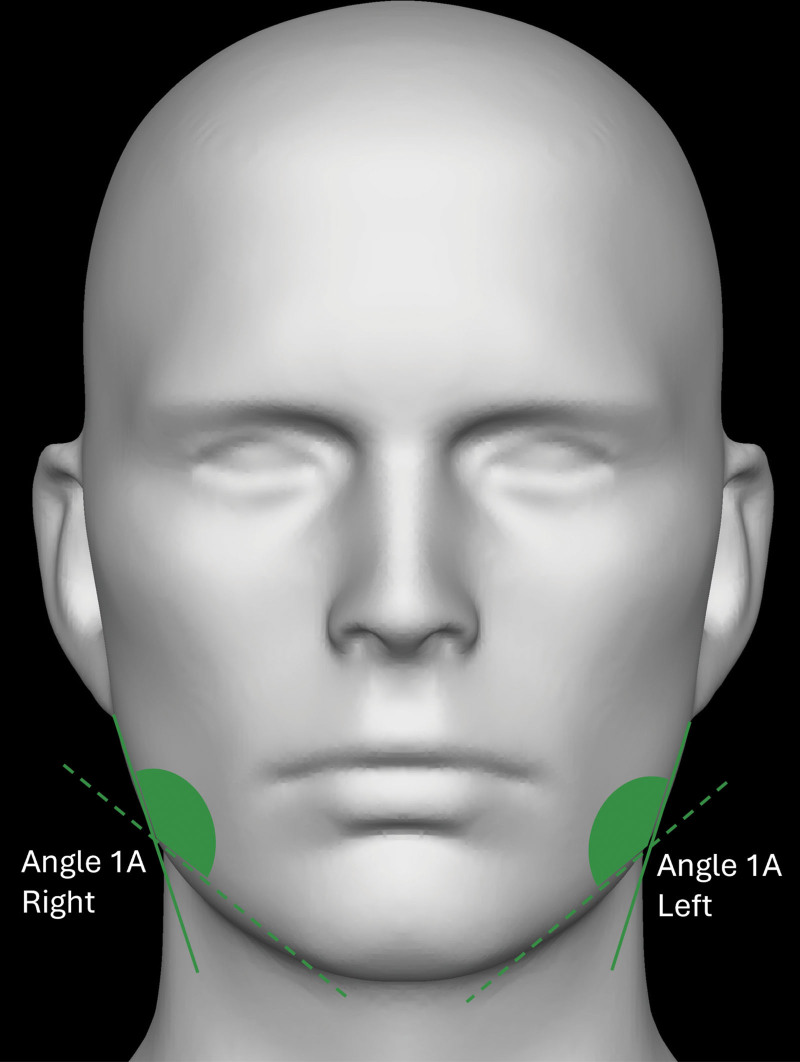
Fig. 2. Methodology to assess mandibular angle 1A measurement. Mandibular angle 1A, depicted by green shading, is formed by the intersection of 2 oblique lines: 1 drawn from the most lateral aspect of cheek to the angle of the mandible (solid green line), and the other drawn across the contour of the horizontal part of the jawline (dashed green line), which intersect at the apex of the angle of the mandible.下颌面角1A测量方法示意:由从颊部最外侧至下颌角的斜线(实线)与沿下颌水平部轮廓的斜线(虚线)相交于下颌角顶点构成,绿色阴影区为所测角度。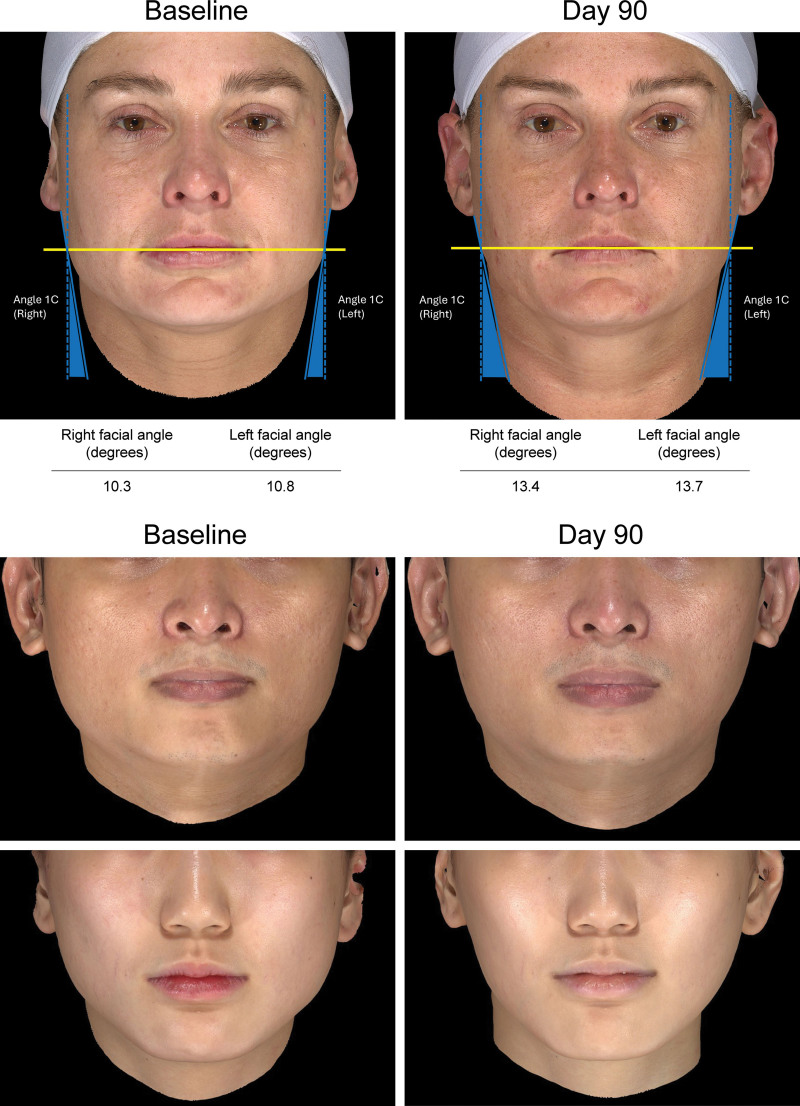
Fig. 3. Before-and-after photographs of subjects treated with 48 U of onabotulinumtoxinA. (Above) Blue shading shows increase in the size of mandibular angle 1C at day 90 compared with baseline, indicating improvement in MMP; the yellow line shows the location of the stomion line, and the blue lines demarcate mandibular facial angle 1C. (Below) Additional representative subject photographs are shown.48 U onabotulinumtoxinA治疗受试者疗前疗后照片:蓝色阴影显示第90天较基线下颌角1C增大,提示MMP改善,下方另附代表性受试者照片。The LFSQ is a patient-reported outcome measure that assesses symptoms, impacts, and satisfaction with the lower face associated with masseter prominence. All items are rated at baseline, and following treatment on a 5-point scale, and scored separately. Scores ranged from 0 = “not at all” to 4 = “extremely,” or 0 = “never” to 4 = “always” for the symptoms assessment and the impacts assessment; and 0 = “very satisfied” to 4 = “very dissatisfied” for the satisfaction assessment. The symptoms assessment evaluates improvements in 7 appearance-related symptoms, such as how much does the jaw stick out, how wide and how square the lower face appears, and how uneven the left and right sides of the face appear; higher scores indicate greater negative appearance and physical symptoms. The impacts assessment evaluates improvements in the impact of the lower face appearance across the last 7 days, such as how much the lower face makes the subject feel sad, self-conscious, embarrassed, less attractive, and less confident; higher scores indicate greater negative impact. The satisfaction assessment evaluates satisfaction with the lower face, such as how satisfied subjects are with the appearance, shape, or width of their lower face; how even the left and right sides of the face appear; and the ability to fully open the mouth; lower scores indicate greater satisfaction.
Analyses were conducted using the modified intent-to-treat population, which comprised all subjects who received the study treatment and had greater than or equal to 1 follow-up visit. Changes from baseline in lower facial width and mandibular facial angle were analyzed using analysis of covariance with factors for treatment, baseline lower facial width or mandibular facial angle, and baseline MMPS grade. For analyses of lower facial width and mandibular facial angle, pairwise comparisons were performed between each onabotulinumtoxinA dose group and the placebo group, and between each onabotulinumtoxinA dose group and the next-higher dose group. Between-group comparisons of raw grades for baseline and change from baseline in LFSQ scores were analyzed using the Wilcoxon rank-sum test. Categories in the LFSQ were converted into discrete ordinal responses (eg, 0, 1, 2). All analyses were performed using SAS version 9.3. Statistical significance was defined as P ≤ 0.05.
As described previously, 16 a total of 188 subjects were enrolled from 13 study centers in Canada (4 sites), Taiwan (4 sites), and Australia (4 sites). The modified intent-to-treat population (187 subjects) was used because of missing source documentation for 1 subject randomized to receive placebo (this subject was excluded from all analyses). The mean ± SD age was 35.4 ± 8.5 years (range, 18 to 50 years), and most subjects were female (81.8%) and Asian (79.7%) (Table 1 ); baseline characteristics were similar across treatment cohorts. Nearly 90% ( n = 167) of subjects completed the study. The number of subjects retreated with onabotulinumtoxinA at day 180 were 29 of 37 with 24 U (78.4%), 16 of 37 with 48 U (43.2%), 15 of 38 with 72 U (39.5%), and 15 of 38 with 96 U (39.5%); 28 of 37 were retreated with placebo (75.7%).
Table 1. Baseline Demographics and Clinical Characteristics
| Characteristic | OnabotulinumtoxinA | |
|---|---|---|
| 24 U (%) | 48 U (%) | 72 U (%) |
| No. of patients | 37 | 37 |
| Mean age ± SD, yr | 34.0 ± 9.1 | 37.2 ± 7.7 |
| Female | 32 (86.5) | 31 (83.8) |
| Race/ethnicity | ||
| White | 5 (13.5) | 7 (18.9) |
| Asian | 32 (86.5) | 30 (81.1) |
| Hispanic | 0 | 0 |
| Other | 0 | 0 |
| MMPS grade | ||
| 4 | 30 (81.1) | 27 (73.0) |
| 5 | 7 (18.9) | 10 (27.0) |
| Mean lower facial width ± SD, mm | 127.6 ± 6.9 | 131.5 ± 10.0 |
| Mean mandibular facial angle ± SD, deg | 146.2 ± 4.5 | 144.4 ± 4.8 |
At day 90 (time of primary endpoint analyses), statistically significant improvements (ie, decreases) in lower facial width were evident for all onabotulinumtoxinA doses compared with placebo ( P < 0.001) (Fig. 4 , above ). The mean change from baseline in lower facial width at day 90 was an increase of 0.4 mm in the placebo group compared with decreases of −4.7, −4.3, −5.0, and −5.6 mm in the onabotulinumtoxinA 24-, 48-, 72-, and 96-U groups, respectively. Improvements in lower facial width remained statistically significant with onabotulinumtoxinA compared with placebo through day 180 for all doses, and for those subjects who received only 1 treatment, continued through day 270 with the 72-U dose and through day 300 with the 96-U dose. Improvements in lower facial width were maintained among subjects who received 2 treatments through day 360 with all onabotulinumtoxinA doses ( P ≤ 0.005), and were greater after repeated treatment than after initial treatment (Fig. 4 , below ). A dose-response trend was observed between onabotulinumtoxinA doses and improvements in lower facial width at day 90 after treatment and continuing for up to 180 days.
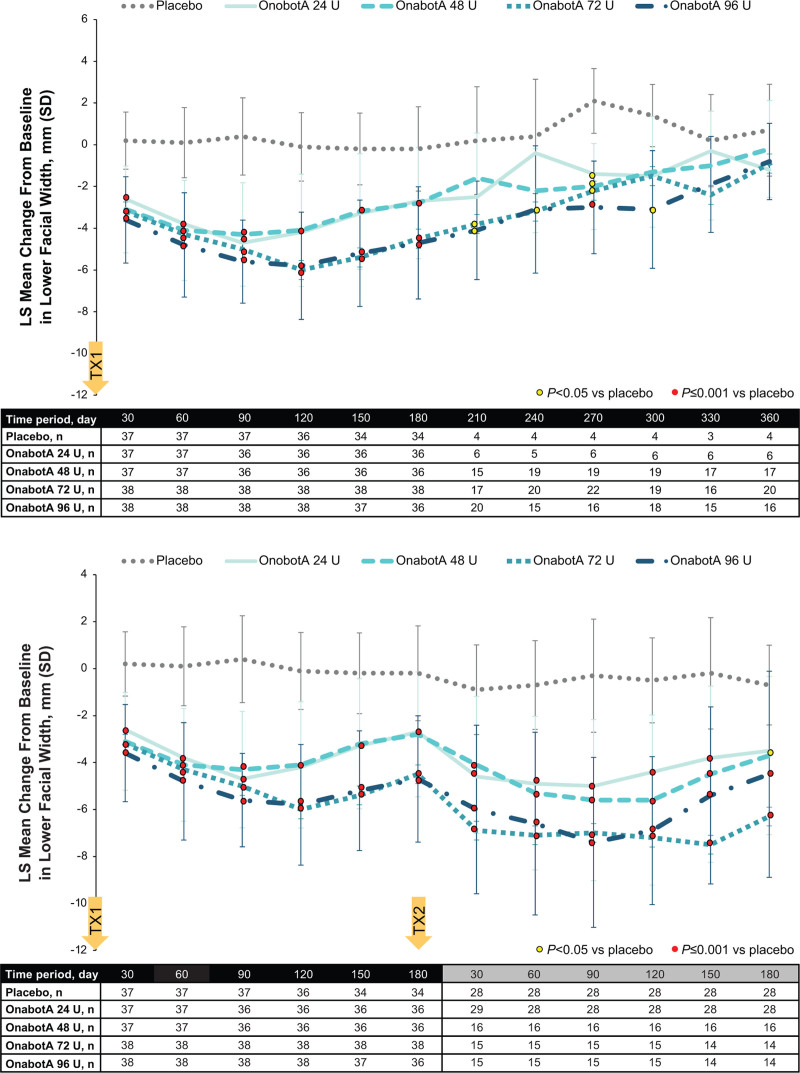
Fig. 4. Mean change in lower facial width, measured by Vectar. (Above) One year following a single treatment. (Below) One year with subjects qualified for repeated treatment at day 180. The timing of the first treatment (orange arrow) (TX1) and repeated treatment (orange arrow) (TX2) are shown. In above, only participants who received a single treatment at day 1 and did not qualify for a second treatment in treatment cycle 2 are represented for days 180 through 360. In below, only participants who qualified to receive a second treatment at day 180 are represented in treatment cycle 2 (days 180 through 360). Data represent least squares mean (SD) change from baseline in mm. LS, least square; onabotA, onabotulinumtoxinA; TX, treatment.下面部宽度(Vectra测量)均值变化:上图为单次治疗后一年内变化,下图为第180天符合重新治疗条件者两次治疗一年内变化,各剂量组均较安慰剂减小。
At day 90, improvements (increases [ie, more oblique/less square]) in mandibular facial angle were statistically significantly greater with all onabotulinumtoxinA doses compared with placebo ( P < 0.001) (Fig. 5 , above ). The mean change from baseline in mandibular facial angle at day 90 was a decrease of −1.1 degrees with placebo; compared with increases of 4.3, 4.2, 4.3, and 4.2 degrees with onabotulinumtoxinA 24, 48, 72, and 96 U, respectively. Improvements in mandibular facial angle remained statistically significant in all onabotulinumtoxinA dose groups compared with placebo through day 180 after both single and repeated treatments, up to day 240 with the 72-U dose after a single treatment, and up to day 330 with the 96-U dose after a single treatment. The magnitude of improvement was larger with repeated treatment than with initial treatment for all onabotulinumtoxinA doses (Fig. 5 , below ). A dose-response trend was observed between onabotulinumtoxinA doses and mandibular facial angle improvements with initial treatment and after repeated treatment. Representative photographs of subjects treated with 48 U of onabotulinumtoxinA are shown in Figure 3 . At day 90, increases from baseline in mandibular facial angle 1C (indicating a more ovoid facial shape) on both sides of the face were observed.
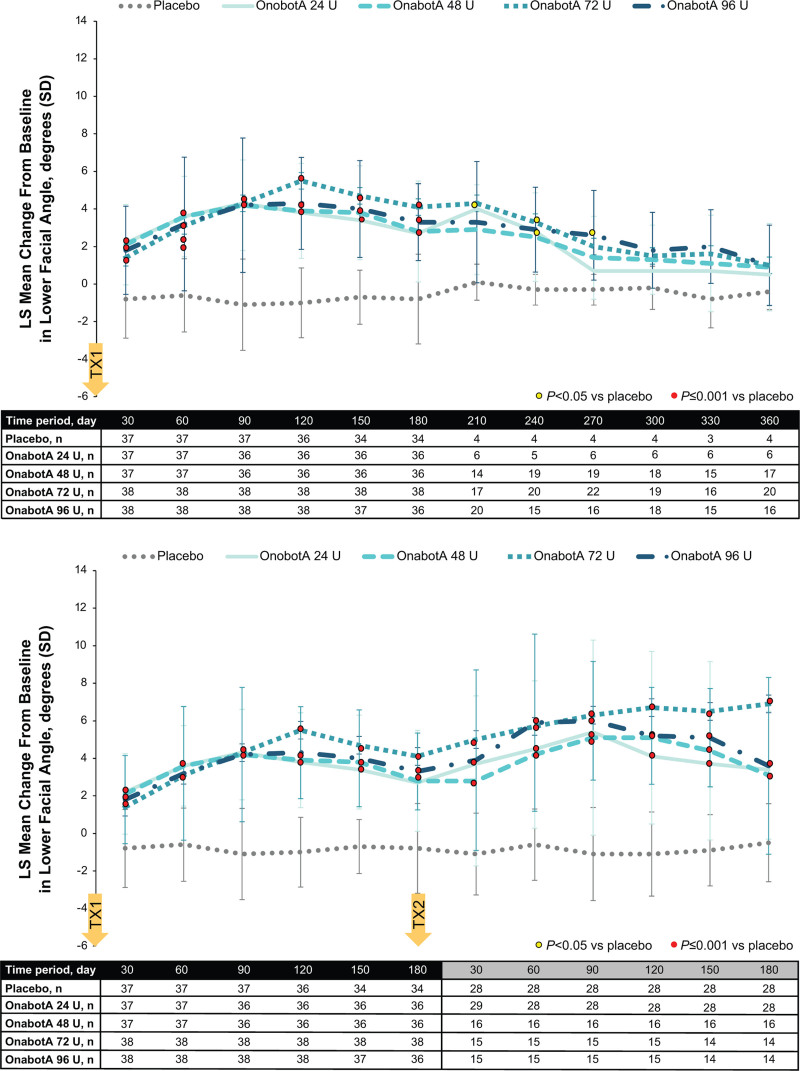
Fig. 5. Mean change in mandibular facial angle, measured by Vectra. (Above) One year following a single treatment. (Below) One year with a repeated treatment at day 180. The timing of the first treatment (orange arrow) (TX1) and repeated treatment (orange arrow) (TX2) are shown. In above, only participants who received a single treatment at day 1 and did not qualify for a second treatment in treatment cycle 2 are represented for days 180 through 360. In below, only participants who qualified to receive a second treatment at day 180 are represented in treatment cycle 2 (days 180 through 360). Data represent least square mean (SD) change from baseline in angle. LS, least square; onabotA, onabotulinumtoxinA.下颌面角(Vectra测量)均值变化:上图为单次治疗后一年内变化,下图为第180天重复治疗后变化,各剂量组角度较安慰剂增大(更趋卵圆形)。
At day 90, decreases (improvements) in MMPS grade were statistically significantly greater with all doses of onabotulinumtoxinA compared with placebo ( P < 0.001). The mean change from baseline in MMPS grade at day 90 was an improvement of −0.4 with placebo; compared with improvements of −1.4, −1.6, −1.9, and −2.0 with onabotulinumtoxinA 24, 48, 72, and 96 U, respectively. Improvements remained statistically significantly greater in the onabotulinumtoxinA 48-, 72-, and 96-U dose groups compared with placebo through day 180 ( P < 0.001). Following retreatment, statistically significant improvements in MMPS grade were seen with all onabotulinumtoxinA doses versus placebo for up to 360 days ( P ≤ 0.033). A dose-response trend was observed between onabotulinumtoxinA doses and MMPS grade improvements through at least day 150 after initial treatment.
At day 90, subjects reported greater improvements with onabotulinumtoxinA, compared with placebo on several items on the LFSQ symptoms, impacts, and satisfaction assessments. OnabotulinumtoxinA, 72 U and 96 U, achieved significantly greater improvements versus placebo in certain appearance-related symptoms, including how much the jaw sticks out and how wide and square the lower face appears ( P < 0.05) (Fig. 6 , above ). Subjects who received 96 U of onabotulinumtoxinA also reported significantly greater improvements in items related to feelings of attractiveness, confidence, self-consciousness, sadness, and embarrassment over a 7-day period compared with placebo, on the LFSQ impacts assessment ( P < 0.05) (Fig. 6 , center ). Subject self-assessment of satisfaction with lower facial shape showed that only 96 U of onabotulinumtoxinA elicited a significantly greater improvement in satisfaction with appearance and shape, whereas both 72 U and 96 U of onabotulinumtoxinA achieved significant improvements in satisfaction with width of the lower face ( P < 0.05) (Fig. 6 , below ). Treatment with 24 U of onabotulinumtoxinA did not result in significantly greater improvements versus placebo in subject self-assessment of MMP symptoms, impacts, or satisfaction.
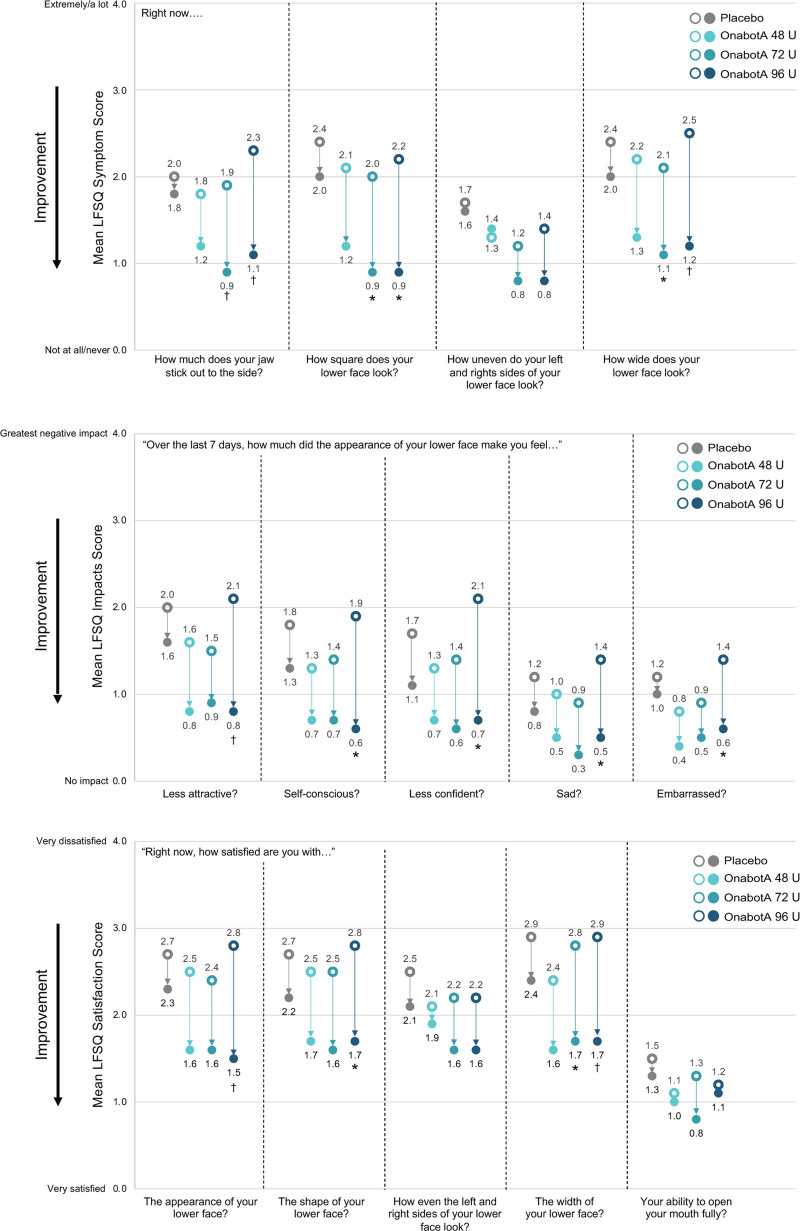
Fig. 6. Subject-reported LFSQ assessments for (above) symptoms, (center) impacts, and (below) satisfaction with lower facial shape. Open symbols depict baseline mean scores; closed symbols depict mean scores at day 90; onabotA, onabotulinumtoxinA. P < 0.05 for change from baseline with onabotulinumtoxinA versus placebo; †P ≤ 0.001 for change from baseline with onabotulinumtoxinA versus placebo.受试者LFSQ量表评估:上图为症状、中图为心理影响、下图为下面部外形满意度;开放符号为基线、实心符号为第90天,部分剂量组较安慰剂改善显著(标注或†)。
The results of the current analyses support and are consistent with results of the primary efficacy analyses, which showed that onabotulinumtoxinA is an efficacious treatment for reducing masseter muscle volume in subjects with bilateral MMP. 16 Across all objective, investigator-rated, and subject-rated measures evaluated, onabotulinumtoxinA resulted in significant improvements to MMP compared with placebo, with similar dose-response curves.
OnabotulinumtoxinA significantly reduced lower facial width and increased mandibular facial angle in all dose groups compared with placebo, with significant improvements observed for up to 6 months following treatment at days 1 and 180. Improvements in MMPS grade with all doses of onabotulinumtoxinA versus placebo at day 90 were consistent with the primary analysis findings. 16 Notably, repeated treatment contributed to additional improvements in lower facial width mandibular facial angle, and MMPS grade compared with initial treatment. Furthermore, improvements with onabotulinumtoxinA in appearance-related lower facial symptoms, impact of lower facial appearance, and satisfaction with lower facial shape, as measured by changes in LFSQ scores, corresponded with the improvements in lower facial width, mandibular facial angle, and MMPS grade.
The MMPS is a validated clinical scale for rating MMP severity that incorporates multiple concepts of shape and volume; it therefore encompasses the concepts of width and angle in a manner that yields a clinically relevant assessment score. Because lower facial width and mandibular facial angle are objective measures, the fact that these individual components showed similar changes to those in MMPS grade in response to increasing doses of onabotulinumtoxinA supports the relevance of the MMPS.
Our data are consistent with previous reports of facial width reductions obtained with similar treatment. 14 , 19 Park et al. reported that injection of onabotulinumtoxinA 25 to 30 U per side led to reductions in masseter thickness at 90 days ranging from 2.5 to 2.9 mm in a single-arm study of 45 subjects with MMP. 14 As only the lowest dose in our study of subjects with marked/very marked MMP was in this range, it is possible that subjects with less severe MMP may obtain benefits with lower doses. Facial angle measurements were previously used by Liew and Dart to demonstrate the “angle of beauty,” 8 and the increase in facial angle 1C toward a more desirable ovoid lower face observed in the current study (Fig. 3 ) is consistent with those findings.
OnabotulinumtoxinA was effective at reducing MMP across a range of doses (24 U through 96 U). Clinical benefits associated with higher onabotulinumtoxinA doses included greater efficacy and longer duration of action. Changes in the lower face in subjects treated with lower doses of onabotulinumtoxinA were subtle; indeed, LFSQ scores indicated that despite significant improvements in objective measurements and investigator-assessed MMPS grade with the 24-U dose, many subjects did not perceive these changes as significant. This suggests that lower doses may be used to contour a refined appearance, whereas higher doses can lead to more transformative changes for subjects who desire them. On several endpoints, the 72- and 96-U doses had similar clinical effects. All dose levels provided improvements in facial width and mandibular angle compared with placebo and were well tolerated. Reports of mastication disorder were minimal (placebo, n = 1; onabotulinumtoxinA, n = 9), and no significant changes in body weight were reported, suggesting that subjects’ ability to eat was not affected by treatment. However, for the primary (change in lower facial volume) and secondary (MMPS responder rate) endpoints, the 24-U dose showed lower efficacy, separating from the 48-U, 72-U, and 96-U dose groups at all time points from day 30 to day 150. 16 Moreover, the 96-U dose showed a localized impact on the smile in 4 subjects (10.5% of the 96-U dose group), 16 which may have resulted from inadvertent local spread of toxin to the risorius muscle. 20 , 21 Considered together, these data indicate that 48 U and 72 U may be the most appropriate doses for further clinical investigation of the safety and effectiveness of onabotulinumtoxinA for the treatment of MMP.
Our study had several limitations. The evaluation of facial contour is limited by the lack of standard imaging technology for measuring facial characteristics. The LFSQ was used for the first time in this study to identify questions most relevant to participants. The small numbers of patients per treatment group make discriminations of efficacy between the 96- and 72-U doses difficult, and both doses yielded maximal effects on imaging analyses and clinician- and patient-reported measures. Subjects were blinded to whether they received onabotulinumtoxinA or placebo but not to dose cohort, which could have introduced some bias to the patient-reported outcome measures. However, all subjects were botulinum toxin treatment–naive for the MMP indication and, therefore, had limited experience to guide any dose-based treatment expectations. There was a predominant proportion of Asian subjects in this study, which could limit generalizability of the results; however, existing evidence suggests that the findings apply to non-Asian individuals. 8 , 22 Further large studies should seek to include greater numbers of other populations.
OnabotulinumtoxinA provides an effective, nonsurgical, minimally invasive treatment for the reduction of MMP. Across a wide range of doses, improvements toward a more ovoid lower facial shape were maintained through at least 6 months after 1 or 2 treatment cycles. Such noticeable, satisfying, and durable changes in lower facial shape support the treatment of MMP with onabotulinumtoxinA.
Jean Carruthers is a consultant and researcher for Allergan Aesthetics, an AbbVie Company; Alphaeon; Bonti; Merz; and Revance. Shannon Humphrey is a speaker, consultant, and/or investigator for Cutanea, Evolus, Galderma, L’Oreal, Merz, Bonti, Revance, and Allergan Aesthetics. Steven Liew has received honoraria and reimbursements as part of the speakers’ bureau and advisory board of Allergan Aesthetics, Galderma, and Teoxane. Jason K. Rivers is an advisory board member, speakers’ bureau member, and investigator for AbbVie/Allergan; an investigator and speakers’ bureau member for Galderma; an advisory board member, speakers’ bureau member, paid consultant, and investigator for Leo Pharma; an investigator for Pfizer; and a founder of and stockholder in Riversol Skin Care Solutions Inc. Beta Bowen, Mitchel F Brin, and Elisabeth Lee are employees of, and may own stock/stock options in, AbbVie. Shyi-Gen Chen has no financial conflicts to report.
The opinions expressed in this article are those of the authors. The authors received no honorarium, fee, or other form of financial support in relation to the development of this article.
Allergan Aesthetics, an AbbVie Company, funded this study and participated in the study design, research, analysis, data collection, interpretation of data, reviewing, and approval of the publication. All authors had access to relevant data and participated in the drafting, review, and approval of this publication. No honoraria or payments were made for authorship. Medical writing support for this article was provided by Kristin E. Larsen, PhD, and Stephanie Leinbach, PhD, both of Peloton Advantage, LLC, an OPEN Health company; and was funded by Allergan Aesthetics, an AbbVie Company.
AbbVie is committed to responsible data sharing regarding the clinical trials they sponsor. This includes access to anonymized, individual, and trial-level data (analysis data sets), as well as other information (eg, protocols, clinical study reports, synopses, or analysis plans), as long as the trials are not part of an ongoing or planned regulatory submission.
These clinical trial data can be requested by any qualified researchers who engage in rigorous, independent, scientific research, and will be provided following review and approval of a research proposal, statistical analysis plan, and execution of a data use agreement. Data requests can be submitted at any time after approval in the United States and Europe and after acceptance of this manuscript for publication. The data will be accessible for 12 months, with possible extensions considered. For more information on the process or to submit a request, visit https://vivli.org/ourmember/abbvie/, then select “Home.”
声明:中文精读 · 仅供学术参考。内容来自公开文献检索,不代表本人观点,不构成诊疗建议。 医疗美容需在正规医疗机构由执业医师实施。
基于相同主题推荐 · 继续深挖
一项2期随机安慰剂对照剂量递增研究(onabotulinumtoxinA 24/48/72/96 U)纳入187例双侧咬肌突出(MMP)受试者,亚洲人约占79.7%。
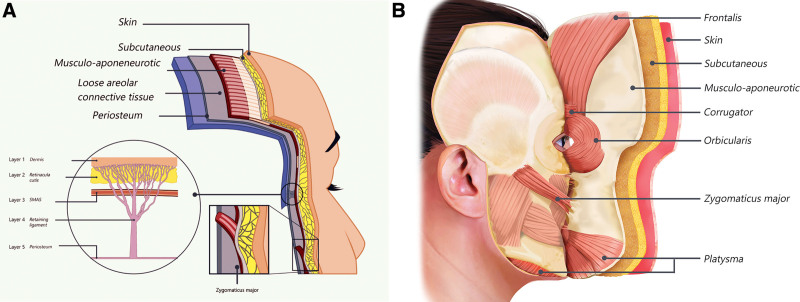
本文为特邀专题/叙述性综述,提出将面部视为 SMAS(表浅肌肉腱膜系统)连续纤维肌层这一单一功能单元,以肉毒毒素再平衡张力区与方向性表情肌,追求自然、有表情的动态效果。
本研究为回顾性队列研究,纳入2022年5月至2025年5月治疗的35例眶周老化患者(91.4%为女性,32/35),年龄30–50岁;BoNT/A单用组20例,MFRF+BoNT/