非手术隆鼻改良Rino-4-Puntos四点技术
2026年9月13日22 min read
Plastic and Reconstructive Surgery Global Open
Background:Recently, we introduced the Rino-4-Puntos (R4P) nonsurgical rhinoplasty technique using hyaluronic acid (HA), which effectively addresses nose shape issues. However, no nonsurgical rhinoplasty procedure has been explicitly tested for improving the appearance of nasal septal deviation (NSD). This study aimed to evaluate the aesthetic outcome, longevity of results, safety, and patient satisfaction of the modified R4P (mR4P) technique, designed to address nose shape issues related to NSD.
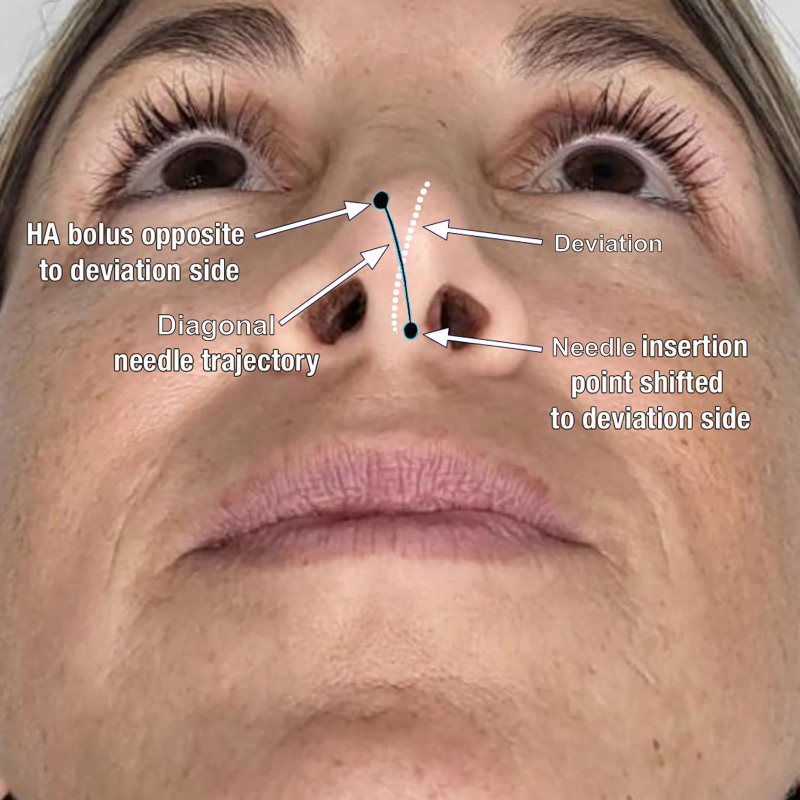
Methods:This was a retrospective study of consecutive patients treated with mR4P. NSD is the leading cause of unpleasing aesthetics. The R4P technique involves targeted injections with an intermediate G prime ( G ′) HA at the radix (point 1), supratip (point 2), and tip (point 3), and high G ′ HA at the columella (point 4). To specifically address nose shape issues caused by NSD, modifications were made to points 4.2 and 4.3 of the technique. At these points, the needle insertion point was repositioned to the side of deviation. Then, the needle was directed diagonally opposite the deviation toward the nasal tip.
Results:Eighty individuals (68.7% women) were included. The procedure is suitable for mild-to-moderate caudal NSD, including I- and C-shaped NSDs. Notably, 87.5% of the participants were very satisfied and 12.5% were satisfied with the aesthetic outcome. Most (81.2%) patients reported respiratory improvements after mR4P. The treatment effect lasted for a median of 11 months. No vascular complications occurred.
Conclusions:The mR4P technique improves the appearance of caudal NSD and provides good longevity of the aesthetic outcomes and safety.
Nonsurgical rhinoplasty (NSR) utilizes a hyaluronic acid (HA) filler to correct nose contour deficiencies and irregularities. 1 – 3 It is a straightforward and quick procedure that does not require local anesthesia and allows for immediate recovery with minimal downtime. 4 This procedure suits individuals with mild cosmetic concerns or who want to enhance their nasal appearance without surgery. 1 Despite its growing popularity, NSR with HA has not yet received approval from the US Food and Drug Administration. Recently, we introduced the Rino-4-Puntos (R4P) NSR technique, which has been designed to significantly enhance aesthetic outcomes and effectively address nose shape issues. 3
It is worth noting that most of the population exhibits some degree of nasal septal deviation (NSD), 5 with prevalence rates as high as 86.6% when assessed using cone-beam computed tomography. 6 Although septal surgery for NSD is recognized as superior and more effective than nonsurgical interventions, many patients with mild-to-moderate NSD choose nonsurgical treatment as an option. 7 However, no NSR studies have focused on the aesthetic enhancement of NSD. This study introduced a modified R4P (mR4P) NSR technique specifically designed to improve the aesthetics of NSD while ensuring strict safety standards are maintained. We thoroughly evaluated the aesthetic outcome, longevity of results, and safety of the innovative mR4P technique, and assessed patient satisfaction.
This retrospective study included consecutive individuals who underwent the mR4P procedure in the authors’ practices between January 2023 and January 2024. The main reason for seeking rhinoplasty consultations was aesthetic improvement of the profile.
We included patients seeking aesthetic improvement in their profile for whom NSD was the leading cause of unpleasing aesthetics. The diagnosis of NSD was made based on information gathered from the patient’s history, symptoms, and physical examination. Rhinoscopy was performed by an ENT provider if the diagnosis needed confirmation. We selected patients with mild or moderate NSD (nasal septal angle <15 degrees) 8 and a minimum follow-up postprocedure of 8 months. We focused on low (caudal) deviations and excluded high (cephalic), middle of the nose (middle), and combined (S-shaped) deviations. An S-shaped deviation involves a caudal deviation to one side and a cephalic deviation to the opposite side. 9 , 10 Patients with high (cephalic) and middle nose deviations were excluded because improving such deviation requires injections into high vascular risk areas on the lateral aspects of the dorsum.
During counseling, we informed patients that our technique focused on adjusting the soft tissue to bring it toward the midline rather than correcting the nasal cartilage and bone. We have specified that this NSR technique is not a replacement for surgery.
Fillers with high elastic modulus ( G prime, G ′) were used in the columellar injections, consistent with the approach used in the R4P procedure. 3 These high G ′ HA gels are characterized by high sturdiness, cohesivity, and low hydrophilicity, 11 which allow for more projection and less spread of the filler material. High G ′ fillers included Belotero Volume+, Merz (26 mg/mL HA, G ′ = 438), Juvéderm Voluma with lidocaine, Allergan (20 mg/mL HA, G ′ = 398), and Restylane Lyft (20 mg/mL HA, G ′ = 977). 11 The injections were performed using a 27G, 13-mm needle. In our experience, thick and viscous HA gels, such as those used in R4P, are injected more effectively with 27G needles than with 30G needles, as they do not flow well in the latter. In addition, a needle provides greater precision in the plane and volume of product deposited than a cannula does. Magacho-Vieira and Santana 12 reported 2 cases of skin necrosis and blindness associated with the use of 22G cannula in NSR. They emphasized that using a cannula alone does not eliminate the risk of intra-arterial filler deposition. Their ultrasound findings indicated that nasal arteries can have a diameter of up to 1.1 mm, whereas the external diameter of a 22G cannula is approximately 0.7 mm.
The mR4P technique does not require local anesthesia. It involves the injection of high G ′ HA into the columellar area. However, concomitant nasal shape problems such as a prominent dorsal hump or drooping tip and other injections of the R4P technique (points 1–3 in radix, supratip, and tip, respectively) may need to be performed with an intermediate G ′ HA, such as Restylane Volyme (20 mg/mL HA, G ′ = 239), Juvéderm Ultra Plus XC (24 mg/mL HA, G ′ = 263), and Belotero Intense (25.5 mg/mL HA, G ′ = 255). 11 The authors have recently provided a comprehensive description of the R4P technique. 3 The filler injection should not exceed 0.05 mL. Before each injection, we perform aspiration. 13 The entire procedure, including photography, takes 15–20 minutes.
Points 1–3 are the same as in the R4P technique. 3 Point 1 is a supraperiosteal injection of 0.05 mL HA in the radix; it can be repeated 2 more times (total HA volume ≤0.15 mL). Point 2 is a suprachondrial injection of 0.025 mL of HA on the supratip. Point 3 involves a 3-bolus injection (bolus, retrograde, and repeated bolus in the interdomal space) into the deep fat of the tip (total HA volume 0.15 mL).
Point 4 involves the base, apex, and body of the columella and is subdivided into 4 points (4.1–4.4). The injection plane is supraperiosteal (point 4.1) or deep fat (points 4.2, 4.3, and 4.4), and the average HA volume is 0.30 mL. 3 Point 4.1, which opens the nasolabial angle, and point 4.4, which provides extra resistance and strength to the columella, are performed as in the R4P technique. At point 4.1, a 0.05 mL bolus is injected supraperiosteally perpendicular to the nasal spine at the base of the columella. At point 4.4, 2 boluses of 0.05 mL each are injected, one on top of the other, into the deep fat at the base of the columella.
In point 4.2, the objective is to provide more rigidity and strength to the columella (Fig. 1 ). 3 The syringe should be held at a 10-degree angle, and the injector should use an entry point at the same level as in point 4.1 but on the side of the deviation. After aspiration, the needle should be advanced diagonally toward the nasal tip in a direction opposite to the deviation. Following aspiration, a 0.05 mL bolus should be injected into the deep fat at the tip of the nose. After aspirating again, the injector should proceed with a retroinjection of a 0.05 mL deposit into the columella. Finally, another 0.05 mL bolus should be injected with the syringe held at a 90-degree angle at the base of the columella. If more filler is required, the above steps can be repeated twice, with a total HA volume of 0.15–0.45 mL. However, most patients do not require a volume exceeding 0.3 mL. ( See Video [online] , which shows the demonstration of the HA injection at point 4.2. The needle’s insertion point is not at the midline but at the side of the deviation. After aspiration, the needle is advanced diagonally [yellow line] opposite the deviation toward the nasal tip, where an HA bolus is injected. Aspiration is repeated, followed by a retrograde bolus into the columella. Finally, another bolus is injected into the base of the columella.)
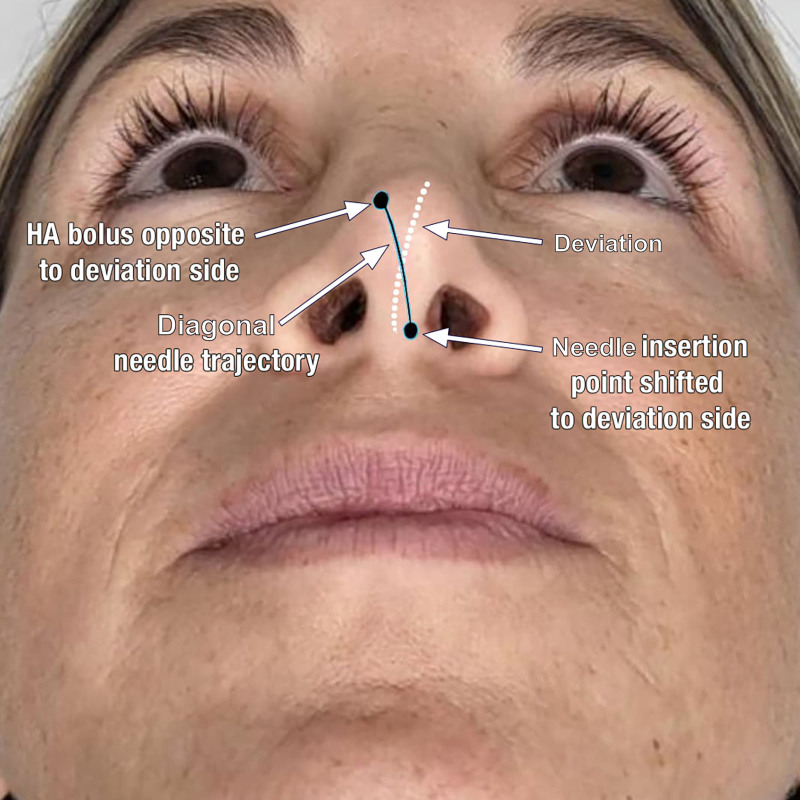
Fig. 1. Schematic demonstration of point 4.2. The direction of deviation is shown with a dotted line. The needle insertion point is shifted to the side of the deviation at the base of the columella. After aspiration, the needle should be advanced diagonally toward the nasal tip (solid line) in a direction opposite the deviation. Following another aspiration, a 0.05 mL HA bolus should be injected into the deep fat at the nasal tip. Then, after aspirating again, the injector should proceed with a retroinjection of a 0.05 mL deposit into the columella. Finally, a last 0.05 mL bolus should be injected at the base of the columella.示意图展示改良点 4.2 的进针与注射方向:进针点移至偏曲侧,针尖斜向偏曲对侧朝鼻尖推进。补充视频 / 附件(原文未随文提供原图,可于出版方页面查看)gox-13-e6801-s001.mp4Video 1. Demonstration of the HA injection at point 4.2. The needle’s insertion point is not at the midline but at the side of the deviation. After aspiration, the needle is advanced diagonally (yellow line) opposite the deviation toward the nasal tip, where an HA bolus is injected. Aspiration is repeated, followed by a retrograde bolus into the columella. Finally, another bolus is injected into the base of the columella.
The goal of point 4.3 is to raise the nasal tip (Fig. 2 ). 3 This point is similar to 4.2; however, the needle, held at a 10-degree angle, should be inserted into the middle of the columella body on the side of the deviation. After aspiration, the needle should be advanced diagonally in the direction opposite to the deviation toward the apex. Following aspiration, a 0.05 mL bolus should be placed into the deep fat at the tip. After aspirating again, the injector should proceed with a retroinjection of another 0.05 mL bolus into the columella. Finally, a 0.05 mL bolus is injected with a syringe held at a 90-degree angle into the middle of the columella body. These steps can be repeated up to 3 times if more volume is required.
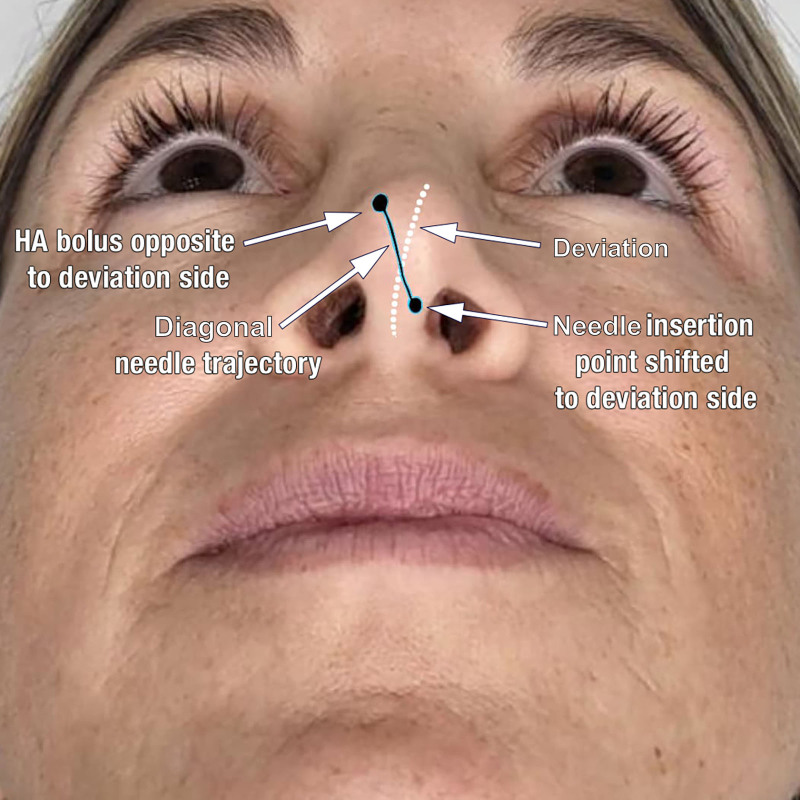
Fig. 2. Schematic demonstration of point 4.3. The direction of deviation is shown with a dotted line. The insertion point of the needle is located on the side of the deviation in the middle of the columella body, higher than in point 4.2. The steps proceed otherwise as described in point 4.2 (Fig. 1).示意图展示改良点 4.3(位于柱体中部、偏曲侧进针),以抬高鼻尖并加强柱部支撑。
Patients were followed up for a median period of 12 months (range: 8–18 mo) postprocedure. The patients were closely monitored after the procedure, and a decision about whether a touch-up was needed was made 4–7 weeks later.
Evaluation of the aesthetic results by the injector was performed via serial photography, that is, comparison of photographs taken immediately before and after the procedure and at the last follow-up visit. At the last follow-up visit, patient satisfaction was assessed based on 3 possible responses: “very satisfied,” “satisfied,” and “unsatisfied.” Additionally, patients were surveyed to determine whether the procedure improved respiration.
Eighty individuals underwent R4P. Fifty-five (68.7%) patients were women. The patients’ ages ranged from 20 to 73 years, with an average of 42 years. Two-thirds of the participants were White, and one-third were Latino. The mR4P procedure is best indicated for mild-to-moderate NSD and caudal deviations, including C-shaped and I-shaped deviations. Typical aesthetic outcomes of the mR4P technique are shown in Figures 3 – 5 . After the initial procedure, a total of 18 (22.5%) patients underwent a touch-up at an average interval of 7 weeks postprocedure. The treatment effect was maintained for a median of 11 months (range: 7–16 mo).
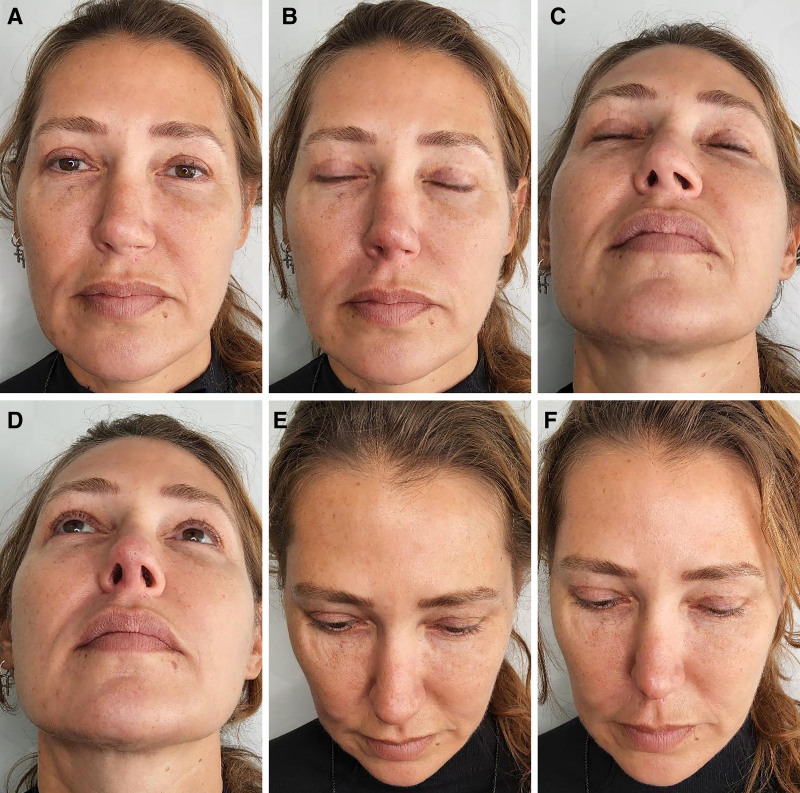
Fig. 3. Correction of I-shaped NSD with the mR4P procedure using HA. A and B, Preoperative and postoperative projection in frontal view; C and D, preoperative and postoperative projection in head-tilted-back view; E and F, preoperative and postoperative projection in head-tilted-down view.I 型鼻中隔偏曲(NSD)患者接受 mR4P 前后的鼻部轮廓改善示例。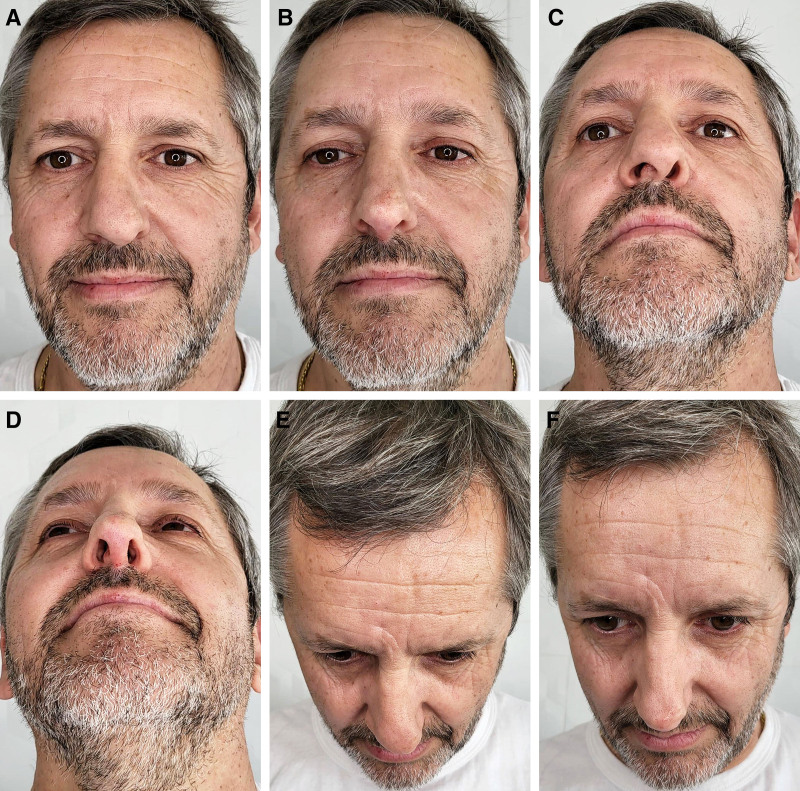
Fig. 4. Correction of C-shaped NSD with the mR4P procedure using HA. A and B, Preoperative and postoperative projection in frontal view; C and D, preoperative and postoperative projection in head-tilted-back view; E and F, preoperative and postoperative projection in head-tilted-down view.C 型 NSD 患者接受 mR4P 前后的鼻部轮廓改善示例。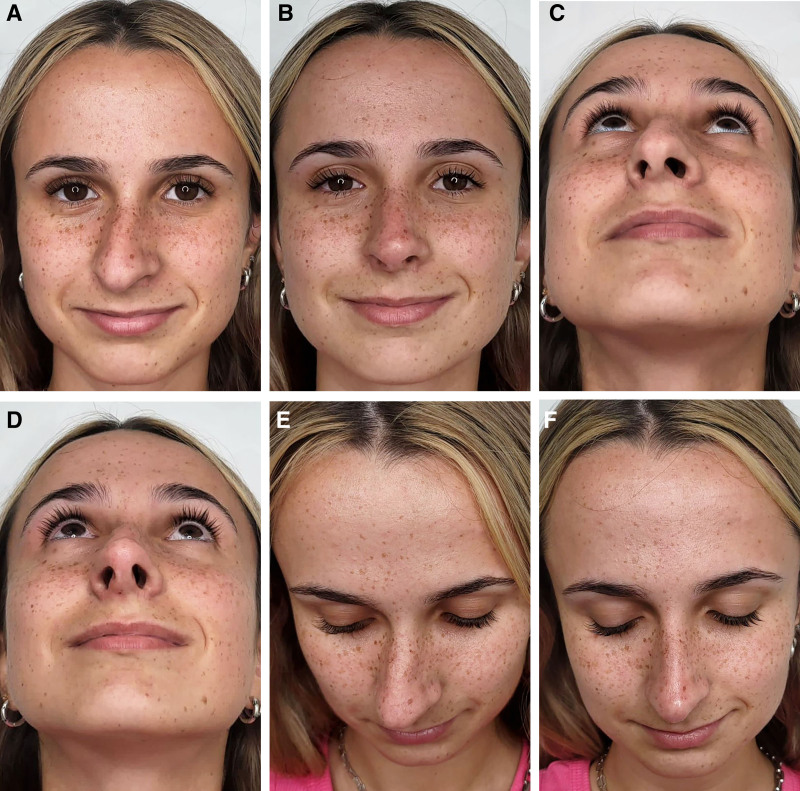
Fig. 5. Correction of I-shaped NSD with the mR4P procedure using HA. A and B, Preoperative and postoperative projection in frontal view; C and D, preoperative and postoperative projection in head-tilted-back view; E and F, preoperative and postoperative projection in head-tilted-down view.另一直 I 型 NSD 病例经 mR4P 治疗后的外观变化。Patient satisfaction was high, as determined by the quality of interactions observed during follow-up visits and the feedback obtained from interviews with the aesthetic provider. At the last follow-up visit, 70 (87.5%) patients confirmed they were “very satisfied,” whereas 10 (12.5%) patients expressed that they were “satisfied.” Patients who experienced a slight decrease in results after the procedure were very satisfied following the touch-up visit. Notably, 65 (81.2%) patients reported respiratory improvements after mR4P. Vascular complications were not encountered, and the patients tolerated the procedure well. Mild erythema, edema, and pain lasting up to 72 hours were sometimes observed after the procedure.
Patients reported high satisfaction with the overall aesthetic outcome, particularly with the improvement in nose shape and profile. The procedure significantly enhanced the patients’ self-perception of their appearance, resulting in increased confidence and empowerment. Patients were able to resume normal activities immediately after the procedure, which contributed to their satisfaction.
The outcomes of this study lasted for a median period of 11 months. Based on this observation, we recommend retreatment every 12 months to maintain desired outcomes. However, many patients visited our offices for other aesthetic procedures more than a year after mR4P treatment, indicating that the results were sustained for up to 16 months postprocedure.
No vascular complications were observed in the present study. We are confident that the changes we made at points 4.2 and 4.3 in mR4P do not increase vascular risks. We advocate for using a 27G needle over smaller bore needles (≤30G), which carry a higher risk of intravascular injection of the filler material and do not aspirate readily. 14 Our literature search did not reveal any cases of columellar artery embolization with NSR procedures. An NSR procedure using a cannula and following a columellar approach did not report any cases of embolization of the columellar artery. 15 Another study that approached the columella via retrograde linear threading from the nasal tip did not report cases of compromise of the columellar artery. 16 To decrease such remote risk at points 4.2 and 4.3, we aspirated 3 times: at the insertion point of the needle, then at the nasal tip before an HA bolus was given, and finally, again at the tip before starting the retrograde injection (Figs. 1 , 2 ). Performing a slow diagonal retrograde injection with low extrusion pressure in points 4.2 and 4.3 adds another level of safety, as the needle is not positioned parallel to the columellar artery, and injecting slowly minimizes the vascular risks of high-pressure injections at a rapid rate, such as retrograde intravascular flow of the filler material. 17 – 19
The safety tips for the R4P technique, which help reduce the risk of vascular incidents, are also applicable to the mR4P technique. These include injecting 0.05 mL or less boluses in small aliquots, injecting at deep planes, injecting in the midline, and compressing the lateral nasal and columellar arteries with the thumb of the nondominant hand pressing the tip of the nose while injecting (points 4.2 and 4.3).
After the completion of mR4P, the surgeon must promptly check for vascular refilling, which should take less than 3–4 seconds. 3 Any prolonged duration will alert the injector to a possible vascular occlusion. The patient must be instructed to promptly contact the office upon experiencing any symptoms or signs of ischemia, such as pain, pallor, blanching, or mottled skin, to ensure that swift intervention, including hyaluronidase therapy, is implemented. 20 , 21
No similar studies are available for comparison with the mR4P technique. Previous NSR studies have focused on addressing issues such as prominent dorsal hump or repositioning of the nasal tip, but none have specifically addressed NSD. 14 , 22 – 25 Studies that included columellar HA injections did not specify regarding NSD. 13 , 16 , 26 In 1 case described by Piggott and Yazdani, 27 the authors corrected a right-sided deviation located in the middle of the nasal dorsum with filler augmentation on the left side of the dorsum. Their procedure was not sufficiently detailed, but we recommend against such treatments because of substantial vascular risks in this area.
For the mR4P technique, we adjusted the soft tissue of the columella and nasal tip to bring it closer to the midline. Like the R4P technique, mR4P offers improved support to the columellar base (points 4.1 and 4.4) compared with procedures using columellar retroinjection 16 or plumbing. 13 Additionally, the mR4P technique retains all other advantages of R4P, mainly as some points of R4P, such as point 3, are often performed in mR4P. These advantages include the use of 2 HA gels with different rheological properties, which distinguishes R4P from other techniques, 14 , 22 – 25 providing good projection of the nasal dorsum, excellent definition, and greater triangularity of the tip. 3
The mR4P technique, a significant refinement of the NSR, was explicitly developed to improve the aesthetics of NSD. This innovative procedure has been successfully performed on a substantial number of patients in the authors’ practices. To the best of our knowledge, there are no comparable NSR techniques that effectively address nasal shape issues related to NSD. The mR4P technique combines optimizing the aesthetic outcome with longevity. With the appropriate injection technique and safety precautions, no vascular adverse events were observed. Patients undergoing this procedure express very high satisfaction levels and report feeling more confident about their nasal profile after the procedure. Notably, an overwhelming majority of patients (81.2%) reported improved respiratory function following the mR4P procedure. Columella elevation could be a reason for experiencing improved breathing. Also, by reshaping the soft tissues, the procedure can open a nostril that feels “closed” due to NSD, further enhancing airflow.
The study is limited by the lack of a control group, the evaluation of results solely by the injector, and the overrepresentation of White and Latino patients among the participants. Patient satisfaction was assessed using a simple descriptive scale that may not capture small changes. This technique is effective for mild-to-moderate caudal deviation. However, it should not be used for cephalic (high), middle nose, and combined (S-shaped) deviations because of the substantial vascular risks associated with correction attempts. The procedure should only be performed by experienced injectors with a thorough understanding of the nasal anatomy, particularly the standard and variant patterns of nasal vascularization. Although evaluating NSR results can be challenging due to the lack of objective measurements regarding aesthetic outcome, 3 correcting NSD is immediately noticed and appreciated by the patient.
The mR4P technique effectively improved the appearance of unpleasing deformities associated with NSD. This procedure yielded reproducible results and was associated with high patient satisfaction. The aesthetic improvements achieved through mR4P were maintained for a median of 11 months. Patients with caudal deviations are suitable candidates for this procedure. Skilled injectors must possess a comprehensive understanding of nasal anatomy when performing the procedure. The risk of adverse effects can be significantly reduced by aspirating before slowly injecting small boluses (≤0.05 mL) at deep planes and injecting into the midline, as evidenced by the absence of vascular complications in the study.
The authors have no financial interest to declare in relation to the content of this article.
Patients provided written consent for the use of their images.
The study complied with the ethical principles of the Declaration of Helsinki for medical research involving human patients.
本项为单中心回顾性、无对照研究,循证等级有限(结果由术者自评,存在主观偏倚风险),可作为临床参考而非确定性结论。其价值在于首次系统地将非手术注射用于 NSD 外观改善,并给出可复现的「四点」注射框架。
需注意:该改良技术仅适用于轻-中度尾侧偏曲,对头侧、中部及 S 型偏曲因涉及高血管风险区域而不推荐。HA 鼻部注射存在血管栓塞(甚至失明)风险,建议由熟悉鼻部血管解剖、能即时处理缺血的医师操作,并遵循小剂量(≤0.05 mL)、深层、回抽等安全要点。
临床落地提示:可将 mR4P 作为不愿或暂不接受鼻中隔手术者的过渡/备选方案,术前应明确告知「调整软组织使鼻部趋于中线、而非矫正软骨与骨性偏曲」的预期;效果约维持 11 个月,可建议约每 12 个月维持治疗。
声明:中文精读 · 仅供学术参考。内容来自公开文献检索,不代表本人观点,不构成诊疗建议。 医疗美容需在正规医疗机构由执业医师实施。
基于相同主题推荐 · 继续深挖
背景:鼻中隔偏曲(NSD)在人群中十分常见(影像学研究报道比例可高达 86.6%),但既往非手术隆鼻(NSR)研究均未针对 NSD 的外观改善。
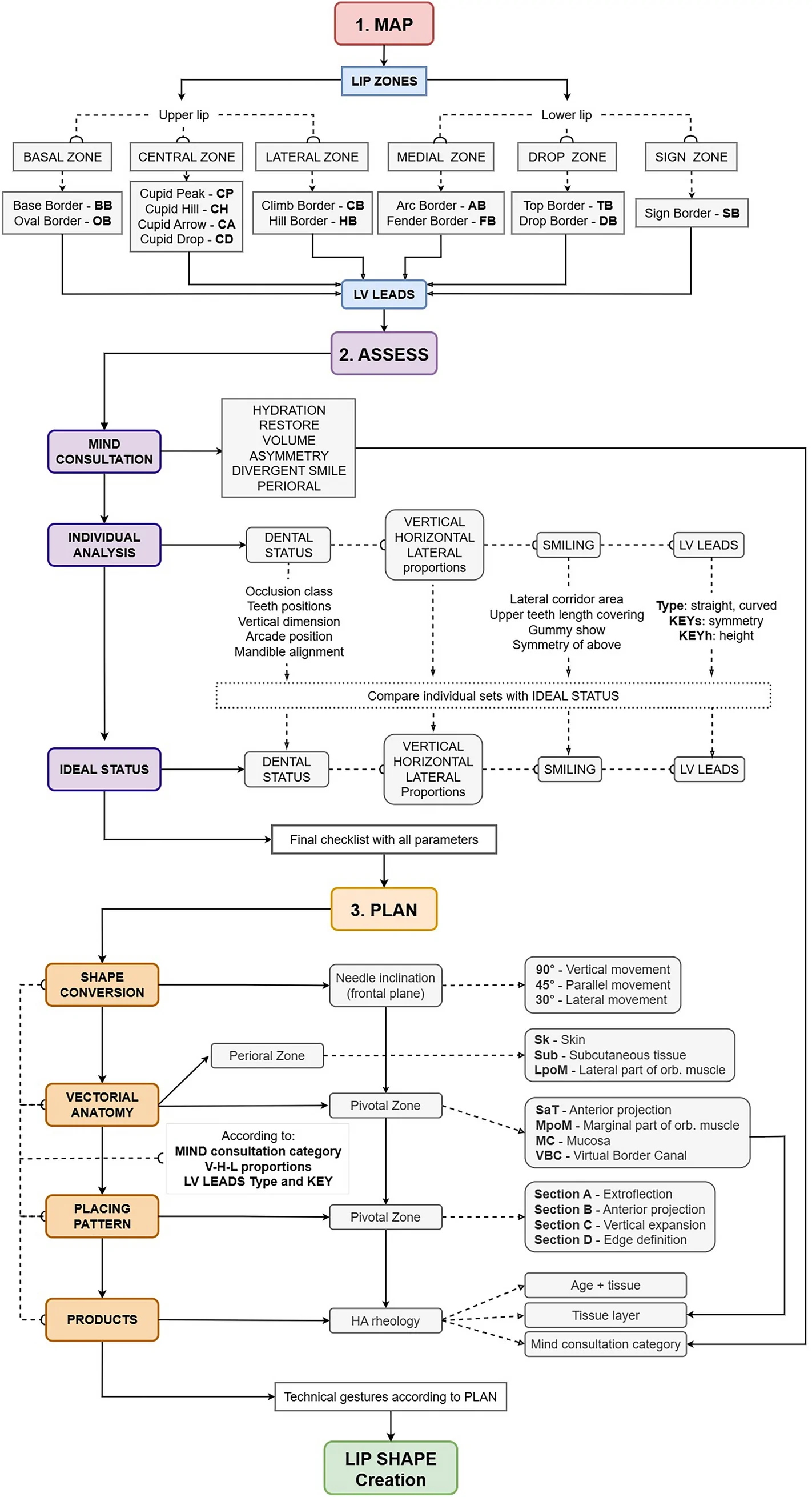
背景:透明质酸(HA)注射唇部美学需求广泛,但个体解剖与诉求差异大,缺乏可编码、可复现的唇部分析与治疗规划框架。
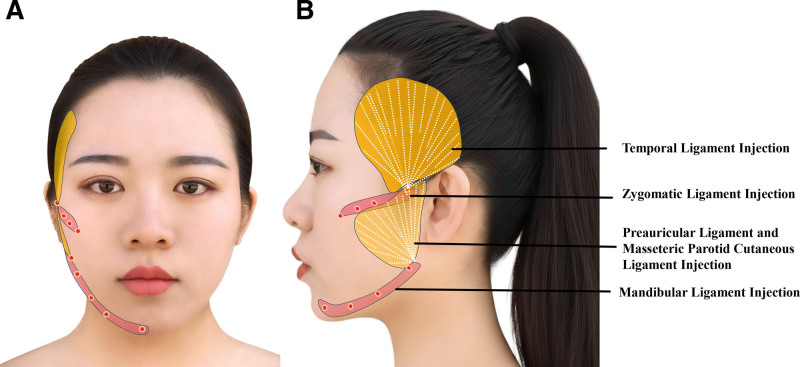
背景:鼻唇沟(NLF)显著影响面部美学。一种交联透明质酸钠 + 聚乳酸-聚乙二醇微球(PLLA-b-PEG/HA) 的新型复合填充剂,兼具即时填充与长期胶原刺激。本文评估其韧带靶向