e.p.t.q. 透明质酸填充剂用于面部年轻化与美化的上市后临床随访研究(PMCF)
2026年10月3日32 min read
Scientific Reports
结论与实践要点
本文为 多中心、前瞻性、观察性上市后临床随访研究(PMCF) ,在韩国 8 家诊所开展,属单组、非随机、非对照设计。
临床应用时,可参考该研究三类适应证的注射方案与剂量范围,并结合个体解剖与既往填充史进行规划;最终疗效与安全性仍需以更大样本的对照研究佐证。
This study was conducted to assess the efficacy and safety of e.p.t.q. hyaluronic acid (HA) fillers (JETEMA Co., Ltd., Yongin, Korea) in the context of aesthetic facial rejuvenation or beautification. The patients were evaluated for changes in the Wrinkle Severity Rating Scale (WSRS) scores, the Mid-Face Volume Deficit Scale (MFVDS) scores and the Medicis Lip Fullness Scale (MLFS) scores at 24 weeks from baseline and those in the investigator- and patient-assessed Global Aesthetic Improvement Scale (GAIS) scores at 24 weeks from 4 weeks and rates of adverse events (AEs), serious AEs (SAEs) and serious adverse device effects (SADEs). The WSRS, MFVDS and MLFS scores reached the highest level at 4 weeks and showed declines thereafter until 24 weeks. Moreover, there were significant changes in the WSRS, MFVDS and MLFS scores at 24 weeks from baseline ( p = 0.0000 for all). The investigator- and patient-assessed GAIS scores reached the highest level at 4 weeks and showed declines thereafter until 24 weeks. Moreover, there were significant changes in the investigator- and patient-assessed GAIS scores at 24 weeks from 4 weeks ( p = 0.0000 for both). There were 88 cases of AEs in 24 patients (10.39%; 95% CI 6.77–15.06), three cases of ADEs in two (0.87%; 95% CI 0.11–3.09), no cases of SAEs, SADEs and unexpected SADEs in 0 (0.00%; 95% CI 0.00-1.58) and two cases of unexpected ADEs in one (0.43%; 95% CI 0.01–2.39). In conclusion, e.p.t.q. HA fillers might be considered for aesthetic facial rejuvenation or beautification.
Keywords: Medical device legislation、Hyaluronic acid、Dermal fillers、e.p.t.q.、Rejuvenation、Skin、Diseases、Health care、Medical research
With advancements across various industries, modern individuals have achieved economic and social growth and stability. As a result, they now have means to lead more comfortable lives. Moreover, significant technological developments have been made in medicine and healthcare to address various diseases. This progress has made it possible to cure many diseases that were once considered untreatable 1 , 2 . With advancements in the medical technology, however, modern society now faces a new social challenge arising from an aging population 3 . This raises an interest in maintaining external beauty, which has spurred the development of cosmetic surgery 4 .
Of note, there has been an increase in the convenience of cosmetic surgery according to the active development of medical devices that are used to improve facial wrinkles, a key sign of aging 5 , 6 . Of such medical devices, dermal fillers are manufactured using a wide range of raw materials from bioderived collagen to synthetic polymers; they are designed to reduce facial wrinkles, functioning by being injected subcutaneously and maintaining volume through a physical restorative effect rather than pharmacological action 7 , 8 .
In Korea, dermal fillers are classified as either materials for tissue restoration depending on the biological source of the raw materials, as regulated by the Medical Device Classification and Standards notified by the Korean Ministry of Food and Drug Safety (KMFDS). Additionally, they are approved as medical devices designed to create a smoother and more complete appearance, including the treatment of nasolabial folds by the US Food and Drug Administration 8 . Furthermore, according to the European Medical Device Regulation (EU MDR), dermal fillers are considered medical devices because they have a similar risk profile and characteristics to them. The EU MDR applies to cosmetic and aesthetic products and then its legislative scope to dermal fillers. Manufacturers of dermal fillers must meet requirements for the CE mark certification and then maintain it 9 .
Hyaluronic acid (HA) is a type of polysaccharide that constitutes the extracellular matrix (ECM) within body tissues, playing a key role in water retention. It dissolves in water in its sodium salt form. Initially, it was extracted from rooster combs, but more recently, HA derived from microorganisms, specifically fermented by Streptococcus zooepidemicus (Group A or C), is commonly used. HA present in the skin decreases naturally with aging, reducing skin elasticity and eventually leading to the formation of facial wrinkles. Due to its high water-binding properties, it hydrates the skin and maintains appropriate tissue volume, making it a popular material for soft tissue wrinkle correction and tissue restoration 10 , 11 .
The physical and chemical properties of HA filler vary depending on the manufacturing process. Moreover, its indications are determined based on the characteristics of the final product 12 . Furthermore, its specific physicochemical properties are required to fill, volumize, sustain and contour diverse anatomical sites 13 .
The consistency of HA filler should be similar to that of the adjacent target region, which is essential for achieving a natural feel. It should also retain its shape against the constant physical strain arising from the muscle contraction 13 .
Given the above background, e.p.t.q. (JETEMA Co., Ltd., Wonju, Korea) has been developed; it is a homogeneous, cohesive highly-concentrated (24 mg/mL) HA filler. It is manufactured using dual (physical and chemical) cross-linking technology. It has been released as three different formulations, S100, S300 and S500, equipped with the same particle size 14 , 15 .
The EU MDR 2017/745 requires for a post-market clinical follow-up (PMCF) to ensure the continuous assessment of the safety and performance of a medical device in a real-world setting. In response to these regulatory requirements, the manufacturer of a medical device is required to develop a PMCF plan in accordance with Annex XIV Part B of the EU MDR 2017/745. A PMCF study is conducted to generate clinical data supporting the continued benefit-risk profile of a medical device in its intended use population 16 , 17 . The current study was therefore conducted to assess the efficacy and safety of e.p.t.q. HA fillers in the context of aesthetic facial rejuvenation or beautification in a PMCF setting.
The current multi-center, prospective observational, PMCF study was conducted at eight local clinics in Korea between September 15, 2022 and May 6, 2023.
Inclusion criteria for the current study are as follows:
Adult men or women aged ≥ 19 years.The patients who are in need of temporary improvement in facial wrinkles or volume and correspond to one of the following cases:The Wrinkle Severity Rating Scale (WSRS) scores of 3 or 4 points on both sides of the face.The Mid-Face Volume Deficit Scale (MFVDS) scores of ≥ 3 points on both sides of the face.The Medicis Lip Fullness Scale (MLFS) scores of 1 or 2 points at the target sites (upper or lower lips and both regions of the lip).
(3)The patients who voluntarily submitted a written informed consent for study participation.
Exclusion criteria for the current study are as follows:
The patients who were given anti-thrombotic agents, excluding low-dose aspirin (100 mg, a maximum dose of 300 mg/day), within two weeks of screening (Visit 1).The patients who have a current or past history of bleeding disorder.The patients who were treated with materials or biomaterials for tissue restoration and regeneration, affecting the results of the current study, at the target sites within 24 weeks of screening (Visit 1) (e.g., HA, polycaprolactone [PCL], collagen filler, lifting [thread or laser] or botulinum toxins)The patients with skin diseases or wound infections on the face that may affect the results of the current study.The patients with a past history of adverse events (AEs) arising from EMLA Cream or other lidocaine products.The patients with a past history of hypersensitivity to HA agents.The patients who are contraindicated in the use of study devices according to precautions of use specified on their approved label.The patients who are deemed ineligible for study participation according to the investigators’ judgment.
The ethical approval of the current study was obtained from the Internal Institutional Review Board (IRB) of the Public Institutional Bioethics Committee designated by the Korean Ministry of Health and Welfare (IRB approval #: P01-202209-01-003) and it was conducted it in compliance with the International Conference of Harmonization - Good Clinical Practice (ICH-GCP), the relevant guidelines and applicable laws. All the study treatments and procedures described herein were performed in accordance with the 1964 Declaration of Helsinki and its later amendments or comparable ethical standards. The current study was registered with the ClinicalTrials.gov (Identifier: NCT06699147). A written informed consent to participate was obtained from all of the patients.
The sample size was estimated at approximately 240, for which a drop-out rate of 20% was considered. The sample size comprises approximately 80 for improvement in nasolabial folds, 80 for facial cheek volumization and 80 for lip volumization.
In the current study, the study devices include e.p.t.q. S300 1.0 mL and e.p.t.q. Lidocaine S300 1.1 mL. The patients were treated with study devices, whose indications include improvement in nasolabial folds, facial cheek volumization and lip volumization, according to the investigators’ judgment as well as their approved labels (purposes and methods of use and precautions of use) in an actual clinical setting. Each of them was treated for only one indication of study devices.
Treatment procedures may vary depending on the center and the investigator. Prior to the treatment, the face was cleansed with a mild cleanser and disinfected using 70% isopropyl alcohol and 2% chlorhexidine gluconate. This was followed by local anesthesia. An infraorbital nerve block was used for improvements in nasolabial folds and facial cheek volumization. An infraorbital nerve block and a mental nerve block applied to the upper and lower lips, respectively, for lip volumization.
The study devices were injected using a 27-G needle supplied with the product package. Based on the manufacturer’s guidelines, typical injection volumes were 0.5–1.0.5.0 mL per each side of the nasolabial fold, 1–2 mL per each side of the cheek and 0.5–1.0.5.0 mL for the lip. Final injection volumes were determined by the treating physician according to the patients’ anatomy and clinical judgment. Blunted needles were replaced as needed.
After injection, the treated areas were gently molded to achieve the desired contour. Residual filler at the entry points was removed, and the skin was cleansed with ethanol-soaked cotton swabs and a risk of contamination was minimized accordingly.
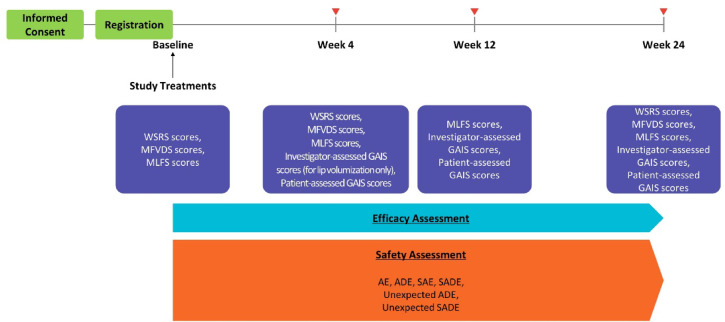
Following the treatment with the study devices, the patients were followed up at 4, 12 and 24 weeks. They were also evaluated for the safety of the study devices at 12 weeks through a telephone interview. The patients receiving the study devices for lip volumization were also evaluated for the efficacy and safety of the study devices at 12 weeks. The study design is illustrated in Fig. 1 .
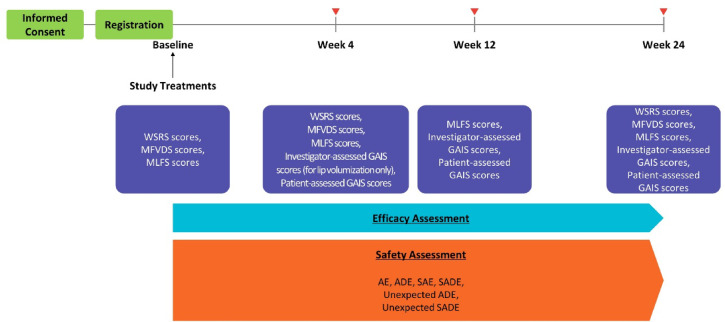
Fig. 1 Study design. WSRS Wrinkle Severity Rating Scale, MFVDS Mid-Face Volume Deficit Scale, MLFS Medicis Lip Fullness Scale, GAIS Global Aesthetic Improvement Scale, AE adverse events, ADE adverse device events, SAE serious adverse events, SADE serious adverse device effects.
Baseline characteristics of the patients include age, sex, height, weight, body mass index, smoking history, drinking history, fertility, pregnancy, breastfeeding, indications and study devices.
For efficacy assessment, the patients were evaluated for the efficacy outcome measures. Time-dependent changes in the WSRS scores and the MFVDS scores were monitored at baseline and 4 and 24 weeks and those in the MLFS scores were monitored at baseline and 4, 12 and 24 weeks. Then, changes in the WSRS scores, the MFVDS scores and the MLFS scores at 24 weeks from baseline were analyzed. Moreover, time-dependent changes in the investigator-assessed GAIS scores in the context of improvement in nasolabial folds and cheek volumization were monitored at 4 and 24 weeks and those in the context of lip volumization were monitored at 4, 12 and 24 weeks. Then, changes in them at 24 weeks from 4 weeks were analyzed. Likewise, time-dependent changes in the patient-assessed GAIS scores in the context of improvement in nasolabial folds, facial cheek volumization and lip volumization were monitored at 4, 12 and 24 weeks. Then, changes in them at 24 weeks from 4 weeks were analyzed. Furthermore, the percentage of the patients who achieved improvements in the WSRS scores by ≥ 1 point at 24 weeks from baseline after treatment with the study devices for those in nasolabial folds, the percentage of the patients who achieved improvements in the MFVDS scores by ≥ 1 point at 24 weeks from baseline after treatment with the study devices for facial cheek volumization and the percentage of the patients who achieved improvements in the MLFS scores by ≥ 1 point at 12 weeks from baseline after treatment with the study devices for lip volumization were calculated.
Clinical photography was not required in the current trial, but it was performed at baseline and 4, 12 and 24 weeks, if necessary.
For safety assessment, any AEs were categorized by the system organ class (SOC) and then coded by preferred terms (PTs) using the Medical Dictionary for Regulatory Activities (MedDRA) version 19. Then, the patients were evaluated for rates of AEs, serious AEs (SAEs) and serious adverse device effects (SADEs).
All data was expressed as mean ± standard deviation or the number of the patients with percentage, where appropriate. Moreover, changes in the WSRS, MFVDS and MLFS scores at 24 weeks from baseline were analyzed using paired t -test or Wilcoxon’s signed rank test. Furthermore, both investigator- and patient-assessed GAIS scores were provided at each time point. Then, changes in them at 24 weeks from 4 weeks were analyzed using paired t -test or Wilcoxon’s signed rank test. The percentage of the patients who achieved improvements in the WSRS, MFVDS and MLFS scores by ≥ 1 point was calculated. Rates of AEs, SAEs and SADEs were provided with 95% confidence intervals (CIs). Missing data was imputed using the last observation carried forward method. Statistical analysis was performed using the Statistical Analysis Software Version 9.4 (SAS Institute Inc, Cary, North Carolina, USA). A p -value of < 0.05 was considered statistically significant.
A total of 239 patients ( n = 239) were screened for study participation. Of these, one patient did not meet inclusion/exclusion criteria and the remaining 238 ( n = 238) were finally enrolled in the current study. There were seven patients who could not be followed up more than once after study treatments. Therefore, the safety set comprises a total of 231 patients ( n = 231). Of these, there was one patient whose efficacy data was not completed after study treatments. Therefore, the efficacy set comprises 230 patients ( n = 230); the efficacy assessment was based on the intent-to-treat set of 230 patients. The disposition of the study patients is shown in Fig. 2 .
The study population comprises 29 men (12.55%) and 202 women (87.45%), whose mean age was 38.71 ± 13.68 years old. Their baseline characteristics are represented in Table 1 .
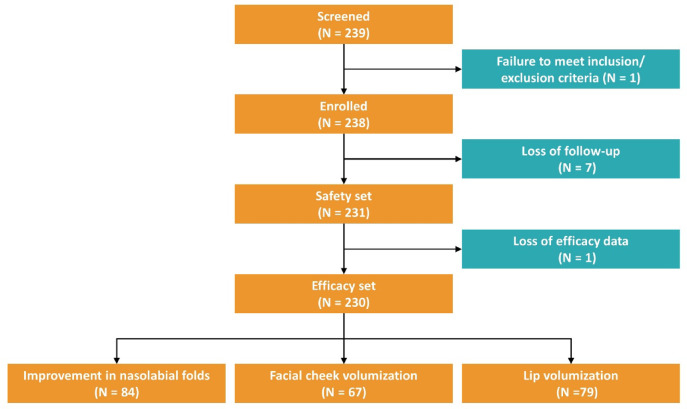
Fig. 2 Disposition of the study patients.
Time-dependent changes in the WSRS, MFVDS and MLFS scores are shown in Table 2 .
At baseline, all the patients presented with moderate (48.81%) or severe (51.19%) nasolabial folds. At 4 weeks, there was a marked improvement, with 34.52% and 47.62% of the patients classified as “Absent” and “Mild”, respectively. Of note, there were no patients who were classified as “Severe” or “Extreme” at 4 weeks. At 24 weeks, there was a partial decrease in the efficacy, with an increase in moderate (38.10%) and severe (8.33%) scores (Table 2 ).
At baseline, 52.24% and 47.77% of the patients exhibited moderate to significant and severe mid-face volume deficits, respectively. At 4 weeks, there was a pronounced volumizing effect, with 62.68% of the patients were classified as having none or minimal mid-face volume deficits. At 24 weeks, there was an increase in the proportion of the patients with mild (34.33%) or moderate (34.33%) mid-face volume deficits, indicating some reduction in the durability of efficacy over time. Moreover, there were only one patient (1.49%) who was classified as having a significant mid-face volume deficit and no patients who were classified as severe (Table 2 ).
At baseline, all the patients were classified as having very thin (44.30%) or thin (55.70%) lips. At 4 weeks, there was a substantial increase in the lip fullness, with 92.40% of the patients achieving medium or greater fullness. This was largely maintained at 12 weeks. At 24 weeks, 62.03% of the patients achieved a medium fullness, while the proportion of the patients with very full lips decreased to 1.27% (Table 2 ).
As shown in Fig. 3 , the WSRS, MFVDS and MLFS scores reached the highest level at 4 weeks and showed declines thereafter until 24 weeks. Moreover, there were significant changes in them at 24 weeks from baseline ( p = 0.0000 for all) (Fig. 3 ).
Time-dependent changes in the investigator- and the patient-assessed GAIS scores are shown in Tables 3 and 4 , respectively.
The investigator-assessed GAIS scores showed that improvements in the nasolabial folds and facial cheek volumization reached the highest level at 4 weeks when the patients were classified as “Very much improved” or “Much improved”. At 24 weeks, however, the patients were classified as “Improved”, accompanied by a small proportion of “No change” or “Worse”, indicating a gradual decrease in the efficacy. But the investigator-assessed GAIS scores also showed that the patients achieved consistent lip volumization, with a majority of the patients classified as “Improved” or “Much improved” at 4, 12 and 24 weeks (Table 3 ).
The patient-assessed GAIS scores reached the highest level at 4 weeks, with most of the patients classified as “Very much improved” or “Much improved”. At 12 and 24 weeks, however, there was a decrease in the proportion of the patients classified as “Very much improved”, while there was an increase in that classified as “Improved” or “No change” (Table 4 ).
As shown in Figs. 4 and 5 , the investigator- and the patient-assessed GAIS scores reached the highest level at 4 weeks and showed declines thereafter until 24 weeks. Moreover, there were significant changes in them at 24 weeks from 4 weeks ( p = 0.0000 for both) (Figs. 4 and 5 ).
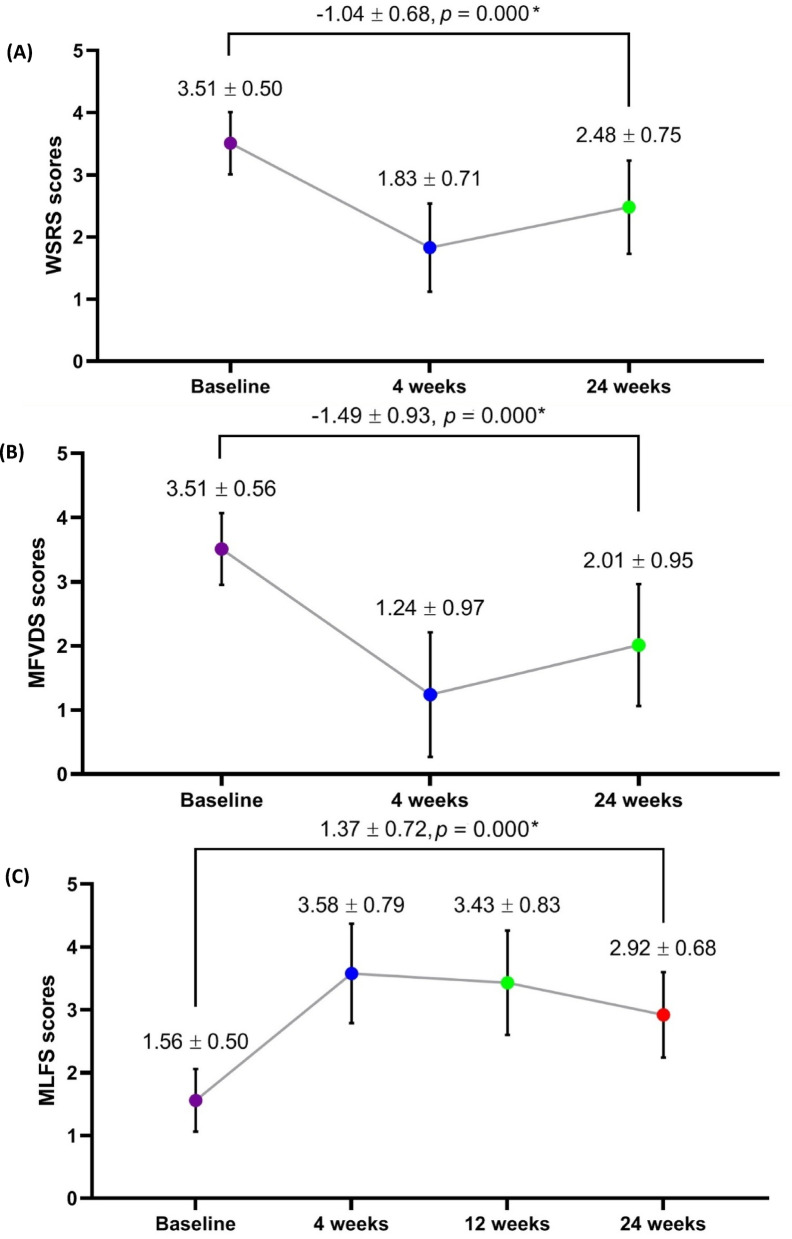
Fig. 3 Changes in the Wrinkle Severity Rating Scale (WSRS) scores, Mid-Face Volume Deficit Scale (MFVDS) scores and Medicis Lip Fullness Scale (MLFS) scores at 24 weeks from baseline. A WSRS scores, B MFVDS scores and C MLFS scores. *Statistical significance at p < 0.05.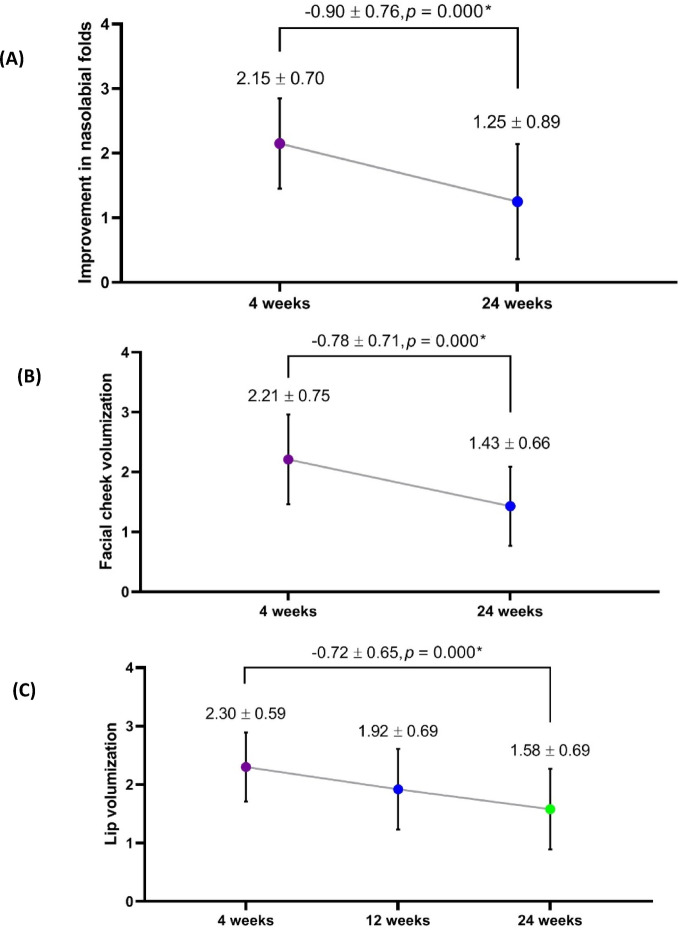
Fig. 4 Changes in the investigator-assessed Global Aesthetic Improvement Scale (GAIS) scores at 24 weeks from 4 weeks. A Improvement in nasolabial folds, B facial cheek volumization and C lip volumization. The Y-axis indicates the investigator-assessed GAIS scores. *Statistical significance at p < 0.05.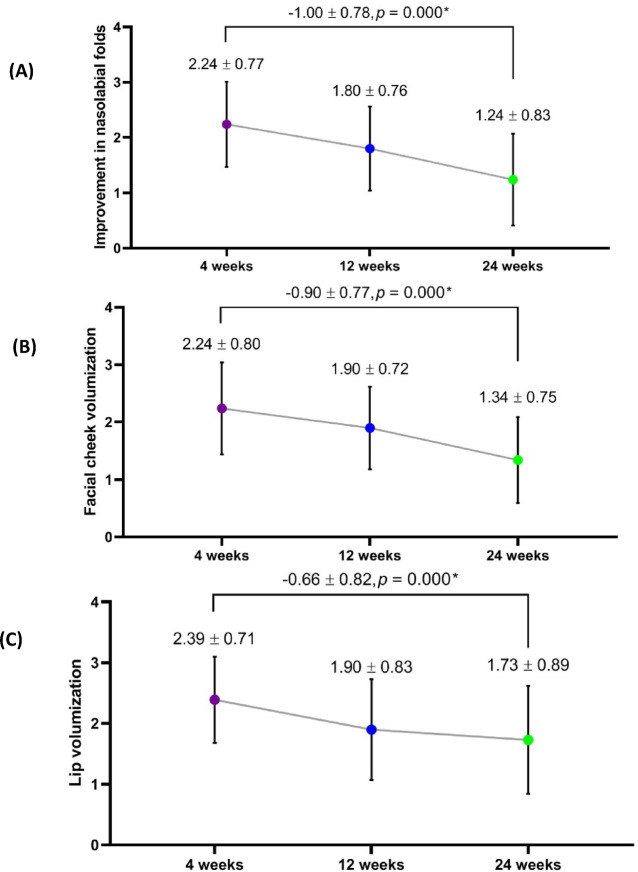
Fig. 5 Changes in the patient-assessed Global Aesthetic Improvement Scale (GAIS) scores at 24 weeks from 4 weeks. A Improvement in nasolabial folds, B facial cheek volumization and C lip volumization. The Y-axis indicates the patient-assessed GAIS scores. *Statistical significance at p < 0.05.
Safety outcomes are summarized in Table 5 . There were 88 cases of AEs in 24 patients (10.39%; 95% CI 6.77–15.06), three cases of ADEs in two (0.87%; 95% CI 0.11–3.09), no cases of SAEs, SADEs and unexpected SADEs in 0 (0.00%; 95% CI 0.00–1.58.00.58) and two cases of unexpected ADEs in one (0.43%; 95% CI 0.01–2.39) (Table 5 ).
Clinical cases are presented in Figs. 6 , 7 and 8 .
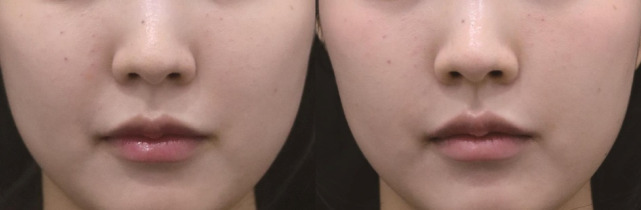
Fig. 6 Clinical case – Improvement in nasolabial folds. A 22-year-old woman was treated with e.p.t.q. Lidocaine S 500 1.1 mL at a total volume of 2.0 mL for improvement in nasolabial folds on both sides of the face. Preoperatively, the nasolabial fold was more pronounced on the right side as compared with the left side. This asymmetry was corrected and the correction was maintained until 24 weeks. Postoperatively, the patient presented with no complications. (Left) at baseline and (right) at 24 weeks.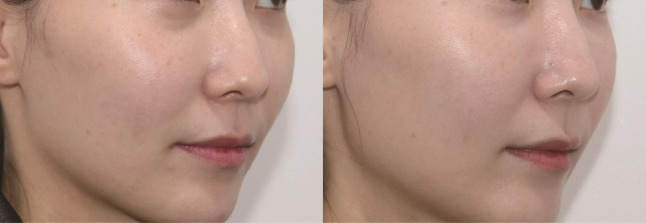
Fig. 7 Clinical case – Facial cheek volumization. A 33-year-old woman complaining of cheek volume loss accompanied by malar fat pad descent was treated with e.p.t.q. Lidocaine S 300 1.1 mL at a total volume of 2.2 mL for facial cheek volumization on both sides of the face. The patient received anterior cheek augmentation for strategic fat redistribution. The volume of the anterior cheek was restored at 24 weeks. The patient achieved a softer facial appearance and a more youthful aesthetic as compared with preoperatively. The patient received no other combination treatments than e.p.t.q. Lidocaine S 300 1.1 mL. Postoperatively, the patient presented with no complications including postoperative pain. (Left) at baseline and (right) at 24 weeks.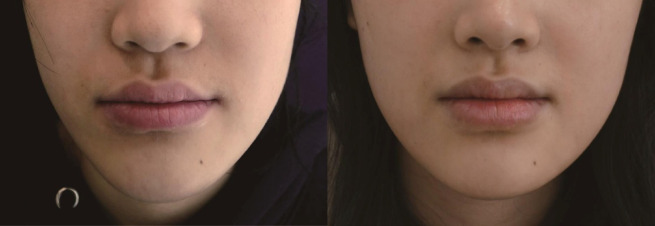
Fig. 8 Clinical case – Lip volumization. A 23-year-old woman was treated with a syringe of e.p.t.q. S 100 1.0 mL for the volumization of the upper and lower lip. Preoperatively, the patient had an upper to lower lip ratio of 1:1. Therefore, the patient received a strategic lip augmentation procedure for the lower lip, thus attempting to achieve an ideal upper to lower lip ratio of 1:1.6 and to restore volumetric balance. Through a meticulous procedure, an asymmetry between the left and right side of the lower lip was corrected. At 24 weeks, both the volumetric balance and correction were maintained. Postoperatively, the patient presented with no complications, such as filler migration and discomfort. (Left) at baseline and (right) at 24 weeks.
Skin aging occurs as a result of time-dependent loss of HA, subcutaneous adipose tissue, collagen and elastic fibers. HA is a non-sulfated glycosaminoglycan composed of repeating polymeric disaccharides of D-glucuronic acid and N-acetyl-D-glucosamine. It is located near collagen interfaces and elastin fibers, which facilitates the maintenance of their proper configuration. Its structure is highly able to hold approximately 1,000 times its weight in water, which contributes to maintaining the flexibility and volume of the skin 18 . The half-life of unmodified HA is estimated at 24–48 h in the tissue, making it unsuitable for use as a dermal filler. Once synthetically cross-linked, however, the HA improves stability, longevity and viscoelastic properties. Therefore, synthetic cross-linked HA fillers are commonly produced through microbial fermentation, which are useful in resisting enzymatic degradation 19 . Their advantages include limited allergic responses, availability of an antidote and a wide variety of products fulfilling diverse aesthetic goals 20 .
Many studies have examined the aesthetic efficacy of HA-based formulations, such as gels, creams and dermal fillers 21 . Of these, subcutaneous injections of HA fillers have become the most common aesthetic procedures performed worldwide, following those of botulinum toxins, due to their biocompatibility, moderate length of efficacy (3–12 months), the reversibility of many complications using hyaluronidase and the efficacy in improving the skin hydration, volume and overall facial appearance 22 , 23 .
Efficacy and safety of e.p.t.q. HA fillers have been well described in the literature 13 , 14 , 24 – 27 . Lee W, et al. measured the rheological properties of e.t.p.q. HA fillers and then selected e.t.p.q. S300 for aesthetic forehead augmentation in a consecutive series of 40 patients. According to these authors, e.t.p.q. S300 was determined to be appropriate for aesthetic forehead augmentation and there were no AEs, such as vascular compromise, infections, granulomas or migration 24 . Moreover, Issa MCA, et al. performed a descriptive analysis of 35 patients receiving e.p.t.q. HA fillers for facial rejuvenation or beautification. These authors noted that such patients achieved improvements in and were satisfactory with aesthetic outcomes 15 .
To summarize, the current results are as follows:
˙The WSRS, MFVDS and MLFS scores reached the highest level at 4 weeks and showed declines thereafter until 24 weeks. Moreover, there were significant changes in the WSRS, MFVDS and MLFS scores at 24 weeks from baseline ( p = 0.0000 for all).The investigator- and patient-assessed GAIS scores reached the highest level at 4 weeks and showed declines thereafter until 24 weeks. Moreover, there were significant changes in the investigator- and patient-assessed GAIS scores at 24 weeks from 4 weeks ( p = 0.0000 for both).There were 88 cases of AEs in 24 patients (10.39%; 95% CI 6.77–15.06), three cases of ADEs in two (0.87%; 95% CI 0.11–3.09), no cases of SAEs, SADEs and unexpected SADEs in 0 (0.00%; 95% CI 0.00–1.58.00.58) and two cases of unexpected ADEs in one (0.43%; 95% CI 0.01–2.39).
Improvements in efficacy outcomes at 4 weeks and declines in them thereafter until 24 weeks are closely associated with histological changes in response to injections of HA fillers. In more detail, after injections of HA fillers, a microscopic examination of the tissue shows the presence of a capsule around the injected filler. This is commonly seen from 4 weeks. Immediately after injections of HA fillers, the thin layer might be formed by compressed subcutaneous tissue 28 – 30 .
After 4 weeks, fibroblasts, new blood vessels and collagen regeneration are involved in the formation of a lattice structure. With the gradual degradation and absorption of HA fillers, such lattice structure is progressively replaced with autologous tissue composed of fibroblasts, connective tissue, adipocytes and blood vessels 28 – 30 .
But the above results cannot be generalized; there are limitations of the current study. First, there was no control group. The current study cannot therefore draw definitive conclusions about the efficacy of the study devices. It is impossible to completely rule out a possibility that results might be due to other factors including confounders. Lack of the control group will make it difficult to establish strong internal validity or to generalize the study results 31 . This warrants further randomized controlled trials (RCTs). Second, the current study failed to calculate the minimally clinically important difference (MCID); it provided the statistical significance solely based on p -values. The MCID of patient-reported outcome measures (PROMs) is the smallest score change which a patient may perceive as beneficial, suggesting that it is meaningful enough to potentially change treatment, representing a patient-centered threshold for improvement beyond random error, calculated using methods like anchor-based (linking to patient global assessment) or distribution-based (using standard deviation) techniques. The MCID of PROMs helps interpret if a statistically significant PROM change actually matters to the patient, guiding clinical management 32 . It is important to differentiate between statistical significance and clinical importance. Statistical significance heavily depends on the sample size of the study; with large sample sizes, even small but clinically unmeaningful treatment effects may appear statistically significant. There is a risk that statistical significance can be misinterpreted as clinical importance 33 . It would therefore be mandatory to consider the clinical meaningfulness by analyzing the actual treatment effect with CIs in interpreting the results of the current study 34 .
Nevertheless, the results of the current PMCF study are of significance in that it addressed the efficacy and safety of an HA filler in the context of aesthetic facial rejuvenation or beautification in a real-world, private practitioner setting in Korea. From this context, e.p.t.q. HA fillers deserve special attention. Their clinical use was approved by the KMFDS in 2017 and achieved CE certification (CE2292) in 2020 35 . Then, of e.p.t.q. HA fillers, e.p.t.q. S500 was approved as a Class III medical device by the National Medical Products Administration in China in 2025 36 . Currently, e.p.t.q. HA fillers are exported to over 60 countries, including EU member states.
In conclusion, e.p.t.q. HA fillers might be considered for aesthetic facial rejuvenation or beautification. But further RCTs are warranted to corroborate the current results.
Table 1 Baseline characteristics of the patients of the safety set (n = 231).
| Variables | Values |
|---|---|
| Age (years old) | 38.71 ± 13.68 |
| 19–29 | 69 (29.87%) |
| 30–39 | 80 (34.63%) |
| 40–49 | 36 (15.58%) |
| 50–59 | 17 (7.36%) |
| 60–69 | 22 (9.52%) |
| ≥ 70 | 7 (3.03%) |
| Sex | |
| Men | 29 (12.55%) |
| Women | 202 (87.45%) |
| Height (cm) | 163.39 ± 7.06 |
| Weight (kg) | 55.90 ± 8.83 |
| BMI (kg/m 2 ) | |
| < 18.5 | 37 (16.02%) |
| ≥ 18.5 and < 25.0 | 178 (77.06%) |
| ≥ 25.0 and < 30.0 | 15 (6.49%) |
| ≥ 30.0 | 0 (0.00%) |
| Smoking history | |
| Current smokers | 27 (11.69%) |
| Past smokers | 7 (3.03%) |
| Non-smokers | 197 (85.28%) |
| Drinking history | |
| Current drinkers | 97 (41.99%) |
| Past drinkers | 21 (9.09%) |
| Non-drinkers | 113 (48.92%) |
| Fertility | |
| Yes | 142 (70.30%) |
| No (infertility or menopause) | 60 (29.70%) |
| Pregnancy | |
| Yes | 0 (0.00%) |
| No | 202 (100.00%) |
| Breastfeeding | |
| Yes | 0 (0.00%) |
| No | 202 (100.00%) |
| Indications | |
| Improvement in nasolabial folds | 84 (36.36%) |
| Facial cheek volumization | 68 (29.44%) |
| Lip volumization | 79 (34.20%) |
| Study devices | |
| e.p.t.q. S300 1.0 mL | 113 (48.92%) |
| e.p.t.q. Lidocaine S300 1.1 mL | 118 (51.08%) |
Table 2 Time-dependent changes in the Wrinkle Severity Rating Scale (WSRS) scores, Mid-Face Volume Deficit Scale (MFVDS) scores and Medicis Lip Fullness Scale (MLFS) scores.
| Variables | Values |
|---|---|
| Baseline | 4 weeks |
| WSRS scores | |
| 1 Absent | 0 (0.00%) |
| 2 Mild | 0 (0.00%) |
| 3 Moderate | 41 (48.81%) |
| 4 Severe | 43 (51.19%) |
| 5 Extreme | 0 (0.00%) |
| MFVDS scores | |
| 0 None | 0 (0.00%) |
| 1 Minimal | 0 (0.00%) |
| 2 Mild | 0 (0.00%) |
| 3 Moderate | 35 (52.24%) |
| 4 Significant | 30 (44.78%) |
| 5 Severe | 2 (2.99%) |
| MLFS scores | |
| 1 Very thin | 35 (44.30%) |
| 2 Thin | 44 (55.70%) |
| 3 Medium | 0 (0.00%) |
| 4 Full | 0 (0.00%) |
| 5 Very full | 0 (0.00%) |
Table 3 Time-dependent changes in the investigator-assessed Global Aesthetic Improvement Scale (GAIS) scores.
| Variables | Values |
|---|---|
| 4 weeks | 12 weeks |
| Improvement in nasolabial folds | |
| 3 Very much improved | 28 (33.33%) |
| 2 Much improved | 41 (48.81%) |
| 1 Improved | 15 (17.86%) |
| 0 No change | 0 (0.00%) |
| −1 Worse | 0 (0.00%) |
| Facial cheek volumization | |
| 3 Very much improved | 27 (40.30%) |
| 2 Much improved | 27 (40.30%) |
| 1 Improved | 13 (19.40%) |
| 0 No change | 0 (0.00%) |
| −1 Worse | 0 (0.00%) |
| Lip volumization | |
| 3 Very much improved | 29 (36.71%) |
| 2 Much improved | 45 (56.96%) |
| 1 Improved | 5 (6.33%) |
| 0 No change | 0 (0.00%) |
| −1 Worse | 0 (0.00%) |
Table 4 Time-dependent changes in the patient-assessed Global Aesthetic Improvement Scale (GAIS) scores.
| Variables | Values |
|---|---|
| 4 weeks | 12 weeks |
| Improvement in nasolabial folds | |
| 3 Very much improved | 37 (44.05%) |
| 2 Much improved | 30 (35.71%) |
| 1 Improved | 17 (20.24%) |
| 0 No change | 0 (0.00%) |
| −1 Worse | 0 (0.00%) |
| Facial cheek volumization | |
| 3 Very much improved | 31 (46.27%) |
| 2 Much improved | 21 (31.34%) |
| 1 Improved | 15 (22.39%) |
| 0 No change | 0 (0.00%) |
| −1 Worse | 0 (0.00%) |
| Lip volumization | |
| 3 Very much improved | 41 (51.90%) |
| 2 Much improved | 28 (35.44%) |
| 1 Improved | 10 (12.66%) |
| 0 No change | 0 (0.00%) |
| −1 Worse | 0 (0.00%) |
Table 5 Safety outcomes.
| Variables | Values |
|---|---|
| N | n |
| AE | 24 (10.39%) |
| ADE | 2 (0.87%) |
| SAE | 0 (0.00%) |
| SADE | 0 (0.00%) |
| Unexpected ADE | 1 (0.43%) |
| Unexpected SADE | 0 (0.00%) |
声明:中文精读 · 仅供学术参考。内容来自公开文献检索,不代表本人观点,不构成诊疗建议。 医疗美容需在正规医疗机构由执业医师实施。
基于相同主题推荐 · 继续深挖
研究类型:系统综述联合单臂荟萃分析(遵循PRISMA,PROSPERO前瞻性注册),纳入11项研究共967例受试者,评估VYC-17.5L(Volift/Vollure,17.5
遵循 PRISMA 的系统综述与单臂荟萃分析(PROSPERO 注册 CRD420261279046),纳入 11 项研究、967 例受试者(单项研究 15–175 例,平均年龄
研究设计:意大利团队提出的三层(深层脂肪、浅层脂肪、真皮皮下层)超声引导中面部年轻化技术,属观察性/概念验证研究;15 例患者(13 女 2 男,50±8 岁,范围 42-65 岁