唇部复杂度分类(LCC):整合解剖与美学的唇部评估框架
2026年10月6日32 min read
Clinical, Cosmetic and Investigational Dermatology
Clinical, Cosmetic and Investigational Dermatology
:整合解剖与美学的唇部评估框架/13565382_fig1.webp)
结论与实践要点
临床评估时应将「复杂度」与「容量」分开看待——即便 Lip Fullness Scale 容量相近,组织质量、动态肌张力、老化程度与既往治疗差异也会显著改变方案。建议初诊即按 LCC 的五个域逐项记录,以「最高级」定级,据此决定是单次容积化、结构重建还是多层康复,并据表(治疗目标—产品—层次—技术—解剖结构)形成书面计划。
技术要点可直接落地:保留红唇缘 1–2 mm 安全边界;优先选择经红唇的闭合式进针,避免开放式中沿退针轨迹跨过红唇缘造成填充剂外溢或形成移位通路。从 II 级起引入钝针处理唇后间隙、减少穿刺点;III 级先建立骨膜上深部支撑(梨状孔/颏前区),再分层处理口周与唇体,多采用逆行、低压、广布技术。
边界说明:本文是概念性分类框架,并非随机对照研究,分级的可重复性与信效度尚未独立验证;其中产品与剂量(如中交联 HA 0.6 mL 等)仅为作者示教案例示意。临床须结合个体解剖与合规产品调整,并常规备有透明质酸酶以应对既往填充剂相关并发症。
BackgroundLip augmentation with hyaluronic acid (HA) fillers remains one of the most technically demanding procedures in aesthetic medicine due to the complex interaction between anatomical variability, tissue quality, dynamic muscular activity, aging-related changes, and previous aesthetic interventions. Although several assessment tools exist for evaluating lip volume, there is currently no standardized system designed to stratify lip treatment complexity and guide therapeutic decision-making. This study proposes the Lip Complexity Classification (LCC), a novel framework intended to correlate anatomical complexity with treatment objectives and injection strategies.
MethodsA conceptual classification system was developed based on anatomical principles and clinical experience. The LCC integrates five key assessment domains: relative lip volume, shape and symmetry, signs of perioral aging, tissue quality, and history of previous treatments. Patients are stratified into three complexity grades (Grade I–III) according to the highest-complexity criterion identified during clinical assessment. For each grade, specific therapeutic objectives, proposed treatment strategies, and technique-oriented approaches were defined.
ResultsThe proposed classification distinguishes three progressively complex clinical scenarios. Grade I (low complexity) is characterized by preserved anatomy and is primarily managed through compartment-based volumization strategies. Grade II (moderate complexity) includes early structural deterioration, mild asymmetry, or functional imbalance, requiring combined restoration of lip architecture and selective treatment of adjacent perioral structures. Grade III (high complexity) encompasses advanced anatomical deterioration, significant tissue compromise, and sequelae of previous aesthetic treatments, frequently requiring multilayer lip and perioral rehabilitation. The framework establishes a direct relationship between complexity grade, therapeutic objectives, anatomical targets, product selection, injection depth, and technical approach.
ConclusionThe Lip Complexity Classification (LCC) provides a structured, multidimensional framework for assessing lip treatment complexity beyond lip volume alone. As a conceptual framework requiring further validation, the LCC may support treatment planning, procedural standardization, and medical education, while providing a basis for future integration with AI-assisted assessment, non-invasive imaging, and multimodal treatment strategies. Its reliability, validity, clinical utility, safety, and potential impact on treatment outcomes and procedural standardization remain to be established. Prospective studies are required to establish its reproducibility and clinical utility before routine implementation in clinical decision-making.
Keywords: lip augmentation、hyaluronic acid fillers、lip complexity classification、lip rejuvenation、perioral rejuvenation
Lip rejuvenation and enhancement with hyaluronic acid (HA) fillers represent one of the most commonly performed procedures in aesthetic medicine. 1 , 2 Despite advances in anatomical knowledge and the development of fillers specifically designed for lip treatments, lip augmentation remains one of the most technically demanding procedures in facial aesthetics. 3–5
This complexity arises from the interaction of multiple anatomical and functional factors, including dentoskeletal support, orbicularis oris muscle dynamics, vascular anatomy, age-related changes, and individual anatomical variability. 6–8 In addition, clinical factors such as asymmetries, scarring, fibrosis, previous filler treatments, filler migration, and congenital variations may further influence treatment planning and outcome predictability. 9
Several classification systems have been proposed to support lip assessment, addressing dimensions such as age-related changes, anatomical or morphological characteristics, and specific clinical configurations, including the gummy smile and M-shaped lip. 10–13 Although these frameworks provide valuable characterization of individual aspects of lip presentation, they were not specifically designed to stratify treatment complexity. To our knowledge, no existing system integrates anatomical characteristics, aging-related changes, tissue quality, and previous aesthetic interventions into a multidimensional framework linking clinical presentation to anticipated procedural complexity and technical requirements. This gap is relevant because current treatment planning remains largely dependent on individual clinical assessment and injector experience. 4 , 5 , 7 , 14–16
The aim of this study is therefore to propose the Lip Complexity Classification (LCC), a conceptual clinical framework for stratifying HA-based lip treatments according to anatomical, morphological, and technical complexity. The framework further associates each complexity level with proposed therapeutic objectives and injection strategies, providing a structured basis for clinical assessment, medical education, and future validation studies.
The LCC was developed as a conceptual, expert-derived clinical framework integrating established determinants of lip assessment with emerging sources of treatment complexity encountered in contemporary aesthetic practice. Several domains, including lip morphology and age-related changes, are well established in the literature and have been incorporated into previous lip assessment and classification systems. Other domains, particularly the history and sequelae of previous aesthetic treatments, reflect evolving clinical challenges associated with the increasing prevalence of previously treated patients, including filler migration, fibrosis, nodules, and tissue distortion.
Based on these considerations, five clinically relevant domains were defined: relative lip volume, shape and symmetry, perioral aging, tissue quality, and history of previous treatments. These domains were organized into three complexity grades according to the anticipated technical requirements of treatment, ranging from straightforward enhancement to structural restoration and comprehensive perioral rehabilitation.
The framework was not developed through a formal consensus methodology and has not yet undergone prospective validation or interobserver reliability assessment. Accordingly, no validation cohort, statistical analysis, or power calculation was applicable to the present conceptual study. Prospective studies are required to assess the reproducibility, validity, and clinical utility of the proposed framework.
The Lip Complexity Classification (LCC) was developed as a conceptual, three-tier grading framework designed to stratify patients according to the anatomical and functional complexity of the lips. The classification is intended primarily as an educational tool, providing a structured approach to help less experienced practitioners recognize increasing levels of treatment complexity and understand the anatomical and technical considerations associated with each level. In addition, the classification is linked to specific treatment objectives and therapeutic approaches, as illustrated in Table 1 .
Table 1 Proposed Therapeutic Considerations According to Lip Complexity Grade
| Complexity Grade | Primary Treatment Objective | Recommended Therapeutic Approach |
|---|---|---|
| Grade I | Beautification and volumization | Predominant enhancement of the anterior lip compartments using a volumetric approach |
| Grade II | Structural restoration and beautification | Combined restoration of anterior and posterior lip compartments, with selective treatment of the adjacent perioral region when indicated |
| Grade III | Structural reconstruction and correction | Comprehensive lip and perioral rehabilitation, frequently requiring staged, multilayer, and corrective treatment strategies |
The LCC integrates five key clinical parameters: relative lip volume, shape and symmetry, signs of perioral aging, tissue quality, and history of previous treatments ( Table 2 ). The final complexity grade is determined by the highest-complexity domain identified during clinical assessment. Therefore, the presence of any Grade II criterion classifies the patient as Grade II unless a Grade III criterion is present, in which case the patient is classified as Grade III.
Table 2 Three-Tier Classification of Lip Complexity Based on Clinical Characteristics and Previous Treatment History
| Grade (Complexity) | Relative Size (Volume) | Shape/Symmetry | Aging Signs | Tissue Quality | Previous Treatments |
|---|---|---|---|---|---|
| I Low complexity | 5–4 (High relative volume) | Preserved/Symmetric Well-defined and proportional lip architecture. | No aging signs Absence of fine lines and volume loss. | Good mucosa .Non-hypercontractile muscle.Tissues of good quality, well hydrated and elastic. | No No history of fillers or previous procedures in the area. |
| II Moderate complexity | 3–2 (Moderate volume) | Partially preserved/Mild asymmetry Mild loss of definition of the contour and/or mild asymmetries. | Early aging signs Lip deflation and/or onset of fine lines (perioral rhytids) with mild volume reduction. | Good mucosa/Contractile muscle .Adequate tissue quality with mild to moderate muscular activity. | Yes, but no migration/No nodules History of filler injections without complications (no migration or nodules). |
| III High complexity | 1 (Low relative volume) | Undefined/Asymmetric/Scars Loss of architectural definition, marked asymmetries and/or presence of scars. | Important aging signs Marked volume loss, deep lines, and poor skin quality. | Poor mucosa/Contractile muscle .Thin, dehydrated or atrophic mucosal tissue with frequent muscular hyperactivity. | Yes and migrated and/or nodules History of filler injections with product migration and/or palpable nodules. |
Within the LCC, treatment complexity refers to the level of technical difficulty and expertise required to plan and perform the indicated procedure safely and reproducibly while achieving a natural aesthetic outcome. It reflects the anatomical structures and planes involved, the technical demands of the injection strategy, and the potential need for corrective or staged procedures. The LCC therefore has a clinical and educational purpose, enabling physicians to anticipate procedural complexity and the level of technical proficiency required for a given clinical presentation.
Patient preferences and aesthetic goals remain fundamental to treatment planning but should be distinguished from treatment complexity. A preference for subtle enhancement versus greater augmentation primarily influences the degree of correction and product volume within the selected therapeutic strategy, rather than necessarily altering the complexity grade. Treatment intensity may therefore be individualized according to patient goals, while the technical approach is primarily determined by anatomical and clinical characteristics.
By categorizing lips into Grade I (low complexity), Grade II (moderate complexity), and Grade III (high complexity), the LCC provides a standardized framework that correlates anatomical presentation with therapeutic objectives and recommended treatment strategies ( Table 3 ), supporting a more systematic approach to lip rejuvenation and augmentation procedures.
Table 3 Injection Technique and Strategy According to Lip Complexity Grade
| Category | Grade I (Low Complexity) | Grade II (Moderate Complexity) | Grade III (High Complexity) |
|---|---|---|---|
| Localization | Lips | Lips + White roll(cutaneous upper lip) | Lips + Perioral area + Adjacent structures(nasolabial support groove and marionette lines) |
| Product Profile | 1 product :Soft hyaluronic acid filler for lips | 2 products :Combination lip filler + hyaluronic acid for skin quality/biorevitalization | 3 products :Structural hyaluronic acid filler + skin quality product + volumizing filler (when indicated) |
| Injection Plane | Anterior and/or posteriorlabial compartment | Labial compartments + Intradermal ± Subdermal | Labial compartments + Intradermal + Subdermal(multilayer approach) |
| Technique | Needle or Cannula | Needle or Cannula | Needle + Cannula (combined techniques as indicated); assessment of previous filler-related complications and consideration of hyaluronidase treatment prior to correction when indicated |
Grade I lips are characterized by preserved anatomical architecture, good tissue quality, minimal signs of aging, and the absence of previous structural modifications. These patients typically present the most favorable conditions for lip enhancement, allowing predictable outcomes and straightforward treatment planning.
Preserved lip volume and projection (Lip Fullness Scale grades 4–5; Müller et al, 2024). 17 Symmetrical vermilion architectureMinimal or absent perioral aging signsAdequate mucosal hydration and elasticity/Non-hyperdynamic orbicularis oris muscleNo previous filler treatment
Lower anticipated technical complexityStandard volumetric approachPotentially lower risk of migration or irregularitiesUsually suitable for single-session correctionPredominant treatment of the anterior lip compartments
This category represents a favorable anatomical scenario for lip augmentation, characterized by a relatively low degree of technical complexity and generally straightforward treatment planning.
Grade II lips are characterized by partial loss of structural definition resulting from early aging changes, mild anatomical asymmetries, or functional muscular imbalances. Although the overall lip architecture remains recognizable, these patients require a more individualized treatment approach and careful evaluation of both static anatomy and dynamic muscle activity.
Mild-to-moderate volume depletion (Lip Fullness Scale grades 2–3; Müller et al, 2024). 17 Partial loss of vermilion border and contour definitionMild asymmetry affecting shape, volume, or projectionEarly signs of perioral aging, including fine rhytids and lip deflationModerate orbicularis oris hyperactivityPrevious filler treatment without clinically significant migration, nodules, or tissue distortion
Comprehensive structural assessment before volumizationCombined contour restoration and support strategiesModerate variability in treatment outcomesMay require staged treatment to optimize correction and maintain tissue balanceCombined treatment of anterior and posterior lip compartmentsAdjunctive treatment of the perioral region adjacent to the vermilion border when indicated
This category represents an intermediate level of complexity in which treatment success depends on addressing both volume loss and early structural or dynamic changes that influence lip shape and function.
Grade III lips are characterized by significant structural alterations resulting from advanced aging, compromised tissue quality, marked anatomical asymmetries, or sequelae of previous aesthetic treatments. In these cases, normal lip architecture is partially or severely disrupted, making treatment planning more challenging and outcomes less predictable
Severe volume depletion and/or distorted lip architecture (Lip Fullness Scale grade 1; Müller et al, 2024). 17 Poorly defined or absent vermilion borderMarked asymmetry and/or scar-related deformityAdvanced signs of perioral agingReduced mucosal quality with decreased tissue elasticityHyperdynamic orbicularis oris muscle activityHistory of migrated filler, nodules, or other treatment-related complications
Potentially reduced treatment predictabilityPotentially increased risk of contour irregularities, product displacement, and migrationPotentially increased risk of complications in the presence of more severely compromised anatomical structures and tissue qualityFrequent need to correct pre-existing structural abnormalities before volumizationMultilayer injection techniques and staged treatment protocols are often requiredRequires advanced proficiency in both needle and cannula techniques to safely address different anatomical structures and tissue planesRequires appropriate knowledge and clinical proficiency in the use of hyaluronidase, including the assessment and management of previously injected hyaluronic acid when dissolution is indicated
This category represents the highest level of complexity in lip augmentation. Management requires a strategic and often corrective approach, prioritizing restoration of anatomical support, tissue quality, and structural balance before aesthetic enhancement. Multiple treatment sessions are commonly required to achieve safe, natural, and stable results.
The therapeutic approaches associated with each LCC grade represent proposed clinical strategies derived from the conceptual framework.
Table 3 summarizes the proposed treatment strategies according to the Lip Complexity Classification (LCC), correlating increasing levels of lip complexity with treatment objectives, product selection, injection depth, technical approach, and the anatomical structures that may need to be addressed. The table is intended as an illustrative educational framework rather than a prescriptive treatment algorithm. In Grade I, treatment is generally confined to the lip structures themselves. In Grade II, the treatment field may extend beyond the vermilion to include the cutaneous lip (white lip), depending on the individual anatomical and aging characteristics. In Grade III, a comprehensive assessment of the entire perioral complex is required, including the lips, cutaneous lip, nasolabial folds, marionette lines, and pyriform fossa, with treatment individualized according to the structural alterations identified.
Treatment is limited to the lips and is primarily focused on volumization and beautification. A single soft hyaluronic acid filler specifically designed for lip enhancement is typically sufficient. Treatment is predominantly directed to the anterior lip compartments, using needle or cannula techniques according to injector preference and anatomical requirements.
Treatment aims to restore structure while enhancing lip aesthetics. In addition to the lip compartments, adjacent perioral structures such as the white roll and cutaneous upper lip may require correction. A combined approach using a lip-specific filler together with a skin-quality or biorevitalization product is recommended. Treatment may involve anterior and posterior lip compartments as well as intradermal and subdermal planes. Needle techniques are generally preferred for anterior compartment and intradermal treatments, whereas cannulas are often advantageous for posterior compartment and subdermal approaches, particularly from a safety perspective, as they may reduce the likelihood of inadvertent vascular encounter with the labial arteries.
Treatment focuses on structural reconstruction and correction. Prior to treatment, assessment of previous filler-related complications and the potential need for hyaluronidase should be considered. Management frequently extends beyond the lips to include the perioral region and adjacent support structures, such as the nasolabial support groove and marionette area. A multilayer strategy combining structural fillers, skin-quality enhancers, and volumizing products may be required. Treatment commonly involves multiple anatomical planes and a combined needle-cannula approach to address structural deficits and sequelae of previous interventions.
Overall, Table 3 illustrates the progressive transition from isolated lip volumization to comprehensive perioral restoration as treatment complexity increases.
The following treatment approaches are presented as conceptual and educational examples of how the LCC framework may be translated into clinical treatment planning. They were developed based on anatomical principles, published evidence regarding lip anatomy and injection techniques, and the authors’ clinical experience. The proposed association between each LCC grade and the corresponding treatment strategy has not been prospectively validated or comparatively evaluated. Accordingly, these techniques should not be interpreted as standardized treatment protocols or as evidence of superiority over alternative injection approaches. Rather, they are intended to illustrate how increasing levels of complexity may require progressively broader anatomical assessment, greater technical expertise, and more comprehensive treatment strategies. Final treatment planning, including product selection, injection plane, technique, and volume, should remain individualized according to patient anatomy, treatment history, tissue characteristics, and aesthetic goals.
Grade I lips are characterized by preserved anatomical architecture, good tissue quality, minimal signs of aging, and the absence of previous filler-related alterations. In these patients, the primary objective is subtle enhancement while maintaining natural lip proportions, biomechanics, and facial harmony.
The proposed technique is based on a preservative volumization approach focused on the anterior intralabial compartments. 18 Product placement is performed using micro-depots and retrograde linear threading to achieve homogeneous filler integration while preserving native lip anatomy. Injection vectors are designed to enhance vermilion support, contour definition, and projection without excessive fullness or distortion. Figure 1
A safety margin of approximately 1–2 mm from the vermilion border is maintained to reduce the risk of superficial filler visibility, contour irregularities, and migration. Within the proposed framework, a conceptual distinction between “closed” and “open” injection techniques is introduced according to the location of the entry point and the injection trajectory relative to the vermilion border. A closed injection technique, as proposed herein, uses an entry point directly through the vermilion, so that both the injection trajectory and filler deposition remain within the lip structures. In contrast, an open injection technique uses an entry point on the cutaneous lip (white lip), from which the needle traverses the vermilion border to reach the intended intralabial target.
The rationale for favoring a closed approach is to avoid creating an injection pathway extending from the intralabial compartment toward the cutaneous lip. During retrograde filler deposition using an open approach, product may be deposited along the withdrawal trajectory toward or across the vermilion border, potentially resulting in filler placement outside the intended lip structures and providing a possible anatomical pathway for subsequent displacement or clinically apparent migration. This proposed mechanism is based on anatomical and biomechanical considerations and requires prospective validation.
As illustrated in Figure 1 , the arrows indicate the direction of needle or cannula advancement, followed by retrograde filler deposition during withdrawal. In the upper lip, small bolus injections may be placed at the Cupid’s bow to improve support and eversion, whereas in the lower lip, additional deposits may be placed at the tubercles when greater projection or volumetric balance is required.
Treatment volumes should be individualized according to baseline anatomy and aesthetic goals. In general, recommended volumes range from 0.1–0.4 mL for the upper lip and 0.2–0.6 mL for the lower lip. However, the final volume should be individualized according to baseline anatomy, tissue characteristics, the patient’s aesthetic goals and preferences regarding the desired degree of volumization.
Due to preserved tissue elasticity and compartmental integrity, Grade I lips typically demonstrate high treatment predictability and require lower filler volumes and fewer injection planes than more complex cases. Although both needle and cannula techniques may be used, a 30G needle is generally preferred to optimize precision and minimize tissue trauma.
Overall, this approach prioritizes balanced volumization, subtle projection, and preservation of lip identity, in line with contemporary aesthetic principles favoring natural-looking outcomes. Figure 2 illustrates a representative before-and-after result following this treatment approach.
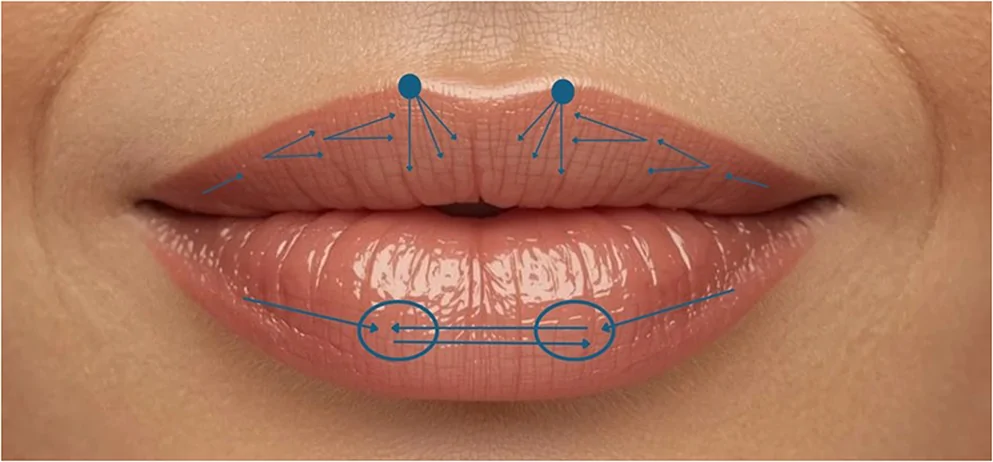
Figure 1 Grade I Technique. Schematic representation of vector-based lip enhancement. Superior oblique vectors are used to improve vermilion eversion and upper lip definition, while inferior horizontal and lateral vectors provide structural support and controlled volume redistribution, aiming to enhance lip shape and projection while preserving natural dynamics.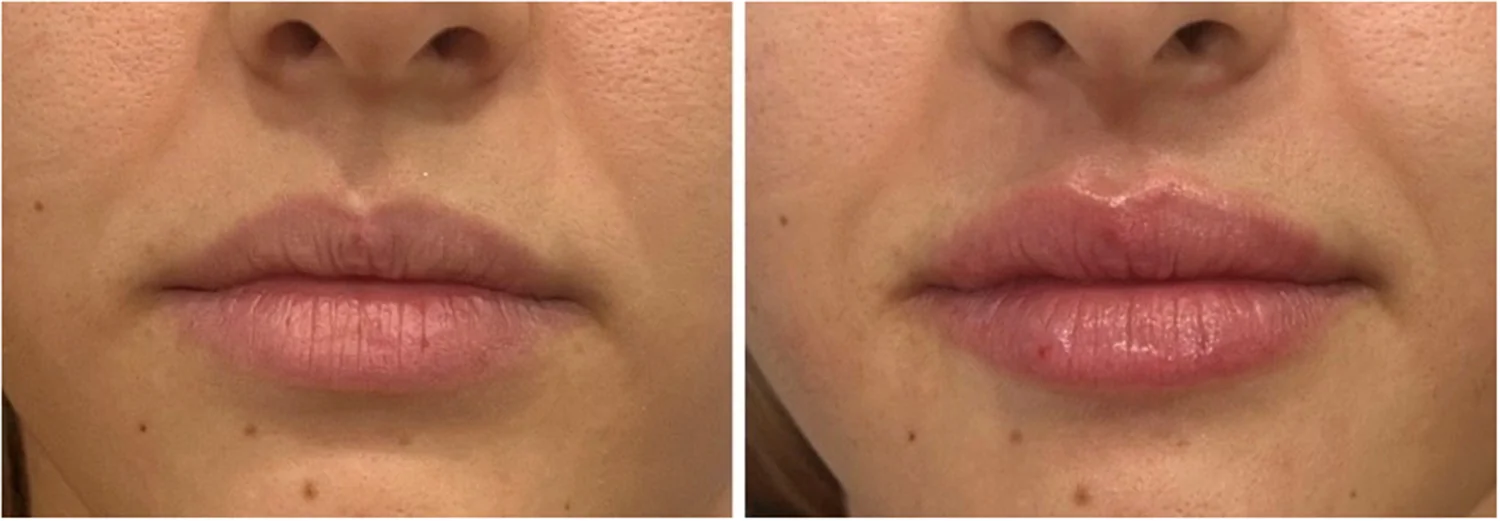
Figure 2 Representative before-and-after result following the Grade I preservative volumization approach using a total of 0.6 mL of a medium-crosslinked hyaluronic acid filler. The post-treatment image, obtained immediately after treatment, shows improved vermilion definition, balanced volumization, and subtle projection enhancement while maintaining natural lip shape and facial harmony.
Grade II lips are characterized by partial loss of architectural definition, mild asymmetry, early aging-related changes, and moderate alterations in tissue dynamics. Unlike Grade I lips, these patients frequently present with early volume depletion, reduced vermilion support, increased muscular activity, and initial distortion of the cutaneous–mucosal transition. Consequently, the therapeutic objective extends beyond simple volumization and focuses on structural restoration while preserving natural lip mobility and facial balance.
The proposed technique ( Figure 3 ) combines treatment of the anterior and posterior intralabial compartments with selective correction of adjacent perioral structures when indicated. The primary goals are to restore contour definition, improve vermilion support, and correct early perioral imbalance while maintaining natural proportions and dynamics. Although the anterior compartments remain the principal treatment target, posterior compartments may additionally require support using a cannula to improve projection, volumetric balance, and deeper structural support.
As in Grade I lips, a safety margin of approximately 1–2 mm from the vermilion border is maintained to reduce the risk of superficial filler visibility, contour irregularities, and delayed migration, following the previously described closed injection approach whenever anatomically and technically appropriate.
Compared with Grade I cases, treatment planning requires greater consideration of tissue quality, dynamic lip behavior, and early aging-related changes. Cannula-assisted treatment of the posterior compartments may facilitate broader filler distribution while minimizing vascular trauma and reducing the number of puncture sites in deeper anatomical planes.
As shown in Figure 3 , light blue markings indicate product placement within the anterior lip compartments using a 30G needle. Small bolus injections may be placed at the Cupid’s bow and lower lip tubercles to improve support, contour, and projection. Dark blue arrows represent treatment of the posterior lip compartments using a cannula, with retrograde linear threading performed during withdrawal.
This dual-plane approach combines selective volumization of the anterior compartments with structural support of the posterior compartments, allowing restoration of lip shape, projection, and contour while preserving natural lip dynamics.
In selected patients presenting with early perioral rhytids (“smoker lines”), adjunctive treatment of the cutaneous upper lip may be performed using intradermal microinjections with a 30G needle and/or subdermal placement using a cannula of skin-quality enhancing products. The objective is to improve dermal quality, provide superficial structural support, and soften early static rhytids while preserving natural perioral mobility and avoiding excessive stiffness of the white lip.
Figure 4 presents representative clinical outcomes following treatment with the Grade II structural restoration technique.
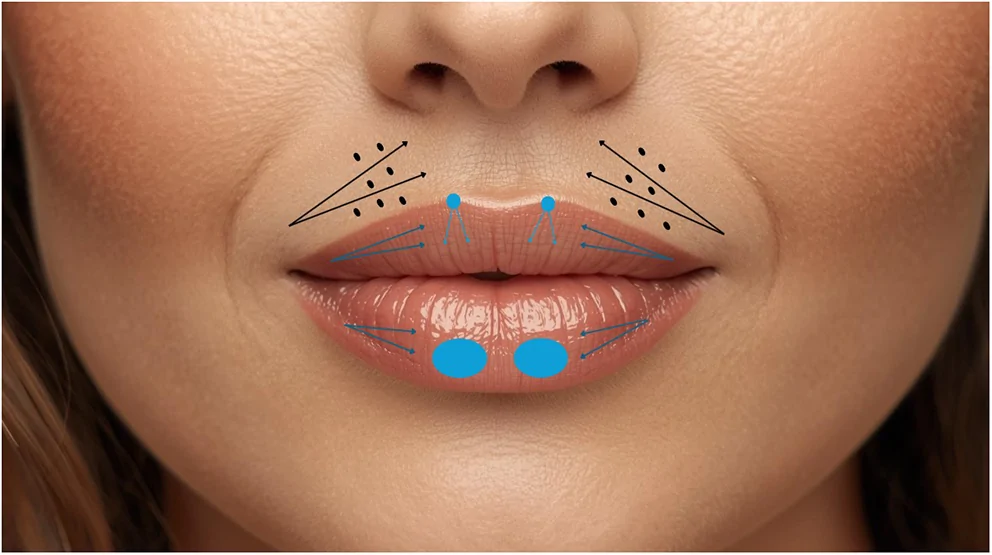
Figure 3 Grade II Technique: Structural Restoration Approach. The figure illustrates the proposed combined anterior-posterior treatment strategy for Grade II lips, integrating treatment of the anterior and posterior lip compartments with selective treatment of early perioral changes. Dark blue arrows indicate cannula-based treatment of the posterior lip compartments. Light blue arrows and circles represent needle-based treatment of the anterior lip compartments, including focal support points at the Cupid’s bow and lower lip tubercles. Black dots indicate intradermal treatment points for early perioral rhytids, while black arrows represent subdermal cannula-based treatment vectors within the same region.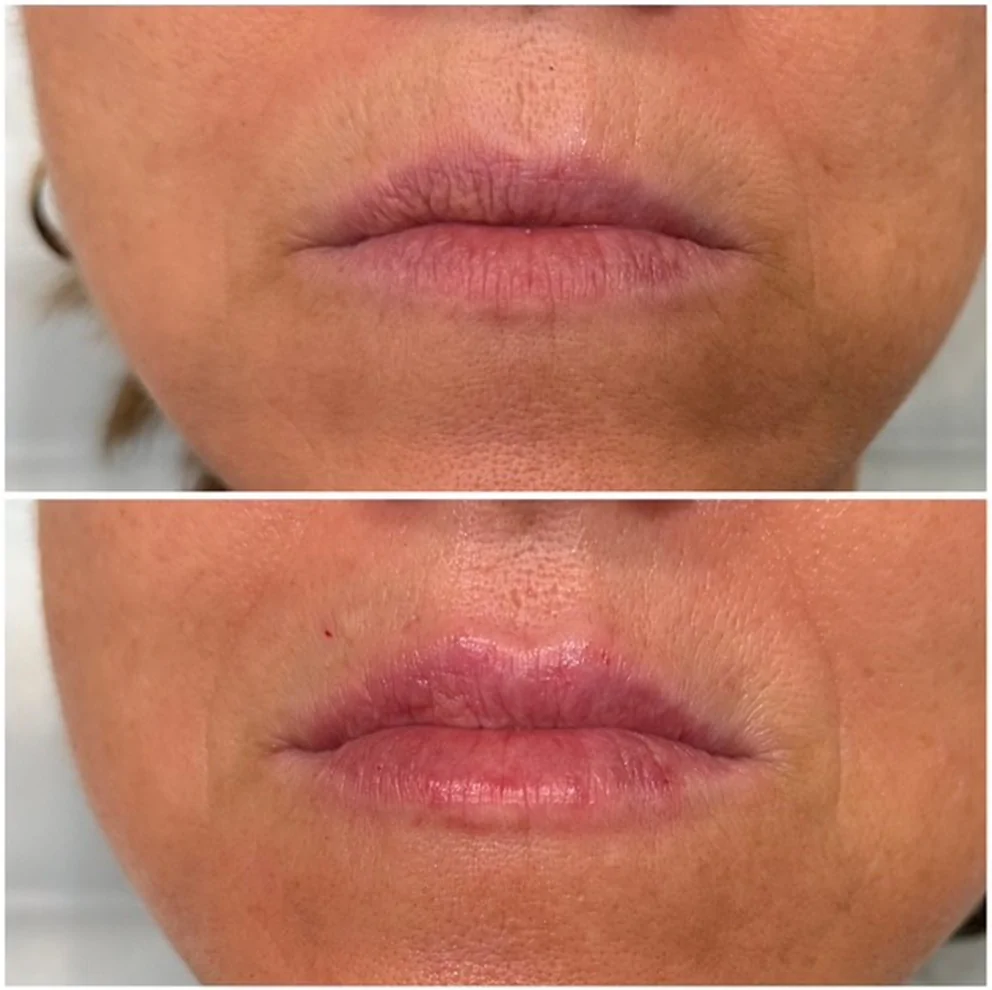
Figure 4 Representative before-and-after result following the Grade II structural restoration technique using 0.6 mL of a medium-crosslinked hyaluronic acid filler for lip treatment and 0.5 mL of a non-crosslinked hyaluronic acid product for perioral lines. The post-treatment photographs were obtained immediately after treatment and show restoration of vermilion support, improved contour definition, and enhanced lip projection while maintaining natural lip dynamics and facial harmony.
Grade III lips represent the highest level of anatomical and technical complexity within the proposed classification system. These patients typically present with advanced architectural deterioration, severe volume depletion, marked asymmetry, impaired tissue quality, dynamic imbalance, and sequelae of previous aesthetic treatments, including filler migration, fibrosis, or nodular formation. In many cases, aging changes extend beyond the vermilion body and involve the entire perioral unit.
Consequently, the therapeutic objective extends beyond lip augmentation and focuses on comprehensive perioral rehabilitation aimed at restoring structural support, tissue balance, contour continuity, and facial harmony.
The proposed technique is based on a multilayer, multivector approach integrating treatment of the anterior and posterior lip compartments together with adjacent perioral support structures. This approach combines HA fillers with different rheological properties according to the anatomical plane and therapeutic objective, using products with greater structural and projection capacity in deeper planes, products with intermediate rheological properties in intermediate planes, and softer or non-crosslinked HA products for the treatment of superficial rhytids. Depending on the anatomical deficits identified, treatment may include the white lip, piriform fossa, prejowl region, nasolabial folds, marionette lines, and lips. As illustrated in Figure 5 , the treatment strategy combines multiple support vectors and anatomical layers to address both lip-specific deficits and global perioral structural deterioration.
A fundamental principle of this approach is the restoration of deep structural support before superficial volumization. Supraperiosteal bolus injections may be placed in the piriform fossa to improve anterior projection and reduce central perioral collapse, while treatment of the prejowl region in the supraperiosteal plane may contribute to restoration of lower facial support and perioral balance.
Within the lips, posterior compartments are preferentially treated using cannula to provide broader structural support and safer filler distribution in deeper planes, whereas anterior compartments are treated with needles to achieve precise volumetric correction and contour refinement. Perioral rhytids (“barcode lines”) may be addressed using superficial intradermal microinjections and subdermal injections to improve skin quality while preserving natural mobility.
Product placement is progressively layered across supraperiosteal, submucosal, subdermal, and intradermal planes according to the degree of tissue deterioration and the specific anatomical deficits identified during clinical assessment. Particular attention is directed toward restoring lip support vectors and correcting tissue collapse affecting the commissural and perioral retaining structures.
As in lower complexity grades, a safety margin of approximately 1–2 mm from the vermilion border is maintained to reduce the risk of superficial filler visibility and delayed migration. Cannula entry points are also placed within the lip vermilion, avoiding cutaneous entry through the white lip. However, altered tissue integrity and reduced biomechanical resistance require more conservative superficial placement and careful volumetric control.
Combined use of 30G needles and blunt cannulas is frequently required, with instrument selection tailored to tissue quality, fibrosis, vascular risk, and treatment objectives. Compared with Grade I and II lips, Grade III cases demonstrate lower predictability and often require staged treatment sessions rather than single-session correction.
Overall, this approach prioritizes structural rehabilitation, biomechanical restoration, and global perioral harmonization rather than isolated lip enlargement, reflecting contemporary anatomical principles of tissue-guided correction in complex lip patients. Representative clinical outcomes achieved with this technique are illustrated in Figure 6 and 7 .
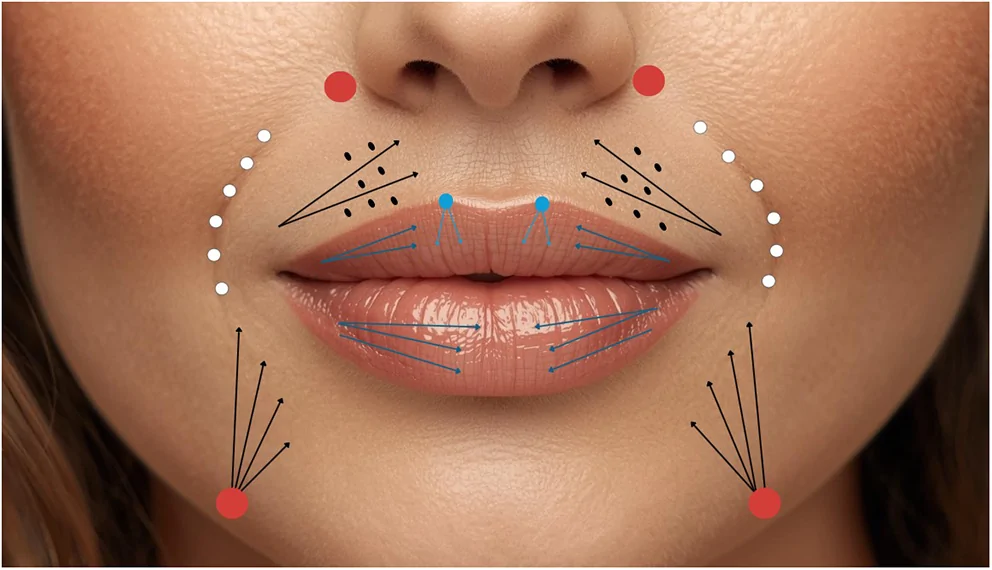
Figure 5 Grade III Technique: Multilayer Perioral Rehabilitation Approach. The figure illustrates the proposed multivector and multilayer treatment strategy for Grade III lips and perioral rehabilitation. Red circles indicate supraperiosteal injection points located at the piriform fossa and prejowl region, providing deep structural support. White circles represent intradermal injection points along the nasolabial folds. Black circles and arrows in the upper perioral (“barcode line”) region indicate intradermal and subdermal treatment, respectively. Black arrows in the marionette line region represent subdermal cannula-based injection vectors within this anatomical region. Dark blue arrows represent cannula-based injections within the posterior lip compartments, whereas light blue arrows and circles indicate needle-based injections within the anterior lip compartments. Together, these injection points and vectors illustrate the proposed multilayer and multiregional approach for Grade III treatment, integrating supraperiosteal structural support, intradermal and subdermal perioral treatment, and combined anterior and posterior lip compartment treatment according to the anatomical deficits identified during clinical assessment.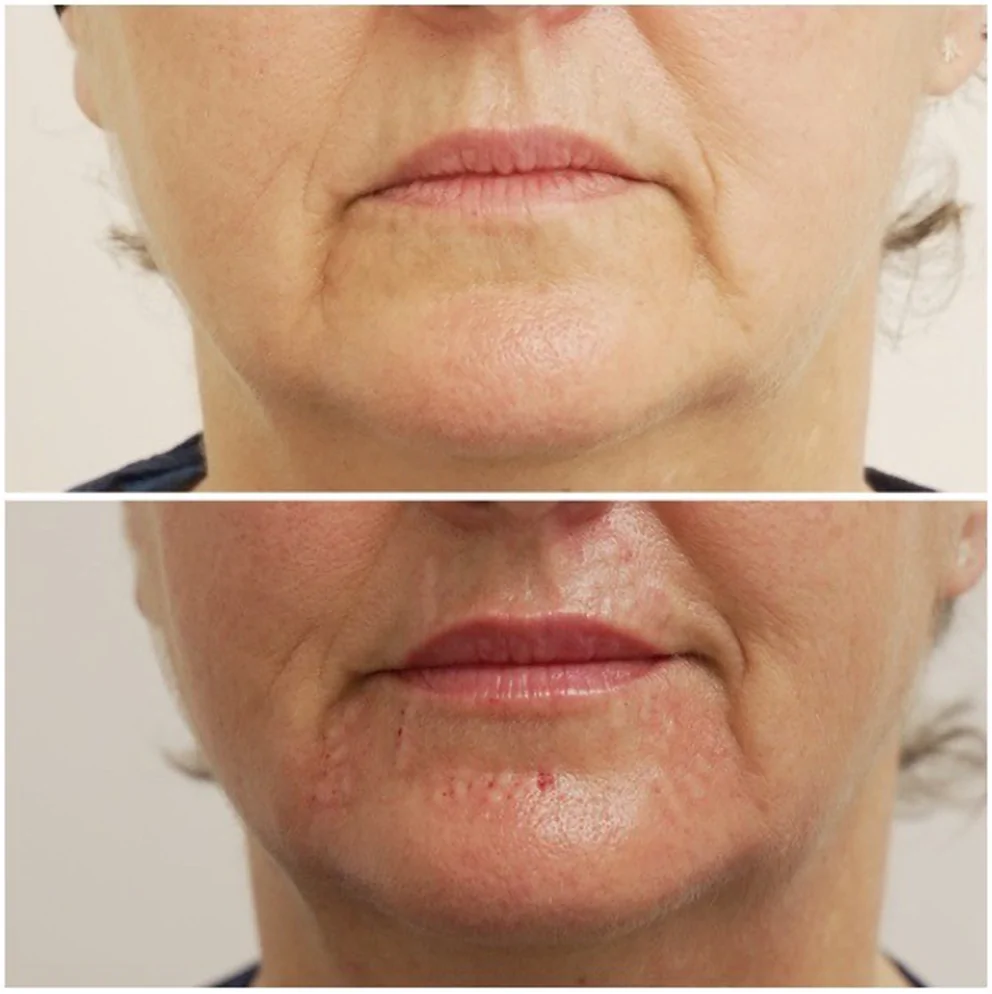
Figure 6 Representative before-and-after case illustrating the Grade III multilayer perioral rehabilitation approach. Baseline (top) and immediate post-treatment (bottom) photographs are shown. Treatment included supraperiosteal injection of a high-density hyaluronic acid (HA) filler in the prejowl region (0.25 mL per side) and supraperiosteal injection in the piriform fossa (0.25 mL per side). Retrograde cannula-based injection of a medium-density HA filler along the marionette lines (0.4 mL per side); treatment of the nasolabial folds with a medium-density HA filler (0,2 mL per side); and combined subdermal and intradermal treatment of perioral rhytids (“barcode lines”) using a non-crosslinked HA product (1 mL in total). The lips were treated with a medium-density HA filler, with 0.4 mL injected into the upper lip and 0.4 mL into the lower lip.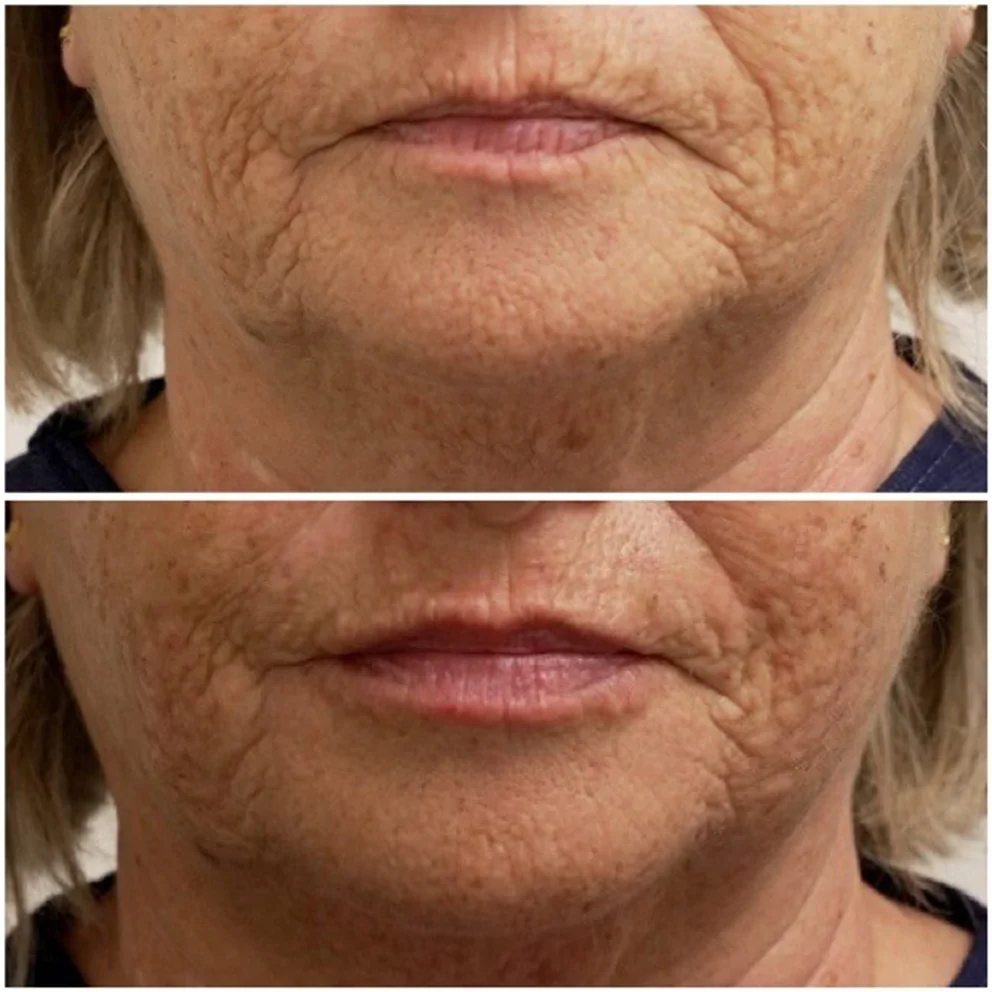
Figure 7 Representative immediate before-and-after clinical case illustrating the proposed Grade III lip treatment approach. Baseline (top) and immediate post-treatment (bottom) photographs are shown. Treatment included a medium-density hyaluronic acid (HA) filler for the marionette lines (0.5 mL in total) and for lip treatment (0.5 mL in the upper lip and 0.5 mL in the lower lip). The nasolabial folds were treated with 0.5 mL of low-density HA filler per side, while perioral rhytids (“barcode lines”) were addressed using combined subdermal and intradermal injections of a non-crosslinked HA product (1 mL in total). The immediate post-treatment images illustrate the multilayer and multiregional strategy proposed for Grade III cases, integrating lip treatment with correction of adjacent perioral structures according to the anatomical deficits identified during clinical assessment.
The Lip Complexity Classification (LCC) is proposed as a clinical framework to stratify patients according to treatment complexity rather than lip volume alone. This distinction is clinically relevant, as similar degrees of lip fullness may require substantially different therapeutic approaches depending on anatomy, tissue quality, muscular dynamics, aging-related changes, asymmetry, and previous aesthetic interventions.
Validated scales such as the Lip Fullness Scale provide standardized assessment of lip volume but do not capture the broader anatomical and clinical determinants of procedural difficulty. Accordingly, lip fullness should not be considered synonymous with treatment complexity. Conversely, lips with adequate volume may still represent a complex treatment scenario when associated with previous filler migration, structural asymmetry, or advanced perioral aging.
Existing lip classifications primarily characterize specific dimensions of lip phenotype, including morphology, aging patterns, and particular clinical configurations. These frameworks are complementary to the LCC, which incorporates such features within a multidimensional assessment of treatment complexity. Recently described aging morphotypes, for example, may inform the aging domain of the LCC, while anatomical characteristics, tissue quality, asymmetry, and previous interventions contribute additional determinants of the overall complexity grade. Thus, rather than redefining existing phenotypes, the LCC integrates clinically relevant variables to translate patient presentation into procedural complexity and therapeutic requirements.
A central feature of the LCC is therefore its potential to bridge clinical assessment and therapeutic decision-making. Increasing complexity reflects a progressive shift in treatment objectives, from isolated lip enhancement to structural restoration and, ultimately, comprehensive perioral rehabilitation. This stratification may support decisions regarding treatment extent, anatomical planes, injection strategy, product selection, and the need for staged or corrective procedures. The LCC should nevertheless be considered a decision-support framework rather than a prescriptive algorithm, with final treatment planning remaining individualized according to patient anatomy, clinical history, and aesthetic goals.
Importantly, the three-grade structure necessarily simplifies a heterogeneous clinical spectrum, and patients within the same grade may differ substantially in the number and combination of complexity domains involved. The current rule assigning the overall grade according to the highest-complexity domain was adopted to avoid underestimating a clinically relevant determinant of procedural difficulty; however, its relative weighting and discriminatory value remain to be validated. Accordingly, the LCC should not be interpreted as a validated predictor of treatment outcomes or complication risk, and whether LCC-guided planning improves clinical outcomes compared with conventional assessment remains to be established prospectively.
Beyond its immediate clinical application, the structured nature of the LCC may facilitate its future integration into digital decision-support tools. A consultation-based application could systematically capture the individual domains and generate a standardized complexity profile to support treatment planning and medical training. Furthermore, image-based artificial intelligence could potentially quantify visually assessable parameters, including lip morphology, proportions, asymmetry, and aging-related features, and map these features onto selected LCC domains. Integration with standardized photography, three-dimensional imaging, or ultrasound could further complement clinical assessment by providing objective anatomical and structural information, particularly in patients with previous aesthetic treatments. Such applications remain hypothetical and would require prospective validation to determine their accuracy, reproducibility, and clinical utility before implementation in routine practice.
The LCC represents a conceptual, clinically derived framework that has not yet undergone prospective validation. Further studies are required to assess its reliability, interobserver agreement, and clinical utility in guiding treatment planning and outcomes.
声明:中文精读 · 仅供学术参考。内容来自公开文献检索,不代表本人观点,不构成诊疗建议。 医疗美容需在正规医疗机构由执业医师实施。
基于相同主题推荐 · 继续深挖
提出「唇部复杂度分类(LCC)」:按 5 个维度(相对唇容量、形态与对称、口周老化征象、组织质量、既往治疗史)将唇部分为 I–III 级,而非仅按容量评估。

这项前瞻性、开放标签、随机、多中心(德国11个中心)上市后研究纳入121名受试者,按1:1随机接受 Belotero Volume(CPM-V,n=58)或含利多卡因的 CPM-V
研究设计:意大利团队提出的三层(深层脂肪、浅层脂肪、真皮皮下层)超声引导中面部年轻化技术,属观察性/概念验证研究;15 例患者(13 女 2 男,50±8 岁,范围 42-65 岁