OnabotulinumtoxinA与CGRP单克隆抗体治疗慢性偏头痛的真实世界对照研究
2026年10月9日26 min read
Journal of Clinical Medicine
结论与实践要点
本研究为基于TriNetX全球联邦电子健康记录数据库的回顾性队列研究(真实世界证据),研究时段2018–2024,纳入成人慢性偏头痛(ICD-10 G43系列)患者,按倾向评分1:1匹配后,onabotulinumtoxinA组与CGRP单克隆抗体组(erenumab、fremanezumab、galcanezumab、eptinezumab)各纳入10,140例(合计20,280例)。主要结局为随访期内“急性曲普坦处方”与“首次偏头痛相关复诊”的发生时间。结果显示:onabotulinumtoxinA组的急性曲普坦处方风险低于CGRP单抗组(HR 0.513,95%CI 0.481–0.546,p<0.001),而两组偏头痛相关复诊风险相近(HR 1.008,95%CI 0.977–1.039,p=0.69)。敏感性分析(扩展至头痛R51编码)与亚组分析结果方向一致。
局限性:回顾性电子病历设计无法控制未测量混杂、治疗选择与就医模式,结论应视为关联而非因果;结局为医疗利用的代理指标(急性曲普坦处方、复诊),并非直接的头痛天数或症状严重度等疗效终点;TriNetX不记录注射方案、剂量递增、依从性及患者报告结局。临床适用边界:结果反映真实世界中两种预防性方案的医疗资源利用差异,可为治疗方案选择与卫生经济学评估提供参考,但不能替代以症状改善为核心指标的随机对照试验证据。
Background: OnabotulinumtoxinA and calcitonin gene-related peptide (CGRP) monoclonal antibodies are widely used for chronic migraine prevention, but comparative real-world evidence on healthcare utilization remains limited. This study aimed to compare the association of onabotulinumtoxinA versus CGRP monoclonal antibodies with acute triptan prescription and migraine-related return visits in patients with chronic migraine. Methods: We conducted a retrospective cohort study using the TriNetX global federated electronic health record database from 2018 to 2024. Adults with chronic migraine who initiated onabotulinumtoxinA or a CGRP monoclonal antibody were matched 1:1 by propensity score. The primary outcomes were time to acute triptan prescription and time to first migraine-related return visit during follow-up. Results: After propensity score matching, 10,140 patients were included in each treatment group. OnabotulinumtoxinA was associated with a lower hazard of acute triptan prescription than CGRP monoclonal antibodies (hazard ratio 0.513, 95% confidence interval 0.481–0.546; p < 0.001), whereas migraine-related return visits were similar between groups (hazard ratio 1.008, 95% confidence interval 0.977–1.039; p = 0.69). Conclusions: In this multicenter real-world analysis, onabotulinumtoxinA was associated with a lower hazard of acute triptan prescription than CGRP monoclonal antibodies, while migraine-related return visits were comparable. These findings reflect treatment-related healthcare utilization patterns in routine practice and should be interpreted considering the limitations of retrospective electronic health record data.
Keywords: chronic migraine、onabotulinumtoxinA、CGRP monoclonal antibodies、real-world evidence、propensity score matching
Chronic migraine is a disabling neurological disorder that imposes substantial individual, social, and healthcare burdens worldwide, with adverse effects on daily functioning, quality of life, work productivity, and healthcare utilization [ 1 ]. Preventive therapy is therefore a central component of long-term management, particularly in patients with frequent headache days, medication overuse, or repeated healthcare visits.
Among currently available preventive options, onabotulinumtoxinA and calcitonin gene-related peptide (CGRP) monoclonal antibodies are widely used for patients with chronic migraine who require more intensive preventive treatment [ 2 , 3 ]. Although both strategies are supported by real-world and clinical evidence [ 4 , 5 , 6 ], they differ in route of administration, treatment schedule, biological target, and potentially in the way treatment response is reflected in routine practice. OnabotulinumtoxinA is generally administered as clinician-delivered injections at regular intervals, whereas CGRP monoclonal antibodies are used as targeted mechanism-based therapies with different dosing schedules and drug-specific pharmacologic profiles [ 7 , 8 , 9 , 10 ].
Mechanistically, onabotulinumtoxinA is believed to reduce migraine activity by inhibiting the release of neurotransmitters and neuropeptides involved in peripheral sensitization and subsequent central pain processing, whereas CGRP monoclonal antibodies act by blocking the CGRP pathway, a key mediator in migraine pathophysiology [ 8 , 9 , 11 , 12 ]. Because these treatments act through distinct biological mechanisms and are delivered under different clinical circumstances, comparative evaluation in real-world settings is clinically relevant.
Previous observational studies have shown that anti-CGRP therapies and onabotulinumtoxinA can both improve migraine-related outcomes, including headache burden, treatment tolerability, and disability measures [ 4 , 5 , 6 , 7 ]. However, much of the existing literature has focused on symptom-centered outcomes, such as monthly migraine days, headache intensity, or patient-reported disability, while less attention has been paid to healthcare utilization outcomes that may better capture treatment patterns in routine care. In real-world databases, outcomes such as acute medication prescribing and return visits may serve as pragmatic indicators of disease control, treatment need, or follow-up intensity when detailed bedside clinical data are unavailable.
Direct head-to-head comparative evidence between onabotulinumtoxinA and CGRP monoclonal antibodies also remains limited, particularly in large multinational electronic health record datasets. In addition, important practical questions remain regarding whether one strategy is associated with lower acute medication use or different patterns of recurrent healthcare contact after treatment initiation. These questions are relevant to clinicians, patients, and health systems because treatment selection in chronic migraine often depends not only on efficacy, but also on comorbidity profile, access, reimbursement, follow-up structure, and anticipated healthcare utilization.
To address this gap, the present study used the TriNetX global federated electronic health record network to compare chronic migraine patients who initiated onabotulinumtoxinA with those who initiated a CGRP monoclonal antibody. After propensity score matching, the study evaluated two pragmatic time-to-event outcomes: acute triptan prescription and first migraine-related return visit during follow-up. Because TriNetX is based on routinely collected coded clinical data, the aim was not to assess detailed injection practice, headache-day frequency, or patient-reported symptom severity but rather to examine treatment-associated healthcare utilization patterns in a large real-world cohort [ 13 , 14 ].
This retrospective cohort study was conducted using the TriNetX global research network, a federated platform that aggregates de-identified electronic health record data from multiple healthcare organizations. The study period extended from 1 January 2018 to 31 December 2024, and analyses were performed within the TriNetX analytics environment using the variables and functions available within the platform. The study was reported in accordance with the STROBE statement for observational studies.
The study was approved by the Taipei Medical University Joint Institutional Review Board (TMU-JIRB No. N202512042; approval date: 13 December 2025). The TriNetX query and analyses were conducted after IRB approval, and the data available for analysis were limited to records from 1 January 2018 to 31 December 2024. All data used in this study were de-identified before analysis, and the requirement for informed consent was waived because of the retrospective design and the use of de-identified records. TriNetX data are structured to comply with privacy requirements, and small cell counts are masked to reduce re-identification risk.
Eligible patients were adults aged 18 years or older with chronic migraines identified by the corresponding ICD-10 diagnostic codes available in TriNetX (G43, G43.7, G43.70, and G43.709). Because TriNetX captures diagnoses through coded electronic health records (EHR)-based data, migraine subtypes such as aura status, status migrainosus, and intractability were identified only when explicitly coded and were otherwise not further subclassified. Patients were assigned to the onabotulinumtoxinA cohort or the CGRP monoclonal antibody cohort (erenumab, fremanezumab, galcanezumab, or eptinezumab) according to the first recorded treatment exposure during the study period. The index date was defined as the date of the first eligible treatment record. To reduce exposure overlap, patients who received both therapies within one month before or after the index date were excluded.
TriNetX is a federated platform that aggregates real-time electronic health records from multiple healthcare organizations. Missing values are retained in their original form without imputation or deletion [ 13 ]. In our analysis, follow-up was operationalized as the period from the index date to the patient’s last recorded clinical encounter in TriNetX, which served as the end of observable data availability [ 15 ]. All data were de-identified in accordance with Health Insurance Portability and Accountability Act (HIPAA) and the General Data Protection Regulation (GDPR) standards, and cell counts fewer than 10 were masked to protect patient privacy [ 16 ].
Exposure was defined using treatment records in TriNetX. The onabotulinumtoxinA cohort was identified using the RxNorm code reported in the manuscript, and the CGRP monoclonal antibody cohort was defined using the corresponding RxNorm identifiers for the included anti-CGRP agents. Because TriNetX is an EHR-based platform, exposure ascertainment reflects recorded treatment documentation rather than protocolized trial administration. Detailed clinical information such as injection pattern, dose escalation, adherence, persistence, switching beyond the predefined window, and physician-specific delivery technique were not available for analysis.
The study evaluated two primary time-to-event outcomes during follow-up: time to acute triptan prescription and time to first migraine-related return visit. These endpoints were selected as pragmatic healthcare utilization proxies rather than direct symptom-based efficacy measures because patient-reported outcomes and detailed headache metrics are not available in TriNetX.
Time to acute triptan prescription was defined as the interval from the index date to the first post-index prescription record for any triptan included in the database query, including sumatriptan, zolmitriptan, rizatriptan, naratriptan, eletriptan, almotriptan, and frovatriptan. This outcome was interpreted as a proxy for breakthrough acute medication need rather than a direct measure of total triptan consumption, as TriNetX does not provide information on dose, days of supply, refill quantity, or cumulative use.
Migraine-related return visit was defined as the first post-index outpatient, emergency department, or inpatient encounter carrying a migraine-related ICD-10 diagnosis code (G43. *). Because some follow-up encounters may reflect planned monitoring rather than spontaneous symptom worsening, especially in patients treated with onabotulinumtoxinA at regular intervals, this endpoint was interpreted as treatment-related healthcare utilization rather than a pure indicator of disease recurrence.
To reduce measured baseline imbalance between treatment groups, the analysis incorporated a broad set of covariates available in TriNetX. These included demographic factors such as age, sex, and race; lifestyle-related variables including nicotine dependence, tobacco use, and alcohol-related disorders; comorbidities such as hypertension, diabetes, sleep disorders, depression, and anxiety; prior healthcare utilization measures; concurrent medication use; and available laboratory values including C-reactive protein, hemoglobin, and estimated glomerular filtration rate.
Propensity score matching was performed in a 1:1 ratio using nearest-neighbor matching without replacement. Covariate balance after matching was assessed using standardized mean differences, with values below 0.1 considered indicative of acceptable balance. This matching strategy was intended to improve comparability between patients initiating onabotulinumtoxinA and those initiating a CGRP monoclonal antibody, while recognizing that residual confounding from unmeasured clinical factors may remain.
Baseline characteristics were summarized before and after matching as appropriate for the TriNetX platform output. Time-to-event analyses were performed using Kaplan–Meier methods, with between-group comparisons assessed by log-rank testing. Cox proportional hazards regression was used to estimate hazard ratios and 95% confidence intervals for the outcomes of interest. A two-sided p -value below 0.05 was considered statistically significant.
Follow-up was defined from the index date until the last recorded clinical encounter in TriNetX, which represented the end of observable data availability for each patient. As a result, the study assessed associations within the captured EHR follow-up period rather than fixed protocol-driven follow-up intervals.
To assess the robustness of the main findings, a sensitivity analysis broadened the diagnostic definition to include headache-related ICD-10 code R51. This approach was intended to test whether the primary findings were materially altered when a wider symptom-based coding framework was used. Prespecified subgroup analyses further explored associations across age, sex, and selected comorbidity strata. These subgroup analyses were considered exploratory and were interpreted cautiously given the limited clinical granularity inherent to coded EHR data.
This study was approved by the Taipei Medical University Joint Institutional Review Board (TMU-JIRB No. N202512042). The requirement for informed consent was waived because of the retrospective design and use of fully de-identified data.
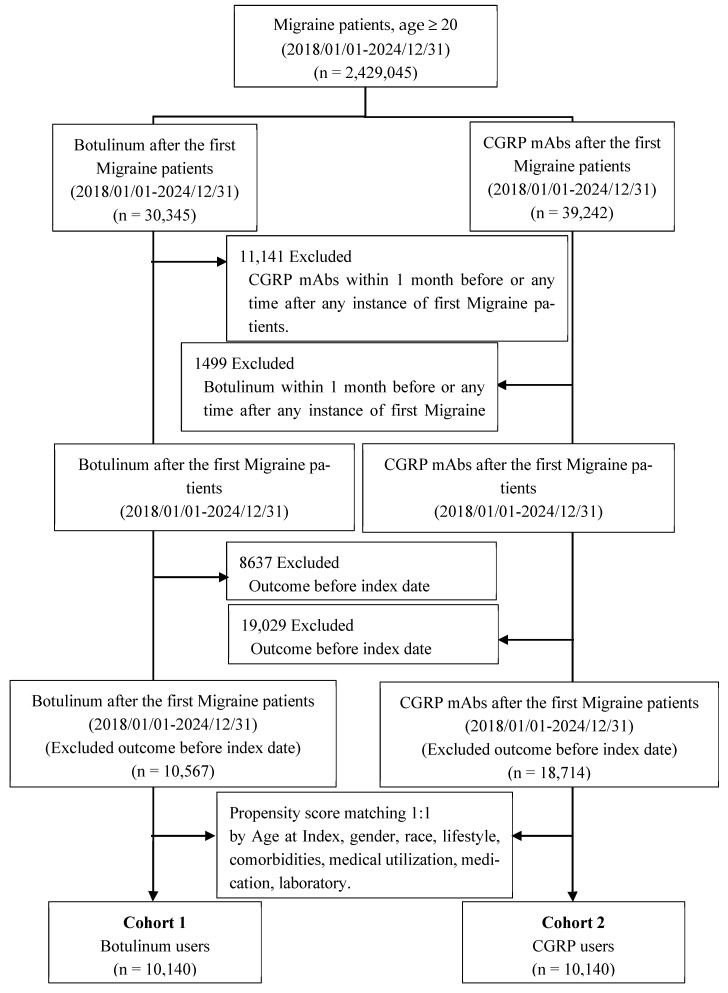
From 2,429,045 patients with migraine, 29,938 met chronic migraine and treatment eligibility criteria. After 1:1 propensity score matching, the final analytic cohorts included 10,140 patients in each group, with good baseline balance across measured covariates (all standardized mean differences < 0.1; Figure 1 and Table 1 ).
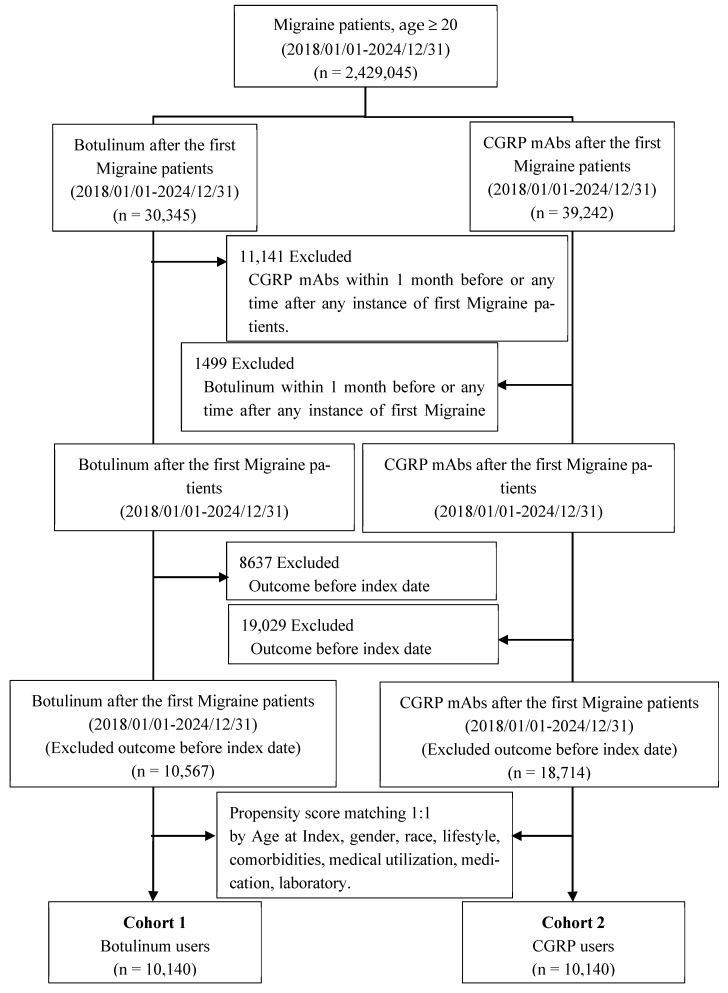
Figure 1 Flow diagram of cohort selection for patients with chronic migraine treated with onabotulinumtoxinA or CGRP monoclonal antibodies in the TriNetX database. Before matching: Botulinum users n = 10,567; CGRP mAbs users n = 18,714. After exclusions and 1:1 propensity score–matched cohorts, final cohorts n = 10,140 each. Arrows indicate cohort selection and exclusion flow. CGRP, calcitonin gene-related peptide; mAbs, monoclonal antibodies.TriNetX数据库中慢性偏头痛患者队列筛选流程图(匹配前BoNT-A组10,567例、CGRP单抗组18,714例)。Table 1 Baseline characteristics of patients with chronic migraine treated with onabotulinumtoxinA versus CGRP monoclonal antibodies before and after propensity score matching. Data are presented as mean ± standard deviation or number (percentage), as appropriate. Std diff indicates standardized difference between groups; values less than 0.1 denote adequate balance after matching. PPHH–SPSC, persons with potential health hazards related to socioeconomic and psychosocial circumstances; CKD–EPI, Chronic Kidney Disease Epidemiology Collaboration; CGRP, calcitonin gene-related peptide; mAbs, monoclonal antibodies. All variables were included in the propensity score model using 1:1 nearest-neighbor matching without replacement.
| Before Matching | After Matching | |
|---|---|---|
| Botulinum Users( n = 10,567) | CGRP mAbs Users( n = 18,714) | |
| Age at index | ||
| Mean ± SD | 50.1 ± 14.8 | 45.9 ± 14.4 |
| Gender, n (%) | ||
| Female | 8511 (80.5%) | 15,328 (81.9%) |
| Male | 2046 (19.4%) | 3373 (18.0%) |
| Unknown Gender | 10 (0.1%) | 13 (0.1%) |
| Race, n (%) | ||
| White | 8144 (77.1%) | 14,581 (77.9%) |
| Black or African American | 755 (7.1%) | 1537 (8.2%) |
| Asian | 180 (1.7%) | 263 (1.4%) |
| Other Race | 417 (3.9%) | 830 (4.4%) |
| Unknown Race | 978 (9.3%) | 1357 (7.3%) |
| Medical utilization, n (%) | ||
| Office or Other Outpatient Services | 4769 (45.1%) | 5530 (29.6%) |
| Emergency Department Services | 1164 (11.0%) | 1908 (10.2%) |
| Preventive Medicine Services | 634 (6.0%) | 820 (4.4%) |
| Hospital Inpatient and Observation Care Services | 503 (4.8%) | 651 (3.5%) |
| Lifestyles , n (%) | ||
| Nicotine dependence | 496 (4.7%) | 787 (4.2%) |
| Tobacco use | 132 (1.2%) | 173 (0.9%) |
| Alcohol related disorders | 102 (1.0%) | 137 (0.7%) |
| Social economic, n (%) | ||
| PPHH-SPSC | 92 (0.9%) | 137 (0.7%) |
| Comorbidities, n (%) | ||
| Hypertensive diseases | 2017 (19.1%) | 2466 (13.2%) |
| Other anxiety disorders | 1764 (16.7%) | 2263 (12.1%) |
| Disorders of lipoprotein metabolism and other lipidemias | 1593 (15.1%) | 1921 (10.3%) |
| Sleep disorders | 1527 (14.5%) | 1777 (9.5%) |
| Depressive episode | 1377 (13.0%) | 1577 (8.4%) |
| Overweight and obesity | 867 (8.2%) | 1403 (7.5%) |
| Diabetes mellitus | 747 (7.1%) | 1164 (6.2%) |
| Asthma | 752 (7.1%) | 964 (5.2%) |
| Fibromyalgia | 621 (5.9%) | 631 (3.4%) |
| Ischemic heart diseases | 532 (5.0%) | 624 (3.3%) |
| Diseases of arteries, arterioles and capillaries | 460 (4.4%) | 506 (2.7%) |
| Cerebral infarction | 314 (3.0%) | 329 (1.8%) |
| Heart failure | 206 (1.9%) | 243 (1.3%) |
| Transient cerebral ischemic attacks and related syndromes | 105 (1.0%) | 172 (0.9%) |
| Medication/procedure, n (%) | ||
| Psychoanaleptics | 4369 (41.3%) | 6125 (32.7%) |
| Psycholeptics | 3594 (34.0%) | 4582 (24.5%) |
| Opioids | 2505 (23.7%) | 3013 (16.1%) |
| Glucocorticoids | 2184 (20.7%) | 2634 (14.1%) |
| Laboratory | ||
| Hemoglobin [Mass/volume] in Blood | ||
| 13.2 ± 1.67 | 13.4 ± 1.61 | |
| Glomerular filtration rate/1.73 sq M.predicted [Volume Rate/Area] in Serum, Plasma or Blood by Creatinine-based formula (CKD-EPI) | ||
| 85.8 ± 23 | 89 ± 22.8 | |
| Erythrocyte sedimentation rate | ||
| 18 ± 19 | 17.5 ± 17.9 | |
| C reactive protein [Mass/volume] in Serum, Plasma or Blood | ||
| 13.1 ± 35.2 | 11.1 ± 31 |
OnabotulinumtoxinA was associated with a lower hazard of acute triptan prescription than CGRP monoclonal antibodies (HR 0.513, 95% CI 0.481–0.546, p < 0.001; Figure 2 ). Migraine-related return visits were similar between groups (HR 1.008, 95% CI 0.977–1.039, p = 0.69; Figure 3 ).
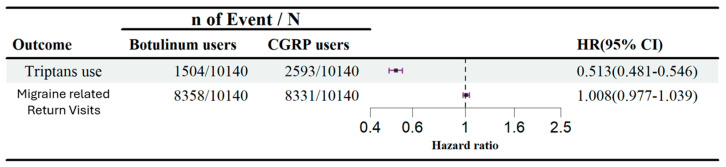
Figure 2 Comparative cumulative incidence of acute triptan prescriptions and migraine-related return visits over the one-year follow-up in patients treated with onabotulinumtoxinA versus CGRP monoclonal antibodies. Hazard ratios with 95% confidence intervals are shown. The dashed line indicates the reference value of HR = 1, and the symbols represent the hazard ratios with 95% confidence intervals for each outcome. CGRP, calcitonin gene-related peptide; HR, hazard ratio; CI, confidence interval.两组急性曲普坦处方与偏头痛复诊的累积发生率比较,含风险比与95%置信区间。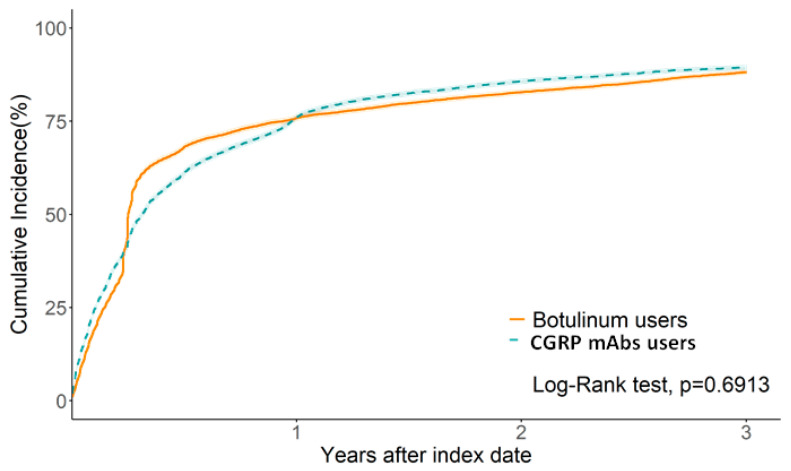
Figure 3 Kaplan–Meier cumulative risk curves for time to migraine-related return visit in patients with chronic migraine receiving onabotulinumtoxinA or CGRP monoclonal antibodies. CGRP, calcitonin gene-related peptide; mAbs, monoclonal antibodies.至偏头痛相关复诊时间的Kaplan–Meier累积风险曲线。
In the expanded cohort including R51.* headache codes, the association with acute triptan prescription remained consistent (HR 0.437, 95% CI 0.409–0.467). Findings for migraine-related return visits were also consistent with the primary analysis, although the expanded definition suggested a difference in healthcare utilization ( Figure 4 , Figure 5 and Figure 6 ).
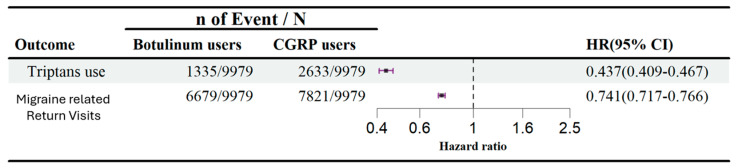
Figure 4 Incidence of acute triptan prescriptions and migraine-related return visits in the expanded cohort including patients with headache symptoms (ICD–10 R51), according to preventive treatment with onabotulinumtoxinA or CGRP monoclonal antibodies. The dashed line indicates the reference value of HR = 1, and the symbols represent the hazard ratios with 95% confidence intervals for each outcome. CGRP, calcitonin gene-related peptide; HR, hazard ratio; CI, confidence interval.扩展头痛队列(ICD-10 R51)中急性曲普坦处方与复诊发生率。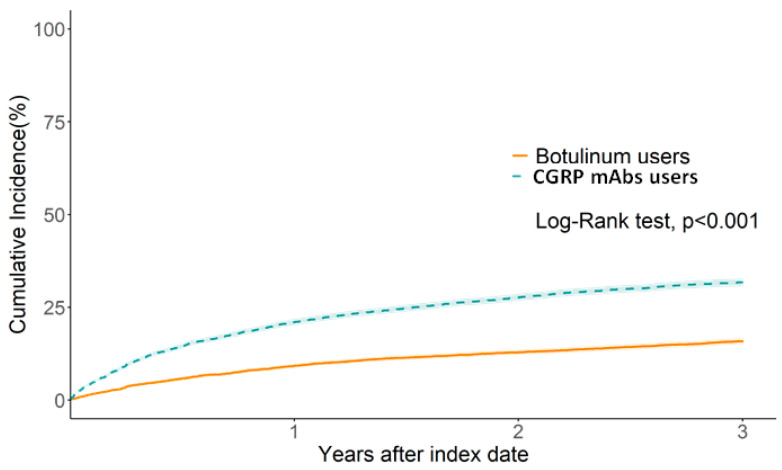
Figure 5 Kaplan–Meier cumulative risk curves for time to acute triptan prescription in the expanded headache cohort (ICD-10 R51). CGRP, calcitonin gene-related peptide; mAbs, monoclonal antibodies.扩展头痛队列中至急性曲普坦处方的Kaplan–Meier曲线。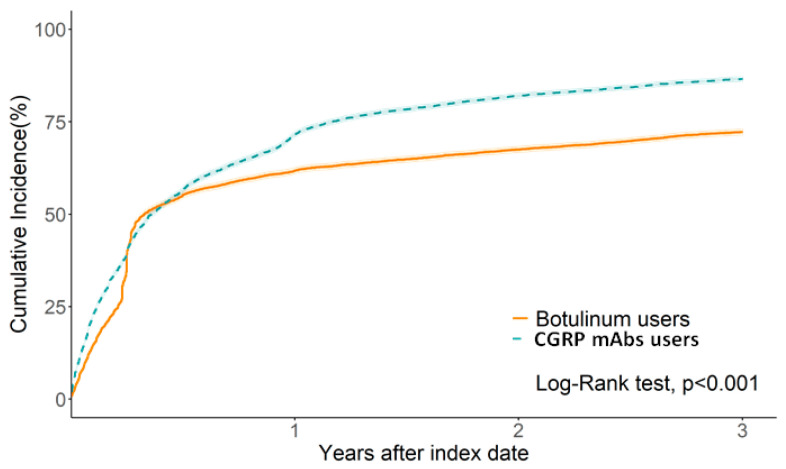
Figure 6 Kaplan–Meier cumulative risk curves for migraine-related return visits in the expanded headache cohort (ICD-10 R51). CGRP, calcitonin gene-related peptide; mAbs, monoclonal antibodies.扩展头痛队列中至偏头痛复诊的Kaplan–Meier曲线。
The lower hazard of acute triptan prescriptions with onabotulinumtoxinA was consistent across prespecified subgroups, including sex, age, race, smoking status, and major comorbidity strata ( Figure 7 ). For migraine-related return visits, no overall difference was observed in the matched cohort, and subgroup patterns were heterogeneous but generally similar between treatments ( Figure 8 ).
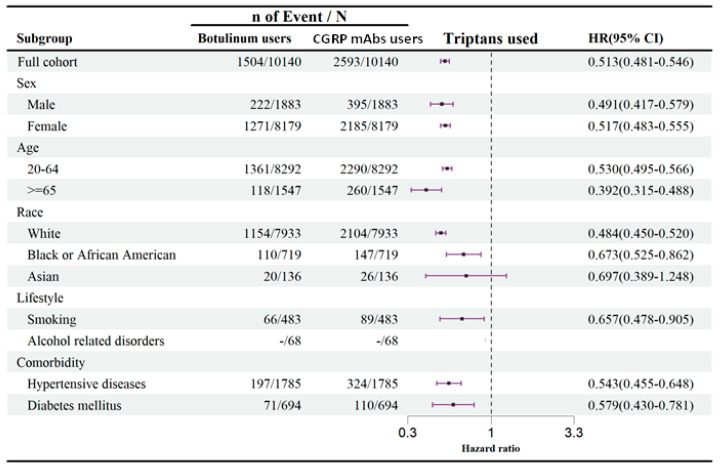
Figure 7 Subgroup analyses of the association between preventive treatment with onabotulinumtoxinA versus CGRP monoclonal antibodies and risk of acute triptan prescriptions. Forest plots display hazard ratios with 95% confidence intervals across strata of age, sex, race, smoking status, and major comorbidities. The dashed line indicates the reference value of HR = 1, and the symbols represent the hazard ratios with 95% confidence intervals for each outcome. CGRP, calcitonin gene-related peptide; mAbs, monoclonal antibodies; HR, hazard ratio; CI, confidence interval.急性曲普坦处方风险的亚组森林图(按性别、年龄、合并症等分层)。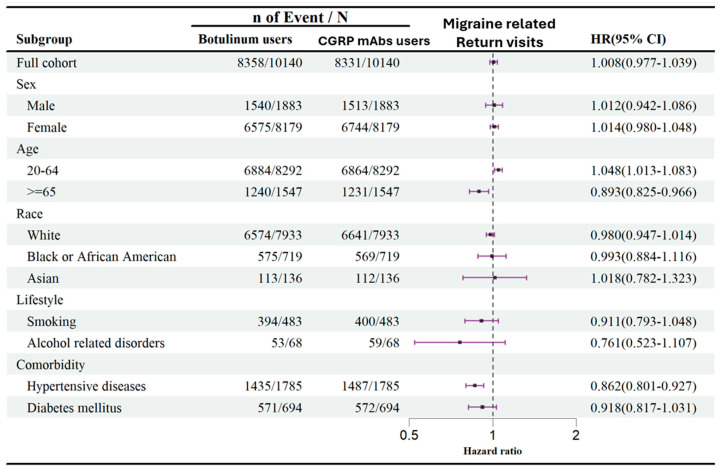
Figure 8 Subgroup analyses of the association between preventive treatment with onabotulinumtoxinA versus CGRP monoclonal antibodies and risk of migraine-related return visits. Forest plots display hazard ratios with 95% confidence intervals across strata of age, sex, race, smoking status, and major comorbidities. The dashed line indicates the reference value of HR = 1, and the symbols represent the hazard ratios with 95% confidence intervals for each outcome. CGRP, calcitonin gene-related peptide; mAbs, monoclonal antibodies; HR, hazard ratio; CI, confidence interval.偏头痛相关复诊风险的亚组森林图。
Across matched chronic migraine cohorts, onabotulinumtoxinA was associated with a lower hazard of acute triptan prescription than CGRP monoclonal antibodies, while migraine-related return visit rates were similar. These associations remained directionally consistent in sensitivity and subgroup analyses.
In this multicenter real-world analysis of propensity score-matched patients with chronic migraine, initiation of onabotulinumtoxinA was associated with a lower hazard of acute triptan prescription compared with initiation of CGRP monoclonal antibodies, whereas the hazard of migraine-related return visit was similar between groups. These findings suggest that the two preventive strategies may differ in treatment-associated healthcare utilization patterns, even when broad measured baseline characteristics are balanced. These findings should be interpreted as associations rather than causal treatment effects, because the retrospective EHR-based design cannot fully account for unmeasured clinical factors, treatment selection, or care patterns [ 13 , 17 ].
Our findings add to prior real-world comparative studies of onabotulinumtoxinA and anti-CGRP therapies, including the RAMO study and related observational reports, which suggest that these preventive strategies may differ in clinically relevant ways despite both being effective in chronic migraine management [ 18 , 19 , 20 , 21 ]. However, much of the existing literature has focused on symptom-based outcomes, such as headache-day reduction, disability measures, or patient-reported benefit [ 19 , 20 , 22 , 23 , 24 , 25 ], including the RAMO study and the combination-therapy report by Blumenfeld et al., whereas the present study evaluated pragmatic healthcare utilization outcomes that are more readily captured in TriNetX, including acute triptan prescription and migraine-related return visits.
The lower hazard of acute triptan prescription observed in the onabotulinumtoxinA cohort may reflect lower subsequent acute medication need, but this interpretation remains indirect because TriNetX does not capture total medication consumption, refill behavior, or patient-reported symptom severity [ 13 , 17 ]. Accordingly, acute triptan prescription should be understood as a proxy for breakthrough acute medication use rather than a direct measure of clinical efficacy.
Migraine-related return visits also require cautious interpretation. In routine clinical practice, onabotulinumtoxinA is commonly administered at scheduled intervals, and some follow-up encounters may therefore reflect planned care rather than spontaneous symptom-driven utilization. For this reason, the return-visit outcome in this study is better interpreted as treatment-linked healthcare utilization than as a pure marker of disease activity.
Although subgroup analyses suggested possible heterogeneity by age and comorbidity status, these findings should be considered exploratory, as the current dataset does not provide sufficient clinical granularity to determine whether the patterns reflect true treatment-response differences, underlying disease severity, treatment selection, or follow-up practices.
The strengths of this multicenter TriNetX analysis ( n = 20,280) include a large propensity score-matched cohort drawn from diverse US healthcare systems and the use of pragmatic endpoints that complement traditional headache-day metrics from clinical trials by reflecting real-world healthcare utilization.
Despite these strengths, several limitations should be acknowledged. First, because TriNetX is based on de-identified EHR data, detailed injection information, including injection sites and dose, was unavailable, and the database also does not capture clinician technique or physician experience, both of which may influence treatment delivery and outcomes. Second, patient-reported outcomes such as pain severity, headache-day burden, and validated disability measures were not available, and the database does not allow precise assessment of total medication consumption, refill behavior, or days of supply. Third, migraine-related return visits may partly reflect scheduled follow-up care, particularly in the onabotulinumtoxinA group, which may affect time-to-event interpretation. Fourth, grouping different CGRP monoclonal antibodies together may have obscured drug-specific differences. Finally, as with any retrospective EHR study, residual confounding, coding misclassification, and incomplete capture of care delivered outside participating healthcare systems remain possible.
This multicenter TriNetX analysis of propensity score-matched patients found that onabotulinumtoxinA was associated with a lower hazard of acute triptan prescriptions than CGRP monoclonal antibodies in chronic migraine, while migraine-related return visit rates were comparable. These findings should be interpreted as observational associations reflecting healthcare utilization patterns rather than direct measures of treatment efficacy. Further prospective studies are needed to confirm these observations.
Real-world associations suggest comorbidity- and age-stratified treatment consideration. Clinicians should weigh acute medication control versus healthcare utilization patterns alongside individual patient characteristics and local reimbursement criteria when selecting preventive therapies for chronic migraine.
声明:中文精读 · 仅供学术参考。内容来自公开文献检索,不代表本人观点,不构成诊疗建议。 医疗美容需在正规医疗机构由执业医师实施。
基于相同主题推荐 · 继续深挖
回顾性队列,基于TriNetX真实世界电子病历
PROSPERO注册的系统综述,纳入9项随机/分脸随机试验、19个治疗臂,构成稀疏连接网络并采用频率学随机效应网络荟萃分析。
回顾性纳入63例红斑毛细血管扩张型玫瑰痤疮(ETR)中国患者,均采用555–950 nm与530–750 nm双滤光片窄谱IPL治疗。