双波长窄谱强脉冲光治疗红斑毛细血管扩张型玫瑰痤疮(中国患者)的疗效与安全性
2026年10月18日18 min read
Clinical, Cosmetic and Investigational Dermatology
Clinical, Cosmetic and Investigational Dermatology
结论与实践要点
双波长窄谱IPL对ETR型玫瑰痤疮的红斑与毛细血管扩张改善率较高,且在本观察中未见明显不良反应,可作为该表型患者常见的光电治疗选择之一。
需强调本研究为回顾性、无对照设计,疗效评估存在主观偏倚可能;临床中建议结合EAS/GAIS等量表进行基线–随访的标准化拍照评估,并依据患者耐受与红斑反应个体化调整滤光片组合与能量。
对于肤色较深或易色素沉着的中国人群,治疗参数应从低起始、分次递增,以减少炎症后色素沉着等风险。
BackgroundErythematotelangiectatic rosacea is characterized by central facial erythema and telangiectasia, accompanied by sensations of burning and stinging. Erythematotelangiectatic rosacea can be addressed through various treatments. We aimed to observe and evaluate the clinical effectiveness of a short pulse narrow-spectrum Intense pulsed light (IPL) with wavelength of 530–750nm and 555–950nm for the treatment of erythematotelangiectatic rosacea.
MethodsWe retrospectively collected patient information on erythematotelangiectatic rosacea and evaluated the clinical outcome.
Results63 cases of erythematotelangiectatic rosacea were included. All patients received different sessions narrow spectrum IPL treatment with 555–950 nm and 530–750 nm filter combinations. The treatment efficacy rate was 57/63 (90.47%), all patients showed significant post-treatment Erythema Assessment Scale (EAS) levels reduction ( p <0.05), and patients who received more treatment sessions tended to obtain greater EAS score reductions. A significant reduction ( p <0.05) in the facial red areas was shown by VISIA images after treatment. 59 (93.7%) demonstrated improvement according to GAIS (Global Aesthetic Improvement Scale) scores. There were no significant skin adverse reactions were observed during treatment. All patients expressed satisfaction with the treatment.
ConclusionThe narrow-spectrum IPL with 555–950nm and 530–750nm wavelengths filter combinations for the treatment of erythematotelangiectatic rosacea has the advantages of a high erythema improvement rate and low adverse reaction.
Keywords: erythematotelangiectatic rosacea、IPL treatment、narrow spectrum IPL、clinical efficacy
Rosacea is a chronic, relapsing inflammatory skin disease, among which erythematotelangiectatic rosacea represents the most common subtype. Erythematotelangiectatic rosacea usually has some clinical manifestations including frequent facial flushing, burning sensation, persistent erythema and angiotelectasis. 1 It significantly impairs the patient’s quality of life. The management of erythematotelangiectatic rosacea includes topical medications and photoelectric therapy, among which intense pulsed light (IPL) represents a beneficial therapeutic modality.
IPL has been formally adopted for clinical use since 1998. IPL can be divided into two types, namely broad-spectrum IPL and narrow-spectrum IPL. The spectrum of broad-spectrum IPL usually ranges from 400 to 1200 nm. 2 Narrow-band IPL utilizes a special filtering technology to obtain a usable spectrum segment, filtering out unnecessary wavelengths to reduce unwarranted tissue damage. The target tissues for IPL are melanin, hemoglobin, and water. 3 IPL therapy can be used for redness reduction and repair barrier in the stable phase of facial erythema. Compared with pulsed dye laser (PDL) that delivers a single fixed wavelength targeting only oxyhemoglobin, narrow-band IPL adopts a multi-wavelength spectrum with broader tissue penetration and multiple target chromophores. PDL possesses higher specificity for superficial vascular lesions but is limited by narrow applicability and a relatively higher risk of post-inflammatory hyperpigmentation. In contrast, narrow-band IPL achieves simultaneous improvement in erythema, telangiectasia, and mild pigmentary abnormalities, with better tolerance and a wider suitable range for different Fitzpatrick skin phototypes.
Oxyhemoglobin exhibits three primary absorption peaks at 418 nm, 542 nm, and 577 nm. 4 The wavelength ranges of 530–750 nm and 555–950nm encompass two of the major absorption peaks of oxyhemoglobin, thus determining its advantage in the treatment of cutaneous redness. 5 The 530–750 nm wavelength is closer to the two absorption peaks of oxyhemoglobin, which is more beneficial for superficial cutaneous vessels. Meanwhile, due to its proximity to the absorption peak curve of melanin, it also has good clinical advantages for pigmentary disorders, particularly in Fitzpatrick skin types II–III. The 555–950 nm wavelength is closer to the 577nm peak of oxyhemoglobin, thus it has some advantages for deep cutaneous vessels. Meanwhile, due to its relative deeper penetration, it also has little therapeutic effects on skin rejuvenation.
We use narrow-band IPL with wavelength of 530–750nm and 555–950nm combinations for the treatment of erythematotelangiectatic rosacea in clinic center from 2023.01.01–2024.12.31. Therefore, the purpose of this study is to observe and evaluate retrospectively the clinical efficacy and safety of the narrow-spectrum IPL for the treatment of erythematotelangiectatic rosacea.
All patients in our study were rigorously screened based on predetermined criteria.
Patient Inclusion Criteria: (1) Patients diagnosed with erythematotelangiectatic rosacea from center from 2023.01.01–2024.12.31. (2) erythematotelangiectatic rosacea in stable phase willing to undergo treatment; (3) No other treatments were received during period;
Patient Exclusion Criteria: (1) Acne-induced post-inflammatory erythema; (2) Pregnancy and lactation period; (3) the facial skin has an open wound; (4) Complications of other systemic diseases.
This study was performed in strict accordance with the principles stated in the Declaration of Helsinki. All patients signed informed consent form prior to treatment. Narrow-band IPL (Nordlys™, Candela Corporation, Wayland, MA, USA) was applied. All patients first received treatment with the 555–950 nm handpiece at a pulse duration of 20–25ms, and fluence of 10–12 J/cm 2 with four pulses. The endpoint response was slight redness. Next, the 530–750 nm handpiece was applied for full-face treatment at a pulse duration of 2.5–3ms and fluence of 6.0–6.3 J/cm 2 with two pulses. The endpoint response being slight redness. The spot size was 10 mm x 48 mm, with 10% of overlap during treatment. Finally, single-pulse treatment was performed on areas with prominent vasodilation with the 530–750 nm handpiece at a pulse duration of 13–15ms and fluence of 11–13 J/cm 2 . The endpoint response was immediate disappearance of the local dilated blood vessels. After the end of treatment, ice packs were applied for 30 minutes. Medical dressings are used within a week.
The results were interpreted by two independent cosmetic dermatologists. Efficacy was measured as reduction in facial erythema and telangiectasia on a five-point ordinal scale: none (0%), poor (1–24%), fair (25–49%), good (50–74%), excellent (75–100% vessel clearance). 6
Effective rate = (nr + ng) / nt × 100%;
nr = number of cases with remarkable results
ng = number of cases with good results
nt = total number of patients
Patients underwent VISIA (Canfield Scientific, Inc., Fairfield, NJ, USA) imaging assessment before and after IPL treatment, and the red area improvement was assessed by two independent cosmetic dermatologists.
The Erythema Assessment Scale (EAS) on the basis of the patients’ photographs were evaluated by two independent dermatologists. The scale grades erythema severity into five levels (0–4 points), ranging from clear skin with no signs of erythema (0 points) to severe erythema with fiery red skin (4 points).
The two independent dermatologists filled out a questionnaire of the 5-point Global Aesthetic Improvement Scale (GAIS) on the basis of the patients’ photographs. The scale has a scoring range of −1 to 3, where −1 indicates worse than baseline, 0 indicates no change, 1 indicates slight improvement, 2 indicates significant improvement, and 3 indicates substantial improvement. 7
Patient satisfaction was assessed using the Lesion Improvement Rating Scale. Very satisfied 5 score; satisfied 4 score; slightly satisfied 3 score; dissatisfied 2 score; very dissatisfied 1 score. 8
All adverse reactions during the treatment period were documented in the clinical medical records.
From 2023.01.01 to 2024.12.31 a total of 63 patients with erythematotelangiectatic rosacea were treated with narrow-spectrum IPL with wavelength of 530–750nm and 555–950 nm combinations, including 1 male and 62 females. The age range of the patients was 25 to 43 years. All enrolled participants in this study were classified as Fitzpatrick skin type III and IV. The number of treatment sessions varied from 1 to 8 across all patients, with the following distribution: 12 patients received 1 session, 30 patients received 2 sessions, 9 patients received 3 sessions, 5 patients received 4 sessions, 5 patients received 5 sessions, 1 patient received 6 sessions, and 1 patient received 8 sessions. All patients who received more than one treatment underwent subsequent treatments at an interval of one month, and patients were followed up and evaluated one month after the final treatment.
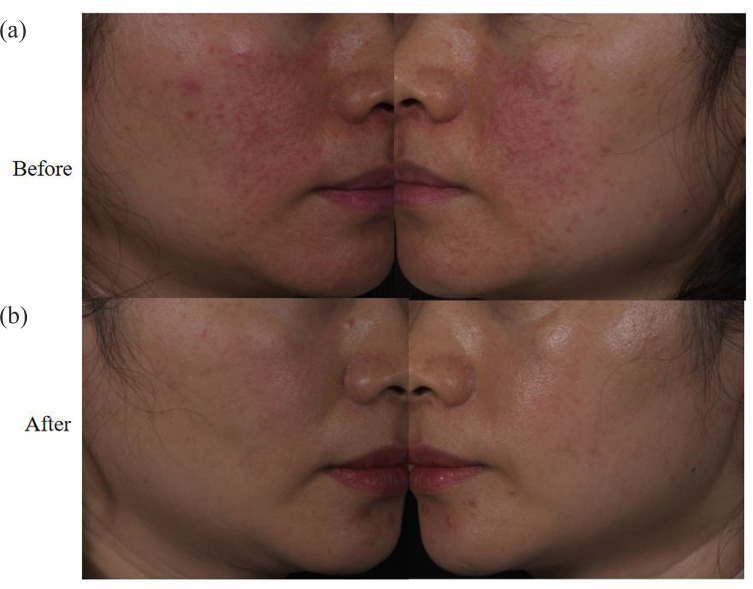
Among all patients, fifty-seven patients achieved positive outcomes (Reduction > 50%), making the treatment efficacy rate 57/63 = 90.47%, six showed little improvement (Reduction 1–49%) in facial erythema and telangiectasia after treatment, failing to meet the evaluation standards ( Figures 1 and 2 ).
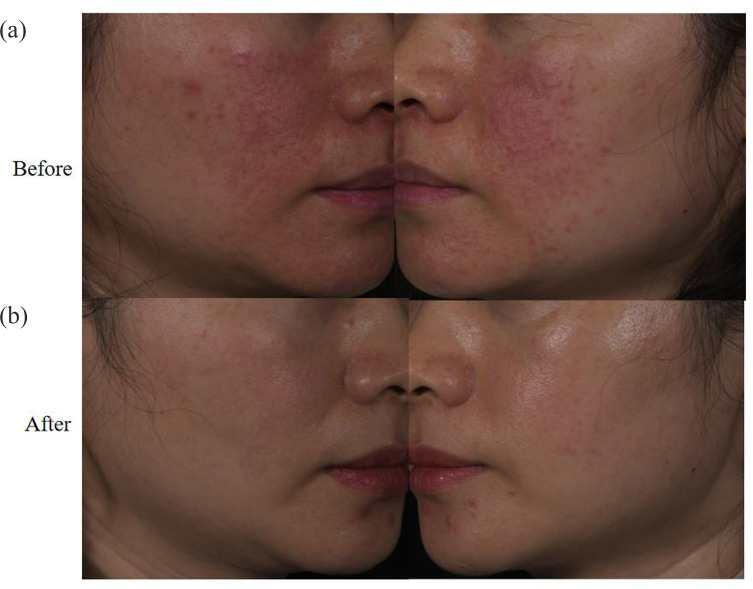
Figure 1 Photographs of changes of erythematotelangiectatic rosacea of a participant. (a) facial erythema before treatment. (b) One month after six IPL treatment sessions.受试者治疗前后面部红斑照片对比(6次IPL后1个月)。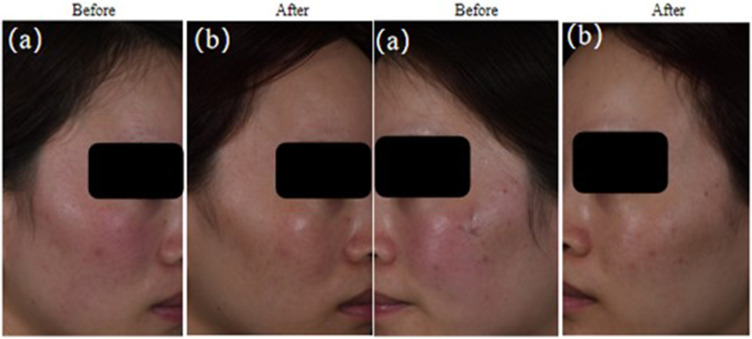
Figure 2 Photographs of changes of erythematotelangiectatic rosacea of a participant. (a) facial erythema before treatment. (b) One month after two IPL treatment sessions.受试者治疗前后对比(2次IPL后1个月),显示红斑减轻。
A total of 23 patients underwent VISIA imaging before and after each IPL treatment session. Statistical comparison between baseline and follow-up indicated a significant reduction in facial red area ( p <0.05) among participants who received narrow‑spectrum IPL treatment Figure 3a and b .
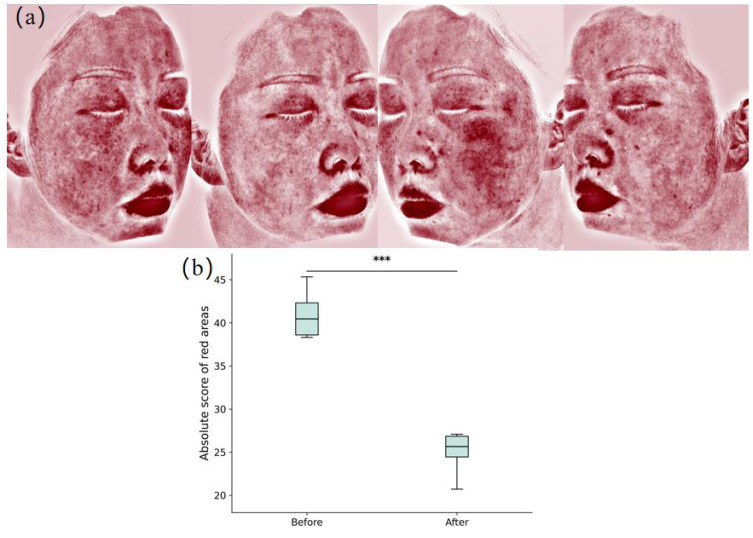
Figure 3 Changes in the VISIA red area after treatment.(a) Improvement in the VISIA red area after three IPL treatment sessions in a patient. (b) The absolute VISIA red area score was significantly decreased after treatment compared with before IPL treatment.VISIA红色区变化,治疗后绝对值评分显著下降。
All 63 patients showed clinically meaningful reductions in EAS levels post-treatment, with the difference being statistically significant ( p < 0.05) Figure 4a . Prior to subgroup analysis, we performed adjustment for baseline characteristics to ensure comparability between different groups (all p > 0.05). Given the limited sample size, subgroup analyses based on treatment sessions were performed for exploratory observation only. Both the single-session group and multiple-session group presented significant within-group reductions in post-treatment EAS scores. Similarly, significant EAS improvements were observed in both the ≤ 2-session and > 2-session groups, as well as in the ≤3-session and >3-session groups (all p < 0.01) Figure 4b–d . In this retrospective non-randomized cohort, higher treatment session counts were positively associated with a greater degree of EAS reduction.
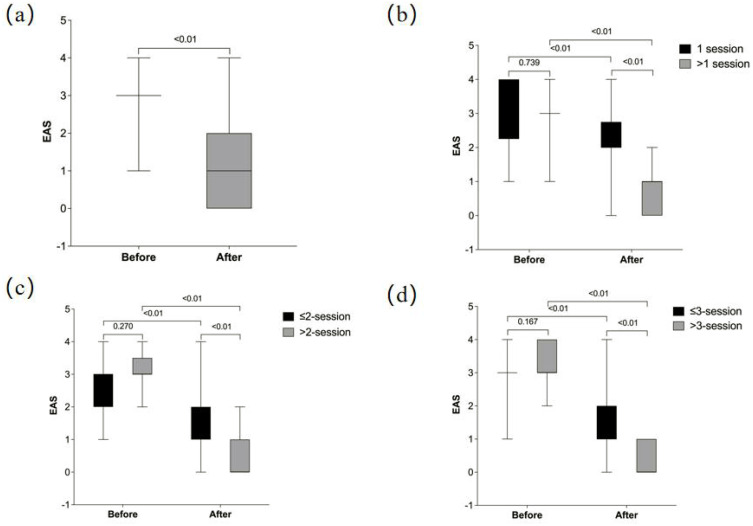
Figure 4 Changes in EAS Levels before and after IPL Therapy. (a) Changes in EAS Levels Before and After IPL Treatment in All Patients. (b) Comparison of EAS between patients receiving a single session (=1) and those receiving multiple sessions (>1). (c) Comparison of EAS between the ≤2-session group and the >2-session group. (d) Comparison of EAS between the ≤3-session group and the >3-session group.全体患者EAS分级治疗前后变化及不同治疗次数间比较。
The GAIS scoring results are as follows: 12 patients (19.0%) showed grade 3 points improvement (very significant improvement);42 patients (66.7%) showed grade 2 points improvement (significant improvement);5 patients (7.9%) exhibited grade 1 point improvement (some improvement) and 4 patients (6.3%) had grade 0 (no change).
100% treatment satisfaction rate was achieved (63/63).
No significant skin adverse reactions, including blisters, scarring, or post-inflammatory hyperpigmentation, were observed during treatment.
The etiology of erythematotelangiectatic rosacea can be categorized into congenital and acquired causes. 9 Photoelectric therapy has become a well-established treatment modality for erythematotelangiectatic rosacea. At present the most commonly used photoelectric treatment methods are PDL and IPL. 2 Narrow-spectrum IPL or PDL targets oxyhemoglobin, which absorbs light and generates heat, this heat then diffuses to the target vessel walls, achieving the effect of vascular destruction. We think narrow-spectrum IPL therapy has more possibilities. E. V. Ross conducted a split-face controlled study to compare the clinical efficacy of PDL versus narrow-spectrum IPL in the treatment of facial erythema. With treatments administered at one-month intervals, evaluation at 8 weeks after two treatment sessions revealed a 60% improvement on the narrow-spectrum IPL treated side, compared to a 45% improvement on the PDL treated side. Furthermore, IPL treatment can alleviate inflammatory reactions of barrier-related erythema such as rosacea by inhibiting mast cell (MC) degranulation. 10 Peiyu Jiang’s study revealed deep infiltration of inflammatory cells and significant MC degranulation in rosacea lesions, whereas these inflammatory responses were attenuated after IPL treatment. In vivo experiments demonstrated that IPL treatment effectively mitigated inflammatory responses in rosacea-like mouse models, evidenced by significant downregulation of MMP-9, KLK5, and cathelicidin expression, along with a reduction in MC degranulation rates. In vitro analyses further revealed that IPL exposure suppressed MMP-9, KLK5, and cathelicidin expression in P815 cells, consequently attenuating inflammatory cytokine release and inhibiting rosacea-like inflammatory pathways. 11 Importantly, Wen X demonstrated IPL may reduce blood vessels by immunohistochemistry staining of CD31 in rosacea-like mouse skin. In addition, skin stratum corneum and keratinocyte permeability were improved by IPL with 530–650 and 900–1200 nm. 12 These findings suggest that the photobiomodulation effects of IPL may contribute to the improvement of rosacea.
In 2015, Wesley J. Moy et al demonstrated the significant therapeutic potential of narrow-spectrum IPL for vascular lesions through animal models. Currently, there are many types available. 13 Tong Lin et al evaluated 45 patients with erythematous rosacea treated with narrow-band IPL of 500–600 nm. After three treatment sessions, the response rate was 68.9%, with an excellent response rate of 35.6%, and no severe adverse effects were observed. 14 Huihui Gan, et, al reported thirty patients with facial telangiectasia underwent five sessions of treatment with IPL of 500–600 nm at 4-week interval, 90% got more than 50% clearance post-treatment and among them 27% got more than 75% clearance. 6 E. V. Ross et al demonstrated that short-pulsed IPL (520–600 nm) significantly reduced facial erythema with a 60% improvement observed in five patients following two treatment sessions at 4-week intervals. 10 In a retrospective analysis of 100 patients treated with narrow-spectrum IPL (450–600 nm), Avdulaj Arminda et al reported significant clinical improvements, as evidenced by GAIS scores of 8.02 ± 0.84 for vascular lesions and 8.14 ± 0.9 for pigmented lesions. These findings suggest that narrow-spectrum IPL effectively targets vascular components. 15
The spectra of the intervals 555–950nm and 530–750nm are coincide with the absorption spectrum of oxyhemoglobin. It theoretically has significant advantage for treating facial erythema. In their randomized, split-face controlled study involving 32 female patients who received three IPL with 530–750 nm sessions treatments at one-month intervals, significant improvements were observed by Lene Hedelund on the treated side compared to the untreated control side, including telangiectasia ( P <0.001) and irregular pigmentation ( P <0.03). In contrast to our findings, the study by Hedelund et al employed a split-face design utilizing a 530–750 nm filter configuration with a more limited sample size. 16 Peter Bjerring et al compared the efficacy of 555–950 nm and 530–750 nm filters, demonstrating significant improvement in both diffuse erythema and irregular pigmentation. 5 The combined use of 530–750nm and 555–950nm narrow-band IPL filters synergistically enhances therapeutic efficacy by addressing the limitations of single-wavelength therapy. Specifically, the 530–750 nm spectrum closely aligns with the 542 nm and 577 nm absorption peaks of oxyhemoglobin, exerting a targeted effect on superficial cutaneous vessels while simultaneously improving mild pigmentary abnormalities. In contrast, the 555–950 nm wavelength penetrates deeper into the skin, focusing on the 577 nm absorption peak to target deeper telangiectasia that may be inadequately addressed by the shorter wavelength alone. This dual-wavelength strategy not only broadens the coverage of vascular lesions at different depths but also reduces the required energy density for each wavelength, minimizing potential tissue damage and improving treatment tolerance.
In our study, all patients were treated for erythematotelangiectatic rosacea using 555–950 nm filters and 530–750 nm filter combinations. The efficacy rate reached 90.47% (57/63). Additionally, after one session treatment, the fair, good or excellent clearance was obtained in 88.9% (56/63). This erythema improvement rate is significantly higher than those reported by Peter Bjerring, which were 72.7% (530–750 nm filters) and 35.0% (555–950 nm filters). 5 Our findings demonstrated a statistically significant reduction in the EAS before and after IPL treatment in all 63 patients ( p < 0.01). Furthermore, in this retrospective non-randomized cohort, a positive association was noted between the number of treatment sessions and the degree of EAS reduction ( p < 0.01). However, such observed association should be interpreted cautiously, as the number of treatment sessions was determined according to baseline disease severity and individual clinical response rather than by randomization. No definitive causal inference or strict dose–response relationship can be established based on the current study design.
A significant reduction ( p <0.05) in the facial red areas was shown by VISIA images after treatment. Only 23 cases had complete and standardized before-and-after VISIA imaging data with qualified image quality, therefore, the present results cannot be generalized to all patient populations. Our findings only indicate a trend toward improvement in VISIA red area among patients who received treatment.
There were six patients had little erythema improvement (reduction 1–49%) after IPL treatment. Among the six patients with suboptimal therapeutic outcomes, three received only a single IPL treatment session, two underwent two sessions, and one received three sessions. This suggests that the inadequate response may be associated with an insufficient number of treatments. Additionally, disease stability should also be considered as a potential contributing factor.
However, the GAIS scoring identified 4 patients with grade 0 in our study. These two evaluation methods are not equivalent, as the treatment efficacy rate incorporates more detailed and objective metrics, while the GAIS scoring remains inherently subjective. Although some patients showed no improvement, they expressed satisfaction with the overall enhancement in facial skin irregular pigmentation, resulting in a 100% satisfaction rate in this study. There were no skin adverse reactions were observed during treatment. This result suggests that narrow-spectrum IPL is safe for individuals with Fitzpatrick skin types III and IV.
To our knowledge, this represents the first large-sample follow-up study evaluating narrow-spectrum IPL with wavelength of 555–950 nm and 530–750 nm combinations for erythematotelangiectatic rosacea treatment. Our data demonstrate that narrow spectrum IPL with dual-wavelength combinations (530–750 nm and 555–950 nm) has unique advantages in the treatment of erythematotelangiectatic rosacea. Certainly, this study has certain limitations. Firstly, this is a retrospective study without a control group. Secondly, the inconsistent number of treatment sessions may lead to potential confounding factors. The current outcomes are preliminary exploratory clinical observation, further investigations with expanded sample sizes are warranted, and split-face controlled prospective clinical trials could be considered to enhance the reliability of findings.
声明:中文精读 · 仅供学术参考。内容来自公开文献检索,不代表本人观点,不构成诊疗建议。 医疗美容需在正规医疗机构由执业医师实施。
基于相同主题推荐 · 继续深挖
回顾性纳入63例红斑毛细血管扩张型玫瑰痤疮(ETR)中国患者,均采用555–950 nm与530–750 nm双滤光片窄谱IPL治疗。
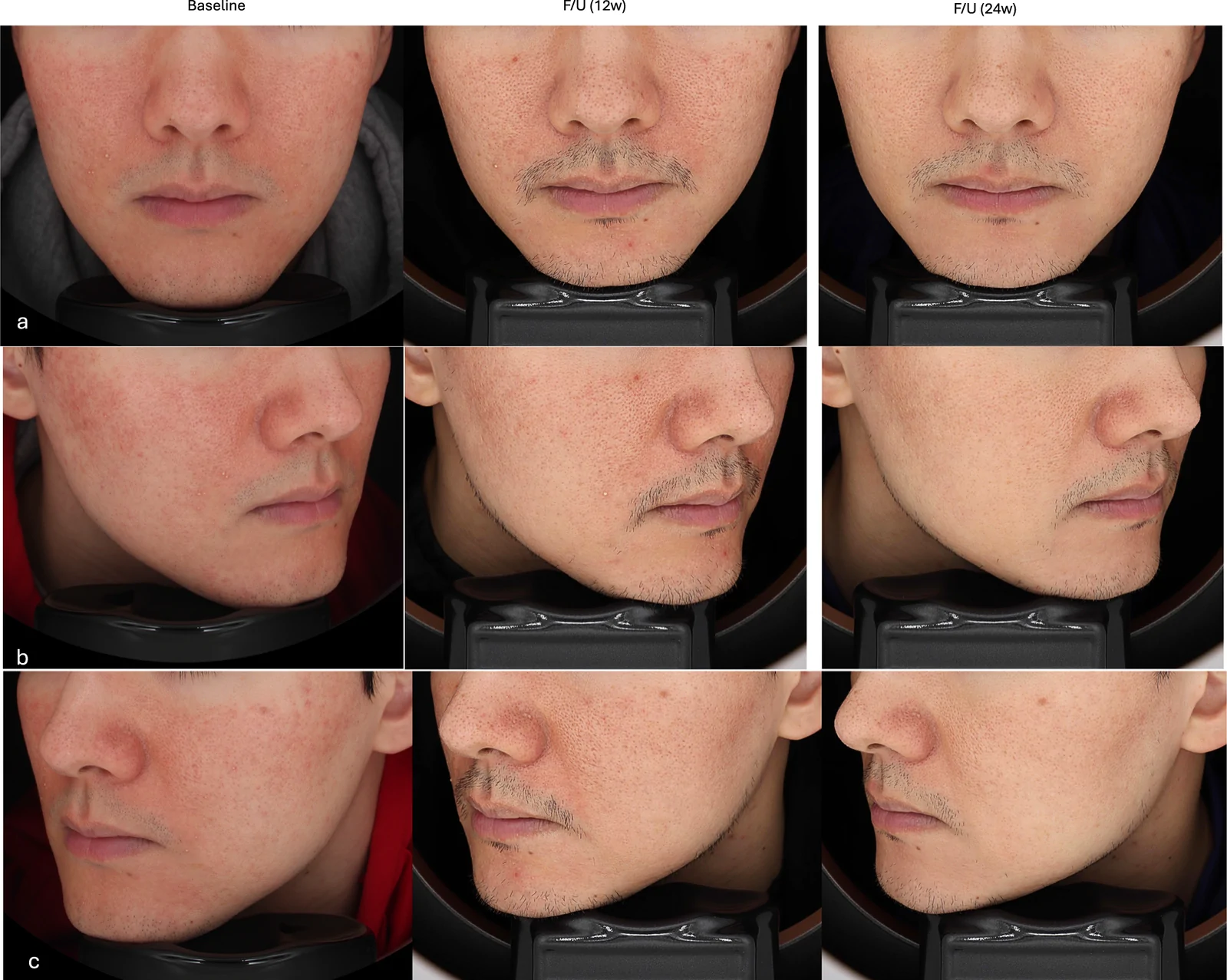
真实世界回顾性队列纳入50例临床诊断玫瑰痤疮成人,80%为女性、中位年龄33岁,多数(76%)为Fitzpatrick III型肤色。
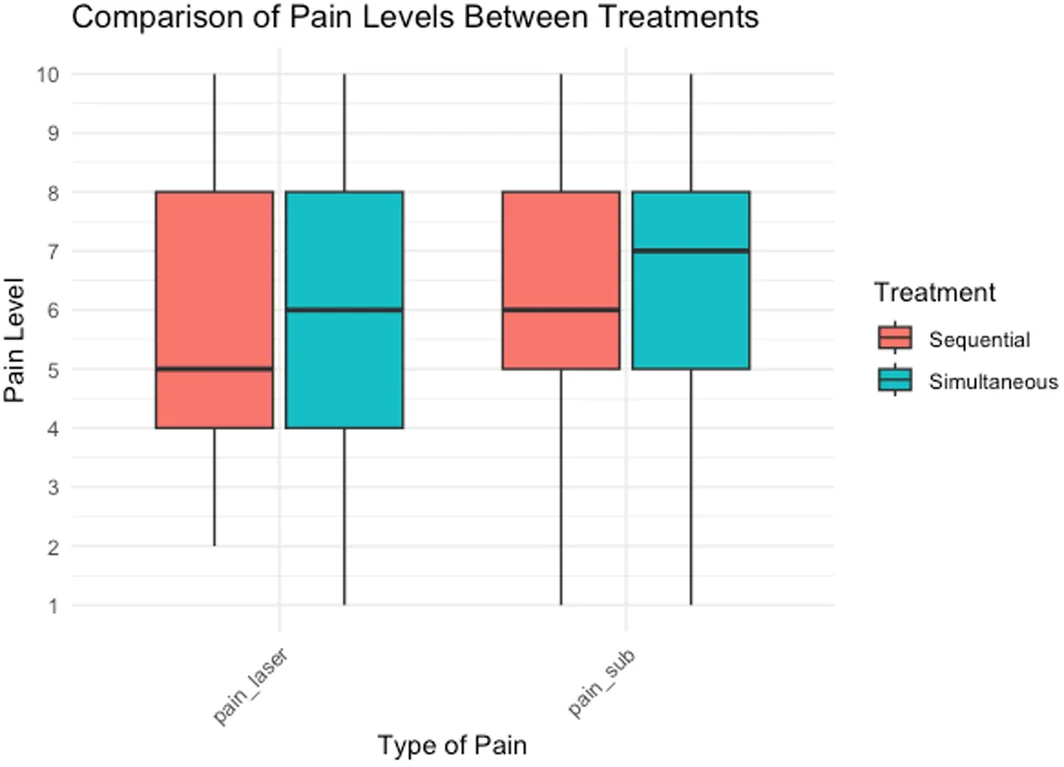
半脸对照研究,34 例中重度萎缩性痤疮瘢痕患者(男 24 / 女 10,平均 30.4 岁),每侧脸接受 3 次皮下剥离 + 点阵 CO₂ 激光(间隔 1 个月)。