单极射频低角度体内回缩(PILAR)技术辅助吸脂与皮肤收紧的临床观察
2026年10月10日25 min read
Plastic and Reconstructive Surgery Global Open
Plastic and Reconstructive Surgery Global Open
结论与实践要点
本研究为一项前瞻性观察性队列研究,纳入2022至2024年间接受吸脂的100例患者,分为常规射频辅助吸脂组(n=36)与塑料低角度体内回缩(PILAR)技术组(n=64),以能量投放总量、设备使用时长、并发症及BODY-Q满意度为主要结局。结果显示,PILAR组总能量投放(均值44195J对84939J)与设备使用时长(21.56分钟对39.63分钟)均显著低于常规组(P<0.001);血清肿发生率PILAR组为3.1%、常规组为25%(P<0.001);BODY-Q满意度PILAR组(95.6±6.1)高于常规组(78.9±7.8,P<0.001);两组吸脂量与体重下降幅度相近。
本研究为观察性设计,缺乏随机对照,且未采用弹性测量、超声或组织学等客观手段量化真皮重塑,结论应视为初步证据。文中提及的热诱导胶原变性、新生胶原等机制引自既往组织学研究,属机制性佐证而非本研究离体或体外验证。随访期6个月对早期与中期结局足够,但长期皮肤回缩的持久性(尤其减重后或50岁以上人群)仍待进一步研究。该技术依赖术者解剖判断与手感,学习曲线与可重复性需更多中心验证。
Background:Liposuction remains one of the most commonly performed aesthetic procedures; however, its ability to address skin laxity is limited. Energy-based technologies such as radiofrequency (RF) have been introduced to improve dermal contraction, though their reproducibility and efficiency remain variable. This study aimed to describe the plastic internal low-angular retraction (PILAR) technique and evaluate its clinical outcomes compared to conventional RF-assisted liposuction.
Methods:A prospective observational cohort study was conducted, including 100 patients undergoing liposuction between 2022 and 2024. Patients were divided into 2 groups: conventional RF-assisted liposuction (n = 36) and PILAR technique (n = 64). Outcomes included energy delivery, device use time, complications, and patient satisfaction measured using the BODY-Q scale.
Results:Baseline characteristics were comparable between groups. The PILAR technique was associated with significantly lower total energy use (44,195 J versus 84,939 J; P < 0.001). Weight reduction was similar between groups.
Conclusions:The PILAR technique was associated with improved efficiency, reduced complication rates, and high patient satisfaction while maintaining comparable contouring outcomes. These findings suggested that targeted subdermal RF delivery may enhance skin retraction and procedural safety. Further controlled studies are warranted to confirm its long-term efficacy and generalizability.
Question: Can the proposed plastic internal low-angular retraction (PILAR) technique enhance skin retraction and reduce postoperative dead space more effectively than conventional liposuction approaches?
Findings: The PILAR technique introduces a directional use of radiofrequency energy in liposuction. By angling the cannula vertically toward the muscle fascia through Camper and Scarpa layers, the method is designed to replicate the dermal fixation effect of Baroudi sutures. This technique leads to immediate and visible skin retraction, enhanced contour definition, and reduced fluid accumulation in the treated zones.
Meaning: The PILAR technique redefines energy-assisted liposuction by shifting the focus from fat removal to strategic dermal retraction. This angulated, fascia-targeted energy delivery offers plastic surgeons a reproducible and technologically driven method to enhance skin tightening and aesthetic results with fewer complications. It represents a significant advancement in the evolution of high-definition body contouring.
Liposuction, also known as liposculpture or suction-assisted lipectomy, is one of the most frequently performed aesthetic surgical procedures worldwide since its introduction in the 1970s. Its primary goal is the removal of localized subcutaneous fat deposits in areas such as the abdomen, flanks, thighs, buttocks, arms, and neck, which are often resistant to diet and exercise. 1 Over time, this technique has evolved from manual methods to sophisticated systems incorporating ultrasound, laser, and radiofrequency technologies, to improve both the efficiency of fat removal and skin retraction. 2
The tumescent technique, described by Klein in 1987, revolutionized liposuction by allowing the infiltration of large volumes of local anesthetic solution with epinephrine, thereby reducing bleeding, postoperative pain, and systemic complication risks. 3 This advancement enabled the performance of larger volume liposuctions with greater safety and lower hospitalization rates.
Despite its effectiveness, conventional liposuction has notable limitations, particularly regarding skin laxity. Proper skin retraction postliposuction depends on factors such as age, collagen quality, photodamage, anatomical location, and the volume of fat removed. 4 In patients with preexisting laxity or poor dermal elasticity, liposuction may result in unsatisfactory body contouring or excess redundant skin, leading surgeons to combine the procedure with techniques such as abdominoplasty or brachioplasty to optimize results. 5
In recent years, adjuvant technologies such as laser, ultrasound, and radiofrequency have been added to the surgical armamentarium to promote dermal contraction by inducing controlled subdermal heating. These modalities aim to stimulate neocollagenesis and improve tissue firmness without extensive skin excision. 6 However, the objective and reproducible efficacy of these technologies, as well as their safety in inexperienced hands, remains controversial. 7
Among the main limitations of conventional liposuction is the operator-dependent nature of results. Uneven cannula distribution may lead to depressions, surface irregularities, or asymmetries that compromise the aesthetic outcome. 8 Furthermore, liposuction is not indicated for massive weight reduction but rather for body contouring in patients with stable weight and realistic expectations. 9
Regarding complications, liposuction is not free of risks. Minor adverse events include ecchymosis, seromas, cutaneous irregularities, and sensory changes. However, major complications such as infection, skin necrosis, pulmonary thromboembolism, fat embolism, and even death may occur. 10 The incidence of such events increases significantly when more than 5 L of fat are removed in a single session or when multiple procedures are combined. 11
Recent studies report major complication rates ranging from 0.1% to 0.7%, depending on the volume of fat removed, procedure duration, and patient-related factors. 12 For this reason, various scientific societies have issued safety guidelines for liposuction, emphasizing appropriate patient selection, intraoperative monitoring, and close postoperative follow-up. 13
Given this context, the pursuit of techniques that not only allow for efficient fat removal but also simultaneous correction of skin laxity has gained great relevance. This article presented a proprietary technique of technology-assisted liposuction, which has shown satisfactory outcomes both in reducing adipose volume and improving visible skin tightening, all within safe and reproducible parameters.
A prospective observational cohort study was conducted; data were obtained from the first author’s patient medical records. The study covered the period from 2022 to 2024.
The study population included all patient records from the first author’s practice in Cali and Bogotá, Colombia, involving individuals who underwent liposuction between January 2022 and December 2024. All patients received a preoperative evaluation consisting of an assessment of the abdominal region and a discussion of their aesthetic goals.
Exclusion criteria included active smoking within 1 month before surgery, a medical history of rectus abdominis diastasis, use of a pacemaker or internal defibrillator, pregnancy, connective tissue disorders, significant comorbidities, and the need for excisional procedures.
Patients were divided into 2 groups: the control group included individuals who underwent liposuction using the conventional radiofrequency protocol for skin retraction, whereas the second group underwent liposuction using a modified radiofrequency protocol known as plastic internal low-angular retraction (PILAR).
There was no randomization process; patients were allocated to each group based on their surgical preferences. Selection criteria were identical for both techniques.
The operational database included the following variables:
Sociodemographic information: age, sex, height, weight, body mass index (BMI).
Clinical information: medical history; surgical procedure; volume of fat extracted; time of use of the radiofrequency over the patient, energy used in the patient per area, surgical complications, and patient satisfaction.
The PILAR technique is an advanced method of subdermal energy-assisted liposuction. Unlike conventional liposuction techniques that use parallel, retrograde movements, the PILAR technique introduces a perpendicular, angular vector directed from the superficial fascial layers (Camper and Scarpa fascia) toward the deep plane. The primary objective is to simulate the fixation point using technology alone (just as Dr. Baroudi described his suture points in abdominoplasty, we create points of union between fascial layers through subdermal radiofrequency); this effectively closes the potential dead space created by liposuction, enhances skin retraction, and reduces the risk of postoperative seroma. 14 The technique provides immediate contouring results and may be applicable to multiple anatomical areas. ( See Video [online] , which explains the markings and how to perform the PILAR technique after liposuction.)
补充视频 / 附件(原文未随文提供原图,可于出版方页面查看)gox-14-e7869-s001.mp4Video 1. This video explains the markings and how to perform the PILAR technique after liposuction.
The markings and incisions will depend on the specific body area being treated:
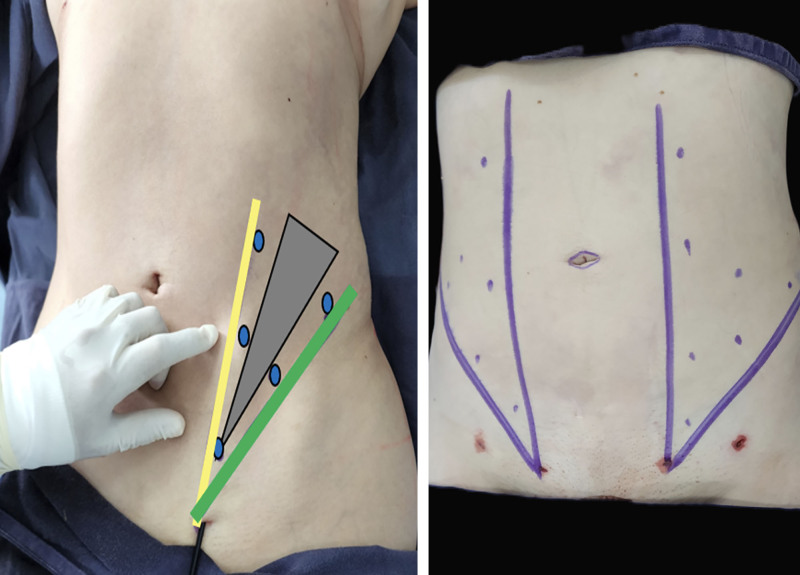
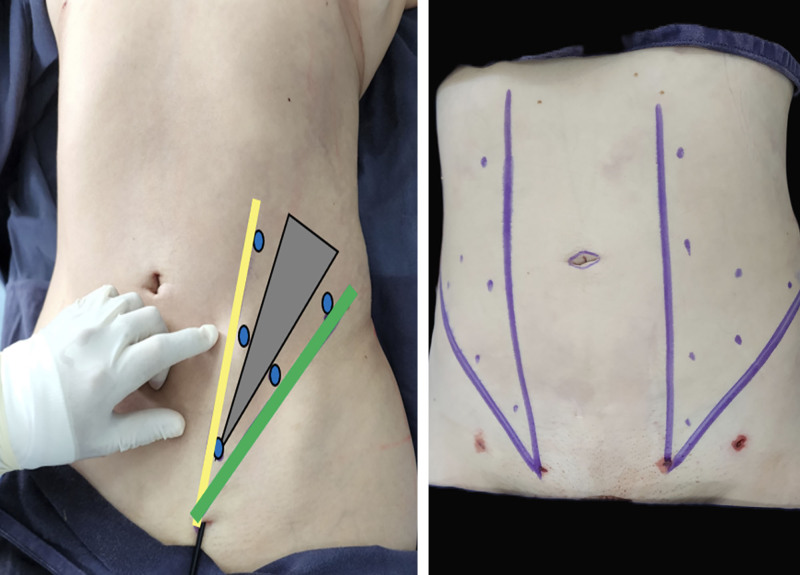
Fig. 1. Marking lines used as references to generate the points for the PILAR technique. Yellow line: External border of the rectus abdominis muscle. Green line: Insertion of the external oblique muscle at the level of the iliac crest in the abdominal region. Blue circles: Points for the application of radiofrequency heat. Gray triangle: Negative zone.PILAR技术参考标记线:腹直肌外缘、髂嵴附着点及射频施热点。
Proper tumescent infiltration improves energy conduction and ensures procedural safety. If a 1:1 aspiration-to-infiltration ratio has been achieved, further infiltration may not be necessary. However, if the infiltrated volume surpasses the aspirated amount, minimal reinfiltration is advised before energy delivery.
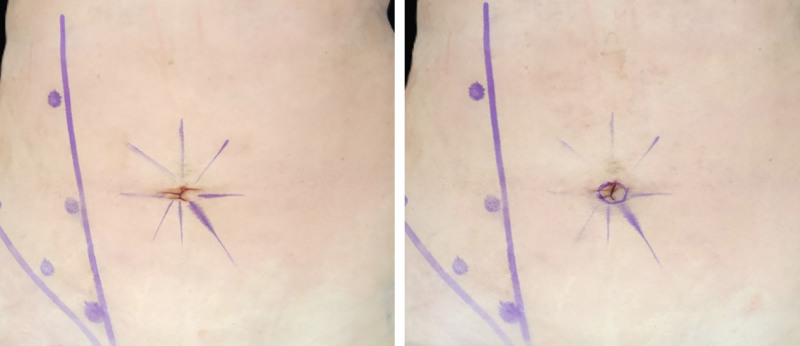
Fig. 2. Markings in the umbilical area, simulating sun rays radiating around the navel.脐周标记,模拟以脐为中心的放射状布点。
Following fat emulsification and deep plane liposuction, the PILAR technique is executed at each premarked point. The procedure was performed using a monopolar subdermal radiofrequency device, equipped with a 4mm×30cm body cannula. Energy delivery was standardized at 50 watts, with a target temperature of 50 °C, monitored intraoperatively through an integrated temperature sensor located at the tip of the cannula to ensure controlled thermal effect and safety.
The radiofrequency cannula tip is inserted perpendicularly into the superficial fascial plane between the Camper and Scarpa fascia. Subsequently, the handpiece is angled upward to direct energy toward the muscle fascia, thereby replicating the mechanical effect of Baroudi sutures. Thermal energy is applied at discrete points approximately 5 cm apart within the negative zone, strictly maintaining consistent cannula angulation to achieve uniform tissue contraction and skin retraction. The procedure continues until clinical endpoints are noted: the “bubbling sign” is detected through palpation and corresponds to the sensation of small bubbles forming beneath the skin, indicating adequate molecular mobilization and thermal stimulation of the tissue; the “popcorn sign” is an auditory phenomenon characterized by discrete popping sounds, suggesting interaction of radiofrequency energy with residual fluid and confirming tissue readiness. Upon reaching either of these endpoints, the surgeon should allow the system to stabilize at the target temperature before proceeding.
The procedure is deemed complete when uniform retraction is achieved across the negative zone, as evidenced by visible skin contraction and enhanced natural contouring. ( See figure, Supplemental Digital Content 1 , which displays [A] an image demonstrating the absence of retraction when cannula angulation is not performed and [B] an image illustrating the significant retraction achieved when the cannula is angled, resulting in effective marking of the negative zone [arrow], https://links.lww.com/PRSGO/E988.)
To mitigate the risk of perforation, especially during the angulation maneuver, several strategies are employed:
To achieve circumferential retraction around the umbilicus, we use the following access points:
The radiofrequency cannula is directed toward the umbilical stalk, which is palpated with the contralateral index finger. Retraction is achieved through retrograde energy delivery while angling the cannula laterally and caudally. This maneuver is repeated through each port to achieve a concentric retraction vector (Fig. 3 ).
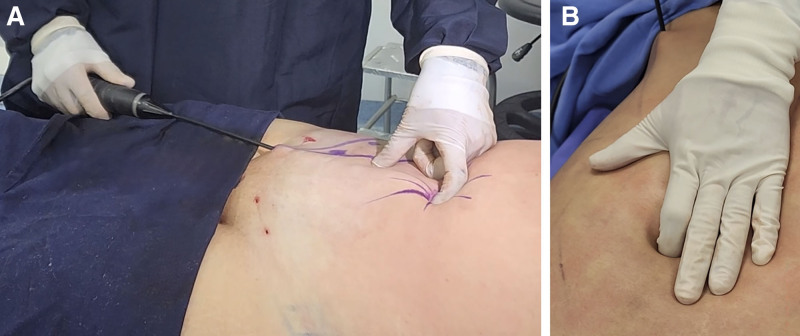
Fig. 3. Surgical access to the lower umbilical region through the pubic ports. A, Image depicting the entry port for approaching the lower part of the umbilicus through the pubic ports. B, The tip of the cannula should be directed toward the central umbilical region, palpated with the free hand’s index finger, and pushed toward the side to be opened (retrograde).经耻骨入路进入脐下区域的操作示意(A入路、B套管方向)。Device parameters for umbilicoplasty: Power, 45 watts; temperature, 45 °C.
The control group underwent the same fat emulsification and liposuction protocol as the intervention group. However, instead of receiving the PILAR technique, subdermal radiofrequency was administered to the abdominal regions in accordance with the manufacturer’s guidelines to achieve appropriate skin retraction.
Both groups received standard postoperative instructions including use of compression garments for 6 weeks and a minimum of 10 manual lymphatic drainage sessions starting 24 hours after surgery, additionally received radiofrequency therapy starting on postoperative day 1, performed daily for 10 days, using a 448 khz radiofrequency with capacitive and resistive modes. Each session lasted approximately 45 minutes, covering the treated areas following the manufacturer’s recommended parameters. Follow-up appointments were scheduled at 10 days, 3 months, 6 months, and 1 year to assess recovery and outcomes.
To evaluate the success of the intervention, results were comparing the follow-up results and the energy required to archive the retraction goals. Patient satisfaction was assessed by analyzing changes in BODY-Q scale scores presurgery versus postsurgery, providing a measure of satisfaction with the outcomes of the procedure.
Informed consent (surgical procedure, use of images and use of data for research) was signed before surgery by each patient; anyone could refuse to participate in the study or to withdraw consent to participate at any time. This research was done according to the Declaration of Helsinki. This study has approbation of the quality and care clinic bioethics committee.
Descriptive statistics were employed to show the patient information results. To demonstrate differences between preoperative versus postoperative skin laxity Student t tests were used. The level of significance for the P value was less than 0.05. Jamovi statistical software (The jamovi project, Australia; version 2.5; Retrieved from https://www.jamovi.org), was used for both univariate and multivariate analyses.
A total of 100 patients were included, with 64 undergoing the PILAR liposuction technique and 36 treated with the conventional method. The mean age of participants was 32.4 years (SD = 5.9). The mean initial BMI was 25.3 kg/m 2 (SD = 2.08), with no statistically significant differences between groups in terms of demographic or anthropometric variables, both groups had a similar lipoaspirate volume, ranging between 2100 and 2800 cm 3 , with no significant differences between them (Table 1 ).
Table 1. Demographic and Anthropometric Data
| Variable | Control Group (n = 36) | PILAR Group (n = 64) | t Test and P |
|---|---|---|---|
| Age (y) | 31.28 ± 5.87 | 32.98 ± 5.90 | t = −1.390 P = 0.168 |
| Initial BMI (kg/m 2 ) | 25.69 ± 1.95 | 25.04 ± 2.13 | t = 1.528 P = 0.130 |
| Weight at 6 mo (kg) | 58.61 ± 4.36 | 58.85 ± 5.40 | t = −0.229 P = 0.819 |
Weight reduction was observed progressively during the follow-up period, but no statistically significant differences were found between groups at any of the postoperative time points ( P > 0.05). The use of energy and device time were significantly lower in the PILAR group compared to the conventional group (PILAR group mean: 44,195 J; conventional group mean: 84,939 J; P < 0.001). Mean device use time was 21.56 minutes (SD = 5.5) in the PILAR group versus 39.63 minutes (SD = 12.3) in the conventional group (Table 2 ).
Table 2. Operative Parameters and Energy Use
| Variable | Control Group (n = 36) | PILAR Group (n = 64) | t Test and P |
|---|---|---|---|
| Device time (min) | 39.63 ± 12.36 | 21.56 ± 5.51 | t = 10.075 P < 0.001 * |
| Total energy (J) | 84939.97 ± 28128 | 44195.38 ± 8873 | t = 10.714 P < 0.001 * |
| Energy abdomen (J) | 48390.83 ± 16604 | 19158.98 ± 3491 | t = 13.608 P < 0.001 * |
The incidence of seroma was 11% overall but disproportionately distributed: 25% in the conventional group versus only 3.1% in the PILAR group (odds ratio [OR] = 0.09, χ 2 = 11.3, 95% CI = 0.01–0.47; P < 0.001). No differences were observed in the occurrence of fibrosis between groups (OR = 1.13; χ 2 = 0.009, 95% CI = 0.09–12.9; P = 0.922, Table 3 ).
Table 3. Surgical Complications
| Variable | Control Group(n = 36) | PILAR Group(n = 64) | OR, CI, and P |
|---|---|---|---|
| Seroma (%) | 25% (n = 9) | 3.1% (n = 2) | OR = 0.0995% CI = 0.01–0.47 P < 0.001* |
| Fibrosis (%) | 2.8% (n = 1) | 3.1% (n = 2) | OR = 1.1395% CI = 0.09–12.9 P = 0.922 |
Patient satisfaction measured in the BODY-Q scale was significantly higher in the PILAR group (mean 95.6 ± 6.1) compared to the conventional group (mean 78.9 ± 7.8), with statistical significance ( P < 0.001, Table 4 ).
Table 4. Patient Satisfaction
| Variable | Control Group(n = 36) | PILAR Group(n = 64) | t Test and P |
|---|---|---|---|
| BODY-Q (up to 100) | 78.9 ± 7.8 | 95.6 ± 6,1 | t = 11.8 P < 0.001 * |
The PILAR technique represents a refinement within energy-assisted liposuction, focused not on enhancing adipocyte emulsification but on maximizing dermal contraction, skin tightening, and patient-centered outcomes. This approach is consistent with a growing emphasis in body contouring on tissue preservation, controlled subdermal thermal stimulation, and long-term remodeling rather than aggressive fat extraction alone.
In this study, the PILAR technique was associated with lower total energy delivery and reduced seroma incidence while achieving high patient satisfaction and comparable reductions in body contour measures relative to conventional methods. These findings suggest that optimized thermal delivery, rather than maximal energy application, may play an important role in balancing efficacy and safety in energy-assisted body contouring.
The PILAR technique is rooted in the established understanding that thermal-induced dermal stimulation leads to collagen denaturation, fibroseptal network contraction, and tissue tightening. Histological studies support that when energy is delivered at subdermal levels, it activates fibroblast proliferation, increases vascular endothelial growth factor and transforming growth factor beta, and enhances neocollagenesis and elastogenesis, fundamental mechanisms for sustained skin retraction and improved tone 15 – 17
Ferguson demonstrated that subdermal monopolar radiofrequency applied to abdominoplasty flaps led to significant dermal thickening, even in previously devascularized tissue planes, confirming that subdermal energy deposition yields predictable histological and mechanical improvements. 18 Duncan’s work on radiofrequency during abdominal liposuction quantified measurable reductions in skin surface area, confirming the contractile potential of radiofrequency across broader treatment zones. 19
The reduction in total energy use and procedure duration observed with the PILAR technique is consistent with recent literature suggesting that focused energy delivery may improve efficiency without compromising outcomes. Hurwitz and Smith observed that radiofrequency-assisted liposuction, when combined with controlled aspiration, achieves greater skin tightening in overweight patients while minimizing trauma. 20 Our study confirms this benefit with lower total energy values and reduced complications such as seroma.
Indeed, one of the most clinically meaningful outcomes was the marked reduction in seroma incidence in the PILAR group (3.1%) compared to the conventional group (25%). This finding correlates with the literature, where excessive tissue manipulation, lymphatic disruption, and prolonged operative time have been linked to seroma formation. 21 By applying low-to-moderate energy only in key dermal planes and avoiding unnecessary passes, the PILAR technique appears to preserve the integrity of lymphovascular structures, limiting inflammatory exudation and postoperative fluid collections.
Helium plasma-assisted liposuction, another evolving technology, has also shown benefits in tissue retraction and skin remodeling in post–weight loss lipoabdominoplasty patients. 22 However, its cost, learning curve, and risk of deeper tissue burns remain considerations.
The high satisfaction scores observed in the PILAR group may be interpreted in the context of current patient expectations, which increasingly prioritize natural results, reduced downtime, and low complication rates. The mean satisfaction score of 9.56 aligns with previously reported outcomes in minimally invasive radiofrequency-based modalities. 23 , 24 To see the results in the patients, see Figures 4 – 7 .
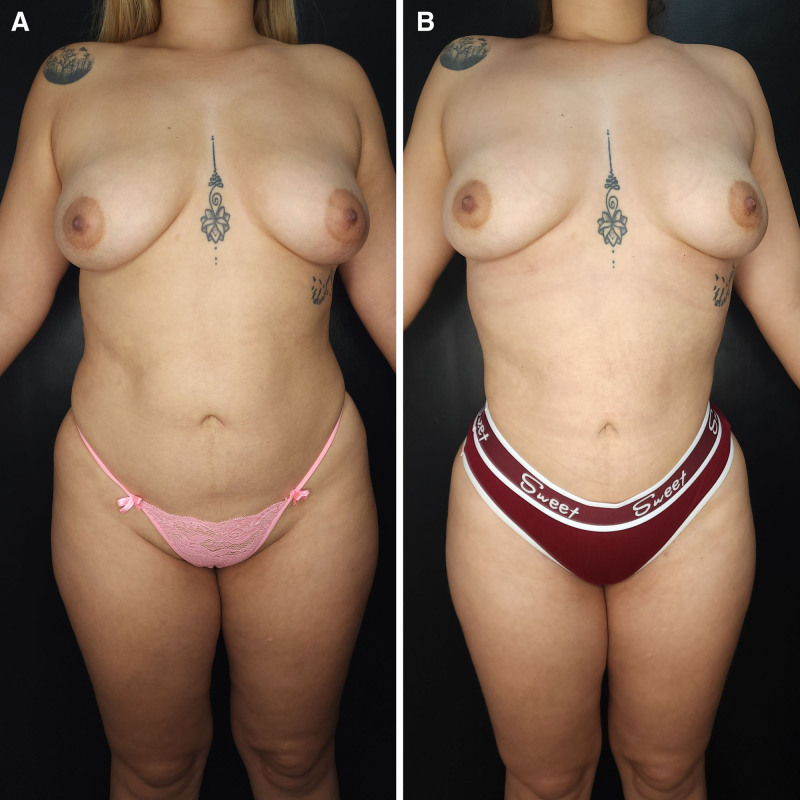
Fig. 4. Preoperative and postoperative frontal view of a female patient in her mid-30s undergoing the PILAR technique (6-mo follow-up). A, Preoperative image demonstrates abdominal adiposity with moderate skin laxity in the lower abdomen and flanks. B, Postoperative image at 6 months shows improved abdominal contour, reduction in flank fullness, and visible skin retraction with smoother transitions between treated areas.30余岁女性PILAR术后6个月正面对比,轮廓与皮肤回缩改善。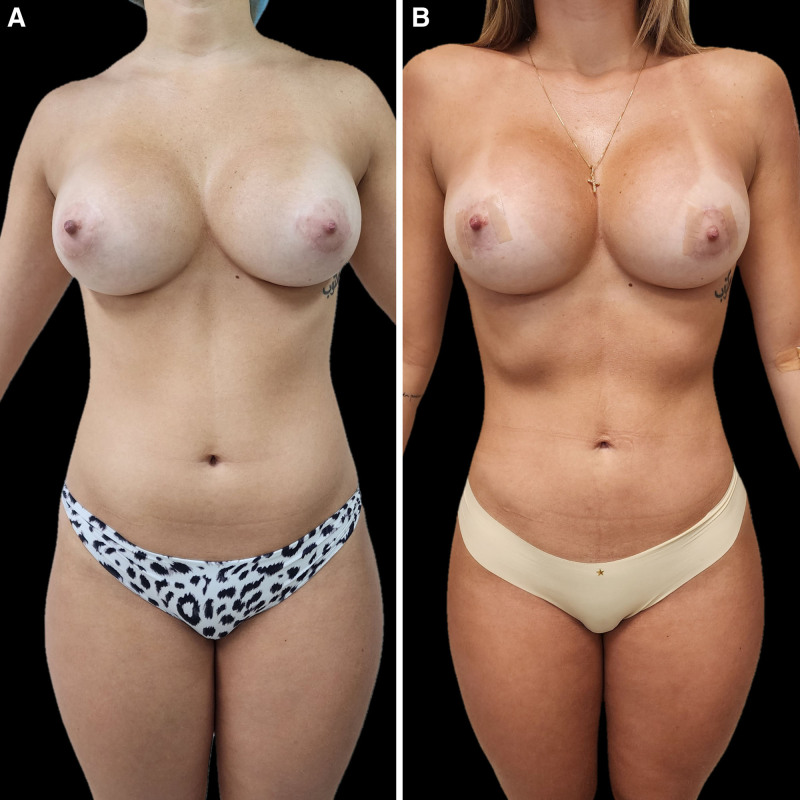
Fig. 5. Preoperative and postoperative frontal view of a female patient in her late 20s undergoing the PILAR technique (1-mo follow-up). A, Preoperative image demonstrates generalized abdominal fullness and mild to moderate skin laxity. B, Postoperative image at 1 month shows early improvement in waist definition, reduction in abdominal volume, and initial skin tightening, consistent with early postoperative changes.20余岁女性术后1个月正面对比,腰线初现、体积下降。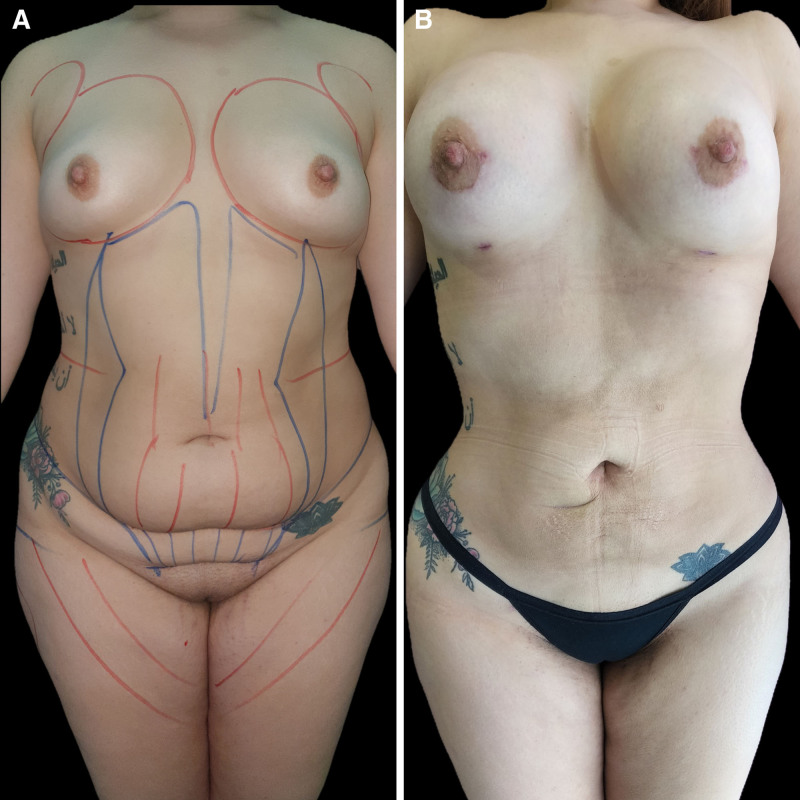
Fig. 6. Preoperative markings and early postoperative outcome of a female patient in her early 40s following the PILAR technique (1-mo follow-up). A, Preoperative image illustrates surgical planning with anatomical mapping of treatment zones, including central abdomen, flanks, and lower abdomen. B, Postoperative image at 1 month demonstrates reduction of adipose volume and early skin retraction, particularly in the lower abdominal region.40余岁女性术前标记与术后1个月早期对比。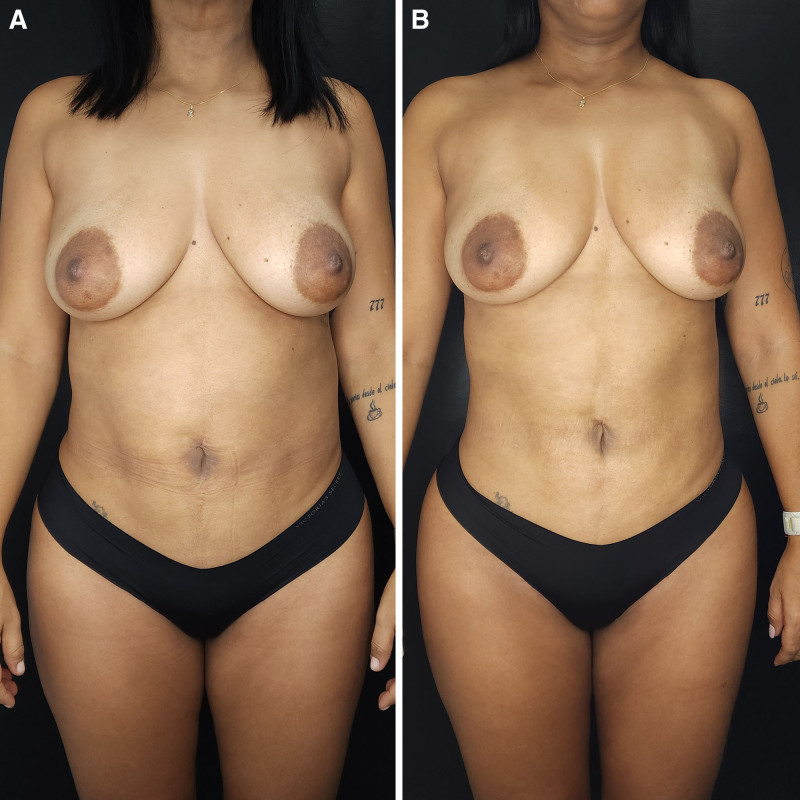
Fig. 7. Preoperative and postoperative frontal view of a female patient in her late 30s undergoing body contouring with the PILAR technique (6-mo follow-up). A, Preoperative image shows abdominal adiposity with mild skin laxity and loss of waist definition. B, Postoperative image at 6 months demonstrates improved abdominal contour, enhanced waistline definition, and more uniform skin contraction.30余岁女性术后6个月正面对比,腰线定义增强、收缩更均匀。Dayan et al demonstrated that combining fractional radiofrequency with bipolar subdermal energy yielded improvements in both patient-reported outcomes and objective skin elasticity scores, reinforcing the notion that energy profile optimization is central to satisfaction. 25 Additionally, the reduction in visible trauma and pain in the PILAR group likely contributed to improved subjective recovery experiences.
The PILAR technique integrates principles of anatomically guided and energy-efficient body contouring. In this study, it demonstrated favorable safety and outcome profiles, including reduced complication rates and shorter operative times while maintaining comparable contouring results; given these preliminary findings, the PILAR technique may represent a promising approach for the management of skin laxity in selected patients. Further controlled studies are warranted to confirm its long-term efficacy and reproducibility across broader populations. This aligns with molecular findings that showed that combined radiofrequency systems reduced the accumulation of advanced glycation end-products, while improving dermal elasticity in vivo. 26 These biochemical effects explain the qualitative improvements we observed in skin tone, texture, and resilience.
The PILAR technique also incorporates a quadrant-based energy mapping system, which ensures consistency in energy dosing while allowing the surgeon to adapt intensity based on preoperative skin laxity. This is akin to the safety and stratification models used in facial radiofrequency protocols, 26 but now adapted to larger body areas. It is important to clarify that ultrasound was not used as a primary guidance tool for cannula placement in this technique. Proper positioning of the radiofrequency cannula relies fundamentally on anatomical knowledge and tactile feedback within the superficial fascial plane. However, ultrasound may serve as a valuable adjunctive tool, particularly for less experienced surgeons, by providing real-time visualization of tissue planes and cannula location.
Moreover, although the follow-up period of 6 months is appropriate for early and intermediate outcome assessment, long-term skin contraction durability—especially in post–weight loss patients or those older than 50 years—requires further investigation.
This study presents some limitations. First, the data supporting the efficacy and safety of the PILAR technique are based on a prospective clinical observations and intraoperative outcomes, without the inclusion of a randomized control group. Second, objective measurements of skin elasticity, tissue adherence, or long-term dermal remodeling such as elastometry, ultrasound-based assessments, or histological confirmation were not performed, which limits the ability to quantify the biological effects described. Finally, although the technique appears reproducible and adaptable across various anatomical regions, further multicenter studies with larger sample sizes are needed to validate its generalizability and refine technical parameters.
The PILAR technique integrates principles of anatomically guided and energy-efficient body contouring. In this study, it was associated with favorable safety and clinical outcomes, including reduced complication rates and shorter operative times while maintaining comparable contouring results. These findings suggest that the PILAR technique may represent a promising approach for the management of skin laxity in selected patients. However, given the observational design of this study, further controlled and long-term investigations are warranted to validate its efficacy, reproducibility, and broader applicability.
The authors have no financial interest to declare in relation to the content of this article.
补充视频 / 附件(原文未随文提供原图,可于出版方页面查看)gox-14-e7869-s002.pdf
声明:中文精读 · 仅供学术参考。内容来自公开文献检索,不代表本人观点,不构成诊疗建议。 医疗美容需在正规医疗机构由执业医师实施。
基于相同主题推荐 · 继续深挖
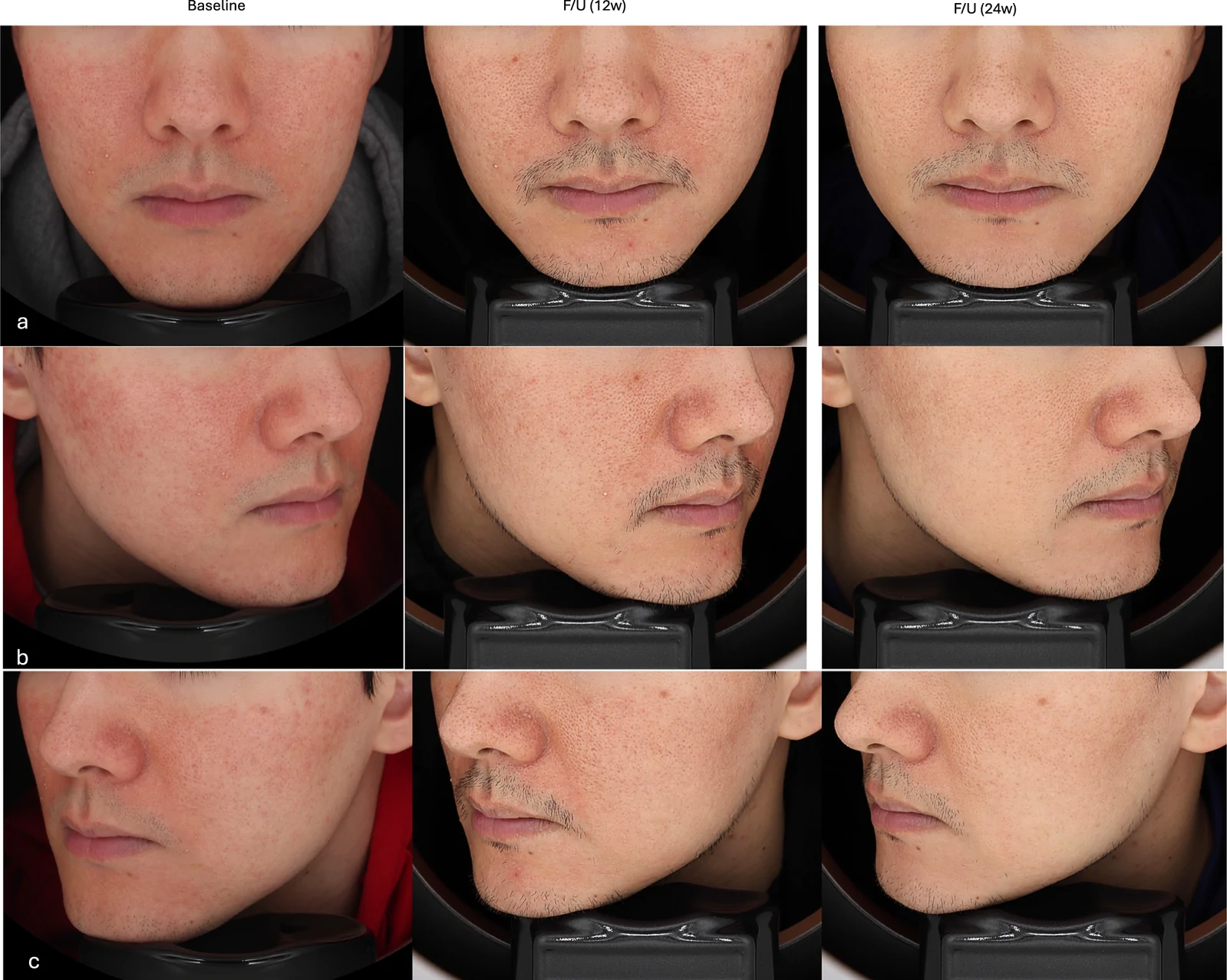
真实世界回顾性队列纳入50例临床诊断玫瑰痤疮成人,80%为女性、中位年龄33岁,多数(76%)为Fitzpatrick III型肤色。
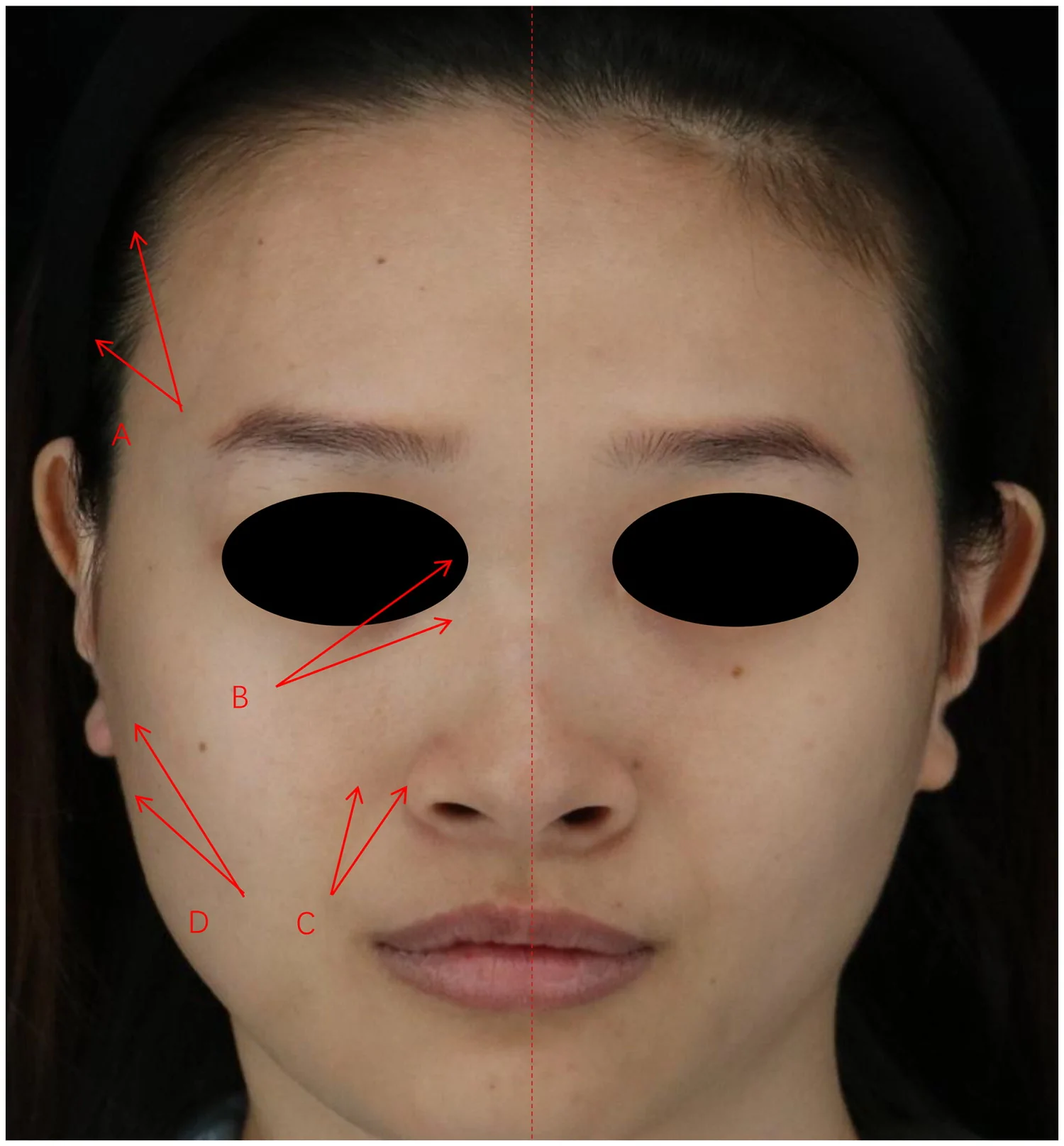
病例系列纳入3名面部皮肤松弛伴容量缺失的年轻女性(24–26岁),采用序贯方案:单次单极射频(Thermage CPT,900发,深度4.5–5.0mm)后1个月起行2次多层PLL
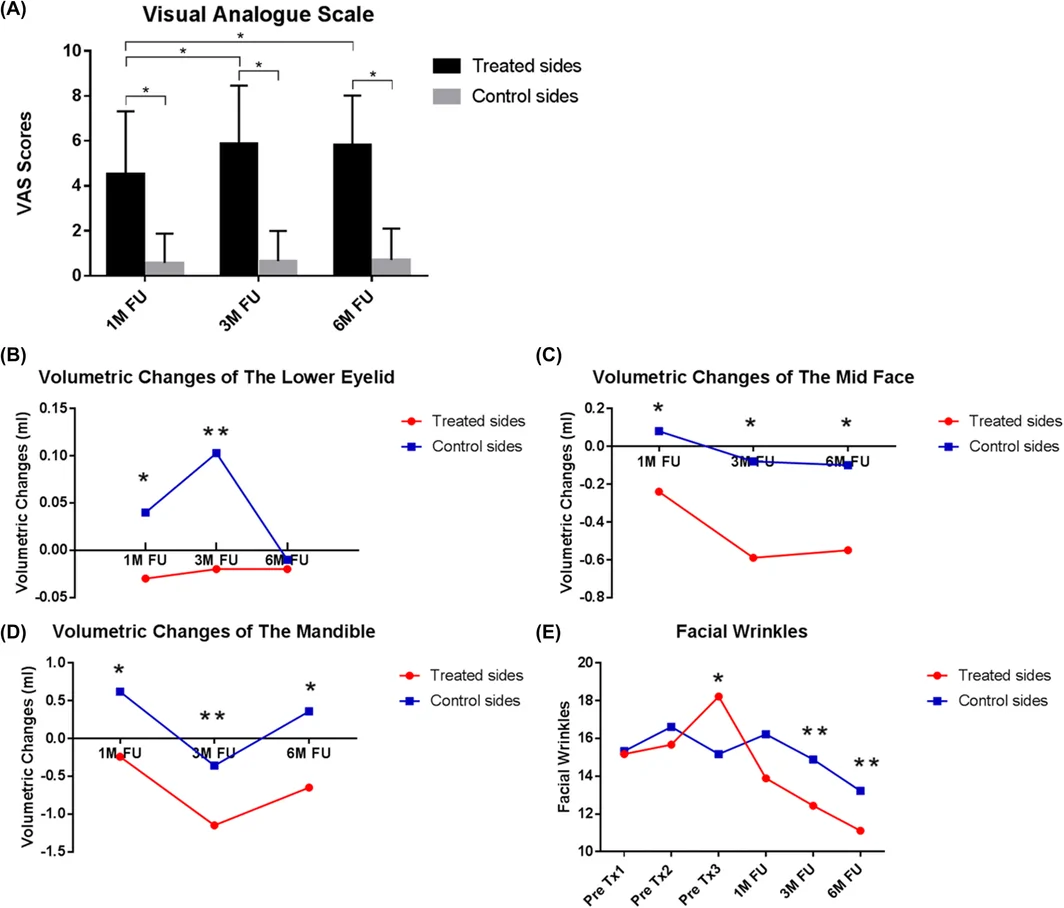
研究设计:前瞻性、随机、半脸自身对照,21例入组、18例完成随访(女17/男1,年龄30–63岁,平均47.6岁),接受3次治疗、间隔1个月,随访至末次治疗后6个月。