外用丰容霜改善快速减重后面部体积与皮肤健康:12周前瞻性临床研究
2026年10月13日35 min read
Journal of Cosmetic Dermatology
结论与实践要点
本研究为发表于 Journal of Cosmetic Dermatology 的前瞻性、开放标签、单组临床研究(DOI: 10.1111/jocd.70681),在美国加州萨克拉门托地区Integrative Research Institute完成(2024年11月至2025年6月,经Allendale机构审查委员会批准),由产品厂商Image Skincare资助。背景是GLP-1受体激动剂与GLP-1/GIP双激动剂所致的快速减重可伴随皮下脂肪减少、胶原合成受抑与基质金属蛋白酶(MMP-1)活性增高,导致面部体积丢失与皮肤老化外观加重(原文称之为「Ozempic face」)。原文纳入35–65岁、近1年内自报快速减重达到或超过总体重10%(源于GLP-1激动剂、GLP-1/GIP双激动剂、减重药物、减重手术或其他减重行为)且存在至少2项皮肤改变(皮肤或颌线松弛、体积缺失、紧致度下降、鼻唇沟明显等)的健康成人。共288人接受筛选,33人入组,29人完成全部6次访视并纳入分析;平均年龄49±8岁,33人中2人为男性;减重来源以GLP-1受体激动剂(15例,均为司美格鲁肽)与GIP/GLP-1双激动剂(9例,均为替尔泊肽)为主,其余为减重手术(5例)、其他减重药物(1例)与其他减重行为(3例)。干预为多成分外用丰容霜(Vol.U.Lift,Image Skincare)每日两次涂抹于清洁的面部、颈部及颌线皮肤,并统一配发SPF75防晒霜。
方法学上,访视包括筛查、基线及第2、4、8、12周;采用VapoMeter测量经皮水分流失(TEWL)、Skin MoistureMeter SC测量皮肤水合、Cutometer MPA 580测量紧致度、黏弹性与净弹性,以VISIA PRIMOS行标准化面部摄影,并在基线、第4周与第8周使用Vscan Air CL超声测量面部皮肤至皮下的厚度,同时由皮肤科医生行皱纹严重度临床分级。统计分析采用Shapiro–Wilk检验正态性,组内比较用配对双尾t检验,p≤0.05为差异有统计学意义,数据以均值±标准误报告。
主要结果(皱纹与体积):第4周与第12周,皮肤科医生分级的皱纹严重度分别降低14.5%(p<0.001)与20.7%(p<0.001)。超声测量显示,面部颊部皮肤及皮下厚度在第4周增加17.3%(p=0.04)、第12周增加20.1%(p=0.015)。中文解读:这是本研究中较贴近「面部体积」的客观证据,但超声厚度的增加既可能来自皮肤含水量与细胞外基质改善,也可能包含皮下脂肪体积变化,原文未对两者进行区分,因此将结果解读为「面部饱满度的客观改善」时宜保留余地。
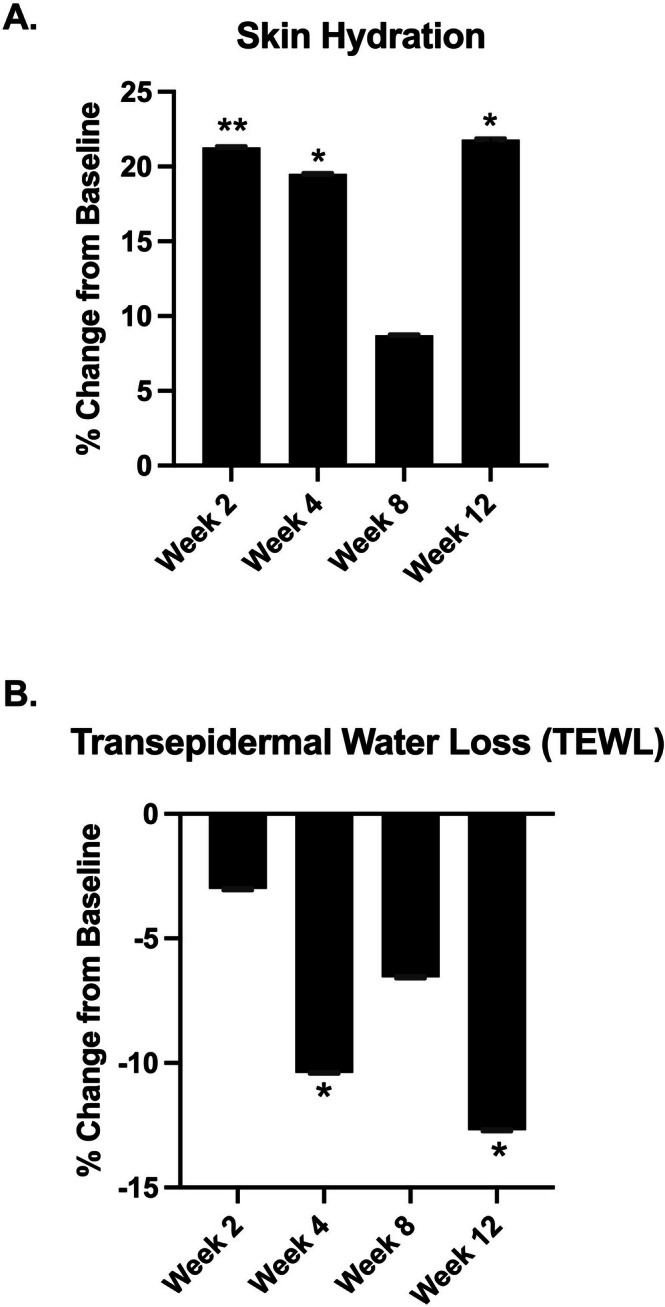
主要结果(皮肤生物物理指标与安全性):第12周多项指标较基线显著改善——紧致度+22.5%(p≤0.002)、净弹性+23.2%(p≤0.0002)、黏弹性+13.1%(p≤0.02)、皮肤水合+21.80%(p≤0.02,第2周+21.29% p≤0.01与第4周+19.50% p≤0.02亦显著)、TEWL第4周−10.39%(p≤0.02)与第12周−12.7%(p≤0.02)。第8周出现水合与弹性的相对低谷,原作者归因于季节环境波动及减重期细胞外基质重塑的短暂影响,并强调各时点数值仍高于基线。安全性方面,第12周时瘙痒、灼热、刺痛、色素减退、色素沉着的自评均为「无」,93%报告无红斑;整个研究期间无治疗相关不良事件。
中文解读(体重分层对内部效度的意义):体重变化分层分析显示,全队列12周平均减重仅1.68%(p=0.0135),且该显著性几乎完全由GIP/GLP-1双激动剂亚组(n=9,−3.87%,p=0.0282)驱动;GLP-1激动剂组(n=15,−1.15%,p=0.1522)、减重手术组(n=5,−1.09%,p=0.5665)与其他组(n=4,+0.54%,p=0.5356)体重均无显著变化。这意味着多数受试者在研究期间体重相对稳定,所观察到的皮肤改善更可能来自外用产品本身而非持续减重的混杂——这是原文论证其效应归因时重要的一项内部效度依据。
临床落地解读:对于以减重后面部老化为主诉的人群(GLP-1/GIP-GLP-1使用者、减重手术后者),该研究支持将「外用丰容联合屏障修护与严格防晒」作为基础辅助管理路径——每日两次涂抹面部、颈部及颌线,12周可观察到皱纹分级、超声厚度、弹性与水合的多维度改善。需同时明确其边界:本研究为单组开放标签设计,无安慰剂对照,观察者与受试者偏倚无法排除;产品含补骨脂酚、透明质酸、维生素C、虾青素、袋鼠爪(Anigozanthos flavidus)提取物与L-鸟氨酸等多成分,无法拆分单一成分的贡献;超声「增厚」的具体组织归属未明;原文明确指出本研究设计为「减重发生后干预」,能否在减重启动前预防性使用尚属未知。此类外用方案不能替代填充剂、紧肤类医学干预对明显体积缺失的处理。
局限性与证据边界:(1)样本量小(29例完成分析)、单组开放标签、无对照组,证据等级低于随机对照试验;(2)研究仅12周,长期效果与停用后的维持时间未知;(3)方案中同时使用防晒霜,虽原作者论证防晒霜不影响面部体积,但联合干预使效应拆分不纯;(4)研究由产品厂商资助,第一作者披露多家药企顾问或讲者关系,存在潜在利益相关性;(5)受试者以女性为主,男性数据极少(2例)。综合而言,在该小样本单组研究中,每日两次使用多成分丰容霜配合防晒与快速减重后面部老化的多项主客观指标改善相关,且耐受性良好;可作为辅助手段考虑,但其相对安慰剂的净效应仍需随机对照试验确认。
BackgroundGLP‐1 receptor agonists (GLP‐1) and dual GLP‐1/gastric inhibitory polypeptide (GIP) agonists emerged in recent years to promote weight loss. By reducing subcutaneous fat, collagen, and overall structural support of the skin, rapid weight loss can lead to visual face aging.
AimsThis study investigates the synergistic effect of a multi‐ingredient topical that acts on different skin levels to treat facial aging in individuals experiencing rapid weight loss from GLP‐1 and GIP/GLP‐1 agonist use.
Patients/MethodsIn this 12‐week study, 33 participants from the Sacramento region were given the same topical volumizing cream (Vol.U.Lift, Image Skincare). Participants had 6 visits: screening, baseline, weeks 2, 4, 8, and 12. Tolerability assessments, facial photography, and measurements of hydration, elasticity, and wrinkles were acquired.
Results29 subjects completed all study related procedures. Wrinkle severity appearance decreased at week 4 (14.5%, p < 0.001) and 12 (20.7%, p < 0.001). The ultrasound based skin and subcutaneous thickness increased at week 4 (17.3%, p = 0.04) and 12 (20.1%, p = 0.015); TEWL decreased at week 4 (10.39%, p ≤ 0.02) and 12 (12.7%, p ≤ 0.02); Skin hydration increased at week 2 (21.29%, p ≤ 0.01), 4 (19.50%, p ≤ 0.02), and week 12 (21.8%, p ≤ 0.02); Firmness (22.5%, p ≤ 0.002), viscoelasticity (13.1%, p ≤ 0.02) and net elasticity (23.2%, p ≤ 0.0002) increased at week 12.
ConclusionsThe use of a topical volumizing cream improved the appearance of facial volume, wrinkles, and biophysical characteristics in participants who had undergone rapid weight loss primarily due to GLP‐1/GIP agonist use.
Keywords: elasticity、facial aging、GIP、GLP‐1、volume、weight loss、wrinkles
1
GLP‐1 receptor agonists (GLP‐1) and dual GLP‐1/Gastric inhibitory polypeptide (GLP‐1/GIP) agonists have emerged in recent years to promote weight loss [ 1 ]. These medications promote the secretion of insulin, inhibit glucagon production from pancreatic α‐cells, and decrease pancreatic β‐cell apoptosis [ 2 ]. This mechanism of action allows suppression of appetite, delay in gastric emptying, and reduction in calorie intake, with FDA approvals for the treatment of conditions such as type 2 diabetes and obesity. Furthermore, enhanced GLP‐1 secretion in patients with bariatric surgery is thought to counteract the antagonistic effect of exendin‐9 that decreases insulin secretion [ 3 ]. The weight loss that can occur secondary to a GLP‐1/GIP agonist can be observed as early as 8–12 weeks [ 4 , 5 ]. However, there is a growing recognition that significant weight loss may accelerate the visual signs of facial aging such as the decrease in adipose tissue volume, skin elasticity, and the thickness and density of collagen fibers [ 6 , 7 , 8 ].
Although numerous studies have investigated the promising benefits of rapid weight loss induced by GLP‐1 receptor agonists [ 4 , 9 , 10 , 11 ] there is a lack of research examining the implications of such rapid weight loss on skin aging. Notably, while many products are available to individually target aspects of skin aging [ 12 , 13 , 14 , 15 , 16 ], there is a lack of topical formulations that combine proven ingredients to specifically address the accelerated skin aging associated with GLP‐1–induced weight loss.
Significant weight loss, such as from the use of GLP‐1/GIP agonists, is associated with both loss of muscle and connective tissue along with the loss of fat [ 17 ]. In turn, there is an associated loss of facial volume as a result of fat, muscle, and connective tissue loss that has been termed “Ozempic Face” [ 18 ]. Collagen turnover, determined by the equilibrium between collagen production and breakdown, occurs between 80 and 120 days [ 19 ]. Studies suggest that GLP‐1 acts on the receptor of adipose‐derived stem cells (ADSCs) [ 20 ], thereby inhibiting collagen synthesis and increasing the activity of matrix metalloproteinases (MMP‐1), resulting in a net loss of elastic and collagen [ 21 , 22 , 23 ]. Overall, the sudden loss of facial volume can accelerate the visible signs of aging. While there are many traditional topical therapies that are available for skin aging, such as the retinoids and antioxidants, they typically do not lead to volume restoration of face beyond the epidermis and the superficial dermis.
For example, superficial bakuchiol, hyaluronic acid (HA), and antioxidants have been shown to reduce the appearance of wrinkles, lead to more even skin tone, and boost resistance to oxidative stress [ 12 , 13 , 15 , 16 , 24 ]. While retinoids are well known for their ability to modulate skin aging superficially [ 25 ] their tolerability has led to alternative ingredients such as bakuchiol to be in demand [ 16 , 24 ]. With its relatively higher tolerability and retinol‐like properties to modulate genes that regulate extracellular matrix production and dermal‐epidermal junction, it enhances human fibroblast cell activity and inhibits the expression of MMP‐1 [ 24 , 26 ]. Antioxidants such as vitamin C and astaxanthin, especially when used in tandem, are also highly sought after due to its ability to prevent the acceleration of skin damage from reactive oxygen species (ROS) by neutralization [ 27 , 28 ]. Vitamin C is a potent antioxidant that is most commonly found in the form of L‐ascorbic acid or Tetrahexyldecyl ascorbate and provides protection against environmental and UV‐induced ROS. In addition to activating transcription factors that aid in the synthesis and stabilization of collagen, it prevents collagen degradation by promoting the synthesis of the MMP‐1 tissue inhibitor [ 29 , 30 ]. Similarly, astaxanthin exhibits antioxidant comparable capabilities in mitigating oxidative stress. By scavenging singlet oxygen produced by UV rays in the epidermis and dermis, astaxanthin prevents the UV‐induced skin deterioration. HA is well known for its anti‐aging effects and humectant properties, which enhance skin hydration and volume [ 28 , 31 ]. At specific molecular weights, HA can penetrate the stratum corneum, modulate epidermal cell interactions, and increase the skin's water‐holding capacity [ 28 , 32 ].
Several ingredients work on cell types that are found deeper in the skin as well. Extracts of Anigozanthos flavidus (kangaroo paw) have been shown to improve fibroblast production of tenascin‐X, collagen, and elastin production in fibroblasts, and a clinical study with its use topically showed improvement in signs of facial aging and skin elasticity [ 33 ]. The amino acid L‐ornithine has been shown to reduce lipolysis in adipocytes, thereby leading to more retention of fat in the adipocytes (patent WO2015167557A1, Publication Date: 2015‐11‐05, Application Number: US2014/036233, Filing Date: 2014‐04‐30). Although both ingredients have cell culture support for addressing deeper layers in the skin, there have been few published clinical studies.
The aim of this clinical trial is to investigate the synergistic effect of a topical cream containing multiple ingredients that are known to work on different cell types in various levels of the skin in individuals experiencing rapid weight loss due to use of GLP‐1 and GIP/GLP‐1 agonists. The goal of the study was to assess whether topical use can counteract the visible loss of volume and the signs of aging.
2
2.1
This 12‐week prospective, open‐label clinical study was conducted in the Sacramento region at Integrative Research Institute from November 2024 to June 2025. Inclusion criteria included healthy men and women between the ages of 35 and 65 years old experiencing skin changes from a history of self‐reported rapid weight loss within the last 1 year (defined as equal to or greater than 10% of total body weight) due to one of the following: GLP‐1 agonist, GIP/GLP‐1 receptor co‐agonists, alternative weight loss promoting drugs, gastric bypass surgery, or other weight loss promoting behavior. Individuals must also experience at least two skin changes including sagging skin or jawline, loss of volume, loss of firmness, prominent nasolabial folds, marionettes, wrinkles under the eye area, loose skin, dullness or lack of radiance, ashy skin, uneven skin, or blotchiness. Exclusion criteria included pregnant or breastfeeding people, individuals who modified their hormonal‐based contraception within 3 months prior to study entry, current tobacco smokers, individuals with an excess of a 10 pack‐year history of tobacco use, prisoners, or subjects who were otherwise unable to provide consent, individuals with insulin‐controlled Type 1 diabetes mellitus or who had an autoimmune photosensitive condition, a known genetic condition associated with decreased collagen production, a skin disease that would affect assessments per investigator, or any known allergy to any of the ingredients in the study product were also excluded. Individuals with a history of malignancy besides localized skin cancer within the past year, on chemotherapy or immunotherapy, or use redlight therapy within 1 month of joining the study or were unwilling to refrain from it during the duration of the study were excluded. Individuals who had undergone facial cosmetic procedures or treatments within the past 6 months or those who were unwilling to refrain from such procedures during the duration of the study were excluded. Additionally, individuals who had used topical antioxidant ingredients such as vitamin C or vitamin E, topical pigment reducing agents such as hydroquinone, azelaic acid, tranexamic acid, kojic acid, topical retinoids, bakuchiol, or any topical vitamin A derivative within 2 weeks before enrollment or those unwilling to undergo a washout period prior to enrollment were also excluded from participation. Individuals were also instructed to undergo a four‐week washout on oral collagen supplementation. This study protocol was approved by the Allendale Institutional Review Board (Protocol # IRI24_08_ImageSkin_OTIS on November 14, 2024) and all subjects provided signed informed consent prior to participation.
2.2
All participants were allocated to receive the study intervention (Vol.U.Lift from Image Skincare) in unmarked tubes along with a commercially available sunscreen (SPF 75). Participants were instructed to apply the study product twice daily to clean skin in the morning and evening, including the neck and jawline. Participants were also given a product log to record daily usage as instructed until their follow‐up visit.
2.3
This study comprised a total of six in‐person clinic visits, which included: screening and consent, baseline assessment, and follow‐up visits at weeks 2, 4, 8, and 12. TEWL, skin hydration, and skin elasticity and firmness were assessed using the VapoMeter (Delfin Technologies, Kuopio, Finland), Skin MoistureMeterSC (Delfin Technologies, Kuopio, Finland), and Cutomer MPA 580 (Courage+Khazaka electronic GmbH, Germany), respectively, at the baseline and follow‐up visits. Facial photographs were captured through the VISIA PRIMOS (Canfield, Parsippany, NJ). At baseline, week 4, and week 8, an ultrasound device (Vscan Air CL, GE Healthcare, Chicago, IL) was used to measure the thickness of the skin from the epidermis to the subcutis. A clinical grading of facial wrinkles was also conducted at each visit starting from baseline.
2.4
The Shapiro–Wilk test was utilized to assess normality, and baseline comparisons were performed using paired, two‐tailed Student's t ‐tests. Statistical significance was set at p ≤ 0.05. Results were presented as mean with standard error of mean. Data were compared within each group against baseline and then between the two treatment groups at each time point. For data visualization, Prism v. 10 (GraphPad Software LLC, San Diego, CA, USA), a statistical graphing software, was used. The data was analyzed as observed when accounting for dropouts.
3
A total of 288 people were assessed for eligibility and 33 participants were enrolled (Figure 1 ). A total of 29 participants completed all visits and were included in the analysis. Two participants were lost to follow‐up, where one was using a GLP‐1 agonist and one had bariatric surgery. From the 2 participants who withdrew due to time limitations, one was on a GLP‐1 agonist and one was on a GIP/GLP‐1 co‐agonist. In total, there were 33 participants enrolled with an average age of 49 ± 8 years. Two subjects were male, and the rest of the subjects were female. The majority of participants were on a GLP‐1 agonist ( n = 15) or GIP/GLP‐1 co‐agonist ( n = 9). The rest of the subjects had bariatric surgery ( n = 5), alternate weight loss medication ( n = 1), or other weight loss promoting behavior ( n = 3). This is shown in Tables 1 and 2 . The most reported skin changes exacerbated due to the rapid weight loss were loss of volume, loss of firmness, and loose skin (Figure 2 ).
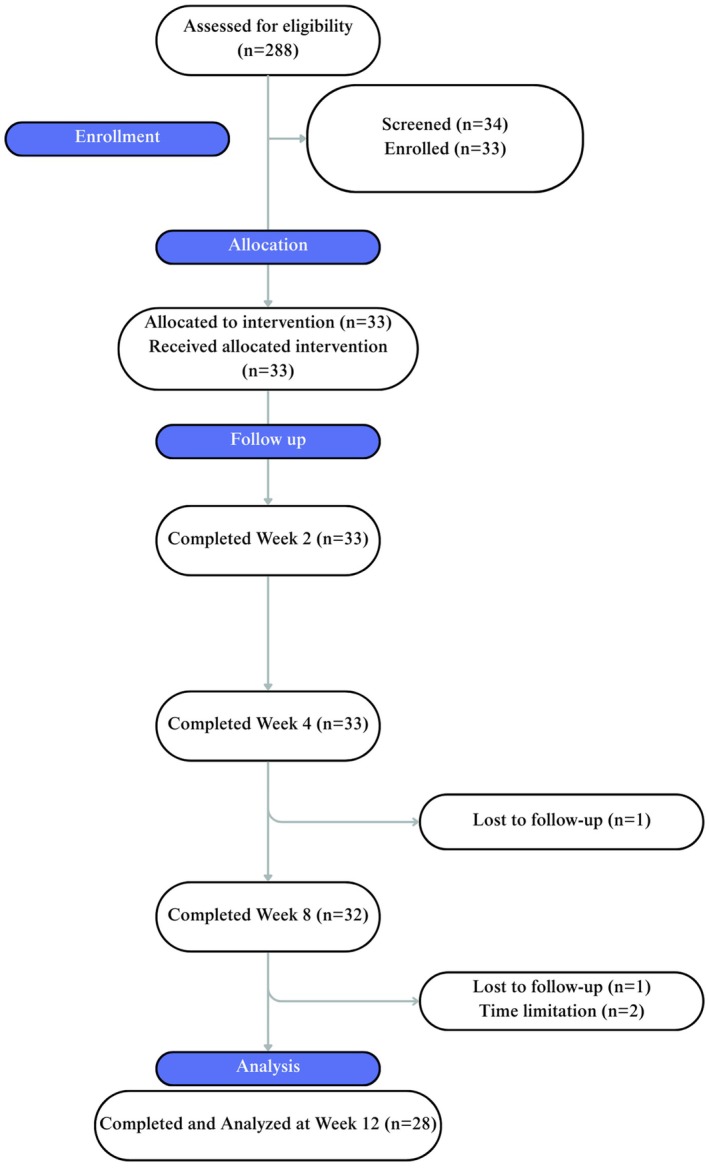
FIGURE 1 CONSORT diagram for clinical study.本临床研究的CONSORT流程图,显示288人筛选、33人入组、29人完成全部访视纳入分析的受试者流转情况。TABLE 1 Biologic medication induced weight loss demographics.
| Type | Duration | |
|---|---|---|
| GLP‐1 agonist ( n = 15) | Semaglutide | 5 months |
| Semaglutide | 11 months | |
| Semaglutide | 15 months | |
| Semaglutide | 24 months | |
| Semaglutide | 35 months | |
| Semaglutide | 5 months | |
| Semaglutide | 15 months | |
| Semaglutide | 17 months | |
| Semaglutide | 12 months | |
| Semaglutide | 15 months | |
| Semaglutide | 14 months | |
| Semaglutide | 13 months | |
| Semaglutide | 11 months | |
| Semaglutide | 18 months | |
| Semaglutide | 14 months | |
| GIP/GLP‐co‐agonist ( n = 9) | Tirzepatide | 12 months |
| Tirzepatide | 9 months | |
| Tirzepatide | 12 months | |
| Tirzepatide | 3 months | |
| Tirzepatide | 7 months | |
| Tirzepatide | 12 months | |
| Tirzepatide | 17 months | |
| Tirzepatide | 14 months | |
| Tirzepatide | 6 months |
TABLE 2 Etiology of non‐biologic medication induced weight loss (other).
| Type | Total ( n = 9) |
|---|---|
| Gastrectomy sleeve (bariatric) surgery | n = 5 |
| Other weight loss medication (topomax) | n = 1 |
| Other weight loss promoting behavior (diet) | n = 2 |
| Other weight loss promoting behavior (stress) | n = 1 |
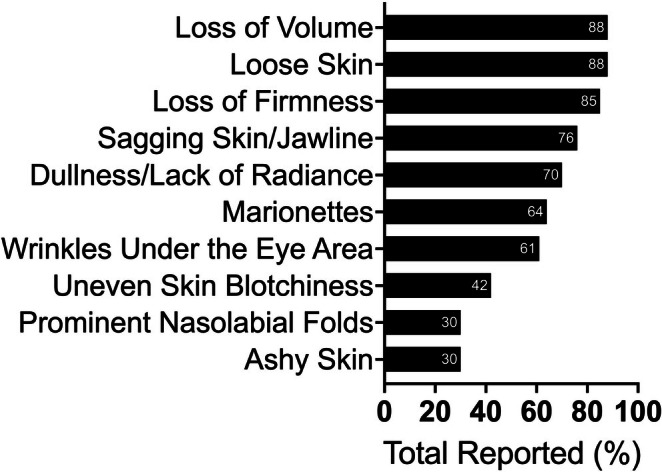
FIGURE 2 Subjective reports of skin changes exacerbated due to the rapid weight loss.受试者主观报告的、因快速减重而加重的皮肤改变分布,报告最多的是体积缺失、紧致度下降与皮肤松弛。3.1
Clinical grading of wrinkle severity is shown in Figure 3 . At weeks 4 and 12, there is a significant reduction in the dermatologist graded appearance of facial wrinkle severity by 14.5% ( p < 0.001) and 20.7% ( p < 0.001), respectively.
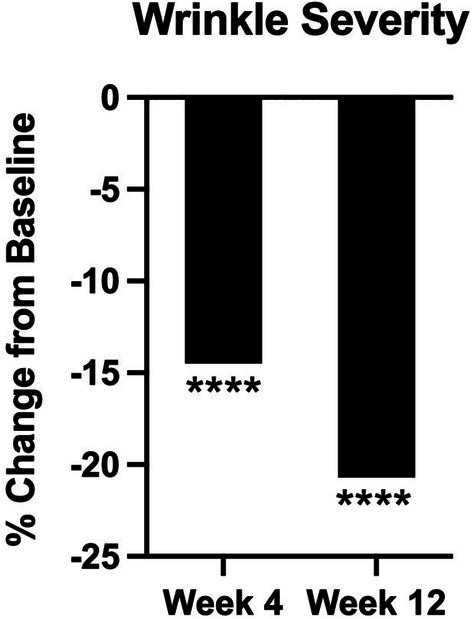
FIGURE 3 Percent change in clinical grading of wrinkle severity at weeks 4 and 12 compared to baseline. ****p ≤ 0.001.统计图:第4周与第12周临床皱纹严重度分级较基线的百分比变化;标注 ****p≤0.001。3.2
Ultrasound‐based thickness is shown in Figure 4 . At weeks 4 and 12, the ultrasound‐based thickness of facial cheek skin and subcutaneous fat increased by 17.3% ( p = 0.04) and 20.1% ( p = 0.015), respectively.
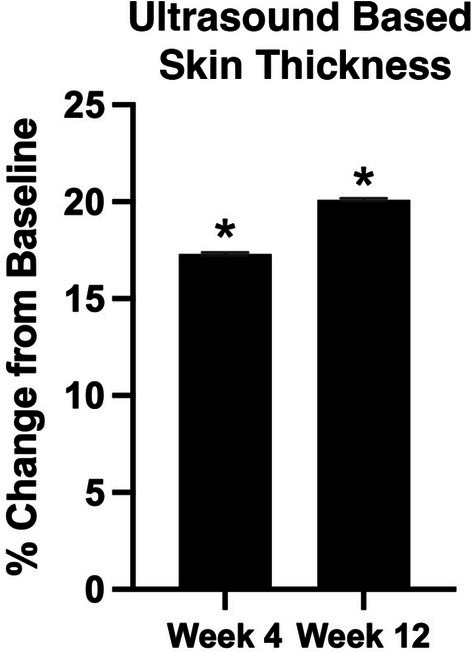
FIGURE 4 Percent change in ultrasound based facial skin and subcutaneous thickness at week 4 and week 12 compared to baseline. *p ≤ 0.05.统计图:第4周与第12周超声测量的面部皮肤及皮下厚度较基线的百分比变化;标注 *p≤0.05。3.3
Pliability/Firmness is shown in Figure 5A . There was a trending increase of 10.59% at week 8 ( p = 0.07) and a significant increase of 22.5% at week 12 ( p ≤ 0.002) when compared to baseline.
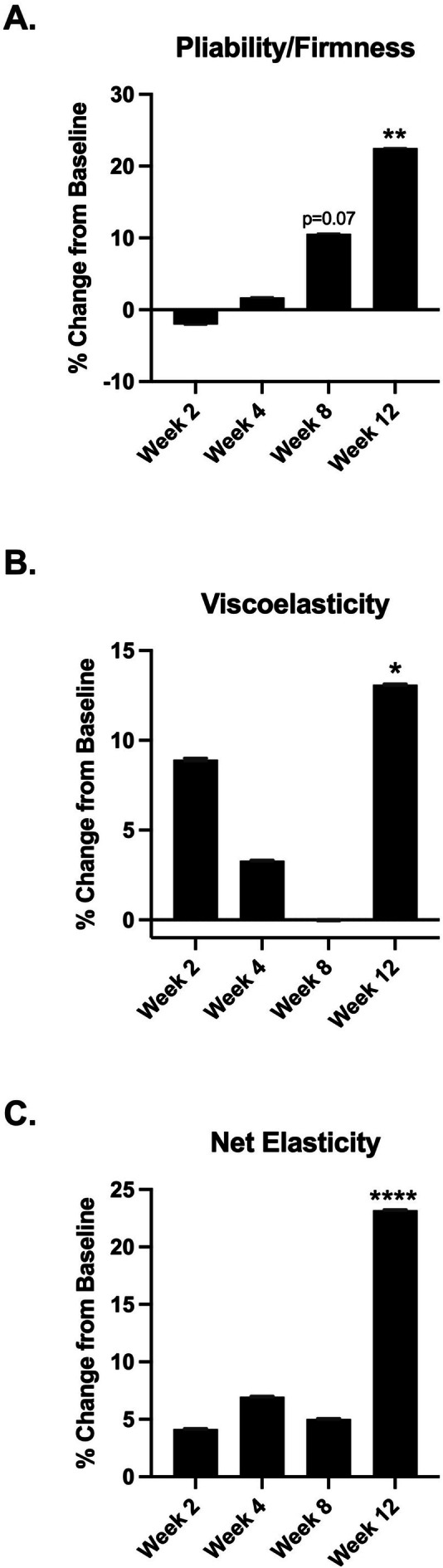
FIGURE 5 (A) Firmness percent change at week 2, week 4, week 8, and week 12 compared to baseline. (B) Viscoelasticity percent change at week 2, week 4, week 8, and week 12 compared to baseline. (C) Net elasticity percent change at week 2, week 4, week 8, and week 12 compared to baseline. *p ≤ 0.05, **p ≤ 0.01, ****p ≤ 0.001.统计图,含三个分图:(A) 紧致度;(B) 黏弹性;(C) 净弹性;均为第2、4、8、12周较基线的百分比变化;标注 *p≤0.05、**p≤0.01、****p≤0.001。3.4
Viscoelasticity is shown in Figure 5B . There was a significant increase of 13.1% at week 12 ( p ≤ 0.02) when compared to baseline.
3.5
Net Elasticity is shown in Figure 5C . There was a significant increase of 23.2% at week 12 ( p ≤ 0.0002) when compared to baseline.
3.6
Skin hydration is shown in Figure 6A . There was a significant increase of 21.29% at week 2 ( p ≤ 0.01), 19.50% at week 4 ( p ≤ 0.02), and 21.80% at week 12 ( p ≤ 0.02) when compared to baseline.
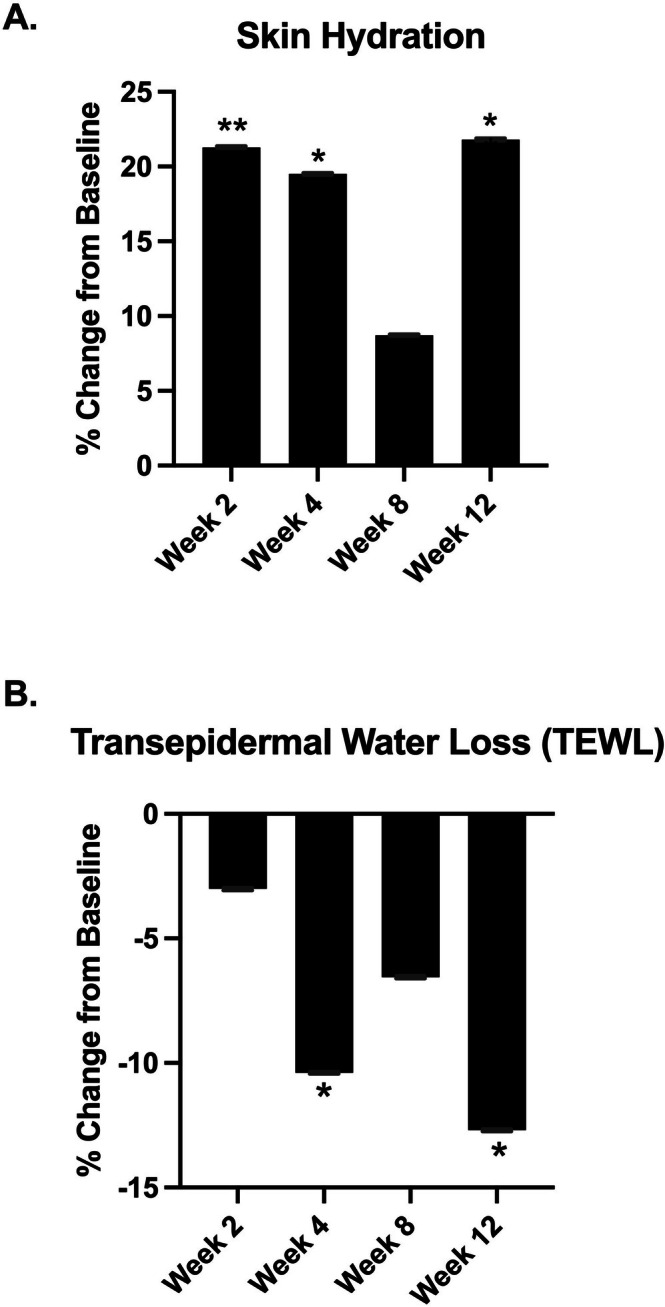
FIGURE 6 (A) Skin hydration percent change at week 2, week 4, week 8, and week 12 compared to baseline. (B) TEWL percent change at week 2, week 4, week 8, and week 12 compared to baseline. *p ≤ 0.05, **p ≤ 0.01.统计图,含两个分图:(A) 皮肤水合;(B) 经皮水分流失(TEWL);均为第2、4、8、12周较基线的百分比变化;标注 *p≤0.05、**p≤0.01。3.7
TEWL is shown in Figure 6B . There was a significant decrease of 10.39% at week 4 ( p ≤ 0.02) and 12.7% at week 12 ( p ≤ 0.02) when compared to baseline.
3.8
Subjective ratings of tolerability are shown in Table 4 . The 3‐point scale referred to “0” as none, “1” as mild, “2” as moderate, and “3” as severe. By week 12, 100% reported none to any itching, burning, stinging, hypopigmentation, or hyperpigmentation. 93% reported none to any redness at week 12.
3.9
Photographs of the participants are shown in Figures 7 and 8 .
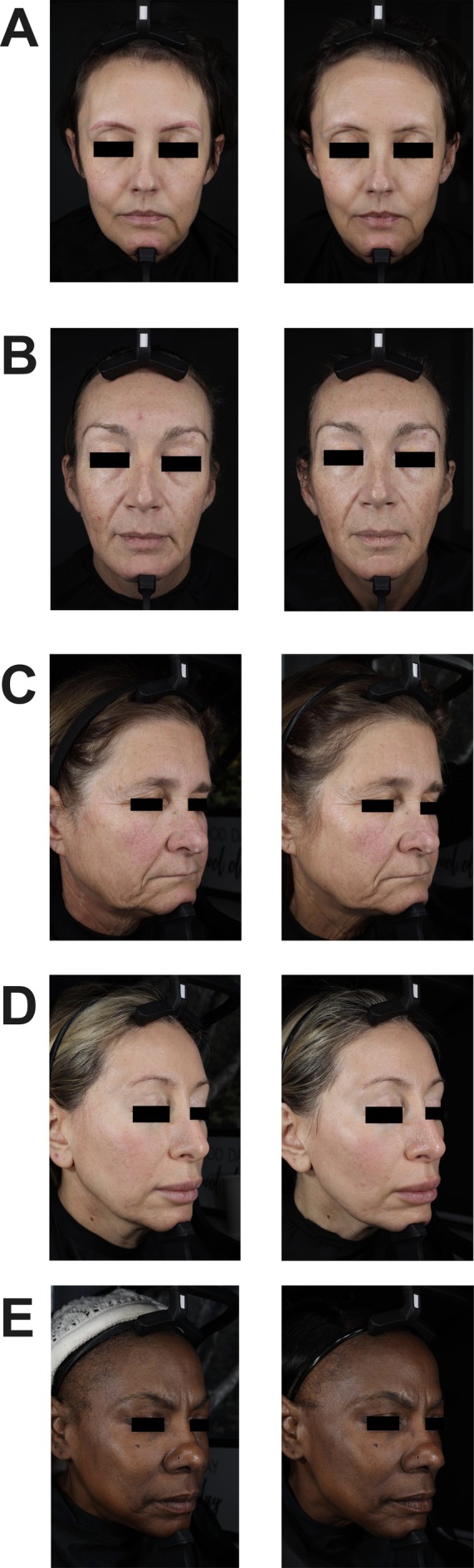
FIGURE 7 Facial photography of participants. (A) Female, 44 years old, 15 months on a GLP‐1 agonist. Frontal view at baseline and week 12. (B) Female, 47 years old, 17 months on a GLP‐1 agonist. Frontal view at baseline and week 12. (C) Female, 61 years old, 5 months on a GLP‐1 agonist. Right oblique view at baseline and week 4. (D) Female, 46 years old, 9 months on a GIP/GLP‐1 co‐agonist. Right oblique view at baseline and week 12. (E) Female, 60 years old, 12 months on a GLP‐1 agonist. Right oblique view at baseline and week 12.受试者面部摄影(VISIA PRIMOS):(A) 44岁女性,使用GLP-1激动剂15个月,正位基线对第12周;(B) 47岁女性,使用GLP-1激动剂17个月,正位基线对第12周;(C) 61岁女性,使用GLP-1激动剂5个月,右斜位基线对第4周;(D) 46岁女性,使用GIP/GLP-1双激动剂9个月,右斜位基线对第12周;(E) 60岁女性,使用GLP-1激动剂12个月,右斜位基线对第12周。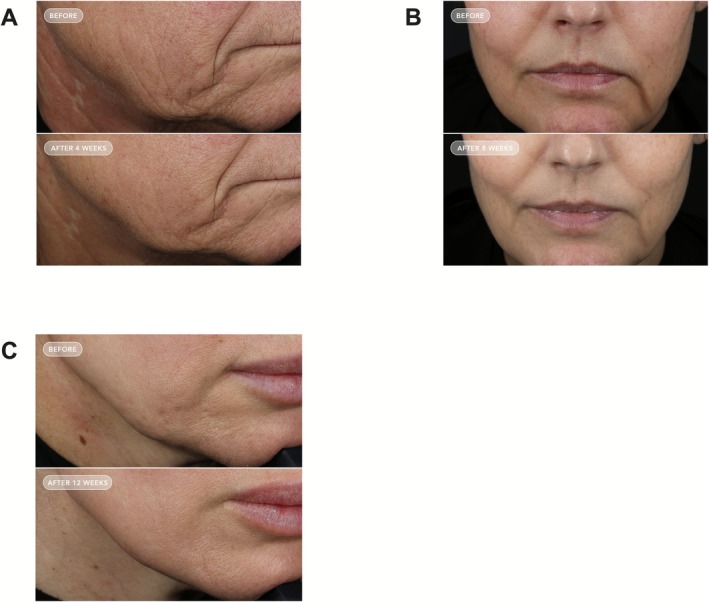
FIGURE 8 Facial photography with close‐up views of the face. (A) Female, 61 years old, 5 months on a GLP‐1 agonist. Images shown from top to bottom at baseline and week 4. (B) Female, 44 years old, 15 months on a GLP‐1 agonist. Images shown from top to bottom at baseline and week 8. (C) Female, 46 years old, 9 months on a GIP/GLP‐1 co‐agonist. Images shown from top to bottom at baseline and week 12.受试者面部特写摄影,图像自上而下为基线与随访对比:(A) 61岁女性,使用GLP-1激动剂5个月,基线对第4周;(B) 44岁女性,使用GLP-1激动剂15个月,基线对第8周;(C) 46岁女性,使用GIP/GLP-1双激动剂9个月,基线对第12周。3.10
There were no treatment‐related adverse effects.
4
Our results indicate that the application of a topical volumizing cream can augment the appearance of facial volume and reduce the signs of aging in those that have undergone significant weight loss. Of note, most participants in this study were on GLP‐1/GIP agonists (semaglutide or tirzepatide), and our results show that facial volume can be partially improved in the setting of the use of these medications.
The results also suggest that the ingredients did work in a synergistic fashion. There was an increase in overall facial volume, an increase in the elasticity measures, an improvement in the skin barrier (reduced TEWL), improved skin hydration, and the reduction in the visible appearance of wrinkles suggesting that the effects of the topical cream were at different levels of the skin. Apart from visible signs of aging, another side effect of rapid weight loss is skin laxity and loss of elasticity [ 34 ]. Our results show that multiple measures of skin elasticity were improved suggesting that skin laxity was addressed in addition to facial volume.
In our cohort, week 8 showed a relative decrease in capacitance‐derived hydration compared with weeks 2 and 4 (Figure 6A ) and a less favorable TEWL profile (Figure 6B ). This pattern is consistent with the literature demonstrating that skin biophysical properties fluctuate over time in response to environmental and weight‐related factors, likely contributing to the non‐significant trough in viscoelasticity and net elasticity at week 8 (Figure 5B,C ). Nam et al. reported significant seasonal variation in both corneometer‐measured hydration and cutometer‐derived elasticity while tracking ambient temperature and humidity in healthy women [ 35 ]. A study by Green et al. concluded that environmental exposures based on geographic location can alter TEWL, a key determinant of stratum‐corneum hydration [ 36 ]. Values remained above baseline at all visits, and week 12 demonstrated a significant improvement versus baseline. The week 12 rise, despite progression into drier months of the study location, is consistent with a cumulative treatment effect on skin volume and barrier function. The significant improvement at week 12, despite progression into drier months, is consistent with cumulative barrier benefits observed with topical regimens that improve stratum corneum water binding and lipid organization, which are associated with lower TEWL and better Cutometer‐derived elasticity over 4–12 weeks [ 37 , 38 , 39 ]. In addition, extracellular matrix remodeling during active weight loss can transiently blunt mechanical measures mid‐course, with recovery as remodeling progresses [ 40 ]. These findings support the interpretation that the week‐8 dip in hydration and elasticity likely reflects physiological variability during ongoing weight change and environmental exposure, rather than a loss of efficacy of the topical volumizing regimen.
The subjects' weight change suggests that the overall weight loss observed was largely driven by a single subgroup, raising important considerations for interpreting the volumizing cream's efficacy (Table 3 ). Across all 33 participants, mean body weight decreased by ~1.68% ( p = 0.014) over the 12‐week study. Importantly, stratified analysis revealed that only the GIP/GLP‐1 co‐agonist subgroup ( n = 9) experienced significant weight loss (~3.87%, p = 0.028). In contrast, the other three subgroups—GLP‐1 agonist users ( n = 15), bariatric surgery patients ( n = 4), and those using other weight‐loss methods ( n = 4) – showed no statistically significant weight change over the study period ( p > 0.05 for each). The overall weight‐loss significance was skewed almost entirely by the GIP/GLP‐1 cohort's reduction, whereas the majority of participants maintained relatively stable weight. This distinction is critical: it indicates that for most subgroups, weight remained essentially constant, isolating the effects of the topical treatment from weight fluctuation confounders. Had the dual‐agonist subgroup not been included, the pooled weight change would not have reached significance, emphasizing how this subgroup's weight trend influenced the aggregate results.
TABLE 3 Average percent weight change at week 12 compared to baseline.
| Group | Average % weight change | SEM | p |
|---|---|---|---|
| GLP‐1 agonist ( n = 15) | −1.15% | 0.84% | 0.1522 |
| GIP/GLP‐co‐agonist ( n = 9) | −3.87% | 1.42% | 0.0282 |
| Gastrectomy sleeve (bariatric) surgery ( n = 5) | −1.09% | 1.63% | 0.5665 |
| Other (4) | 0.54% | 1.12% | 0.5356 |
| Combined ( n = 33) | −1.68% | 0.64% | 0.0135 |
TABLE 4 Tolerability was assessed in the form of a questionnaire at week 2, week 4, week 8, and week 12.
| None 0 | Mild 1 | Moderate 2 | Severe 3 | |
|---|---|---|---|---|
| Week 2 | ||||
| Itching | 96.97% | 0.00% | 3.03% | 0.00% |
| Burning | 93.94% | 6.06% | 0.00% | 0.00% |
| Stinging | 96.97% | 0.00% | 3.03% | 0.00% |
| Redness | 90.91% | 9.09% | 0.00% | 0.00% |
| Hypopigmentation | 96.97% | 3.03% | 0.00% | 0.00% |
| Hyperpigmentation | 100% | 0.00% | 0.00% | 0.00% |
| Week 4 | ||||
| Itching | 96.97% | 3.03% | 0.00% | 0.00% |
| Burning | 93.94% | 6.06% | 0.00% | 0.00% |
| Stinging | 96.97% | 3.03% | 0.00% | 0.00% |
| Redness | 85.85% | 12.12% | 3.03% | 0.00% |
| Hypopigmentation | 96.97% | 3.03% | 0.00% | 0.00% |
| Hyperpigmentation | 93.94% | 3.03% | 3.03% | 0.00% |
| Week 8 | ||||
| Itching | 100% | 0.00% | 0.00% | 0.00% |
| Burning | 100% | 0.00% | 0.00% | 0.00% |
| Stinging | 100% | 0.00% | 0.00% | 0.00% |
| Redness | 90.63% | 9.38% | 0.00% | 0.00% |
| Hypopigmentation | 96.88% | 3.13% | 0.00% | 0.00% |
| Hyperpigmentation | 96.88% | 3.13% | 0.00% | 0.00% |
| Week 12 | ||||
| Itching | 100% | 0.00% | 0.00% | 0.00% |
| Burning | 100% | 0.00% | 0.00% | 0.00% |
| Stinging | 100% | 0.00% | 0.00% | 0.00% |
| Redness | 93.10% | 6.90% | 0.00% | 0.00% |
| Hypopigmentation | 100% | 0.00% | 0.00% | 0.00% |
| Hyperpigmentation | 100% | 0.00% | 0.00% | 0.00% |
The effects of this cream were observed even in the setting of significant weight loss. That is notable as this is a more difficult population to improve signs of facial aging as they are actively taking a medication that would counteract any potential effects of a topical cream. While this cream was studied specifically in those with significant weight loss, the effects would likely not be restricted to those with ongoing weight loss and future studies in those without significant weight loss but with typical age‐related changes in facial aging would be warranted.
This study had several limitations. The study was conducted over a period of 12 weeks, and longer‐term results cannot be deduced from this study. The topical regimen included a sunscreen in addition to the topical volumizing cream. However, sunscreens are not known to affect facial volume to the levels that were noted in this study. This study was designed to assess how facial aging can be shifted after weight loss has already occurred. What is not known is if this cream can be used prophylactically prior to commencement of any weight loss and should be the focus of future studies.
5
Our results show that the twice daily use of a volumizing cream (Vol.U.Lift) can improve multiple parameters of facial aging in those that have undergone significant weight loss. The improvements include improvements in the appearance of facial volume and wrinkles as well as skin biophysical features such as skin elasticity, hydration, and barrier.
Conception and design: R.K.S., N.A. Data acquisition: N.N., A.A.; or analysis and interpretation of data: N.N., N.A., A.L., W.A., M.N.D., R.K.S. Drafting of manuscript: N.N., N.A., A.L., R.K.S.
Funding for this study was provided by Image Skincare.
R.K.S. serves as a consultant or speaker for Burt's Bees, Sanofi, Bristol Myers Squibb, Arbonne, Trace Minerals, Codex Labs, Pfizer, Phothera, Nutrafol, Lilly, Galderma, Incyte, Novartis, Arcutis, Abbvie, Leo, UCB, Sun, and Regeneron Pharmaceuticals. The authors have no disclosures.
The study was conducted according to the guidelines of the Declaration of Helsinki and approved by the Allendale Institutional Review Board (protocol# IRI24_08_ImageSkin_OTIS) on 14 January 2025.
Signed informed consent was obtained from all subjects involved in the study. All participants provided written consent for publication of their photographs.
R.K.S. has served as a consultant or speaker for Amgen, Burt's Bees, Sanofi, Bristol Myers Squibb, Arbonne, Trace Minerals, Codex Labs, Pfizer, Phothera, Almirall, Nutraceutical Wellness, Lilly, Galderma, Incyte, Novartis, Arcutis, Janssen, Abbvie, Leo, UCB, Sun and Regeneron Pharmaceuticals. The other authors declare no conflicts of interest.
声明:中文精读 · 仅供学术参考。内容来自公开文献检索,不代表本人观点,不构成诊疗建议。 医疗美容需在正规医疗机构由执业医师实施。
基于相同主题推荐 · 继续深挖
12周前瞻性开放标签单组研究(美国加州):288人筛选、33人入组、29人完成全部访视纳入分析,均为近1年内快速减重≥10%体重者(多为GLP-1/GIP-GLP-1受体激动剂使用
回顾性大样本病例系列(2016年11月至2025年1月),共1999例连续手术,中位年龄36岁(IQR 31至42),中位BMI 29(IQR 26至32),最短随访6个月。
前瞻性单臂研究(西班牙 Asturias 伦理委员会批准),39 例健康女性志愿者(23–68 岁,平均 47 岁,Fitzpatrick II–III),腹部/腰侧 25 例、大