外鼻阀功能紊乱两种重建技术比较:侧脚张力调整联合 articulated 翼状缘移植物 vs 侧脚支撑移植物
2026年10月14日43 min read
Plastic and Reconstructive Surgery
Plastic and Reconstructive Surgery
结论与实践要点
该研究比较了两种外鼻阀(ENV)功能重建技术:LCT/AARG(侧脚张力调整 + articulated 翼状缘移植物,通过平衡脚部张力稳定外鼻阀)与 LCSG(侧脚支撑移植物,软骨垫置加固)。311 例患者均接受开放鼻整形并统一使用鼻中隔延伸移植物支撑鼻尖。结果显示:初治鼻整形中 LCT/AARG 在通气功能与生活质量指标上均优于 LCSG,NPIF 改善超过最小临床重要差值;修复鼻整形两者差异不显著,但均较基线改善。
对临床的提示:其一,作者推测 LCSG 的垫置移植物可能占用气道空间产生“拥挤效应”,在术前阻塞侧重者尤为明显——这与 LCT 组在阻塞侧 NAR 上优势更大的结果方向一致,但该机制解释属推论,本研究未直接验证;其二,初治与修复人群的分层分析是关键,混入修复病例可能稀释技术差异(作者指出既往 Kondo 研究样本混合故未见差异);其三,历史性非随机设计存在术者学习曲线与技术演进的混杂,且 7 年未用 LCSG 的术者偏好可能影响评估,结论宜作为单中心高质量证据而非普遍定论;其四,美学结局两技术相当,技术选择可更多依据功能目标与鼻部具体解剖(如过窄鼻需增宽者作者仍保留 LCSG)。
Background:External nasal valve dysfunction, a common cause of nasal obstruction, is unlikely to be restored with septoplasty or turbinoplasty alone. This study assessed 2 rhinoplasty techniques for the prevention and treatment of external nasal valve dysfunction: lateral crural tensioning with articulated alar rim grafts (LCT/AARG) and lateral crural strut grafts (LCSG) in primary and revision rhinoplasty.
Methods:A retrospective cohort analysis was performed. Patients received LCT/AARG or LCSG. Assessment occurred at baseline and at least 6 months after surgery. The primary outcome was nasal obstruction sensation, measured by a visual analog scale; the Nasal Obstruction Symptom Evaluation; and an ordinal nasal obstruction score. Secondary outcomes were nasal airflow (assessed by nasal peak inspiratory flow, nasal airway resistance, and minimum cross-sectional area) and patient-perceived aesthetic results (assessed by the Rhinoplasty Outcome Evaluation and a 13-point ordinal score).
Results:A total of 203 primary rhinoplasty and 108 revision rhinoplasty patients were included. Both techniques had positive effects in primary and revision cases. In primary rhinoplasty, LCT/AARG was more effective than LCSG in improving nasal obstruction (category improvement of 1 or greater in nasal obstruction score, 81% versus 64% [ P < 0.01]), nasal airflow (change in nasal peak inspiratory flow, 21.00 ± 46.43 L/min versus 4.32 ± 42.64 L/min [ P = 0.01] and change in nasal airway resistance on the obstructed side, −0.29 [−0.71 to 0.03] Pa/cm 3 /s versus −0.11 [−0.56 to 0.18] [ P = 0.03]), and Rhinoplasty Outcome Evaluation score (42 [21 to 54] versus 31 [13 to 46] [ P = 0.02]). Both techniques were similar in revision rhinoplasty.
Conclusion:LCT/AARG is a reliable technique offering improved airflow, reduced resistance, and better patient-reported outcomes compared with LCSG.
The external nasal valve (ENV) is a key determinant of nasal airflow and is commonly implicated in nasal obstruction. Contemporary approaches toward correction of external nasal valve dysfunction (EVD) involve reconstructive techniques that preserve the nasal framework rather than resective reduction rhinoplasty techniques that can predispose to functional compromise. Classic maneuvers such as excess cephalic trim of the lower lateral cartilages without resupport are known to contribute to such compromise. 1
Two rhinoplasty techniques used to treat EVD are lateral crural tensioning with articulated alar rim grafts (LCT/AARG) and lateral crural strut grafts (LCSG). Although the techniques share similar objectives, their strategies differ. LCT, popularized by Davis, 2 aims to treat and prevent EVD by eliminating crural laxity and recurvature through balanced tensile forces. This increases nasal sidewall tone and valvular minimum cross-sectional area (MCA) without the added bulk of underlay grafts. AARGs preserve alar shape and support. 3 LCSG, proposed by Gunter and Friedman 4 and popularized by Toriumi and Asher, 5 stabilizes the nasal valve using caudally repositioned underlay grafts. This technique aims to prevent collapse by stiffening and flattening the lateral crus. The techniques have similar aesthetic and functional goals and are used globally.
Despite their similar indications, few studies have compared LCT/AARG with LCSG. 3 Some studies support the use of LCSG in improving nasal function and aesthetics, but many rely on nonvalidated outcome measures. 6 – 8 Furthermore, no comparative studies have stratified primary and revision subpopulations for analysis, which is an important distinction given the additional challenges of scar tissue, deformed cartilage, and heightened patient apprehension in revision cases. Combining the analysis of primary and revision populations may obscure meaningful differences, because both present different clinical challenges for the surgeon. This study aims to compare the functional and aesthetic outcomes of LCT/AARG versus LCSG for managing EVD within primary and revision populations separately. No direct comparisons are made between the primary and revision populations due to their differing challenges.
A cohort study comparing the use of LCT/AARG versus LCSG in primary and revision rhinoplasty patients was performed. The cohorts were defined by a historical shift in surgical practice from LCSG to LCT/AARG, driven by dissatisfaction with the consistency of outcomes using LCSG in the authors’ experience, and an introduction to LCT, which resulted in an immediate change in practice. LCSG was used for 7 years by a surgeon with 17 years of rhinoplasty experience at the time, followed by LCT over a subsequent 7 years. Baseline characteristics and study outcomes were collected as part of routine care. Ethics approval was obtained from the Human Research Ethics Board at St. Vincent’s Hospital (2019/ETH12361).
Participants were adult patients from a tertiary facial plastics clinic in Sydney, Australia, who received either LCT/AARG or LCSG. Revision rhinoplasty patients had their baseline assessment performed between their primary and revision rhinoplasties. Postoperative assessment was targeted for 6 months. Exclusion criteria included active recreational drug use, smoking, vasculitides, and severe untreated allergic rhinitis.
All patients underwent open rhinoplasty with either LCT/AARG or LCSG. Across both groups, a septal extension graft (SEG) was used for tip support, a septoplasty was performed if septal deviation was present, and a turbinate reduction was performed when there was significant allergy and rhinitis.
LCT was performed as per the Marcells modification of the Davis method, as reported by Kondo et al. 2 , 3 An SEG was attached either end to end with bilateral splinting grafts (Fig. 1 ) or side to side. The medial crura were reattached to the SEG in a tongue-in-groove fashion, with reshaping as required. LCT was achieved in one of two ways. In patients with a moderate excess of crural length, lateral crural steal was performed, medially advancing the lateral crus with a horizontal mattress suture to create a new nasal dome. In patients with a large excess of lower lateral crural length, tension was achieved by shortening, removing redundant length. Excision of the dome allows for maximal tensioning and tip refinement. Division was performed on the lateral crus, as this provides the most effective means of tensioning the nasal sidewall. The shortened lateral crura were then secured to the SEG (Fig. 2 ). Dome division and shortening was performed in most cases. Lateral crural steal was used in fewer than 5% of patients. AARGs were fixed with 6-0 polydioxanone at the medial aspect and more laterally along the lateral crus, then inserted into nonanatomical pockets within the alar rim (Fig. 3 ). Soft-tissue grafts were placed on either side of the SEG to create 2 neodomal points and camouflage the medial aspect of the AARGs.
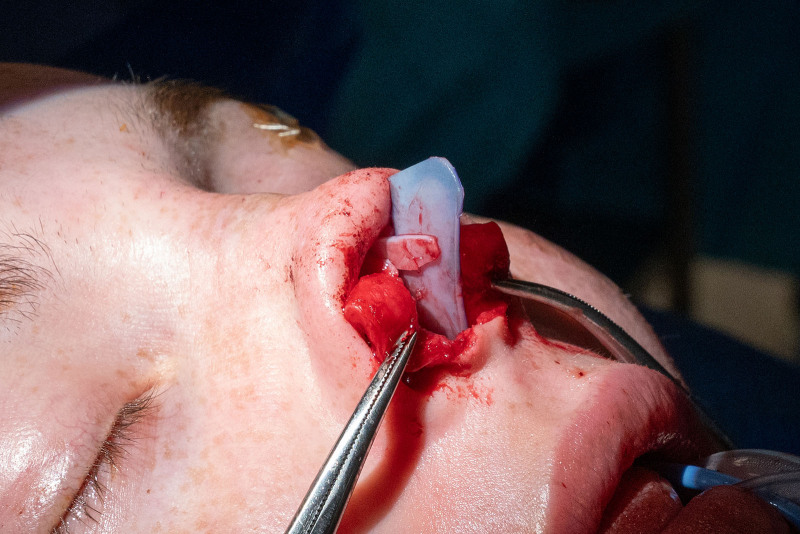
Fig. 1. An end-to-end SEG, supported by bilateral splinting grafts. The SEG is yet to be shaped and conformed to the desired outcome.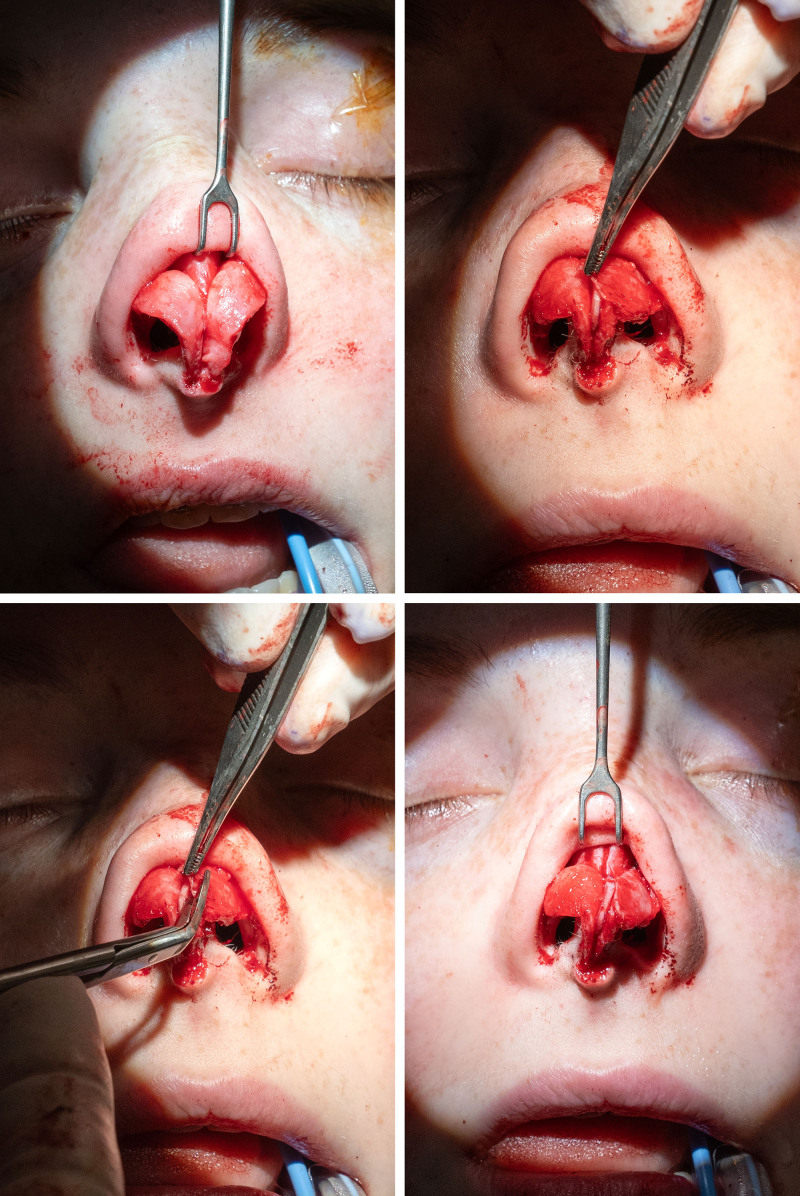
Fig. 2. LCT. (Above, left) The native nasal cartilages are revealed after dissecting the skin envelope. (Above, right) The divided left lower lateral cartilage has been overlapped to show the excess lateral crural length. (Below, left) Excision of excess left lower lateral cartilage. (Below, right) Comparison between the tensioned left lower lateral cartilage versus the nontensioned right lower lateral cartilage.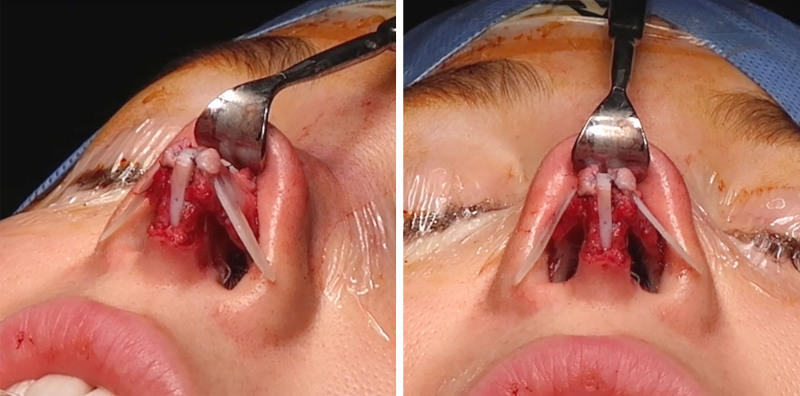
Fig. 3. (Left) Oblique and (right) basal views of LCT/AARG and soft-tissue tip grafts before placement in nonanatomical pockets laterally.
LCSGs were performed as outlined by Toriumi and Asher 5 (Fig. 4 ). The vestibular mucosa was dissected from the lateral crus and a cartilaginous graft was sutured beneath it (5-0 polydioxanone) and repocketed more caudally toward the piriform aperture, superior to the alar groove. Grafts typically measured approximately 25 mm long, 3 to 5 mm wide, and 1 to 1.5 mm thick.
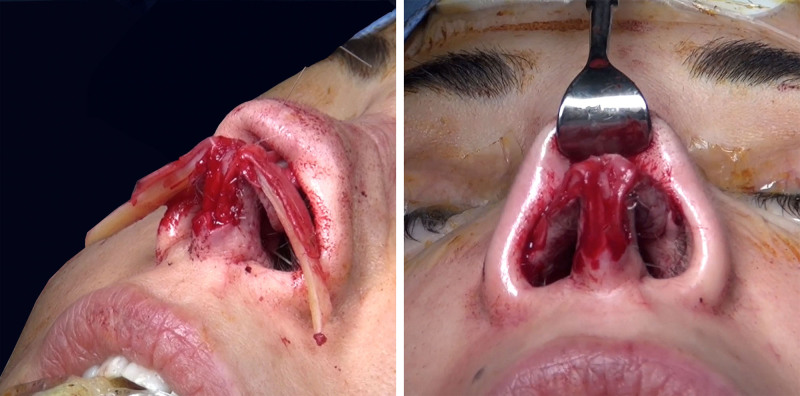
Fig. 4. LCSGs. (Left) Cartilaginous grafts sutured to the underside of the lateral crus bilaterally, before pocketing. (Right) Base view of LCSGs after repocketing laterally.
The primary outcome was patient-reported nasal obstruction. Secondary outcomes included objective nasal airflow measures, including rhinomanometry (accepted standard), nasal peak inspiratory flow (NPIF) to assess collapse, and acoustic rhinometry to evaluate airspace changes. Rhinomanometry and acoustic rhinometry were performed in accordance with international consensus guidelines. 9 Airway resistance was measured from the nonobstructed nostril in rhinomanometry, and acoustic measures were taken from the nostril rim (Fig. 5 ). Both techniques assess airway anatomy modified by nasal valve techniques. The patient-perceived aesthetic result was recorded with a validated tool. Results were obtained without topical decongestant use to reflect natural symptoms and function. The “obstructed” side was defined as the side with the worst baseline value for each variable, and the preoperative and postoperative values were compared for this side. The respiratory scientists performing the objective airway measures were blinded to the surgical technique.
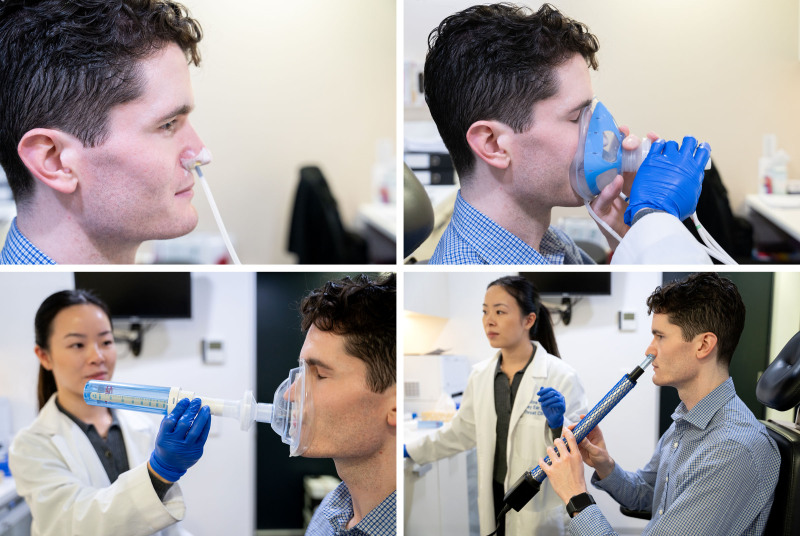
Fig. 5. Objective measures of airflow, including airway resistance (rhinomanometry), nasal collapse (NPIF), and assessment of the cross-sectional area of the nose (acoustic rhinometry). (Above, left) In rhinomanometry, the pressure transducer is introduced into the nontest nostril and sealed with micropore tape. The open contralateral side is the nasal airway being tested. (Above, right) The anesthetic mask and flow meter are then placed on the face without distorting the nasal framework. As the patient breathes through the open nostril, the airflow and pressure are recorded. The test side is the open nostril, which is undistorted by either pressure transducer or the anesthetic mask. (Below, left) Placement of the NPIF meter is used to create a seal without distorting the nasal framework. The best of 3 maximal inspiratory efforts is recorded if the top 2 are within 10% of each other. (Below, right) In acoustic rhinometry, careful placement of the nosepiece and sound tube is performed to prevent distortion of the nasal framework. The acoustic echo begins from the nostril rim and returns cross-sectional area data throughout the nasal valve area and beyond.
Perceptions of nasal obstruction were assessed through 3 methods: the visual analog scale (VAS), an ordinal questionnaire of nasal obstruction, and the Nasal Obstruction Symptom Evaluation (NOSE).
Patients rated the severity of nasal obstruction in each nostril on a scale from 0 mm (no obstruction) to 10 mm (total obstruction). ( See Appendix, Supplemental Digital Content 1 , which shows the VAS for obstruction, https://links.lww.com/PRS/I531.) This was scaled to a score out of 100 mm. A VAS score of 21 mm was considered average for a patient without obstruction. 10
Patients rated their severity of nasal obstruction over the past 2 weeks on an ordinal 6-point Likert scale, ranging from “no problem” (0) to “problem as bad as it can be” (5). ( See Appendix, Supplemental Digital Content 2 , which shows the ordinal questionnaire of nasal obstruction, https://links.lww.com/PRS/I532.)
The NOSE questionnaire was validated for nasal obstruction by Stewart et al. in 2004. 11 ( See Appendix, Supplemental Digital Content 3 , which shows the NOSE questionnaire for nasal obstruction, https://links.lww.com/PRS/I533.) Patients rated the severity of their nasal obstruction–related symptoms from “not a problem” (0) to a “severe problem” (4), with scores scaled to 100. A score of 15 was considered average for patients without obstruction. 10
Nasal airway function was assessed using measures of airway resistance (rhinomanometry), airway collapsibility (NPIF), and air–space geometry (acoustic rhinometry).
Nasal airway resistance (NAR) was measured using active 4-phase anterior rhinomanometry with an NR6 Rhinomanometer (GM Instruments) at 150 Pa (international standard). 12 With the patient upright, the contralateral nostril was occluded with a foam plug fitted to the end of a pressure-sensing tube and sealed with micropore tape (Fig. 5 , above, left ). An anesthetic mask was applied without compressing nasal structures, and the patient was asked to breathe normally with their mouth closed (Fig. 5 , above, right ). Three readings were obtained, with a minimum of 2 within 10% of each other. This was repeated for the other nostril. Results were combined on the NARIS program (GM Instruments) to determine a total NAR score. NAR was considered normal when less than or equal to 0.26 Pa/cm 3 /s. 13
NPIF measures maximum forced inspiratory nasal airflow and was used to assess nasal patency. NPIF was measured using an In-Check Nasal Inspiratory flow meter (Clement Clarke International) attached to an anesthetic mask (Fig. 5 , below, left ). The patient, seated upright, was asked to inspire maximally 3 times with their mouth closed. The highest result was recorded. NPIF was considered normal if greater than 120 L/min.
An A1 acoustic rhinometer (GM Instruments) measured the MCA by analyzing sound wave reflections within the nasal cavity to determine its geometry (area and volume). With the patient upright in a quiet room, one nostril was occluded with a glass nosepiece connected to a straight sound tube (Fig. 5 , below, right ). The patient was asked to inspire and hold their breath with their mouth closed. Three readings were obtained, with a minimum of 2 within 10% of each other. Normal unilateral MCA was considered greater than 0.52 cm 2 in area. 14
Nasal aesthetic was assessed by 2 methods: the Rhinoplasty Outcome Evaluation (ROE) questionnaire and the Aesthetic Anchor Score (Likert scale).
Patients completed the ROE questionnaire, a 6-question tool assessing quality of life due to nasal aesthetic and function. ( See Appendix, Supplemental Digital Content 4 , which shows the ROE questionnaire, https://links.lww.com/PRS/I534.) The total score was scaled to 100. A scaled score of 75 was considered average for healthy individuals. 15
Aesthetic anchor scores were gathered with a 13-point Likert scale. ( See Appendix, Supplemental Digital Content 5 , which shows the 13-point Likert scale for nasal aesthetic, https://links.lww.com/PRS/I535.) Patients were asked to rate their nasal appearance from “terrible” (−6) to “excellent” (+6).
Data analysis was performed using IBM SPSS Statistics 27. Comparison between groups was performed using an independent-samples t test for continuous, normally distributed data and the Mann-Whitney U test for ordinal or continuous nonnormally distributed data. A chi-square test was used for independent categorical data. Normality was determined using the Shapiro-Wilk test, QQ-plots, and histograms. Comparison of values before and after surgery was performed using a paired-samples t test for continuous, normally distributed data and the Wilcoxon signed-rank test for ordinal or continuous nonnormally distributed data. The McNemar test was used for paired categorial data. Results were reported as mean ± SD for continuous, normally distributed data; median (interquartile range) for nonnormally distributed data; and percentages for categorical data. The threshold for statistical significance was P < 0.05.
A total of 311 patients were included in this study, with 203 primary and 108 revision rhinoplasty patients. The use of LCT/AARG was similar between primary and revision patients (64% versus 59% [ P = 0.41]).
The median age of primary rhinoplasty patients was 32 years (range, 24 to 44 years), and 75% were female. At baseline, all patients had poor perceptions of nasal patency, nasal airway function, and disease-specific quality of life (below-normal VAS, NOSE, NAR [obstructed and total], MCA [obstructed and total], and ROE scores) (Table 1 ). The LCT/AARG and LCSG groups were similar at baseline, except the LCT/AARG group had fewer female participants (70% versus 84% [ P = 0.03]) and a higher baseline MCA (obstructed side: 0.36 [0.23 to 0.47] cm 2 versus 0.28 [0.19 to 0.40] cm 2 [ P = 0.01]; total: 0.91 ± 0.30 cm 2 versus 0.74 ± 0.35 cm 2 [ P < 0.01]) (Table 2 ).
Table 1. Baseline Characteristics in the Primary and Revision Rhinoplasty Populationa
| Characteristics | Primary | Revision |
|---|---|---|
| No. | 203 | 108 |
| Age, yrs | 32 (24 to 44) | 40 (32 to 50) |
| Sex, % female | 75 | 78 |
| Alar base surgery, % yes | 25 | 25 |
| Turbinate reduction, % yes | 37 | 36 |
| Nasal obstruction symptoms | ||
| VAS (obstructed side) (0–100), mm | 60 (40 to 79) | 67 (50 to 80) |
| Nasal obstruction score, % moderate or worse | 50 | 68 |
| NOSE (0–100) | 50 (30 to 70) | 65 (41 to 80) |
| Objective nasal airway function | ||
| NPIF, L/min | 121.18 ± 41.91 | 99.58 ± 38.61 |
| NAR, obstructed side, Pa/cm 3 /s | 0.84 (0.58 to 1.24) | 0.91 (0.70 to 1.37) |
| NAR, total, Pa/cm 3 /s | 0.30 (0.23 to 0.41) | 0.35 (0.28 to 0.46) |
| MCA, obstructed side, cm 2 | 0.32 (0.21 to 0.45) | 0.30 (0.20 to 0.45) |
| MCA, total, cm 2 | 0.85 ± 0.33 | 0.81 ± 0.33 |
| Nasal aesthetic and quality of life | ||
| ROE (0–100) | 42 (33 to 50) | 38 (29 to 46) |
| Aesthetic anchor test score, % poor or worse | 69 | 63 |
Table 2. Comparison of the Baseline Characteristics in the LCT/AARG versus LCSG Groups in Primary Rhinoplastya
| Characteristics | LCT/AARG | LCSG | P |
|---|---|---|---|
| No. | 130 | 73 | |
| Age, yrs | 32 (24 to 43) | 32 (23 to 45) | 0.82 |
| Sex, % female | 70 | 84 | 0.03 b |
| Alar base surgery, % yes | 49 | 13 | <0.01 b |
| Turbinate reduction, % yes | 47 | 33 | 0.06 |
| Nasal obstruction symptoms | |||
| Baseline VAS (obstructed side), mm | 60 (40 to 80) | 59 (34 to 78) | 0.31 |
| Baseline nasal obstruction score, % moderate or worse | 50 | 51 | 0.84 |
| Baseline NOSE (0–100) | 50 (30 to 65) | 50 (25 to 75) | 0.69 |
| Objective nasal airway function | |||
| Baseline NPIF, L/min | 117.23 ± 38.98 | 127.92 ± 46.39 | 0.07 |
| Baseline NAR, obstructed side, Pa/cm 3 /s | 0.79 (0.55 to 1.21) | 0.88 (0.64 to 1.27) | 0.35 |
| Baseline NAR, total, Pa/cm 3 /s | 0.29 (0.22 to 0.40) | 0.32 (0.25 to 0.42) | 0.14 |
| Baseline MCA, obstructed side, cm 2 | 0.36 (0.23 to 0.47) | 0.28 (0.19 to 0.40) | 0.01 b |
| Baseline MCA, total, cm 2 | 0.91 ± 0.30 | 0.75 ± 0.35 | <0.01 b |
| Nasal aesthetic and quality of life | |||
| Baseline ROE (0–100) | 42 (33 to 46) | 42 (32 to 54) | 0.35 |
| Baseline aesthetic anchor test score, % poor or worse | 68 | 71 | 0.68 |
Primary rhinoplasty (irrespective of technique) significantly decreased sensations of nasal obstruction (VAS score improved from 60 [40 to 79] to 20 [8 to 46] [ P < 0.01], percentage of nasal obstruction scores of moderate or worse decreased from 50% to 15% [ P < 0.01], and NOSE scores decreased from 50 [30 to 70] to 15 [5 to 30] [ P < 0.01]).
Primary rhinoplasty also improved objective nasal airway function by increasing NPIF (from 121.18 ± 41.91 L/min to 136.09 ± 44.52 L/min [ P < 0.01]), decreasing total NAR and NAR of the obstructed side (from 0.84 [0.58 to 1.24] Pa/cm 3 /s to 0.51 [0.38 to 0.77] Pa/cm 3 /s [ P < 0.01] and from 0.30 [0.23 to 0.41] to 0.26 [0.20 to 0.34] [ P < 0.01], respectively), and an increasing total MCA and MCA of the obstructed side (from 0.32 [0.21 to 0.45] cm 2 to 0.50 [0.37 to 0.63] cm 2 [ P < 0.01] and from 0.85 ± 0.33 cm 2 to 1.01 ± 0.32 cm 2 [ P < 0.01], respectively).
Patient satisfaction with nasal aesthetics and quality of life also improved after primary rhinoplasty, with a decrease in percentage of patients reporting a poor or worse nasal aesthetic (from 69% to 3% [ P < 0.01]) and an improvement in ROE scores (from 42 [33 to 50] to 83 [63 to 96] [ P < 0.01]) (Table 3 ).
Table 3. Overall Effects of Rhinoplasty as an Intervention for Nasal Obstruction in Primary Rhinoplastya
| Effects | Preoperative | Postoperative | Δ | P |
|---|---|---|---|---|
| Nasal obstruction symptoms | ||||
| VAS (obstructed side), mm | 60 (40 to 79) | 20 (8 to 46) | −30 (−52 to −2) | <0.01 b |
| Nasal obstruction score, % moderate or worse | 50 | 15 | — | <0.01 b |
| NOSE (0–100) | 50 (30 to 70) | 15 (5 to 30) | −25 (−50 to −5) | <0.01 b |
| Objective nasal airway function | ||||
| NPIF, L/min | 121.18 ± 41.91 | 136.09 ± 44.52 | 15.05 ± 45.71 | <0.01 b |
| NAR (obstructed side), Pa/cm 3 /s | 0.84 (0.58 to 1.24) | 0.51 (0.38 to 0.77) | −0.29 (−0.64 to 0.03) | <0.01 b |
| NAR (total), Pa/cm 3 /s | 0.30 (0.23 to 0.41) | 0.26 (0.20 to 0.34) | −0.04 (−0.13 to 0.06) | <0.01 b |
| MCA (obstructed side), cm 2 | 0.32 (0.21 to 0.45) | 0.50 (0.37 to 0.63) | 0.15 (0.02 to 0.27) | <0.01 b |
| MCA (total), cm 2 | 0.85 ± 0.33 | 1.01 ± 0.32 | 0.17 ± 0.34 | <0.01 b |
| Nasal aesthetic and quality of life | ||||
| ROE (0–100) | 42 (33 to 50) | 83 (63 to 96) | 38 (17 to 54) | <0.01 b |
| Aesthetic anchor test score, % poor or worse | 69 | 3 | — | <0.01 b |
Patients who underwent LCT/AARG were more likely to experience an improvement in sense of nasal obstruction compared with those who underwent LCSG when measured by an ordinal questionnaire of nasal obstruction (81% versus 64% [ P < 0.01]) (Table 4 ). In addition, LCT/AARG patients had a greater improvement in NPIF (21.00 ± 46.43 L/min versus 4.31 ± 42.64 L/min [ P = 0.01]) than LCSG patients (Table 4 ), with the ΔNPIF only being significant in the LCT/AARG group and not the LCSG group (Table 5 ). Only patients in the LCT/AARG group had a significant improvement in total NAR (Table 5 ), and they experienced a greater improvement in NAR (of the obstructed side) compared with LCSG (Table 4 ). Patients undergoing LCT/AARG also reported a greater improvement in their quality of life after rhinoplasty, with a greater improvement in ROE score (42 [21 to 54] versus 31 [13 to 46] [ P = 0.02]) (Table 4 ).
Table 4. Comparison of the Changes in Nasal Obstruction Outcomes before and after Surgery between the LCT/AARG and LCSG Groups in Primary Rhinoplastya
| Changes in Outcomes | LCT/AARG | LCSG | P |
|---|---|---|---|
| No. | 130 | 73 | |
| Nasal obstruction symptoms | |||
| ΔVAS (obstructed side) | −25 (−55 to −10) | −20 (−48 to −1) | 0.11 |
| Δ Nasal obstruction score, % improvement in 1 or more categories | 81 | 64 | <0.01 b |
| ΔNOSE | −30 (−50 to −10) | −25 (−53 to −5) | 0.73 |
| Objective nasal airway function | |||
| ΔNPIF, L/min | 21.00 ± 46.43 | 4.31 ± 42.64 | 0.01 b |
| ΔNAR (obstructed side), Pa/cm 3 /s | −0.29 (−0.71 to 0.03) | −0.11 (−0.56 to 0.18) | 0.03 b |
| ΔNAR (obstructed side), % Δ | −40.63 (−63.82 to −5.79) | −12.47 (−54.63 to 42.03) | 0.01 b |
| ΔNAR (total), Pa/cm 3 /s | −0.05 (−0.14 to 0.03) | −0.02 (−0.12 to 0.11) | 0.05 |
| ΔNAR (total), % Δ | −18.32 (−38.89 to 7.62) | −5.86 (−31.04 to 41.59) | 0.04 b |
| ΔMCA (obstructed side), cm 2 | 0.14 (0.03 to 0.27) | 0.15 (0.02 to 0.30) | 0.92 |
| ΔMCA (obstructed side), % Δ | 40.00 (7.94 to 122.22) | 45.16 (3.81 to 156.63) | 0.67 |
| ΔMCA (total), cm 2 | 0.16 ± 0.31 | 0.18 ± 0.36 | 0.67 |
| ΔMCA (total), % Δ | 27.89 ± 48.56 | 101.81 ± 479.35 | 0.22 |
| Nasal aesthetic and quality of life | |||
| ΔROE | 42 (21 to 54) | 31 (13 to 46) | 0.02 b |
| Δ Aesthetic anchor test score, % improvement in 1 or more categories | 94 | 95 | 0.85 |
Table 5. The Effect of LCT/AARG and LCSG on Nasal Function in Primary Rhinoplastya
| Effects | Preoperative | Postoperative | Δ | P |
|---|---|---|---|---|
| LCT/AARG ( n = 130) | ||||
| NPIF, L/min | 117.23 ± 38.98 | 138.23 ± 45.50 | 21.00 ± 46.43 | <0.01 b |
| NAR (obstructed side), Pa/cm 3 /s | 0.79 (0.55 to 1.21) | 0.46 (0.35 to 0.65) | −0.29 (−0.71 to 0.03) | <0.01 b |
| NAR (total), Pa/cm 3 /s | 0.29 (0.22 to 0.40) | 0.24 (0.19 to 0.31) | −0.05 (−0.14 to 0.03) | <0.01 b |
| MCA (obstructed side), cm 2 | 0.36 (0.23 to 0.47) | 0.52 (0.40 to 0.64) | 0.14 (0.03 to 0.27) | <0.01 b |
| MCA (total), cm 2 | 0.91 ± 0.31 | 1.06 ± 0.29 | 0.16 ± 0.31 | <0.01 b |
| LCSG ( n = 73) | ||||
| NPIF, L/min | 127.92 ± 46.39 | 132.22 ± 42.73 | 4.31 ± 42.64 | 0.39 |
| NAR (obstructed side), Pa/cm 3 /s | 0.88 (0.64 to 1.27) | 0.66 (0.50 to 0.94) | −0.11 (−0.56 to 0.18) | 0.02 b |
| NAR (total), Pa/cm 3 /s | 0.32 (0.25 to 0.42) | 0.31 (0.24 to 0.40) | −0.02 (−0.12 to 0.11) | 0.57 |
| MCA (obstructed side), cm 2 | 0.28 (0.19 to 0.40) | 0.42 (0.28 to 0.60) | 0.15 (0.02 to 0.30) | <0.01 b |
| MCA (total), cm 2 | 0.74 ± 0.35 | 0.92 ± 0.35 | 0.18 ± 0.36 | <0.01 b |
The median age of revision rhinoplasty patients was 40 years (range, 32 to 50 years) and 78% were women. At baseline, the revision population had poor perceptions of nasal obstruction, nasal airflow, and quality of life (below-normal VAS, NOSE, NPIF, NAR [obstructed and total], MCA [obstructed and total], and ROE scores) (Table 1 ). The LCT/AARG group was older ( P < 0.01), had better perceptions of nasal patency (VAS was 61 [40 to 80] versus 71 [59 to 82] [ P = 0.02] and NOSE was 53 [40 to 79] versus 70 [51 to 89] [ P = 0.01]), had better nasal airway function (NAR of the obstructed side was 0.83 [0.60 to 1.26] Pa/cm 3 /s versus 1.01 [0.79 to 1.55] Pa/cm 3 /s [ P = 0.03]), and had a better disease-specific quality of life (ROE 42 [33 to 50] versus 33 [21 to 43] [ P = 0.03]) at baseline (Table 6 ).
Table 6. Comparison of the Baseline Characteristics of the LCT/AARG versus LCSG Groups in Revision Rhinoplastya
| Characteristics | LCT/AARG | LCSG | P |
|---|---|---|---|
| No. | 64 | 44 | |
| Age, yrs | 46 (36 to 52) | 37 (29 to 43) | <0.01 b |
| Sex, % female | 75 | 82 | 0.40 |
| Alar base surgery, % yes | 46 | 10 | <0.01 b |
| Turbinate reduction, % yes | 46 | 31 | 0.18 |
| Nasal obstruction symptoms | |||
| Baseline VAS (obstructed side), mm | 61 (40 to 80) | 71 (59 to 82) | 0.02 b |
| Baseline nasal obstruction score, % moderate or worse | 59 | 81 | 0.05 |
| Baseline NOSE (0–100) | 53 (40 to 79) | 70 (51 to 89) | 0.01 b |
| Objective nasal airway function | |||
| Baseline NPIF, L/min | 98.13 ± 41.60 | 101.70 ± 34.15 | 0.64 |
| Baseline NAR (obstructed side), Pa/cm 3 /s | 0.83 (0.60 to 1.26) | 1.01 (0.79 to 1.55) | 0.03 b |
| Baseline NAR (total), Pa/cm 3 /s | 0.35 (0.25 to 0.48) | 0.37 (0.31 to 0.45) | 0.24 |
| Baseline MCA (obstructed side), cm 2 | 0.32 (0.19 to 0.46) | 0.28 (0.20 to 0.44) | 0.48 |
| Baseline MCA (total), cm 2 | 0.84 ± 0.34 | 0.77 ± 0.31 | 0.30 |
| Nasal aesthetic and quality of life | |||
| Baseline ROE (0–100) | 42 (33 to 50) | 33 (21 to 43) | 0.03 b |
| Baseline aesthetic anchor test score, % poor or worse | 62 | 64 | 0.81 |
Revision rhinoplasty, regardless of technique, improved patient-reported sensations of nasal obstruction (improvement in percentage of nasal obstruction scores of moderate or worse from 68% to 25% [ P < 0.01], improvement in VAS scores from 67 [50 to 80] to 40 [20 to 62] [ P < 0.01], and improvement in NOSE scores from 65 [41 to 80] to 30 [15 to 60] [ P < 0.01]).
Rhinoplasty also improved nasal airway function by improving NPIF (from 99.58 ± 38.61 L/min to 112.50 ± 43.63 L/min [ P < 0.01]), NAR (obstructed and total) (from 0.91 [0.70 to 1.37] Pa/cm 3 /s to 0.61 [0.45 to 1.02] Pa/cm 3 /s [ P < 0.01] and from 0.35 [0.28 to 0.46] Pa/cm 3 /s to 0.30 [0.23 to 0.43] Pa/cm 3 /s; P = 0.03, respectively), and MCA (obstructed and total) (from 0.30 [0.20 to 0.45] to 0.43 [0.32 to 0.55] [ P < 0.01] and from 0.81 ± 0.33 cm 2 to 1.00 ± 0.49 cm 2 [ P < 0.01], respectively).
Revision rhinoplasty improved patients’ perceptions of their nasal aesthetics (percentage of patients perceiving a poor or worse nasal aesthetic decreased from 63% to 6% [ P < 0.01]) and disease-specific quality of life (ROE increased from 38 [29 to 46] to 67 [42 to 84] [ P < 0.01]) (Table 7 ).
Table 7. Overall Effect of Rhinoplasty as an Intervention for Nasal Obstruction in Revision Rhinoplastya
| Overall Effects | Preoperative | Postoperative | Δ | P |
|---|---|---|---|---|
| Nasal obstruction symptoms | ||||
| VAS (obstructed side), mm | 67 (50 to 80) | 40 (20 to 62) | −20 (−45 to 0) | <0.01 b |
| Nasal obstruction score, % moderate or worse | 68 | 25 | — | <0.01 b |
| NOSE (0–100) | 65 (41 to 80) | 30 (15 to 60) | −25 (−45 to −5) | <0.01 b |
| Objective nasal airway function | ||||
| NPIF, L/min | 99.58 ± 38.61 | 112.50 ± 43.63 | 12.92 ± 35.15 | <0.01 b |
| NAR (obstructed side), Pa/cm 3 /s | 0.91 (0.70 to 1.37) | 0.61 (0.45 to 1.02) | −0.25 (−0.66 to 0.05) | <0.01 b |
| NAR (total), Pa/cm 3 /s | 0.35 (0.28 to 0.46) | 0.30 (0.23 to 0.43) | −0.04 (−0.17 to 0.06) | 0.03 b |
| MCA (obstructed side), cm 2 | 0.30 (0.20 to 0.45) | 0.43 (0.32 to 0.55) | 0.08 (0.00 to 0.23) | <0.01 b |
| MCA (total), cm 2 | 0.81 ± 0.33 | 1.00 ± 0.49 | 0.19 ± 0.51 | <0.01 b |
| Nasal aesthetics and quality of life | ||||
| ROE (0–100) | 38 (29 to 46) | 67 (42 to 84) | 25 (9 to 46) | <0.01 b |
| Aesthetic anchor test score, % poor or worse | 63 | 6 | — | <0.01 b |
There were no significant differences between the LCT/AARG and LCSG groups in revision rhinoplasty (Table 8 ). Further analysis showed that improvements in objective nasal airway function in the domains of NPIF and NAR (total) were only significant in the LCT/AARG group (NPIF improved from 98.13 ± 41.60 L/min to 113.91 ± 45.11 L/min [ P < 0.01] and NAR [total] decreased from 0.35 [0.25 to 0.48] Pa/cm 3 /s to 0.27 [0.21 to 0.35] Pa/cm 3 /s [ P = 0.02]). Improvements in objective nasal airway function in other domains (NAR [obstructed side] and MCA [obstructed and total]) were significant in both groups (Table 9 ).
Table 8. Comparison of Changes in Nasal Obstruction Outcomes before and after Surgery between the LCT/AARG and LCSG Groups in Revision Rhinoplastya
| Changes in Outcomes | LCT/AARG | LCSG | P |
|---|---|---|---|
| No. | 64 | 44 | |
| Nasal obstruction symptoms | |||
| ΔVAS (obstructed side) | −20 (−48 to 0) | −21 (−41 to −2) | 0.80 |
| Δ Nasal obstruction score, % improvement in 1 or more categories | 75 | 71 | 0.72 |
| ΔNOSE | −25 (−58 to 4) | −28 (−44 to −10) | 0.76 |
| Objective nasal airway function | |||
| ΔNPIF, L/min | 15.78 ± 37.08 | 8.75 ± 32.10 | 0.31 |
| ΔNAR (obstructed side), Pa/cm 3 /s | −0.27 (−0.69 to −0.01) | −0.25 (−0.59 to 0.12) | 0.76 |
| ΔNAR (obstructed side), % | −36.05 (−60.94 to −1.25) | −26.41 (−46.29 to 12.35) | 0.37 |
| ΔNAR (total), Pa/cm 3 /s | −0.04 (−0.19 to 0.05) | −0.01 (−0.09 to 0.11) | 0.19 |
| ΔNAR (total), % | −14.57 (−41.96 to 21.56) | −4.06 (−23.09 to 31.31) | 0.16 |
| ΔMCA (obstructed side), cm 2 | 0.08 (−0.02 to 0.23) | 0.06 (0.01 to 0.23) | 0.93 |
| ΔMCA (obstructed side), % | 24.44 (−5.55 to 107.14) | 27.78 (2.44 to 129.32) | 0.67 |
| ΔMCA (total), cm 2 | 0.25 ± 0.61 | 0.12 ± 0.33 | 0.39 |
| ΔMCA (total), % | 56.55 ± 133.49 | 27.80 ± 54.11 | 0.166 |
| Nasal aesthetics and quality of life | |||
| ΔROE | 25 (6 to 40) | 27 (12 to 54) | 0.25 |
| Δ Aesthetic anchor test score, % improvement in 1 or more categories | 84 | 88 | 0.57 |
Table 9. Effects of LCT/AARG and LCSG on Nasal Function in Revision Rhinoplastya
| Effects | Preoperative | Postoperative | Δ | P |
|---|---|---|---|---|
| LCT/AARG ( n = 64) | ||||
| NPIF, L/min | 98.13 ± 41.60 | 113.91 ± 45.11 | 15.78 ± 37.08 | <0.01 b |
| NAR (obstructed side), Pa/cm 3 /s | 0.82 (0.60 to 1.26) | 0.52 (0.42 to 0.71) | −0.27 (−0.69 to −0.01) | <0.01 b |
| NAR (total), Pa/cm 3 /s | 0.35 (0.25 to 0.48) | 0.27 (0.21 to 0.35) | −0.04 (−0.19 to 0.05) | 0.02 b |
| MCA (obstructed side), cm 2 | 0.32 (0.19 to 0.46) | 0.43 (0.33 to 0.61) | 0.08 (−0.02 to 0.23) | <0.01 b |
| MCA (total), cm 2 | 0.84 ± 0.34 | 1.09 ± 0.58 | 0.25 ± 0.61 | 0.01 b |
| LCSG ( n = 44) | ||||
| NPIF, L/min | 101.70 ± 34.15 | 110.45 ± 41.82 | 8.75 ± 32.10 | 0.08 |
| NAR (obstructed side, Pa/cm 3 /s | 1.01 (0.79 to 1.55) | 0.74 (0.56 to 1.25) | −0.25 (−0.59 to 0.12) | <0.01 b |
| NAR (total), Pa/cm 3 /s | 0.37 (0.31 to 0.45) | 0.36 (0.29 to 0.47) | −0.01 (−0.09 to 0.11) | 0.77 |
| MCA (obstructed side), cm 2 | 0.28 (0.20 to 0.44) | 0.43 (0.31 to 0.51) | 0.06 (0.01 to 0.23) | <0.01 b |
| MCA (total), cm 2 | 0.77 ± 0.31 | 0.89 ± 0.32 | 0.12 ± 0.33 | 0.03 b |
LCT/AARG and LCSG have emerged as leading techniques for managing EVD. LCSGs use strong underlay grafts to fortify the ENV. LCT/AARG improves ENV stability by balancing tensile forces across the crura. 16 Proponents for LCT/AARG argue that it avoids the potential crowding effect associated with larger underlay grafts. 2 , 3 , 17 Although the aesthetic outcomes of both techniques have been described, nasal airway changes are less well documented.
This study demonstrates that rhinoplasty with either technique significantly improves patients’ perceptions of nasal patency, aesthetics, and objective nasal airway function in both primary and revision rhinoplasty. This result is most pronounced in primary rhinoplasty, after which perceptions of nasal obstruction (assessed by a VAS), disease-specific quality of life, and objective nasal airway function (measured by NPIF and total NAR) were restored to normal. 10 , 13 , 15 , 18 Improvements were less pronounced in revision rhinoplasty, likely due to the complex scar tissue formations and loss of native structural support in revision rhinoplasty. Existing literature supports the use of rhinoplasty to improve symptoms of nasal obstruction and aesthetics, but its effects on nasal airway structure and resistance remain uncertain. Further research is required to clarify this relationship, with current evidence on the impact of rhinoplasty on total NAR being conflicting and limited by small sample sizes. 3 , 19 , 20
We found that LCT/AARG is more likely to improve nasal obstruction symptoms (measured by an ordinal questionnaire of obstruction) and disease-specific quality of life (measured by the ROE questionnaire) in primary but not revision rhinoplasty. Although a previous comparative study by Kondo et al. 3 did not find either technique to be more effective in this regard, the previous study had a smaller sample size and different population characteristics, and their mixed primary and revision population may have obscured differences in outcomes, which were only evident in the primary population of the current study.
When considering objective nasal airflow measures, LCT/AARG is more effective at improving NPIF than LCSG, and resulted in a clinically significant increase in NPIF (21.00 ± 46.43) that exceeded the minimal clinically important difference of 20 L/min. 21 Moreover, although improvements with LCT/AARG were significant (117.23 ± 38.98 L/min to 138.23 ± 45.50L/min [ P < 0.01]), improvements with LCSG were not significant (127.92 ± 46.39 L/min to 132.22 ± 42.73 L/min [ P = 0.39]). Again, these findings differ from those of Kondo et al., 3 in which the techniques had similar effects on NPIF (119.41 ± 35.10 L/min to 127.82 ± 42.16 L/min [ P = 0.285]), possibly for the aforementioned reasons. In revision rhinoplasty, both techniques are equally effective in improving NPIF, but similarly, the improvement in NPIF was only significant with LCT/AARG.
LCT/AARG is more successful in reducing NAR of the obstructed side compared with LCSG in primary rhinoplasty ( P = 0.03). The reduction in NAR with LCSG is half that of LCT/AARG, potentially lending strength to the previous theory that larger underlay grafts exert an airway crowding effect by occupying valuable nasal airway space, especially on the side with worse obstruction, in which there are preexisting anatomical factors for nasal obstruction. LCSGs can be modified and placed as an overlay graft to assist in avoiding crowding, but this may compromise aesthetic outcomes by widening the nose. Although LCT/AARG was more effective in reducing NAR of the obstructed side, there was no difference in total NAR improvement between the 2 groups before and after surgery, contrary to the findings reported by Kondo et al. 3 This could be attributed to regression to the mean of the obstructed side. The significance of these changes remains uncertain without an accepted minimal clinically important difference for NAR.
LCT/AARG and LCSG have both been shown to enhance patients’ perceptions of nasal appearance. 22 , 23 This study finds the techniques to be equally effective in improving perceptions of nasal aesthetics in both primary and revision rhinoplasty. The authors have found that tensioning is an easier technique to master and has provided a more reliable balance between appearance and function; however, this is likely to be highly surgeon-dependent. The authors have not used LCSGs in more than 7 years, except in patients with an overly pinched or narrow nose desiring greater width. Figures 6 through 8 show the aesthetic postoperative results achieved with LCSG and LCT/AARG.
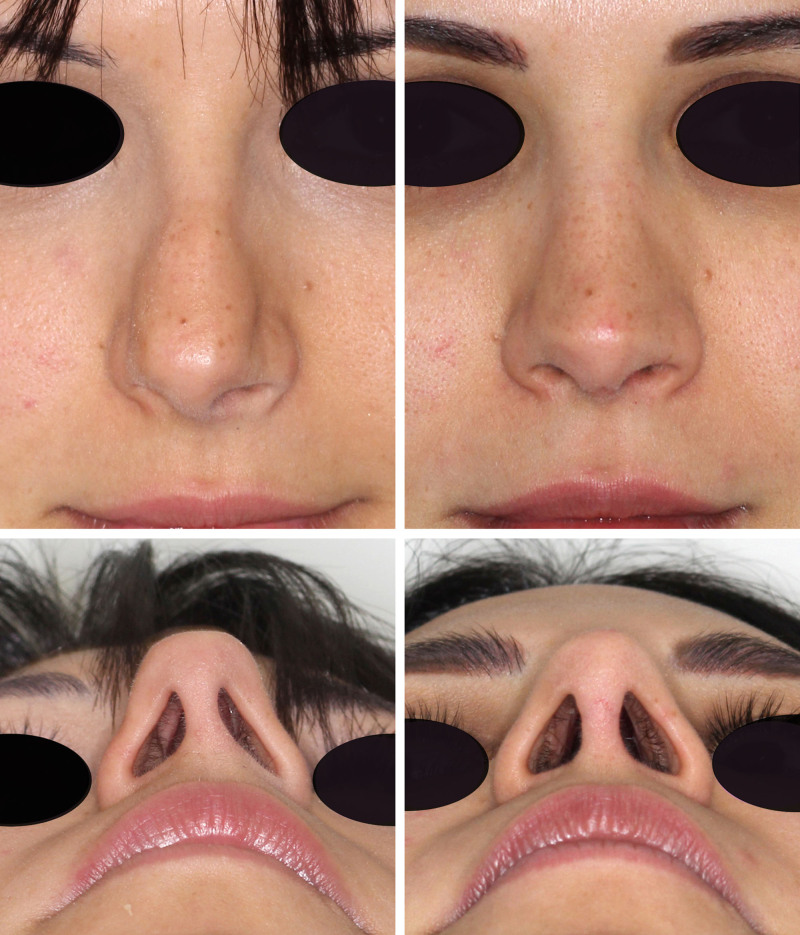
Fig. 6. Preoperative and 4-year postoperative photographs. LCSG technique. (Left) Preoperative frontal and base views of a primary rhinoplasty patient in their mid-20s, with bulbous vertically oriented lateral crura. (Right) Four-year postoperative photographs of the same patient after treatment with LCSG and repositioning. Frontal and base views show tip refinement and patent airway. Many patients have had acceptable outcomes with this technique, but achieving a consistent balance of appearance and function was challenging for the authors.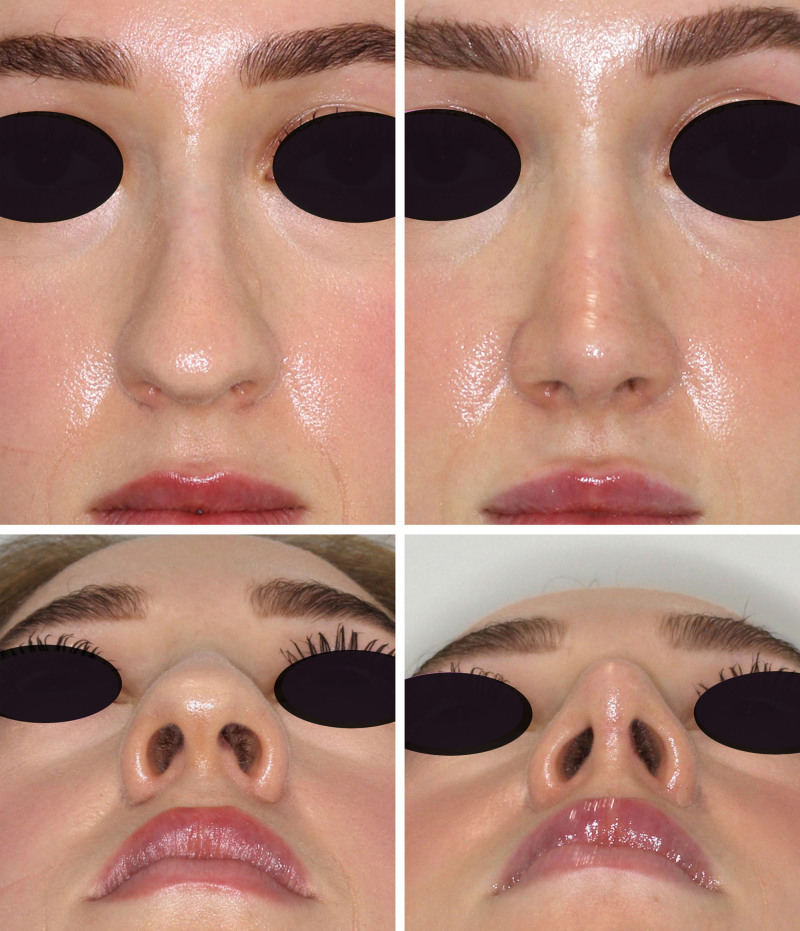
Fig. 7. Preoperative and 1-year postoperative photographs. LCT/AARG technique. (Left) Preoperative photographs of a primary rhinoplasty patient in their early 20s with wide and very convex lateral crura. (Right). One-year postoperative photographs of the same patient after treatment with LCT using dome division and AARGs. Frontal and base views show tip refinement and patent airway.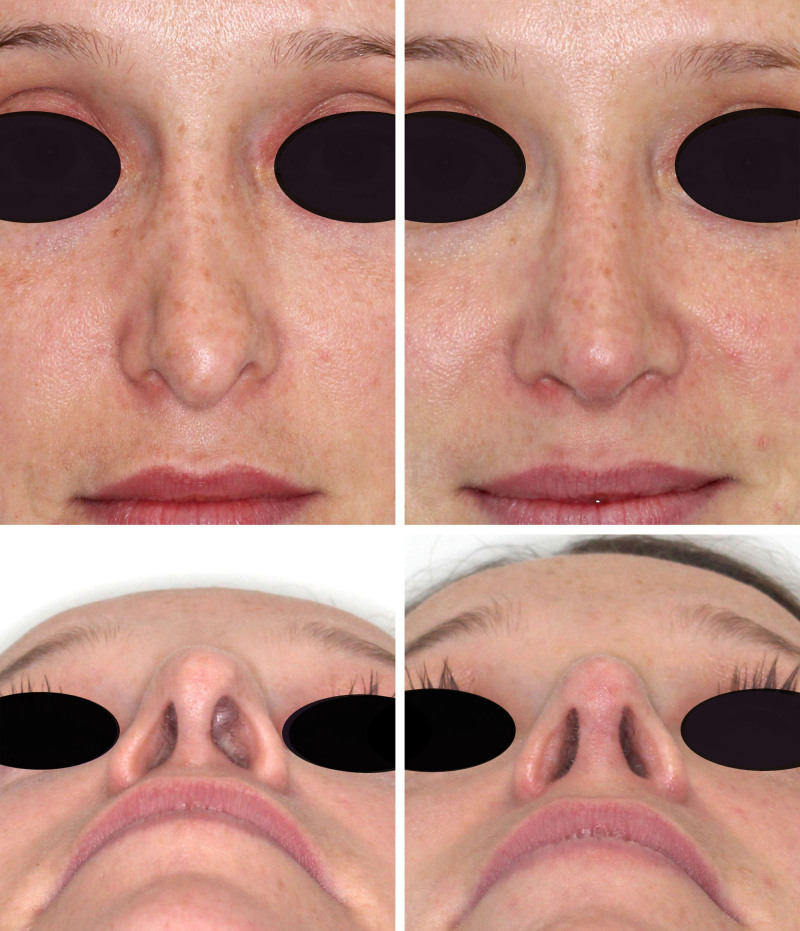
Fig. 8. Preoperative and 1-year postoperative photographs. LCT/AARG technique. (Left) Preoperative photographs of a revision rhinoplasty patient in their mid-20s with inverted V deformity and convex lateral crura. (Right) One-year postoperative photographs of the same patient after treatment with rib grafting, LCT using dome division, and AARGs. Frontal and base views show tip refinement and patent airway.
This study represents the largest comparison between the LCT/AARG and LCSG techniques with stratification of primary and revision subpopulations, using patient-centered outcome measures supported by objective nasal airflow analysis. However, it is limited in its generalizability, as the study population had poor baseline function and all operations were performed by a skilled plastic surgeon at a tertiary facial plastics clinic, which may not reflect outcomes in typical settings. Moreover, assessment of other outcomes, including operative time, recovery, revision, and complications between the groups, would be valid, but were beyond the scope of this research. The authors believe they are likely to be similar.
One of the challenging aspects of assessing rhinoplasty patients before and after surgery is the multitude of maneuvers that are often combined during surgery. In this study, alar base surgery was more commonly performed during the period when LCSG-style rhinoplasty was being practiced (alar base surgery primary, 49% versus 13% [ P < 0.01], and revision, 46% versus 10% [ P < 0.01]). To assess the relationship of alar base surgery on outcomes, over both populations, those who had alar base surgery had similar change in nasal symptom score (Δ in more than 1 category, 77.0% versus 76.1% [ P = 0.88]). A simple linear regression was used to test whether alar base surgery, turbinate reduction, or nasal valve technique significantly predicted NPIF. The overall regression was statistically significant (R 2 = 0.508, F 3,172 = 3.56 [ P = 0.016]). The nasal valve technique more closely predicted NPIF (β = 15.1, P = 0.06), along with turbinate reduction (β = 13.3, P = 0.06), compared with alar base surgery (β = −11.0, P = 0.21). Other regression models for NAR and MCA did not have significant differences for patients with alar base surgery.
The surgical techniques were not selectively applied on the basis of patient factors, but there were differences in characteristics between LCT and LCSG groups in both the primary and revision populations. In the primary population, there was a difference between groups in MCA. The MCA was normalized and a percentage change from baseline was also similar between groups (%ΔMCA obstructed side, 40.00 [7.94 to 122.22] versus 45.16 [3.81 to 156.63] [ P = 0.67]; %ΔMCA total, 27.89 ± 48.56 versus 101.81 ± 479.35 [ P = 0.22]). In the revision population, the older age of the LCT group might imply greater soft-tissue laxity compared with the LCSG group. Both techniques have a learning curve, and judgment and skill sets might suit different surgeons accordingly.
Further investigations could be performed with stratified and extended follow-up periods to investigate the long-term viability of both techniques. Ongoing patient recruitment, particularly in the revision subpopulation, would improve the power of the study. Future studies should aim to use validated patient-reported outcome measures to ensure reliability and validity across different populations.
Both LCT/AARG and LCSG are effective techniques, but LCT/AARG offers additional benefits of improving nasal airflow, reducing nasal resistance, and improving perceptions of nasal function and quality of life.
Dr. Harvey is a consultant for Medtronic, Neilmed, Glaxo-Smith-Kline, and Sanofi. Research grant funding was received from Glaxo-Smith-Kline, Sanofi, Neilmed, Procter & Gamble, and Stryker. He has been on the speakers bureau for Glaxo-Smith-Kline, Neilmed, Abbott Pharma, Sanofi, Viatris, Stallergenes, Procter & Gamble, and Stryker. Dr. Kalish is on the speakers bureau for Seqirus, Stallergenes, and Viatris. Dr. Sacks has served on advisory boards for Medtronic and AstraZeneca. The other authors have no financial disclosures or conflicts of interest to report.
Patients provided written informed consent for the use of their images.
声明:中文精读 · 仅供学术参考。内容来自公开文献检索,不代表本人观点,不构成诊疗建议。 医疗美容需在正规医疗机构由执业医师实施。
基于相同主题推荐 · 继续深挖
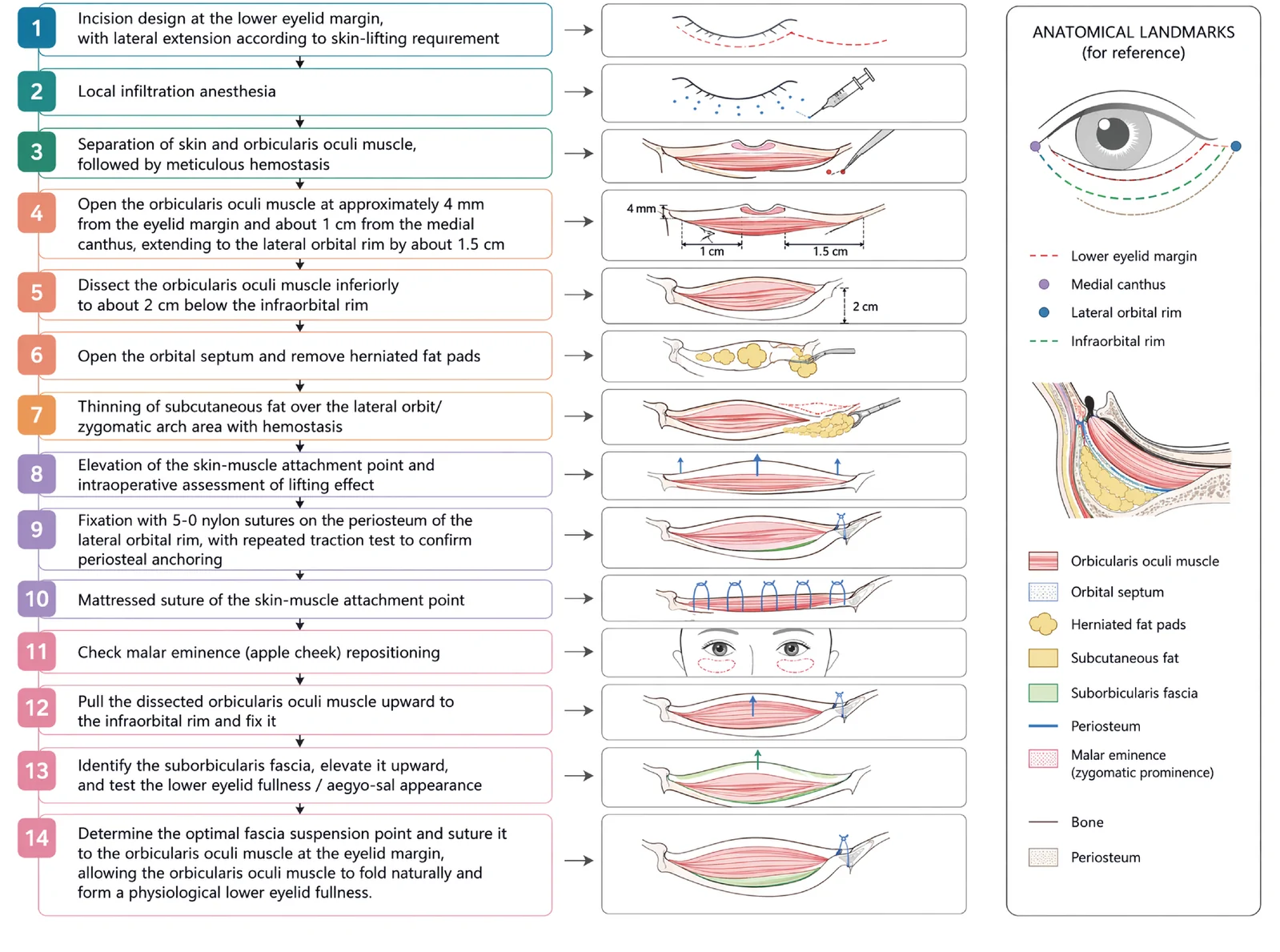
V3中面部提升经睫毛下切口,沿内眦线、外眦线、颧脂肪垫下界三个向量悬吊,可同时改善中面部下垂、下睑袋及睑颊轮廓不连续。
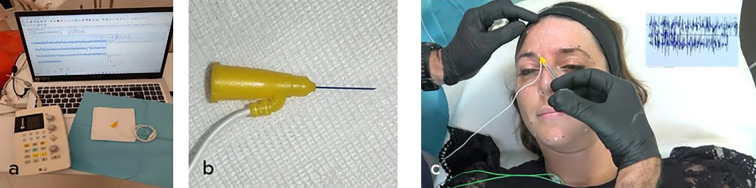
由6名意大利多学科专家(皮肤科、整形外科、神经科)基于文献回顾(PubMed 1973–2025)与临床经验形成的专家共识,针对incobotulinumtoxin A(Bocou
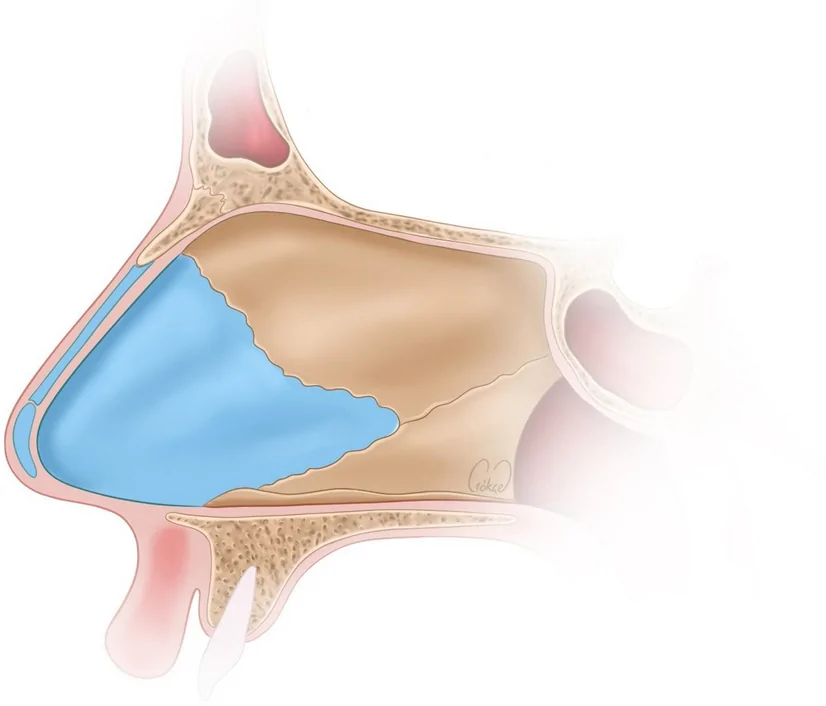
回顾性队列研究(循证等级IV),50例轴向偏曲(C形28例、反C形22例)歪鼻患者,由单一术者于2021至2023年行开放鼻整形,平均随访2年(1至3年)。