液态聚己内酯(PCL)填充剂中面部年轻化先导研究:30 例 6 个月随访
2026年10月14日20 min read
Plastic and Reconstructive Surgery Global Open
Plastic and Reconstructive Surgery Global Open
结论与实践要点
本研究以回顾性先导设计评估液态 PCL 填充剂用于中面部年轻化的疗效与安全性。30 例患者接受每侧 4 mL、间隔 30 天的 2 次注射(25G 钝针、深层真皮、逆行线性技术),以 Vectra 3D 影像与 FACE-Q 问卷评估。结果显示 90 天时颧部体积增加、下颌线改善,95% 患者报告 definitely satisfied;60 次治疗中仅 2 例(3.3%)出现轻度炎症样反应,短期激素联合抗组胺治疗即可控制,未发生血管事件、结节或肉芽肿。
临床提示:其一,液态 PCL 的即时容积效应来自载体、渐进效应来自胶原新生,作者引用既往活检证据(9 与 21 个月 I/III 型胶原升高)说明其效应时相,但本研究自身未做组织学验证,该机制证据属引用性质;其二,2 例炎症反应均发生于第二次治疗后,提示重复治疗可能增加免疫反应风险,术前沟通应包含迟发肿胀的可能;其三,研究无对照组、样本小、随访仅 6 个月,疗效量级尚不能与 HA 或其他生物刺激剂直接比较,长期维持时间(液态 PCL 约 12 个月)需更大样本验证;其四,注射技术与产品选择(含/不含利多卡因)可能影响耐受性,本方案为不含利多卡因的深层真皮注射。
Background:Facial aging is a multifaceted process involving structural changes in deeper tissues alongside skin alterations. Dermal fillers, including hyaluronic acid and non-hyaluronic acid variants, have emerged as key tools in addressing these changes, offering safe, effective, and minimally invasive solutions. Polycaprolactone (PCL) is a biocompatible, biodegradable polymer with remarkable collagen-stimulating properties.
Methods:This pilot study explored the efficacy and safety of liquid PCL-based filler in rejuvenating the middle third of the face in 30 patients during a 6-month period, who underwent 2 treatments with PCL filler using a 25G cannula.
Results:The results demonstrate significant improvements in skin quality and volume, with high patient satisfaction rates. Although adverse events were mild and transient, careful injection techniques are recommended to mitigate risks. The gradual dissipation of the PCL-based filler induced the formation of new collagen, ensuring a prolonged volumizing effect in the middle third of the face.
Conclusions:The ability of PCL to stimulate collagen production offers promising prospects for long-term facial rejuvenation, underscoring its importance in modern aesthetic medicine.
Question: Can liquid-form polycaprolactone (PCL) be a safe and effective treatment for rejuvenation of the middle third of the face?
Findings: This 6-month pilot study involving 30 patients demonstrated high satisfaction and significant volumetric and contour improvements after 2 sessions of PCL-based filler, with a 3.3% incidence of mild, self-limiting adverse events.
Meaning: Liquid PCL is a promising collagen biostimulator with long-lasting aesthetic benefits and a favorable safety profile, especially suitable for volume restoration and contour enhancement in the midface region.
The aging process brings about a complex cascade of changes in the facial anatomical structures, affecting not only the skin but also the deeper layers. These transformations encompass volume loss, which occurs because of bone remodeling and the gradual deflation of fat pads. Commencing in the late second to the third decade of life, these processes are intimately linked to the emergence of diverse and unmistakable signs of aging.
In response to these natural and age-related alterations, a range of dermal fillers, such as hyaluronic acid (HA) and non-HA fillers, have been developed to counteract the loss of collagen, which is a hallmark of aging. Similarly, recent research has highlighted the use of intact fish skin grafts in regenerative medicine, due to their unique ability to stimulate collagen production and improve skin quality. These findings further contextualize the growing role of biostimulators like PCL in aesthetic applications. The use of soft-tissue fillers for augmentation has witnessed a remarkable surge in recent decades, progressively overtaking surgical procedures. This shift can be attributed to the improved safety and efficacy profiles of fillers, their shorter recovery times, and cost-effectiveness.
These fillers serve as indispensable tools for the restoration of lost volume across multiple soft-tissue layers and at the supraperiosteal level. By strategically addressing volume deficits, they play a crucial role in rejuvenating the appearance of the face, effectively mitigating the visible effects of aging and helping individuals regain a more youthful and vibrant look.
Various types of soft-tissue fillers can be categorized into nonbiodegradable options (such as polymethylmethacrylate) and biodegradable choices (such as HA). In the more recent past, a new generation of biodegradable fillers has emerged, represented by calcium hydroxylapatite, poly-l-lactic acid (PLLA), and PCL, all of which come with biostimulatory properties. 1 However, it is worth noting that calcium hydroxylapatite may not deliver long-lasting biostimulatory results, whereas PLLA and PCL require some time to observe satisfying volumetric effect for the majority of patients. 1 PCL is a biocompatible, biodegradable, and reabsorbable polymer commonly used in aesthetic treatments to combat the visible signs of skin aging, including facial sagging, wrinkles, and a decline in skin elasticity. 2
A noteworthy and distinctive feature of the PCL-based biostimulators is their remarkable ability to induce the synthesis of new collagen within the skin. Collagen, a pivotal structural protein, is abundantly found in various connective tissues and comprises a substantial portion (approximately 25%–30%) of the body’s total proteins. 3 As individuals age, the collagen fibers within the dermis undergo a gradual process of fragmentation, coupled with an increase in the activity of metalloprotease enzymes, which play a pivotal role in breaking down collagen filaments. 4 , 5 In response to this natural aging process, a range of injection-based treatments has been developed to counteract the loss of collagen, which is a hallmark of aging. 6 Among these treatments, PCL has emerged as one of the most promising materials for addressing age-related collagen depletion.
It is crucial to emphasize that although PCL is indeed a promising option for aesthetic treatments, it is imperative to consult with a qualified healthcare professional who can assess individual circumstances and recommend the most suitable treatment approach. These experts can ensure that PCL fillers are used in a safe and effective manner to achieve the desired rejuvenating and antiaging results.
Previous studies have demonstrated that PCL-based treatment is safe and effective for nasolabial fold correction, restoring volume loss in the zygomatic area, but not specifically for the middle third of the face. Therefore, in the present retrospective study, we analyzed cases where PCL filler was used for the rejuvenation of the middle third of the face. The study included 30 patients observed during a 6-month period.
This observational, pilot study was carried out on a cohort of 30 patients, all of whom underwent cannula 25G injections of liquid PCL-based filler without lidocaine into the deep dermal layer within the middle third of the face using the retrograde linear technique. All the treatments described in this article were administered by 2 highly experienced medical doctors within the confines of their private clinical practice.
To ensure the integrity and relevance of the data, strict exclusion criteria were applied, encompassing individuals younger than the age of 25, those with systemic dermatological pathologies, and individuals who had received dermal filler treatments in the middle third of the face within 6 months preceding the given treatment.
The protocol entailed an initial treatment, wherein each patient received 2 vials of the product (2 mL) on each side of their face (4 mL total). This initial treatment was followed by an identical treatment 30 days later. The treatment outcomes were assessed using the Vectra 3D imaging system. A set of 5 photographs was taken: before the first treatment, right after the first treatment, right after the second treatment, 30 days after the second treatment, and 6 months after the second treatment with PCL. Before any cosmetic intervention at our practice, patients were required to provide consent by signing a photography and procedural consent form, which was thoroughly conducted in this case as well. According to the local law, the study did not require additional approval by the local ethics committee considering the study design. The research adhered strictly to the ethical principles outlined in the Declaration of Helsinki, emphasizing the paramount importance of safeguarding the well-being and rights of participants.
The primary endpoints of the study included short- and long-term adverse effects (such as prolonged swelling, bruising, contour irregularities, intravascular injection, and related sequelae), as well as scores from posttreatment patient satisfaction questionnaires. A validated patient-centric facial assessment of clinical evaluation questionnaire (FACE-Q) was used for the evaluation of patient satisfaction. This comprehensive approach, combining advanced imaging technology and patient-reported data, provided a well-rounded evaluation of the efficacy and patient experience associated with the liquid PCL-based filler treatment.
The effects were also evaluated using a visual analog scale, which is a subjective scale of the patient’s feelings about the treatment. Patients were asked to grade their degree of satisfaction (0 = very satisfied, 10 = very dissatisfied) immediately after the injection and after 2 months.
Demographic data are summarized in Table 1 . Most patients (73%) were of Fitzpatrick skin type 3. According to the study observations, patients experienced notable improvements in skin quality after their initial treatment with PCL, and the overall satisfaction rate was high. All patients were sent a patient-centric FACE-Q questionnaire after their treatment, and the scores were calculated for each response (range, 0-100) with higher scores indicating greater satisfaction with appearance or treatment decision ( Fig. 1 ). Most patients answered “definitely satisfied” (95%). The mean (SD) of the calculated satisfaction score using the FACE-Q conversion table was 74.2 ± 34.4.
Table 1. Demographic Information for 30 Patients
| Characteristic | Patients, n |
|---|---|
| Age, mean (range), y | 54 (25–67) |
| Sex, n (%) | Male, 3 (10); female, 27 (90) |
| Fitzpatrick skin type, n (%) | 1 (1), 2 (3), 3 (22), 4 (4), 5 (0) |
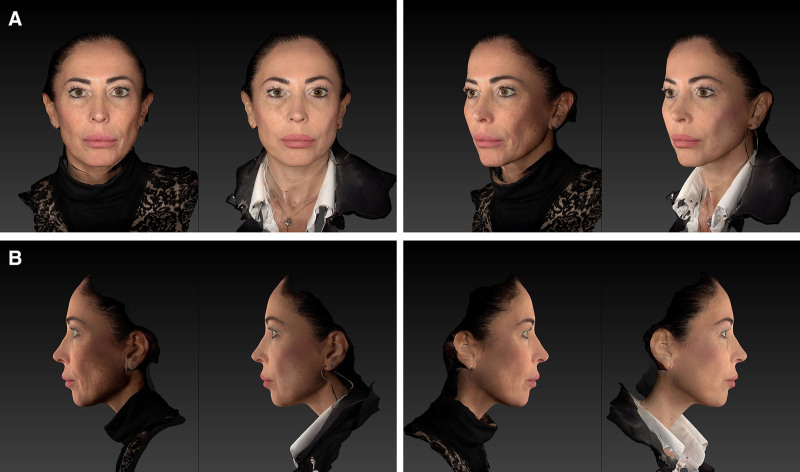
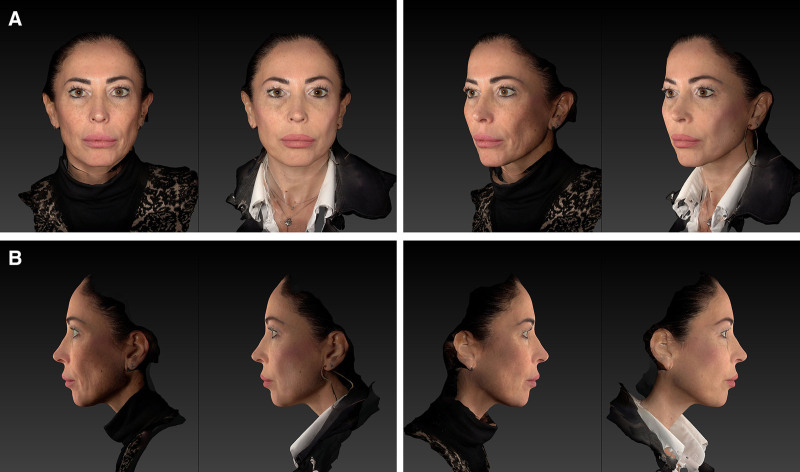
Fig. 1. Comparative photographs of a 57-year-old woman captured by Vectra 3D imaging system before the first treatment with PCL (A) and 30 days after the second treatment with PCL (B).Furthermore, the use of the Vectra 3D imaging system enabled us to document significant changes, including an increase in volume within the malar and zygomatic regions, as well as a redefinition of the mandibular line 90 days after treatment, as shown in Figure 2 . This observation suggests that liquid PCL-based filler treatments positively impacted these facial areas, leading to a more desirable aesthetic outcome.
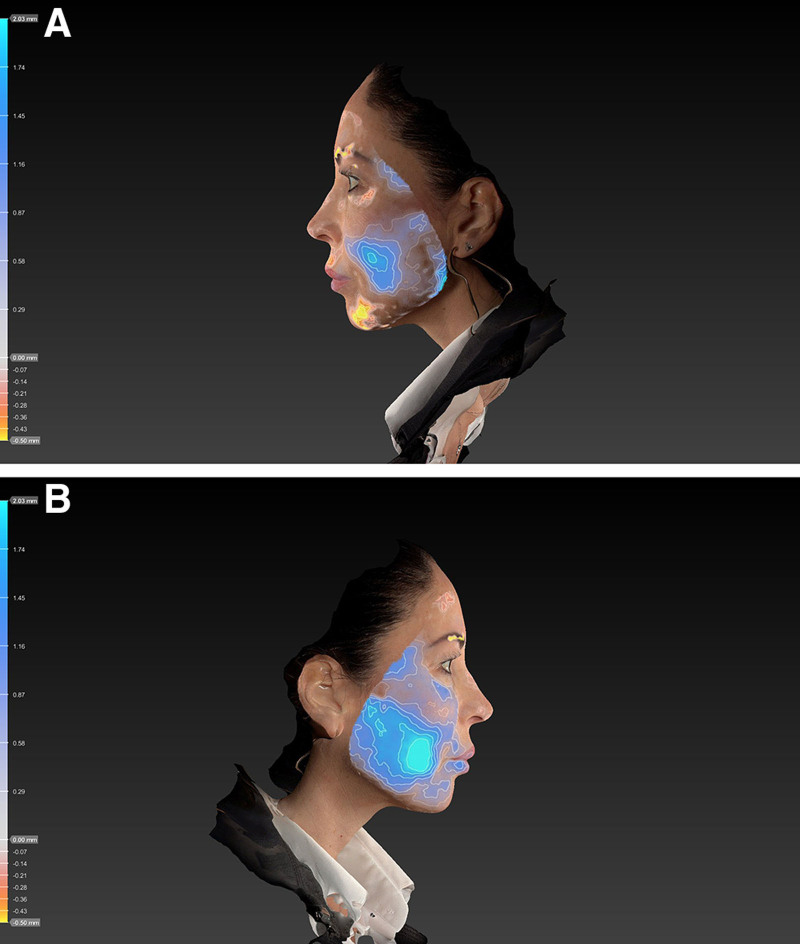
Fig. 2. Photographs of a 57-year-old woman captured by the Vectra 3D imaging system showing increased volume in the malar and zygomatic regions and redefinition of the mandibular line just 90 days after the second treatment with PCL.Regarding safety outcomes, no sequelae were observed during the 6-month follow-up period throughout the study period. Mild-to-moderate adverse reactions occurred in only 2 patients, representing a 3.3% incidence rate across the 60 treatments performed. These findings support the favorable safety profile of the PCL-based dermal filler.
One patient, an otherwise healthy 65-year-old woman, had no complications observed during the first treatment with a PCL-based dermal filler. However, approximately 8 hours after her second treatment with the same filler, she began to experience a gradual onset of facial swelling (Fig. 3 ). The patient did not develop any additional symptoms. On reevaluation, the patient displayed facial edema, along with very mild bruising beneath the lower eyelids. The patient also reported experiencing diffuse pain in her face. No specific laboratory investigations were performed. Another patient, also a woman, aged 27 years, presented with mild periorbital edema, predominantly affecting the lower eyelid, 3 days after the first treatment with PCL.
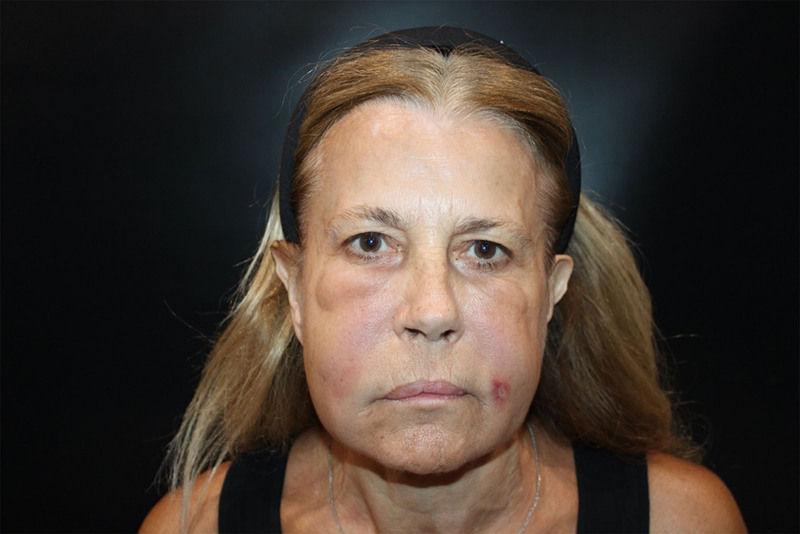
Fig. 3. A 65-year-old female patient, 24 hours after her second treatment with PCL.The progress of these patients was closely monitored; they received 4 mg of intramuscular betamethasone as first treatment and then 2 mg of betamethasone and oral antihistamines for 5 days to manage the symptoms. After a few days, the swelling began to diminish, and the patients exhibited increased relaxation and self-confidence, leading to a gradual reduction in the betamethasone dosage until full discontinuation of the oral therapy. Subsequent evaluations by our medical team after 5 days showed significant improvements and subsiding of all symptoms (Fig. 4 ). No long-term sequelae were observed in either patient, suggesting favorable prospects for their overall health and well-being after the specified treatment. Moreover, the patients demonstrated a more noticeable rejuvenation of the middle third of their faces after the second procedure with PCL (Fig. 5 ).

Fig. 4. A 65-year-old female patient, 7 days after her second treatment with PCL.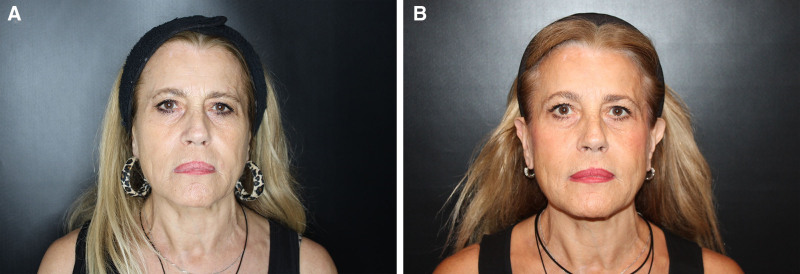
Fig. 5. A 65-year-old female patient before her first treatment with PCL (A) and 6 months after her second treatment with PCL (B).To summarize, both the reported cases demonstrate a mild and self-limiting inflammatory response consistent with a controlled, postinjection inflammation process. Such reactions are expected in the early phase after dermal filler implantation and should be clearly communicated to patients during pretreatment counseling. The transient nature and manageable course of these symptoms further support the favorable safety profile of the product.
The article presents a detailed exploration of the use of PCL as a dermal filler for rejuvenating the middle third of the face based on a retrospective assessment of the patients treated with liquid PCL-based filler. The implications of the findings, the significance of the methodology used, and the broader context within the field of aesthetic medicine are discussed.
The aging process involves multifaceted changes in facial anatomy, including volume loss, bone remodeling, and fat pad deflation. These changes lead to visible signs of aging, such as wrinkles, sagging skin, and loss of facial contours. Various dermal fillers have been developed to counteract these changes, including HA and non-HA fillers. PCL stands out among these as a promising option due to its biocompatibility, biodegradability, and ability to stimulate collagen synthesis, addressing the underlying cause of age-related volume loss.
What sets PCL fillers apart is their ability to promote the formation of type III collagen, a predecessor to the production of type I collagen, which is the most abundant and structurally important type of collagen. The induction of type III collagen, which is consequently followed by the induction of type I collagen, ultimately leads to skin tightening and an enhancement in skin quality that endures over time. The capacity of PCL to stimulate collagen production stands as a key factor behind its efficacy in addressing facial laxity, wrinkles, and the loss of skin elasticity. 7 – 9 The latest findings regarding PCL and its remarkable capacity to stimulate collagen production and its positive impact on skin thickness represent pivotal advances in our understanding of potential treatments for combatting the signs of aging and rejuvenating the facial appearance. 10 – 12
One particularly noteworthy aspect of PCL is its longevity after injection. PCL-based threads are proven to be more long-lasting compared with polydioxanone- or PLLA-based threads. 13 Currently, available commercial PCL-based fillers have expected in vivo longevity of 1–4 years, 14 with liquid-type PCL leaning toward a shorter period of up to 12 months. This remarkable durability suggests that PCL treatment offers a distinct advantage over temporary solutions, as its effects can be maintained during an extended period. 15 – 17
Equally significant are the observations of increased type I and III collagen levels in biopsies obtained at 9 and 21 months post PCL injection. This points to the potential for sustained collagen remodeling and long-term rejuvenation. In practical terms, this implies that PCL may have a lasting impact on improving skin quality and reducing the visible signs of aging. 1 , 18
The comprehensive body of evidence regarding the effects of PCL on collagen production, its prolonged persistence in the body, and its capacity to enhance skin thickness underscores its potential as a durable and effective option for facial rejuvenation. Ongoing research in this area is anticipated to yield further insights, expanding our understanding of the diverse benefits and applications of PCL in cosmetic medicine, in particular, PCL in a liquid form.
The intricate process by which PCL operates unfolds in a well-studied manner. PCL serves as a potent catalyst, stimulating the formation of neocollagen, which is pivotal for achieving rejuvenating results. 7 , 12 , 19 , 20
These mechanisms have been validated through histological and histochemical examinations of skin biopsies from treated individuals. An intriguing observation from these analyses is the progressive transition from collagen type III to collagen type I, indicating an improvement in quality and an earlier onset of favorable outcomes compared with other resorbable products designed for long-lasting effect. 20 The use of PCL fillers is gaining prominence in the field of aesthetic medicine.
Although the existing medical literature predominantly reports cases of localized adverse events associated with PCL-based dermal fillers, often attributed to injection techniques, these complications usually include swelling, bruising, malar edema, temporary lumps, granulomas, and discoloration. 2 , 19 Notably, facial edema has been associated with an exaggerated immune response of the host. 2 , 19 Collectively, these findings emphasize the potential effectiveness of PCL in improving skin quality and achieving desirable aesthetic outcomes. Continuous monitoring of long-term effects and further data collection will be essential to validate and expand on these initial results. 2 , 19
This study confirmed the findings of the abovementioned studies regarding the effectiveness of PCL in terms of skin rejuvenation. At the same time, during the series of a total of 60 treatments, there were only 2 cases of adverse reactions to the filler implantation. The reactions observed in this study manifested as facial swelling and bruising. Prompt intervention with corticosteroids and antihistamines effectively managed these adverse events. This demonstrates better results in terms of tolerance and posttreatment rehabilitation after liquid PCL-based filler injection compared with the results of a retrospective study on carboxymethyl cellulose-gel–suspended PCL microsphere–based filler implantation conducted by Lin and Christen, 2 where all patients have experienced either short-term or prolonged swelling after the treatment. Although not incorporated in this study for the purpose of medical device safety evaluation, it is assumed that pre- and postmedication protocol guidelines recommended by doctors can mitigate the related risks.
The findings of this study have several implications for clinical practice. First, PCL emerges as a viable option for rejuvenating the middle third of the face, offering both immediate volumetric effects and long-term collagen stimulation. However, clinicians must be aware of the potential for adverse reactions and should exercise caution while adhering to recommended protocols, particularly in susceptible individuals. Future research should focus on optimizing treatment protocols, refining patient selection criteria, and investigating the long-term outcomes of PCL treatment.
It is important to acknowledge the limitations of the study. The sample size was relatively small, limiting the generalizability of the findings. Additionally, the study lacked a control group, making it challenging to compare the efficacy and safety of PCL with other fillers or treatment modalities. Further research with larger sample sizes and comparative study designs could provide more robust evidence regarding the benefits and risks of PCL treatment. These findings underscore the translational relevance of PCL-based stimulators and their potential to revolutionize the field of aesthetic medicine.
In conclusion, our study confirms the favorable safety profile of the liquid PCL-based filler, with only mild and self-limiting adverse events observed during the 6-month follow-up. No cases of vascular complications, nodules, or granulomas were reported. The treatment proved effective in stimulating collagen production and improving midface volume, offering both immediate and progressive rejuvenation. These findings support the role of liquid PCL as a valuable, long-lasting option for nonsurgical facial enhancement.
The authors have no financial interest to declare in relation to the content of this article.
声明:中文精读 · 仅供学术参考。内容来自公开文献检索,不代表本人观点,不构成诊疗建议。 医疗美容需在正规医疗机构由执业医师实施。
基于相同主题推荐 · 继续深挖
回顾性观察性先导研究,30 例患者(73% 为 Fitzpatrick III 型皮肤),液态 PCL 填充剂以 25G 钝针、逆行线性技术注射至中面部深层真皮,每侧面部 2 瓶(
背景:玻尿酸(HA)填充剂广泛用于面部年轻化,相关并发症常用透明质酸酶(HAase)溶解;但 HAase 对真皮基质、皮肤结构与成纤维细胞功能的影响此前不明确。
背景:填充剂广泛用于软组织增量与面部年轻化,总体安全,并发症多轻微;不可逆并发症虽罕见却后果严重,主因常是对面部解剖理解不足、选品 / 技术不当、诊断与管理失误。