皮肤削减乳房切除术后一期假体再造:胸肌前 vs 胸肌后 Meta 分析(26 研究 1106 侧)
2026年10月15日29 min read
Plastic and Reconstructive Surgery Global Open
Plastic and Reconstructive Surgery Global Open
结论与实践要点
这是迄今聚焦 SRM 后单期假体再造的胸肌前/后对比 Meta 分析。核心结论:总体安全性相当(并发症 20% vs 25%),胸肌前在缺血类并发症上呈有利趋势且 BREAST-Q 心理社会与满意度维度一致较高,作者倾向在皮瓣质量允许时优先胸肌前——但所有组间差异均未达统计学意义,且胸肌前组异质性高达 84%。
解读须注意三点偏倚:① 选择偏倚——回顾性研究中皮瓣薄、血供差的高危病例更常被分入胸肌后;而文献中也有大型队列报告胸肌前假体丢失更高(部分分析达 23% vs 4.8%),提示病例选择与技术时代差异(胸肌后系列平均早 5–10 年)可能共同影响结果;② ADM 使用不均——胸肌前组 46.8% 使用 ADM,可能降低包膜挛缩;③ 并发症与 PRO 报告口径异质、无统一对照。落地建议:皮瓣血运评估(厚度、灌注)是平面选择的主要依据;选择胸肌前者应术前告知皱褶风险及脂肪移植补救方案;长期结局仍待前瞻性、标准化报告的研究确认。
Background:Skin-reducing mastectomy (SRM) enables single-stage implant-based breast reconstruction (IBBR) in women with large or ptotic breasts. The optimal implant plane after SRM remains debated. Retropectoral placement provides reliable coverage but is associated with pain and animation deformity, whereas prepectoral placement avoids muscle dissection but requires well-vascularized and thicker skin flaps.
Methods:A systematic review and meta-analysis was conducted according to PRISMA guidelines (PROSPERO ID: 1019974). Databases were searched in April 2025. Eligible studies reported outcomes of SRM followed by single-stage prepectoral or retropectoral IBBR. The primary outcome was breast complications; secondary outcomes included aesthetic and patient-reported outcomes (PROs). A random-effects proportional meta-analysis was performed.
Results:Twenty-six studies comprising 863 patients and 1106 reconstructions were included (432 prepectoral and 674 retropectoral). The pooled complication rate was similar between prepectoral and retropectoral reconstruction (20% versus 25%), with no statistically significant differences in any specific complication, including implant loss, skin necrosis, nipple-areolar complex necrosis, wound dehiscence, superficial epidermolysis, capsular contracture, and rippling. PROs favored prepectoral placement, with consistently high BREAST-Q scores across psychosocial, sexual, and satisfaction domains.
Conclusions:In women with large ptotic breasts undergoing SRM with single-stage IBBR, prepectoral and retropectoral reconstruction show comparable overall safety. Given the favorable PRO trends, prepectoral placement may be preferred, although these differences did not reach statistical significance.
Question: In skin-reducing mastectomy (SRM) with single-stage implant-based breast reconstruction (IBBR) in ptotic breasts, do outcomes differ between prepectoral and retropectoral implant placement?
Findings: In this meta-analysis of 26 studies (1106 reconstructions), overall complication rates did not differ significantly between planes. Patient-reported outcomes were higher with prepectoral placement.
Meaning: SRM with single-stage IBBR appears safe in well-selected patients regardless of implant plane.
The evolution of mastectomy techniques has been driven by the dual goals of oncologic safety and improved aesthetic outcomes. Skin-sparing mastectomy, introduced in the early 1990s, marked a turning point by preserving the breast skin envelope and inframammary fold, thus allowing more natural reconstructions compared with previous mastectomy approaches. 1 , 2 However, in women with large or ptotic breast, simple skin preservation often led to redundant, poorly vascularized flaps, with increased risks of wound complications and unsatisfactory cosmetic results. 3 – 5 To address this limitation, the concept of skin-reducing mastectomy (SRM) was introduced, combining oncologic principles with reduction mammoplasty techniques. By employing a Wise-pattern or inverted-T incision, SRM reduces the skin envelope and enables single-stage implant-based breast reconstruction (IBBR) while reshaping the breast mound. 1 , 4
However, the optimal plane of implant placement after SRM remains debated. Retropectoral placement positions the implant partially beneath the pectoralis major, whose inferior border is then sutured to a de-epithelialized dermal flap to create a dermomuscular pocket over the implant, as described by Nava et al. 1 This provides robust soft-tissue coverage and reduces visible rippling, especially in thin patients, but requires muscle disinsertion. As a result, it is associated with pain, animation deformity, increased bleeding, increased seroma rate, functional impairment of the chest wall, and increased recovery time. 1 , 3 , 4 , 6 – 8
In contrast, prepectoral reconstruction, in which the implant is placed entirely above the pectoralis major muscle has re-emerged as an alternative in the last decade. This technique avoids muscle dissection, reducing pain, animation deformity, and hospitalization, but requires adequate skin flap vascularity to avoid complications such as necrosis and implant exposure. 3 , 4 , 9 – 11
Both planes can be reinforced with acellular dermal matrices (ADMs), which provide additional coverage to increase the thickness of the lower flap and to better fixate the inframammary fold. However, their high cost and limited availability prevent widespread use. 12 – 15
Given the rising popularity of prepectoral reconstruction and the long-standing experience with retropectoral techniques, a systematic evaluation of outcomes is essential in the setting of SRM. This systematic review and meta-analysis aims to compare prepectoral and retropectoral single-stage IBBR following SRM, focusing on postoperative complications, aesthetic results, and patient-reported outcomes (PROs).
We followed the PRISMA (Preferred Reporting Items for Systematic Reviews and Meta-Analyses) guidelines for reporting study results. 16 Our systematic review and meta-analysis study protocol was prospectively registered on PROSPERO (registration ID: 1019974).
The review question was formulated based on the PICOS framework (population, intervention, comparison, outcome, study design) and included adult women with large or ptotic breasts undergoing SRM and single-stage IBBR. Prepectoral and retropectoral implant placement were compared; the primary outcome was postoperative complications (Table 1 ).
Table 1. PICOS Criteria
| PICOS | Inclusion | Exclusion |
|---|---|---|
| Population | Adult women after skin-reducing mastectomy | Cadaver, Animal, women with other types of mastectomies |
| Intervention | Immediate implant-based breast reconstruction | Autologous reconstruction, expanders, delayed implant reconstruction |
| Comparator | Prepectoral implant placement compared with retropectoral implant placement | |
| Outcomes | Primary: postoperative complicationsSecondary: aesthetic outcomes and satisfaction | If primary outcome not reported |
| Study design | Prospective, retrospective, comparative, RCTs, case series of >5 | Reviews, meta-analysis, letters, abstracts only, case reports |
To answer this question, a comprehensive literature search of PubMed, Embase, Web of Science, and Cochrane Library was conducted on April 11, 2025. A combination of MeSH terms and keywords related to SRM, immediate IBBR, implant plane (prepectoral/retropectoral), and postoperative outcomes was used to develop a search strategy (Table 2 ).
Table 2. Search Strategy
| Key Words | Database |
|---|---|
| (“skin reducing mastectomy” OR“skin reduction mastectomy” OR(skin AND (“reducing”/exp OR reducing OR “reduction”/exp OR reduction) AND (“mastectomy”/exp OR mastectomy)))AND(“immediate implant based breast reconstruction” OR“immediate breast reconstruction” OR“implant based reconstruction” OR(immediate AND implant AND (“breast”/exp OR breast) AND (“reconstruction”/exp OR reconstruction)))AND(prepectoral OR “pre-pectoral” ORretropectoral OR “retro-pectoral”)AND(“postoperative complication”/exp OR“postoperative complications” OR(postoperative AND (“complication”/exp OR complication)) OR(postoperative AND (“outcome”/exp OR outcome))) | Pubmed (MEDLINE)EmbaseWeb of ScienceCochrane Library |
We included English-language studies of adult women who underwent SRM followed by single-stage IBBR. Animal or cadaveric work, other mastectomy types, autologous reconstructions, tissue expanders and secondary implant reconstructions were excluded. Eligible designs were randomized controlled trials, prospective or retrospective cohort studies, and case series with more than 5 patients. Studies had to report the primary outcome to qualify for analysis. All records retrieved on April 11, 2025 were imported into Rayyan and screened independently by two reviewers (C.M.N. and D.C.), with disagreements resolved in consultation with the senior author (C.M.O.).
The primary outcome was defined as any postoperative complication occurring at the breast after single-stage prepectoral or retropectoral implant placement, whereas the secondary outcome was defined as aesthetic outcomes and patient satisfaction.
For inclusion in the meta-analysis, a complication had to be reported in at least 3 articles; otherwise, it was only described in the Results section. Complications were documented on a per-breast basis.
The data were analyzed for proportional meta-analysis using R software (R Foundation for Statistical Computing, Vienna, Austria) version 4.3.2 with the meta-package. Articles were dichotomized in 2 groups: prepectoral or retropectoral implant placement. A random-effects model based on the DerSimonian–Laird method was applied to calculate pooled complication rates of each method, with studies weighted by inverse variance (and incorporating between-study variance, τ 2 , under the random-effects model). Study heterogeneity was assessed using the I 2 statistic and the Q-statistic P value. I 2 values <30% indicate low heterogeneity and values above 70% indicate significant heterogeneity. 17 Forest plots were generated to display pooled proportions with 95% confidence intervals (CIs). Differences in pooled proportions were then compared for statistical significance using a 2-tailed z-test. All tests were two-sided, and statistical significance was defined as a P value less than 0.05.
Risk of bias for nonrandomized studies was assessed using the Newcastle–Ottawa Scale; higher scores (8–9) were considered indicative of higher methodological quality and lower risk of bias. 18
Baseline characteristics were summarized descriptively by implant plane, P values were not calculated because groups were drawn from separate noncomparative studies and pooled comparisons would not appropriately account for between-study clustering and heterogeneity. For continuous variables, study-size–weighted means were calculated as ∑(ni×x¯i)/∑ni,with ranges reported as the minimum–maximum of study means. For binary variables, results are presented as n/N available (%), where N available is the sum of patients (or breasts) across studies reporting the variable.
The initial search yielded 373 citations. After removing 60 duplicates, 313 titles remained. Of these, 261 were excluded based on title and abstract, leaving 52 articles for full-text assessment. Six reports could not be retrieved in full text, and 20 were excluded after full-text review for the following reasons: Becker expander studies (n = 3), insufficient extractable data (n = 4), wrong outcome (n = 6), other technique (n = 5), and case series with 5 or fewer participants (n = 2). Ultimately, 26 studies met the eligibility criteria and were included in the review, comprising 18 retrospective and 8 prospective studies (Fig. 1 ). 1 , 3 , 4 , 7 , 13 , 19 – 39
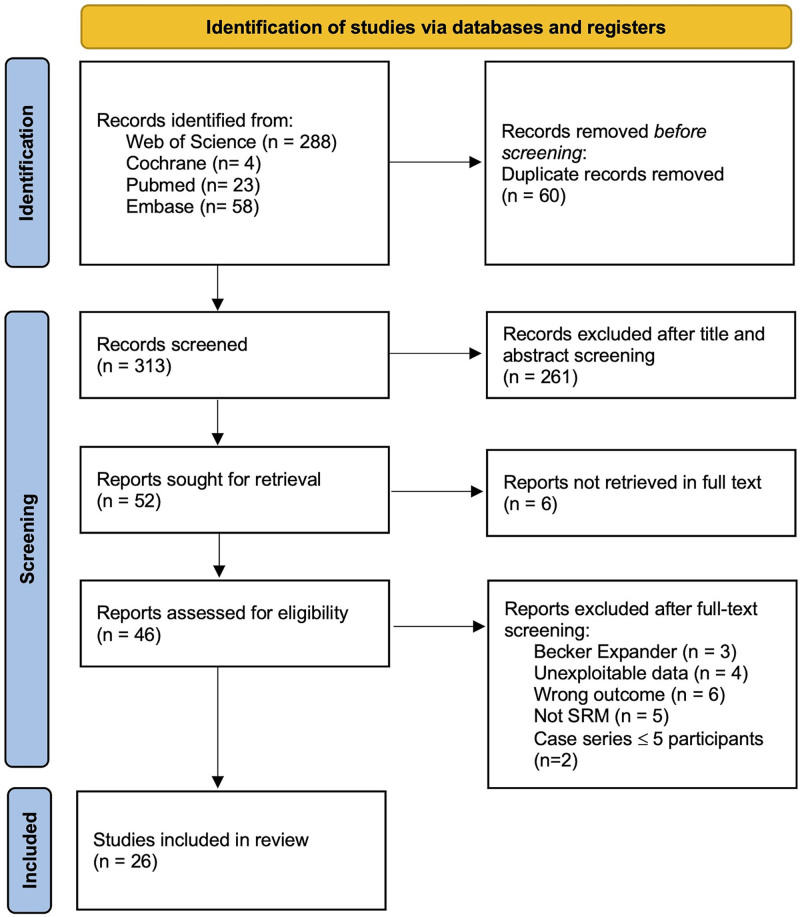
Fig. 1. PRISMA Flowchart.文献筛选 PRISMA 流程:373 条记录经筛选后 26 篇纳入。
Included studies were conducted in Europe (n = 18), 1 , 3 , 4 , 7 , 19 – 23 , 26 , 27 , 29 – 32 , 34 – 37 the United Kingdom (n = 2), 24 , 25 Canada (n = 1), 13 the United States (n = 1), 38 Egypt (n = 1), 39 Lebanon (n = 1), 28 and Saudi Arabia (n = 1). 33 Of these, 3 were multicentric, 32 , 34 , 39 and 23 were single-center studies. 1 , 3 , 4 , 7 , 13 , 19 – 31 , 33 , 35 – 38
A total of 863 patients underwent 1106 single-stage IBBR after skin-reducing mastectomy, 432 (39.0%) using prepectoral and 674 (61.0%) using retropectoral implant placements. ( See table, Supplemental Digital Content 1, which displays study and patient characteristics, https://links.lww.com/PRSGO/F72.) Patient demographics were comparable between groups, with similar weighted mean age (48.9 versus 48.8 y) and body mass index (27.6 versus 27.2 kg/m 2 ), and similar proportions of active smokers and hypertension. Diabetes was reported more frequently in prepectoral cohorts (Table 3 ). At the breast level, weighted mean implant size was similar between groups (461.8 versus 424.6 mL). Radiotherapy was uncommon in both groups (5.6% prepectoral versus 2.7% retropectoral). ADM use was reported more frequently in prepectoral reconstruction (46.8% versus 9.5%), as seen in Table 4 .
Table 3. Baseline Characteristics (per Patient)
| Prepectoral (N = 316) | Retropectoral (N = 547) | |
|---|---|---|
| Pre N available | Pre Value | |
| Age, y (weighted mean, range) | 316 | 48.9 (41–56) |
| BMI, kg/m 2 (weighted mean, range) | 270 | 27.6 (23.5–36.6) |
| Active smokers, n/N available (%) | 150 | 26/150 (17.3) |
| HTN, n/N available (%) | 167 | 23/167 (13.8) |
| Diabetes, n/N available (%) | 190 | 21/190 (11.1) |
Table 4. Breast Characteristics (per Breast)
| Prepectoral (N = 432) | Retropectoral (N = 674) | |
|---|---|---|
| Pre N available | Pre Value | |
| Implant size, mL (weighted mean, range) | 419 | 424.6 (340.0–663.1) |
| Radiotherapy, n/N available (%) | 301 | 17/301 (5.6) |
| Prophylactic mastectomy, n/N available (%) | 277 | 51/277 (18.4) |
| Therapeutic mastectomy, n/N available (%) | 277 | 226/277 (81.6) |
| ADM use, n/N available (%) | 432 | 202/432 (46.8) |
Most studies were single-arm cohorts rated moderate in quality (6 out of 9 stars on the Newcastle–Ottawa Scale). ( See table, Supplemental Digital Content 2 , which displays the Newcastle–Ottawa-Scale, https://links.lww.com/PRSGO/F73.)
In this meta-analysis, the pooled complication rate was lower in the prepectoral group (0.20; 95% CI: 0.11–0.33; I 2 = 84%) compared to the retropectoral group (0.25; 95% CI: 0.19–0.31; I 2 = 60%), though this difference was not statistically significant ( P = 0.43) (Figs. 2 , 3 ). Funnel plots for the pooled complication rate are provided as Supplemental Digital Content 3 and Supplemental Digital Content 4 . ( See table, Supplemental digital content 3 , which displays the funnel plot of overall complication rate in the prepectoral group, https://links.lww.com/PRSGO/F74.) ( See table, Supplemental digital content 4 , which displays the funnel plot of overall complication rate in the retropectoral group, https://links.lww.com/PRSGO/F75.) Visual inspection did not suggest marked small-study effects, although interpretation is limited by heterogeneity in both subgroups and a small number of studies in the prepectoral subgroup (PRE: k = 11, I 2 = 83.6%; RETRO: k = 15, I 2 = 60.0%).
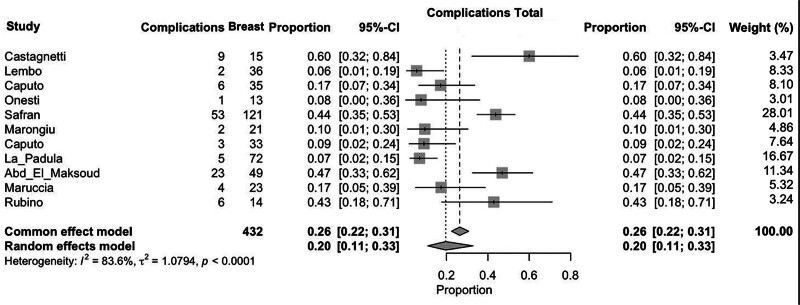
Fig. 2. Overall complications for prepectoral group.胸肌前组总体并发症率汇总森林图。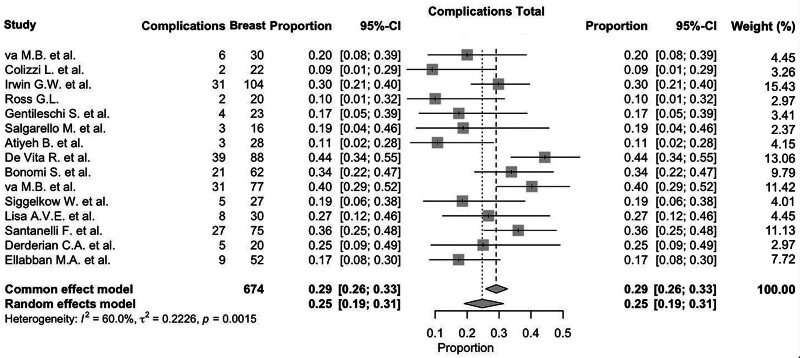
Fig. 3. Overall complications for retropectoral group.胸肌后组总体并发症率汇总森林图。
Clinical outcomes comparing prepectoral and retropectoral implant placement in SRM are detailed in Table 5 .
Table 5. Comparison of Clinical Outcomes Between Prepectoral and Retropectoral Implant Placement
| Prepectoral | Retropectoral | Z-test | |
|---|---|---|---|
| Pooled Proportion | N | Pooled Proportion | |
| Implant loss | 0.02 | 419 | 0.04 |
| Skin necrosis | 0.05 | 168 | 0.10 |
| NAC necrosis | 0.04 | 350 | 0.07 |
| Wound dehiscence | 0.03 | 384 | 0.06 |
| Hematoma | 0.02 | 230 | 0.04 |
| Seroma | 0.03 | 399 | 0.03 |
| Infection | 0.01 | 383 | 0.02 |
| Implant exposure | 0.03 | 170 | 0.07 |
| Superficial epidermolysis | 0.03 | 33 | 0.09 |
| Capsular contracture | 0.01 | 292 | 0.05 |
| Implant rippling | 0.01 | 228 | NA |
| Overall complications | 0.2 | 432 | 0.25 |
| Revision surgery | 0.01 | 285 | 0.15 |
The pooled rate of implant loss was lower in the prepectoral group (0.02, 95% CI: 0.01–0.04, I 2 = 0%) than in the retropectoral group (0.04, 95 CI: 0.02–0.09, I 2 = 71%), and the difference did not reach statistical significance ( P = 0.30) (Figs. 4 , 5 ). The pooled rate of skin necrosis was lower in the prepectoral group (0.05, 95% CI 0.01–0.20, I 2 = 61%) than in the retropectoral group (0.10, 95% CI 0.06–0.15, I 2 = 60%), and the difference did not reach statistical significance ( P = 0.35) (Figs. 6 , 7 ).
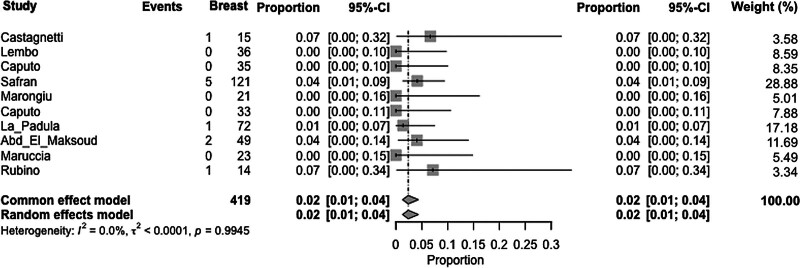
Fig. 4. Prepectoral Implant loss.胸肌前组假体丢失率森林图。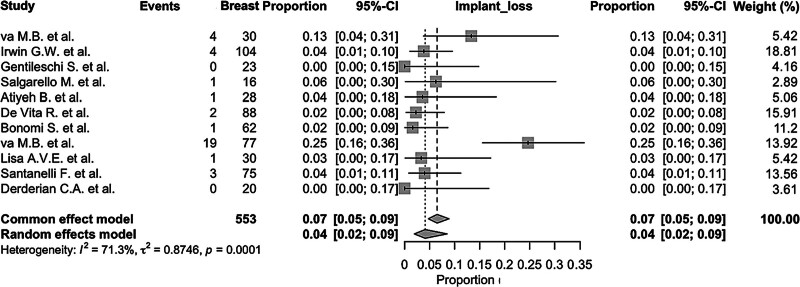
Fig. 5. Retropectoral implant loss.胸肌后组假体丢失率森林图。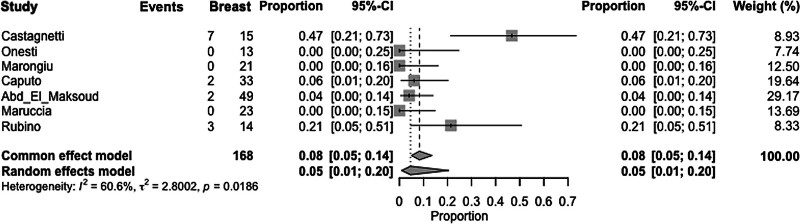
Fig. 6. Prepectoral skin necrosis.胸肌前组皮肤坏死率森林图。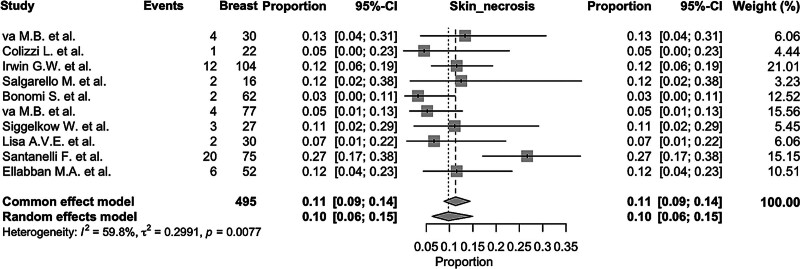
Fig. 7. Retropectoral skin necrosis.胸肌后组皮肤坏死率森林图。The pooled rate of nipple–areola complex (NAC) necrosis was lower in the prepectoral group (0.04, 95% CI: 0.02–0.09, I 2 = 0%) than in the retropectoral group (0.07, 95% CI: 0.04–0.11, I 2 = 0%), and the difference did not reach statistical significance ( P = 0.24) (Figs. 8 , 9 ). The pooled rate of wound dehiscence was lower in the prepectoral group (0.03, 95% CI: 0.01–0.05, I 2 = 0%) than in the retropectoral group (0.06, 95% CI: 0.02–0.12, I 2 = 56%), and the difference did not reach statistical significance ( P = 0.27) (Figs. 10 , 11 ).
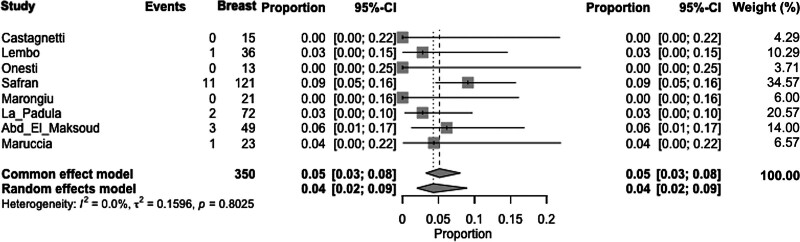
Fig. 8. Prepectoral NAC necrosis.胸肌前组乳头乳晕复合体(NAC)坏死率森林图。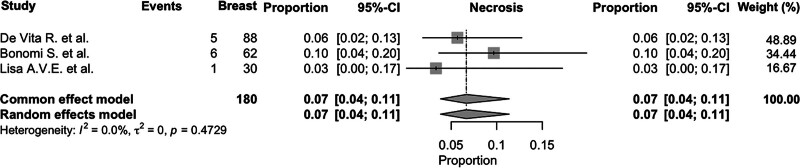
Fig. 9. Retropectoral NAC necrosis.胸肌后组 NAC 坏死率森林图。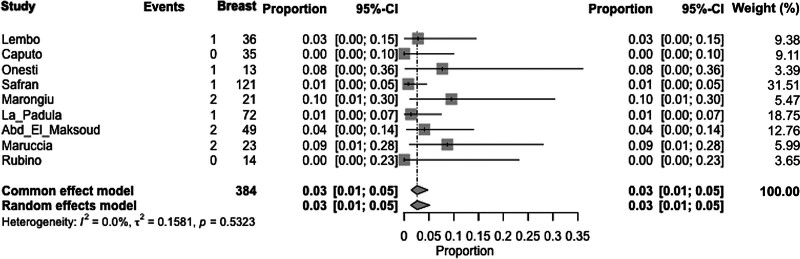
Fig. 10. Prepectoral wound dehiscence.胸肌前组伤口裂开率森林图。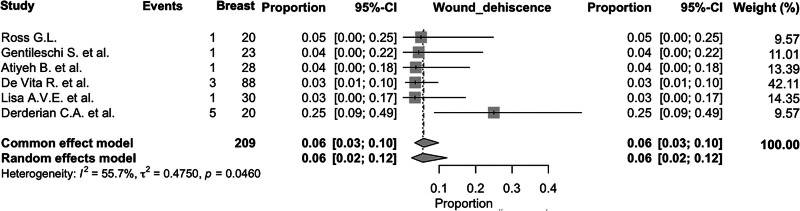
Fig. 11. Retropectoral wound dehiscence.胸肌后组伤口裂开率森林图。Regarding additional complications, the pooled rate of hematoma was lower in the prepectoral group at 0.02 (95% CI: 0.01–0.05; I 2 = 0%) compared to 0.04 (95% CI: 0.02–0.06; I 2 = 0%) in the retropectoral group, although this difference was not statistically significant ( P = 0.17). The incidence of seroma was identical between the two approaches, with a rate of 0.03 in both the prepectoral (95% CI: 0.01–0.05) and retropectoral groups (95% CI: 0.02–0.06), and no significant difference was observed ( P = 1.00).
Implant exposure occurred less frequently in the prepectoral group, with a rate of 0.03 (95% CI: 0.01–0.07; I 2 = 0%), compared to 0.07 (95% CI: 0.03–0.15; I 2 ≈ 60%) in the retropectoral group ( P = 0.38). Similarly, the rate of superficial epidermolysis was lower in the prepectoral cohort at 0.03 (95% CI: 0.00–0.16; I 2 = 0%) versus 0.09 (95% CI: 0.04–0.17; I 2 = 56%) in the retropectoral group ( P = 0.25).
Capsular contracture was reported at a lower rate in the prepectoral group (0.01; 95% CI: 0.00–0.21; I 2 = 0%) than in the retropectoral group (0.05; 95% CI: 0.01–0.18; I 2 = 56%), though this difference did not reach statistical significance ( P = 0.56). Implant rippling was reported exclusively in the prepectoral group, with a rate of 0.01 (95% CI: 0.00–0.18; I 2 = 0%).
The infection rate was also lower in the prepectoral group, recorded at 0.01 (95% CI: 0.00–0.05; I 2 = 0%) compared to 0.02 (95% CI: 0.01–0.07; I 2 = 0%) in the retropectoral group ( P = 0.62). Finally, revision surgery was less frequently reported in the prepectoral group, with a pooled rate of 0.01 (95% CI: 0.00–0.14; I 2 = 28%) versus 0.15 (95% CI: 0.01–0.67; I 2 = 42%) in the retropectoral group, although this difference was not statistically significant ( P = 0.42).
PROs using the BREAST-Q questionnaire in the prepectoral group consistently showed positive results across multiple domains (Tables 6 , 7 ). Six studies reported these outcomes. Psychosocial well-being scores ranged from 60.3 ± 5.7 to 89.22 ± 9.7, reflecting strong psychological satisfaction after reconstruction. 20 , 37 Sexual well-being was also favorable, with values ranging from 70.85 ± 6.2 to 79.9 ± 14.9. 3 , 20
Table 6. Prepectoral BREAST-Q Results
| Authors | Patients | Psychosocial Well-being, Mean ± SD | Sexual Well-being, Mean ± SD | Preoperative Satisfaction, Mean ± SD | Postoperative Satisfaction, Mean ± SD | Physical Well-being, Mean ± SD | Response Rate (%) |
|---|---|---|---|---|---|---|---|
| Castagnetti et al 19 | 15 | NA | NA | NA | NA | NA | NA |
| Lembo et al 20 | 21 | 89.22 ± 9.7 | 70.85 ± 6.2 | 69.32 ± 8.6 | 78.35 ± 5.6 | 77.21 ± 3.4 | 100 |
| Caputo et al 21 | 19 | NA | NA | NA | NA | NA | NA |
| Onesti et al 7 | 10 | 62.1 ± 16.4 | 48.5 ± 21 | NA | 60.10 ± 7.9 | 66.9 ± 14.6 | 100 |
| Safran et al 13 | 84 | 65,9 | 63,4 | 54,5 | 76,3 | 17,90 | |
| Marongiu et al 22 | 17 | NA | NA | NA | NA | NA | NA |
| Caputo et al 29 | 27 | NA | NA | NA | NA | NA | NA |
| La Padula et al 31 | 45 | NA | 85.1 ± 20.3 | 59.1 ± 8.7 | 88.2 ± 7.5 | 87.1 ± 13.5 | 100 |
| Abd El Maksoud et al 33 | 49 | NA | NA | NA | NA | NA | NA |
| Maruccia et al 3 | 19 | 81.4 ± 13.2 | 79.9 ± 14.9 | NA | 79.3 ± 15.2 | 80.2 ± 15.8 | 100 |
| Rubino et al 37 | 10 | 60.3 ± 5.7 | 62.8 ± 19.4 | NA | 66.1 ± 6.2 | 10.2 ± 10.2 | 90 |
Table 7. Retropectoral BREAST-Q Results
| Authors | Total Patients | Psychosocial Well-being, Mean ± SD | Sexual Well-being, Mean ± SD | Preoperative Satisfaction, Mean ± SD | Postoperative Satisfaction, Mean ± SD | Physical Well-being, Mean ± SD | Response Rate (%) |
|---|---|---|---|---|---|---|---|
| Nava et al 1 | 28 | NA | NA | NA | NA | NA | NA |
| Colizzi et al 23 | 18 | NA | NA | NA | NA | NA | NA |
| Irwin et al 24 | 64 | NA | NA | NA | NA | NA | NA |
| Ross 25 | 10 | NA | NA | NA | NA | NA | NA |
| Gentileschi et al 26 | 23 | NA | NA | NA | NA | NA | NA |
| Salgarello et al 27 | 14 | 85.7 ± 7.8 | 83.5 ± 9.1 | NA | 80.4 ± 11.9 | 88.4 ± 7.5 | 100% except sexual well-being 71.3% |
| Atiyeh et al 28 | 22 | NA | NA | NA | NA | NA | NA |
| De Vita et al 40 | 74 | NA | NA | NA | NA | NA | NA |
| Bonomi et al 30 | 56 | NA | NA | NA | NA | NA | NA |
| Nava et al 32 | 65 | NA | NA | NA | NA | NA | NA |
| Siggelkow et al 34 | 24 | NA | NA | NA | NA | NA | NA |
| Lisa et al 35 | 24 | 70.3 ± 26.4 | 57.4 ± 33.1 | NA | 89.4 ± 10.2 | 49.9 ± 20.0 | NA |
| Santanelli et al 36 | 63 | NA | NA | NA | NA | NA | NA |
| Derderian et al 38 | 20 | NA | NA | NA | NA | NA | NA |
| Ellabban et al 39 | 42 | NA | NA | NA | NA | NA | NA |
Postoperative satisfaction was high, with scores such as 78.35 ± 5.6, 20 79.3 ± 15.2, 3 and 88.2 ± 7.5, 31 demonstrating consistent contentment with surgical outcomes. Physical well-being also showed favorable outcomes, ranging from 66.9 ± 14.6 7 to 87.1 ± 13.5, 31 suggesting good physical recovery in the prepectoral group. Data on preoperative satisfaction were limited but still positive, with Lembo et al reporting 69.32 ± 8.6. 20
Response rates to the BREAST-Q were generally excellent, with full participation (100%) reported in 5 studies, 3 , 7 , 19 , 20 , 31 and 90% in 1, 37 of 8 total studies reporting the BREAST-Q questionnaire results. Only 1 study had a notably lower response rate of 17.9%, which may limit interpretation in that case. 13
Overall, these results reflect a high level of patient satisfaction and well-being following prepectoral breast reconstruction, supported by strong response rates and consistent reporting across studies.
PROs for retropectoral breast reconstruction were reported in only two studies, making a meta-analysis not feasible. These studies provided data across various BREAST-Q domains. 27 , 35 Reported scores were generally high, with Salgarello et al, 27 noting postoperative satisfaction at 80.4 ± 11.9 and physical well-being at 88.4 ± 7.5, whereas Lisa et al 35 reported even higher postoperative satisfaction (up to 93.3 ± 5.0). Despite these encouraging findings, the small number of studies underscores the lack of consistent reporting of PROs in the retropectoral group.
This systematic review and meta-analysis compared prepectoral and retropectoral single-stage IBBR after SRM. The analysis of 26 studies and over 1100 reconstructed breasts shows that overall complication rates are broadly comparable, though differences in complication patterns and PROs provide important insights for surgical decision-making.
In this meta-analysis, the pooled complication rate was 20% for prepectoral placement and 25% for retropectoral placement. Although this difference was not statistically significant ( P = 0.43), the trend favored the prepectoral approach. Importantly, heterogeneity was high in several pooled analyses, particularly within the prepectoral cohort (I 2 up to 84%). Despite this variability, prepectoral reconstruction demonstrated lower rates of ischemic complications, including implant loss, skin necrosis, NAC necrosis, wound dehiscence and implant exposure. Superficial epidermolysis followed a similar trend, occurring in 3% of prepectoral cases compared with 9% of retropectoral cases. These complications are particularly relevant in SRM, where the 2 long superior flaps that close down to the inframammary fold may become ischemic because of their length and thinness, leading to wound healing complications at the inverted-T scar. 1 , 41 – 43
Flap vascularity after SRM mainly depends on the subdermal plexus supplied by internal mammary and lateral thoracic perforators. 44 Creating a thin SRM flap can disrupt this plexus, further reducing perfusion to the critical T-point, particularly in prepectoral implant placement. 3 , 21 The trend toward lower ischemic complications in the prepectoral group in our analysis may be explained by preferential selection of higher-risk cases with thinner or more compromised mastectomy flaps for retropectoral implant placement. Nevertheless, other meta-analyses and large cohort studies have reported similar findings, with lower rates of ischemic complications such as skin necrosis, NAC necrosis, and wound dehiscence after prepectoral compared with retropectoral reconstruction. 40 , 45 , 46
In the literature, implant loss is usually also more common with prepectoral implant placement in several large matched-cohort and multicenter studies, with explantation rates up to 23% for prepectoral versus 4.8% for retropectoral in some analyses. 47 – 49 In our meta-analysis, however, there was a nonsignificant trend toward lower implant loss in the prepectoral group. This apparent discrepancy may also reflect the fact that selected prepectoral studies are more recent by 5–10 years than retropectoral series, potentially benefiting from advances in patient selection and perioperative care.
In contrast, rippling was reported exclusively in the prepectoral plane (1%), reflecting reduced soft-tissue coverage, which is typically correctable with fat grafting. 50 Seroma and hematoma rates were comparable between groups, suggesting that such complications are likely not related to implant position. 51
The use of ADMs has become an important adjunct in SRM reconstructions. 7 By reinforcing the pocket and acting as a biologically active interface, ADMs provide additional implant coverage, reduce tension on mastectomy flaps, and lower the risk of capsular contracture. 52 – 54 Their role is particularly prominent in prepectoral placement, where the implant can be fully wrapped, whereas in retropectoral reconstructions, ADMs are more often applied as a lower-pole patch. 4 , 35 , 55 In our meta-analysis, capsular contracture was reported less frequently in the prepectoral group (1%), where 46.8% of patients received ADM compared with the retropectoral group (5%), where 9.5% of patients received ADM, consistent with the proposed protective effect of ADM support. 3 , 39
Retropectoral placement requires detachment of the pectoralis muscle, which has been consistently associated with animation deformity, increased postoperative pain, and longer recovery. 7 , 13 Although these endpoints were not uniformly quantifiable in this meta-analysis, the consistently higher patient-reported physical well-being scores after prepectoral reconstruction support the advantage of preserving the muscle plane. 3 , 37 PROs further emphasize the strengths of the prepectoral approach. Across multiple series, psychosocial, sexual, and satisfaction scores were consistently high, ranging from 70 to 90 on BREAST-Q domains. 3 , 37 Although the limited retropectoral data also reported favorable satisfaction, 34 , 35 the inconsistent reporting limits comparison.
Taken together, these results suggest that prepectoral reconstruction after SRM is at least as safe as retropectoral, with potential advantages in pain, function and patient satisfaction, though confirmation from larger prospective studies is needed.
To our knowledge, this is the first meta-analysis restricted to SRM with single-stage prepectoral versus retropectoral IBBR. The main limitations are the predominance of retrospective cohort designs, likely selection bias favoring thicker flaps for prepectoral placement and substantial heterogeneity in how complications and PROs were reported. Moreover, heterogeneity in surgical practice across centers and the absence of a uniform control group are inherent limitations. Finally, most retropectoral series predate the prepectoral cohorts by 5–10 years, so temporal improvements in technique and perioperative care may partly explain the observed differences between groups.
Overall, prepectoral reconstruction appears at least as safe as retropectoral placement after SRM in women with large ptotic breasts, with potential benefits in morbidity, function, and patient satisfaction when flap quality is adequate. Larger prospective studies with standardized reporting and long-term follow-up are needed to confirm these results and refine patient selection.
The authors have no financial interest to declare in relation to the content of this article.
声明:中文精读 · 仅供学术参考。内容来自公开文献检索,不代表本人观点,不构成诊疗建议。 医疗美容需在正规医疗机构由执业医师实施。
基于相同主题推荐 · 继续深挖
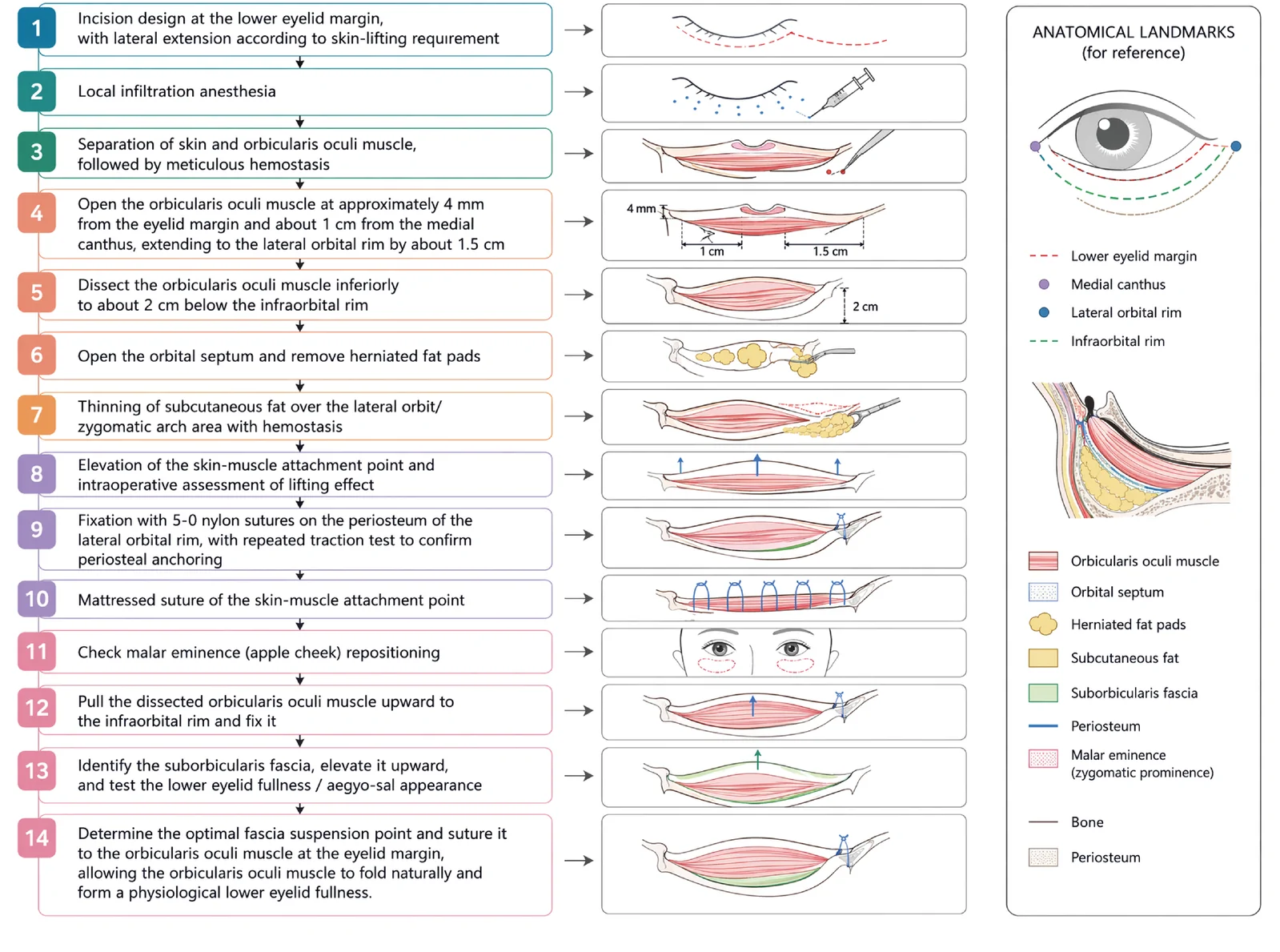
V3中面部提升经睫毛下切口,沿内眦线、外眦线、颧脂肪垫下界三个向量悬吊,可同时改善中面部下垂、下睑袋及睑颊轮廓不连续。
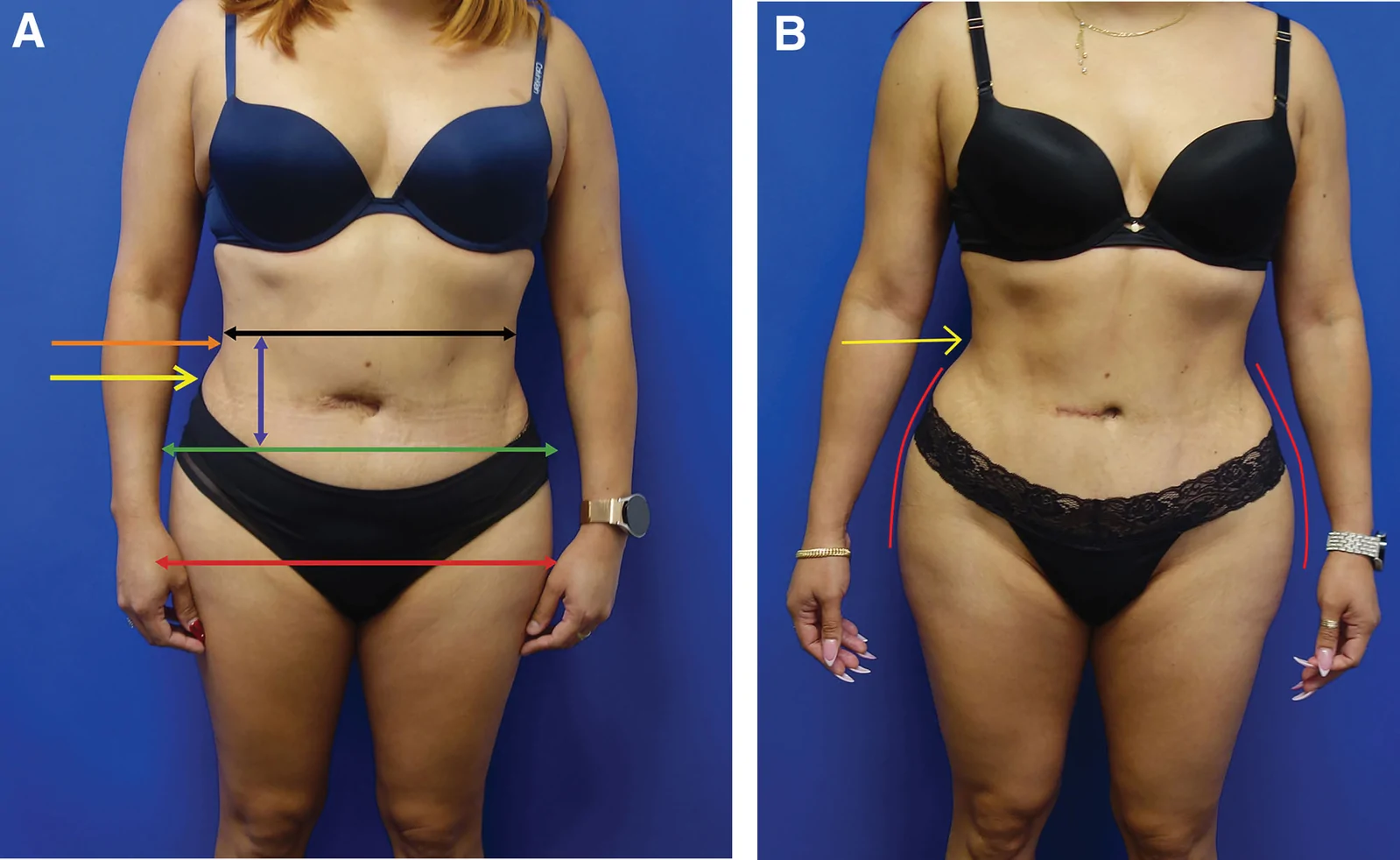
回顾性大样本病例系列(2016年11月至2025年1月),共1999例连续手术,中位年龄36岁(IQR 31至42),中位BMI 29(IQR 26至32),最短随访6个月。
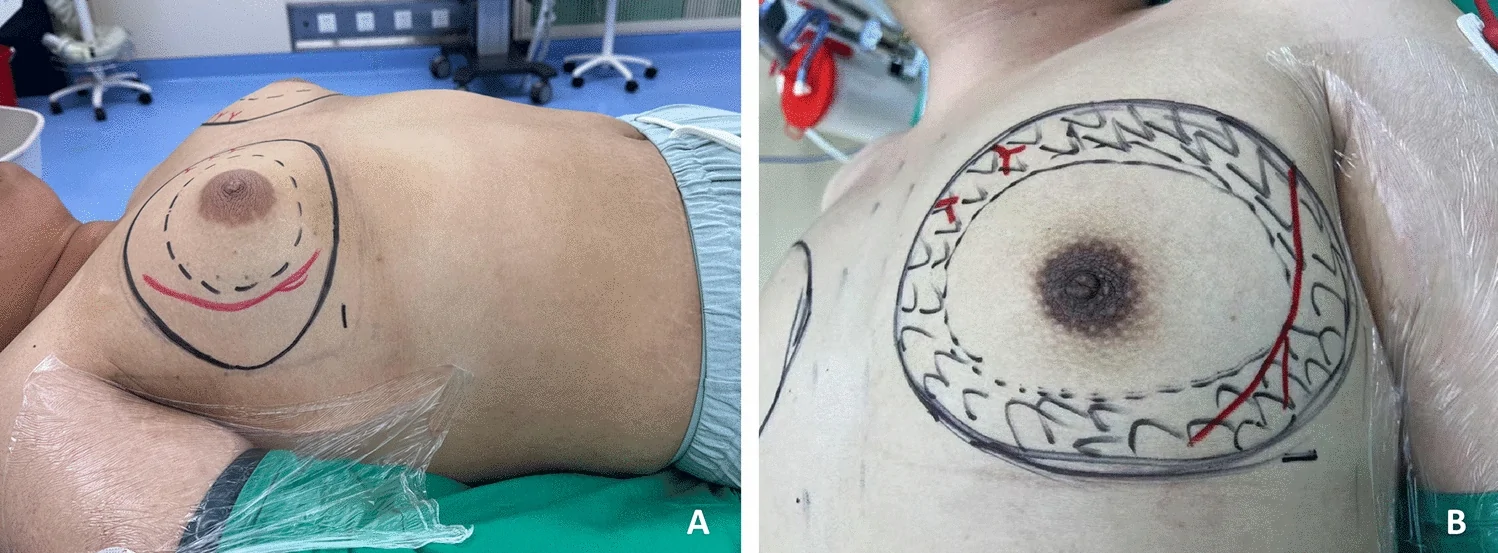
单中心、单臂前瞻性病例系列(证据等级 III),纳入 2024 年河北医科大学第一医院 786 例男性乳腺发育内镜腺体切除术患者(773 例双侧、13 例单侧),平均随访 96.5