男性高清脂雕中「胸锯肌三角」的定义化技术:200 例连续病例回顾
2026年10月26日16 min read
Aesthetic Plastic Surgery
结论与实践要点
本研究为一项单中心回顾性连续病例系列,纳入 2020 至 2024 年间由同一术者完成的 200 例男性高清脂雕患者,将“胸锯肌三角”(前界胸大肌斜缘、后界背阔肌、上界腋窝穹隆、下界接外侧腹壁)的定义作为常规步骤,旨在评估该技术的安全性、可重复性与美学价值。
队列平均 41.5 岁、平均体重指数 26.9,平均随访 19 个月(最小 8 个月)。安全性方面,未见严重并发症或皮肤坏死;一过性纤维化 90 例(45%),均在 6–8 周内经规范按摩与上肢活动度锻炼消退,无持久纤维化;含铁血黄素沉着 24 例(12%),保守处理后多数逾 1 年完全消退;胸锯肌三角区无血清肿,下腹部积液 24 例(12%)经串行抽吸解决,无需再手术。
作者认为将胸锯肌三角纳入男性高清脂雕是安全、可重复的技术细化,有助于实现自然协调的躯干轮廓。但本研究为回顾性、无对照设计,缺乏盲法美学评估,且早期含铁血黄素沉着发生率偏高(与术中肿胀液浸润不足相关),结论外推需谨慎;未来需前瞻性、对照或盲法评估验证其美学增益。
BackgroundHigh-definition (HD) liposculpture aims to enhance male body aesthetics by sculpting natural muscular definition. However, one of the most commonly overlooked areas in the torso is the serratus triangle, whose definition is essential to achieve a harmonious transition between the pectoralis major, latissimus dorsi, and lateral abdominal wall. Failure to address this area can result in an unnatural or incomplete appearance.
ObjectivesTo describe a refined surgical approach for defining the serratus triangle during male HD liposculpture and to evaluate its efficacy, safety, and reproducibility in a consecutive series of patients.
MethodsA retrospective study of 200 consecutive male patients who underwent HD liposculpture including serratus triangle definition between 2020 and 2024. The technique involves deep and superficial liposuction along the serratus lines, with selective use of the Renuvion® technology in cases with nipple-areola complex ptosis.
ResultsAll 200 patients completed a minimum follow-up of 8 months. No major complications or cases of skin necrosis were observed. Ninety patients developed transient fibrosis in the treated area, which resolved within 6–8 weeks with compliance to the postoperative exercise and massage protocol.
ConclusionsDefining the serratus triangle is a simple yet often-overlooked step that significantly enhances the natural, athletic look of male HD liposculpture. This technical refinement is safe, reproducible, and can be seamlessly integrated into existing HD protocols to improve aesthetic outcomes.
Level of Evidence IIIThis journal requires that authors assign a level of evidence to each article. For a full description of these Evidence-Based Medicine ratings, please refer to the Table of Contents or the online Instructions to Authors www.springer.com/00266.
Supplementary InformationThe online version contains supplementary material available at 10.1007/s00266-026-05794-3.
Keywords: Abdominal liposculpture、HD liposculpture、Male liposculpture、High definition、Aesthetic surgery、Serratus triangle
Since the introduction of high-definition (HD) liposculpture [ 1 – 6 ], the demand for sculpted, athletic abdominal aesthetics has steadily increased worldwide. According to the latest ISAPS Global Statistics [ 7 ], liposuction remains one of the most popular cosmetic surgical procedures, with over 2 million procedures performed globally every year. Among male patients, liposuction ranks as the fourth most requested surgical procedure, reflecting a growing interest in achieving a more defined and athletic torso. A review of the existing literature on male abdominal etching shows a consistent focus on enhancing the rectus abdominis inscriptions, linea alba, and semilunar lines [ 8 – 11 ]. However, there is a striking lack of discussion regarding a small yet crucial area for achieving a balanced, natural masculine torso: the serratus triangle. This area is frequently overlooked during male body contouring procedures, and its omission can result in outcomes that appear incomplete, artificial, or disharmonious.
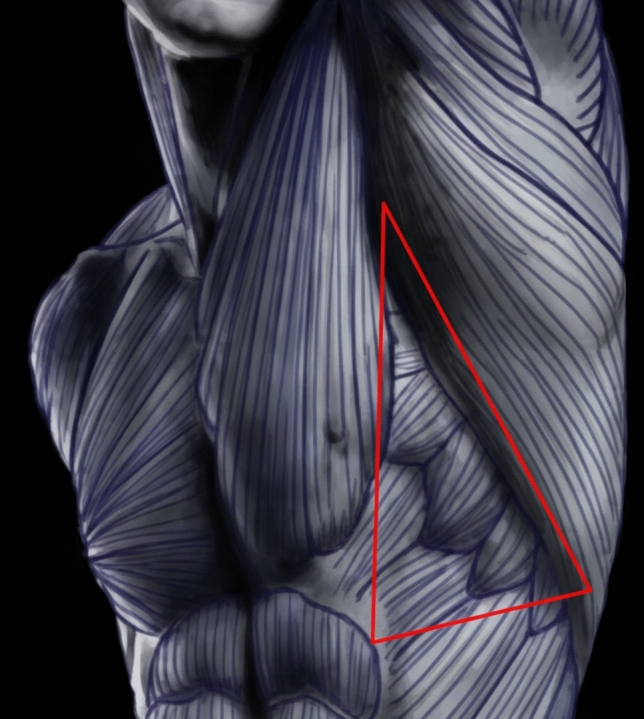
Anatomically, the serratus triangle (Fig. 1 ) is bordered by:Anteriorly by the oblique edge of the pectoralis majorPosteriorly by the latissimus dorsiSuperiorly by the dome of the axillaInferiorly in continuation with the lateral abdominal wall (the external oblique muscle)On top of the serratus anterior muscles
The aim of this article is to highlight the aesthetic importance of this often-overlooked area through presenting our personal technique and sharing our clinical experience from a consecutive series of male patients undergoing HD liposculpture.
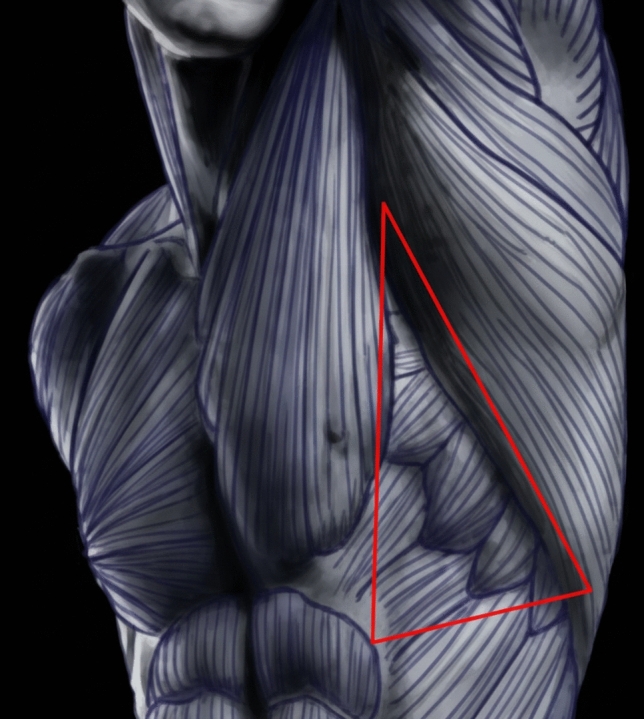
Fig. 1 Identification of the serratus triangle (Image created with the help of AI)胸锯肌三角的体表定位示意(由人工智能辅助绘制),标出前界胸大肌、后界背阔肌、上界腋窝穹隆及下界外侧腹壁。
A retrospective study was conducted of 200 consecutive male patients treated between 2020 and 2024 by the same senior surgeon.
The study followed the Declaration of Helsinki; all patients signed informed consent.
All cases included in the review represent male patients seeking HD liposculpture, in whom the serratus triangle was always addressed as an integral step to ensure a balanced and natural result. For this reason, inclusion and exclusion criteria mirrored standard abdominal etching:
Age >18 yearsBMI <30 kg/m 2 ASA ≤2
Poorly controlled comorbidities (diabetes and hypertension)Active smokers (required cessation ≥5 week preoperative and ≥6-week postoperative)Significant skin laxity that necessitates skin excision (only mild–moderate acceptable)Nipple areola complex (NAC) below the inframammary fold IMF [ 12 ]Poor skin quality
Tumescent fluid composed of superwet technique with a solution consisting of 1000 mL of 0.9% saline, 20 mL of 1% lidocaine, and 1 mL of epinephrine at a concentration of 1:1000.Power-assisted liposuction (PAL) by MicroAire® (Inc, Charlottesville, VA)5-mm basket cannula or PAL HD straight cannula by MicroAire® (Inc, Charlottesville, VA)Renuvion® (Apyx Medical, Florida)
Patient marking is performed in the preoperative area in a standing position. The inferior and oblique edges of the pectoralis major muscle are marked with the patient arms pressing down on the surgeon’s shoulders. The lateral edge of the latissimus dorsi (LD) is marked by asking the patient to put his hands on his waist and push in order to contract the muscle (Video 1 ).
Patient is positioned supine with arms abducted at approximately 45 degrees on adjustable arm boards. Access to the serratus triangle is gained through a small incision placed discreetly in the axillary fold, just posterior to the anterior axillary line, and also through a second incision within the inferior half of areola. Infiltration as above described, both into deep and superficial planes, is then carried out. To maximize the vasoconstrictive and analgesic effects of the solution, a waiting period of approximately 15 min is always observed before liposuction began (Video 2 ).
Power-assisted liposuction (PAL) (Microaire®, Inc, Charlottesville, VA) is then performed in two sequential phases. First, deep fat removal is carried out beneath the Scarpa fascia to debulk the area and allow proper contour transition. This is followed by a superficial sculpting phase where most superficial fat is removed within the marked serratus triangle and below the horizontal edge of the pectoralis major (Video 3 ). After aspiration, a phase of fat equalization is performed using the reciprocating PAL technology without suction, which helps smooth the superficial fat layer and eliminate any contour irregularities.
When indicated, in cases presenting with mild-to-moderate nipple-areolar complex NAC ptosis (as long as the nipple is above the IMF level), Renuvion® (Apyx Medical, Florida) technology is applied to promote lifting of the NAC on the pectoralis major. The device is set at 80% power with a helium gas flow of 2 L/min. Application of the technology is performed in a controlled, fan-shaped motion, maintaining a spacing of 2–3 cm between passes and an activation speed of 1–3 cm/sec to balance efficacy and minimize the risk of thermal injury. Typically, four passes are applied, while deliberately avoiding areas where superficial liposuction has been carried out to prevent additional risk of skin suffering (Video 4 ).
For further clarity, we have created Figure 2 , which provides a concise overview of all four main procedural steps.
Closure is performed with absorbable subcutaneous sutures and Steri-Strips, the area is dressed with compressive Epifoam and compressive garments to maintain contour and minimize dead space. No drains are used. Postoperatively, patients are monitored overnight to ensure proper fluid management and recovery, and they are discharged with oral antibiotics and analgesics, although NSAIDs are systematically avoided due to potential interference with helium plasma efficacy. All patients are instructed to wear the compressive garment day and night for three weeks to support edema reduction and skin redraping. Manual lymphatic drainage is started on the second postoperative day. To minimize the risk of postoperative fibrosis, patients are instructed from the first day to elevate their arms fully every 2 h. If restricted, they are asked to reach their maximum range of motion, extend by an additional centimeter, and hold the position for 20 s.
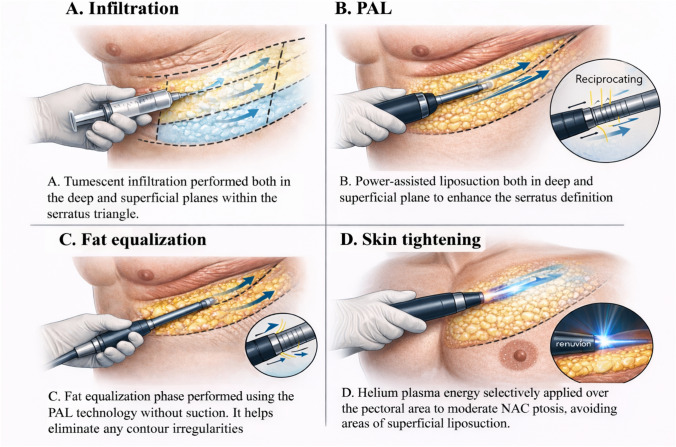
Fig. 2 Four-step summary of serratus triangle sculpting (Image created with the help of AI)胸锯肌三角塑形四步流程概览(人工智能辅助绘制):标记、肿胀浸润、深浅层吸脂与脂肪均衡、选择性氦等离子紧肤。
The mean patient age was of 41.5 years old (range 27–48 y.o.), and the mean BMI was of 26.9 (range 24, 9–29,8).
The average follow-up was of 19 months, with the minimum being 8 months and the maximum 4 years.
No cases of major life threatening and skin necrosis were observed. Transient fibrosis within the serratus triangle region developed in 90 patients (45%), typically resolving within 6 to 8 weeks with consistent adherence to massage protocols and the prescribed range-of-motion exercises. No cases of persistent fibrosis were observed beyond 3-month postoperative. Twenty-four patients (12%) presented with hemosiderosis along the demarcation line, treated in a conservative way and resolved over the following months and might take over a year for complete resolution. No revisions were required. No seromas were observed in this are, however, since all of these patients underwent a complete HD liposculture within abdomen and flanks, 24 of them (12%) did develop fluid collections in the lower abdomen which was treated through serial aspiration. Complications are described in Table 1 . Figures 3 , 4 , and 5 are showing pre and postoperative pictures.
Table 1 Postoperative complications
| Type of complications | Number and percentage |
|---|---|
| Transient fibrosis | 90 patients (45%) |
| Permanent fibrosis | 0 patients (0%) |
| Skin necrosis | 0 patients (0%) |
| Hemosiderin | 24 patients (12%) |
| Seroma collection at serratus triangle site | 0 patients (0%) |
| Seroma collection at lower abdomen | 24 patients (12%) |
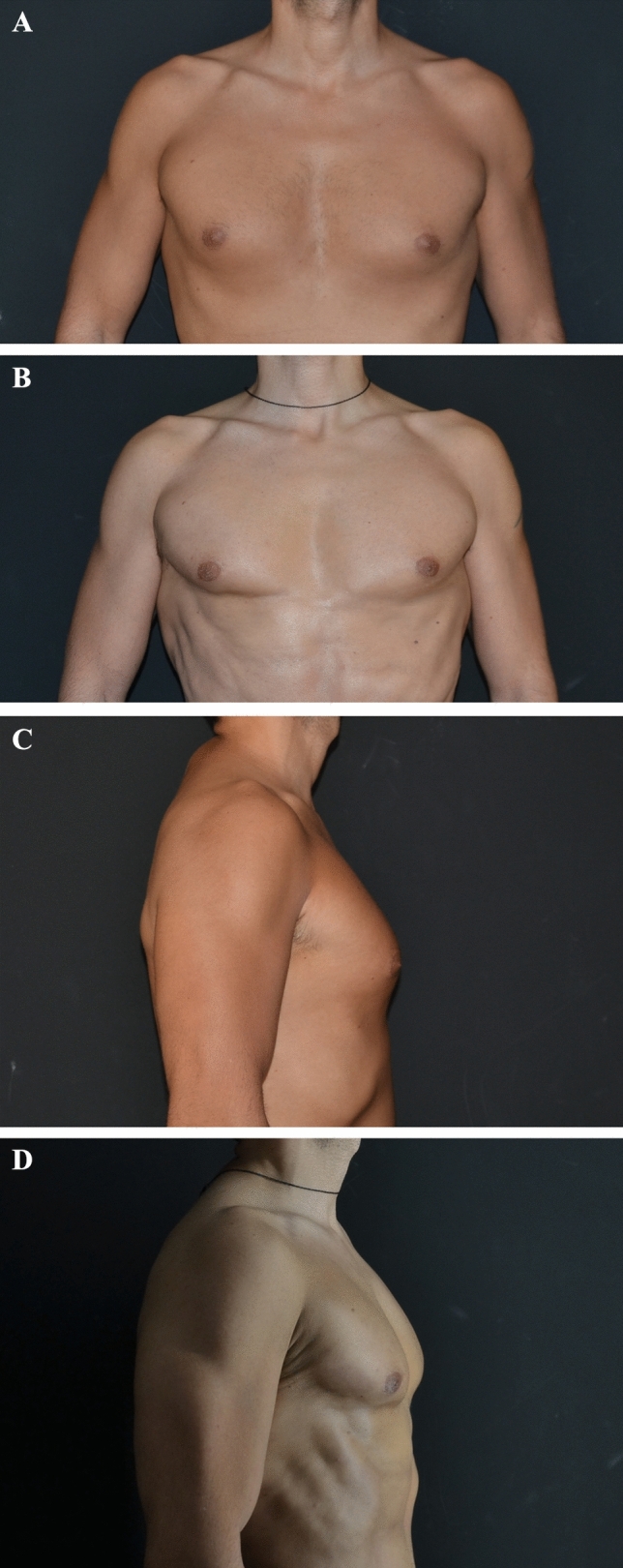
Fig. 3 A 41-year-old patient A Preoperative frontal view B 1-year postoperative frontal view C Preoperative lateral view; and D 1-year postoperative lateral view41 岁患者术前与术后 1 年正侧位对照,展示胸锯肌三角定义后的躯干轮廓改善。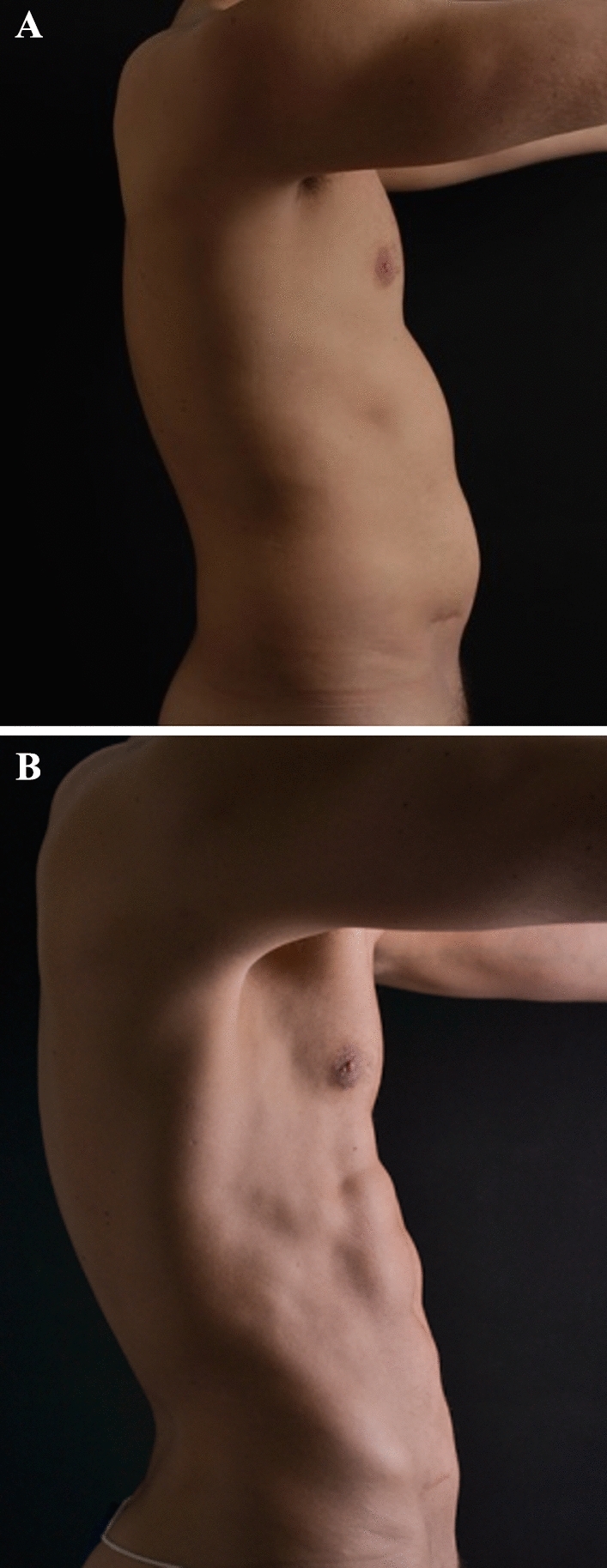
Fig. 4 A 29-year-old patient A Preoperative lateral view and B 1.5-year operative lateral view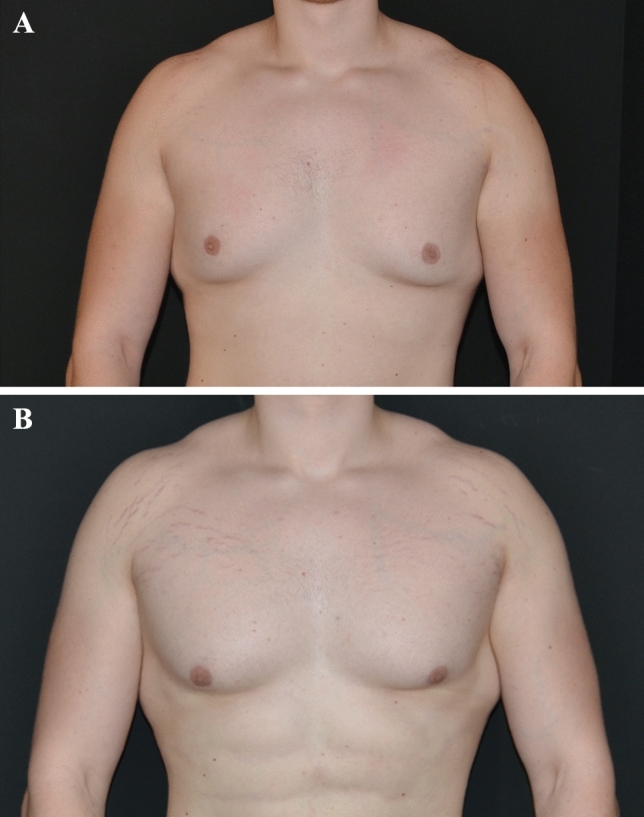
Fig. 5 A 38-year-old patient A Preoperative frontal view and B 8-month operative frontal view
The popularity of high-definition liposculpture has grown exponentially in recent years, especially among male patients who seek an athletic, natural-looking body contour. While traditional abdominal etching techniques focus primarily on enhancing the rectus abdominis, linea alba, and semilunar lines, our experience suggests that neglecting adjacent anatomical transition zones can lead to results that appear incomplete or artificially segmented. In this context, the serratus triangle plays a pivotal role in achieving a harmonious and authentic male torso definition.
Despite its clear aesthetic relevance, the serratus triangle is rarely emphasized in the literature. Yet, this anatomical region defines the superolateral continuity between the chest and the upper abdominal wall. When properly sculpted, it frames the lateral thoracic silhouette and enhances the perception of a fit, athletic physique.
Our retrospective analysis of 200 consecutive cases demonstrates that the inclusion of this area in routine male HD liposculpture is safe, reproducible, and adds significant value to the final aesthetic outcome without increasing the risk of major complications. In our experience, the technical refinements described, including precise deep and superficial liposuction limited to well-defined lines, the use of PAL for better fat equalization, and the selective application of subdermal helium plasma for skin tightening, provide predictable and durable results.
A key element in preventing contour irregularities and ensuring smooth recovery is strict patient compliance with postoperative care instructions, especially the regimen of frequent arm elevation and early lymphatic massage. Fibrosis, although common in the early weeks, was transient in all patients and resolved with strict adherence to postoperative recommendations. This underlines the importance of clear patient education and active follow-up during the first postoperative weeks. Regarding the 12% incidence of hemosiderosis, these cases occurred mostly during the initial period of the study. Our observation indicates that proper infiltration of the superficial fat layer with tumescent fluid can significantly reduce its incidence.
Recently, alternative strategies for enhancing the oblique-serratus complex have been reported, particularly using ultrasound-guided fat grafting techniques. Flores González et al. (2023) [ 13 ] described ultrasound-guided intramuscular fat grafting of the serratus-external oblique muscle complex, demonstrating an immediate increase in muscle thickness after augmentation. Compared with our non-volumizing, sculpting-only approach, fat grafting provides the potential advantage of increasing local contour volume and improving three-dimensional muscular projection. However, this strategy typically involves increased operative time, a more complex procedural workflow (including real-time ultrasound guidance and targeted intramuscular injections), uneven fat take and some procedure-specific risks associated with intramuscular fat injection. Although small series such as Flores González et al. did not observe complications, larger studies of intramuscular fat grafting techniques have reported risks including fat embolism, infection, seroma, hematoma, fat necrosis, asymmetries, or the need for revisions [ 14 ]. In contrast, our approach focuses on selective deep and superficial liposuction along the serratus lines to enhance natural muscular definition without increasing tissue volume. This allows for a reproducible, less complex intervention with predictable outcomes and minimal additional risk. While volumization may be appropriate in select patients with low baseline muscular prominence, definition-only sculpting provides a reliable method for achieving a harmonious, athletic appearance in the majority of male patients.
A limitation of our analysis is its retrospective design and the lack of a control group. Future studies may benefit from including a blinded evaluations to further validate the impact of serratus triangle sculpting on overall aesthetic satisfaction. Nevertheless, our results strongly suggest that this technical nuance, while seemingly minor, can transform the final result from simply defined to genuinely natural and harmonious, aligning with current aesthetic ideals for the male abdomen.
Defining the serratus triangle in male HD liposculpture is a safe, reproducible technical refinement that significantly improves the harmony and natural look of the torso, with minimal additional risk. This approach should be considered a standard part of male torso etching.
Below is the link to the electronic supplementary material.
声明:中文精读 · 仅供学术参考。内容来自公开文献检索,不代表本人观点,不构成诊疗建议。 医疗美容需在正规医疗机构由执业医师实施。
基于相同主题推荐 · 继续深挖
回顾性连续系列 200 例男性(2020–2024),均行包含胸锯肌三角定义的高清脂雕,由同一资深医师完成,最小随访 8 个月(平均 19 个月,最长 4 年)。
单中心7年系列:96例单次联合除皱+脂肪移植+全面部等离子换肤
背景:臀脂肪移植(BBL)、吸脂与腹壁整形常联合施行以改善轮廓、缩短恢复期,但也可能带来手术时间延长、麻醉管理复杂化与并发症风险上升。