面部除皱术局部氨甲环酸系统评价
2026年9月4日28 min read
Plastic and Reconstructive Surgery Global Open
结论与实践要点
临床意义: 血肿是除皱术棘手且后果严重的并发症(可压迫气道、常需二次手术清创),TXA 作为局部辅助能把血肿 OR 降到约 0.35(相对风险下降约 65%),属于低成本、高收益的围术期干预,值得纳入标准流程考量。
证据怎么读: 合并样本 1122 例、含随机与观察性研究,GRADE 未给出『高级』定论;EBL 的高异质性提示具体数值需谨慎,但方向一致(TXA 减少出血)。临床上应看重『血肿风险下降』这一稳健结论,而非纠结于出血量的绝对值。
实践建议: 可考虑将局部 TXA(肿胀液 / 局部浸润)纳入除皱术常规,但剂量与给药方式尚未统一,应规范记录并积累本团队数据;同时注意 TXA 的禁忌(血栓史、抗凝管理等)与整体凝血管理,不可因使用 TXA 而放松其他止血环节。
循证边界: 本文为系统评价而非原始 RCT,结论为『有前景的辅助策略』,须更多标准化试验确认。在科普或同行交流中应如实表述证据等级,避免将其描述为确定性的『一步到位』方案。
Background:Rhytidectomy is one of the most performed facial rejuvenation procedures, yet postoperative hematoma remains its most frequent and consequential complication, driving patient morbidity and compromising aesthetic outcomes. Tranexamic acid (TXA), a potent antifibrinolytic agent, has been widely adopted to mitigate surgical bleeding; however, a definitive high-level synthesis of evidence for its local application in rhytidectomy remains limited. We conducted a comprehensive systematic review and meta-analysis to highlight the efficacy and safety profile of local administration of TXA compared with control interventions in patients undergoing rhytidectomy.
Methods:A systematic search of PubMed, Embase, MEDLINE (EBSCO), and Cochrane Central Register of Controlled Trials (CENTRAL) was conducted from database inception through December 2025. Studies comparing the effects of local administration of TXA with a control in adults undergoing rhytidectomy were included. Pooled effect estimates were calculated using a random-effects model; risk of bias was assessed with risk of bias in non-randomized studies-of interventions (ROBINS-I); and the certainty of evidence was appraised using the grading of recommendations assessment, development, and evaluation (GRADE) framework.
Results:Seven studies met the inclusion criteria, comprising 1122 patients (596 local TXA and 526 controls). Meta-analysis revealed that local TXA was associated with a significant reduction in estimated blood loss (in milliliters) (standardized mean difference, −4.53; 95% confidence interval [CI], −8.09 to −0.97; P = 0.01), 24-hour postoperative drain output (in milliliters) (standardized mean difference, −1.10; 95% CI, −1.40 to −0.79; P < 0.01), and hematoma rates (odds ratio, 0.35; 95% CI, 0.15–0.81; P = 0.014).
Conclusions:In patients undergoing rhytidectomy, the application of local TXA significantly enhances surgical efficiency and patient safety by reducing blood loss, drain output, and postoperative hematologic complications.
Rhytidectomy, or face lift, is the archetypal procedure in the pursuit of facial rejuvenation, a field propelled by robust and resilient global demand for aesthetic enhancement. 1 The procedure has evolved from its inception as a simple cutaneous excision to a sophisticated, anatomically complex procedure. Modern rhytidectomy is predicated on the manipulation of the superficial musculoaponeurotic system (SMAS), a fibrous network that invests the facial mimetic muscles and is continuous with the platysma. 2 Techniques have evolved from simple SMAS plication to more extensive deep-plane and composite dissections, which reposition ptotic facial soft tissues as a single unit to produce more natural and durable results. 3 This technical refinement has fueled a marked increase in the procedure’s popularity, with data from the Aesthetic Society 2023 national database indicating that rhytidectomy was the sixth most common surgical procedure, with 96,061 procedures performed in 2023 alone, representing a 37.3% increase from 2022 and an 81.5% increase since 2019. 4
Despite its technical sophistication and high rates of patient satisfaction, the extensive subcutaneous dissection inherent to rhytidectomy creates a vast raw tissue surface, rendering the procedure prone to hemorrhagic complications. 5 , 6 Postoperative hematoma remains the most frequent and feared adverse event, with a reported incidence ranging from 0.6% to 14.2% and representing the unequivocal leading cause of unplanned returns to the operating room. 6 – 12 The clinical sequelae are far from benign; an expanding hematoma can compromise the viability of the overlying skin flap, leading to ischemia and necrosis, while also increasing the risk of infection and necessitating a prolonged, painful recovery that can irrevocably compromise the final aesthetic outcome. 13 , 14
Tranexamic acid (TXA), a synthetic lysine analog, has emerged as a leading candidate in this search. Its potent antifibrinolytic effect is exerted by competitively and reversibly blocking lysine-binding sites on plasminogen. 15 This molecular action prevents the conversion of plasminogen to its active form, plasmin, the primary enzyme responsible for fibrin clot degradation. 15 The clinical utility of intravenous TXA was first established in high-hemorrhage surgical settings, where landmark trials such as clinical randomization of an antifibrinolytic in significant haemorrhage 2 (CRASH-2) and others demonstrated its capacity to significantly reduce blood loss and allogeneic transfusion requirements. 16 – 18 This clinical momentum extended to aesthetic surgery, where the American Society of Plastic Surgeons practice pattern data indicate that TXA has been adopted in 83.6% of rhytidectomies, 77.1% of neck lifts, 54.8% of forehead and brow lifts, and 55.0% of rhinoplasty procedures. 19
This success spurred a growing trend toward the use of local TXA in aesthetic surgery, where the goal is not to prevent exsanguination but to mitigate bleeding-related morbidity. 20 – 22 The rationale for this shift is compelling: local application via topical irrigation or subcutaneous infiltration achieves high therapeutic concentrations directly at the target tissue while minimizing systemic absorption. 23 This widespread adoption has vastly outpaced the publication of high-level synthesized evidence. This study was therefore conducted to address this critical evidence gap, aiming to quantify the efficacy and safety of local TXA administration in rhytidectomy and to provide an evidence-based foundation for formalizing its role in modern facial rejuvenation surgery.
This systematic review with meta-analysis was conducted following the Cochrane Handbook for Systematic Reviews of Interventions and is reported in accordance with the Preferred Reporting Items for Systematic Reviews and Meta-Analyses (PRISMA) 2020 statement. 24 , 25 ( See figure, Supplemental Digital Content 1 , which displays the PRISMA-compliant checklist, https://links.lww.com/PRSGO/F220.) The study protocol was prospectively registered with an international registry (PROSPERO; protocol no. CRD420251247589) to ensure transparency and methodological rigor.
Eligible studies were required to (1) be randomized or nonrandomized studies of interventions (NRSIs); (2) involve adult patients undergoing rhytidectomy; (3) directly compare an intervention group receiving local TXA with a control group receiving either placebo or regular local anesthesia; and (4) report quantitative data for at least one of the predefined outcomes, listed as follows: estimated blood loss (EBL) (in milliliters), drain output within the first postoperative day (in milliliters), postoperative hematoma rates, and composite complication rates (including seroma, surgical-site infections, wound-healing complications, and facial nerve neuropraxia). Studies were excluded if they did not include a comparator arm; reported the use of local versus systemic TXA; did not report any of the predefined outcomes; or were review articles, case reports, series, editorials, conference abstracts, or preprints.
A comprehensive systematic search of PubMed (National Library of Medicine, Bethesda, MD), Embase (Elsevier, Amsterdam, the Netherlands), MEDLINE via EBSCO host (EBSCO Information Services, Ipswich, MA), and the Cochrane Central Register of Controlled Trials (CENTRAL; Cochrane Library, London, United Kingdom) was conducted from their inception through December 2025. The search strategy was developed in consultation with a medical librarian and combined controlled vocabulary (eg, MeSH, Emtree) with free text keywords encompassing 2 main concepts: (1) rhytidectomy and (2) locally administered TXA, with the full search strategy given in Supplemental Digital Content 2. ( See figure, Supplemental Digital Content 2 , which displays the full search strategy for each of the databases included in this study, https://links.lww.com/PRSGO/F221.)
Two reviewers (J.M. and M.H.) independently performed title and abstract screening, followed by a full-text eligibility assessment, using Covidence (Veritas Health Innovation, Melbourne, Australia). 26 A standardized data extraction form was developed and piloted on Microsoft Excel (Microsoft Corporation, Redmond, WA, USA). The same 2 authors independently extracted relevant data, including study design, patient demographics, intervention details (TXA dose, concentration, volume, and route of administration), control type, and outcome data. All data were extracted from the published articles; any missing data were retrieved by contacting the corresponding author and, if needed, converted to numerical values by using validated methods. 27
The primary outcomes in this meta-analysis were selected to reflect the direct hemostatic and efficiency benefits of TXA, representing objective, quantifiable measures of intraoperative and immediate postoperative bleeding. The first outcome of interest was the incidence of hematoma, defined as a clinically significant blood collection requiring either surgical evacuation in the operating room or bedside drainage. The second primary outcome was EBL, defined as the volume of blood lost during the surgical procedure (calculated by the surgical or anesthesia team based on the volume of blood collected in suction canisters and the weight of blood-soaked surgical sponges). The final primary outcome was the 24-hour postoperative drain output, defined as the total volume of fluid (in milliliters) collected in closed-suction surgical drains.
The principal secondary outcome was the incidence of other postoperative complications—a composite dichotomous outcome, defined as the occurrence of 1 or more of the following adverse events within the study follow-up period: (1) seroma defined as a collection of serous fluid requiring aspiration or drainage; (2) surgical-site infection evaluated as an infection at the surgical site requiring antibiotic treatment or surgical intervention; (3) marginal mandibular neuropraxia defined as a temporary conduction block of the marginal mandibular branch of the facial nerve (cranial nerve VII) without axonal disruption; and (4) wound-healing complications defined as prolonged epithelialization or wound closure, including persistent wound dehiscence, wound breakdown, or the need for ongoing local wound care beyond the expected postoperative period. The number of patients experiencing at least one of these events was extracted for both groups to calculate a pooled odds ratio (OR).
A prespecified subgroup analysis was performed to evaluate whether the effect of local application of TXA on postoperative hematoma differed by surgical technique. Studies were categorized into SMAS-based rhytidectomy and non–SMAS-based rhytidectomy (including deep-plane and multiplane approaches) based on the operative descriptions provided in each study.
To assess the stability and reliability of the pooled estimates, sensitivity analyses were performed. Studies that contributed disproportionately to heterogeneity were systematically evaluated, and a leave-one-out sensitivity analysis was conducted, in which each study was sequentially omitted to assess its influence on the overall effect size. Consistent with methodological standards, substantial heterogeneity was defined as an I 2 value of more than 40%.
The methodological quality of all included studies was independently evaluated by 2 reviewers (J.M. and L.K.-R.) using validated, study design–appropriate tools and was rated as low, moderate, or serious risk of bias. NRSIs were evaluated using the ROBINS-I instrument, which assesses 7 domains of potential bias. Complementing these assessments, the certainty of evidence for each outcome was independently graded by 2 authors (J.M. and M.H.) using the GRADE methodology, incorporating considerations of risk of bias, inconsistency, indirectness, imprecision, and publication bias. Final determinations were reached through consensus, supported by GRADEpro GDT, 28 ensuring a transparent, reproducible, and methodologically appropriate evaluation.
All analyses were performed using a random-effects model with the DerSimonian–Laird estimator to account for expected clinical and methodological heterogeneity across the included studies. Continuous outcomes were synthesized using standardized mean differences (SMDs) with corresponding 95% confidence intervals (CIs). Dichotomous outcomes were assessed using ORs with corresponding 95% CIs. Statistical significance was defined as a 2-sided P value of less than 0.05. Heterogeneity was quantified using the I 2 statistic and Cochran Q test, with heterogeneity considered significant at a P value of less than 0.10 or an I 2 value of more than 40%. All analyses were carried out with R (version 4.4.1, 29 R Foundation for Statistical Computing, Vienna, Austria) using the meta and metafor packages.
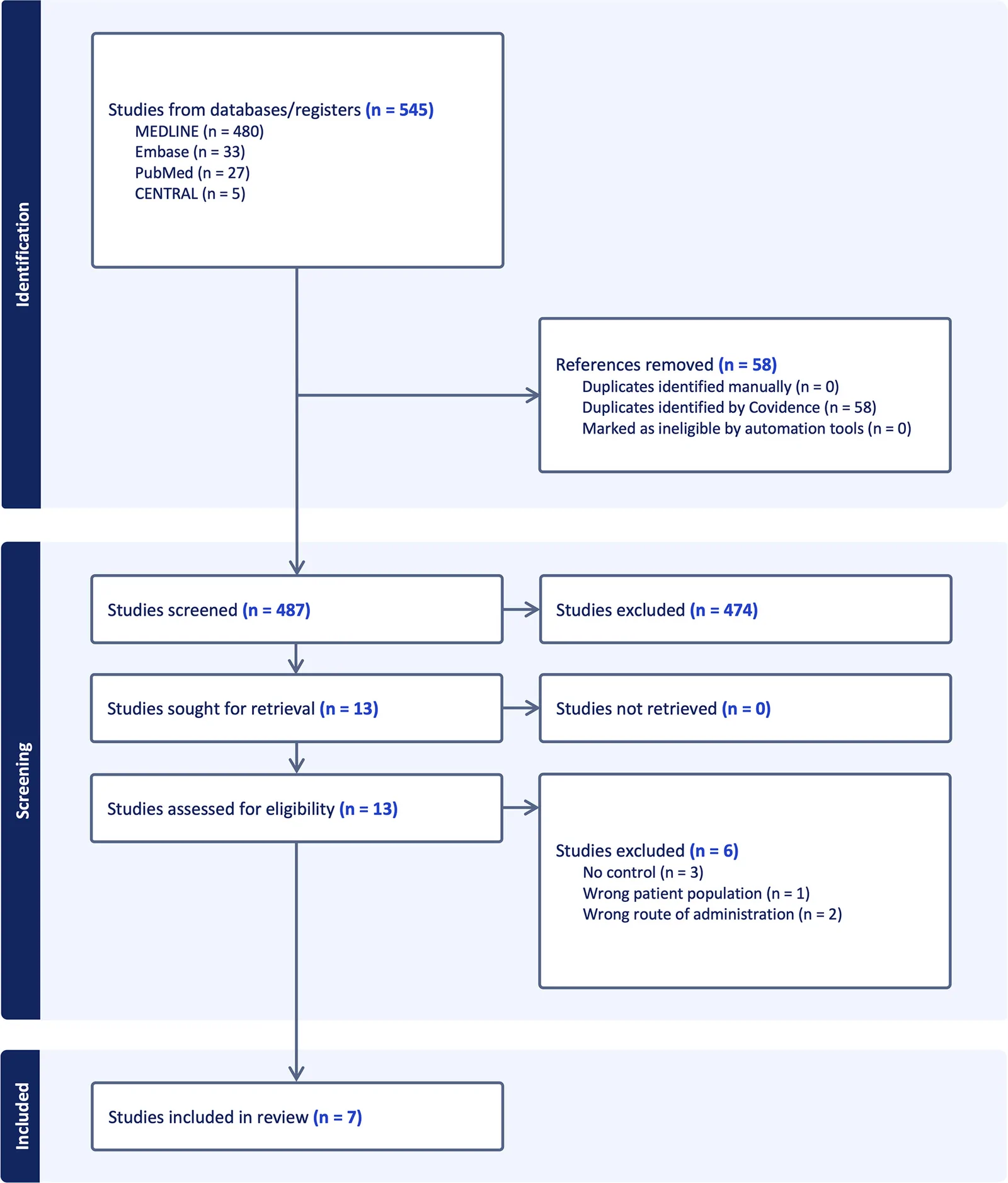
The literature search yielded 545 unique records (Fig. 1 ). Following the exclusion of duplicated studies and irrelevant titles or abstracts, 13 articles warranted full-text evaluation. Subsequent eligibility assessment identified 7 studies 30 – 36 that met all predefined inclusion criteria, comprising 1122 patients (596 local TXA and 526 controls), with an average female proportion of 93.3% and an average age of 62.9 years. The included studies comprised 5 retrospective single-surgeon cohort studies, 31 , 32 , 34 – 36 1 retrospective case–control single-surgeon study, 30 and 1 prospective single-surgeon cohort study, 33 published between 2020 and 2025, primarily from the United States. The surgical technique varied across studies, including SMAS plication, deep-plane dissection, and multiplane dissection. The method of local TXA administration also varied, with subcutaneous infiltration, topical irrigation, and soaked gauze application being the most common approaches (Table 1 ).
Table 1. Baseline Study Designs and Patient Characteristics
| Study | Local TXA, n | Control, n | Study Design | Country of Study | Surgical Technique | Female, n | Age, y | Follow-up, d | Topical TXA Administration | Control Administration |
|---|---|---|---|---|---|---|---|---|---|---|
| Coombs et al 30 | 72 | 73 | Retrospective single-surgeon case control | United States | Extended SMAS rhytidectomy | 134 | 64.65 ± 8.65 * | 616 † | 1–2 mg/mL of TXA per 1 mL of 0.5% lidocaine with 1:200,000 epinephrine local infiltration | 0.5% lidocaine with 1:200,000 epinephrine local infiltration |
| Darras et al 31 | 261 | 261 | Retrospective single-surgeon cohort | United States | Deep-plane rhytidectomy ± platysmaplasty | 488 | 64.46 † | 232 (180–365) ‡ | 1–2 mg/mL of TXA per 1 mL of 0.5% lidocaine with 1:200,000 epinephrine local infiltration | 0.5% lidocaine with 1:200,000 epinephrine local infiltration |
| Pou et al 32 | 120 | 55 | Retrospective single-surgeon cohort | United States | Deep-plane rhytidectomy ± platysmaplasty | 167 | 61.09 † | 182 † | 25 mg/mL of TXA soaked gauze or 0.5 mL of 100 mg/mL TXA with 9.5 mL of 0.5% lidocaine with 1:200,000 epinephrine local infiltration | 40 mL of 0.5% lidocaine with 1:200,000 epinephrine local infiltration |
| Schroeder et al 36 | 44 | 32 | Retrospective single-surgeon cohort | United States | Deep-plane rhytidectomy with platysmaplasty | 76 | 62.3 † | 60 † | Topical/infiltrative TXA (9.1 mg/mL) added to local 1:1 mixture of 2% lidocaine and 0.5% bupivacaine with 1:200,000 epinephrine + 0.3% xylocaine with 1:600,000 epinephrine | Local 1:1 mixture of 2% lidocaine and 0.5% bupivacaine with 1:200,000 epinephrine + 0.3% xylocaine with 1:600,000 epinephrine |
| Serrano Reyes et al 33 | 15 | 15 | Prospective single-surgeon cohort | Brazil | Round rhytidectomy with SMAS plication | 29 | 62 ± 7.64 * | 90 † | Irrigation of 20 mL of TXA in 20 mL of sterile water | Irrigation of 20 mL of sterile water |
| Trimas et al 34 | 34 | 40 | Retrospective single-surgeon cohort | United States | Standard SMAS plication rhytidectomy | 64 | 62.8 (43–81) ‡ | 60 † | Local infiltration of 250 mg of TXA added to tumescent solution of 12.5 mL of 1% lidocaine, 12.5 mL of 0.25 Marcaine, 1 mL of 1:1000 epinephrine, and 250 mL of saline | Tumescent solution of 12.5 mL of 1% lidocaine, 12.5 mL of 0.25 Marcaine, 1 mL of 1:1000 epinephrine, and 250 mL of saline |
| Ziegler Rodríguez et al 35 | 50 | 50 | Retrospective single-surgeon cohort | Peru | Multiplane facial rhytidectomy | 88 | 59.5 (47.75–65) ‡ | 60 † | Local infiltration of 10 mL/1 g of TXA added to 800 mL of saline, 2 mL of 1:400,000 epinephrine, 20 mL of 2% lidocaine, and 800 mL of saline | Local infiltration of 2 mL of 1:400,000 epinephrine added to 20 mL of 2% lidocaine, and 800 mL of saline |
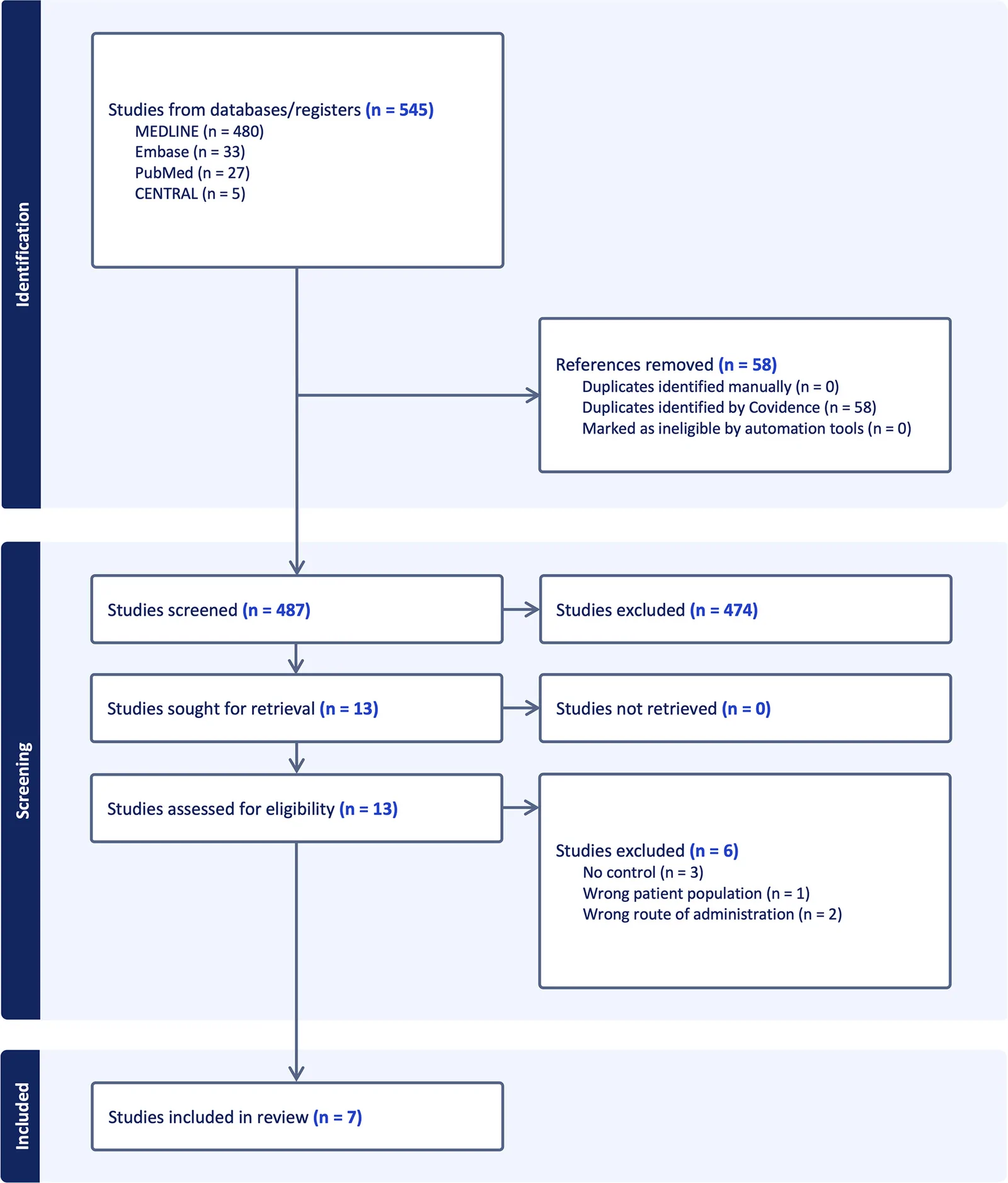
Fig. 1. PRISMA flow diagram of study selection demonstrating the systematic identification, screening for title, abstract, full-text reviews, and inclusion of studies following PRISMA 2020 guidelines. IV, intravenous.PRISMA 2020 文献筛选流程图,展示系统检索→筛选→纳入的全过程。
Across 3 studies 32 , 34 , 35 involving 349 patients (204 local TXA and 145 controls), EBL was significantly lower in the local TXA cohort (SMD, −4.53 mL; 95% CI, −8.09 to −0.97]; P = 0.01; I 2 = 98.9%; Fig. 2 ). The considerable heterogeneity is likely attributable to differences in intraoperative blood-loss measurement.
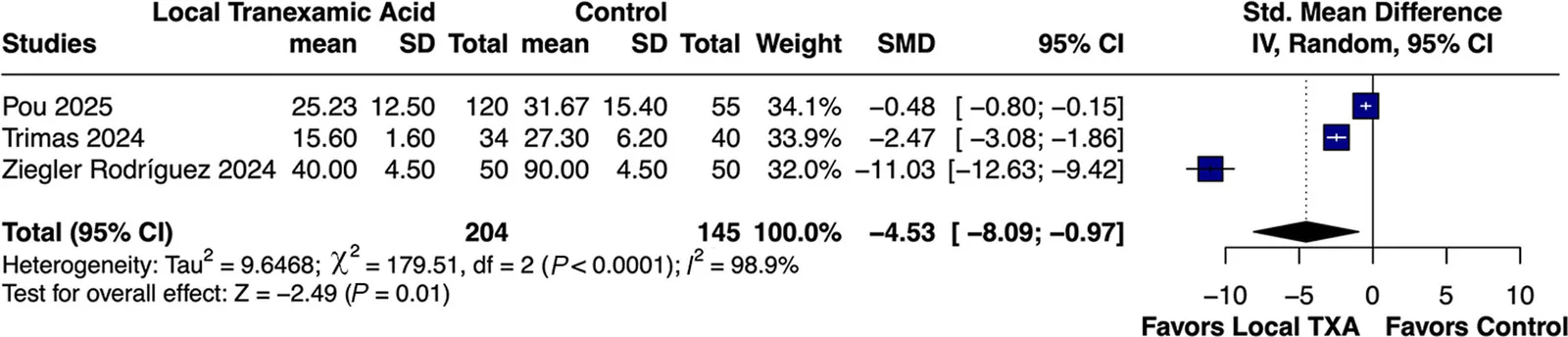
Fig. 2. Forest plot demonstrating the pooled effect of local administration of TXA on EBL. Results are presented as SMDs with 95% CIs for EBL across relevant included studies.局部 TXA 对 EBL(估计出血量)的森林图(SMD 合并效应)。注意高异质性(I²≈98.9%)。
Three comparative studies 32 , 33 , 36 totaling 281 patients (179 local TXA and 102 controls) reported data on drain output during the first 24 hours postoperatively. Pooled analysis revealed that the local TXA cohort had a significantly lower drain output within the first 24 hours (SMD, −1.10 mL; 95% CI, −1.40 to –0.79]; P < 0.01; I 2 = 16.1%; Fig. 3 ).
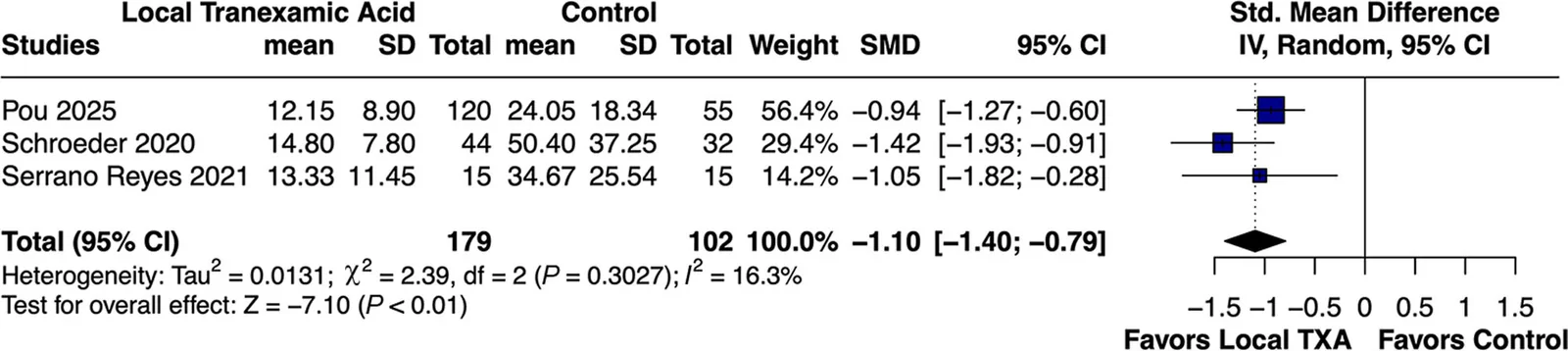
Fig. 3. Forest plot summarizing the pooled effect of local administration of TXA on postoperative drain output in the first 24 hours. Results are presented as SMDs with 95% CIs across relevant included studies.对 24h 术后引流量的森林图(SMD 合并效应)。
All included studies, 30 – 36 comprising 1122 patients (596 local TXA and 526 controls), reported postoperative hematoma rates. The pooled analysis demonstrated that local TXA was associated with a significantly lower risk of hematoma (OR, 0.35; 95% CI, 0.15–0.81; P = 0.014; I 2 = 0.0%; Fig. 4 ).
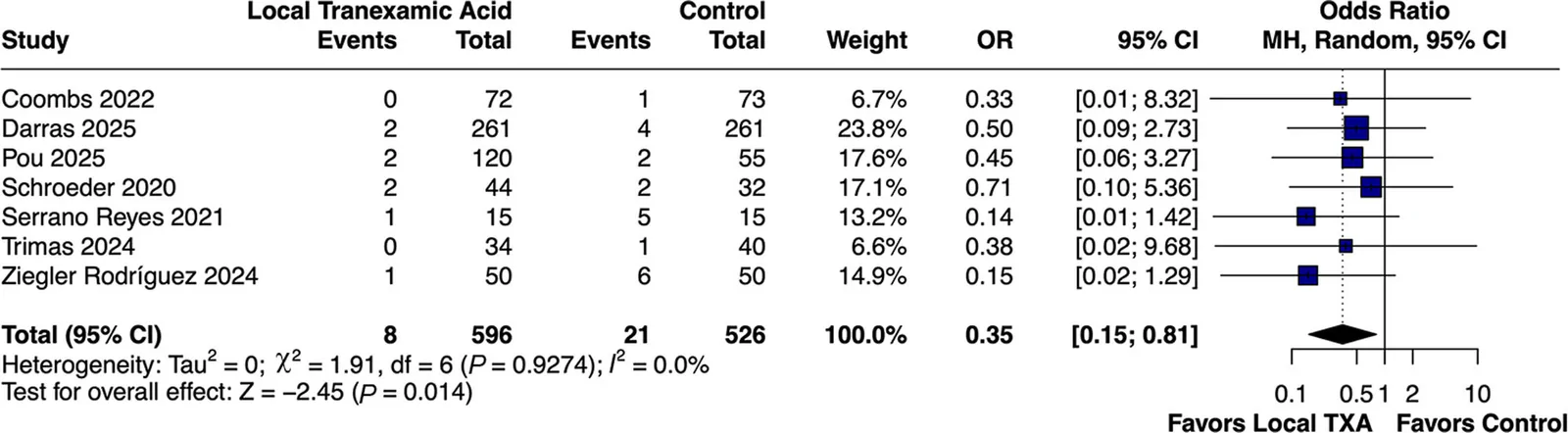
Fig. 4. Forest plot demonstrating the pooled effect of local administration of TXA on hematoma rates. Results are presented as ORs with 95% CIs across all included studies. MH, mantel haenszel.对血肿发生率的森林图(OR 合并效应,I²=0%)。
Three studies 30 – 32 encompassing 842 patients (453 local TXA and 389 controls) reported data on other postoperative complications. Meta-analysis demonstrated that local administration of TXA was associated with a statistically significant reduction in the odds of these complications (OR, 0.58; 95% CI, 0.37–0.92; P = 0.020; I 2 = 16.7%; Fig. 5 ).
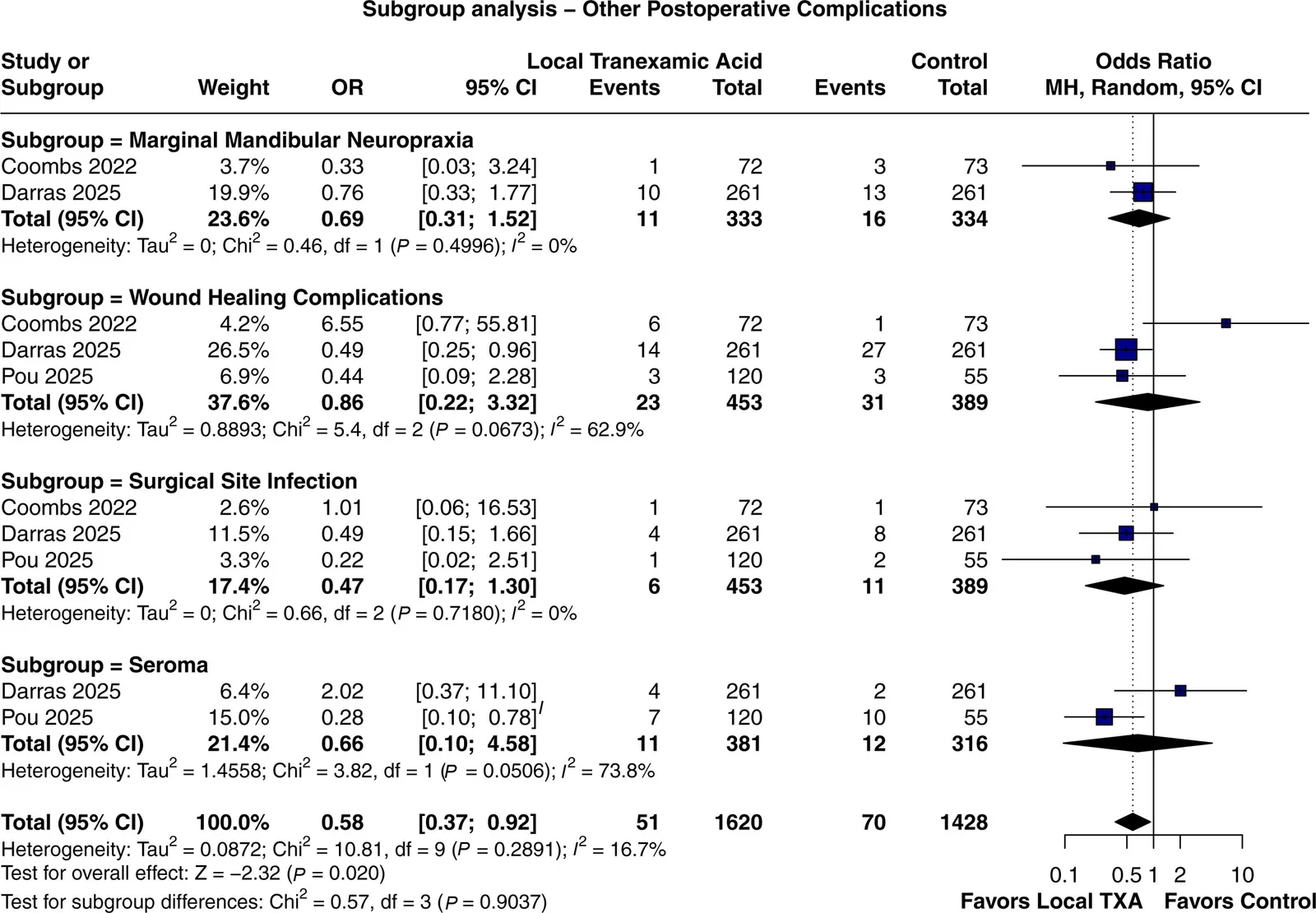
Fig. 5. Forest plot highlighting the pooled effect of local administration of TXA on postoperative complications. Results are presented as ORs with 95% CIs across all relevant studies. MH, mantel haenszel.对其他术后并发症的森林图(OR 合并效应)。
Subgroup analysis demonstrated that the hematoma-reducing effect of local administration of TXA was consistent across surgical techniques. In SMAS-based rhytidectomy, local TXA showed a pooled OR of 0.23 (95% CI, 0.04–1.14), whereas non–SMAS-based techniques demonstrated a pooled OR of 0.41 (95% CI, 0.16–1.09). The test for subgroup differences was not statistically significant (χ 2 = 0.39; P = 0.53), indicating no detectable difference in the effectiveness of TXA across technique categories. Overall heterogeneity across studies was negligible ( I 2 = 0.0%) (Fig. 6 ).
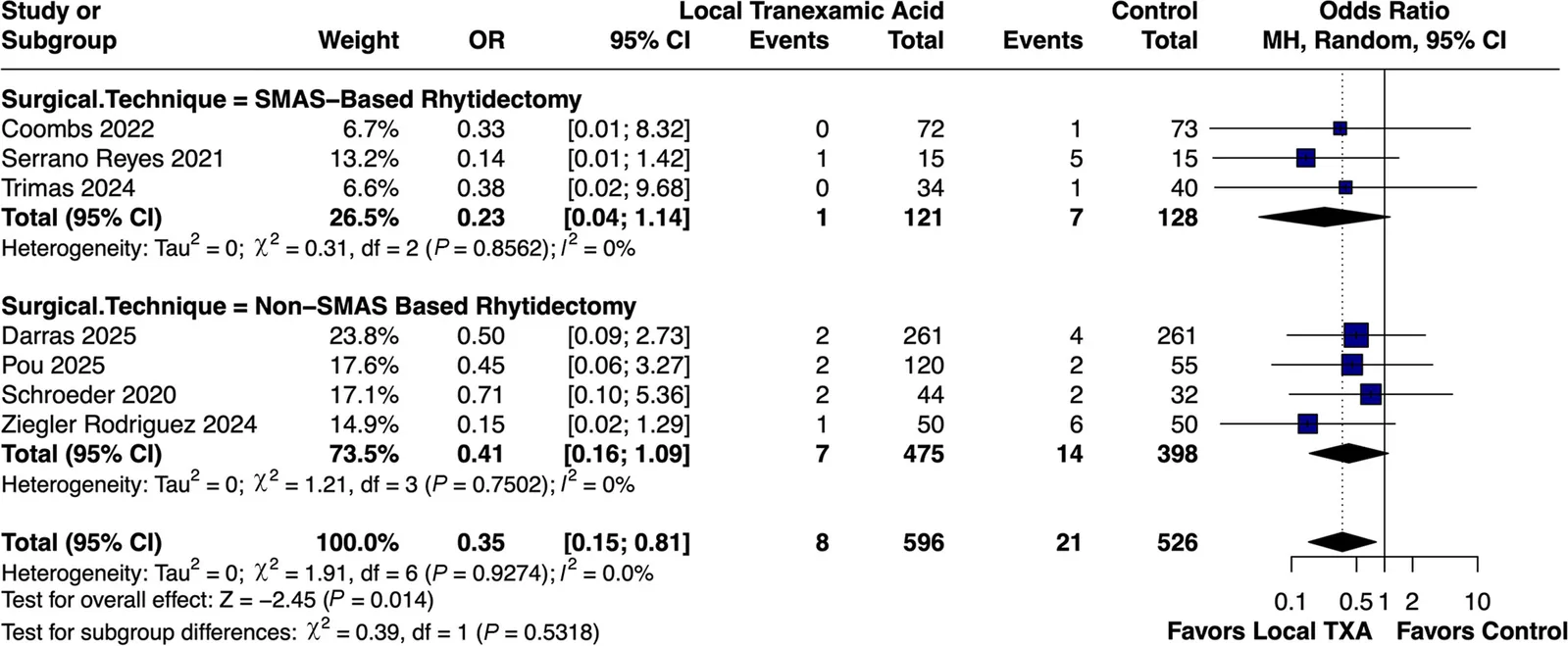
Fig. 6. Forest plot of subgroup analysis comparing hematoma risk following rhytidectomy with local administration of TXA vs control, stratified by surgical technique. Results are presented as ORs with 95% CIs, and subgroup differences were assessed using χ2 test. MH, mantel haenszel.按手术技术分层的血肿风险亚组森林图(OR)。
Sensitivity analyses using a leave-one-out approach demonstrated that the overall findings for EBL were stable to the exclusion of any individual study. Removal of any single study preserved the overall association between local TXA use and reduced intraoperative bleeding, with SMDs ranging from −6.71 to −1.45 and consistently elevated heterogeneity ( I 2 = 96.9%–99.4%) (Fig. 7 ).
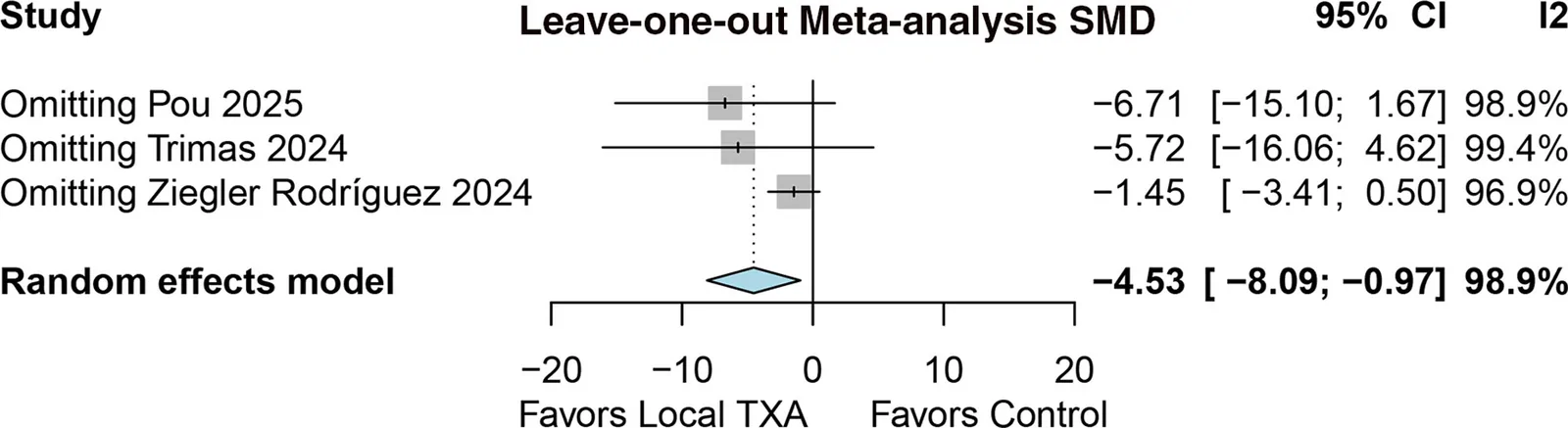
Fig. 7. Sensitivity leave-one-out analysis for the outcome EBL.EBL 的留一敏感性分析。
The risk of bias was systematically evaluated using the ROBINS-I tool, as all studies included in this meta-analysis were NRSIs. Among the 7 included studies, 30 – 36 2 were judged to have a serious risk of bias, 30 , 36 2 a moderate risk of bias, 31 , 32 and 3 a low risk of bias 33 – 35 (Fig. 8 ). The predominant contributors to elevated risk were residual confounding stemming from differences in perioperative protocols, surgical technique, and concerns regarding outcome measurement, given the inconsistent and often unblinded assessment of operative metrics in some of the included studies.
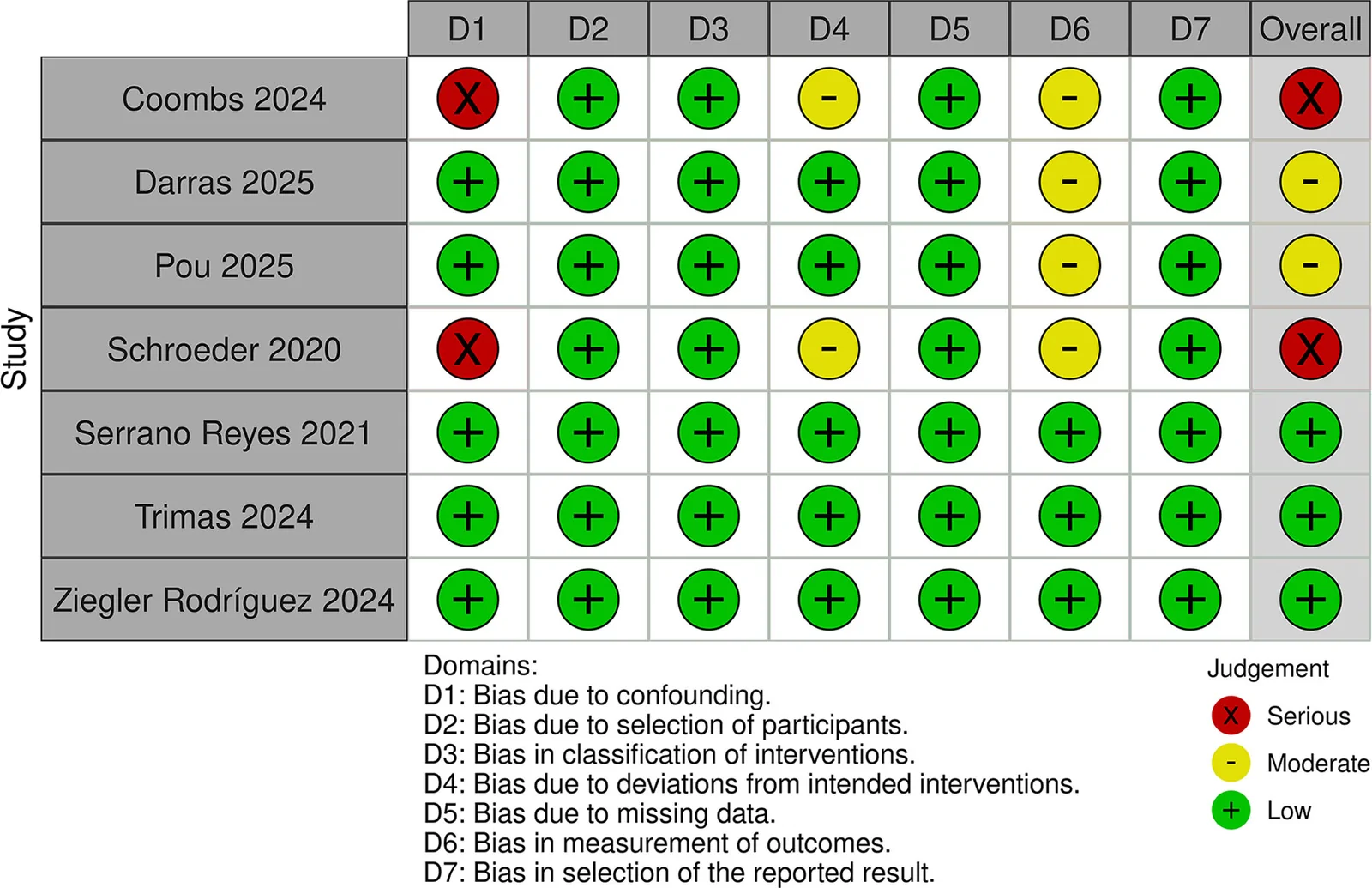
Fig. 8. Risk of bias assessment using Cochrane ROBINS-I framework. Summary traffic-light figure demonstrating the risk of bias for each included study, categorized across 7 domains, and the overall risk of bias judgment.ROBINS-I 偏倚风险评价(交通灯图),按 7 个域评估每篇研究的偏倚。
As illustrated in Table 2 , the certainty of evidence was evaluated for all outcomes using the GRADE framework. Certainty was rated as moderate to high for all included outcomes, with downgrading for risk of bias or inconsistency arising from high heterogeneity. Collectively, although some outcomes were constrained by variability across NRSIs, the evidence base consistently supports a beneficial effect of local application of TXA across clinically relevant endpoints.
Table 2. GRADE Summary of Findings
| Outcome | No. Studies | Study Design | Risk of Bias | Inconsistency | Indirectness | Imprecision | Other Considerations | Local TXA, n | Control, n | Relative 95% CI | Absolute 95% CI | Certainty | Importance |
|---|---|---|---|---|---|---|---|---|---|---|---|---|---|
| EBL, mL | 3 | NRSIs | Not serious | Very serious * | Not serious | Not serious | Very strong association | 204 | 145 | NA | SMD 4.53 SD lower (8.09 lower to 0.97 lower) | High | Critical |
| Drain output in first 24 h, mL | 3 | NRSIs | Serious † | Not serious | Not serious | Not serious | Strong association | 179 | 102 | NA | SMD 1.1 SD lower (1.4 lower to 0.79 lower) | High | Critical |
| Hematoma | 7 | NRSIs | Serious † | Not serious | Not serious | Not serious | Very strong association | 8/596 (1.3%) | 21/526 (4.0%) | OR 0.35 (0.15–0.81) | 26 fewer per 1000 (from 34 fewer to 7 fewer) | High | Critical |
| Marginal mandibular neuropraxia | 2 | NRSIs | Serious † | Not serious | Not serious | Not serious | None | 11/333 (3.3%) | 16/334 (4.8%) | OR 0.69 (0.31–1.52) | 14 fewer per 1000 (from 33 fewer to 23 more) | Moderate | Important |
| Wound-healing complications | 3 | NRSIs | Serious8 | Serious ‡ | Not serious | Not serious | None | 23/453 (5.1%) | 31/389 (8.0%) | OR 0.86 (0.22–3.32) | 10 fewer per 1000 (from 61 fewer to 144 more) | Low | Important |
| Surgical-site infection | 3 | NRSIs | Serious † | Not serious | Not serious | Not serious | Strong association | 6/453 (1.3%) | 11/389 (2.8%) | OR 0.47 (0.17–1.30) | 15 fewer per 1000 (from 23 fewer to 8 more) | High | Important |
| Seroma | 2 | NRSIs | Serious † | Serious ‡ | Not serious | Serious § | None | 11/381 (2.9%) | 12/316 (3.8%) | OR 0.66 (0.10–4.58) | 13 fewer per 1000 (from 34 fewer to 115 more) | Very low | Important |
This systematic review and meta-analysis of 7 nonrandomized studies 30 – 36 comprising 1122 patients provides a granular synthesis of the available evidence supporting the use of locally administered TXA in rhytidectomy. The cumulative data demonstrate that this simple pharmacological intervention confers significant benefits across the critical domains of surgical efficiency, hemostasis, and patient safety. Our principal findings demonstrate that locally administered TXA was associated with significant reductions in EBL and drain output during the first 24 hours, as well as in the rate of hematoma; these are of paramount clinical importance and directly address the most significant causes of morbidity in face lift surgery, despite decades of refinements in surgical technique and perioperative management.
Hematoma remains the sentinel complication in rhytidectomy, capable of compromising flap viability, distorting aesthetic results, prolonging recovery, and undermining patient confidence. In their meta-analysis of 183 face lift studies, Jacono et al 37 demonstrated that major hematoma rates differ significantly by technique, ranging from 0.32% in composite lifts to nearly 2% in SMASectomy/imbrication, with deep-plane and SMASectomy approaches carrying higher odds of hematoma formation. Complementing these findings, Azzi et al 38 performed a comprehensive subgroup analysis of hemostatic strategies and reported a 1.53% rate of major hematoma across 7 TXA studies, comparable to outcomes with sealants (1.25%) and hemostatic nets (1.23%). Collectively, these data highlight both the persistent clinical burden of hematoma across face lift techniques and the emerging role of TXA as a promising adjunct within the broader hemostatic landscape.
The benefits of local TXA administration in aesthetic surgery extend beyond its clinical efficacy to encompass a favorable safety and economic profile. By administering the drug directly into the surgical field, high tissue concentrations are achieved while systemic absorption is minimized, a key advantage over the intravenous route. 32 , 36 Yet, despite its growing popularity, the optimal dose of local TXA remains undefined. Existing evidence suggests that doses in the range of 1–2 g reliably produce meaningful reductions in bleeding and edema with an exceedingly low adverse-event profile; however, no consensus protocol has been universally adopted, highlighting the need for dose standardization in future trials. 30 – 36 , 39
Recent literature has highlighted conflicting evidence regarding the safety of local TXA administration in face lift procedures. Yalamanchili et al 40 reported a case series of 4 patients who developed wound-healing complications, including skin necrosis, which the authors attributed to locally administered TXA. In contrast, Darras et al 31 found no significant difference in wound-healing complications between patients who received local TXA and those who did not in their matched-cohort study of 522 patients. This discrepancy may reflect differences in TXA concentration and dosing. Cases in the study by Yalamanchili et al 40 involved higher TXA concentrations (8–25 mg/mL), whereas Darras et al 31 used lower concentrations (1–2 mg/mL). This observation suggests that wound-healing complications may be dose-dependent, with higher concentrations potentially interfering with normal wound-healing processes. Interestingly, our pooled cohort showed similar complication rates despite different doses, with hematoma cases ranging from 0 to 2, and other postoperative complications remaining less than 1% in all included studies.
Furthermore, Schroeder et al 36 demonstrated substantial reductions in postoperative drainage and earlier drain removal, as well as a reduced subjective rate of postoperative ecchymosis and edema, with topical application of TXA following deep-plane rhytidectomy, providing strong early postoperative evidence of TXA’s stabilizing effect on surgical planes. Pou et al 32 expanded this understanding in their 3-arm retrospective cohort study, demonstrating that both topical and subcutaneous TXA administration significantly reduced EBL, bruising, and seroma formation while maintaining systemic complication rates comparable to those of controls. From an economic standpoint, the rationale for TXA is equally compelling. TXA itself is inexpensive, with studies reporting an approximate cost of $58 per 1 g, yet this minimal investment yields substantial downstream savings by reducing the incidence of costly bleeding-related complications up to $84. 41 This supports the notion that local TXA administration is not only clinically advantageous but also a dominant, cost-saving strategy.
Several limitations should be acknowledged. The inclusion of nonrandomized single-surgeon cohort studies introduces the potential for confounding and limits generalizability. Heterogeneity in surgical techniques and local TXA administration protocols, including differences in dose, concentration, and delivery methods, prevented the identification of an optimal regimen. The predominance of female patients and the lack of sex-specific outcome reporting limit the extrapolation of these findings to male patients. Additionally, the small number of included studies (<10) precluded meta-regression and formal assessment of publication bias. Finally, economic outcomes were not reported, preventing a formal cost-effectiveness analysis despite TXA being a relatively low-cost adjunct.
This systematic review and meta-analysis suggest that the local administration of TXA is a safe and effective adjunct in rhytidectomy. Its use is associated with reductions in EBL, postoperative drainage, and hematologic complications. Although local TXA shows promise as an adjunctive hemostatic strategy in face lift surgery, additional high-quality, controlled trials with standardized protocols and economic evaluation are essential to confirm these findings, establish optimal dosing and administration methods, and define the role of local TXA administration in modern aesthetic surgery practice.
The authors have no financial interest to declare in relation to the content of this article.
补充视频 / 附件(原文未随文提供原图,可于出版方页面查看)gox-14-e8083-s001.pdf补充视频 / 附件(原文未随文提供原图,可于出版方页面查看)gox-14-e8083-s002.pdf
声明:中文精读 · 仅供学术参考。内容来自公开文献检索,不代表本人观点,不构成诊疗建议。 医疗美容需在正规医疗机构由执业医师实施。
基于相同主题推荐 · 继续深挖
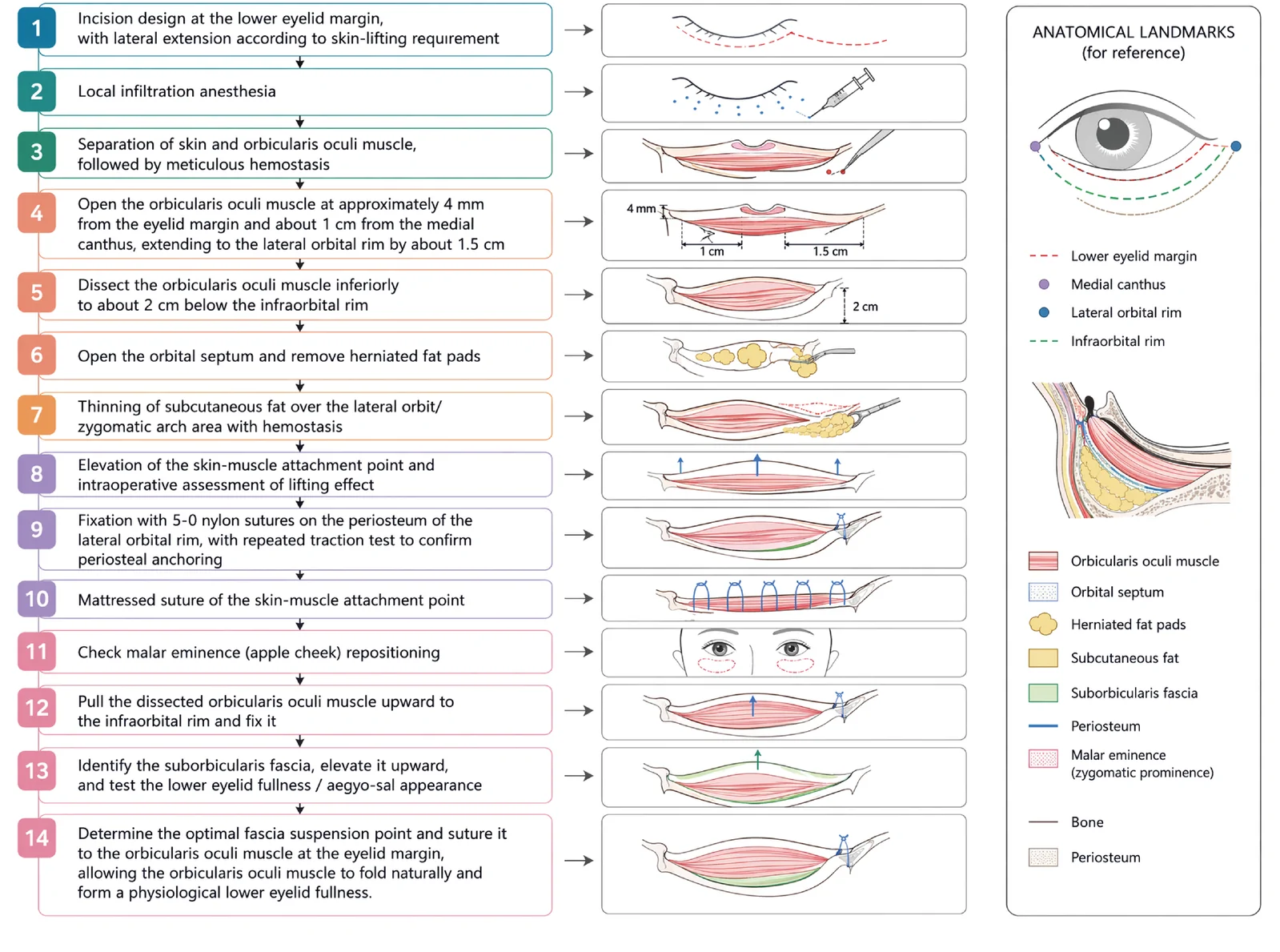
V3中面部提升经睫毛下切口,沿内眦线、外眦线、颧脂肪垫下界三个向量悬吊,可同时改善中面部下垂、下睑袋及睑颊轮廓不连续。
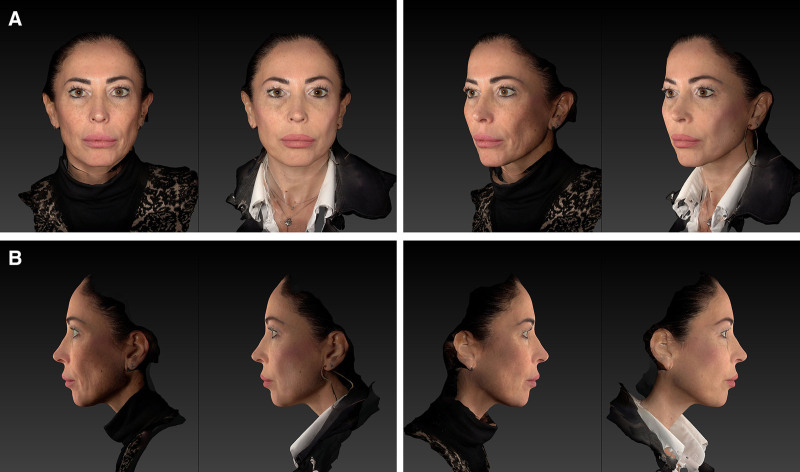
回顾性观察性先导研究,30 例患者(73% 为 Fitzpatrick III 型皮肤),液态 PCL 填充剂以 25G 钝针、逆行线性技术注射至中面部深层真皮,每侧面部 2 瓶(
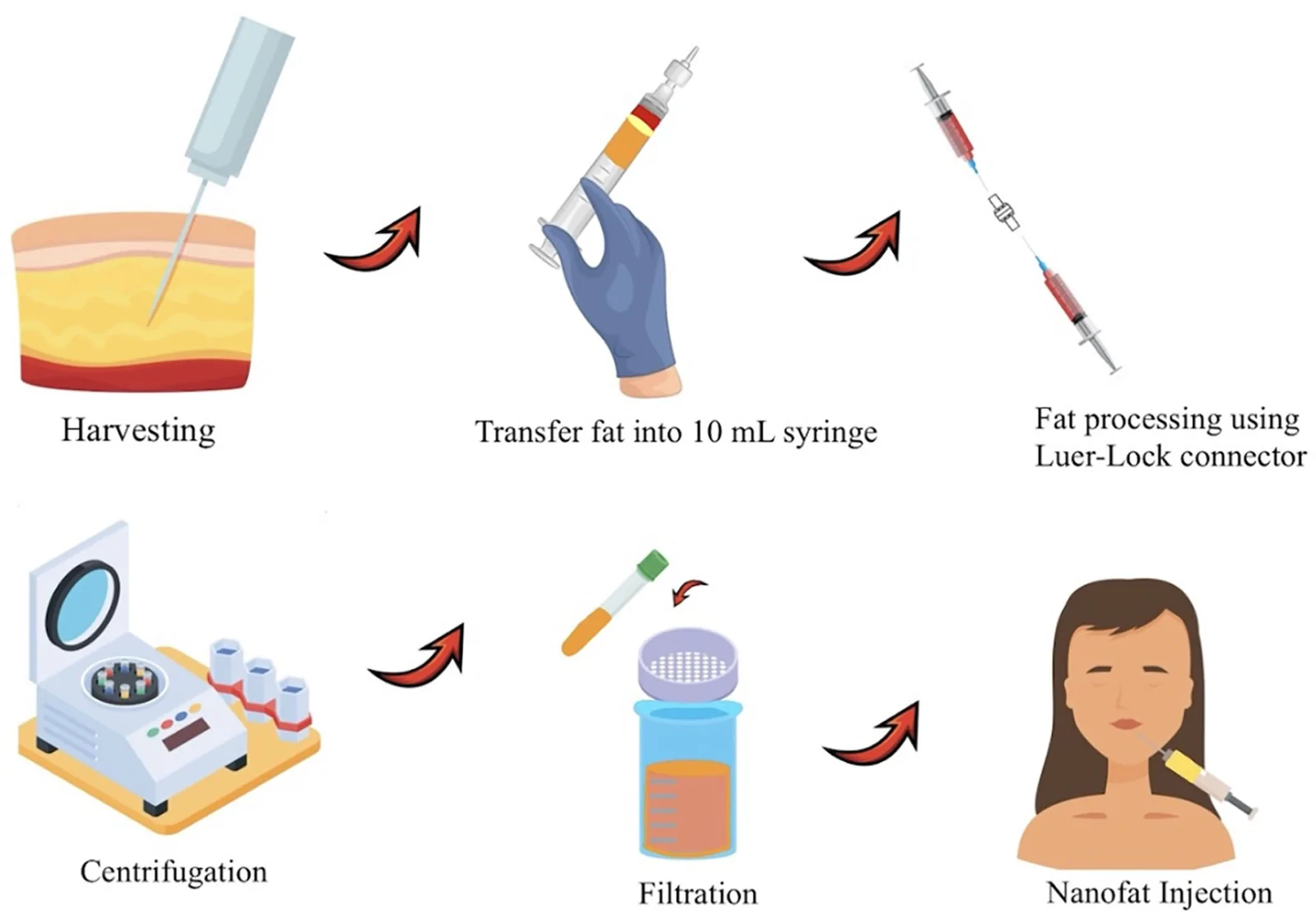
PRISMA 系统综述(2024-12),纳入 18 项研究、768 例患者;纳米脂肪为机械乳化/过滤的自体脂肪,富集 SVF 与脂肪来源干细胞,侧重再生而非单纯容积充填。