植发后1小时重新植入移植毛囊的存活:缺血耐受与机械损伤证据
2026年9月14日16 min read
Plastic and Reconstructive Surgery Global Open
Plastic and Reconstructive Surgery Global Open
结论与实践要点
结论(循证): 在术后 1 小时将已植入、但位置或方向不满意的毛囊单位(FU)取出重新植入,通常不会因「缺血」本身导致大范围坏死——毛囊对离体缺血有较强耐受(标准保存液下约 6 小时、含 PRP 可达约 8 小时仍保持活力,PMC12063776);且在离体/留置 60 分钟这一时间窗,毛囊主要表现为应激而非不可逆凋亡(抗凋亡 BCL-2 已上调、执行性 caspase 未激活,PMC13180374)。真正决定再植入存活高低的,是「取出与再植入过程中的机械损伤」与操作技术(PMC5404445),而非这 1 小时的留置。
机制:为何 1 小时不是问题。 移植毛囊植入受区后,并非立即接上受区血流。其早期营养依赖「血浆浸渗(plasmatic imbibition)」,真正的再血管化(neovascularization)通常需 48–72 小时才建立。也就是说,术后 1 小时时毛囊尚未长出新的毛细血管——此时将其拔出,并不会「扯断」已经建立的血供;在生理学上,这更接近把毛囊从保存液中取出再植入,而非破坏已成活血管。结合 PMC12063776 的离体活力时间窗(≥6 小时)与 PMC13180374 的 60 分钟抗凋亡转变,1 小时留置处于安全范围内。
真正的存活风险:机械损伤。 PMC5404445 在 42 例 FUE 取发毛囊的镜检显示,即使熟练操作也存在横断(约 7%)、削薄/paring、毛球部分损伤、毛乳头(DP)损伤与折断等微小创伤;其中毛球与 DP 损伤常仅在 ×60 显微镜下可见,常规 ×5–6 放大镜易漏诊,且很可能拉低存活率。把已植入 1 小时的毛囊再拔出,等于增加一次「取发」式创伤——若钳取时挤压毛球、撕裂 DP、或折断毛囊,存活就会下降。因此:再取出的手法比「间隔 1 小时」更关键。
操作建议(若必须重做)。 ① 全程保持毛囊湿润、避免干燥(干燥是已知存活杀手);② 用精细镊轻柔夹持毛干/脂肪垫,避免挤压毛球与 DP;③ 再植入时控制深度与角度、纠正原有歪斜,避免反复进出造成隧道损伤;④ 尽量缩短再次离体时间,越快回植越好;⑤ 可用含 PRP 的保存液短时浸润,可能延长耐受窗(PMC12063776 思路,但属概念验证、尚未在植入后存活上证实)。
局限与提醒。 本读核心文献 PMC12063776 为离体活力(台盼蓝)的概念验证研究,并非「植入后存活」临床结局,不能直接等同于再植入成活率;PMC13180374 为分子水平的离体缺氧窗研究,样本小、仅 RNA 层面。两者共同指向「1 小时缺血在存活上通常可控」,但真实再植入成活率仍受术者技术主导。若重做时肉眼可见毛球扁塌、DP 碎裂或毛囊折断,建议弃用该单位、改补新单位,而非强行回植低质量移植物。总体而言:纠正歪斜的再植入值得做(美观收益大于风险),但前提是严格无创操作。
Hair transplantation effectively treats alopecia, and hair graft viability is crucial for its success. The study aimed to assess the use of preconditioned autologous platelet-rich plasma with photothermal biostimulation as a graft preservation solution to increase the viability time of follicular units before transplantation. The study was conducted as a proof of concept. The platelet-rich plasma photothermal biostimulation was conducted using the MCT System, exposing the sample for 15 minutes to 623 nm red light with an intensity of 0.5 J/cm 2 and a temperature of 4 ºC to obtain the MCT Plasma. Grafts of volunteers were collected and preserved in 2 Petri dishes per preservation solution (MCT Plasma + phosphate-buffered saline, Ringer’s lactate, and saline solution). Graft viability was evaluated in 6 random follicular units at 5, 6, 7, and 8 hours with 0.4% Trypan blue stain diluted at 1/6 with NaCl 0.9%. Twenty-eight male volunteers were included with a mean age of 41 (SD 8.14, range 29–59). A total of 240 grafts were collected from each subject and distributed equitably in 2 Petri dishes for each preservation solution. At 8 hours, only grafts preserved in MCT Plasma with phosphate-buffered saline survived. MCT Plasma maintained hair follicle viability more effectively before transplantation than the saline solution or Ringer’s lactate, demonstrating its efficacy as a preservation solution. Hair grafts preserved in MCT plasma with phosphate-buffered saline remained viable for eight hours following extraction, 2 hours longer than with the other tested solutions.
Question: How can we improve the properties of hair graft preservation solutions to align them with new transplantation techniques requiring more prolonged preservation periods?
Findings: Photobiomodulation preconditions platelet-rich plasma (PRP) by improving its properties, increasing growth factors and cytokines released by alpha granules. The study showed that when preconditioned PRP was used as an additive to preservation solution, it improved hair graft survival with an extension of its viability.
Meaning: Preconditioned PRP can mimic the scalp environment and adapt preservation solutions to novel hair transplantation techniques that are able to implant a significant number of follicular units requiring extended preservation periods.
Hair transplantation has reached considerable popularity for alopecia treatment due to its natural results, 1 and the preservation solution plays a crucial role because it influences graft survival. 2 As the newer techniques have increased the number of implanted follicles, the preservation time has also increased. Consequently, grafts’ time exposure to the preservation solution has increased. 3 For this reason, specialized solutions are currently being designed to extend the viability of cells and tissues, keeping the grafts in an environment similar to the scalp. 4 One option is using autologous platelet-rich plasma (PRP) because it can promote hair growth, stimulate cell survival and proliferation, and prolong the anagen phase. 5 Photothermal biostimulation or photothermal biomodulation is a novelty procedure for cell preconditioning that enhances PRP properties. 6 Its application to autologous PRP for hair graft preservation purposes could extend the viability of follicular units (FUs).
The study aimed to assess the use of preconditioned autologous PRP with photothermal biostimulation as a graft preservation solution to increase FU viability time before transplantation.
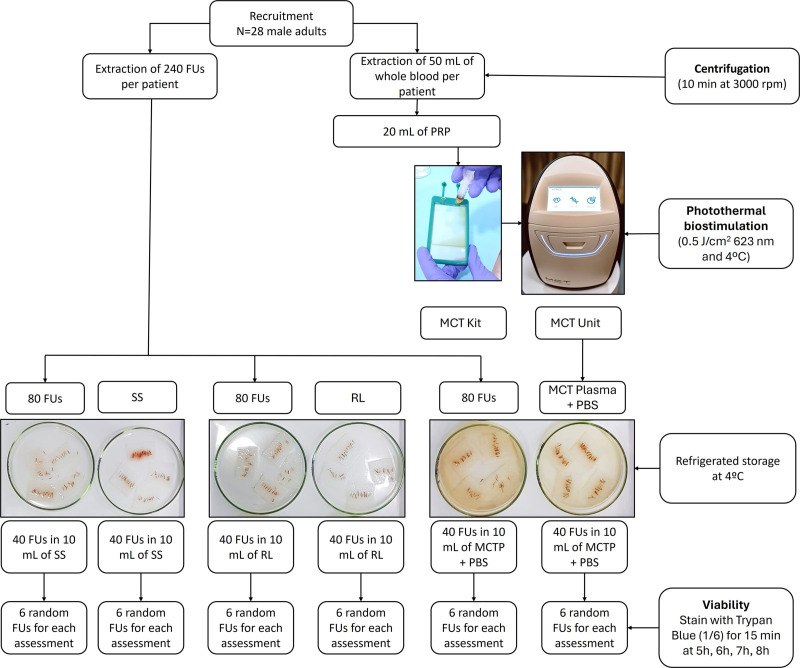
The study was conducted as proof of concept at (removed for anonymization purposes) (Madrid, Spain) to assess the viability of FUs from male volunteers with androgenic alopecia preserved in preconditioned PRP/ phosphate-buffered saline (PBS), saline solution (SS), and Ringer’s lactate (RL) (Fig. 1 ). The donors selected were healthy male adults from 25 to 60 years of age. Patients with systemic diseases, pathological blood test results, scalp damage, or pathological conditions were excluded.
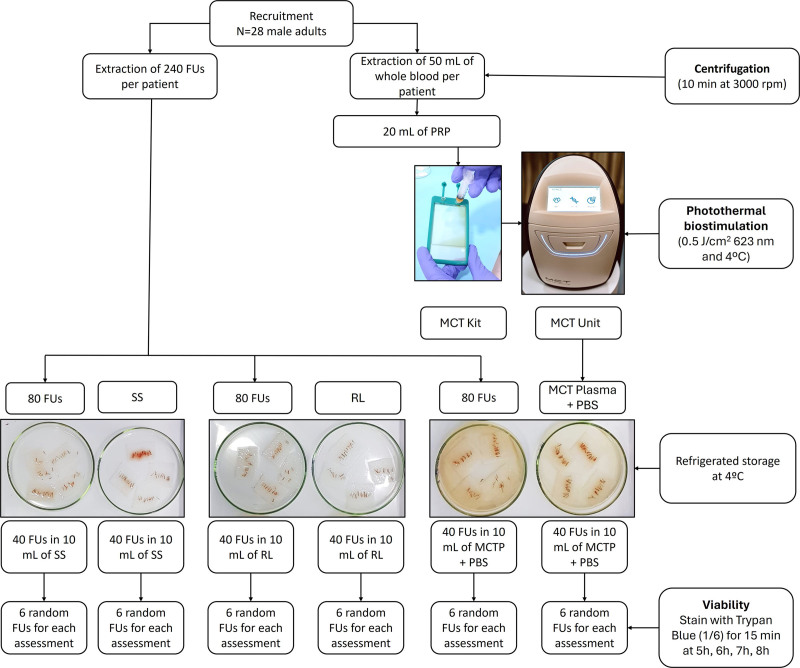
Fig. 1. Study design. rpm, revolutions per minute; MCTP, photothermal-biostimulated plasma.研究设计:28 名男性志愿者,每人取 240 个 FU,分别用 MCT Plasma/PBS、生理盐水(SS)、乳酸林格液(RL)保存,在离体 5/6/7/8 小时评估活力。rpm=转速;MCTP=光热生物刺激血浆。The research adhered to the revised Declaration of Helsinki and the Good Clinical Practice principles and complied with all applicable laws and regulatory requirements relevant to the use of devices in Spain. All patients signed an informed consent before participating.
Fifty milliliters of blood were extracted from each donor using closed blood processing systems. Samples were centrifuged for 10 minutes at 3000 rpm (Nahita-Blue Fugelab-GB10, Innovagen, Madrid, Spain), and 20 mL of PRP was obtained.
The PRP photothermal biostimulation was conducted using the MCT System (Meta Cell Technology, Sant Cugat, Spain), a novel cell preconditioning device comprised of the MCT Unit and the MCT Kit (a sterile 10 mL single-use container manufactured with a medical-grade special polymer). The 20mL of PRP were equally distributed in 2 MCT Kits. Subsequently, the MCT Kit was placed into the MCT Unit, and the sample was stimulated for 10 minutes with 623 nm red light with an intensity of 0.5 J/cm 2 and a temperature of 4 °C (Fig. 1 ).
A total of 240 FUs were obtained from each donor, with 80 equitably placed in 2 Petri dishes with 10 mL of SS 0.9% (ERN Laboratories S.A., Barcelona, Spain), 80 in 2 Petri dishes RL (Braun Lactato-RingerVet, B. Braun Vetcare S.A., Barcelona, Spain), and 80 in 2 Petri dishes with 8 mL of MCT Plasma and 2 mL of PBS (Gibco PBS pH 7.4). All grafts were maintained in each petri dish at 4 ºC until the viability assessment (Fig. 1 ).
The viability was assessed by staining the FUs with Trypan Blue Stain 0.4% (Gibco-Life technologies, NY). The stain was tested in several dilutions with NaCl 0.9% (Vitulia physiological serum, Laboratorios ERN, S.A.), and 1/6 was the selected dilution (Fig. 2 ). Viability was assessed at 5, 6, 7, and 8 hours. At each evaluation, 6 randomized grafts (using a list of random numbers) of each preservation solution were stained for 15 minutes (Fig. 1 ). A subjective semiquantitative assessment was conducted based on 3 levels: dark blue represents low viability (−), blue represents moderate viability (±), and light blue represents high viability (+).

Fig. 2. Trypan blue stain 0.4% dilutions with NaCl 0.9% to decide which was the most suitable to assess FU viability.台盼蓝 0.4% 不同稀释度(与 0.9% NaCl)的筛选,用于判定最适于评估 FU 活力的染色条件。
Twenty-eight adult male volunteers were included, with a mean age of 41 years (SD 8.14; range 29–59 y). Two hundred forty FUs were obtained from each donor, 80 preserved with MCT Plasma/PBS, 80 with SS, and 80 with RL. All follicles preserved with MCT Plasma/PBS, SS, or RL were viable until 6 hours after extraction (Fig. 3 ). After 7 hours, only a few FUs of those preserved at SS and RL and all preserved in MCT Plasma/PBS were viable. At 8 hours, the grafts preserved in SS and RL were markedly blue stained, which indicated their nonviability for transplantation, and those FUs preserved in MCT Plasma/PBS showed a high viability (+) (Fig. 3 ).
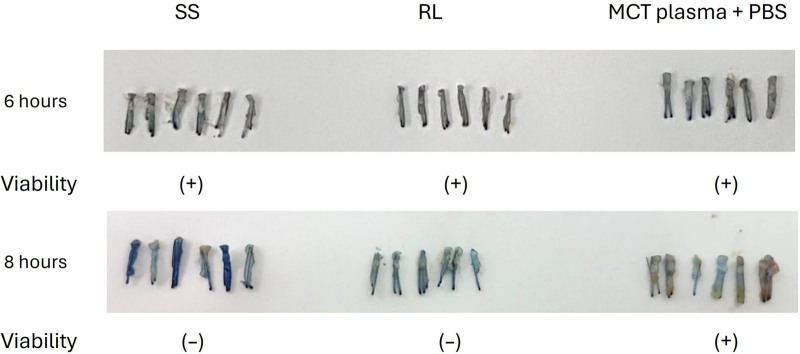
Fig. 3. Follicular units stained with Trypan blue diluted at 1/6 with NaCl 0.9% for the viability assessment at 6 and 8 hours. (+), light blue = high viability; (±) blue = moderate viability; (−) dark blue = low viability.毛囊单位经 1/6 稀释台盼蓝染色后的活力评估(6 与 8 小时):浅蓝(+) = 高活力,蓝(±) = 中等活力,深蓝(−) = 低活力。可见 8 小时仅 MCT Plasma/PBS 组仍保持较高活力。
The preservation solution is essential for the hair graft’s viability. Our study showed that grafts stored in a solution containing MCT Plasma/PBS remained viable for 8 hours, 2 hours longer than those preserved with SS or RL. The rationale of these results would be related to the PRP properties in addition to those of PBM. PBM enhances the release of platelet-derived growth factor, basic fibroblast growth factor, transforming growth factor ß, vascular endothelial growth factor, interleukins, hormones, and several hundred other proteins released by platelets. 7 PBM increases complexes I, II, III, and IV, and succinate dehydrogenase activity in the electron transfer chain. 8
Other authors have assessed the efficacy of new preservation solutions for increasing hair graft viability compared with standard solutions such as SS and RL. Raposio et al 9 found a significant increase in the survival rate of hair micrografts pretreated with adenosine triphosphate-magnesium chloride and deferoxamine mesylate compared with those preserved with isotonic saline. Another study compared a preservation solution developed by the Hair Science Institute with SS and RL Braun. 10 The results showed that the graft’s viability was longer in those FUs preserved with the Hair Science Institute solution. One randomized controlled trial added PRP to Williams’ Medium E and RL and found that hair follicle grafts exhibited higher levels of CK15 expression than those without PRP. 2 A split scalp study kept the grafts in autologous plasma or RL. 11 At 12 and 72 hours, grafts stored in plasma showed higher hair follicle cell survival. A randomized controlled trial found that preserving hair grafts in PRP increased hair density, graft uptake, and hair thickness compared with those preserved in SS. 12 Based on the findings of previous studies and the advantages of photograph biostimulation in enhancing cell properties, the use of MCT Plasma may prove beneficial for graft preservation.
The pilot study was limited by the small number of grafts, and the only use of the Trypan blue stain to assess the results. As it was a preclinical study, it was not designed to assess postimplantation viability. As we have determined that MCT Plasma has longer viability than standard preservation solutions such as PBS or RL, we should design another study with more sensitive parameters to compare the preservation properties of MCT Plasma with those of standard PRP before and after hair graft implantation.
MCT Plasma maintained hair follicle viability more effectively before transplantation than the SS or RL, demonstrating its efficacy as a preservation solution. Hair grafts preserved in MCT Plasma/PBS remained viable for 8 hours following extraction, 2 hours longer than with the other tested solutions. After these findings, more research needs to be carried out.
Meta Cell Technology S.L. provided the MCT System device for the study and covered the costs of medical writing support, but did not provide personal fees. Dr. Pinto is a scientific advisor at Metacell Technology; however, he did not receive any fees for conducting this study. The other author has no financial interest to declare in relation to the content of this article.
We thank i2e3 Procomms for providing medical writing assistance.
声明:中文精读 · 仅供学术参考。内容来自公开文献检索,不代表本人观点,不构成诊疗建议。 医疗美容需在正规医疗机构由执业医师实施。
基于相同主题推荐 · 继续深挖
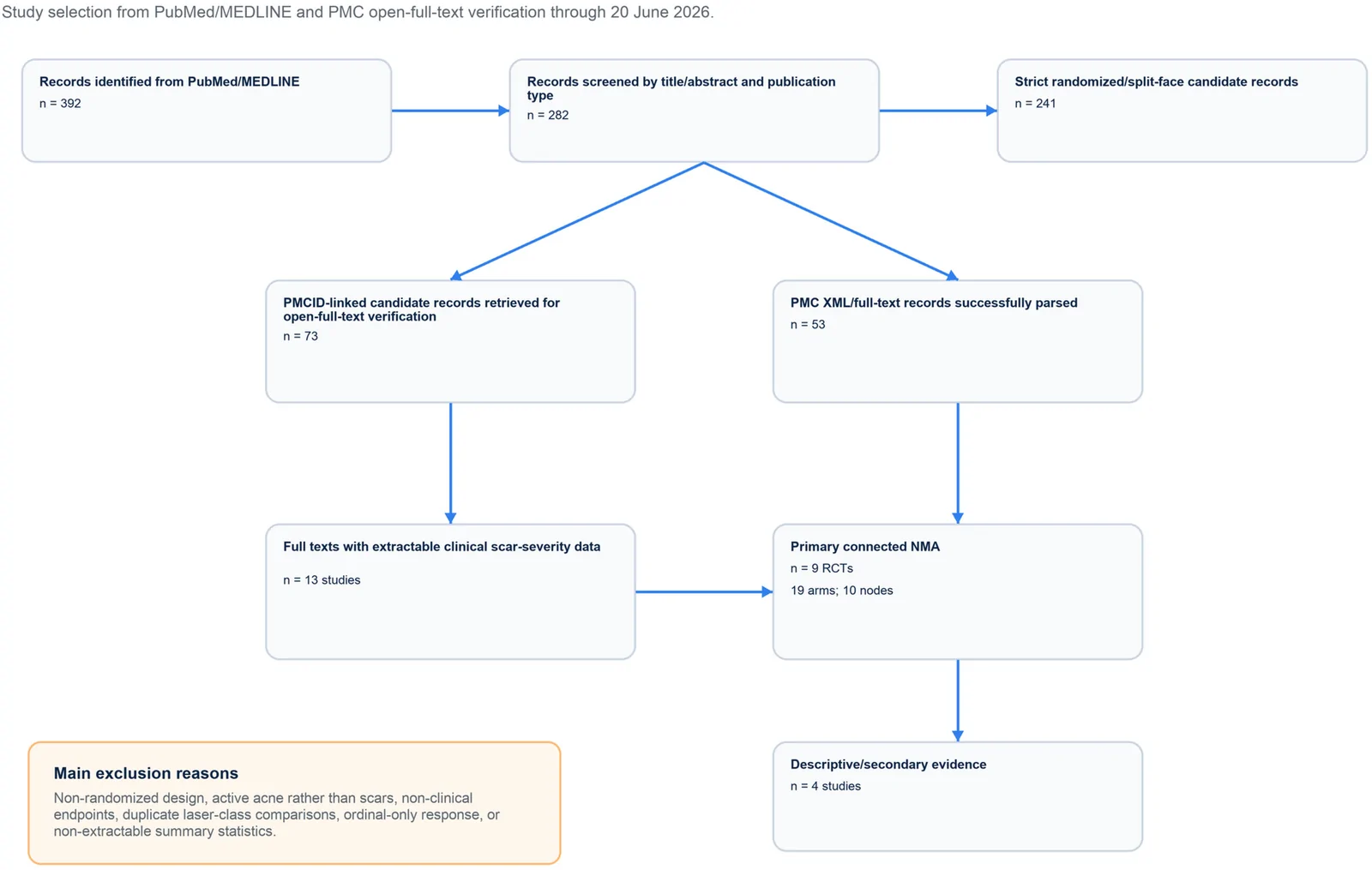
PROSPERO注册的系统综述,纳入9项随机/分脸随机试验、19个治疗臂,构成稀疏连接网络并采用频率学随机效应网络荟萃分析。
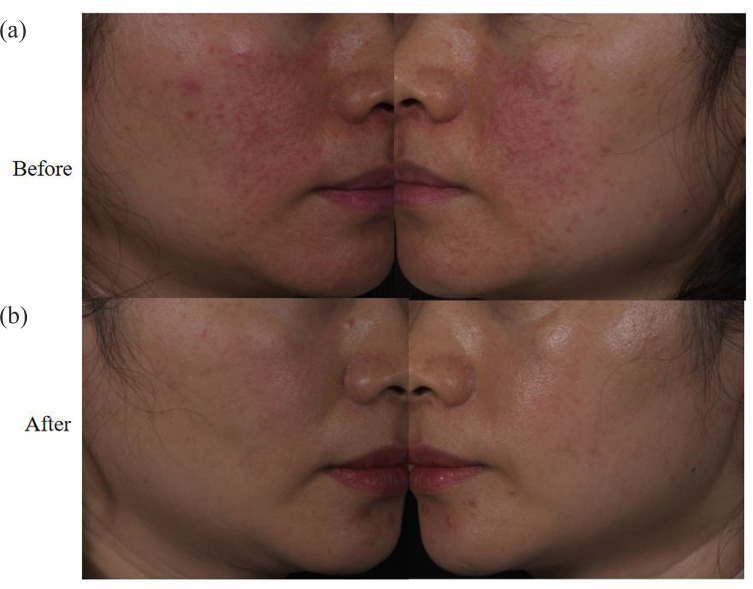
回顾性纳入63例红斑毛细血管扩张型玫瑰痤疮(ETR)中国患者,均采用555–950 nm与530–750 nm双滤光片窄谱IPL治疗。
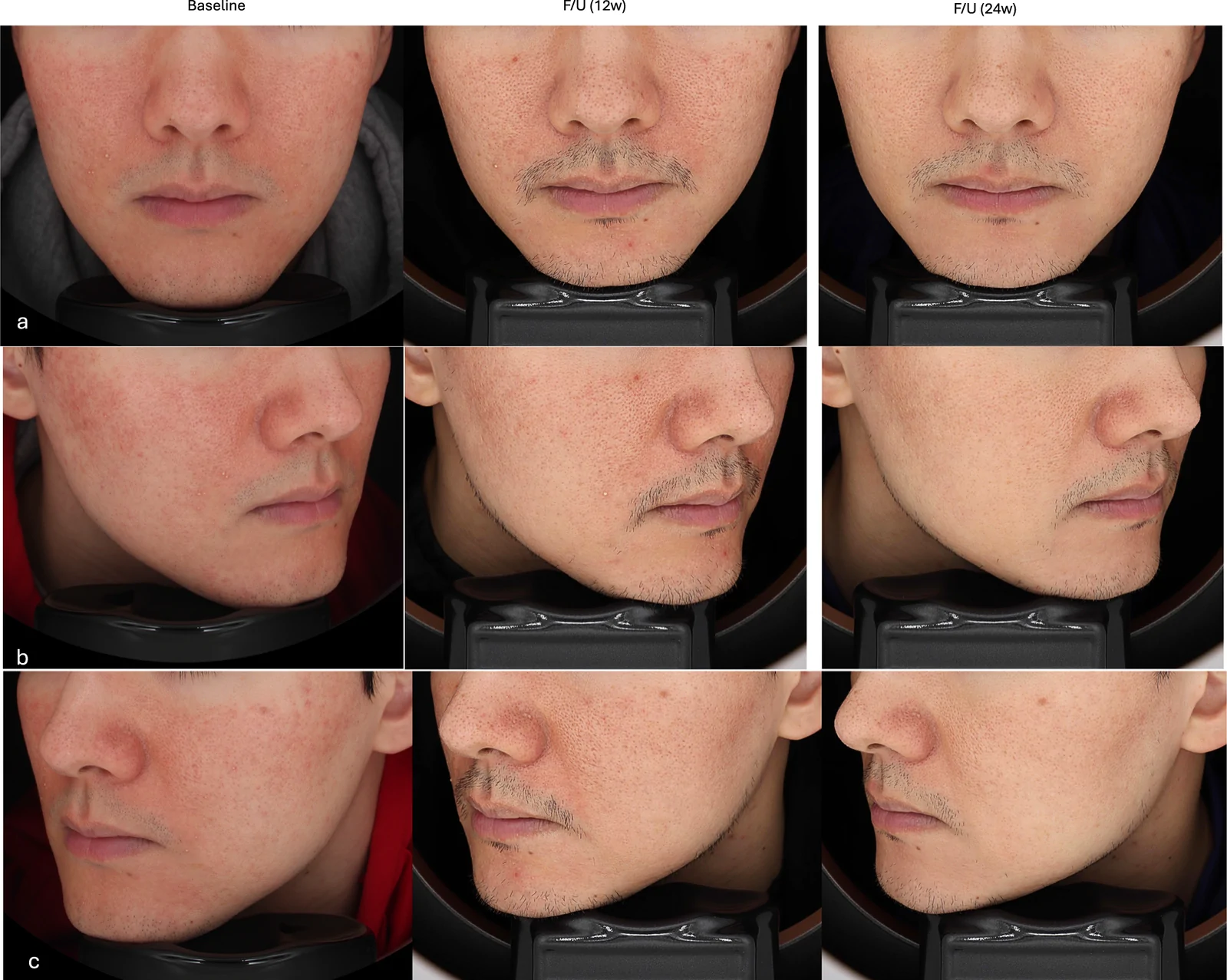
真实世界回顾性队列纳入50例临床诊断玫瑰痤疮成人,80%为女性、中位年龄33岁,多数(76%)为Fitzpatrick III型肤色。