聚己内酯(PCL)填充剂三阶段 V-line 分层注射用于面部轮廓重建:病例报告
2026年9月29日11 min read
Plastic and Reconstructive Surgery Global Open
Plastic and Reconstructive Surgery Global Open
结论与实践要点
亚洲面部常见的解剖特征是中面部偏平、颧弓较宽、立体感不足,求美目标往往不是单一部位的「加高」,而是轮廓过渡的平滑与比例协调。本文提出的 V-line 概念,即把点(颏尖)、线(下颌缘、耳前)、面(中面部、T 区)的分层增量整合在一个结构化的注射序列中。
本例使用 PCL 类填充剂(Ellansé S)。这类材料兼具凝胶载体的即刻容量效应与 PCL 微球带来的后续组织反应,因此在需要「支撑感」的下颌线与颏部区域具备应用逻辑;治疗按三阶段推进:先建立颏部与前份支撑(V1),再延伸至下颌与耳前区(V2),最后处理中面部与 T 区的过渡。
必须明确证据等级:这是一篇单例病例报告(n=1),即刻与 6 个月的改善来自照片与临床观察,缺乏客观量化指标与对照,作者本人也指出需要更大样本、客观测量与更长随访。因此它更适合作为「思路与注射序列」的参考,而不能作为疗效强弱的依据。
临床启示:对亚洲面型的轮廓治疗,建议先做整体评估(骨性支撑、软组织容量、松弛程度、咬肌状态),再按支撑—过渡—细化的顺序分次实施;PCL 类材料不可降解周期长、一旦过量或不对称处理难度较大,剂量与层次应保守,并预留随访与必要的修正空间。
Asian facial anatomy is often characterized by flatter midfaces, wider zygomatic arches, and reduced projection, leading to diminished contour definition. Aesthetic goals therefore emphasize smooth transitions and balanced facial proportions. The V-line concept represents a structured approach integrating point-, line-, and plane-based augmentation to enhance facial support and contour. This preliminary case report describes a 39-year-old woman who underwent facial rejuvenation using a polycaprolactone (PCL)-based filler with a 3-stage V-line layered injection technique. The protocol targeted the jawline, midface, and T-zone in a single treatment session using a layer-specific approach. Improvements were observed immediately and maintained at 1-, 3-, and 6-month follow-ups. Lower facial contour and jawline definition improved, midface support was restored with smoother transitions, and upper facial projection was enhanced. No complications were observed. This preliminary report suggests that the 3-stage V-line technique using PCL filler may provide effective and natural facial rejuvenation tailored to Asian facial morphology. Further studies with larger sample sizes, objective outcome measures, and longer follow-up are warranted.
There are significant differences between Asian and Western populations in facial anatomy and aesthetic preferences. Asian faces generally exhibit softer, flatter features, including wider zygomatic bones, insufficient forehead projection, a relatively flat midface, a lower nasal bridge, and a shorter or mildly retrusive chin, resulting in less pronounced 3-dimensional contour. 1 , 2 Consequently, aesthetic goals in Asian populations emphasize smooth facial transitions, structural harmony, and balanced projection.
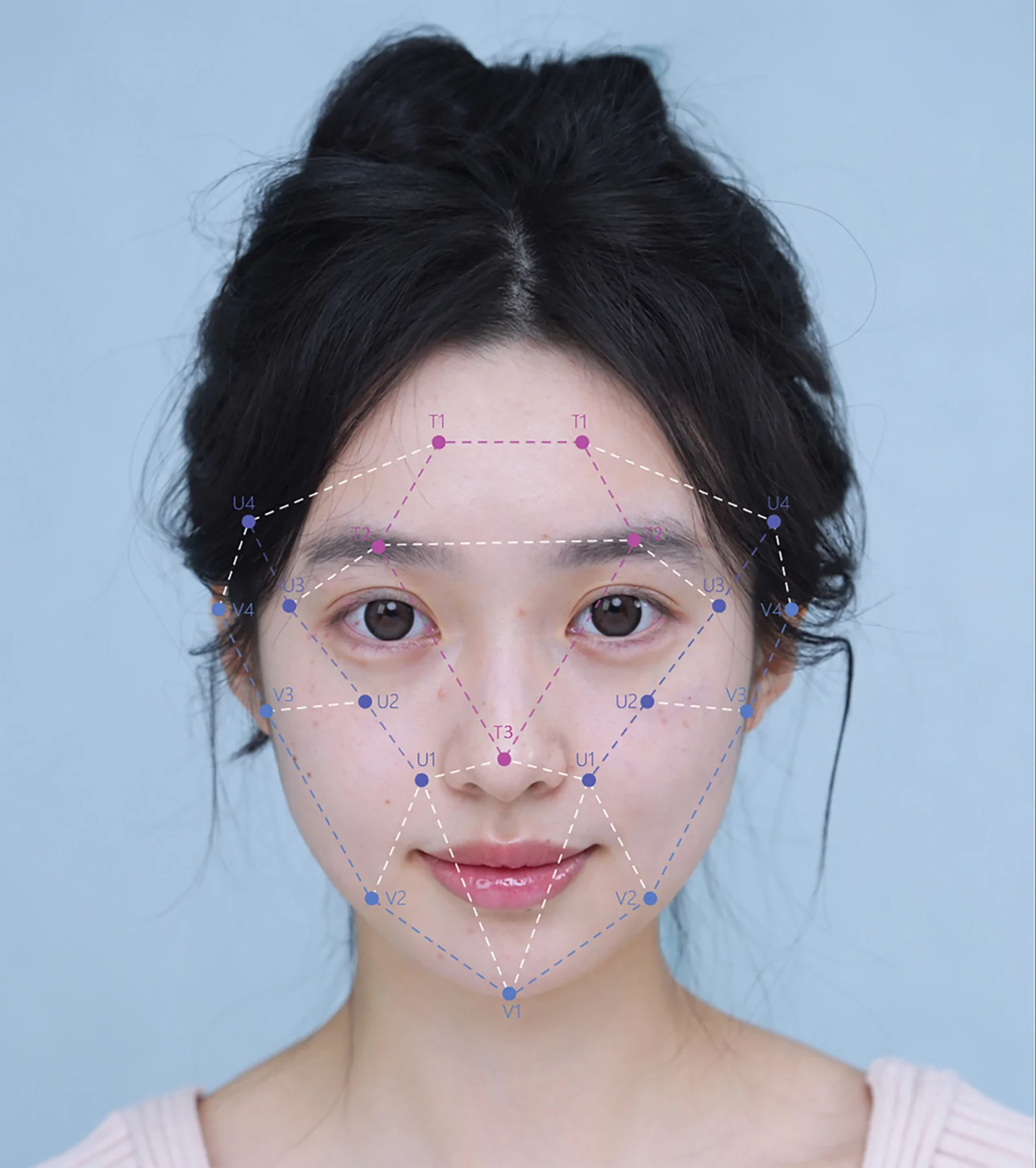
Polycaprolactone (PCL)-based fillers have recently emerged as a new generation of biostimulatory materials with promising effects in volume restoration and structural lifting. 3 This case report aims to provide a preliminary evaluation of the clinical efficacy of PCL-based fillers in facial rejuvenation and structural contouring, with particular focus on refining the V-line contour. The V-Line is a structured, 3-stage V-shaped facial framework that coordinates point, line, and plane augmentation to enhance facial support, contour definition, and youthful dimensionality (Fig. 1 ). Unlike conventional approaches that primarily focus on localized volumetric filling, the V-Line technique emphasizes comprehensive structural remodeling of the entire face. This layer-specific injection protocol uses precise anatomic targeting, specifically tailored to Asian facial characteristics.
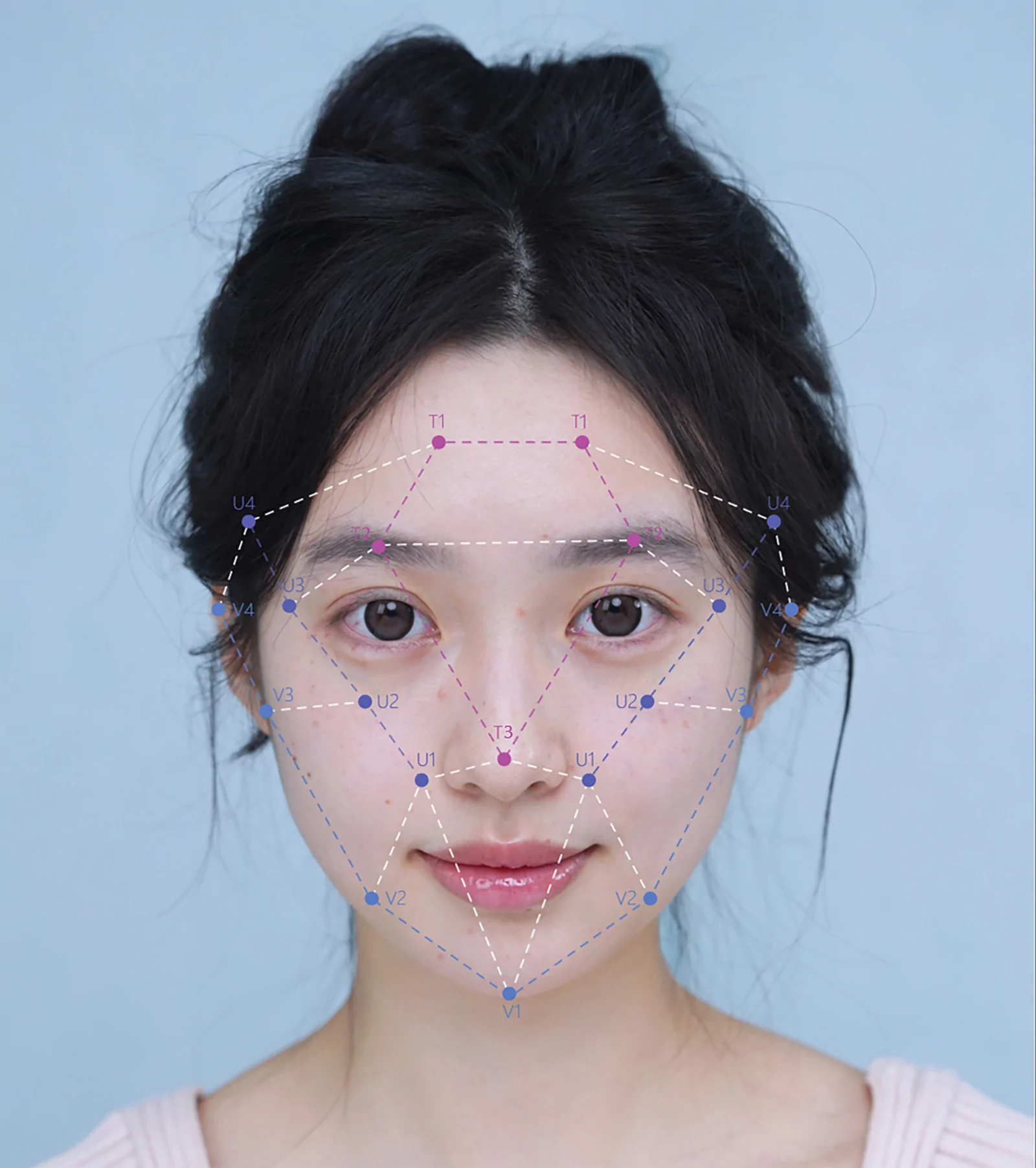
Fig. 1. Schematic illustration of the 3-stage V-line injection strategy, highlighting a stepwise approach from structural support to contour refinement through coordinated point, line, and plane augmentation.三阶段 V-line 注射策略示意图:从结构支撑到轮廓细化,按「点—线—面」协同逐步推进。
A 39-year-old Chinese woman sought improvement in facial smoothness, fatigue appearance, and nasolabial and marionette lines (Fig. 2 A). This case reflects a common pattern of facial aging in Asian patients, characterized by volume deficiency, mild skin laxity, and suboptimal lower facial contour. She had previously received botulinum toxin to the masseter muscles approximately 6 months before the current treatment, and any residual effects were considered minimal. PCL-based fillers (Ellansé S formulation, Sinclair Pharma, London, United Kingdom) were used in a 3-stage V-Line layered injection technique designed to achieve multidimensional facial rejuvenation and structural remodeling. All procedures were performed by the same board-certified dermatologist following a standardized protocol with a 25-G blunt-tip cannula. Local anesthesia was achieved with lidocaine before injection, and standardized posttreatment care was implemented to minimize swelling and discomfort.
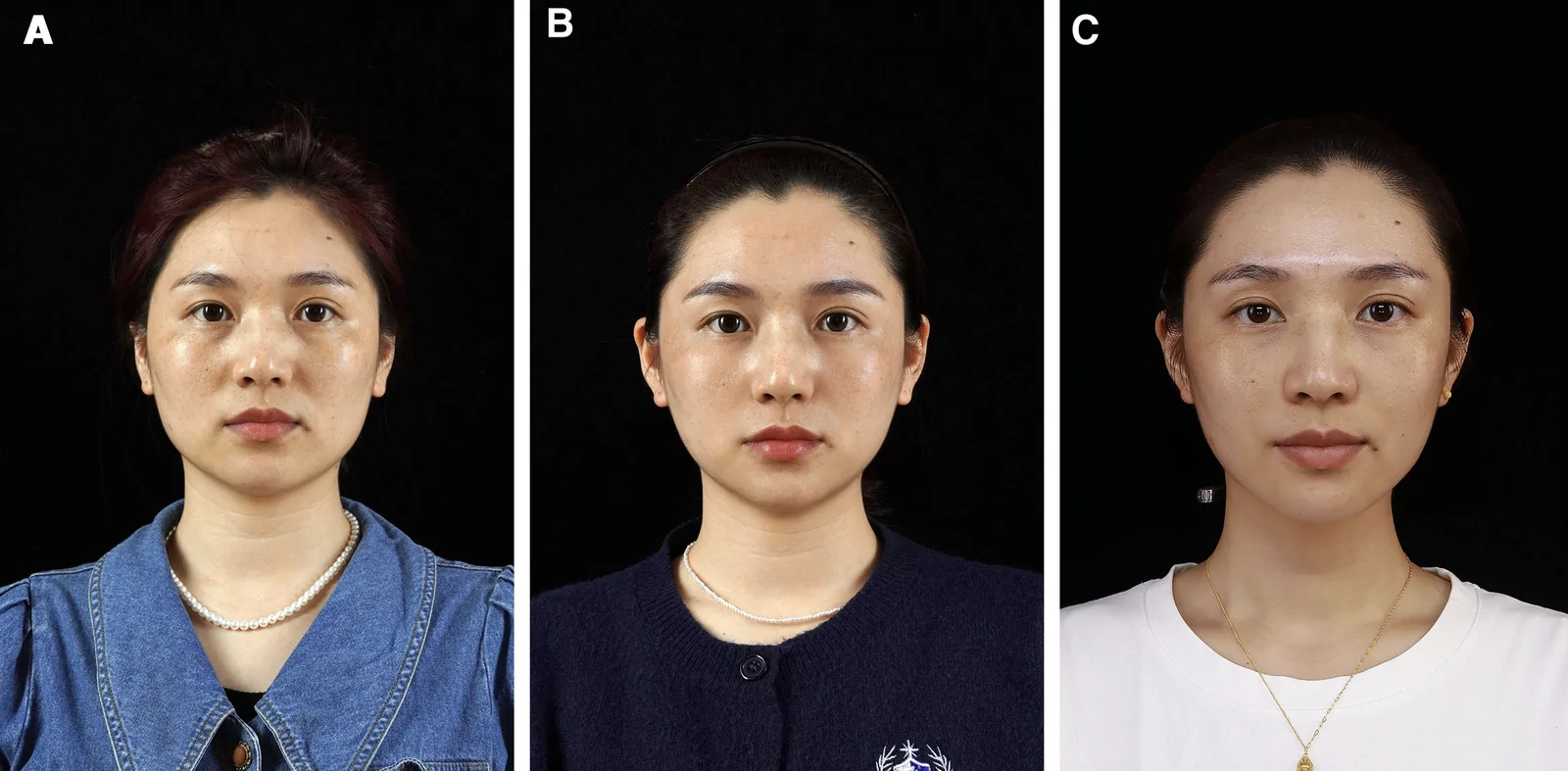
Fig. 2. Photographs of a 39-year-old woman in frontal view at baseline (A), immediately after treatment (B), and at 6-month follow-up (C).39 岁女性正面照:A 为基线,B 为治疗后即刻,C 为治疗后 6 个月随访。Stage I focused on jawline tightening and contour enhancement via 4 injection points (V1–V4) at the chin apex, mandibular ligament, preauricular ligament, and antihelix, to strengthen mandibular support, reduce marionette lines, and refine the lower facial contour. Stage II targeted midface support via 4 injection points (U1–U4) at the maxillary ligament, zygomatic-cutaneous ligament, lateral orbital region, and superficial temporal fascia to restore mid-facial volume, soften nasolabial folds, and improve facial smoothness and lifting. Stage III enhanced T-zone projection via 3 injection points (T1–T3) at the frontal eminence, brow arch, and nasal tip to improve upper facial contour and 3-dimensional definition. Overall, this 3-stage V-line injection protocol integrates volumetric restoration and structural support to achieve comprehensive facial rejuvenation and V-line contour enhancement. All stages of the protocol were performed within a single treatment session. The injection depth primarily targeted the supraperiosteal and deep subcutaneous or superficial fascial layers, whereas the total injection volume was determined by individualized assessment and remained within the product’s safety recommendations. Detailed injection sites and volumes are summarized in Table 1 .
Table 1. Overview of Injection Points, Areas, Products, and Product Doses Used
| Injection Points | Injection Areas | Products | Volume (mL) |
|---|---|---|---|
| V1 | Chin apex | PCL | 0.3 * |
| V2 | Mandibular ligament | PCL | 0.5 * |
| V3 | Preauricular ligament | PCL | 1.0 * |
| V4 | Antihelix | Sodium Hyaluronate | 3.0 * |
| U1 | Maxillary ligament | PCL | 0.5 * |
| U2 | Zygomatic-cutaneous ligament | PCL | 0.2 * |
| U3 | Lateral orbital region | Type I collagen | 0.5 * |
| U4 | Superficial temporal fascia | PCL | 2.0 * |
| T1 | Frontal eminence | PCL | 0.2 * |
| T2 | Brow arch | PCL | 0.3 * |
| T3 | Nasal tip | PCL | 1.0 |
The patient exhibited significant improvement in overall facial volume and contour immediately after treatment, with sustained effect observed at 1-, 3-, and 6-month follow-up visits. Serial photographs confirmed immediate contour improvement after treatment (Fig. 2 B) and a sustained, refined V-Line contour at the 6-month follow-up (Fig. 2 C). In the first stage, targeted chin apex (V1) augmentation improved chin projection and the labiomental angle. Treatment of the mandibular (V2) and preauricular ligaments (V3) reduced marionette lines, redefined the jawline, and elevated the oral commissures, creating a slimmer lower face. Injection at the antihelix region (V4) further enhanced facial narrowing. The second stage provided midface support through the maxillary (U1) and zygomatic-cutaneous ligaments (U2), softening nasolabial folds, restoring malar volume, and smoothing midcheek transitions. Treatment of the lateral orbital region (U3) improved tear trough and zygomatic contour, whereas superficial temporal fascia (U4) supported the lateral contour and reduced facial width. In the third stage, treatment of the frontal eminence (T1) and brow arch (T2) optimized forehead proportion and brow contour, whereas nasal tip (T3) treatment enhanced nasal projection and definition. The patient reported high satisfaction following 3-stage V-line layered injection therapy. The procedure corrected soft-tissue sagging, refined the jawline to improve facial harmony, restored mid-facial volume, and enhanced T-zone definition. No evidence of intravascular injection or other complications was observed during follow-up.
In this study, PCL-based fillers combined with a 3-stage V-line layered injection technique achieved facial rejuvenation and structural remodeling. The approach coordinates point, line, and plane sculpting for a natural, youthful appearance. Previous studies have explored the clinical applications of PCL-based fillers in the forehead, midface, T-zone, and nasolabial folds, confirming their immediate volumization and long-term collagen stimulation. 4 – 7 Similarly, in this case, the patient exhibited noticeable improvements in facial contour smoothness, jawline definition, and overall volume restoration immediately after treatment and at 1-, 3-, and 6-month follow-ups.
This 3-stage, layer-specific injection protocol is based on facial biomechanics to achieve bottom-up rejuvenation. Stage I enhances mandibular support and jawline definition; stage II restores midface volume and projection; and stage III improves upper facial balance. By adjusting injection depth and volume across layers, it provides multidimensional support while avoiding overfilled or “mask-like” results.
No redness, nodules, vascular compromise, or other complications were observed. The favorable safety profile of PCL-based fillers is attributed to their biodegradability, reducing the risk of delayed inflammation and granuloma formation compared with permanent fillers. 6 , 8 A large-scale study involving 1111 patients similarly reported only mild, transient reactions and no vascular events during a 3-year follow-up. 9
In summary, the 3-stage V-Line layered injection protocol provides a precise, reproducible strategy for comprehensive facial rejuvenation and structural enhancement. However, as a single case report, this study is limited in its ability to comprehensively assess safety. In addition, outcome evaluation was primarily based on photographic assessment and patient-reported satisfaction, and the follow-up duration was relatively short to fully assess the long-term effects of PCL-based fillers. In addition, no formal pain or tolerability assessment was performed. Further studies with larger sample sizes, standardized outcome measures, and longer follow-up periods are warranted.
The authors have no financial interest to declare in relation to the content of this article.
The patient provided written consent for the use of her image.
The authors sincerely appreciate the participant of this study for her invaluable contribution to medical research. The authors acknowledge her time, effort, and dedication throughout the study.
声明:中文精读 · 仅供学术参考。内容来自公开文献检索,不代表本人观点,不构成诊疗建议。 医疗美容需在正规医疗机构由执业医师实施。
基于相同主题推荐 · 继续深挖

这项前瞻性、开放标签、随机、多中心(德国11个中心)上市后研究纳入121名受试者,按1:1随机接受 Belotero Volume(CPM-V,n=58)或含利多卡因的 CPM-V
单例病例报告:39 岁中国女性,采用 PCL 类填充剂行三阶段 V-line 分层注射。
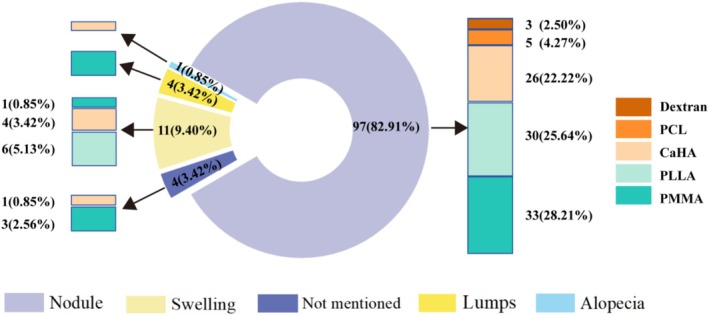
纳入 40 篇研究、117 例异物肉芽肿患者(93.16% 女性,中位年龄 52.63 岁),涉及 PMMA、PLLA、CaHA、PCL、PVOH、右旋糖酐六类微球填充剂(9 个产