真实世界研究:连续长期 OnabotulinumtoxinA(保妥适)注射用于面部美学治疗的安全性、有效性与自我感知年龄——《Dermatologic Surgery》
2026年10月22日20 min read
Dermatologic Surgery
Dermatologic Surgery
结论与实践要点
随着多种新型肉毒素制剂进入市场,业界担忧反复注射可能诱导中和抗体、降低疗效并缩短作用时长,但保妥适长期连续用于面部美容的安全性数据仍较有限。本研究旨在评估连续多次保妥适美容注射的长期使用情况,并了解患者的自我感知年龄。
研究为单中心、单注射者的回顾性队列分析(含横断面补充分析),共纳入50例患者(48例女性、2例男性),平均随访15.04年(范围8–26年),累计1,098个治疗周期(每例8–67个),人均累积剂量1,232 U(范围332–3,684 U),年均约2.4个周期。结果未识别到任何继发性无应答病例;不良事件发生率为2.18%(1,098个周期中24例次,涉及12例患者),以降下唇肌轻瘫(21例次)和轻度上睑下垂(3例次)为主,均程度轻微、一过性且无需特殊处理。自我感知年龄(SPA)问卷显示,94%患者认为外观至少年轻2岁,76%认为年轻5–12岁,无人感觉比实际年龄更老。
对临床实践的提示:在规范、连续使用下,保妥适用于面部美容的长期耐受性较好,疗效时长未见明显衰减,且未发现继发性无应答。需注意本研究为单中心、单注射者、样本量较小(n=50)的回顾性设计,缺乏基线SPA数据,且未系统收集瘀青、水肿等常见反应,结论外推应审慎;中和抗体未直接检测,其影响需结合更大规模研究进一步确认。
BACKGROUNDSince the approval of OnabotulinumtoxinA, the introduction of new botulinum toxin formulations has raised concerns regarding the potential development of neutralizing antibodies, diminished efficacy, and reduced duration of effect. However, long-term data on the safety of repeated cosmetic OnabotA treatments remain limited, particularly in real-world clinical practice.
OBJECTIVETo evaluate the long-term use and patient perceived age after consecutive cosmetic OnabotA injections.
METHODSSingle-center, single-injector, retrospective cohort study evaluating the long-term use of consecutive OnabotA injections and assessing patient perceived age.
RESULTSFifty patients (48 females, 2 males) were included, with a mean follow-up duration of 15.04 years (range: 8–26) and a total of 1,098 treatment cycles (8–67 cycles/patient). The cumulative OnabotA dose ranged from 332 to 3,684 units, with an average cumulative dose of 1,232 units/patient. When asked how old they perceived themselves compared to their current age, no patient reported feeling older than their chronologic age. Ninety-four percent stated appearing at least 2 years younger, while 76% perceived themselves to be between 5 and 12 years younger.
CONCLUSIONIn this cohort of 50 patients treated over an average of 15 years, OnabotA demonstrated no evidence of treatment failure or diminished duration of aesthetic outcomes.
Botulinum toxin type A (BoNT-A) induces selective paralysis of facial muscles, effectively reducing dynamic wrinkles for 4 to 6 months, requiring regular sessions for maintenance. 1 , 2
By 2024, OnabotulinumtoxinA (OnabotA) had reached 22 years since its initial approval for the treatment of glabellar lines (GL). 2 Additional facial indications were approved over time: periocular lines (PO) in 2013, forehead lines (FL) in 2017, and platysma prominence in 2024. 3
Since its cosmetic approval, new botulinum toxin formulations have entered the market, sparking debate regarding the potential development of neutralizing antibodies, reduced efficacy, and shorter duration of effect. Establishing long-term evidence on the safety of consecutive OnabotA treatments for cosmetic indications remains a key consideration.
Despite the widespread use of BoNT-A, few studies have reported long-term follow-up on its cosmetic effects. One study documented sustained improvement in forehead wrinkles in 2 patients who received repeated treatments for 7 years (21–24 cycles). 4 Another study followed identical female twins over 19 years, with one twin receiving regular treatments while the other underwent only 4 sessions. 5 The consistently treated twin appeared younger, with no resting wrinkles in the upper face, whereas the less frequently treated twin developed visible lines, highlighting the benefits of long-term treatment. 5
Hexsel and colleagues 6 demonstrated that repeated BoNT-A injections contribute to long-term brow elevation when treating GL and PO while preserving frontalis muscle function. In addition, they reported lasting improvements in gummy smiles after consecutive BoNT-A treatments. 7
Controlled clinical trials have shown increased patient satisfaction with repeated BoNT-A sessions. However, most follow-up periods in these studies were limited to 2 years with a restricted number of treatment cycles. 1 , 8
Although OnabotA has been extensively studied, its long-term effects in real-world clinical settings remain underexplored. One of the main challenges is the difficulty of conducting long-term medical record reviews in cosmetic dermatology, where documentation is often incomplete or inconsistently recorded.
To date, only 2 long-term studies have reported outcomes beyond 4 treatment cycles: a single-center study of 50 patients with an average follow-up of 5.9 years, 9 and a multicenter study of 194 patients followed for an average of 9.1 years. 10
The objective of this study was to describe the long-term use and assess patient perceived age after consecutive OnabotA injections for facial cosmetic treatment.
This was a single-center, single-injector, retrospective cohort study with a cross-sectional complementary analysis. Patients were individually contacted to participate, and those who agreed provided informed consent for medical record review and data collection. At the time of consent, they also completed a self-perception of age (SPA) questionnaire, a single-item tool that asked, “How many years older or younger do you feel you appear compared to your current age?” This tool has been previously used to assess the correlation between facial appearance and chronologic age. 10
Eligible patients were 18 years or older at the time of their first treatment and had completed a minimum of 6 consecutive years or 12 OnabotA treatment cycles with the same injector. Patients were excluded if they had received other neuromodulators or undergone cosmetic surgery on the upper face.
Medical record reviews collected data on treated facial areas, dose/area/session, cumulative dose, number of treatment cycles, years of continuous use, and adverse effects (AEs). Information on additional cosmetic treatments was not included.
The primary outcomes were the OnabotA dose used per region and the interval between treatments (measured in days). For statistical analysis, a generalized linear mixed-effects model was applied to evaluate treatment effects over time, with descriptive statistics used for the remaining data. Significance was set as p < .05.
As shown in Table 1 , 50 patients (48 females, 2 males) were included. The average follow-up duration was 15.04 years (range: 8–26). A total of 1,098 treatment cycles were analyzed, with an average cumulative OnabotA dose of 1,232 U/patient (range: 332–3,684 U), and a mean of 2.4 cycles/year/patient. No cases of secondary nonresponse were identified.
TABLE 1. Demographic data, Cycles of Treatment, Doses, and Adverse Effects
| Demographic data | |
|---|---|
| Included patients | 50 (100%) |
| Female | 48 (96%) |
| Male | 2 (4%) |
| Mean age (yr) | 52.4 (41–78) |
| Mean age at initial treatment (yr) | 41 |
| Treatment cycles | |
| Total | 1,098 |
| Mean/patient | 21.9 (8–67) |
| Mean per patient/year | 2.4 |
| Mean interval between cycles/patient | 6 mo |
| Mean follow-up time | 15.4 years (8–26) |
| Treatment cycles/area | |
| Glabella | 1,073 (98.60%) |
| Periocular | 1,069 (97.70%) |
| Frontalis | 820 (75%) |
| Mentalis | 842 |
| Depressor anguli oris | 527 |
| Platysma | 447 |
| Average dose (UI) per area/cycle | |
| Glabella | 20.2 |
| Periocular | 17.7 |
| Frontalis | 6.5 |
| Mentalis | 4 |
| Depressor anguli oris | 4 |
| Platysma | 25 |
| Mean total dose (UI) | |
| Per patient | 1,231 (332–3,684) |
| Adverse effects | |
| Cycles with adverse effects | 2.18% |
| Lid ptosis | 0.27% cycles |
| DAO | 2.28% cycles |
The most commonly treated areas were the glabellar (GL) and periocular (PO) regions, receiving 1,073 (98.6%) and 1,069 (97.7%) treatment sessions, respectively, followed by the frontalis, which underwent 820 cycles. Additional details are presented in Table 1 .
Other frequently treated areas included the mentalis (M) with 842 treatment cycles and the depressor anguli oris (DAO) with 527 cycles, both receiving a mean dose of 4 U per session. The platysma was treated in 447 sessions, with an average dose of 25 U/session. Nasal, perioral, and masticatory muscles were treated less frequently and were not included in this analysis.
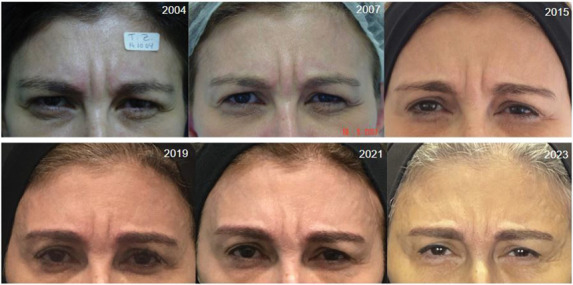
The long-term effects of upper facial treatment, particularly in the glabella, are illustrated in Figure 1 , which presents a case treated for 19 years, demonstrating reduction in wrinkle severity and prevention of glabellar and eyebrow ptosis, key signs of upper facial aging. Figure 2 illustrates the progressive improvement in lower facial contour and wrinkle severity after consecutive treatments targeting the mentalis, DAO, and platysma muscles.
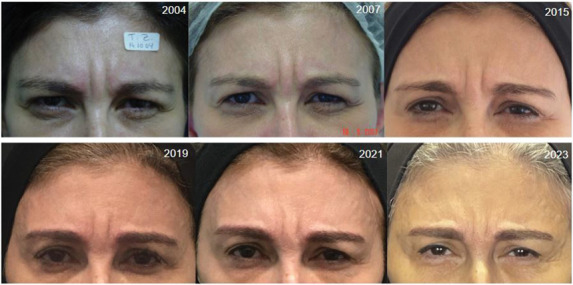
Figure 1. A 67-year-old woman, 19 years of regular OnabotA treatment. Progressive improvement of glabellar wrinkles and prevention of glabellar drop with aging.1例67岁女性连续19年规律接受保妥适治疗,图示眉间皱纹逐步改善,且随年龄增长未出现眉间下垂,提示长期连续注射的维持效果。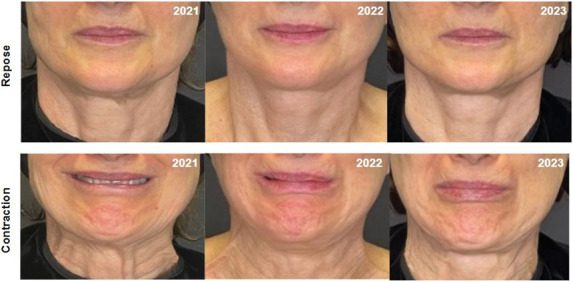
Figure 2. A 70-year-old woman. A sequence of annual photographs taken before OnabotA treatment shows progressive improvement in lower face contour, wrinkles, and vertical bands, both at rest and during lower face contraction.1例70岁女性连续多年注射前的年度照片序列,显示下面部轮廓、皱纹及颈阔肌垂直条索在静息与收缩状态下均逐步改善。
For the GL, the dose remained relatively stable over time, increasing by 0.1 U every 5 years ( p < .01). In contrast, for PO lines, the doses also remained stable but showed a slight reduction of 0.1 U every 5 years ( p < .01). For the frontalis (FL), a significant increase in dose was observed over time, with a rise in 1 U every 5 years ( p < .004).
In the lower face, the dose for the mentalis muscle remained stable, increasing by 1 U approximately every 8.3 years ( p = .03). For the DAO, a dose increase of 1 U was observed approximately every 11.8 years ( p = .05). No significant dose variation was found for the platysma.
Baseline SPA data were not available in the medical records. At the study visit, when asked how old they perceived themselves compared to their current age, no patient reported feeling older than their chronologic age. Ninety-four percent stated that they appeared at least 2 years younger, while 76% perceived themselves to be between 5 and 12 years younger (Figure 3 ).
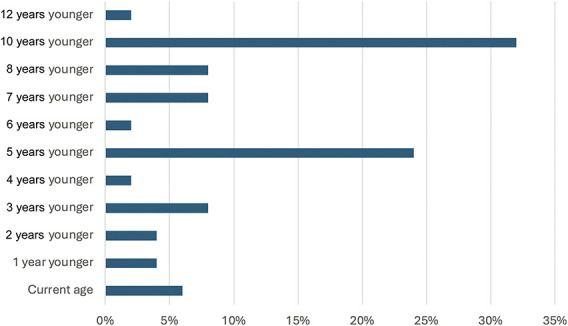
Figure 3. Distribution of patients' responses to the self-perception of age (SPA) questionnaire.自我感知年龄(SPA)问卷的患者作答分布,显示多数患者自评外观较实际年龄更年轻(94%至少年轻2岁,76%年轻5–12岁)。
Among the 1,098 treatment cycles, 24 worrisome adverse events (AEs) were reported by 12 patients, accounting for 2.18% of the cycles.
Data on other common AEs, such as bruising, edema, injection site pain, or rash, were not systematically collected unless specifically reported by the patient.
The most frequent AE was paresis of the depressor labii inferioris (DLI), occurring in 21 episodes, followed by mild eyelid ptosis in 3 episodes. None of the AEs were serious, and all were transient. The cases of eyelid ptosis were mild and did not require intervention, except for the use of iopidine eye drops in 2 patients. Five episodes of DLI paresis resolved without intervention, while the remaining cases were managed by injecting 1 U into the contralateral unaffected side.
This retrospective analysis of 50 patients treated for an average of 15.4 years (range: 8–26) demonstrates the tolerability of consecutive facial cosmetic treatments with OnabotA. This study represents the longest follow-up of cosmetic patients continuously treated by the same injector, with a total of 1,098 cycles.
In comparison, the 2 other major studies had average follow-up durations of 5.9 years (853 cycles) and 9.1 years (5,112 cycles), respectively, but involved multiple injectors. Although the sample size may be considered modest, it is comparable to Carruthers' OnabotA long-term study, which included 50 patients but with multiple injectors. 9 Other multicenter studies included 10 investigators, yielding a final sample size of 194 patients with an average of less than 20 patients/investigator. 10 , 11 Moreover, it was a result of the strict inclusion criteria of a minimum of 6 consecutive years or 12 OnabotA treatment cycles with a single injector.
The percentages of treatments in the glabellar (GL) and periocular (PO) areas were similar in this study (98.6% and 97.7%, respectively), while in other studies, the GL area exceeded the PO (100% vs 92.3%, and 98% vs 70%, respectively). FL was the third most frequently treated area in all studies, with 75% of cycles in this one, compared to 35% and 60.9% in previous studies. 9 , 10
The mean age at initial treatment was 41 years, which aligns with the average age of most clinical trials with naïve patients. 2 In Carruthers' poster, the mean age was 42.8 years, 9 and in the multicenter study, it was 46.4 years. 11 The average total cumulative dose was 1,232 U, ranging from 332 to 3,684 U/patient, compared to 690 U (range: 244–1,603 U) in the Carruthers study, with no data available from the multicenter study. 9 The average doses per area per session in the authors' study were 20.2 U for GL, 17.7 U for PO, and 6.5 U for FL, compared to 21.6 U for GL, 19.4 U for PO, and 9 U for FL in the multicenter study. 10 These doses align with those suggested in the latest Global OnabotA cosmetic use consensus. 12
The mean interval between cycles was 6 months, which is longer than the usual 4 months described in controlled trials for GL and FL. 2 , 9 , 11 Doses for GL and PO remained stable over time, increasing by 0.1 U every 5 years for GL and decreasing slightly for PO, similar to the results in 2 previous studies. 9 , 11 For FL, the authors observed a small but significant increase in dose (1 U every 5 years), which may be explained by several factors, including the relatively small average dose of 6.5 U (smaller than the 20 U OnabotA U FDA-approved dose 1 ), the increasing age of patients, and the injector's enhanced experience. 11
For the lower face, the dose remained very stable, with an increase of 1U every 8.3 years for the mentalis and every 11.8 years for the DAO, with no variation observed for the platysma. Long-term OnabotA treatment data for the lower face is not widely available in the literature, likely because these areas are considered off-label indications.
The dose stability observed across treatment cycles in the authors' study suggests the absence of nonresponse and reinforces how understanding the impact of OnabotA in modulating facial muscles can sustain favorable results with long-term, repetitive therapy. 11 This finding may reflect patient satisfaction with the outcomes, benefits, and efficacy of individualized, cumulative muscular modulation, rather than the use of fixed, standardized dose regimens typically seen in controlled clinical trials. 12 The authors' daily practice involves tailoring treatments based on individual glabellar (GL) and frontalis (FL) contraction patterns, which helps address patient-specific needs, improve treatment outcomes, and conserve neuromodulator units when compared to standardized injection protocols. 13 – 16
On the other hand, since patients in the authors' clinical setting were responsible for covering their treatment expenses, economic factors may have influenced the frequency of treatments.
It is well-established that repeating BoNT-A treatment cycles not only increases the duration of response but also progressively improves both dynamic and resting wrinkles. Moreover, the effects on resting lines may last longer than on dynamic ones. 8 Regular treatments can diminish unwanted facial expressions, improve skin quality, and rebalance facial structures, such as the eyebrows, mouth corners, and lower face contour. 7 , 17 , 18 OnabotA injections into the glabellar region not only improve dynamic and resting lines by weakening the local facial depressor muscles (corrugators, procerus , orbicularis oculi , and depressor supercilii ) but also allow unopposed elevation, resulting in a lifting effect from the noninjected lower frontalis, the primary brow elevator. Long-term alleviation of the inferior pull from the glabellar region helps to release the skin and enhance the upward-directed action of the frontalis muscle, ultimately preventing brow and glabellar ptosis. 8 , 17
In the lower face, the mentalis was treated more frequently than the DAO, with both areas receiving an average dose of 4U, that remained relatively stable over time. Relaxing the mentalis helps alleviate the mental crease and the peau d'orange texture of the skin, while treatment of the DAO lifts the mouth corners by allowing the unopposed action of the lip levators (zygomatic major and levator anguli oris ). 18 , 19
The platysma was treated in 447 cycles, with an average dose of 25U per session. Most patients received injections in 2 horizontal lines on each side of the face, positioned above and below the mandibular border, after a previously established pattern. 20 The goal was to treat the lower face as a unit, achieving a lifting effect while improving both dynamic and resting wrinkles of the lower face and upper neck. 20 Additional injections were placed in the vertical platysma bands if necessary. To the authors' knowledge, long-term cosmetic treatment outcomes in these lower face areas have not been previously described, likely due to their off-label nature. A retrospective study of patients with unilateral facial palsy after otoneurosurgeries demonstrated that “the skin follows the muscle” and that platysma bands are caused by muscle activity rather than relaxation or skin laxity. 21 This suggests that repetitive chemical denervation of the platysma may improve the signs of neck aging.
Regarding complications, 24 OnabotA-related adverse events (AEs) occurred in 2.18% of cycles. Paresis of the DLI muscle was the most common, occurring repeatedly in only 12 individuals. This is similar to the Carruthers study, 9 in which 8 subjects reported a total of 10 AEs, and to the multicenter study, which documented 84 AEs in 40 subjects. 10 This frequency may be related to individual anatomical variations, particularly in the lower face, where muscles are interdigitating and overlapping. 22 None of the AEs were severe; all were transient, and patients continued to seek treatment without experiencing therapy failure or a reduction in the duration of effects. The average number of cycles per year was 2.4.
The SPA questionnaire helps correlate facial appearance with chronologic age. The results of the authors' study align with this, as all patients reported looking their current age or younger. Ninety percent considered themselves at least 2 years younger, and 76% felt between 5 and 12 years younger than their chronologic age. These findings are consistent with the multicenter study, where long-term patients reported looking an average of 6.9 years younger than their chronologic age. 10
The limitations of this study include its retrospective design, the absence of a control group, modest sample size, lack of registered rate of efficacy//treatment, and of data on concurrent facial cosmetic treatments. However, this cohort provides valuable insights into real-world outcomes within a dermatology practice.
The fact that patients voluntarily returned for subsequent paid cosmetic treatment sessions suggests a high level of satisfaction with the provided therapeutic plan and outcomes. Patient retention can be seen as a surrogate marker for overall satisfaction, analogous to nonprofit service industries. 23 Despite these limitations, the scarcity of similar long-term data in the literature highlights the importance of studies like this, which can suggest the efficacy and safety of the treatment over extended periods.
This analysis of 50 patients treated for an average of 15 years demonstrates that OnabotA has favorable tolerability for long-term continuous cosmetic treatment. There was no evidence of therapy failure or a reduction in the duration of cosmetic results. In addition, 76% of patients reported feeling 5 to 12 years younger than their chronologic age.
声明:中文精读 · 仅供学术参考。内容来自公开文献检索,不代表本人观点,不构成诊疗建议。 医疗美容需在正规医疗机构由执业医师实施。
基于相同主题推荐 · 继续深挖
连续长期保妥适面部注射的真实世界观察:单中心、单注射者、回顾性队列研究。
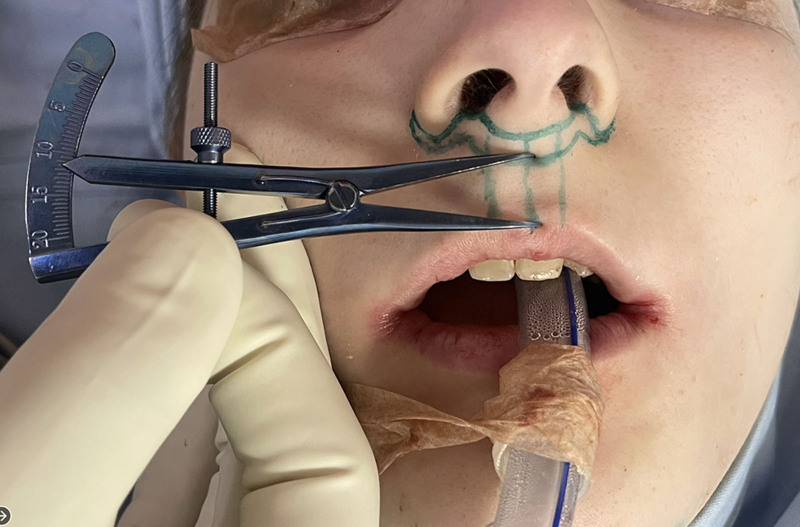
1997-2023年共988例出生分配为男性的性别焦虑者接受唇女性化与年轻化,累计1789例次手术,年龄22-75岁(平均39.5岁),79.8%小于50岁。
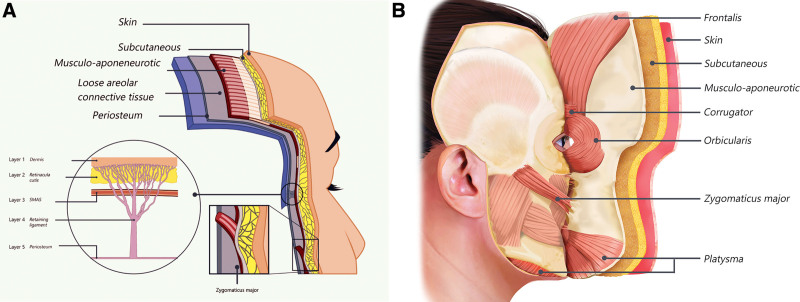
本文为特邀专题/叙述性综述,提出将面部视为 SMAS(表浅肌肉腱膜系统)连续纤维肌层这一单一功能单元,以肉毒毒素再平衡张力区与方向性表情肌,追求自然、有表情的动态效果。