保妥适上面部注射中机械镇痛装置与表面麻醉乳膏的疼痛控制对比:一项分脸前瞻性临床研究
2026年10月26日19 min read
Aesthetic Plastic Surgery
结论与实践要点
本研究为单中心前瞻性分脸研究,纳入80例(女性87.5%、平均33.2岁)接受上面部保妥适(Dysport)注射的成年患者,每例一侧使用利多卡因2.5%/丙胺卡因2.5%乳膏(注射前约20分钟、未封包),对侧使用ShotBlocker样机械镇痛装置,由同一医师操作、患者即时自评VAS(0–10)。结果显示机械装置侧平均VAS为3.19±1.08,显著低于乳膏侧4.14±1.30(p<0.001),个体内平均差0.95±1.41,65.0%的患者机械侧疼痛更轻。
亚组与相关性分析显示,基线乳膏侧疼痛越高者从机械装置获益越明显(Spearman ρ=0.664,p<0.001);以乳膏侧VAS中位数4分层,高痛组(≥4)个体内差异达1.51、92.5%患者获益,而低痛组(<4)差异为-0.28、仅37.5%获益(p均<0.001)。效应量Cohen's dz=0.67、Cliff's delta≈0.60,提示中等至较大的临床镇痛效应。其机制符合闸门控制理论,即通过机械刺激激活粗纤维抑制痛觉传导,且具备即时起效、无药理副作用、操作简便等特点,适合作为疼痛敏感人群注射时的辅助镇痛手段。
需注意本研究局限性:患者无法设盲、乳膏未封包且作用时间偏短可能削弱其镇痛效果,疼痛采用注射后即时主观评分,且10分量表上约1分的平均差值其临床意义应谨慎看待。该结论仅基于人体临床分脸对照数据,未来仍需更大样本、随机分侧及分区评估加以验证。
IntroductionBotulinum toxin type A (BoNT-A) is widely used in aesthetic medicine to treat dynamic facial rhytides. Despite its well-established safety and efficacy, BoNT-A injections often induce discomfort and anxiety owing to injection-related pain, especially in sensitive facial areas. Although topical anesthetic creams are commonly employed to alleviate pain, they have limitations, such as delayed onset and local side effects. Mechanical analgesic devices, based on the gate control theory of pain, have emerged as promising non-pharmacological alternatives.
MethodsIn this prospective, single-center, split-face study, 80 adult patients undergoing upper-facial BoNT-A injections between May 2024 and August 2025 were enrolled. Each participant received a topical anesthetic cream on one side of the face and a Shot Blocker-like mechanical analgesic device on the contralateral side. All injections were administered by a single experienced physician. Pain levels were assessed immediately post-injection using a visual analog scale (VAS, 0–10) by a blinded evaluator. Statistical analyses included paired t-tests, Wilcoxon signed-rank tests, Spearman correlation, and Mann–Whitney U tests. Effect sizes were reported using Cohen’s dz and Cliff’s Δ.
ResultsMean VAS scores were significantly lower with the mechanical device (3.19 ± 1.08) than with the topical cream (4.14 ± 1.30) ( p < 0.001). The intra-individual mean difference (0.95 ± 1.41) favored the mechanical device. Spearman’s correlation indicated that higher pain scores with the cream correlated with greater relative benefit from the device (ρ = 0.664, p < 0.001). Patients with higher baseline pain (VAS ≥ 4 on the cream side) experienced significantly greater pain reduction ( p < 0.001).
DiscussionA shot blocker-like mechanical analgesic device is more effective than a topical anesthetic cream in minimizing pain during BoNT-A injection into the upper face. Its immediate analgesic effect, absence of pharmacologic side effects, and ease of use make it a valuable adjunct in aesthetic practice, particularly for patients with pain sensitivity. Further studies are warranted to validate these findings in broader populations and different anatomical regions.
Level of Evidence IIThis journal requires that authors assign a level of evidence to each article. For a full description of these Evidence-Based Medicine ratings, please refer to the Table of Contents or the online Instructions to Authors.
Supplementary InformationThe online version contains supplementary material available at 10.1007/s00266-026-05884-2.
Keywords: Botulinum toxins、Type A、Pain management、Facial aesthetics、Topical anesthetics、Mechanical stimulation
Botulinum toxin type A (BoNT-A) injections are among the most commonly performed aesthetic interventions worldwide, particularly for the management of dynamic facial rhytides. Although the procedure is widely regarded as safe and effective, pain associated with BoNT-A injections remains a frequently reported source of discomfort and anxiety among patients, especially when treating highly sensitive facial areas [ 1 ].
To alleviate injection-related pain, topical anesthetic creams, most commonly lidocaine/prilocaine formulations, are routinely applied prior to administration [ 2 ] . However, these agents have several drawbacks, including delayed onset, inconsistent dermal penetration, and the potential for adverse local reactions, such as erythema, irritation, or allergic responses [ 3 ]. These limitations have driven growing interest in alternative, non-pharmacological strategies for procedural pain management [ 4 ] .
One such approach involves the use of mechanical analgesic devices based on the gate control theory of pain. This theory suggests that non-noxious sensory input, such as pressure or vibration, can inhibit the transmission of nociceptive signals by stimulating large-diameter afferent nerve fibers, effectively "closing the gate" to pain perception [ 5 ].
The ShotBlocker® is a noninvasive, reusable device featuring a blunt plastic disk with multiple short projections. Designed to provide simultaneous cutaneous stimulation during needle-based procedures, it has demonstrated efficacy in reducing pain associated with subcutaneous and intramuscular injections in both pediatric and adult populations [ 6 ]. Recently, similar devices have been explored for their applicability in aesthetic procedures, including dermal fillers and mesotherapy injections.
Despite their promising utility, the analgesic effectiveness of mechanical stimulation devices has not yet been evaluated in the context of facial BoNT-A injections, a setting in which patients often present heightened sensitivity and elevated expectations regarding comfort. This study aimed to address this gap by comparing the analgesic efficacy of a ShotBlocker-like mechanical device with that of a standard topical anesthetic cream during upper facial BoNT-A injections. A prospective split-face design was employed to systematically assess patient-reported pain levels and determine the relative effectiveness of each modality.
This prospective, single-center, split-face study was conducted between May 2024 and August 2025. Eighty adult patients who underwent botulinum toxin type A (BoNT-A) injections for the aesthetic treatment of the upper face were enrolled. All procedures were performed by the same experienced physician (E.G.) to ensure procedural standardization.
All procedures were performed as part of routine clinical aesthetic practice. Written informed consent was obtained from all participants before the procedure, including consent for the use of anonymized clinical data for research purposes. The study was conducted in accordance with the principles of the Declaration of Helsinki.
The inclusion criteria were adult patients seeking cosmetic botulinum toxin type A (BoNT-A) treatment for the glabellar, frontalis, and lateral canthal regions. The exclusion criteria were a history of facial surgery, neuromuscular disorders, active skin infections, chronic systemic diseases, pregnancy, and concurrent facial aesthetic interventions.
A split-face design was applied to each participant. The side receiving topical anesthesia and the side receiving mechanical analgesia were alternated sequentially between patients to minimize allocation bias. To reduce potential order effects, the side injected first was also alternated between participants.
On one hemiface, a topical anesthetic cream containing lidocaine 2.5% and prilocaine 2.5% was applied as a thin uniform layer approximately 20 min prior to injection. No occlusive dressing was used. Immediately before injection, the cream was removed using sterile gauze, and the skin was cleansed with chlorhexidine antiseptic solution.
A mechanical analgesic device resembling a ShotBlocker® was used on the contralateral hemiface. This fenestrated plastic device was positioned over the injection site such that the central opening allowed needle entry, and the surrounding blunt projections provided cutaneous mechanical stimulation. The device was gently applied to the skin surface to provide neurosensory stimulation based on the Gate Control Theory of Pain without altering the injection technique or needle placement. The device was disinfected between patients using standard antiseptic solutions.
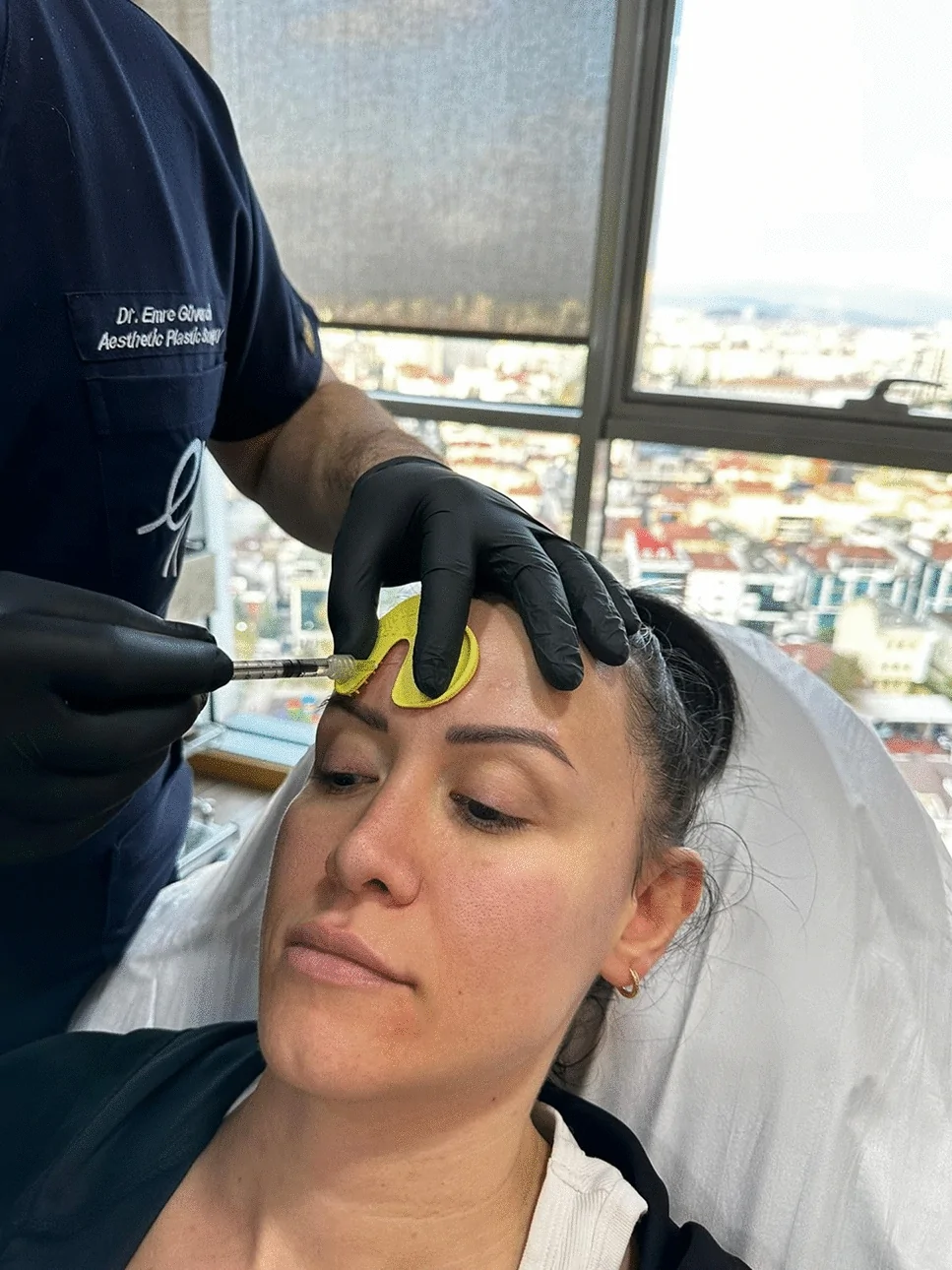
After antiseptic preparation, standard injection points for upper facial BoNT-A treatment—including the glabellar, frontalis, and lateral canthal regions—were marked using a sterile surgical marker (Figs. 1 - 2 , Video 1 ).
All injections were performed using Dysport ® (Ipsen Biopharm Ltd., UK), reconstituted with 2.5 mL of sterile saline to achieve a standardized dilution. A 30-gauge insulin syringe was used for all injections.
Because the procerus injection is located at the midline, this point was excluded from the side-specific pain comparison to maintain the validity of the split-face analysis.
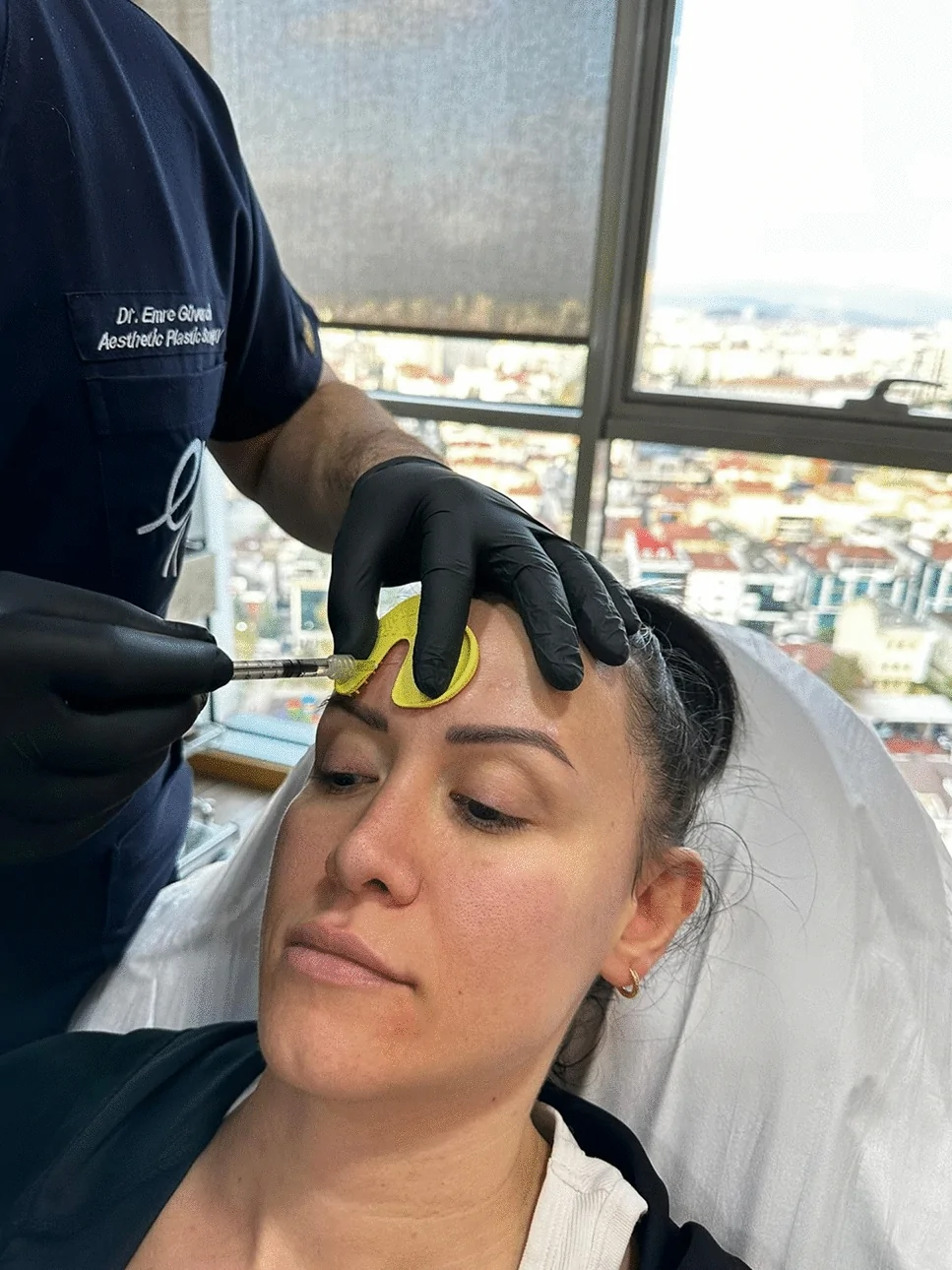
Fig. 1 Application of botulinum toxin type A (BoNT-A) injections to the glabellar and forehead regions using a ShotBlocker-like mechanical analgesic device. The fenestrated device was positioned with the window aligned proximally to allow direct visualization of the injection site展示ShotBlocker样带窗机械镇痛装置用于眉间与额部保妥适注射的操作实景,开窗设计便于直视注射点并同时提供触觉刺激。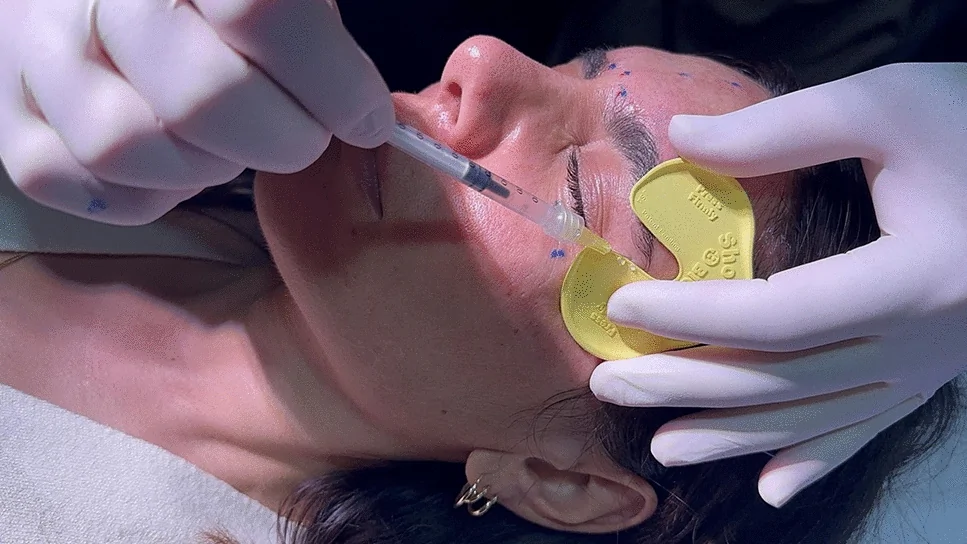
Fig. 2 Use of a shotBlocker-like mechanical analgesic device during BoNT-A injection targeting the lateral canthal lines (crow’s feet). The device projections were oriented along the dermatomal distribution to maximize the tactile stimulation and pain modulation
Pain intensity was assessed using a visual analog scale (VAS) ranging from 0 (no pain) to 10 (worst imaginable pain). Patients were asked to self-report their pain immediately after each injection by marking the VAS scale. Pain scores were recorded before cold compression.
After completion of the injections and VAS assessment, bilateral cold compression was applied to reduce postprocedural discomfort and swelling.
All statistical analyses were performed using IBM SPSS Statistics for Windows, version 27.0 (IBM Corp., Armonk, NY, USA). Because of the split-face design, each participant served as their own control.
VAS scores between the topical anesthetic cream and mechanical device sides were compared using paired statistical tests. Descriptive statistics are presented as mean ± standard deviation (SD) and median with interquartile range (IQR). Depending on the normality of the distribution, either the paired t-test or Wilcoxon signed-rank test was used.
Spearman’s rank correlation analysis was performed to evaluate the relationship between baseline pain scores on the cream side and the intra-individual difference between treatments (cream—device). Participants were categorized into high- and low-pain groups based on the median VAS score of the cream side. These exploratory subgroup analyses should be interpreted cautiously because of potential statistical limitations.
Effect sizes are reported as Cohen’s dz for parametric paired comparisons and Cliff’s delta for nonparametric analyses. All statistical tests were two-tailed, and p < 0.05 was considered statistically significant.
Eighty patients who underwent BoNT-A injections in the upper face were included in the analysis. The mean age of the participants was 33.2 years. Of the cohort, 70 (87.5%) were women and 10 (12.5%) were men.
Pain intensity was assessed using a visual analog scale (VAS) ranging from 0 (no pain) to 10 (worst pain). On the side where the mechanical analgesic device was used, the mean VAS score was 3.19 ± 1.08, with a median of 3 (IQR: 2–4). On the side treated with the topical anesthetic cream, the mean VAS score was 4.14 ± 1.30, with a median of 4 (IQR: 3–5). The within-subject difference (cream—device) yielded a mean of 0.95 ± 1.41 and a median of 1 (IQR: 0–2), favoring the mechanical device (Tables 1 - 2 ).
Table 1 Comparison of pain intensity between topical anesthetic cream and mechanical analgesic device during upper facial BoNT-A injections
| Variable | Cream side | Mechanical device side | Within-subject difference | p -value |
|---|---|---|---|---|
| Mean VAS (± SD) | 4.14 ± 1.30 | 3.19 ± 1.08 | 0.95 ± 1.41 | < 0.001 (*) |
| Median VAS (IQR) | 4 (3–5) | 3 (2–4) | 1 (0–2) | < 0.001 (*) |
| Lower VAS on device side (%) | – | – | 65.0% | – |
| Equal VAS on both sides (%) | – | – | 18.8% | – |
| Higher VAS on device side (%) | – | – | 16.2% | – |
| Effect size (Cohen’s dz) | – | – | 0.67 | – |
| Effect size (Cliff’s delta) | – | – | ≈ 0.60 | – |
Table 2 Subgroup analysis of pain reduction according to baseline cream-side VAS scores
| Variable | Low pain group (Cream-side VAS < 4) | High pain group (Cream-side VAS ≥ 4) | p -value |
|---|---|---|---|
| Number of patients (n) | 40 | 40 | – |
| Cream-side VAS (mean ± SD) | 3.12 ± 0.61 | 5.16 ± 0.84 | < 0.001 |
| Device-side VAS (mean ± SD) | 3.40 ± 0.92 | 3.65 ± 1.01 | 0.18 |
| Within-subject difference (Cream—device, mean) | − 0.28 | 1.51 | < 0.001 |
| Median difference (IQR) | 0 (− 1 to 1) | 2 (1–3) | < 0.001 |
| Patients benefiting from device (%) | 37.5% | 92.5% | < 0.001 |
| Effect size (Cliff’s delta) | − 0.12 | 0.74 | – |
A paired-sample analysis revealed a statistically significant reduction in pain with the mechanical device: t = 6.01, p < 0.001 (paired t-test) and W = 1812.5, p < 0.001 (Wilcoxon signed-rank test). Effect sizes indicated a moderate-to-large effect: Cohen’s dz = 0.67 and Cliff’s delta ≈ 0.60. Pain scores were lower on the mechanical device side in 65.0% of patients, equal in 18.8%, and higher in 16.2% of patients (Tables 1 - 2 ).
A strong positive correlation was observed between the cream-side VAS score and the within-subject difference (ρ = 0.664, p < 0.001), suggesting that individuals experiencing more pain with the cream alone derived greater benefit from the mechanical device (Fig. 3 ).
Patients were stratified based on the median cream-side VAS score (4) into high- and low-pain groups. The high-pain group showed a mean difference of 1.51, whereas the low-pain group showed a mean difference of −0.28. The between-group difference was statistically significant (U = 1166, p < 0.001, Mann–Whitney U test) (Fig. 4 ).
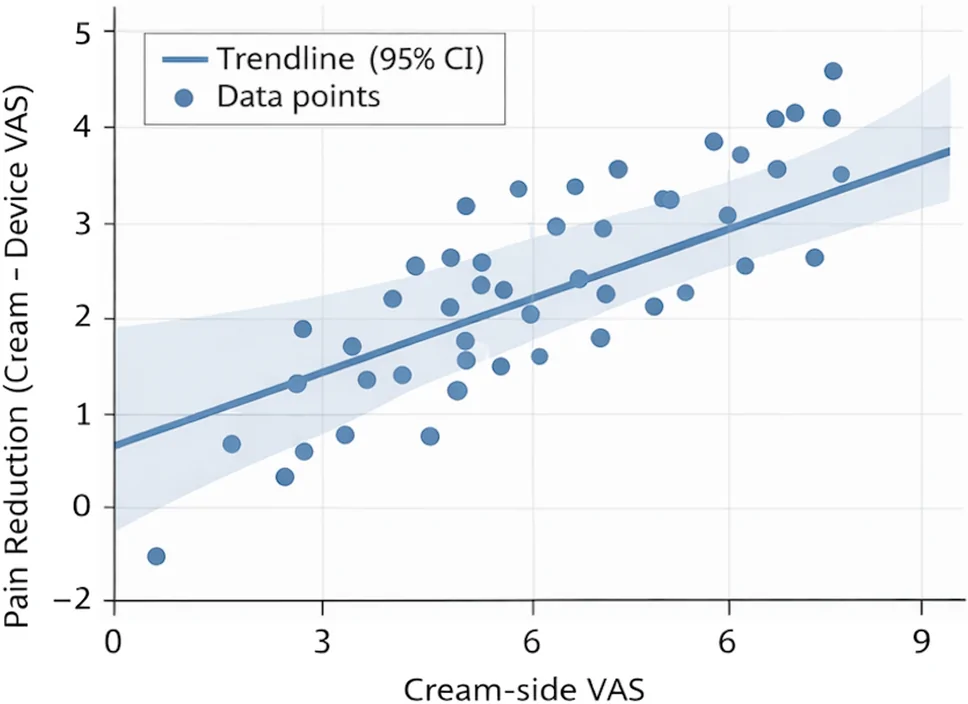
Fig. 3 Scatter plot showing the correlation between baseline pain scores under the topical anesthetic cream condition (Cream-side VAS) and the magnitude of pain reduction achieved with the mechanical device (cream—Device VAS). A significant positive correlation was observed (ρ = 0.664, p < 0.001), indicating that patients who experienced higher baseline pain with the cream derived greater benefit from mechanical analgesic intervention. The shaded area represents a 95% confidence interval散点图显示乳膏侧基线VAS与机械装置镇痛幅度呈显著正相关(ρ=0.664,p<0.001),即基线痛感越强者从机械镇痛获益越大。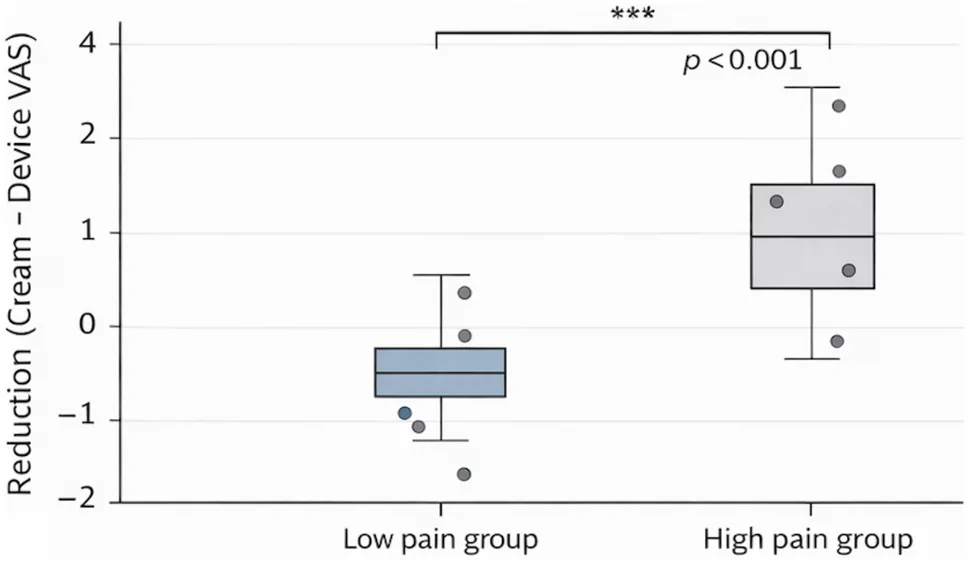
Fig. 4 Boxplot comparison of within-subject pain reduction scores (cream—device VAS) between patients with low (VAS < 4) and high (VAS ≥ 4) baseline pain under the cream condition. Patients in the high-pain group experienced significantly greater analgesic benefit from the mechanical device (p < 0.001, Mann–Whitney U test), highlighting its enhanced efficacy in individuals with higher pain sensitivity箱线图比较低痛组(VAS<4)与高痛组(VAS≥4)的个体内疼痛减轻差值,高痛组获益显著更大(p<0.001,Mann–Whitney U检验)。
Our findings indicate that the use of a ShotBlocker-like compressive device was associated with lower pain scores during facial botulinum toxin (BoNT-A) injections than with the topical anesthetic cream protocol used in this study. These findings are consistent with previous studies that have demonstrated the analgesic potential of mechanical sensory modulation during injection-based procedures, including intradermal, intramuscular, and subcutaneous injections.
The observed analgesic effect may be explained by the Gate Control Theory of Pain, which proposes that non-noxious mechanical stimuli—such as the projections of the ShotBlocker device—activate large-diameter Aβ fibers that inhibit the transmission of nociceptive signals carried by smaller Aδ and C fibers, thereby reducing pain perception at the spinal or trigeminal level [ 7 ]. This mechanism is particularly relevant in facial procedures, where the trigeminal nerve branches (V1, V2, and V3) provide dense sensory innervation and patients may be more sensitive to discomfort during aesthetic injections [ 8 ].
Our results are in line with those reported by Yu et al., who demonstrated significantly reduced visual analog scale (VAS) pain scores during intradermal lidocaine injections when a compressive disc device was used. In their study, 93% of patients in the intervention group reported mild pain (VAS <30 mm) compared with 39% in the control group [ 9 ]. Similarly, Kuwahara and Ogawa reported that vibratory anesthesia reduced perceived pain during facial procedures, with 88% of participants reporting subjective improvement in comfort [ 8 ]. Unlike previous studies that primarily evaluated intradermal injections or vibratory analgesic devices, the present study examined a mechanical pressure-based analgesic tool during facial BoNT-A injections, a clinical context in which both injection depth and patient comfort are important considerations. In this regard, Gordin et al. reported that subcutaneous BoNT-A injections were perceived as less painful than intramuscular injections while maintaining therapeutic effectiveness [ 10 ]. These findings highlight the importance of procedural pain modulation strategies in aesthetic practice.
In the present study, the reduction in pain scores associated with the mechanical device appeared to be more pronounced among individuals who reported higher pain levels on the topical anesthetic side. A positive correlation was observed between cream-side VAS scores and the magnitude of pain reduction with the mechanical device, suggesting that mechanical sensory modulation may provide greater benefit in patients with higher baseline pain sensitivity or an inadequate response to topical anesthetics.
Similar observations have been reported in studies evaluating mechanical pain-reducing devices during invasive procedures [ 11 ]. Baxter et al. demonstrated that the use of the ShotBlocker during injections in pediatric patients resulted in significantly lower pain scores compared with standard injection techniques [ 12 ]. In our study, a similar trend was observed, particularly in patients for whom topical anesthetic cream alone did not provide sufficient analgesia.From a clinical standpoint, mechanical stimulation devices may offer several practical advantages compared with topical anesthetics. These include an immediate onset of analgesic effect, absence of pharmacological side effects, ease of application, and potential cost-effectiveness. However, ergonomic considerations, such as device positioning, adaptation to facial contours, and integration into routine injection workflows, should be taken into account to ensure consistent and reproducible application.
Nevertheless, several limitations should be acknowledged. Although the split-face design reduces interindividual variability, patient blinding was not possible, and expectation-related factors may have influenced pain perception. Additionally, the topical anesthetic cream was applied without occlusion and for a relatively short duration, which may have limited its analgesic effectiveness. Pain perception was evaluated using a subjective scale immediately after injection; therefore, psychological factors, such as anxiety or attentional bias, may have influenced reported scores. Finally, although the difference in VAS scores reached statistical significance, the clinical relevance of a mean difference of approximately one point on a ten-point scale should be interpreted with caution.
Future studies with larger patient populations and improved methodological controls, including randomized side allocation and region-specific pain assessment, may further clarify the role of mechanical sensory modulation during aesthetic injections. Comparative investigations examining different mechanical analgesia modalities, such as compression versus vibration, may also help determine the most effective strategies for procedural pain reduction.
In conclusion, within the limitations of this single-center split-face study, the use of a ShotBlocker-like mechanical stimulation device was associated with lower immediate pain scores during facial BoNT-A injections than with the topical anesthetic protocol. These findings suggest that mechanical sensory modulation may represent a useful adjunctive approach for improving patient comfort during aesthetic procedures.
Below is the link to the electronic supplementary material.
声明:中文精读 · 仅供学术参考。内容来自公开文献检索,不代表本人观点,不构成诊疗建议。 医疗美容需在正规医疗机构由执业医师实施。
基于相同主题推荐 · 继续深挖
本研究为单中心前瞻性分脸研究,纳入80例接受上面部保妥适注射的成年患者,平均33.2岁,女性占87.5%。
病例性质:急诊病例报告。一名患者在 医师办公室(office-based) 接受大腿动力辅助吸脂(PAL),皮下注射利多卡因剂量达 71 mg/kg ,术中无明显异常;术后约 2
回顾性连续系列 200 例男性(2020–2024),均行包含胸锯肌三角定义的高清脂雕,由同一资深医师完成,最小随访 8 个月(平均 19 个月,最长 4 年)。