年龄与性别肯定胸廓切除术手术结局:一项 12 年单中心机构回顾
2026年10月26日23 min read
Plastic and Reconstructive Surgery Global Open
Plastic and Reconstructive Surgery Global Open
结论与实践要点
本研究为德国单中心回顾性队列,纳入 2011 年 1 月至 2022 年 12 月接受双侧性别肯定胸廓切除术的 258 例女性出生指派、确诊性别不安者(中位年龄 24 岁,范围 16–61),术式以双切口联合游离乳头移植(77.5%)为主,记录 30 天内并发症(依严重程度分级)与再手术率,并用多变量逻辑回归评估年龄等因素与结局的关联。
总体并发症率 15.1%、再手术率 22.8%,以血肿(8.1%)、伤口裂开(3.9%)、乳头-乳晕复合体坏死(2.3%)及轮廓不规则再修整(9.7%)多见。随时间推移两者均显著下降,后期(2019–2022)低于前期(P=0.013、P=0.010)。多变量分析显示,仅手术年份与更低并发症(比值比 0.89,P=0.040)和再手术(比值比 0.88,P=0.004)独立相关;年龄与两者均无显著关联(P=0.698、P=0.104)。
作者认为结局改善更可能反映机构 12 年累积的技术打磨、围术期管理与患者选择优化,而非年龄或人口学转变,结论与世界跨性别健康专业协会第八版去除年龄门槛的导向相符。但本研究为回顾性、单中心,样本对细微年龄效应可能检验效能有限,且未评估生活质量与满意度;年龄本身不宜被解读为决定手术安全的主导因素,仍需前瞻性或多中心研究验证。
Background:Gender-affirming mastectomy is the most frequently performed surgical procedure among the transmasculine population. This study evaluates surgical outcomes over a 12-year study period and examines associations between changing patient demographics and surgical results.
Methods:A retrospective chart review of all gender-affirming mastectomies between January 2011 and December 2022 was performed. Postoperative outcomes included complications and revision rates over time. Multivariable logistic regression models were performed to assess the association between patient age and postoperative complications and revision surgery, adjusting for clinically relevant confounders.
Results:A total of 258 patients were included, with a median age of 24 years (range 16–61 y). During the study period, surgical volume increased, accompanied by a notable trend toward younger patients. Overall complication and revision rates were 15.1% and 22.8%, respectively, and both declined significantly over time. Despite these concurrent trends, we did not observe a significant association between patient age and postoperative complications or revision surgery. After multivariable adjustment, year of surgery remained the only variable independently associated with a reduced risk of postoperative complications (odds ratio 0.89, P = 0.040) and revision surgery (odds ratio 0.88, P = 0.009).
Conclusions:In this single-institution cohort, we did not observe a significant association between patient age and postoperative complications or revision surgery following gender-affirming mastectomy. Improvements in surgical outcomes were related to year of surgery, likely a reflection of cumulative procedural refinement and evolving patient selection based on increasing institutional experience in gender-affirming care over time.
Question: Are shifting age demographics associated with improved outcomes following gender-affirming mastectomy?
Findings: In this retrospective study of 258 patients, patient age was not independently associated with postoperative complication or revision rates. In multivariable regression analyses, the year of operation emerged as the most consistent variable associated with surgical outcomes.
Meaning: Temporal changes in surgical results may be closely related to increasing institutional experience rather than patient age. Thoughtful selection of surgical techniques and preoperative counseling are essential to minimizing revisions and ensuring favorable outcomes for patients across all age groups.
Chest masculinizing surgery is a central component for transmasculine individuals in aligning physical appearance with male identity. It is frequently the first, and in some cases, the only surgical procedure undertaken in the transition process. 1 , 2 Because access to gender-affirming care has expanded over recent years, gender-affirming mastectomies are being performed with increasing frequency. 3 , 4 According to the American Society of Plastic Surgeons, the number of chest masculinizing surgery increased by 15% in 2020 compared to the previous year, despite widespread healthcare disruptions due to the COVID-19 pandemic. 5 This growth has been even more pronounced among adolescents: Tang et al reported a 13-fold increase in mastectomies undertaken in patients 12–17 years of age between 2013 and 2020. 6
The demographic shifts observed likely reflect improvements in access to care, increasing social acceptance, and evolving clinical guidelines. 7 , 8 In 2022, the World Professional Association for Transgender Health (WPATH) released version 8 of its standards of care (SoC), which included a major update: the removal of age-based recommendations for gender-affirming care. 9 Unlike earlier versions that advised surgical eligibility at the age of majority, SoC-8 emphasizes that age restrictions alone should not determine access to surgery in properly selected patients. 9 , 10 Instead, it supports personalized, multidisciplinary assessments that consider psychological readiness, informed consent capacity, and individual needs—regardless of chronological age.
Although several studies have compared outcomes between adolescents and adults undergoing gender-affirming mastectomy and reported high postoperative satisfaction and favorable safety profiles, it remains unclear whether age is independently associated with surgical outcomes across the broader transmasculine population. 11 – 13 Large, centralized, nationwide studies have shown conflicting results, with some linking higher complication rates to older age and others to younger age. 14 , 15 Although these studies benefit from multicenter populations, their limitations include heterogenous patient cohorts, mixed surgical procedures, and a lack of procedure-specific variables.
To address these limitations, the present study incorporates detailed procedural and outcome data and aims to evaluate whether patient age is associated with surgical outcomes in a 12-year single-institution cohort of transmasculine patients undergoing gender-affirming mastectomy.
A retrospective, institutional review board–approved cohort study of patients who underwent bilateral gender-affirming mastectomy between January 2011 and December 2022 was performed. Inclusion criteria for the present study were confirmed gender dysphoria of individuals designated female at birth. Suitability for surgery was evaluated according to WPATH SoC. 9 , 10 Written informed consent was obtained from all participants. Hormone replacement therapy was routinely initiated before surgery in all but 2 patients. Contraindications among these included hepatic insufficiency and positive testing for BRCA gene mutation.
Surgical techniques included either double-incision mastectomy with free nipple grafting or periareolar resection. Concomitant liposuction was used in periareolar technique to address axillary excess and facilitate dissection of the gland from the surrounding tissue. Procedure selection was primarily based on preoperative breast characteristics, including size, ptosis, and skin elasticity. 1 , 16 All procedures were performed bilaterally and by board certified plastic surgeons.
Tight-fitting chest compression was initiated immediately after the operation and maintained for a minimum of 6 weeks. In cases involving free nipple grafting, bolster dressings were routinely removed 1 week postoperatively. Further follow-up visits were scheduled at 6 weeks after surgery, with additional appointments available as needed upon patient request.
The primary outcome of interest was the incidence of complications occurring within 30 days of surgery such as hematoma, seroma, wound dehiscence, surgical site infection, and necrosis of the nipple–areolar complex (NAC). To ensure uniform reporting, complications were categorized according to their management as defined by Clavien–Dindo. 17 The secondary outcome was the incidence of operative revisions related to defined complications and further indications, such as contour corrections, unpleasant scarring, or NAC reconstruction.
Baseline characteristics and procedural variables were summarized and compared across surgical outcome groups using descriptive statistics. Categorical variables were presented as counts and percentages. Continuous variables were reported as means and SD or medians and interquartile range (IQR) in case of nonnormal distribution.
Temporal trends were primarily assessed by modeling year of surgery as a continuous variable. For descriptive purposes, outcomes were also summarized by an early (2011–2018) and late (2019–2022) period. The 2019 cut point reflects the timing of institutional practice modifications, including the increasing use of adjunctive liposuction in periareolar techniques and refinement of mastopexy indications.
To assess the association between patient age and postoperative outcomes, multivariable logistic regression models were constructed, with patient age included a priori as the primary variable of interest. The selection of adjustment variables was based on clinical relevance rather than statistical screening methods and included year of surgery, body mass index (BMI), resection weight, smoking status, and incision type. 18 , 19
Statistical significance was defined as a P value less than 0.05. All analyses were performed using Python (v3.13.5) with the following libraries: pandas (v2.2.3), matplotlib (v3.10.0), and statsmodels (v0.14.6).
Over the 12-year study period, a total of 261 patients were retrospectively identified and met inclusion criteria. Due to incomplete data, 3 patients were excluded, resulting in a final cohort of 258 patients with a median age of 24 years (range 16–61 y). Detailed demographics and procedural characteristics are depicted in Table 1 .
Table 1. Demographic and Procedural Characteristics
| Variable | Value | |
|---|---|---|
| Sample size, n | 258 | |
| Age, median, IQR (y) | 24.0 | 11 |
| BMI categories, n (%) | ||
| Underweight | 9 | (3.5) |
| Normal weight | 125 | (48.4) |
| Preobesity | 59 | (22.9) |
| Obesity class I | 43 | (16.7) |
| Obesity class II | 15 | (5.8) |
| Obesity class III | 7 | (2.7) |
| HRT therapy, n (%) | 256 | (99.2) |
| HRT, n (%) * | ||
| Gel | 54 | (21.4) |
| Spray | 5 | (2.0) |
| Intramuscular | 193 | (76.6) |
| Duration HRT; median–IQR (m) | 17.0 | 14 |
| All-cause comorbid conditions, n (%) | 36 | (13.9) |
| Type of comorbidity, n (%) † | ||
| Diabetes mellitus | 3 | (1.2) |
| Hypertension | 13 | (5.0) |
| Asthma | 19 | (7.4) |
| Renal disease | 1 | (0.4) |
| Coagulopathy | 8 | (3.1) |
| Psychiatric condition | 31 | (12.0) |
| Active smoker, n (%) | 94 | (36.4) |
| Type of incision, n (%) | ||
| Periareolar | 58 | (22.5) |
| Inframammary | 200 | (77.5) |
| Combined hysterectomy and oophorectomy, n (%) | 116 | (45.0) |
| Duration of operation, median, IQR (min) | 113.0 | 44 |
| Resection weight total, median, IQR (g) | 659.0 | 886.3 |
| Lipoaspirate; mean ± SD (mL) ‡ | 529.0 | 241.7 |
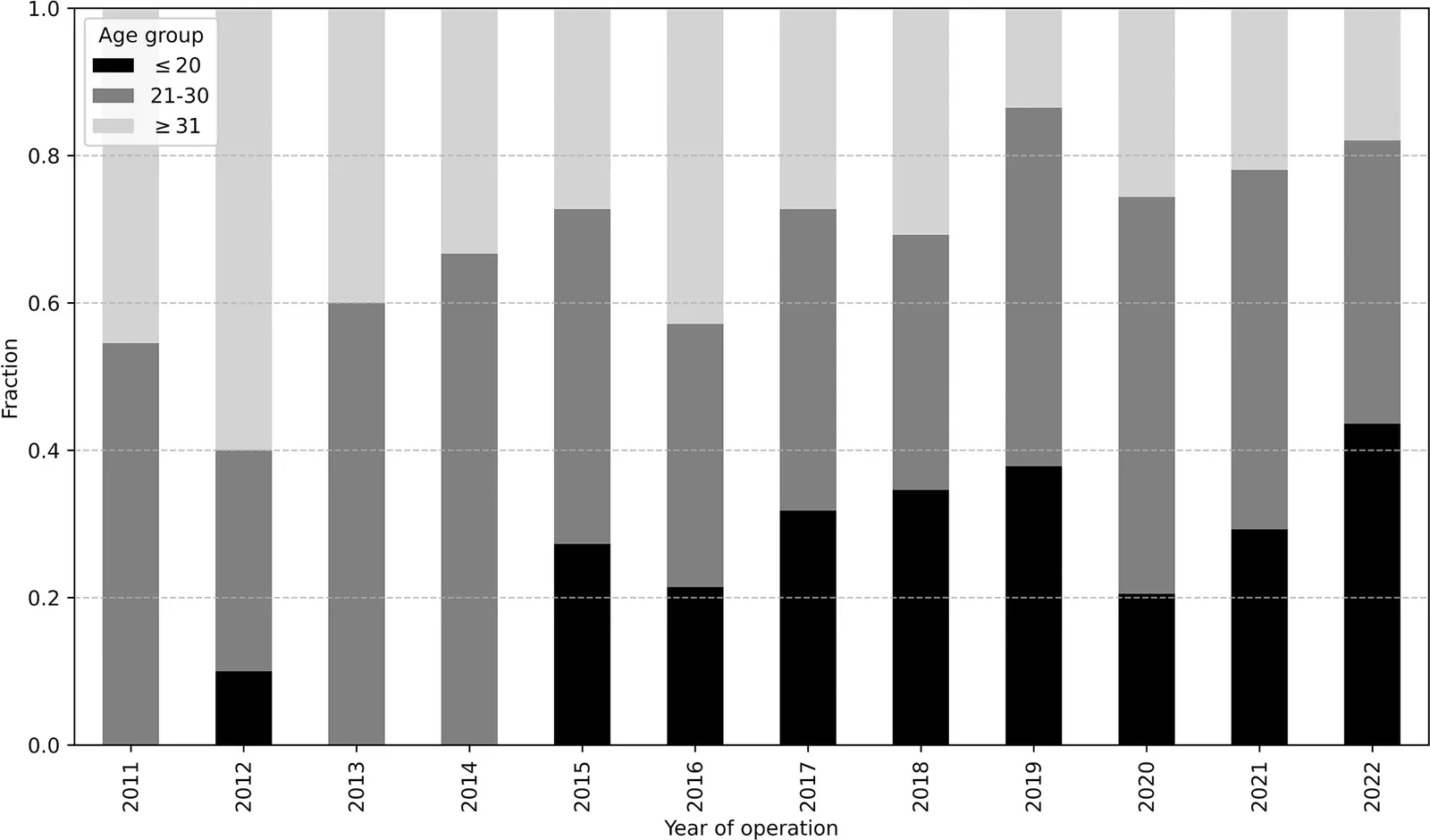
Figure 1 illustrates a temporal trend toward earlier surgical intervention over time. From 2015 onward, the proportion of younger patients (<20 y) increased, whereas the proportion of patients older than 31 years of age steadily declined, comprising only 17% of the annual cohort by 2022.
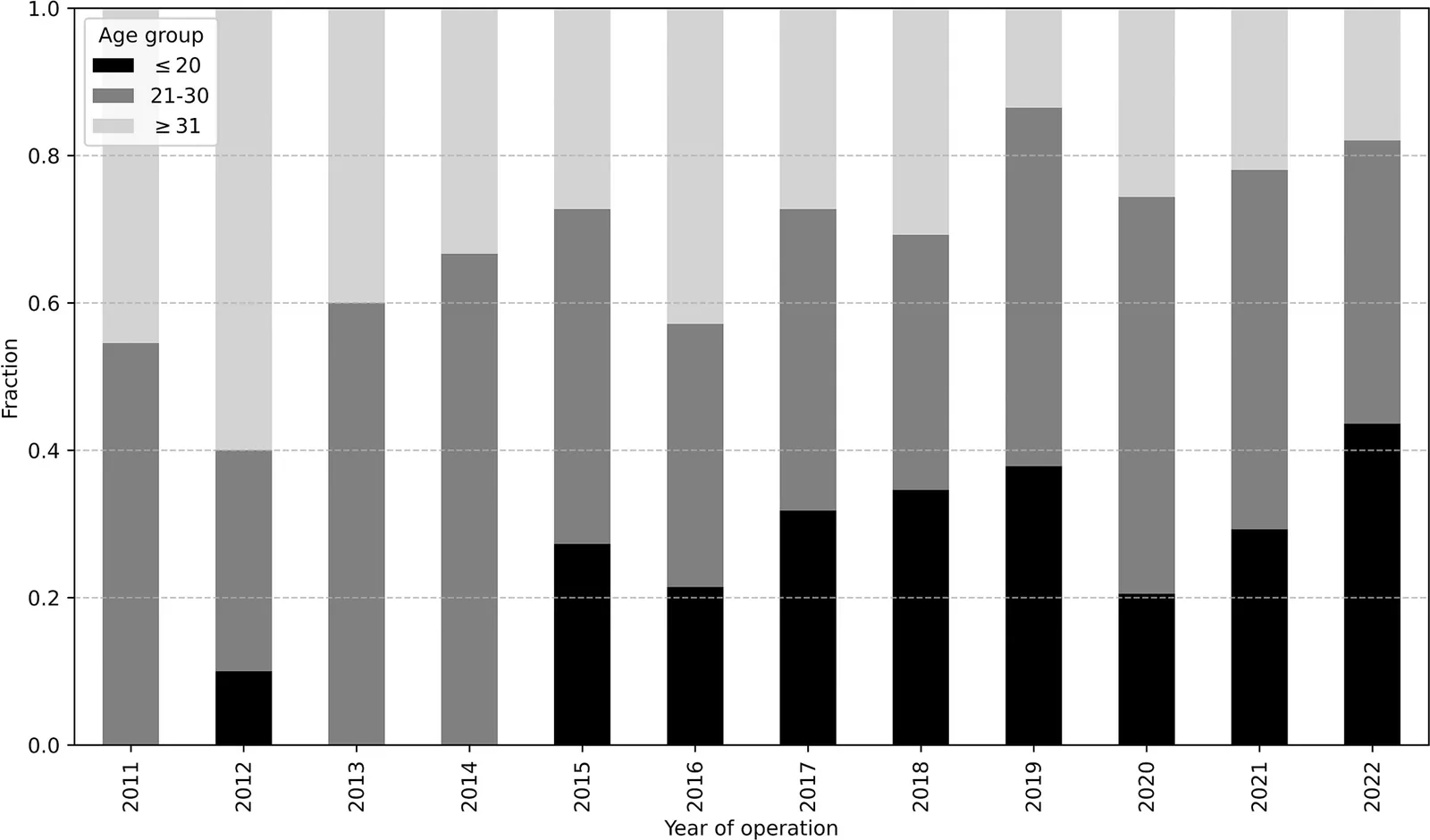
Fig. 1 . Shifting age demographics from 2011 to 2022.2011–2022 年患者年龄分布变化,呈现手术人群逐年年轻化趋势(小于 20 岁比例上升、大于 31 岁比例下降)。
Double-incision mastectomy (Fig. 2 ) with free nipple grafting was the most performed technique (77.5%), whereas periareolar mastectomy (Fig. 3 ) accounted for 22.5% of cases. Among periareolar procedures, concomitant liposuction was undertaken in about 53% of patients. Resection weights varied widely across the cohort, ranging between 11 to 2600 g per breast, and strongly correlated with BMI ( r = 0.72) and incision type ( r = 0.64).
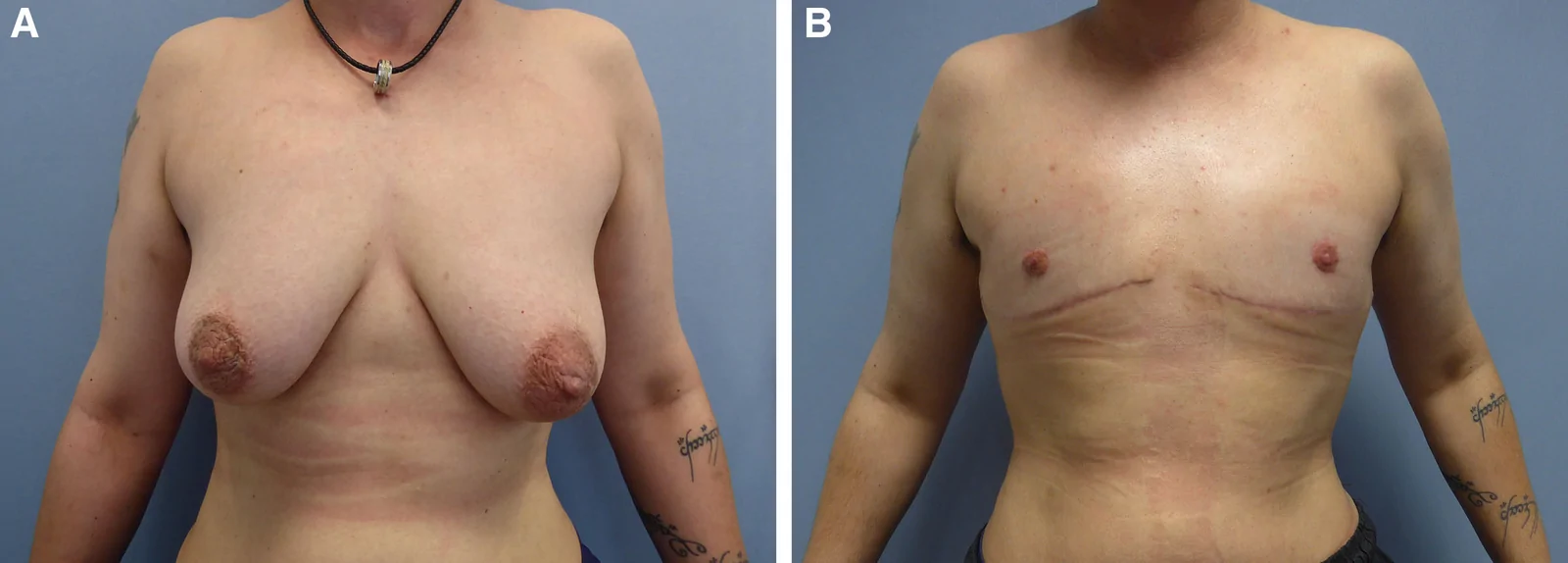
Fig. 2 . Gender-affirming mastectomy using an inframammary incision with free nipple grafting. A, Preoperative frontal view. B, Postoperative result at 6 months.乳房下皱襞切口联合游离乳头移植术式示意(A 术前,B 术后 6 个月),为最常见术式(77.5%)。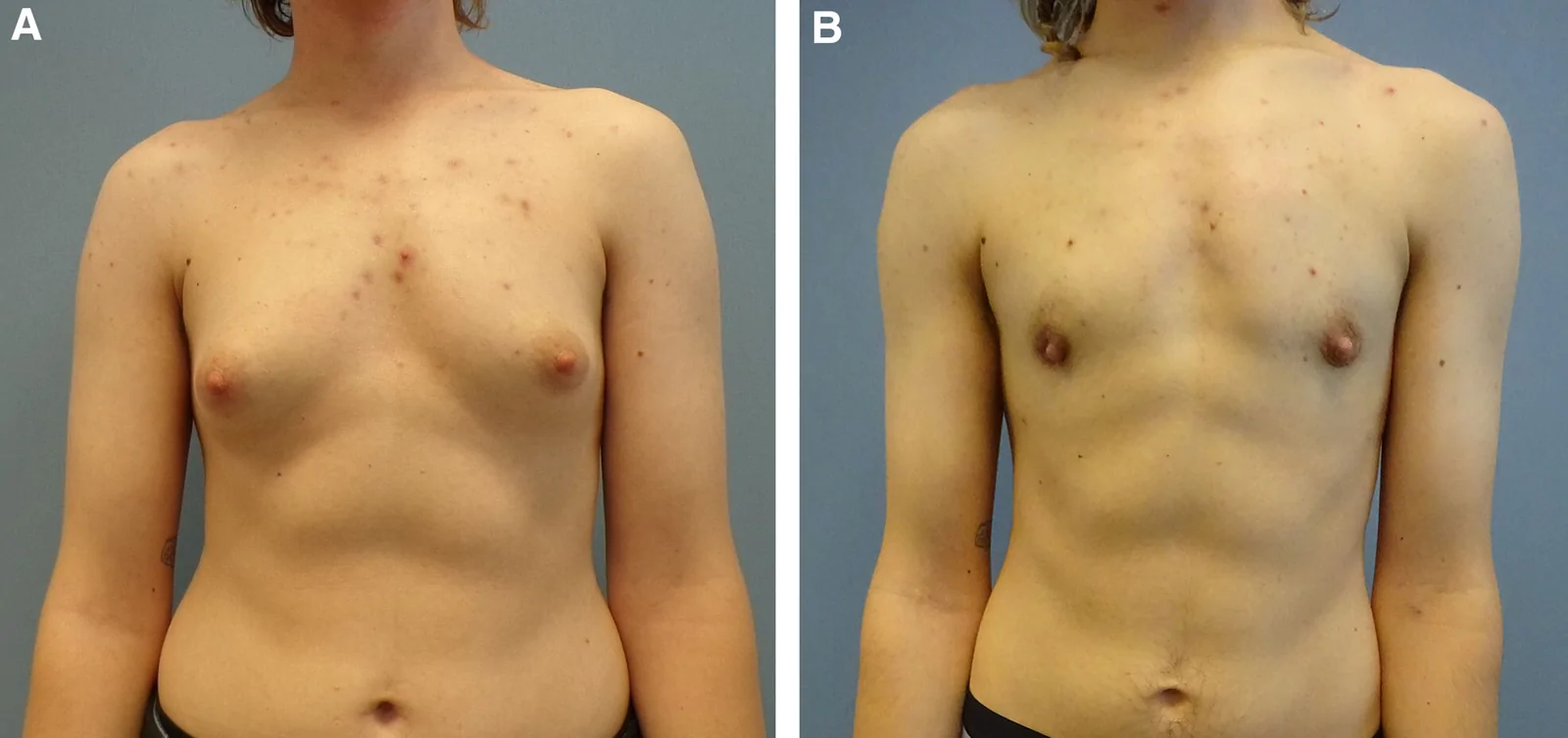
Fig. 3 . Gender-affirming mastectomy performed via periareolar incision and adjunctive liposuction. A, Preoperative frontal view. B, Postoperative result at 6 months.
Overall complication and revision rates were 15.1% and 22.8%, respectively. The most common complications included hematoma (8.1%), wound dehiscence (3.9%), and NAC necrosis (2.3%). Secondary procedures were most frequently performed for contour irregularities (9.7%), dog ear resection (6.2%), and scar revision (5.0%).
When postoperative outcomes were analyzed over time, both complication and revision rates declined significantly across the study period (Fig. 4 ). An additional comparison of outcomes between an early period (2011–2018) and a later period (2019–2022) revealed that complication and revision rates were significantly lower in the second period (Fig. 4 , P = 0.013 and P = 0.010, respectively).
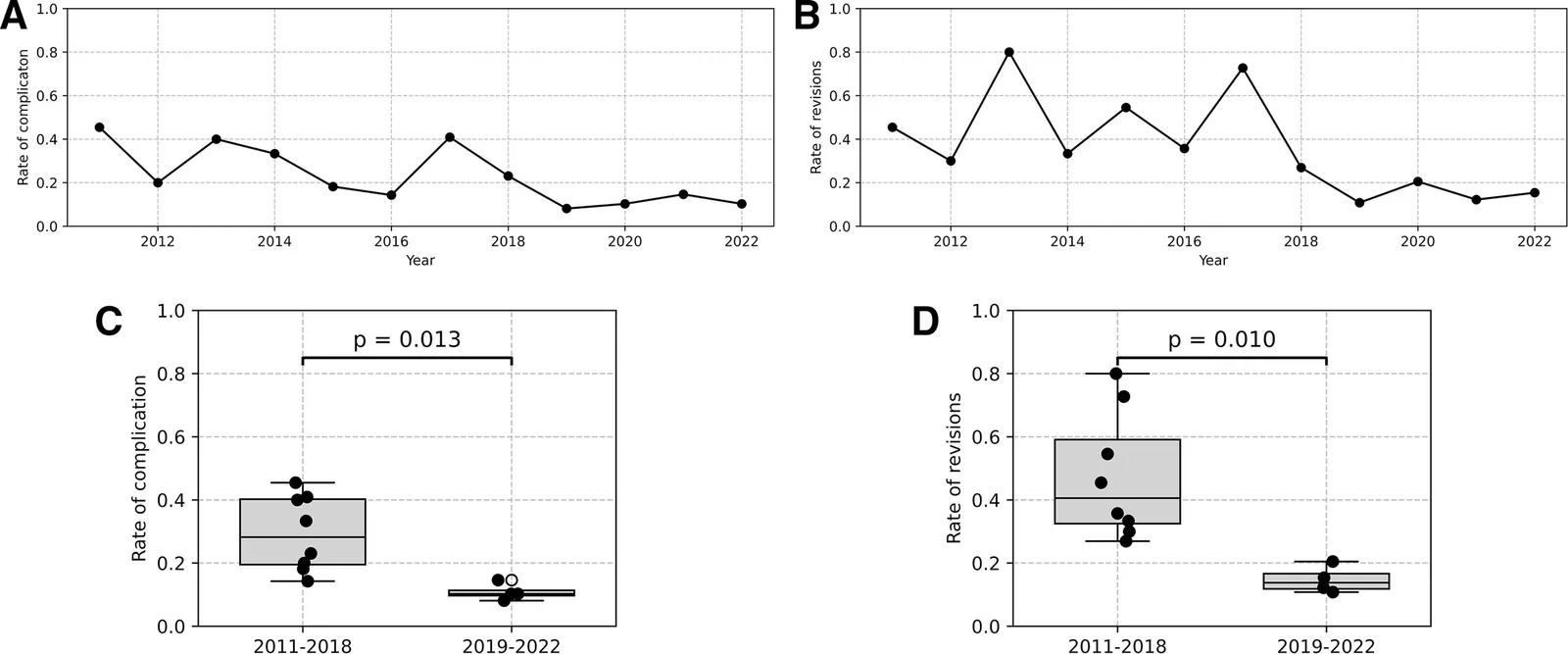
Fig. 4 . Rate of complication (A) and revision (B) as a function of time. Complications (C) and revisions (D) significantly decreased in the second period (P = 0.013 and P = 0.010).并发症(A/C)与再手术(B/D)率随时间变化,后期较前期显著下降(P=0.013、P=0.010)。Table 2 summarizes detailed temporal changes in complication subtypes, Clavien–Dindo classification, and indications for secondary corrections. Between 2019 and 2022, the incidence of hematoma and NAC necrosis decreased significantly, accompanied by a reduction of acute revision procedures ( P = 0.001). Concurrently, planned secondary procedures, particularly contour corrections, were less frequently performed in the second study period ( P = 0.002).
Table 2. Temporal Trends of Postoperative Results*
| Total, 2011–2022 | Study Period, 2011–2018 | Study Period, 2019–2022 | P | |
|---|---|---|---|---|
| Sample size, n | 258 | 102 | 156 | |
| Complications, n (%) | ||||
| Hematoma | 21 (8.1) | 15 (14.7) | 6 (3.8) | 0.007 |
| Wound dehiscence | 10 (3.9) | 3 (2.9) | 7 (4.5) | 0.744 |
| NAC necrosis † | 6 (2.3) | 5 (4.9) | 1 (0.6) | 0.037 |
| Seroma | 5 (1.9) | 3 (2.9) | 2 (1.3) | 0.387 |
| Infection | 4 (1.6) | 3 (2.9) | 1 (0.6) | 0.304 |
| Clavien–Dindo classification, n (%) | ||||
| Grade I | 16 (6.2) | 7 (6.9) | 9 (5.8) | 0.794 |
| Grade II | 4 (1.6) | 3 (2.9) | 1 (0.6) | 0.304 |
| Grade IIIa | 2 (0.8) | 1 (0.9) | 1 (0.6) | 1.000 |
| Grade IIIb | 24 (9.3) | 18 (17.6) | 6 (3.8) | 0.001 |
| Grade IV | — | — | — | — |
| Grade V | — | — | — | — |
| Secondary corrections, n (%) ‡ | ||||
| Scar revision | 13 (5.0) | 9 (8.8) | 4 (2.6) | 0.038 |
| Dog ear resection | 16 (6.2) | 8 (7.8) | 8 (5.3) | 0.433 |
| Contour revision | 25 (9.7) | 19 (18.6) | 6 (3.8) | 0.002 |
| NAC correction | 3 (1.2) | 3 (2.9) | — | 0.061 |
Given the concurrent temporal shift toward younger patients and the observed improvement in postoperative outcomes, the association between age and complication and revision rates was further evaluated. As shown in Figure 5 , we did not observe a significant association between patient age and the incidence of postoperative complications or revision surgery. Similarly, no meaningful association was observed between patient age and complication severity, as classified by the Clavien–Dindo system (all P > 0.05, data not shown).
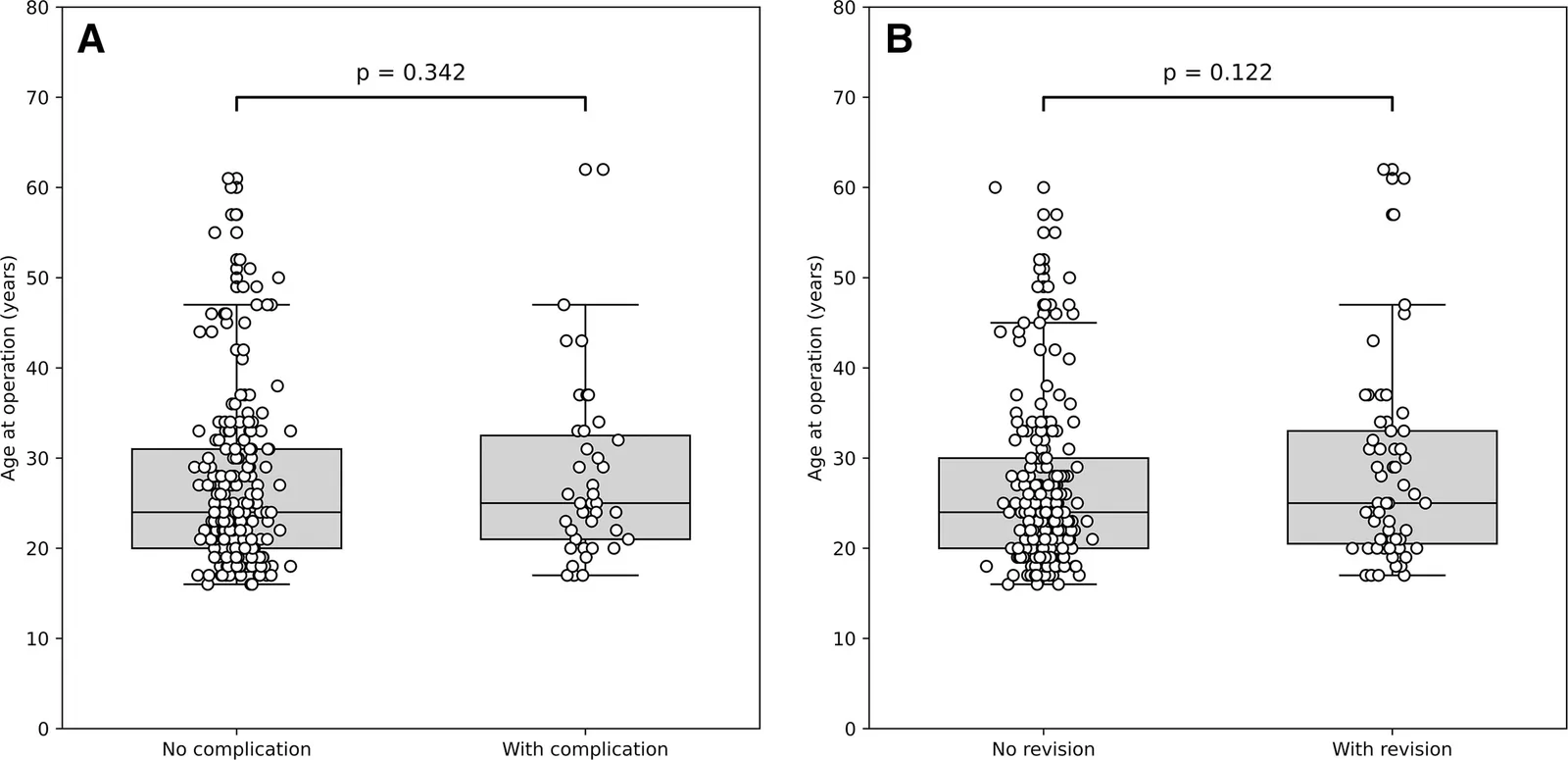
Fig. 5 . Age and postoperative outcome. No significant association was identified between patient age and the rate of complications (A) or revisions (B).年龄与术后并发症(A)及再手术(B)关系,未显示显著关联。
In multivariable analysis (Table 3 ), the year of operation was independently associated with reduced odds of postoperative complications (odds ratio [OR] 0.89, 95% CI 0.80–0.99, P = 0.040) and revision surgery (OR 0.88, 95% CI 0.80–0.97, P = 0.004). No other covariables were independently associated with either outcome. Age at operation, as the focal variable of interest, showed no meaningful association with postoperative complications (OR 1.01, 95% CI 0.97–1.05, P = 0.698) or revision surgery (OR 1.03, 95% CI 0.99–1.06, P = 0.104).
Table 3. Multivariable Analysis
| Complications | Revisions | |
|---|---|---|
| OR | 95% CI | |
| Age at operation (y) | 1.00 | 0.97–1.05 |
| Year of operation (y) | 0.89 | 0.80–0.99 |
| BMI (kg/m 2 ) | 0.99 | 0.90–1.09 |
| Resection weight (g) | 1.00 | 0.99–1.00 |
| Active smoking | 1.77 | 0.86–3.64 |
| Type of incision * | 0.55 | 0.23–1.34 |
This study evaluates the relationship between age and surgical outcomes following gender-affirming mastectomy over a 12-year period characterized by a marked shift toward younger patients. Despite this demographic change and a concurrent decline in postoperative complications and revision rates, inferential analyses demonstrated that patient age was not independently associated with postoperative complications or revision surgery. Instead, improvements in surgical outcomes were primarily related to year of surgery in multivariable regression analysis adjusted for relevant confounders. This finding likely reflects cumulative refinement in operative technique, perioperative management, and patient selection based on increasing institutional experience in gender-affirming care over time.
Notably, outcome improvements were primarily driven by a progressive decline in acute revision procedures related to hematoma evacuation and fewer planned secondary procedures, particularly for contour corrections and scar revisions. These trends coincide with several modifications implemented during the study period that may have contributed to the observed change in outcomes.
Earlier in this cohort, periareolar incisions were frequently combined with concentric mastopexy to address mild ptosis in small breasts. However, this approach was associated with unfavorable scar characteristics (widened and distorted scars around the NAC) and limited options for secondary revision, leading to a more selective use of periareolar techniques over time. In cases with concerns regarding breast size or skin quality, an inframammary approach with free nipple grafting was increasingly favored. This evolution is consistent with existing literature indicating that patients prioritize a masculine chest contour achieved in a single stage over concerns about visible scarring. 20 , 21 Moreover, the lower complication rates associated with inframammary techniques further support their use and are consistent with the improvements observed throughout the study period. 20 , 22 – 24
In parallel, adjunctive liposuction was more frequently incorporated into periareolar procedures in the later study period, increasing from 13% before 2019 to 80% thereafter. This change may have improved contouring by facilitating the obliteration of the inframammary fold and more complete removal of lateral and axillary fullness. 25 Supporting evidence from other studies also suggests that liposuction can aid in gland removal through hydrodissection and reduce intraoperative bleeding when combined with adrenaline irrigation. 26 , 27 Together, these technical refinements are consistent with a learning-curve effect and underscore the importance of surgical experience in optimizing outcomes following gender-affirming mastectomy. 28
Previous studies examining age-related outcomes in gender-affirming surgery have reported conflicting results. Large database analyses, including those using the American College of Surgeons National Surgical Quality Improvement Program (ACS NSQIP), have variably associated both younger and older age with increased complication rates, whereas smaller institutional series have suggested favorable outcomes in patients younger than 18 years of age. 14 , 15 , 29 However, several of these findings rely on dichotomized or arbitrarily defined age thresholds, which may oversimplify the effects of age across a broader population or even lead to spurious interactions between certain variables because of the categorical approach. 30 , 31 In addition, large database studies include heterogeneous patient cohorts and combine chest masculinization with genital gender-affirming procedures, which differ substantially in operative complexity, perioperative risk profile, and typical timing within the transition process. 32 These methodological differences, together with the frequent absence of procedure-specific variables, such as incision type or resection weight, limit the ability to isolate age-related effects relevant to mastectomy alone. By analyzing age as a continuous variable and focusing exclusively on gender-affirming mastectomy with detailed operative data, the present study provides a more procedure-specific and methodologically robust assessment of the relationship between age and surgical outcomes. The findings of this study align with the current emphasis on individualized surgical decision-making reflected in the WPATH SoC-8, which discourages rigid age-based eligibility thresholds. 9 , 10 Importantly, the present results should not be interpreted as advocating for or against surgery at any specific age but suggest that chronological age does not appear to be a dominant determinant of surgical outcomes within the transmasculine population undergoing gender-affirming mastectomy.
Several limitations of this study warrant consideration. The retrospective design and single-institution setting may limit the generalizability of our findings. Although the cohort spans more than a decade, the sample size may be underpowered to detect subtle age-related differences in outcomes. Accordingly, age was analyzed as a continuous variable, and artificial stratification or dichotomization was deliberately avoided (except for one graphical illustration) since these approaches can introduce bias and reduce statistical power, particularly in studies with small or modest sample size. 30 , 31 , 33 Despite adjustment for clinically relevant confounders in multivariable analysis, the number of outcome events relative to the number of covariates was limited, raising the possibility of model overfitting. Therefore, the stability of regression estimates should be interpreted with caution.
Because this study focused exclusively on surgical results, the question of whether age influences quality of life or satisfaction following gender-affirming mastectomy cannot be addressed. Future research should incorporate longitudinal patient-reported metrics, inclusive of those assessing detransition or surgical regret, to evaluate how age influences broader outcomes beyond surgical safety. Although no cases of surgical regret were documented in our database, one patient with a known history of severe depression died by suicide 2 years after undergoing gender-affirming mastectomy. This underscores the importance of comprehensive perioperative psychosocial support and long-term follow-up.
We further recognize the evolving clinical knowledge in transgender care within the last years. Improvements in outcomes observed over the study period likely reflect multifactorial changes, including increasing clinical experience, evolving perioperative management and refinements in procedural technique and patient selection, rather than a single dominant factor. Although this limits the ability to isolate the contribution of an individual variable, the institution’s more than 45 years of experience in gender-affirming surgery strengthens the internal consistency and reliability of the observed trends.
In this 12-year single-institution cohort, we did not observe an independent association between patient age and postoperative complications or revision surgery following gender-affirming mastectomy. Improvements in surgical outcomes were associated with year of surgery, likely reflecting cumulative advancements in procedural technique, perioperative management, and patient selection over time. These findings suggest that temporal changes in surgical results may be closely related to increasing institutional experience rather than chronological age or shifting demographics. Our results, however, should be interpreted with caution given the sample size limitations, retrospective design and potential learning-curve effects, and further prospective or multicenter studies are warranted.
The authors have no financial interest to declare in relation to the content of this article.
Ethical approval was obtained from the Medical Association of Hesse / Germany (Approval number: 2023-3336-evBO).
声明:中文精读 · 仅供学术参考。内容来自公开文献检索,不代表本人观点,不构成诊疗建议。 医疗美容需在正规医疗机构由执业医师实施。
基于相同主题推荐 · 继续深挖
单中心回顾性队列,2011–2022 年共 258 例(剔除 3 例数据不全),确诊性别不安、女性出生指派,中位年龄 24 岁(16–61),由认证整形外科医师行双侧手术。
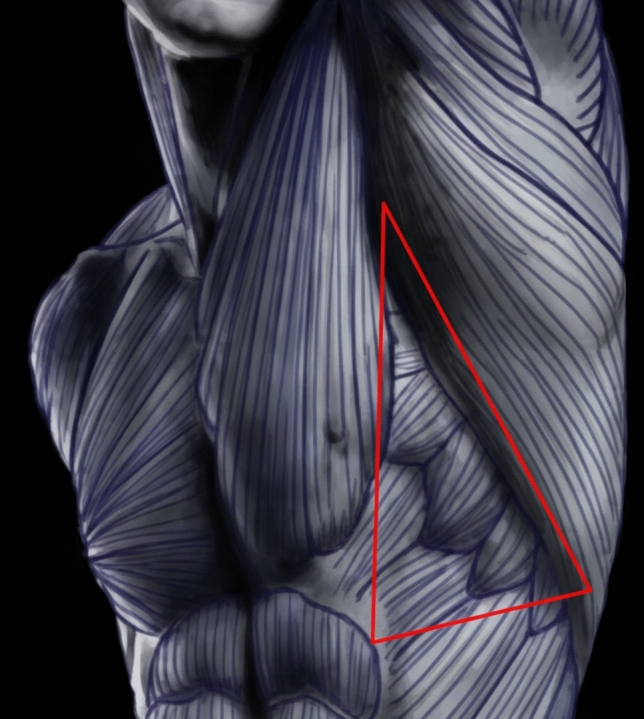
回顾性连续系列 200 例男性(2020–2024),均行包含胸锯肌三角定义的高清脂雕,由同一资深医师完成,最小随访 8 个月(平均 19 个月,最长 4 年)。
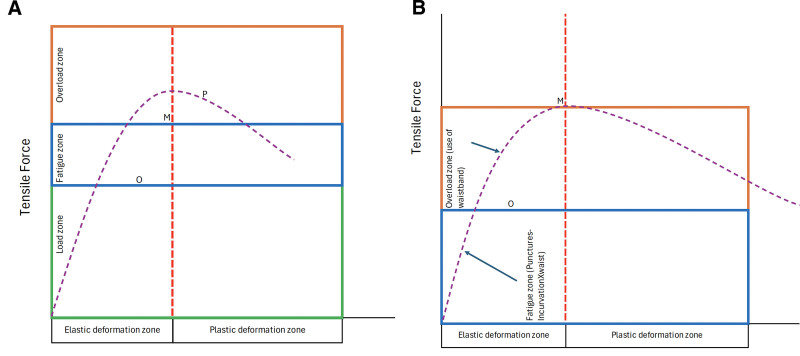
研究为 50 例 18–38 岁女性(RibXcar 组 26 例,IncurvationXribs 组 24 例),均接受第 11–12 浮肋重塑以缩腰,随访 6 个月。