烧伤后下睑瘢痕性睑外翻矫正:SOOF 提升联合全厚皮片移植(2026 病例报道)
2026年10月27日12 min read
Plastic and Reconstructive Surgery Global Open
Plastic and Reconstructive Surgery Global Open
结论与实践要点
本报道为单病例研究(n=1):一名45岁男性因47%总体表面积火焰烧伤(含面部全厚受累)发生左眼下睑瘢痕性睑外翻,伴眼睑闭合不全与暴露性角膜炎。在充分松解与植皮前,下睑仍无法覆盖下方角膜(MRD2约8 mm、睑裂闭合不全5 mm、约3 mm角膜暴露),术者遂在术中发现单纯松解不足,转而采用骨锚定中面部提升以重建垂直支撑。
手术要点:切除左下睑瘢痕(2×6 cm)并保留眼轮匝肌,同期切除左侧面部瘢痕(16×12 cm,约192 cm²)至皮下;于眶下缘下方5–7 mm、间隔8–10 mm 处钻3个1.5 mm骨孔,以3-0 Prolene 向上外矢量将颧颊/SOOF 复合体固定于眶下缘,重建睑—颊交界、抵消向下矢量。左锁骨上取3×7 cm 全厚皮片(FTSG)削薄后以6-0 肠线置入下睑,5-0 Monocryl 行外侧眦固定,面部以0.015英寸刃厚皮片(STSG)覆盖;并以睑缘缝合保护角膜。估计失血约100 mL。
术后3个月随访:植皮完全愈合,MRD2约5 mm、睑裂闭合不全0 mm,睑裂闭合稳定、角膜完全覆盖,面部植皮整合良好,功能与外观结局满意。临床适用边界:该整合术式(松解+SOOF 中面部提升+FTSG+外侧固定+保护性睑缘缝合)适用于常规松解与植皮仍无法恢复下睑高度/角膜贴附的复杂烧伤性睑外翻;但本研究仅为单例、随访仅3个月,作者明确提示烧伤后挛缩可能复发、需更长期随访,潜在并发症包括睑外翻复发、植皮失败、感染及中面部提升相关的错位或神经刺激,故其证据等级有限,外推至其他病因或更大样本仍需谨慎。
Cicatricial ectropion following facial thermal injury arises from anterior lamellar deficiency and persistent downward traction across the lid–cheek interface. Even with complete scar release and resurfacing, unresolved midface contracture can compromise corneal coverage and graft survival. This report describes a 45-year-old man with 47% total body surface area flame burns, including full-thickness facial involvement, who developed left lower eyelid cicatricial ectropion and exposure keratitis. After excision of the lid cicatrix and extensive facial scar release, residual inferior tension precluded lid apposition to the globe. A subperiosteal sub–orbicularis oculi fat–based midface suspension was therefore performed using drill-hole fixation to the infraorbital rim, reestablishing vertical support and reconstituting the lid–cheek junction. The lower lid was resurfaced with a supraclavicular full-thickness skin graft and stabilized with lateral canthopexy and protective tarsorrhaphy, whereas the adjacent facial defect received a sheet split-thickness graft. Postoperatively, the patient achieved complete graft take, stable eyelid closure, and excellent contour restoration at 3 months. This case highlights the biomechanical benefit of combining sub–orbicularis oculi fat–based midface suspension with lamellar replacement in burn-related ectropion and, in review of the literature, supports this integrated approach as an effective, durable method for restoring lower lid position and corneal protection in complex burn reconstruction.
Cicatricial ectropion after thermal injury reflects anterior lamellar shortage and tethering across the lid–cheek interface. Cicatricial ectropion in this case primarily involved anterior lamellar deficiency with relative preservation of the posterior lamella. Even with meticulous release and resurfacing, persistent downward vector forces from the contracted midface can jeopardize corneal coverage and threaten graft success. 1 , 2 Sub–orbicularis oculi fat (SOOF)–based midface suspension offers a biomechanically complementary maneuver, reestablishing vertical support at the orbital rim. 3 In complex burn patterns, adding a bone-anchored midface lift can be decisive in preventing recurrent retraction and protecting the ocular surface.
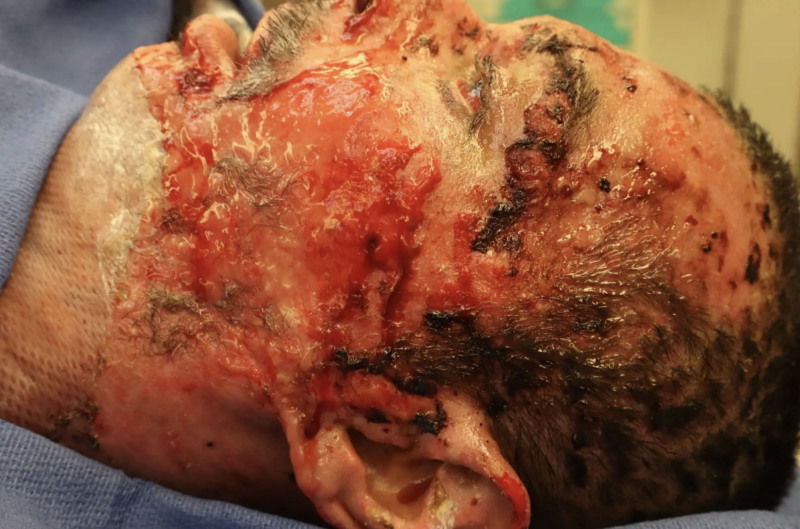
A 45-year-old man sustained 47% total body surface area flame burns, including the face. He developed left lower lid cicatricial ectropion with lagophthalmos and exposure keratitis during his acute course (Fig. 1 ). There were no associated comorbidities, no significant drug history, and no known allergies. The periorbital region was managed with frequent ophthalmic lubrication, moisture chamber protection, eyelid taping, and topical bacitracin application, though cicatricial changes progressed to ectropion requiring surgical correction. Risks and alternatives were discussed with the patient’s surrogate, including recurrence given the anticipated need for facial split-thickness skin grafting (STSG).
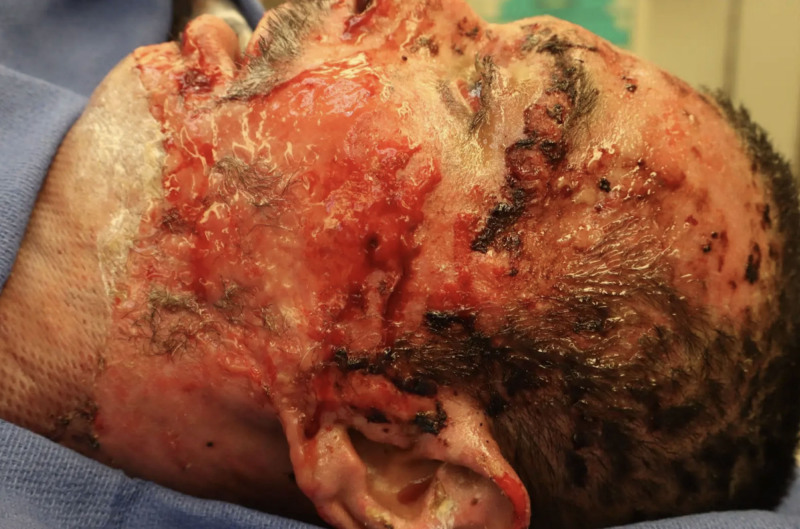
Fig. 1. Preoperative lateral view depicting cicatricial ectropion of the left lower eyelid and flame burns to the left face.术前左侧位,显示左眼下睑瘢痕性睑外翻及左面部火焰烧伤外观。Thirty-three days after admission, the patient underwent operative correction. After induction of anesthesia, the left lower eyelid and face were infiltrated with 1% lidocaine with epinephrine and tranexamic acid. A traction suture was passed through the meibomian orifices to control the lid, and the lower eyelid cicatrix was excised to healthy tissue, measuring 2 × 6 cm, with preservation of the orbicularis. The left facial scar (16 × 12 cm) was then excised in anatomical subunits to the subcutaneous plane.
Despite complete release, the inferior cornea remained uncovered with upward traction on the lid, prompting a subperiosteal midface suspension. MRD2 measured approximately 8 mm, lagophthalmos was 5 mm, and approximately 3 mm of inferior cornea remained exposed despite maximal release, confirming inadequate corneal coverage. Through a small infraorbital incision, the subperiosteal plane was developed along the maxilla to the nasomaxillary buttress, extended laterally over the zygomaticomaxillary buttress and zygomatic arch, thereby mobilizing the cheek. Three 1.5-mm drill holes were placed along the infraorbital rim approximately 5–7 mm below the rim and spaced 8–10 mm apart; the cheek/SOOF complex was secured with 3-0 Prolene in a superolateral vector to reestablish the lid–cheek junction at the orbital rim.
An oversized full-thickness skin graft (FTSG) (3 × 7 cm) was harvested from the left supraclavicular area, thinned, and inset to the lower lid with 6-0 plain gut; a lateral canthopexy to the lateral orbital periosteum was performed with 5-0 Monocryl. The face was resurfaced with a 0.015-inch STSG harvested from the right calf, pie-crusted, and secured with 4-0 chromic. A hemostatic “net” of 3-0 Prolene was applied to bolster the facial graft. Suprathel and a tie-down Xeroform bolster were placed over the eyelid graft, followed by bacitracin-impregnated Xeroform and a light compressive dressing to the face. To protect the cornea during early healing, medial and lateral tarsorrhaphies were placed with 5-0 Prolene through the meibomian orifices and secured to the forehead (Fig. 2 ).
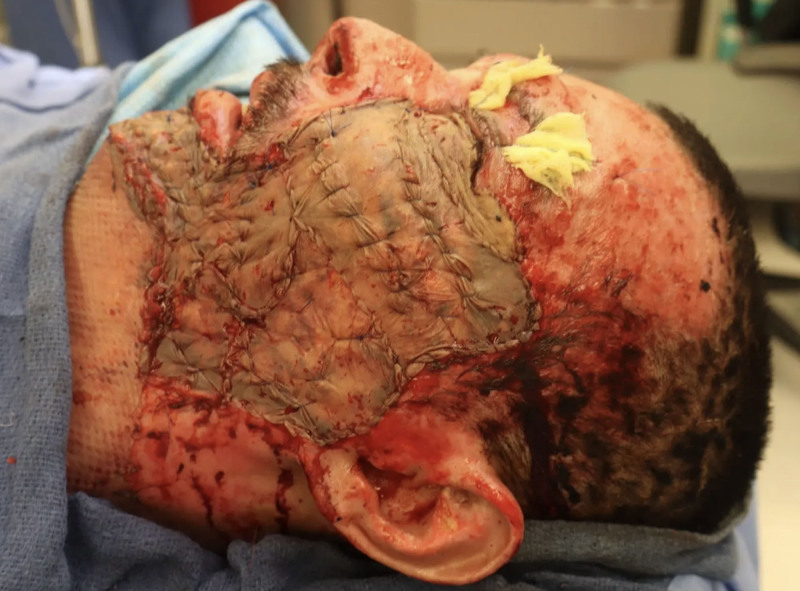
Fig. 2. Intraoperative left lateral view showing inset of an FTSG into the left lower eyelid and a split-thickness skin graft to the left face. Temporary medial and lateral tarsorrhaphies were placed and secured to the forehead.术中左侧位,左眼下睑置入 FTSG、左面部置入刃厚皮片,并临时行内、外侧睑缘缝合固定于前额。Estimated blood loss was 100 mL. The patient tolerated the procedure well and was transferred to the intensive care unit in critical but stable condition. The patient demonstrated a steady postoperative recovery with progressive improvement in eyelid position, graft take, and facial contour (Fig. 3 ). By 3 months postoperatively, he exhibited complete graft healing, MRD2 of approximately 5 mm with no lagophthalmos (0 mm), stable eyelid closure with complete corneal coverage, and excellent integration of facial grafts (Fig. 4 ). Overall, his functional and aesthetic outcomes were favorable. The 3-month follow-up is a limitation, as burn-related contracture may recur and longer-term outcomes are needed. Potential complications include ectropion recurrence, graft failure, infection, and midface suspension–related malposition or nerve irritation.
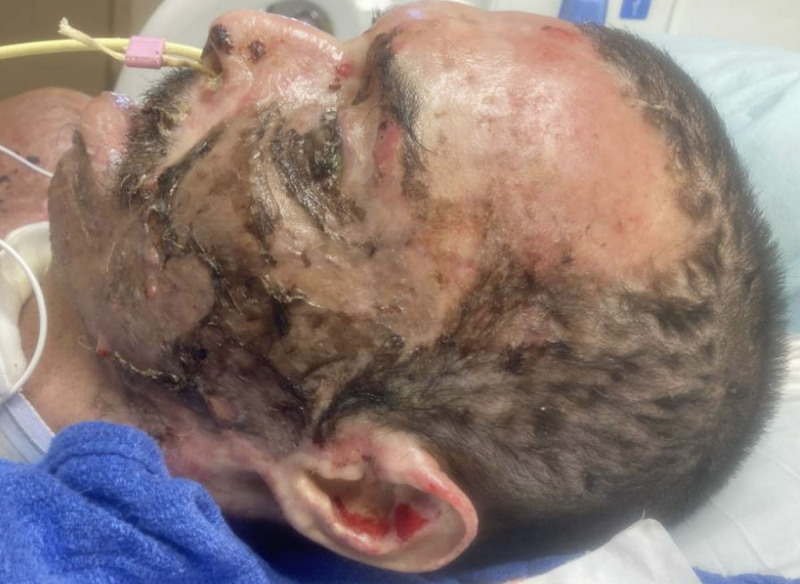
Fig. 3. One-month postoperative left lateral view showing well-healed skin grafts with improved eyelid position and restoration of facial contour.术后1个月左侧位,植皮愈合良好、睑位改善、面部轮廓恢复。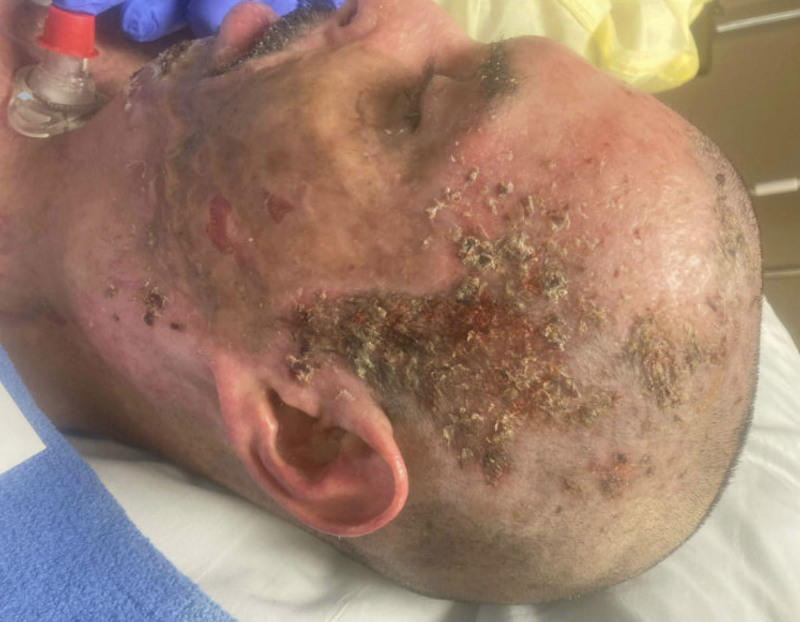
Fig. 4. Three-month postoperative lateral view showing graft healing with stable eyelid closure.术后3个月左侧位,植皮愈合、睑裂闭合稳定。
Burn-related cicatricial ectropion is driven by anterior lamellar deficiency and scar vectors that pull the lower lid away from the globe. Although full release and resurfacing with FTSG remain foundational, large field facial burns often impart persistent inferior traction across the lid–cheek junction. 1 , 4 In that setting, simply replacing skin may not restore vertical lid height or corneal apposition, and the reconstructive strategy must address both lamellar length and midface support. 5 , 6 In this case, the surgeon determined intraoperatively that release alone did not allow the lower lid to cover the inferior cornea with traction. Subperiosteal mobilization of the cheek and SOOF, with rigid fixation to the infraorbital rim through drill holes, repositioned the lid–cheek junction to the orbital rim and neutralized the downward vector that threatens graft performance and corneal protection. 3 Reconstruction may be tailored to lamellar involvement, with anterior deficiencies requiring skin replacement and posterior defects requiring structural support. 7 Unlike lateral tightening or spacer grafting, SOOF suspension corrects vertical midface descent and downward vectors, making it well suited for burn-related ectropion with anterior lamellar deficiency.
The choice of a left supraclavicular FTSG provided stable anterior lamellar resurfacing with appropriate thickness and color, and was favored over upper eyelid or postauricular skin due to limited local availability and larger graft size. A lateral canthopexy added horizontal tightening to resist recurrent retraction, whereas a staged plan for tarsorrhaphy safeguarded the ocular surface during edema and graft inosculation. Given the breadth of facial scar excision (192 cm 2 ) and the necessity of a sheet STSG, the team also counseled the patient’s surrogate regarding the risk of recurrent contracture.
This integrated approach—release, SOOF-based midface suspension, FTSG to the lower lid, lateral stabilization, and protective tarsorrhaphy—aligns with reconstructive principles for complex lower lid retraction. 8 By restoring vertical support at the orbital rim and off-loading the graft, midface suspension creates the conditions for durable eyelid position and corneal coverage. 9 The uneventful intraoperative course, modest blood loss, and stable immediate postoperative status are consistent with the safety profile of combining these maneuvers in a single stage.
Severe burn cicatricial ectropion often needs more than lamellar repair. When release is insufficient, SOOF suspension restores the lid–cheek junction, reduces traction, and supports FTSG, providing corneal protection and durable eyelid position.
The authors have no financial interest to declare in relation to the content of this article.
The patient provided written consent for the use of his image.
声明:中文精读 · 仅供学术参考。内容来自公开文献检索,不代表本人观点,不构成诊疗建议。 医疗美容需在正规医疗机构由执业医师实施。
基于相同主题推荐 · 继续深挖
中重度烧伤后下睑瘢痕性睑外翻常不仅是前层缺损,中面部持续性向下牵拉可危及角膜覆盖与植皮成活。
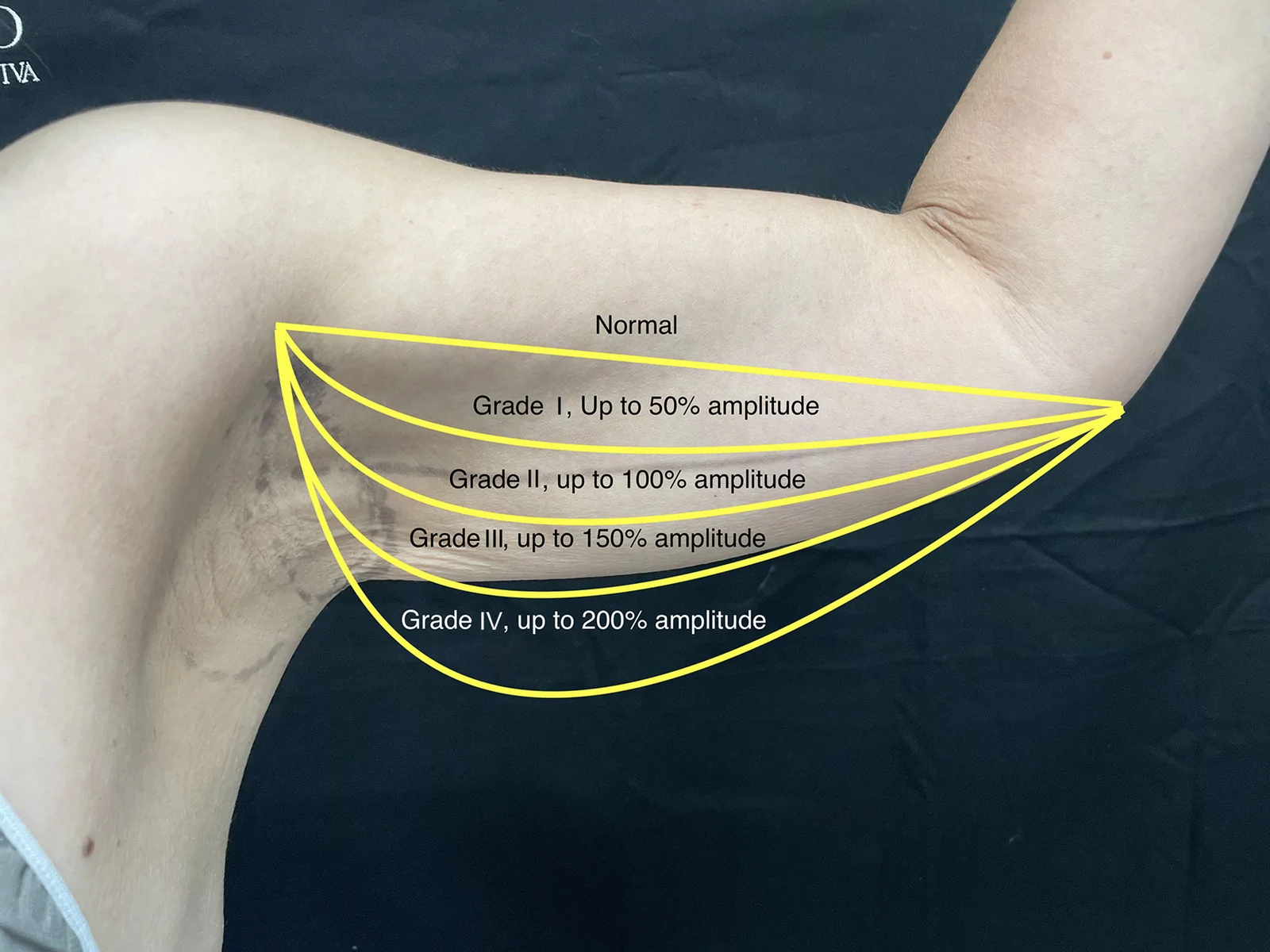
针对 Iglesias I–III 级中度上臂松弛,SAB 以腋窝单一小切口联合吸脂、皮下单极射频与有限皮肤切除,避开传统从腋窝延伸至肘部的长瘢痕。
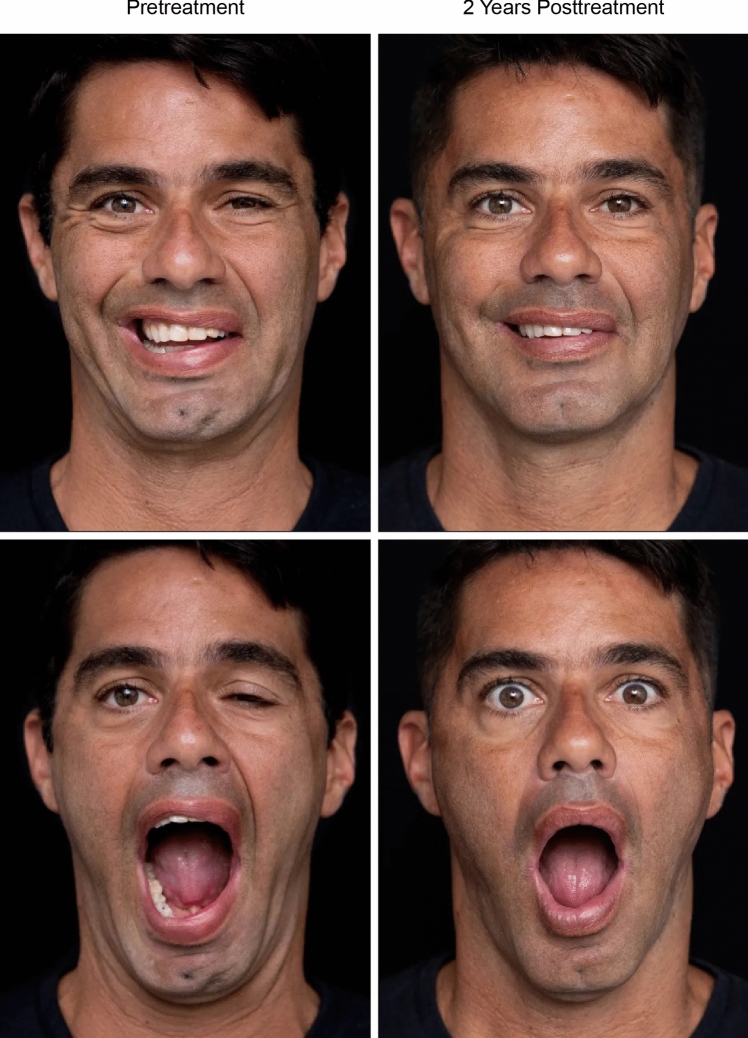
以「矫正型(correction)患者画像」为框架,综述并示例肉毒毒素(onabotulinumtoxinA)、HA 凝胶与 HA+CaHA 混合注射剂在面部不对称、创伤、瘢痕等矫