双治疗头冷冻溶脂满意度与安全性
2026年9月17日27 min read
Dermatologic Surgery
结论与实践要点
循证与证据等级。 本项为前瞻性、多中心、多国家上市后研究(安全人群 n=110,5 国 8 中心),属低至中等证据等级(无对照、开放标签);主要终点中段满意度 83.3%、盲态医师影像识别 88.0%、3D 皮下脂肪体积平均减少约 195 mL 且具统计学显著,支持该双治疗头系统在中段减脂上的有效性与良好耐受。
局限。 缺乏随机对照与盲法、受试者免治疗费可能带来偏倚;3D 脂肪体积变化标准差很大(≈492 mL),提示个体反应异质显著,均值不宜直接等同于个体可预期效果;随访止于末次治疗后 12 周,长期维持与罕见不良事件(如反常性增生)需更久监测;非白人代表性有限。
可落地提示。 对 BMI 正常或轻度超重、以腹/侧腹为主诉的求美者,双治疗头冷冻溶脂可作为非侵入减脂的参考选项,且可同时处理多部位;建议以 1–2 个治疗程、末次治疗后约 12 周评估终效,并在 4 周左右复评早期反应;术前应充分知情短暂麻木/压痛等轻度反应,并排除冷相关禁忌(冷荨麻疹、冷球蛋白血症等)。
BACKGROUNDCryolipolysis is an effective, well-tolerated noninvasive subcutaneous fat reduction treatment.
OBJECTIVEAssess participant satisfaction, effectiveness, and safety of a dual-applicator cryolipolysis system that can deliver simultaneous treatments.
MATERIALS AND METHODSAdult participants received treatment to the abdomen/flanks (midsection). Participants could also receive treatment to upper arms, thighs, and submental area. Primary end point was participant satisfaction with midsection results at 12 weeks after final treatment. Secondary end points included independent photography review, participant satisfaction with additional body areas, and overall satisfaction. Exploratory end points included 3D imaging of midsection volumetric changes and assessments at 4 weeks after initial treatment. Safety was monitored throughout.
RESULTSOf 110 treated participants, 75% were female. Mean age and body mass index were 43 years and 25.1 kg/m 2 , respectively. Of 96 evaluable participants, 83.3% (80/96) were “satisfied/very satisfied” with midsection results. Reviewers correctly identified 88.0% (81/92) of baseline versus 12 weeks after final treatment midsection images. Mean (SD) subcutaneous fat volume loss was 194.8 (492.3) mL at 12 weeks after final treatment ( p < .001). Visible improvements were noted at 4 weeks after initial treatment by a majority of physician reviewers and participants. Five (4.5%, 5/110) participants reported 7 treatment-emergent adverse device effects.
CONCLUSIONThe dual-applicator cryolipolysis system demonstrated high participant satisfaction, effectiveness, and safety.
Among minimally invasive cosmetic procedures, noninvasive fat reduction was the third most-commonly sought procedure from 2021 through 2022. 1 In 2021, 77% of surveyed consumers reported being most bothered by excess body fat. 2 In addition, a recent US survey of approximately 4000 aesthetically inclined adults interested in improving their body appearance demonstrated that stubborn body fat on the stomach was their most frequent and bothersome concern. 3
Cryolipolysis is a noninvasive, clinically proven fat reduction treatment by which controlled cooling extracts heat from subcutaneous tissue to induce selective adipocyte cell death, leading to controlled elimination of adipocytes and reduction in thickness of the subcutaneous fat layer. 4 – 9 Cryolipolysis treatment is effective and well tolerated over multiple treatment cycles and sessions with high levels of participant satisfaction. 9 – 11 A new cryolipolysis system using dual applicators with new cup geometries to improve tissue contact was developed to provide simultaneous treatment to >1 body area at any given time and improve treatment efficiency.
A retrospective study of 91 patients treated in real-world practice at a single clinic demonstrated high patient satisfaction and comfort with cryolipolysis treatment utilizing the dual-applicator system 11 ; however, prospective evaluation of participant-centric outcomes, effectiveness, and safety when treating the midsection and additional body areas is needed.
The objectives of this study were to evaluate participant satisfaction, effectiveness, and safety of the new dual-applicator cryolipolysis system for noninvasive subcutaneous fat reduction of the abdomen and flanks, upper arms, inner thighs, outer thighs, and submental area.
Eligible participants included adults aged 22 to 65 years with a body mass index of ≥18.5 and <30 kg/m 2 and with clearly visible and palpable fat in the abdomen and flanks (midsection). If participants also desired treatment to upper arms, inner thighs, outer thighs, and/or submental area, they could receive treatment to the additional body area(s) per investigator assessment. Eligible participants agreed to maintain weight within 5% of body weight at baseline and did not have weight fluctuations >5% in the preceding month.
Key exclusion criteria included history of a noninvasive fat reduction procedure and/or body contouring procedure in the area(s) considered for treatment within the past 12 months; history of invasive fat reduction procedure within or adjacent to the area considered for treatment; known sensitivity to cold or history of cryoglobulinemia, cold urticaria, cold agglutinin disease, or paroxysmal cold hemoglobinuria; history of surgery, scar tissue, or hernia related to area of treatment; any active implanted device or drug-delivery system within the intended treatment area; a known bleeding disorder or concomitant use of blood thinners (or any medication) associated with an increased risk of bruising; or concomitant use of any diet pills or weight control supplements.
This multicenter, multicountry, prospective, open-label, postmarketing study was conducted between May 2021 and June 2022. The study was conducted in compliance with good clinical practice and received institutional review board and ethics committee approval at each site in the United States, France, Sweden, Germany, and Singapore. Participants provided written informed consent. This study is registered at clinicaltrials.gov (NCT#04897867).
Eligible participants received up to 2 treatment sessions separated by 8 weeks for all body areas eligible for treatment, with a final follow-up visit 12 weeks after final treatment session (week 12 for participants who received 1 treatment session; week 20 for participants who received 2 treatment sessions). Each treatment session comprised ≥1 cryolipolysis treatment cycle(s) (timed segments of tissue cooling delivered by an applicator) followed by a 2-minute manual massage. The duration of a cryolipolysis treatment cycle is fixed per the design specifications for each applicator according to the device User Manual and ranges from 35 to 75 minutes depending on the applicator chosen for treatment. 12
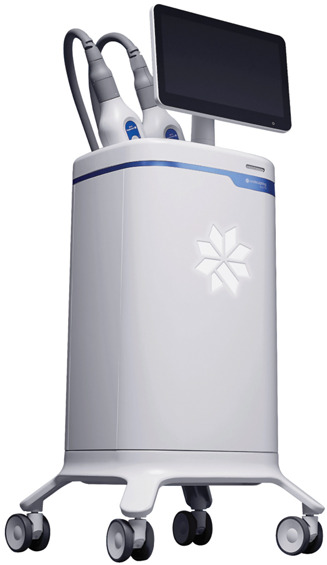
Treatment plans were designed at the investigator's discretion; upper limits on the number of treatment cycles to be delivered were provided. For the midsection, ≤8 treatment cycles per treatment session were permitted, for a total of 16 treatment cycles that could be administered over 2 treatment sessions. For participants who also received treatment to the upper arms, inner thighs, and/or outer thighs in addition to the midsection, ≤4 treatment cycles were permitted per treatment session for each body area, for a maximum total of 8 treatment cycles that could be administered over 2 treatment sessions for the respective body areas. For participants who received treatment to the submental area, ≤2 cycles per treatment session were permitted, for a maximum total of 4 treatment cycles over 2 treatment sessions. Study sites utilized the dual-applicator cryolipolysis system (CoolSculpting Elite; Allergan Aesthetics, an AbbVie Company, Irvine, CA; CoolSculpting and the Snowflake Design are trademarks of Zeltiq Aesthetics, Inc., an AbbVie Company) and had either 1 or 2 systems available for study use (Figure 1 ). Treatment sessions could consist of simultaneous treatment of multiple body areas, during which >1 applicator could be placed on different body areas at the same time. Representation of applicator placement is demonstrated in Figure 2 .
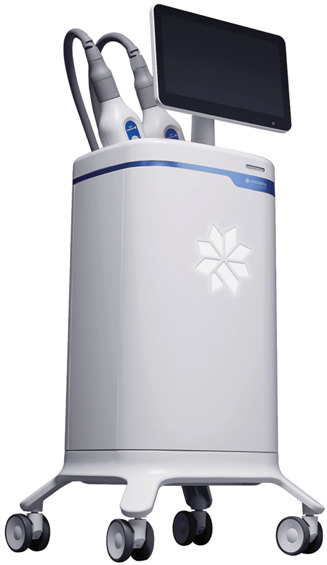
Figure 1. Image of CoolSculpting Elite system.12 ©2024 AbbVie. Used with permission.CoolSculpting Elite(双治疗头冷冻溶脂)系统实物图。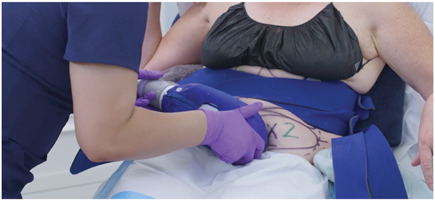
Figure 2. Representative image of applicator placement in preparation for treatment with CoolSculpting Elite system. Not a study participant; photo is representative. ©2024 AbbVie. Used with permission.治疗头摆放的代表性示意(非研究受试者)。
The primary effectiveness end point was participant-reported satisfaction with results of cryolipolysis treatment on the midsection as assessed by Item 1 of the Cryolipolysis Satisfaction Questionnaire (CSQ)-Midsection at 12 weeks after final treatment. The CSQ-Midsection is a 2-item patient-reported outcome (PRO) instrument. Item 1 measures participant satisfaction with results of cryolipolysis treatment. The primary end point was met if the proportion of participants who were “satisfied/very satisfied” was ≥63.9%, based on previous cryolipolysis studies reporting weighted average participant satisfaction after treatment to the midsection.
Secondary effectiveness end points included participant-reported satisfaction at 12 weeks after final treatment with the individual treated body areas (upper arms, inner thighs, outer thighs, submental area) on the respective CSQ, and overall satisfaction for participants who completed treatment to the midsection and ≥1 body area(s) to assess satisfaction when multiple body areas are treated. The CSQ-Overall and CSQ specific for body areas are 1-item PRO instruments that measure participant satisfaction with results of treatment when considering all body areas treated and individual body areas, respectively. An additional secondary effectiveness end point was correct identification of baseline versus 12 weeks after final treatment images of the treated body area(s) by ≥2 of 3 blinded, independent physician reviewers; success was defined as ≥70% correct identification of pretreatment images. A series of baseline and follow-up 2-dimensional (2D) photographs of the treatment areas were taken using a 2D photo capture system (2D Intellistand; Canfield Scientific, Parsippany, NJ).
Exploratory effectiveness end points included assessment of volumetric subcutaneous fat changes at 4 and 8 weeks after initial treatment and 12 weeks after final treatment using the 3-dimensional (3D) Canfield VECTRA XT System available at select study sites. The 3D imaging system obtained a 360-degree image of the body to allow quantification of volumetric changes of the treated areas from baseline. Additional exploratory assessments were also conducted at 4 weeks after initial treatment; end points included correct identification of baseline versus 4 weeks after treatment images of the treated body area(s) by ≥2 of 3 blinded, independent physician reviewers, and participant evaluation of noticeable improvement.
Adverse events (AEs), adverse device effects (ADEs), serious AEs, serious ADEs, and unanticipated AEs/ADEs were documented in the study. During the treatment sessions, participant pain was assessed 10 minutes after starting cryolipolysis treatment on a scale of 0 (no pain) to 10 (the worst pain imaginable). If the pain score worsened during treatment, this was recorded.
Summary statistics were provided for all analyses, and 2-sided 95% CIs on the percentages were provided. p values for change from baseline by visit were provided based on paired t -tests. The sample size was planned for the estimate of the primary effectiveness end point based on satisfaction rate for the midsection.
Evaluable participants for the primary end point were those who completed their cryolipolysis treatment plan and CSQ-Midsection Item 1 at 12 weeks after final treatment session and did not have any significant protocol deviations or violations. Evaluable participants for other effectiveness end points consisted of all treated participants who completed their cryolipolysis treatment plan for any other body areas with no significant protocol deviations or violations. The safety population consisted of all enrolled participants who received ≥1 cryolipolysis treatment cycle.
This study was conducted at 8 centers in 5 countries. In total, 114 participants were enrolled, with 4 participants excluded based on an inclusion/exclusion criterion. The safety population comprised 110 participants who were treated and received ≥1 cryolipolysis treatment cycle. All 110 treated participants received treatment to the midsection, and 61 treated participants also were evaluable for an additional body area, comprising the upper arms, inner thighs, outer thighs, and/or submental area. Ninety-nine participants completed the study; 11 participants prematurely discontinued from the study (lost to follow-up, n = 7; withdrawal of consent, n = 1; pregnancy, n = 1; other reasons, n = 2). Three participants were excluded from all evaluable populations due to protocol deviation (weight change from baseline of ≥5%). Thus, 96 participants were evaluable for the primary end point for the midsection. Baseline characteristics and demographics are summarized in Table 1 .
TABLE 1. Baseline Demographics and Characteristics
| Treated Participants ( N = 110) | |
|---|---|
| Age, mean (SD), yr * | 43.0 (12.1) |
| Male, n (%) | 28 (25.5) |
| Female, n (%) | 82 (74.5) |
| Body mass index, kg/m 2 | 25.1 (2.7) |
| Fitzpatrick skin type, n (%) | |
| I | 6 (5.5) |
| II | 45 (40.9) |
| III | 47 (42.7) |
| IV | 10 (9.1) |
| V | 2 (1.8) |
| VI | 0 |
Some participants in the United States (46/57) received a second treatment session >8 weeks after the first treatment session in accordance with a request by the US FDA that occurred during the study period to hold treatment with the dual-applicator cryolipolysis system in the United States until review of a software update was completed. The longer time interval between the first and second treatment sessions was deemed not to adversely impact the analysis of effectiveness outcomes. The primary end point results for these participants were comparable to the overall US population; thus, the data are presented together.
For the midsection, 97.9% (94/96) of evaluable participants received their prescribed treatment plan over 2 treatment sessions. The mean (SD) number of treatment cycles delivered to the midsection was 13.1 (3.4). Treatment plans were commonly delivered via simultaneous applicator regimens.
For the 61 participants who received treatment to an additional body area(s), 85.2% (52/61) of participants received 2 treatment sessions to the respective body area(s). The mean (SD) number of treatment cycles delivered to body areas was 4.9 (1.9) to the combined upper arms ( n = 30), 4.7 (2.0) to the combined inner thighs ( n = 32), 4.0 (1.4) to the combined outer thighs ( n = 4), and 2.9 (1.0) to the submental area ( n = 8).
The total number of cryolipolysis treatment cycles administered within the study was 1744, comprising all participants and treated body areas. When considering all treated body areas, the average (SD) number of treatment cycles administered per treated participant was 15.8 (5.63).
The primary end point was met, with 83.3% (80/96; 95% CI: 74.4, 90.2) of evaluable participants reporting they were “satisfied/very satisfied” with their midsection results on CSQ-Midsection Item 1 at 12 weeks after final treatment session (Figure 3 ). For participants who were evaluable for midsection and additional body areas, 83.0% (44/53; 95% CI: 70.2, 91.9) of participants reported they were “satisfied/very satisfied” on the CSQ-Overall at 12 weeks after final treatment when considering the collective results to both midsection and the additional treated body area(s) (Figure 3 ). Satisfaction with the individual treated body areas of the upper arms, inner thighs, and submental areas at 12 weeks after final treatment session varied, although sample sizes for the respective body areas were small (Figure 3 ).
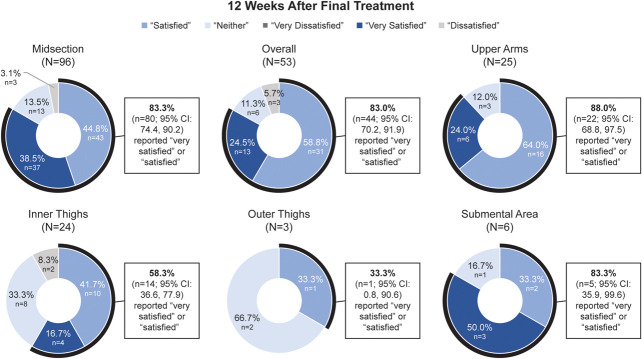
Figure 3. Response on CSQ item 1 for individual body areas (midsection being the primary end point) and overall (midsection plus other body area[s]) questionnaires at 12 weeks after final treatment session. No participants reported that they were “very dissatisfied” on CSQ Item 1 for midsection, overall, or for inner thighs, outer thighs, upper arms, or submental area. CI, confidence interval; CSQ, Cryolipolysis Satisfaction Questionnaire.CSQ 第 1 项(满意度)在 12 周时各治疗部位及整体问卷的应答分布。Photographic identification of baseline versus 12 weeks after final treatment midsection images demonstrated an 88% (81/92; 95% CI: 79.6, 93.9) correct identification rate by ≥2 out of 3 blinded, independent physician reviewers (Figure 4 ).
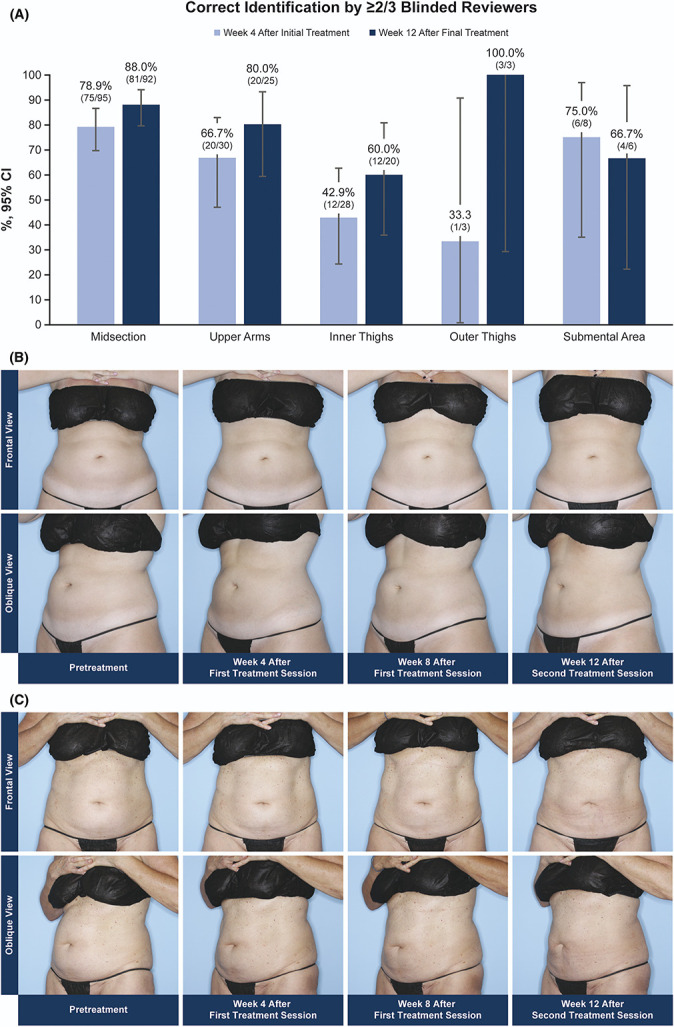
Figure 4. (A) Correct identification of baseline versus 4 weeks after initial treatment and 12 weeks after final treatment images by at least 2 of 3 blinded, independent physician reviewers. (B) Images of a 29-year-old female participant with baseline BMI of 27.3 kg/m2, at pretreatment, 4 and 8 weeks after the first treatment session, and 12 weeks after the second treatment session; participant received 2 treatment sessions with 14 cycles total to the midsection. Participant reported being “satisfied” at 8 weeks after the first treatment and “very satisfied” at 12 weeks after the second treatment on CSQ-Midsection Item 1. ©2024 AbbVie. Used with permission. (C) Images of a 60-year-old female participant with baseline BMI of 23.3 kg/m2, at pretreatment, 4 and 8 weeks after the first treatment session, and 12 weeks after the second treatment session; participant received 2 treatment sessions with 14 cycles total to the midsection. Participant reported being “satisfied” on CSQ-Midsection Item 1 at 8 weeks after the first treatment session and 12 weeks after the second treatment session. ©2024 AbbVie. Used with permission. BMI, body mass index; CI, confidence interval; CSQ, cryolipolysis satisfaction questionnaire.盲态独立医师对基线 vs 初次治疗后 4 周、末次治疗后 12 周影像的正确识别率。
Three-dimensional images were captured for volumetric analysis for 51% (49/96) of evaluable midsection participants (Figure 5 A). Significant midsection subcutaneous fat volume loss from baseline was observed at all time points assessed, including at 4 and 8 weeks after initial treatment and at 12 weeks after final treatment, with an average change from baseline in fat volume of −194.8 mL ( p < .001 for each time point vs baseline; Figure 5 B).
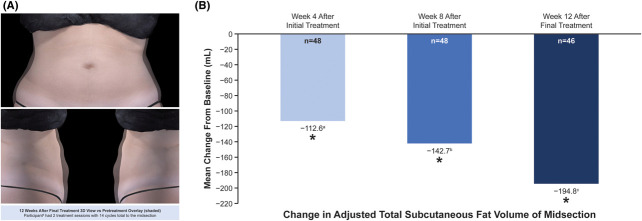
Figure 5. Volumetric subcutaneous fat reduction after cryolipolysis treatment to the midsection (abdomen and flanks). (A) Three-dimensional view of results at 12 weeks after the final treatment session versus pretreatment overlay (shaded); participant received 2 treatment sessions with 14 cycles total to the midsection. ©2024 AbbVie. Used with permission. (B) Mean volumetric changes at 4 and 8 weeks after initial treatment and 12 weeks after final treatment session compared with baseline; negative change indicates reduction in volume. *p < .001 versus baseline; aSD = 265.0; bSD = 335.4 mL; cSD = 492.3 mL.中段(腹/侧腹)皮下脂肪体积减少的 3D 量化结果(A 三维视图,B 体积变化)。Assessment of visible results at 4 weeks after initial treatment via photographic review demonstrated a 78.9% (75/95; 95% CI: 69.4, 86.6) correct identification rate of baseline versus 4-week midsection images by ≥2 out of 3 blinded, independent physician reviewers. Most participants also noted onset of results at the 4-week time point, with 71.7% (76/106) of participants who completed the 4-week follow-up reporting noticeable improvement for any treated body area. For the midsection, 72.9% (70/96; 95% CI: 62.9, 81.5) of evaluable participants reported visible improvement at the 4-week time point. Variable results were noted for the other body areas, with 50.0% (15/30; 95% CI: 31.3, 68.7), 0.0% (0/4; 95% CI: 0.0, 60.2), 18.8% (6/32; 95% CI: 7.2, 36.4), and 50.0% (4/8; 95% CI: 15.7, 84.3) of patients reporting visible improvement at 4 weeks after initial treatment for the upper arms, outer thighs, inner thighs, and submental areas, respectively.
Of the 97.9% (94/96) of evaluable participants who received 2 treatment sessions to the midsection, 84.0% (79/94; 95% CI: 75.0, 90.8) of participants reported they were “satisfied/very satisfied” on CSQ-Midsection Item 1 at 12 weeks after the second treatment session.
An additional exploratory analysis on the CSQ-Midsection was performed to observe whether there were trends in satisfaction after the administration of the second treatment session. At 8 weeks after initial treatment session, most participants, 79.8% (75/94), reported being “satisfied/very satisfied,” but there were 19 participants who reported that they were “neither satisfied nor dissatisfied” ( n = 18) or “dissatisfied” ( n = 1). After administration of a second treatment session, 63.2% (12/19) had an improved response and were “satisfied/very satisfied” at 12 weeks after the second treatment session ( p < .0001; 95% CI: 0.41, 0.85).
For midsection participants who received 2 treatment sessions, the rate of correct identification of baseline versus 4 weeks after initial treatment and 12 weeks after second treatment session midsection photos by ≥2 out of 3 blinded, independent physician reviewers was 78.5% (73/93; 95% CI: 68.8, 86.3) and 87.8% (79/90; 95% CI: 79.2, 93.7), respectively. In addition, 72.3% (68/94; 95% CI: 62.2, 81.1) reported noticeable improvement at 4 weeks after initial treatment. For the 46 participants who received 2 treatment sessions and had analyzable 3D photos, the mean (SD) change in volume of subcutaneous fat from baseline was −114.0 (270.1) mL at 4 weeks after initial treatment session, −155.6 (333.7) mL at 8 weeks after initial treatment session, and −217.0 (483.6) mL at 12 weeks after second treatment session ( p < .001 for vs baseline for all time points).
Of 110 treated participants, 9 (8.2%) participants reported 12 treatment-emergent adverse events (TEAEs). All TEAEs were mild and resolved by the end of the study; none led to study discontinuation. Of 12 TEAEs, 7 were considered device-related TEAEs and were reported by 5/110 (4.5%) participants. They were categorized as treatment-emergent adverse device effects (TEADEs).
The 7 TEADEs were all mild in severity and included hypoesthesia ( n = 3), abdominal tenderness ( n = 2), nausea ( n = 1), and dizziness ( n = 1). Nausea and dizziness resolved within 1 day. Four cases of tenderness and hypoesthesia resolved within 2 to 3 weeks, and 1 case of abdominal tenderness persisted for 127 days but was reported to be resolved before the end of the study. Of the 5 participants with TEADEs, 2 (1.8%, 2/110) reported the event in the first treatment session and 4 (4.0%; 4/100) reported the event in the second treatment session, with 1 participant experiencing an event in both treatment sessions. There were no events of paradoxical hyperplasia reported during the study period and no serious AEs, unanticipated AEs, or deaths reported.
During the treatment sessions, the worst (highest) mean pain score was recorded during the second treatment session compared to the first treatment session for all treated body areas except for the inner thighs. The highest pain scores were reported with submental treatment for both the first treatment session (mean [SD] score, 3.8 [2.8]) and second treatment session (mean [SD] score, 5.5 [2.1]). The highest mean (SD) pain scores reported during the first and second treatment sessions of the midsection were 3.6 (2.2) and 4.0 (2.6), respectively. At the 12-week follow-up/exit visit, no participants reported pain. There were no treatment discontinuations or interruptions due to pain.
This was the first prospective, global, multicountry study to assess treatment outcomes with a new dual-applicator cryolipolysis system for the midsection and additional body areas. This study showed that cryolipolysis treatment achieved the aesthetic goals of participants and met the primary study objective, with high levels of participant satisfaction with the treatment results to the midsection. In addition, visible results were observed by blinded, independent physician reviewers at 4 weeks after initial treatment session and 12 weeks after final treatment session.
Results of this study are consistent with prior cryolipolysis studies. 9 – 11 A prospective postmarketing study demonstrated high participant satisfaction after treatment of the midsection with a single-applicator cryolipolysis system, 10 and effectiveness and high participant satisfaction were reported in a separate study with multiple overlapping cycles and multiple treatment sessions to the midsection, upper arms, and submental area. 9 A single-center retrospective study with the same dual-applicator cryolipolysis system used in this trial also demonstrated high participant satisfaction, suggesting that the results achieved in real-world clinical practice are consistent with those reported in clinical trials. 11 The variety of treatment cycle regimens administered within the present study indicates that the study investigators tailored treatment plans to meet individual participant aesthetic goals with noninvasive fat reduction treatment. Almost all evaluable participants (97.9%) received treatment plans comprising 2 treatment sessions, which is consistent with a prior study indicating that 2 treatment sessions were the most commonly prescribed treatment plan for the abdomen and flanks when investigators were allowed to use 1 or 2 treatment sessions. 10 The average number of treatment cycles (13.1) delivered to the midsection was also comparable with recent recommendations from a global expert panel on cryolipolysis treatment. 13 The exploratory analysis of participants who received 2 treatment sessions indicated that, for patients who are neutral or dissatisfied with results after initial treatment, an additional treatment session may increase the likelihood of achieving satisfaction, although further evaluation of this trend is needed.
The 4-week after initial treatment time point was of particular interest in this study given early anecdotal feedback from clinicians using the dual-applicator cryolipolysis system, who noticed improvement 1 month post-treatment. In this study, most participants reported noticeable improvement at 4 weeks after initial treatment in any of the treated body areas, and in the midsection specifically (71.7% and 72.9%, respectively). In addition, objective measurements using independent photography review and 3D imaging of the midsection demonstrated effectiveness at the 4-week time point.
This study allowed participants to also receive treatment to the upper arms, inner thighs, outer thighs, and submental area to reflect real-world consultation plans in which patients may be seeking treatment in multiple body areas. Global expert consensus guidelines for cryolipolysis treatment encourage a full-body assessment before initiating treatment. 13 Of the participants who received treatment to the midsection and were evaluable for additional body area(s), 83% (44/53) were “satisfied/very satisfied” with their results when considering all treated body areas. The focus of this study was the midsection and treatment of additional body areas was optional, so the number of participants per individual additional body area was small; therefore, limited conclusions can be made when assessing nonmidsection results. Generally, higher levels of participant satisfaction were reported for treatment of the upper arms and submental area than the inner and outer thighs.
With a sum total of 1744 treatment cycles across all treatment plans administered during the study and the capability for simultaneous treatment with multiple applicators, cryolipolysis treatment with the dual-applicator system was well tolerated. No new safety signals emerged. Treatment-emergent adverse device effects were mild and resolved within days to weeks. There were no unanticipated AEs or SAEs reported in this study. Most mean pain scores were ≤5.5 during the treatment sessions and follow-up time points.
Limitations of the study include lack of a control group and randomization. In addition, the precision of volume changes observed with 3D image analysis may have been affected by the size and variability of area of interest for the image capture technique, and changes in posture, hand positioning, and clothing worn at the time of imaging. Standard deviations with the same magnitude of difference were reported previously in this setting. 10 Furthermore, there was no participant cost for receiving treatment, which has the potential to introduce bias when participants evaluate treatment outcomes. Finally, for countries in which race/ethnic background information could be collected, there were a limited number of participants identifying as non-White; future studies with increased diversity of participants are needed.
This first global, prospective, multicountry clinical study of the recently launched dual-applicator cryolipolysis system demonstrated high participant satisfaction, effectiveness, and safety, with the capability of providing simultaneous treatment. This study builds on the evidence from prior cryolipolysis studies by demonstrating high participant satisfaction with treatment to the midsection and other body areas. Objective measurements demonstrated visible improvement of the treated areas by blinded physicians as early as 4 weeks after initial treatment and 12 weeks after final treatment. 3D imaging also demonstrated subcutaneous fat volume loss in the midsection. No new safety signals were reported.
声明:中文精读 · 仅供学术参考。内容来自公开文献检索,不代表本人观点,不构成诊疗建议。 医疗美容需在正规医疗机构由执业医师实施。
基于相同主题推荐 · 继续深挖
不损伤人体脂肪细胞的组织学验证/7891655_fig1.jpg)
多中心、前瞻性、开放性、非随机可行性研究,纳入 11 例拟行腹部整形术的女性受试者(33–49 岁,均值 41.5 岁;BMI 均值 29.1),在体内直接比较 EMMS 与冷冻溶
背景:冷冻溶脂为非侵入性、耐受良好的皮下减脂手段;新型双治疗头系统可同时治疗多个部位、提升治疗效率。
1997-2023年共988例出生分配为男性的性别焦虑者接受唇女性化与年轻化,累计1789例次手术,年龄22-75岁(平均39.5岁),79.8%小于50岁。